Small orders can be expensive to ship separately. Freight consolidation brings compatible shipments together for part of their journey, sharing transport costs across a larger load. It works by road, ocean, and air. Whether it pays off depends on the full delivery cost and how long your stock can wait.
If you buy from several China suppliers, the practical question is whether to send each order separately or bring them together before export. This guide explains the main types of consolidated freight shipping first, then shows how to compare the costs, timing, and risks for a multi-supplier order.
What is freight consolidation
Freight consolidation is the process of combining smaller shipments into a larger load for a shared transport leg. The goods may belong to one business or several shippers. A carrier, freight forwarder, or logistics provider groups compatible cargo travelling along the same route or toward the same region.
For example, three suppliers each send two pallets to a warehouse. The six pallets travel together to a destination hub, where they are separated for delivery to different recipients. That separation is called deconsolidation. If everything belongs to one buyer, the combined load may instead go directly to that buyer’s warehouse.
Not every shipment needs the same final address, and consolidation does not necessarily mean waiting until a truck or container is completely full.
Types of freight consolidation
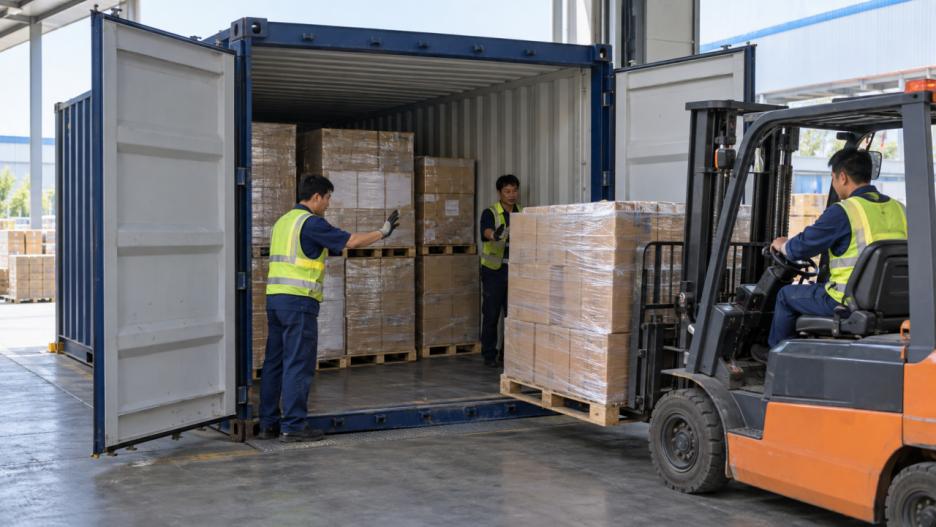
The three main transport modes are road, ocean, and air. Each uses shared capacity differently, with its own pricing, schedules, and handling requirements.
LTL trucking consolidation
Less-than-truckload (LTL) shipping lets smaller road shipments share trailer space. In a conventional LTL network, freight may pass through several terminals. A planned consolidation service can group shipments into a fuller truckload for the main journey, followed by local deliveries.
For a business sending a few pallets to several stores in one region, this can reduce repeated long-distance movements. The actual route matters: not every consolidated service has fewer stops. Averitt’s guide explains both the potential efficiencies and the scheduling challenges.
Ocean freight consolidation
Less-than-container-load (LCL) shipping combines different customers’ goods in a shared ocean container. Cargo is received and loaded at origin, then separated and released at the destination. It can suit shipments that do not justify a dedicated container and can meet the scheduled sailing.
LCL consolidation is usually organised by the forwarder or consolidator across different customers. Buyer’s consolidation starts with one buyer’s orders from several suppliers; that combined order can travel by LCL or in its own FCL container.
Full-container-load (FCL) means exclusive use of a container; it does not have to be physically full. A buyer can combine orders from several suppliers into one FCL shipment, but booking FCL alone is not consolidation. Our FCL vs. LCL guide explains the booking differences.
Air freight consolidation
An air freight forwarder groups smaller consignments into a shared air shipment, commonly under one master air waybill while retaining individual shipment records. This can offer a more economical option than sending each small consignment separately on a comparable service.
Air consolidation can suit smaller orders that need to arrive faster than ocean freight allows. Check the departure cutoff and destination release time: a scheduled consolidation may involve waiting for the next departure.
Air freight is commonly priced by chargeable weight—the higher of actual gross weight and dimensional weight under the service’s rules. Bulky, lightweight cartons can therefore cost more than their scale weight suggests. See DHL’s explanation of chargeable weight.
Other consolidation models
These describe how the operation is organised, rather than a separate transport mode:
- Buyer consolidation: orders from several suppliers are combined for one buyer, often into a dedicated ocean container. A smaller combined order may instead travel by LCL.
- Cross-docking: incoming goods move to outbound vehicles with little or no storage. It can support consolidation, although transferring goods alone is not necessarily consolidation.
- Pool distribution: shipments travel together over the main route, then separate at a regional terminal for local delivery.
The models can overlap. An importer might combine supplier orders in China, ship them by ocean, and use pool distribution to deliver to stores after arrival.
Planning shipments from several China suppliers
Send NicheSources your supplier locations, packing lists, ready dates, destination, and delivery deadline. We can help coordinate the orders and compare suitable shipping options.
Benefits of freight consolidation
The main benefit is sharing transport capacity and costs. Depending on the service, consolidation can offer:
- Lower shipping cost per unit. Spreading main-journey costs across a larger load can help, provided collection, handling, and storage do not cancel out the saving.
- Simpler receiving and coordination. One buyer can bring several supplier orders into a more manageable delivery schedule.
- Fewer transfers on some trucking routes. A planned consolidated load may bypass intermediate terminals. Ocean LCL, however, usually adds consolidation and separation steps compared with FCL.
- Better use of capacity. Fuller loads can reduce the transport needed per unit, although the environmental result depends on the route, mode, and extra collection journeys.
The trade-off is coordination. Cargo may wait for a departure or another supplier, and warehouse work can add cost. Temperature-controlled, dangerous, or fragile goods need a service that can handle their particular requirements.
How the freight consolidation process works
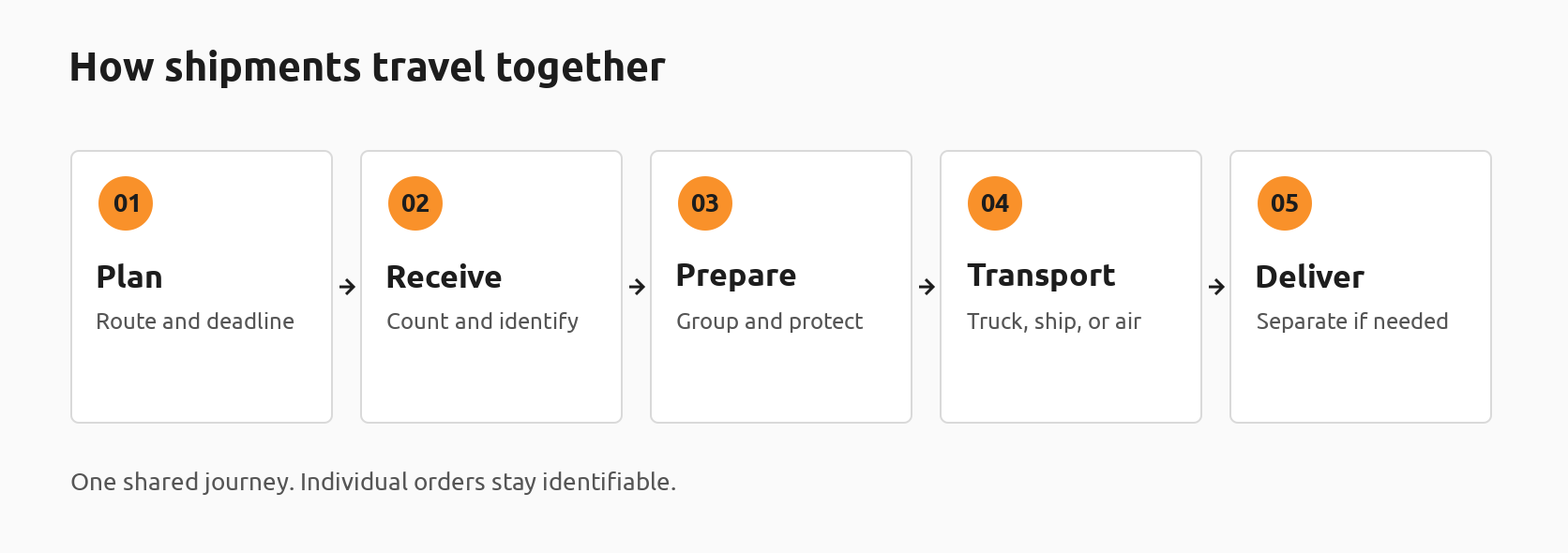
1 Plan the shipments
Confirm origins, destinations, ready dates, delivery deadlines, packed dimensions, and weights. The provider checks whether the cargo can safely share a route and service. For ocean quotes, our guide to calculating CBM explains how to measure shipment volume.
2 Collect and receive the cargo
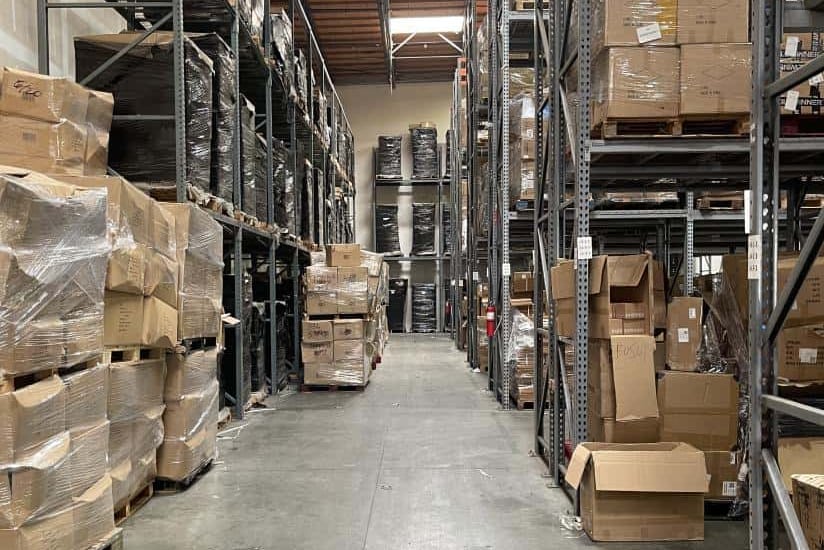
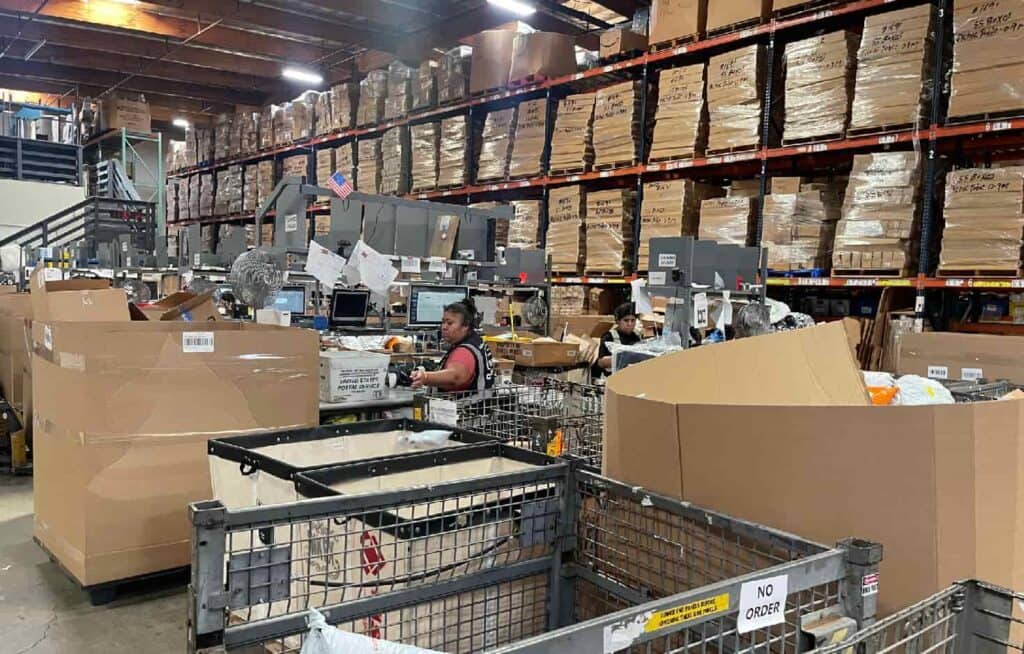
Goods arrive at a warehouse or terminal. Staff count packages, check labels, and record visible damage. A detailed product inspection is a separate service and should be agreed in advance.
3 Group and prepare the load
The provider groups shipments by route, timing, and handling needs. Any authorised repacking or palletising should protect the goods for the journey. Final dimensions and weights must reflect the finished packaging.
4 Move the combined freight
The load travels by truck, ship, or aircraft. Tracking and paperwork must still identify the individual orders. Consolidation does not remove the need for accurate invoices, packing lists, or applicable customs documents.
5 Separate and deliver
At the destination, goods for different recipients are sorted for onward delivery. A combined load for one buyer may go straight to that buyer. Confirm destination handling, delivery appointments, and unloading responsibilities in the quote. Maersk’s LCL overview shows this sequence for shared ocean freight.
When should you consolidate shipments
Consolidation is worth considering when several smaller shipments can share a route, are ready within a workable window, and have compatible handling needs. Regular replenishment orders and purchases from multiple suppliers are common examples.
A separate or dedicated service may be a better fit when:
- An urgent order cannot wait for the consolidation cutoff.
- Collection requires a costly detour.
- The shipment already makes good use of a truck or container.
- Special cargo requirements rule out the available shared service.
Compare the complete collection-to-delivery schedule. A cheaper freight quote is not a saving if the delay creates a more expensive stock shortage.
A China sourcing example with three suppliers
Suppose an importer orders goods from three suppliers for the same overseas warehouse:
| Supplier location | Order | Packed volume | Ready date |
|---|---|---|---|
| Foshan | Household products | 4.8 CBM | Monday |
| Dongguan | Packaging | 4.2 CBM | Wednesday |
| Shenzhen | Accessories | 4.5 CBM | Saturday |
The total is 13.5 CBM. A China warehouse can receive the orders, check them against the packing lists, and prepare them for a shared departure.
Compare separate LCL shipments, a combined LCL shipment, and a dedicated 20-foot FCL booking. Volume alone does not decide the winner: weight, packaging, collection costs, destination charges, and sailing dates also matter.
If the Saturday order runs late, there are three practical choices: hold everything, send the ready goods and ship the late order later, or expedite only the quantity needed urgently. Compare storage and extra freight with the cost of running short of stock.
For more detail on the ocean arrangements, see our guide to shared container shipping from China.
Planning shipments from several China suppliers
Send NicheSources your supplier locations, packing lists, ready dates, destination, and delivery deadline. We can help coordinate the orders and compare suitable shipping options.
How much time should you allow for consolidation
For ocean LCL, KLN Freight (Oceania) gives a typical 3–7-day origin consolidation window in its ocean freight guide. Cargo is received and grouped at a container freight station before sailing. The timing depends on the trade lane and departure frequency; air and trucking services follow different schedules.
Those days are only one part of the delivery timeline. For illustration, five days at origin + a 25-day sea voyage = 30 days, before destination handling and final delivery. Supplier production delays or a missed sailing can extend the schedule further.
Check whether origin consolidation is already included in your door-to-door estimate before adding it again. Ask for the cargo cutoff and expected delivery date, not just the time at sea.
How to check whether consolidation saves money
Ask for quotes covering the same cargo, pickup points, delivery address, and acceptable delivery window. Compare the whole journey, not just the main freight rate.
| Cost stage | What to compare |
|---|---|
| Collection | Every supplier pickup and transfer to the consolidation point |
| Consolidation | Receiving, handling, repacking, palletising, and storage |
| Main transport | Road, ocean, or air charges, minimums, and surcharges |
| Destination | CFS deconsolidation, terminal handling, document or handover fees, and clearance service charges |
| Final delivery | Local transport, appointments, unloading, and waiting time |
Estimated saving = total separate-shipment cost − total consolidated-shipment cost.
For ocean LCL, ask whether destination CFS charges and document or handover fees apply per shipment, per bill, or by volume. If you consolidate shipments from China but retain several separate bills, some fixed fees may still repeat. Also check how many free storage days the origin warehouse allows, and the charges for waiting, relabelling, or rebuilding pallets. A low ocean-freight line does not make the full delivery cheap.
For an illustrative comparison, separate shipments cost $1,500 and the consolidated option costs $1,250: a $250 saving. If consolidation means waiting five extra days, that saving is worthwhile only if the added storage costs and the business impact of waiting stay below $250. An extra $300 in storage and urgent freight would leave you $50 worse off. These are example amounts, not current shipping rates.
Pricing also differs by mode. LTL quotes commonly consider weight, dimensions, distance, and freight classification where applicable. LCL may be charged by volume or weight, subject to minimums; air commonly uses chargeable weight. Keep duties, taxes, insurance, and service exclusions consistent across the comparison—one combined load does not automatically mean one customs charge.
How to compare freight consolidation services
Look for experience with your route and cargo, clear receiving records, an itemised quote, and a named contact. Before booking, ask:
- Which transport mode, departure schedule, and transfer points will be used?
- What is the cargo cutoff, and what happens if a supplier misses it?
- When does storage become chargeable, and who approves extra work?
- Who handles the documents, customs arrangements, damage reporting, and final delivery?
For imports from China, submit your shipping inquiry via our quote link to coordinate sourcing and shipping through one team.
FAQs
Is freight consolidation only used for ocean shipping
No. It is also used in LTL trucking and air freight. Ocean LCL is one form of consolidation, not the definition of the whole practice.
Is freight consolidation the same as LTL or LCL
No. Consolidation is the broader practice of combining shipments. LTL and LCL describe shared-capacity road and ocean services. A buyer can also consolidate several supplier orders into a dedicated container.
Does freight consolidation take longer
It can. Ocean LCL typically involves a 3–7-day origin consolidation window, according to KLN Freight (Oceania), before the sea journey. This is not a fixed delay for every route or transport mode. Compare complete delivery dates: a few extra days may be worth the freight saving if you have enough stock, but less attractive if you face storage charges or lost sales. For urgent items, price a small separate shipment instead of holding up the whole order.
Can goods from different suppliers be consolidated
Yes, when their routes, ready dates, documentation, and handling requirements are compatible. Keep every supplier order identifiable, even when the goods travel together.