Shipping from China to the USA means moving commercial goods by express, air freight, LCL, or FCL, then clearing US customs and paying applicable duties and fees.
As of September 2026: express costs about $6–12/kg and takes 1–5 days; air freight $3.50–7.50/kg and 3–10 days; LCL $40–150/CBM and 25–45 days; and FCL $2,000–6,000 per container and 15–35 days port-to-port.
Suppose a product costs $4.80 ex-factory. If freight adds $0.60 per unit and duties and import fees add another $1.80, that $4.80 item is already at $7.20 before domestic fulfillment. This is why we look at the full landed cost, not just the freight quote.
Quick Facts: China to USA Shipping
- Fastest: Express courier, typically 1–5 days.
- Best fit for mid-size urgent cargo: Air freight, especially around 150–500 kg.
- Lowest cost per unit at volume: Sea freight, with FCL usually becoming more economical as shipment volume approaches roughly 15 CBM.
- De minimis: The former $800 duty-free exemption no longer applies; China-origin shipments lost the exemption in May 2025, and the broader US suspension followed in August 2025.
- Tariffs: There is no single China import-tax rate. Your landed duty can include the product’s normal HTS duty, Section 301 tariffs, and any other applicable trade measures, so the exact rate needs to be checked by HTS code.
From our work coordinating shipping from China, we find that the biggest budgeting mistakes usually come from comparing headline freight rates without also accounting for customs duties, destination charges, and inland delivery. The sections below break those costs apart so you can compare methods on a true landed-cost basis.

Shipping from China to USA at a Glance
Here’s the rule we use when comparing shipping methods: start with shipment weight and volume, then check whether the delivery deadline justifies paying more for speed.
| Method | Typical Cost | Transit Time | Best For |
| Express courier | ~$6–12/kg | 1–5 days | Samples, urgent parcels, and shipments under ~150 kg |
| Air freight | ~$3.50–7.50/kg | 3–10 days | Time-sensitive cargo around 150–500 kg |
| Sea freight (LCL) | ~$40–150/CBM | 25–45 days | Shipments above ~500 kg or roughly 2–15 CBM |
| Sea freight (FCL) | ~$2,000–4,000 for 20ft; ~$3,000–6,000 for 40ft | 15–35 days port-to-port | Bulk inventory and shipments approaching 15+ CBM |
These are September 2026 base freight ranges. Customs duties, brokerage, destination charges, and inland delivery can materially increase the final landed cost.
The 30-Second Shipping Decision
- Under 150 kg: Start with express shipping. The higher per-kilo rate is often offset by simpler door-to-door handling and lower minimum charges.
- 150–500 kg: Compare air freight first. This is usually the strongest balance between transit time and cost.
- Over 500 kg: Start comparing sea freight, especially if the shipment is not urgent.
- Around 15 CBM or more: Quote FCL and LCL side by side. At this volume, a full container often becomes more economical than paying LCL charges per cubic meter.
These are practical starting points rather than hard cutoffs. Dense cargo can move to sea earlier, while lightweight but bulky goods may become expensive by air because carriers charge on volumetric weight.
Types of Shipping Options from China to USA
For most shipments, the choice comes down to sea freight, air freight, or express shipping. We usually compare chargeable weight, shipment volume, urgency, and final delivery requirements before looking at the headline rate, because the lowest quoted rate is not always the lowest landed cost.
Sea Freight
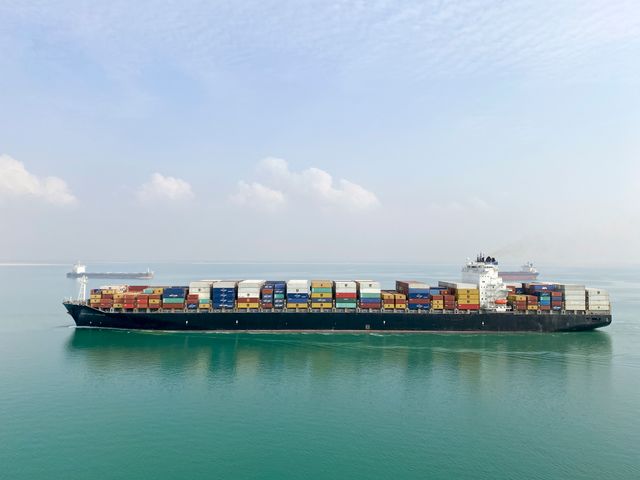
Sea freight is usually the most cost-efficient option for larger commercial shipments, especially once cargo moves beyond roughly 500 kg or a few cubic meters. As of September 2026, LCL rates are commonly around $40–150 per CBM, while FCL base rates are roughly $2,000–4,000 for a 20ft container and $3,000–6,000 for a 40ft container, depending on the route and market conditions.
You can ship either FCL or LCL. With FCL, you pay for the full container, while LCL lets you share container space and pay according to volume; our FCL or LCL comparison explains the trade-offs in more detail.
LCL works well for shipments that are too large for air freight but do not justify a full container. Once a shipment approaches roughly 15 CBM, we normally suggest pricing FCL as well, because LCL consolidation, handling, and destination charges can narrow or eliminate the apparent savings.
Transit time is typically 15–35 days port-to-port for FCL, while LCL can take around 25–45 days because cargo must be consolidated in China and deconsolidated after arrival. For inventory planning, we would also allow extra time for customs clearance, port handling, and inland delivery.
Air Freight
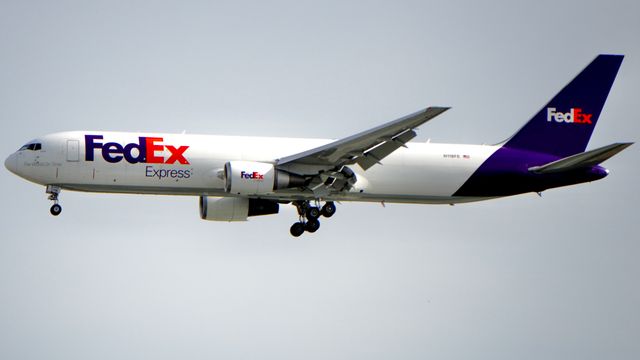
Air freight is usually the strongest middle-ground option for shipments around 150–500 kg where speed matters but express courier pricing is too high. September 2026 rates are roughly $3.50–7.50 per kg, with typical transit of 3–10 days depending on the airport pair and service level.
The key cost variable is chargeable weight. Airlines charge whichever is higher: actual weight or volumetric weight, commonly calculated as:
Length × Width × Height in cm ÷ 6,000
For example, a carton weighing 10 kg but measuring 60 × 50 × 40 cm has a volumetric weight of 20 kg. In that case, the airline charges for 20 kg, which is why lightweight but bulky products can become surprisingly costly by air.
In practice, air freight works especially well for higher-value inventory, urgent restocks, and products with enough margin to absorb the higher per-kilo rate.
Express Shipping

Express couriers such as DHL, FedEx, and UPS are usually the simplest option for samples, urgent orders, and commercial shipments under roughly 150 kg. September 2026 rates are generally around $6–12 per kg, with delivery typically taking 1–5 days door-to-door.
The main advantage is simplicity: pickup, international transport, customs processing, and final delivery are handled within one courier network. That makes express especially useful when speed and predictability matter more than the lowest possible freight cost.
Express carriers also use volumetric pricing, often with a divisor of 5,000, so bulky cartons can become expensive even when their actual weight is low. Once the shipment moves much beyond 150 kg, we usually compare standard air freight because the per-kilo savings can become significant.
How Long Does Shipping from China to the USA Take?

Shipping from China to the USA can take 1–5 days by express, 5–10 days door-to-door by air freight, and roughly 20–45 days door-to-door by sea. For ocean freight, the biggest variable is which US coast you are shipping to.
| Route | Typical Port-to-Port Transit |
| Shanghai/Shenzhen → Los Angeles/Long Beach | 12–18 days |
| Shanghai/Shenzhen → Seattle/Tacoma | 12–18 days |
| Shanghai/Shenzhen → Houston | 25–30 days |
| Shanghai/Shenzhen → New York/New Jersey | 25–35 days |
| Shanghai/Shenzhen → Savannah | 25–35 days |
These are port-to-port estimates. For ocean shipments, we generally allow another 7–14 days for origin handling, customs clearance, deconsolidation where applicable, and inland delivery.
Transit Time by US Coast
- West Coast: Usually the fastest ocean route from China at around 12–18 days port-to-port. Los Angeles, Long Beach, and Seattle/Tacoma are common gateways.
- Gulf Coast: Houston typically takes around 25–30 days, but it can reduce inland trucking if your inventory is headed to Texas or nearby states.
- East Coast: New York/New Jersey and Savannah commonly take 25–35 days port-to-port because vessels travel farther, often through the Panama Canal.
Transit schedules can also tighten around tariff announcements. When importers rush inventory into the US before a new tariff takes effect, the resulting front-loading can create temporary congestion at Chinese ports, on vessels, and at US terminals.
For inventory-critical shipments, we recommend building a 1–2 week buffer into the quoted ocean lead time rather than planning around the carrier’s earliest arrival date.
Tariffs, Duties & the End of De Minimis
The biggest change for China-to-USA imports is that the old $800 de minimis exemption is gone. CBP suspended it for China-origin goods on May 2, 2025, followed by a broader suspension for all countries on August 29, 2025. In practical terms, splitting an order into sub-$800 parcels no longer makes those shipments automatically duty-free.
For commercial imports from China, think of duties as a stack rather than a single tariff rate:
| Charge | 2026 Treatment | What It Means for Your Shipment |
| MFN duty | Depends on the product’s HTS code | This is the normal US customs duty. Some products enter at 0%; others carry materially higher rates. |
| Section 301 | Generally 25% for Lists 1–3 and 7.5% for List 4A | This China-specific tariff is added to the normal HTS duty. Certain targeted products face higher rates. |
| Section 232 | 50% for covered steel and aluminum products | Applies only when the product or derivative falls within the covered classifications. |
| Post-July 2026 tariff layer | In flux as of September 2026 | The temporary 10% Section 122 surcharge expired July 24, 2026. Replacement measures are still changing, so confirm the current HTS-specific treatment before importing. |
| MPF | 0.3464%, minimum $32.71 and maximum $634.62 | A customs processing fee charged on most formal entries. |
| HMF | 0.125% | Applies to ocean imports entering through US ports. |
Section 301 rates can be substantially higher for targeted sectors, including 100% for EVs, 50% for semiconductors and solar cells, and 25% for batteries. The normal MFN rate still sits underneath these additional trade measures.
Because the tariff environment changed several times during 2026, we would not price a purchase order from a generic “China tariff percentage.” Check the product’s HTS classification through the USITC tariff database and confirm the current treatment with a customs broker before the goods leave China.
Worked Example: Landed Cost of Stainless Steel Water Bottles
Suppose you are importing 1,000 stainless steel water bottles at a factory price of $4 each.
For illustration, assume:
- Factory value: $4,000
- Ocean freight and associated transport: $1,200, or $1.20 per bottle
- Example MFN rate: 3%
- Section 301: 25%
- Illustrative additional tariff layer: 10%
- MPF: 0.3464%, subject to CBP’s minimum
- HMF: 0.125%
The exact HTS classification of your bottle must be verified before using these tariff rates; this example is designed to show the calculation rather than assign a tariff code to every stainless steel bottle.
| Cost Component | Calculation | Total | Per Bottle |
| Factory cost | 1,000 × $4.00 | $4,000.00 | $4.00 |
| Freight | — | $1,200.00 | $1.20 |
| MFN duty | $4,000 × 3% | $120.00 | $0.12 |
| Section 301 | $4,000 × 25% | $1,000.00 | $1.00 |
| Additional tariff layer* | $4,000 × 10% | $400.00 | $0.40 |
| MPF | Minimum applies | $32.71 | $0.03 |
| HMF | $4,000 × 0.125% | $5.00 | <$0.01 |
| Illustrative landed cost | $6,757.71 | ~$6.76 |
So the $4 factory price becomes roughly $6.76 per unit before US warehousing, domestic fulfillment, or last-mile delivery.
This is why freight alone can be misleading. In this example, international freight adds $1.20 per unit, while duties and federal import fees add roughly $1.56 per unit.
*The post-July 2026 tariff layer remains subject to change. As of September 2026, importers should verify the applicable successor rate before using it in landed-cost calculations.
CBP determines what must be declared and collected at entry; for an importer, that means your HTS code, declared customs value, country of origin, and applicable trade measures directly determine the amount due. Section 232 can further increase the calculation for covered steel or aluminum products, so do not assume the example above applies unchanged simply because a product contains stainless steel.
Why Does Shipping from China Feel So Expensive Now?

The main reason is that freight cost and landed cost are no longer moving together. Ocean and air rates have eased from their pandemic-era peaks, but importers are still paying more overall because duties, entry fees, and post-de-minimis customs costs now make up a larger share of the final bill.
1. Tariffs now outweigh freight on many products
Take a $10,000 shipment with $2,500 in ocean freight. If the product carries a combined tariff burden of around 30–40%, duties can add $3,000–4,000 before brokerage, MPF, HMF, or inland delivery.
That means a 10% reduction in freight might save only $250, while a tariff classification difference of 10 percentage points changes the landed cost by $1,000. For many importers, customs treatment now matters more than negotiating another few hundred dollars off the freight quote.
2. The end of de minimis changed small-parcel economics
Before the exemption ended, importers could send qualifying parcels under $800 without paying normal duties. Once that route disappeared, the same parcel could become subject to customs entry, duty, and brokerage costs.
For example, adding $80 in entry and handling costs to a $400 shipment increases the landed cost by 20% before duty is even added. This is why small direct-from-China orders can feel disproportionately expensive compared with larger consolidated freight.
3. Splitting shipments can now increase total cost
Parcel-splitting used to reduce duty exposure under the old de minimis rules. In 2026, splitting one commercial order into five separate shipments can mean paying five sets of courier clearance, entry, or handling charges instead of one.
If each parcel attracts even $40 in fixed processing costs, five parcels add $200 in fees. A single consolidated shipment may therefore cost less even if its headline freight rate is slightly higher.
4. Destination charges create the biggest quote surprises
A base ocean rate might look competitive, but it does not always include terminal handling, customs brokerage, drayage, documentation, or final delivery. Those charges can add roughly $700–1,500 per container depending on the port and delivery location.
The result is simple: a $3,000 ocean quote can become a $4,000+ logistics bill before duties are added. This is why we compare quotes on an all-in landed basis rather than by the carrier rate alone.
5. Tariff announcements create temporary freight spikes
Freight is not permanently at crisis levels, but policy changes can cause short-term congestion. When importers rush cargo before a tariff deadline, demand gets pulled forward, space tightens, and spot rates can rise for several weeks.
That volatility matters most for businesses with tight inventory cycles. We usually recommend a 1–2 week buffer around tariff-related surges so you are not forced into premium air or express rates if ocean capacity tightens.
Required Documentation and US Customs Clearance

Most China-to-USA shipments clear smoothly when the paperwork is prepared before departure. We pay particular attention to the commercial invoice, product classification, and ocean ISF filing because mistakes in these documents can delay release or change the amount of duty assessed.
Documents You’ll Usually Need
- Commercial Invoice: Shows the buyer and seller, product description, quantity, declared value, country of origin, and shipping terms. CBP uses this information to assess the customs value and applicable duties.
- Packing List: Lists carton counts, dimensions, gross/net weights, and how the goods are packed. Your forwarder and customs broker use it to match the physical cargo to the entry documents.
- Bill of Lading or Air Waybill: The carrier’s transport document. Ocean freight uses a Bill of Lading, while air shipments use an Air Waybill.
- ISF 10+2 for ocean freight: US-bound ocean cargo requires an Importer Security Filing before the goods are loaded for departure. This does not apply to standard air or express shipments.
- Importer information and customs bond: Formal commercial entries may require an importer number and customs bond, depending on the shipment.
- Product-specific certificates or approvals: Categories such as food, cosmetics, electronics, children’s products, batteries, and certain wood products can require additional documentation from agencies such as the FDA, FCC, CPSC, or USDA.
These are the core documents, but there is no universal paperwork package for every product. Before shipping, we recommend checking the exact requirements for the product’s HTS classification rather than waiting until the cargo reaches a US port.
The China-to-USA Shipping Process in 7 Steps
- Get a freight quote and book the shipment.
Provide the origin, destination, carton dimensions, weight, product description, HTS code if available, and preferred Incoterm. This lets the forwarder quote the actual transport route rather than a headline rate. - Pick up and consolidate the cargo.
The forwarder collects goods from the supplier or combines orders from multiple factories at a China warehouse. Consolidation can reduce duplicate handling and per-shipment charges. - Prepare export and shipping documents.
The supplier and forwarder finalize the commercial invoice, packing list, transport documents, and Chinese export declaration. - File ISF for ocean shipments.
For US-bound sea freight, the required ISF 10+2 information must be submitted before the vessel loads in China. In practice, this means the importer and broker need supplier and shipment data before departure, not after the container is already at sea. - Move the shipment to the USA.
The cargo travels by ocean, air, or express courier. Tracking normally follows the Bill of Lading, Air Waybill, or courier tracking number. - Complete US customs clearance.
Your customs broker submits the entry, CBP reviews the declared value and HTS classification, and applicable duties and fees are paid. Some shipments are released automatically; others may be selected for document review or physical inspection. Our guide to customs clearance explains this stage in more detail. - Arrange final delivery.
Once CBP releases the shipment, the cargo moves from the port, airport, or terminal to your warehouse, 3PL, Amazon fulfillment center, or other US destination.
One practical point: customs clearance starts before the goods arrive. Waiting until a container reaches the US to confirm the HTS code, importer details, or supporting certificates can turn a routine clearance into storage charges and avoidable delays.
DDP vs FOB vs CIF vs EXW
Incoterms determine where the seller’s responsibility ends and yours begins. For China-to-USA imports, the practical difference is who controls the freight, who pays import duties, and who carries the risk at each stage.
| Incoterm | Who Pays Main Freight? | Who Pays US Duty? | When Risk Transfers | Best For |
| EXW (Ex Works) | Buyer | Buyer | At the supplier’s premises | Experienced importers who want full control from factory pickup onward |
| FOB (Free On Board) | Buyer | Buyer | Once goods are loaded aboard the vessel in China | Repeat importers using their own forwarder |
| CIF (Cost, Insurance & Freight) | Seller to US destination port | Buyer | Once goods are loaded aboard the vessel in China | Importers comfortable arranging customs clearance and destination delivery |
| DDP (Delivered Duty Paid) | Seller/forwarder | Seller/forwarder under the agreed quote | At the named US destination, subject to the agreed delivery terms | Importers wanting an all-in door-to-door shipping from China service |
EXW Gives You Maximum Control
With EXW, the supplier generally makes the goods available at the factory or warehouse. You arrange the pickup, China export procedures, international freight, US customs clearance, duties, and final delivery.
This can work well if you already have a China-side forwarder or are consolidating inventory from several suppliers. The trade-off is that you take responsibility earlier in the shipment and need someone capable of managing Chinese export logistics.
FOB Is Often the Practical Choice for Regular Importers
Under FOB, the supplier gets the cargo to the agreed Chinese port and handles export clearance. You take control of the main freight from there and pay the US duties and destination costs.
We often prefer FOB for repeat shipments because it makes freight costs easier to compare across forwarders. You are not locked into the supplier’s international freight quote, while the supplier still handles the China-side export process.
CIF Can Hide Costs at Destination
CIF includes the main ocean freight and insurance to the named US port, but it does not mean delivery to your warehouse. You still handle customs clearance, duties, port charges, and inland transportation after arrival.
That distinction matters because a competitive CIF quote can be followed by substantial destination charges. Before accepting one, ask for an estimate of the US-side terminal, brokerage, and delivery costs so you can compare it fairly with FOB or DDP.
DDP Provides the Simplest Landed-Cost View
With DDP, the seller or logistics provider quotes transportation through to the agreed US destination and takes responsibility for the customs and duty costs included in the agreement. This gives importers a clearer landed-cost figure and reduces the number of providers they need to coordinate.
However, we would still ask three questions before accepting a DDP quote: Who is the importer of record? What duties and destination charges are included? Will the goods be declared at their true transaction value? A low DDP price built around undervaluation or unclear customs responsibility can create much larger problems than the initial freight saving.
Shipping to Amazon FBA
Shipping directly from China to Amazon FBA requires more than moving the cartons to the US. The shipment also has to meet Amazon’s prep, labeling, packaging, and delivery requirements before the fulfillment center will accept it.
The main requirements are:
- Product labeling: Each unit generally needs the correct FNSKU or other Amazon-approved barcode. Applying these labels at the factory is usually more efficient than relabeling inventory after it reaches the US.
- Carton labeling: Every shipping carton must carry the Amazon shipment labels generated in Seller Central. The carton count, contents, and dimensions should match the shipment plan.
- Packaging compliance: Products need to meet Amazon’s packaging and prep rules for their category, including requirements for poly bags, fragile items, bundled products, and carton weight or size limits where applicable.
- Customs and duties: Amazon generally does not act as the importer of record for inbound FBA inventory, so customs clearance and applicable duties need to be arranged before delivery.
- Appointment delivery: Palletized or freight shipments normally need to be delivered through an Amazon-approved carrier process with the required fulfillment-center appointment.
This is where a forwarder familiar with FBA can reduce errors. A regular freight provider may get the shipment into the US, but Amazon FBA forwarding also needs to account for labeling, carton preparation, customs clearance, and the final delivery appointment.
For a deeper breakdown of routing and prep options, see our guide to shipping to Amazon FBA.
Key Ports in China and USA
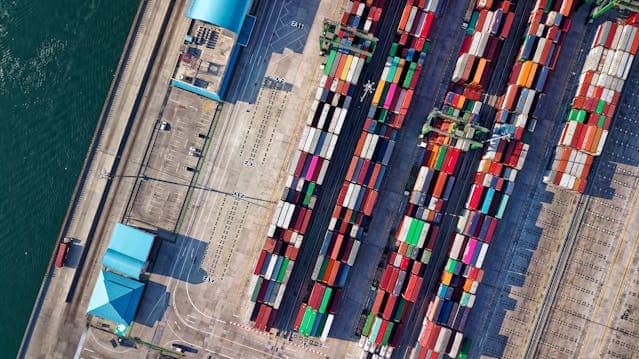
The port pair affects both ocean transit time and inland delivery cost. We generally start with the port closest to the supplier, then compare the US gateway against the final warehouse location rather than automatically choosing the shortest ocean route.
The latest complete annual figures are for 2025. Shanghai handled more than 55.06 million TEUs, Shenzhen about 35.41 million, and Guangzhou about 28.05 million, making all three major gateways for China-origin container freight.
Major China Ports
- Shanghai: The world’s busiest container port, handling more than 55 million TEUs in 2025. It is a natural gateway for suppliers across Shanghai, Jiangsu, Zhejiang, and much of eastern China.
- Shenzhen: Handled about 35.4 million TEUs in 2025, up 6% year over year. Yantian and the wider Shenzhen port system are especially important for electronics and consumer goods sourced across the Pearl River Delta.
- Guangzhou: Processed roughly 28.05 million TEUs in 2025. Its Nansha terminals are a practical alternative for factories around Guangzhou, Foshan, and other parts of Guangdong.
Choosing the nearest appropriate Chinese port can save domestic trucking and several days of handling. For example, moving Guangdong cargo hundreds of kilometers to Shanghai just to access a slightly lower ocean rate can erase the savings before the container even leaves China.
Major US Ports and Typical Transit Times
| China Origin | US Gateway | Coast | Typical Port-to-Port Transit | 2025 Port Volume |
| Shanghai / Shenzhen / Guangzhou | Los Angeles / Long Beach | West Coast | 12–18 days | LA: 10.24M TEUs; Long Beach: ~9.9M TEUs |
| Shanghai / Shenzhen / Guangzhou | New York / New Jersey | East Coast | 25–35 days | 8.90M TEUs |
| Shanghai / Shenzhen / Guangzhou | Savannah | East Coast | 25–35 days | 5.7M TEUs |
| Shanghai / Shenzhen / Guangzhou | Houston | Gulf Coast | 25–30 days | 4.30M TEUs |
Los Angeles handled 10.24 million TEUs in 2025, while neighboring Long Beach handled about 9.9 million. Together, the San Pedro Bay ports accounted for roughly 31% of US containerized international waterborne trade, making Southern California the dominant gateway for China–USA container traffic.
On the East Coast, New York/New Jersey handled 8.90 million TEUs in 2025, while Savannah processed nearly 5.7 million. Port Houston handled a record 4.30 million TEUs, making it an increasingly important option for cargo ultimately headed to Texas and the central US.
Which US Coast Should You Choose?
For West Coast inventory, Los Angeles or Long Beach usually gives you the shortest ocean transit from China. For warehouses in the eastern half of the US, however, the fastest vessel is not automatically the lowest-cost route.
We normally compare two options: an all-water service into New York/New Jersey or Savannah, versus a West Coast arrival followed by rail or truck across the country. Houston deserves the same comparison for inventory destined for Texas and nearby states because a longer ocean voyage can be offset by much shorter inland transport.
The practical rule is to optimize the full China-factory-to-US-warehouse route, not the port-to-port sailing time in isolation.
How to Reduce Shipping Costs from China to the USA

The biggest savings usually come from changing how the shipment is structured, rather than negotiating a few cents off the freight rate. Since the de minimis rules changed, consolidation, carton efficiency, and supplier coordination matter more than they did a few years ago.
1. Consolidate Orders Instead of Splitting Them
Before 2025, splitting qualifying orders into parcels below $800 could reduce duty exposure under de minimis. That strategy no longer works because the exemption has been suspended.
Now, sending five separate parcels can mean paying clearance, handling, and courier fees five times. Combining those orders into one air or sea shipment lets you spread the fixed costs across more units, so consolidation often produces a lower landed cost even when the shipment itself is larger.
2. Consolidate Directly from Multiple Factories
If you source from several suppliers, avoid having each factory arrange its own international shipment. A China-side warehouse can collect the goods, perform quality inspection, combine cartons, and ship everything under one freight booking.
We use this approach frequently with factory-direct orders because it reduces duplicate pickup, documentation, and destination charges. It also gives you one shipment to clear through US customs instead of several smaller entries.
3. Reduce Carton Size Before You Negotiate Freight
Air and express carriers charge according to volumetric weight when the cartons take up more space than their actual weight suggests. Ocean LCL is similarly priced largely by CBM.
Reducing unnecessary packaging therefore cuts the bill directly. If carton redesign lowers a shipment from 10 CBM to 8 CBM, an LCL rate of $100 per CBM drops the base freight from about $1,000 to $800 before handling charges.
4. Compare LCL and FCL Near 15 CBM
LCL looks attractive because you only pay for the space you use, but every shipment also carries consolidation, documentation, and destination handling charges. Those fixed costs become increasingly important as volume grows.
Once cargo approaches roughly 13–15 CBM, ask for both LCL and FCL quotes. A full container may cost less overall while also reducing handling and shortening the consolidation process.
5. Compare Freight on the Same Incoterm
A $2,500 FOB freight quote and a $2,800 DDP quote are not directly comparable because they include different responsibilities. Compare quotes using the same origin, destination, Incoterm, and included charges.
We recommend asking every provider to separate main freight, origin fees, destination fees, customs brokerage, duties, and final delivery. That makes it much easier to spot a low headline rate that becomes expensive after arrival.
6. Use Regional Warehousing to Reduce Delivery Costs and Delays
For brands holding recurring inventory, shipping consolidated stock into a US warehouse can reduce per-order international shipping and give you domestic delivery for subsequent customer orders. It also creates inventory buffer when ocean schedules or tariff announcements cause temporary congestion.
A US warehouse does not remove US import duties—the goods still clear customs when they enter the country. If you sell in both the US and Europe, however, splitting inventory in China and sending stock directly to regional US and EU warehouses can avoid unnecessary cross-border reshipping and shorten fulfillment lead times.
7. Plan Freight Around Your Supplier Lead Time
Shipping decisions become expensive when production finishes later than expected. A missed ocean cutoff can force part of the order onto air freight simply to prevent a stockout.
We therefore plan the factory lead time and shipping schedule together. Giving yourself even 1–2 additional weeks of buffer can preserve the option to use sea freight instead of paying several dollars more per kilogram for an emergency air shipment.
How to Choose the Right Shipping Partner

A good freight forwarder should do more than quote a low ocean or air rate. We look for partners that can manage the full China–USA route, explain every charge clearly, and resolve customs or delivery problems when they happen.
| What to Check | What to Look For | Why It Matters |
| Licensing and credentials | Appropriate freight forwarding credentials and verifiable business details | Reduces the risk of working with an unqualified intermediary |
| China–USA route experience | Regular shipments on your origin, US port, and transport mode | Route specialists are more familiar with schedules, congestion, and local charges |
| Transparent all-in quotes | Freight, origin fees, destination charges, brokerage, duties, and delivery shown separately | Prevents a low headline rate from becoming a much higher landed cost |
| Customs brokerage capability | In-house brokerage or a clearly identified US customs partner | Helps resolve HTS classification, duty, bond, and clearance issues before they delay cargo |
| Cargo-specific experience | Familiarity with FBA, LCL consolidation, batteries, liquids, or other special requirements | Different cargo types can require different documentation and carrier handling |
| Communication | Clear points of contact in both China and the US | Faster responses matter when cargo is rolled, inspected, or held at the terminal |
One question we recommend asking before you book is: “What is excluded from this quote?” If the forwarder cannot clearly explain destination fees, customs charges, delivery, and potential surcharges, you do not yet have a comparable freight quote.
Our freight forwarder from China to USA guide goes deeper into evaluating providers. If you need China-side consolidation, inspection, customs coordination, and international transport under one workflow, our freight forwarding services cover those steps as well.
From our experience in Yiwu: unclear landed-cost quotes are one of the most common problems importers face before working with us. Our team can consolidate supplier orders, check the shipment before departure, and provide an itemized freight quote so you can see the transport, customs, and delivery costs before booking. Discuss your project.
FAQs about Shipping from China to USA
When shipping from China to the USA, there are several common questions regarding tracking orders, import taxes, and prohibited items. This section aims to provide clear, insightful answers to these queries.
How Do I Track My Order from China?
To track your order from China, check the shipping or courier service’s website with your tracking number. Most logistics companies offer an online tracking system where you can monitor your shipment’s progress.
For sea freight, expect regular updates at major transit points. For example, ocean freight from the Port of Shanghai to the Port of Long Beach typically updates when leaving the port, upon arrival, and if there are any delays en route.
How Much Is Import Tax to USA?
The import tax, or duty, to the USA from China varies based on the product’s value, type, and the trade agreements in place.
The U.S. International Trade Commission provides a tariff database that can be used to determine specific duty rates.
Please keep in mind that additional fees, like the Merchandise Processing Fee (MPF), apply to most imports.
What Are the Prohibited Items to Ship to the US?
The U.S. Customs and Border Protection (CBP) strictly prohibits or restricts certain items from being shipped into the country.
This includes, but is not limited to, illicit substances, counterfeit products, certain agricultural produce, and products made from protected animals.
Detailed information on prohibited and restricted items can be found on the CBP’s official website. Always ensure to comply with the latest regulations to avoid complications during shipment.
How much does a 50 lb package cost to ship from China?
A 50 lb shipment is about 23 kg. At typical September 2026 express rates of $6–12/kg, the international freight portion would be roughly $140–275, before duties or unusual surcharges.
At this weight, express is often simpler than standard air freight because air cargo minimum charges can reduce the apparent per-kilo saving.
Who should be the importer of record?
The importer of record is the party responsible for the US customs entry and the accuracy of information such as value, origin, and classification. Before accepting a DDP arrangement, confirm who will act in that role rather than assuming the forwarder automatically takes responsibility.
What happens if US Customs inspects my shipment?
If CBP selects the cargo for inspection, clearance can take longer and additional examination or storage charges may arise. Your customs broker or forwarder normally coordinates the required documents and communicates the status, which is another reason to have the HTS classification, invoice, and product paperwork prepared before arrival.
How far in advance should I book ocean freight?
For routine shipments, book once the supplier has a reliable production-completion date rather than waiting until the cargo is already finished.
Around August–October peak season or tariff-related surges, allow extra time because vessel space can tighten quickly.
Building the shipping schedule into the supplier lead time reduces the chance of needing an emergency air shipment later.