Choosing the right size of shipping container starts with your packed cargo—not just the advertised capacity.
- A 20ft container often suits smaller or dense loads.
- A 40ft standard offers about twice the internal volume, but not twice the weight allowance.
- A 40ft high cube adds one foot of height without adding floor space.
For importers buying from China, the right size of a shipping container depends on packed carton dimensions, total weight, door clearance, and the complete shipping quote. Start with the cargo, then compare equipment—not the other way around. A larger container is worthwhile only when its extra capacity solves a loading problem or reduces your total cost.
This guide compares the three common sizes, shows why advertised capacity differs from usable space, and explains what to check before booking.
Shipping container measurements at a glance
These are the three sea freight container sizes most importers compare first. External dimensions describe the box; internal dimensions and door openings determine what can go inside.
Shipping container sizes in meters and feet
Dimensions below follow length × width × height. The exterior measurements follow the standard sizes in Hapag-Lloyd’s container specification guide.
| Container | External dimensions in meters | External dimensions in feet |
|---|---|---|
| 20ft standard | 6.058 × 2.438 × 2.591 m | 20ft × 8ft × 8ft 6in |
| 40ft standard | 12.192 × 2.438 × 2.591 m | 40ft × 8ft × 8ft 6in |
| 40ft high cube | 12.192 × 2.438 × 2.896 m | 40ft × 8ft × 9ft 6in |
The internal figures below are fleet examples from Hapag-Lloyd’s 20ft standard, 40ft standard, and 40ft high-cube specifications. Equipment varies by manufacturer and series; confirm the assigned unit when clearance is tight.
| Container | Internal dimensions in meters | Internal dimensions in feet and inches |
|---|---|---|
| 20ft standard | 5.900 × 2.352 × 2.395 m | 19ft 4¼in × 7ft 8⅝in × 7ft 10¼in |
| 40ft standard | 12.032 × 2.352 × 2.395 m | 39ft 5⅝in × 7ft 8⅝in × 7ft 10¼in |
| 40ft high cube | 12.032 × 2.350 × 2.700 m | 39ft 5⅝in × 7ft 8½in × 8ft 10¼in |
| Container | Door opening: width × height | Internal volume | Empty weight / maximum payload |
|---|---|---|---|
| 20ft standard | 2.340 × 2.292 m; 7ft 8⅛in × 7ft 6¼in | 33.2 m³ / 1,172 ft³ | 2,350 / 28,130 kg |
| 40ft standard | 2.340 × 2.292 m; 7ft 8⅛in × 7ft 6¼in | 67.7 m³ / 2,390 ft³ | 3,750 / 28,750 kg |
| 40ft high cube | 2.340 × 2.597 m; 7ft 8⅛in × 8ft 6¼in | 76.3 m³ / 2,694 ft³ | 3,900 / 28,600 kg |
Check the door first. A tall pallet can fit the interior yet fail to pass through the opening. Allow working clearance for loading equipment, packaging, and securing materials.
Which size of shipping container suits your cargo?
- 20ft standard: Consider it for smaller orders and dense goods such as hardware, tile, or metal parts. Confirm floor loading and inland weight limits.
- 40ft standard: Consider it for furniture, textiles, and packaged consumer goods that need more room. Its extra length helps with volume, not a doubled payload.
- 40ft high cube: Consider it for tall or safely stackable cargo. The cited examples add 305 mm of internal and door height, but no extra single-tier pallet positions.
When a full container leaves too much unused capacity, compare FCL vs LCL shipping. FCL reserves the container for your shipment; it does not mean you must fill every cubic meter.
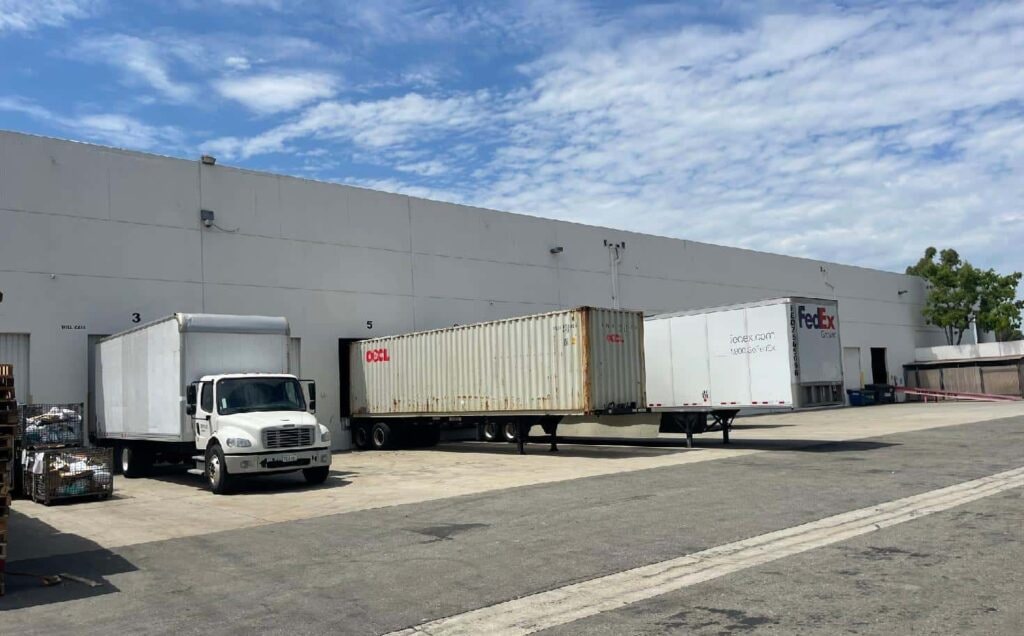
Shipping container volume is not usable loading space
Nominal volume is the interior’s mathematical capacity. Cartons rarely fill that space perfectly. Pallets, gaps, dunnage, lashing, door hardware, and safe stack heights all reduce usable capacity.
Calculate shipment volume in CBM, then check a load plan using final packaging dimensions—not product dimensions.
A 600-carton example
Suppose each carton measures 0.60 × 0.40 × 0.30 m and weighs 12 kg:
- One carton occupies 0.072 m³.
- 600 cartons total 43.2 m³ and 7,200 kg.
- Dividing 67.7 m³ by 0.072 suggests space for roughly 940 cartons.
- A simple arrangement of 20 along × 5 across × 7 high holds 700 cartons instead.
That arrangement uses 12.0 × 2.0 × 2.1 m before securing materials. It shows why 600 cartons merit a 40ft load-plan check, not a promise that they will fit. Carton strength, other cargo, loading access, and weight distribution still matter. Different orientations can change the result.
What about pallets?
For 1,200 × 1,000 mm pallets, a simple two-across layout puts the 1,000 mm side across the container and the 1,200 mm side along it. Four rows give a 20ft container eight floor positions; ten rows give a 40ft 20 positions.
This is a straightforward layout example, not a maximum-capacity claim. Mixed orientations may improve the count. Overhang, loaded height, access, and securing space may reduce it. High cube does not add floor positions; it helps only if the load can safely use the extra height.
When weight becomes the limit before space
Whatever size of shipping container you choose, make two separate checks: Will it fit? and Can the equipment and route carry it?
Dividing the cited payload by nominal volume gives a quick density screen:
| Container | Payload ÷ nominal volume |
|---|---|
| 20ft standard | About 847 kg/m³ |
| 40ft standard | About 425 kg/m³ |
| 40ft high cube | About 375 kg/m³ |
For example, 60 m³ of packed goods averaging 500 kg/m³ weighs 30,000 kg. That is below the 40ft example’s nominal volume but above its 28,750 kg payload. Choosing high cube does not solve the weight problem.
These ratios are screening calculations, not safe loading limits. Concentrated cargo can overload part of the floor, and truck, chassis, axle, bridge, or permit restrictions may impose a lower limit than the container’s structural payload.
The shipper also needs a verified gross mass under IMO’s container-weight requirements. This includes the container itself. It can be established by weighing the packed container or by weighing cargo, packaging, pallets, and securing materials and adding container tare under an approved certified method.
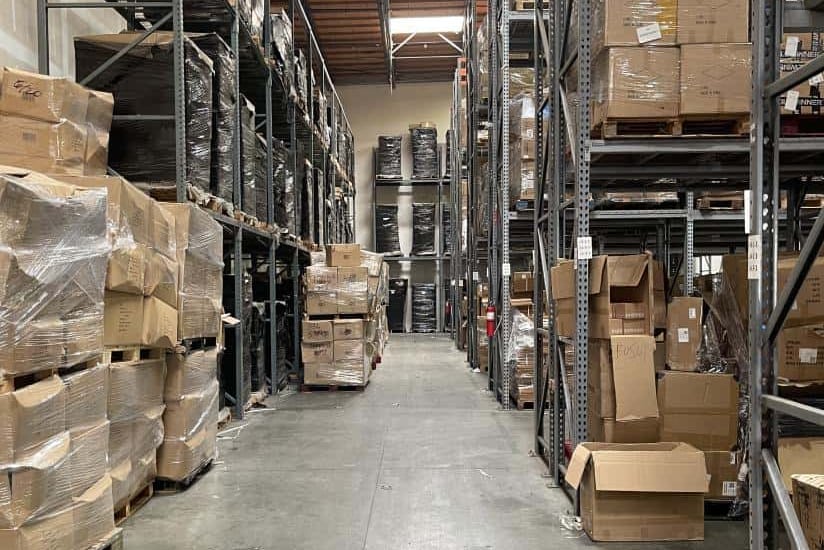
How does the size of shipping container affect your costs?
A 40ft rate is not automatically twice a 20ft rate, and high cube has no universal surcharge. Ask for the same origin, destination, ready date, commodity, Incoterm, and delivery scope across every option.
Include pickup, export documents, terminal handling, ocean freight, surcharges, destination handling, customs brokerage, chassis, and final delivery. Check free time and possible storage or waiting charges. Keep duties and taxes visible separately where they are unchanged across options.
The useful calculation is:
Cost per loaded CBM = comparable total shipping cost ÷ actual planned cargo volume.
A worked cost comparison: 20ft vs 40ft vs high cube
Using the 43.2 m³ carton order above, suppose all three options have feasible load plans and the same service scope. These are illustrative figures, not current freight quotes.
| Option | Illustrative total | Cost per 43.2 m³ loaded |
|---|---|---|
| Two 20ft containers | $4,000 | $92.59/m³ |
| One 40ft standard | $2,800 | $64.81/m³ |
| One 40ft high cube | $3,000 | $69.44/m³ |
Here, the 40ft standard saves $1,200 compared with two 20ft containers. High cube costs $200 more without helping if the same order already fits the standard box.
If taller packing lets you ship an additional 6 m³ in the high cube, that $200 premium becomes $33.33 per extra cubic meter used. Compare it with the complete cost of shipping the overflow separately, including handling and delivery. Do not divide the premium by extra space your load cannot use.
For a smaller shipment, compare a well-used 20ft against a partly empty 40ft on total cost—not the larger container’s attractive cost per nominal cubic meter. NicheSources’ guide to container costs from China to the USA explains the charge categories to review.
Special container types
Standard dry containers do not suit every product. Carrier equipment guidance distinguishes options by cargo shape, temperature, and loading method.
| Equipment | When to consider it | What changes |
|---|---|---|
| Open top | Tall or heavy cargo needing crane loading | Removable covering; oversized dimensions and securing need approval |
| Flat rack or platform | Heavy, wide, or irregular machinery | No enclosed dry-box protection; support points and weight distribution matter |
| Reefer | Temperature-sensitive goods | Machinery and insulation reduce space; preserve airflow and required settings |
| 45ft high cube | High-volume cargo on supported services | More length; confirm equipment, terminal, chassis, and route availability |
A 10ft container is more commonly a specialist storage or local-use option than a routine deep-sea booking. A 53ft container is associated with North American domestic intermodal transport, not the default China ocean shipment.
For oversized goods, provide drawings, packed dimensions, weight, lifting points, and securing requirements before requesting a rate.
Before you book: six checks
- Measure: final carton or pallet dimensions, quantities, total CBM, and gross cargo weight.
- Test the fit: largest package, door clearance, stackability, load arrangement, and securing space.
- Check weight: payload, floor loading, inland route limits, and unloading equipment.
- Compare quotes: suitable container sizes and LCL, with matching services and exclusions.
- Confirm equipment: availability, assigned-unit specifications, ready date, cutoff, and free time.
- Inspect and document: condition, seals, moisture, load securing, and verified gross mass.
A China freight forwarder can coordinate the booking and route checks. For orders arriving from several suppliers, review shared container shipping from China before the first factory dispatches.
Choose the right size of shipping container for your order
Send NicheSources your packed dimensions, quantities, gross weights, supplier locations, destination, and ready date. The team can help compare container sizes, usable capacity, and shipping options for your order.
Frequently asked questions
How big is a shipping container?
Common dry-container exteriors are 20ft × 8ft × 8ft 6in and 40ft × 8ft × 8ft 6in. A 40ft high cube is 9ft 6in tall. Internal dimensions and door openings are smaller.
What size are shipping containers?
For typical China imports, start with 20ft standard, 40ft standard, and 40ft high cube. Special equipment includes reefers, open tops, flat racks, and 45ft high cubes. The right choice depends on packed cargo, not product category alone.
What is the difference between a 20ft and 40ft container?
A 40ft standard doubles the nominal length and offers about twice the internal volume. It does not double payload. A dense order may reach weight limits before using the extra space.
How heavy is a 40-foot container empty?
Hapag-Lloyd’s cited standard example weighs 3,750 kg, or 8,267 lb; its high-cube example weighs 3,900 kg, or 8,598 lb. Use the tare marked on the assigned unit for weight calculations.
How much can a 40ft container actually hold?
The cited standard example holds 67.7 m³ internally. Actual cargo volume is lower once you allow for carton geometry, pallets, gaps, securing, and loading access. Check the load plan and weight independently.
Is a 40ft high cube worth it for bulky cargo?
It can be when the cargo safely uses the extra height and the premium costs less than splitting the shipment. It brings little benefit to single-tier non-stackable pallets or a load already limited by weight.
Are shipping containers waterproof?
A serviceable dry container is designed to be weatherproof, not guaranteed waterproof in every condition. Check walls, roof, doors, and gaskets for damage. Condensation can still harm cargo without an external leak, so keep goods and dunnage dry and use suitable moisture protection.