If you sell online, a cheap product can turn into an expensive mistake. A late parcel or a supplier’s flyer inside the box can cost you a customer. So which site gives you more control?
Temu vs AliExpress both offer low-priced goods, but they work differently. Temu’s terms limit ordinary use to personal, non-commercial purposes, so check the terms for your location before buying for resale. AliExpress lets you buy from sellers, but packaging, shipping, and dropshipping support depend on the seller you choose.
This guide shows you what to check before placing an order: total cost, delivery, returns, and brand control. For larger or custom orders, compare supplier quotes rather than assuming either marketplace is cheapest.
If you’re weighing wholesale options, see our separate comparison guide.
Key Takeaways
- Business Model: Think of Temu as a tightly managed retail store that controls all fulfillment. AliExpress operates more like an open bazaar where you can talk directly to independent sellers.
- Pricing: Recent data shows Temu averages roughly 10% cheaper at retail. Still, AliExpress suppliers often negotiate great bulk discounts if you ask.
- Logistics: Temu packs everything centrally and consistently delivers in 6 to 22 days. Meanwhile, AliExpress delivery times range from 15 to 45 days, though their managed “Choice” items often reach the US in 5 to 10 days.
- Trust: Both platforms keep you safe. AliExpress holds your money in escrow until delivery, while Temu handles refunds quickly and centrally.
- Resale Rights: Temu officially restricts you to “personal and non-commercial use” and ships everything in bright orange bags. On the flip side, AliExpress sellers gladly drop invoices and customize boxes for dropshippers.
- Scale: When you grow past roughly 500 units per item, factory-direct sourcing through platforms like Alibaba usually beats both on landed cost.
What Are Temu and AliExpress, and Why Does the Model Matter?
When you buy products to resell, you choose a living supply chain. You are not just picking a checkout page. A platform’s basic setup decides how much control you keep over your own business.
What Is Temu?
Temu opened in the United States in September 2022. PDD Holdings, the Nasdaq-listed parent company of Pinduoduo, owns it. It operates as a fully managed marketplace. This means the platform controls the entire process behind closed doors.
- Aggressive Price Wars: According to Temu’s seller mechanism, suppliers must bid for placement. They are pushed to drop prices at or below 1688 wholesale levels. They also face penalty fines for quality or fulfillment failures.
- Hidden Factories: Temu dictates the retail prices, stacks items on its own warehouse shelves, and ships everything under its own brand.
- Zero Customization: As a result, you never know who actually made your product. No seller messaging, no negotiation, and no customization. If a listing vanishes, your supply chain breaks instantly because you cannot trace the factory.
What Is AliExpress?
AliExpress launched in 2010. Built as Alibaba Group’s international retail marketplace, it runs as an open space. It hosts independent merchants and active manufacturers.
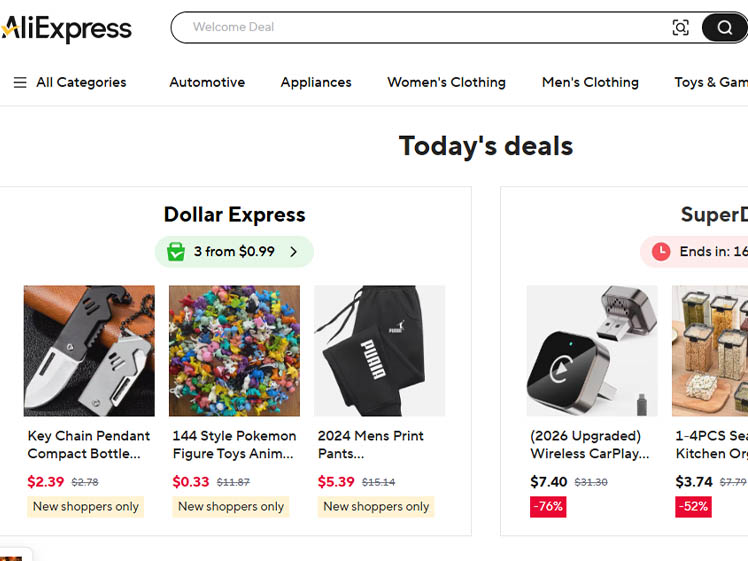
- Massive Scale: You can explore more than 100 million product listings, according to most published estimates. Every seller displays their ratings, order counts, and a direct chat channel.
- Direct Communication: You buy items at fixed listed prices, but you can always message the seller. Many of these sellers are the same factories that list on Alibaba.
- The Scouting Ground: This openness acts as a perfect testing lab. You can buy a product one unit at a time. Then, you can identify a responsive supplier, negotiate white-label boxes, and move to a bulk wholesale deal. None of that is possible inside Temu’s locked system.
A fully managed platform focuses on its own profit margins and a smooth checkout for the final consumer. Meanwhile, an open marketplace lets you build solid supplier relationships that grow over time.
Temu vs AliExpress: Key Differences
When you evaluate AliExpress vs Temu as a reseller, surface-level features can be misleading. To protect your investment, you must weigh practical details like fulfillment times, pricing levers, and custom branding options.
The comparison table below outlines how each platform serves a growing business. These policies reflect official guidelines updated as of September 2026.
| Feature | Temu | AliExpress | Winner for Business Buyers |
| Business Model | Fully managed platform | Open third-party marketplace | AliExpress |
| Product Variety | Curated catalog (millions of SKUs) | Over 100 million listings | AliExpress |
| Pricing Structure | Fixed prices; shipping usually included | Fixed prices, volume tiers, and chat bargaining | AliExpress for volume |
| Standard Delivery (US) | Roughly 6 to 22 days; free on most orders | 15 to 45 days standard; 5 to 10 days on Choice | Temu |
| Express Delivery (US) | Roughly 4 to 11 days (USD 12.90 under USD 129) | Varies by seller and courier | Temu |
| Late Delivery Credit | Auto-issued USD 5 (standard) or USD 13 (express) | Dispute-based refund | Temu |
| Return Window | 90 days; first return per order is free | 15 days after delivery confirmation | Temu (for retail buyers) |
| Seller Messaging | None | Direct chat with every storefront | AliExpress |
| Packaging Control | None (ships in bright orange bags) | Negotiable (plain parcels, no invoices) | AliExpress |
| Automation Tools | None; manual ordering only | DSers, AutoDS, Spocket, and open APIs | AliExpress |
| Resale Allowed? | Restricts use to personal purchases | Yes, permitted by seller agreement | AliExpress |
| Buyer Protection | Temu Purchase Protection | Alipay escrow and formal disputes | Tie |
Which Platform Has Better Quality?
Both sites source inventory from overlapping factory clusters in China. Because of this shared manufacturing base, overall product quality is fairly similar. The real difference is how you manage risk.
On AliExpress, you control your own safety checks. You can inspect seller ratings, study customer photos, and order a single sample to test seams, hinges, or electronics.
On Temu, you cannot vet the vendor. You buy blind from the platform catalog. Practical discussions in communities like r/Aliexpress and r/dropshipping report wide swings in Temu quality across different categories. Gambling on a five-dollar T-shirt for personal use is fine. Staking your store’s brand on an unverified factory is far riskier.
Shipping Times, Returns, and Who Controls the Package
Temu ships orders through a centralized hub. Goods from multiple vendors arrive together in one tracked package. If a parcel misses the delivery date, Temu automatically adds a USD 5 credit to your account. Their 90-day return policy is also generous.
AliExpress ships orders per merchant, primarily using Cainiao logistics. While AliExpress selection standard shipping can drag out to 45 days, Choice items arrive within 5 to 10 business days.
For an online reseller, plain packaging matters far more than shipping speed. Every Temu order arrives in a branded orange bag that cannot be altered. That packaging instantly tells your buyer what the product originally cost. Conversely, AliExpress vendors routinely agree to:
- Leave out pricing slips, promotional flyers, and invoices.
- Ship items in unbranded cardboard boxes or plain mailers.
- Add custom logo stickers or thank-you cards for repeat bulk buyers.
Choosing between these platforms comes down to short-term speed versus long-term flexibility. Temu delivers reliable personal orders in a tidy box, while AliExpress provides the communication, pricing tiers, and neutral packaging needed to run a sustainable store.
Is AliExpress More Secure Than Temu?
Both platforms are legitimate, publicly traded companies that process payments securely. Neither site is inherently a scam. Instead, they guard your money in completely different ways. The better choice depends on what kind of business risk you need to control.
How AliExpress Protects Buyers
AliExpress acts like a cautious middleman. It runs an escrow system powered by Alipay. When you buy a batch of products, the platform holds your cash securely. The factory doesn’t see a dime until you confirm the package arrived in good condition.
- The Dispute Machine: Because the marketplace has operated since 2010, its dispute process is heavily tested. You can easily upload photos and chat records to prove your case.
- Your Responsibility: You only have a strict 15-day window after delivery to open a dispute. Your safety also depends on your own research. You must carefully vet individual sellers by checking their store age and rating history.
Check our AliExpress legitimacy guide for detailed seller vetting.
How Temu Protects Buyers
Temu operates more like a giant retail shield. It centralizes everything under the Temu Purchase Protection Program. Because Temu manages the supply chain, you do not have to dodge fake third-party storefronts.
- Direct Refunds: If an item never arrives, shows up broken, or looks wrong, the platform refunds you directly.
- The Trade-off: Temu only launched in 2022, meaning its track record is much shorter. If a problem happens, you are dealing with a massive platform, not a single supplier who wants your repeat business.
Which Is Safer for Business Orders?
For small test orders, both sites protect your credit card. However, neither protection scheme is truly built for commercial scale. Temu officially limits its service to personal use.
Meanwhile, AliExpress Buyer Protection covers basic retail hiccups, not a 500-unit bulk order with exact factory specs. Once your inventory spending reaches four figures, you will need to graduate to written purchase agreements and professional pre-shipment inspections.
Find the mechanics described in our guide to buying safely on Alibaba.

Can You Dropship from Temu or AliExpress?
Imagine you spot a popular new phone gadget and want to sell it in your own online store today. You need a supplier system that syncs with your website and ships orders directly to your customers. When you compare the two platforms, they serve completely different goals.
Here is how each platform handles third-party business owners:
Temu’s Business Limitations
Temu functions strictly as a consumer retail app. Their official Terms of Use restrict purchases to “personal and non-commercial use”. If you use the service for the benefit of another business without explicit permission, you face account termination and canceled orders.
Temu offers no dropshipping program, API, CSV export, or integration with platforms like Shopify. You must type every single customer order manually. Furthermore, supplier identities remain hidden. You can’t legally reuse their product images, and every item ships in bright orange packaging you cannot remove.
AliExpress for Dropshippers
AliExpress openly supports your growing store. It provides an official Dropshipping Center to help you research trending items. You can easily automate your daily orders using built-in tools like DSers, AutoDS, Spocket, and Zendrop.
Most importantly, the sellers expect dropshipping. They gladly agree to blind shipping, leave out pricing invoices, and negotiate custom packaging once you reach modest minimum order quantities. You can even move these relationships off-platform to private-label production later.
Temu’s low consumer prices might look tempting for a quick profit. However, a setup that combines manual data entry, branded retail packaging, no resale rights, and untraceable suppliers creates a heavy liability as your daily order count scales.
AliExpress remains the clear Preferred Choice for Resale. It supports your business safely, from the first test order to small-batch inventory.
To explore other fulfillment models, check out our dropshipping vs. wholesale comparison.
When Should You Move Beyond Marketplaces?
Both Temu and AliExpress work well for testing new product ideas. However, once you buy real volume, the math changes completely.
The table below models a typical example for a generic 500 ml stainless steel insulated bottle at three order sizes. These numbers use current pricing and freight rates as of September 2026.
Remember to check live listings before you commit to a purchase:
| Order Size | Temu (Per Unit, Landed) | AliExpress (Per Unit, Landed) | Factory-Direct via Alibaba/1688 + Agent |
| 1 unit (Product test) | ~USD 8, all-in | ~USD 9–10, all-in | Not available |
| 50 units (Small batch) | ~USD 8 (no volume discount) | ~USD 7 (listed tier or negotiated) | ~USD 5–6 (MOQs rarely justify setup) |
| 500 units (First inventory) | Not a realistic channel | ~USD 8–9 (retail tiers top out) | ~USD 4–5 (including freight, duty, agent fee) |
Which Is Better, Temu or AliExpress? If You Are…
Choosing the right platform depends on your role in the transaction. Your order volume, your business model, and your fulfillment needs should decide your path.
Here is a clear breakdown based on where your store stands today:
- A consumer buying for yourself: Choose Temu. Lower average retail prices, predictable consolidated delivery, and an easy 90-day return window are built specifically for individual shoppers.
- Testing a single product idea (1–10 units): Use either platform. AliExpress is slightly better if you want to chat with the merchant, ask technical questions, and inspect sample materials. Treat the higher per-unit markup as cheap tuition for market research.
- A dropshipper or reseller at any scale: Choose AliExpress. Direct seller messaging, automated store integrations, blind shipping, and lawful commercial resale rights make it the only realistic option between the two.
- Ordering 50 to 500 units: Pick AliExpress. You can negotiate custom quantity discounts and plain box packaging directly through the chat. You can also compare DHgate for competitive pricing in this exact small-batch range.
- Ordering 500+ units per SKU or building a private-label brand: Choose neither. Move to factory-direct manufacturing through Alibaba or 1688. At this scale, partnering with a dedicated sourcing agent to oversee factory audits, quality control, and ocean freight will best protect your margins.
When ordering sample batches on AliExpress, ask the seller to send a photo of the product on a weight scale before dispatching. This quick check verifies material thickness and build quality before goods leave China.
FAQ
Is AliExpress more secure than Temu?
Neither app is strictly safer than the other, as both process payments securely. AliExpress holds your money safely in escrow until you confirm the package arrived. Always check a seller’s rating history. Meanwhile, Temu offers fast refunds through its Purchase Protection Program. This stops individual seller scams, but you miss out on building strong, long-term relationships with reliable overseas factory partners.
Is Temu owned by AliExpress?
No, they are completely separate global companies. PDD Holdings, the Nasdaq-listed parent company of Pinduoduo, owns Temu. Alibaba Group, by contrast, owns and operates AliExpress. They are actually fierce competitors in the e-commerce market, not friendly partners. Because they operate differently, you should always review each platform’s terms of service before choosing one to supply your new online store.
Is Temu better than AliExpress?
For everyday personal shopping, Temu often wins. Their prices run about 10% lower. They also provide faster shipping and simple 90-day returns. However, for running a business, AliExpress is much better. Temu bans commercial reselling and blocks seller communication. Use Temu to buy cheap gifts, but never use it to supply your online store.
Is AliExpress better than Temu?
Yes, it is definitely better for business buyers. AliExpress gives you direct tools to succeed. You can message sellers, negotiate lower bulk prices, and connect software like DSers straight to your shop. Always ask your AliExpress supplier to use plain boxes. Temu blocks all these business features. If you want to build your own brand safely, AliExpress is the clear winner.
Which is cheaper, Temu or AliExpress?
For a single item, Temu usually costs about 10% less. However, when you buy 50 items, AliExpress becomes much cheaper. You can chat with the vendor and ask for a bulk discount. Always calculate your total shipping fees before deciding. Once you order over 500 units, skip both apps entirely. Buying directly from a factory saves you the most money.
Does Temu have better quality than AliExpress?
Neither app actually makes its own products. Both platforms source their goods from the same factory networks in China. Therefore, product quality changes from item to item. AliExpress lets you carefully check seller ratings to avoid bad items. Always order one test sample first. Brands on Temu remains hidden, so you can never properly verify their true work quality.
Can you dropship from Temu?
No, you cannot practically dropship using Temu. Their strict rules ban commercial reselling entirely. You will face account bans if you try. Also, every single package arrives in a bright orange, branded bag. Stick with AliExpress for automated store fulfillment. AliExpress gladly supports blind shipping, leaves out all pricing invoices, and links directly to your store using popular tools like DSers or AutoDS.
Temu vs AliExpress vs Alibaba: which is best for bulk buying?
Alibaba wins easily for bulk buying. Temu and AliExpress are retail shops for smaller purchases. Alibaba is a massive wholesale platform built for huge orders, custom logos, and tough negotiations. Switch to Alibaba when you need over 500 units. Getting goods straight from the factory significantly lowers your true landed cost and sharply boosts your overall store profit margin.
Is DHgate or Taobao a better alternative?
DHgate works wonderfully for small batches of twenty to two hundred units. It clearly shows wholesale pricing tiers. Always ask your AliExpress seller if they can match DHgate’s price. Taobao offers amazing deals, but it strictly serves local Chinese shoppers. Because Taobao operates entirely in Mandarin and avoids direct exports, you must hire a local agent to help you buy goods safely.
Source Beyond the Marketplaces with NicheSources
Temu and AliExpress answer basic early sourcing questions well. They help you test a single product idea or fulfill your first small batch of 50 units.
However, once you outgrow retail apps, dealing with overseas factories best protects your profit. Managing that heavy workload on your own can quickly drain your time.
NicheSources works on the ground in China to verify legitimate factories, negotiate bulk pricing, inspect production samples, and coordinate door-to-door freight. We charge a simple 5% to 10% commission with zero upfront fees.
Ready to scale your store safely? Send us your product link, target quantity, destination country, and delivery deadline. We will return clear quotes you can compare against retail apps. Request a free sourcing quote.