The short answer: yes, Alibaba is legitimate and generally safe to buy from. But Alibaba is a marketplace, not the supplier fulfilling your order. In our 10+ years sourcing products in China, we’ve found that the bigger risk is usually choosing the wrong supplier or structuring the order poorly, especially when payment or communication moves outside Alibaba’s protections.
The product costs $4 per unit, but the supplier wants a $3,000 deposit and asks you to wire it to a personal bank account to “avoid platform fees.” That’s exactly the kind of situation that makes buyers wonder whether Alibaba is actually safe.
Quick Facts: Is Alibaba Safe and Legit?
| Question | Quick answer |
| Is Alibaba legit? | Yes. Alibaba Group is an established, publicly traded company. |
| Is Alibaba safe to buy from? | Yes, provided you verify the supplier and use Alibaba’s buyer protections. |
| What’s the biggest risk? | The individual supplier you choose, rather than Alibaba itself. |
| How should you pay? | Keep payments within Alibaba’s official checkout and Trade Assurance system. |
| What protects you in a dispute? | Your Trade Assurance order terms and the evidence you keep on-platform. |
We’ll show you how we evaluate suppliers, structure orders, and reduce these risks before sending money.
What Is Alibaba?
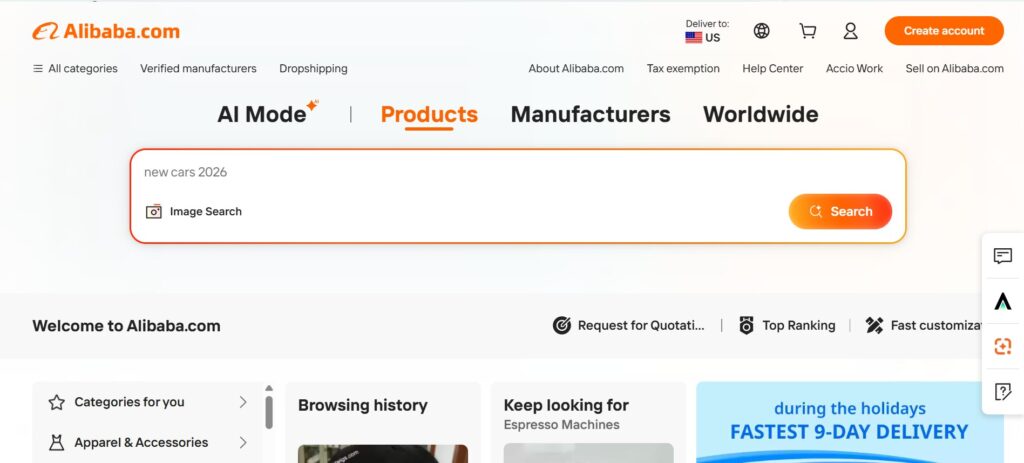
Alibaba is a group of companies that primarily started as an eCommerce platform. It is based in China and has spread to many companies including AliExpress, 1688, and Taobao to name a few.
Currently, Alibaba is serving as a B2B eCommerce platform. It is where you can buy and sell products preferably in larger quantities where MOQs are applied.
Starting in 1999, it has grown to dominate the major online selling world. But people still ask questions like is Alibaba legit or is Alibaba safe?
Let’s answer these questions once and for all.
Is Alibaba Legit?
Yes. Alibaba is a legitimate global ecommerce company, founded in 1999 and publicly traded in both New York (NYSE: BABA) and Hong Kong (HKEX: 9988). The company also operates at a scale that makes the legitimacy of the platform itself fairly straightforward to establish.
The more useful question for buyers is whether every seller on Alibaba is legitimate. The answer is no. Alibaba.com connects independent manufacturers, trading companies, and other suppliers with buyers, so using a legitimate marketplace doesn’t automatically make every transaction low-risk.
Customer reviews reflect that distinction. As of September 2026, Alibaba.com has about 30,000 Trustpilot reviews and a 3.6/5 rating. Positive reviews frequently mention smooth transactions and responsive suppliers, while complaints include shipping delays, products not matching expectations, and difficulties resolving disputes.
That’s why, from a sourcing perspective, we treat Alibaba as a supplier discovery platform. We still verify the company behind a listing before placing a meaningful order, the same approach we recommend to any buyer sourcing from China.
Alibaba Legal Security
How would you know if the products you have ordered from Alibaba are legal to be received? Alibaba has also addressed this concern.
Alibaba does not allow the prohibited items via its platform which can create trouble for the sellers and the buyers.
Alibaba has a list of prohibited items that it has shared on its website.
These items include hazardous material, drugs, prohibited firearms, etc.
Had Alibaba been not legit, it would not have been following international rules of trading legal items.
So, it is also safe and legal to buy from Alibaba regarding the nature of products.
Is Alibaba Safe to Buy From?
Yes, Alibaba can be safe to buy from, but there’s an important distinction we make when sourcing: Alibaba’s platform security and supplier reliability are two different things.
Alibaba provides the infrastructure for finding suppliers, making payments, and protecting eligible orders through Trade Assurance. The actual products, production, and fulfillment, however, are handled by independent suppliers.
In practice, you’ll generally encounter three types of sellers:
- Manufacturers: Factories producing goods themselves, often with more control over customization, production, and pricing.
- Trading companies: Businesses sourcing from factories and reselling to buyers. They aren’t inherently risky, but you’re adding a middleman.
- Unreliable or fraudulent sellers: Suppliers that misrepresent their capabilities, substitute materials, use misleading listings, or try to move payments outside Alibaba.
That’s why we never judge an order simply by whether the supplier is “on Alibaba.” We look at the company behind the listing, its production capabilities, samples, documentation, payment terms, and quality controls before committing to a bulk order.
Alibaba gives you tools to reduce transaction risk. The next step is understanding how to use its most important one Trade Assurance properly.
How Does Alibaba Trade Assurance Work?
Alibaba Trade Assurance is an order protection system designed to help buyers when a supplier fails to meet the agreed order terms. However, the protection is only as useful as the agreement and evidence behind your order.
From a sourcing perspective, this is where buyers often make mistakes. Simply seeing the Trade Assurance badge does not mean every problem with an order will automatically qualify for a full refund.
1. Alibaba Enforces What’s Written in Your Order
Your Trade Assurance order should contain measurable product requirements.
For example, “high-quality cotton T-shirts” leaves plenty of room for disagreement. Specifications such as 100% cotton, 220 GSM fabric, Pantone color code, measurement tolerances, packaging requirements, quantity, and an agreed shipping date give both sides something objective to reference during a dispute.
We recommend getting these details agreed upon before making payment rather than relying on informal promises from a salesperson.
2. Keep Important Communication on Alibaba
Keep specifications, changes, approvals, and other important agreements documented through Alibaba’s platform.
If you discuss an order through WhatsApp, WeChat, a video call, or email, summarize the agreement afterward in Alibaba’s Message Center and ask the supplier to confirm it. This creates a much clearer evidence trail if you later need Alibaba to review the transaction.
3. Trade Assurance Has a Dispute Window
Trade Assurance protection does not remain open indefinitely. Your order has a specific period during which you can request a refund or raise an issue.
This matters with long production schedules and international shipping. Don’t assume you can wait until weeks after receiving or inspecting an order to start a dispute. Check the applicable protection deadline on the individual order and monitor it if production or shipping is delayed.
4. Watch for Automatic Order Confirmation
Alibaba orders can eventually be confirmed as received automatically based on the order’s delivery timeline. If your shipment is delayed particularly with longer international freight you don’t want the relevant dispute deadline to pass while the goods are still in transit.
We recommend monitoring the order status rather than relying solely on the supplier’s shipping updates.
5. Trade Assurance Doesn’t Guarantee a Full Refund
A successful dispute does not necessarily mean getting every dollar back. The resolution depends on the order terms, evidence, and circumstances of the dispute, and outcomes can include partial refunds.
This is why we view Trade Assurance as one layer of risk control rather than a replacement for supplier verification, samples, clear specifications, and pre-shipment quality inspection.
What Are the Most Common Alibaba Scams?
Most Alibaba scams follow recognizable patterns. In our experience, the biggest warning sign is usually a supplier trying to move some part of the transaction outside the process you originally agreed to whether that means changing the payment account, specifications, or product after you’ve committed.
Here are the patterns we would watch for:
| Scam or Risk | What It Looks Like | How to Protect Yourself |
| Off-platform payment | The supplier offers a discount if you wire money directly, use crypto, or pay a personal account. | Keep the transaction within Alibaba and eligible for Trade Assurance. |
| Unrealistically low quotes | One supplier quotes substantially below comparable factories for the same specifications. | Compare several like-for-like quotes and confirm materials, specifications, MOQ, and what the price actually includes. |
| Fake factory claims | A trading company or fraudulent seller presents itself as the manufacturer or uses factory photos it doesn’t own. | Verify the business license and request a live video walkthrough showing the facility and production line. |
| Great sample, poor bulk order | The approved sample meets your requirements, but mass production uses different materials or workmanship. | Put measurable specifications into the order and arrange a pre-shipment quality inspection before paying the balance. |
| Counterfeit branded products | A supplier claims to offer “original” branded products at unusually low wholesale prices. | Ask for authorization and supporting documentation. Avoid products whose authenticity or selling rights cannot be verified. |
| Fake payment or Alibaba page | You’re sent a payment link resembling Alibaba’s website but hosted elsewhere. | Access your order and payment page directly through Alibaba rather than supplier-sent links. |
| Misleading certificates | A supplier sends certificates that don’t correspond to the company, product, or required standard. | Check the certificate number, company name, product scope, issuing body, and applicable standard rather than accepting the PDF at face value. |
These checks reduce risk, but they don’t eliminate it. A legitimate factory can still produce a bad batch, miss a lead time, or misunderstand specifications. That’s why we combine supplier verification with samples, written specifications, Trade Assurance, and quality inspection rather than relying on any single trust signal.
How Do You Verify an Alibaba Supplier?
Before placing a meaningful order, we recommend verifying the company behind the Alibaba profile, rather than relying on badges or reviews alone. No single check proves that a supplier is reliable, so we use several signals together.
1. Check Their Alibaba Supplier Status
Start with the supplier’s profile, but understand what each badge actually tells you.
A Gold Supplier membership is paid and shouldn’t be treated as proof that a factory has been independently audited. A Verified Supplier has undergone additional third-party verification, making it a more useful starting signal but still not a substitute for your own due diligence.
2. Review Their Alibaba History
Look at how long the supplier has operated on Alibaba, their transaction history, customer feedback, and the markets and products they specialize in.
We also check whether their catalog makes sense. A supposed factory selling dozens of completely unrelated product categories deserves additional scrutiny.
3. Verify the Chinese Business License
Ask the supplier for their Chinese business license and locate the 18-digit Unified Social Credit Code (USCC).
You can use this information to check the company through China’s National Enterprise Credit Information Publicity System (NECIPS). Confirm that the legal company name, registration information, and stated business activities are consistent with what the supplier has told you.
4. Match the Company and Bank Details
Before transferring money, compare the legal entity on the business license with the company shown on your invoice and payment information.
If the beneficiary suddenly changes or you’re asked to send a business payment to an unrelated personal account, stop and verify why before proceeding.
5. Order and Evaluate Samples
Never treat listing photos as evidence of production quality. Order a sample and evaluate the materials, dimensions, workmanship, packaging, labeling, and any other specifications that matter to your product.
For customized products, an approved sample also gives you a clearer benchmark for bulk production.
6. Request a Live Factory Video Call
Ask the supplier to show you the facility live rather than sending another polished factory video.
During the call, ask to see the production line, machinery, warehouse, QC area, and your product category. We also like asking technical questions about MOQ, materials, production capacity, and lead time because the answers help reveal how closely the salesperson actually understands production.
7. Inspect the Bulk Order Before Shipment
A good sample doesn’t guarantee that 500 or 5,000 units will match it. For a first bulk order or any order where defects would create a meaningful loss, arrange a pre-shipment quality inspection before releasing the final payment.
The inspection should compare randomly selected production units against the specifications and approved sample. This final step catches the problem while the goods are still at the factory, when correcting it is usually much easier than after the shipment reaches your country.
Our rule is simple: Alibaba badges help us decide who deserves further investigation. We don’t use them as the final reason to trust a supplier.
What Is the Safest Way to Pay on Alibaba?
The safest approach is to pay through Alibaba’s official checkout using a method covered by Trade Assurance. For smaller orders and samples, a credit card can add another layer of recourse through your card issuer if something goes wrong.
Here’s how we generally assess the options:
| Payment Method | Risk Level | What to Know |
| Credit card via Trade Assurance | Low | Combines Alibaba’s dispute process with potential card issuer chargeback rights. Useful for samples and smaller orders. |
| PayPal via Alibaba checkout | Low | Keeps the transaction on-platform and may provide additional buyer protections where available. Supplier acceptance varies. |
| Bank transfer (T/T) via Trade Assurance | Low–Medium | Common for larger B2B orders. Trade Assurance can apply, but you generally don’t have the same chargeback mechanism as a credit card. |
| Alibaba financing/deferred payment options | Low–Medium | Available only to eligible buyers and transactions. Keep the entire order and payment within Alibaba. |
| Direct transfer outside Alibaba | High | You may lose Trade Assurance protection and have much less recourse if the supplier fails to deliver. |
| Personal account, crypto, Western Union, or gift cards | Very High | Major warning sign for a commercial order. We would not use these methods for an Alibaba supplier transaction. |
Two rules matter more than the specific payment method: keep the payment within Alibaba and verify who is receiving the money. Before approving a substantial payment, we compare the beneficiary information with the supplier’s legal company details and investigate unexpected changes.
For bulk orders, payment safety also needs to work alongside your production terms. A common structure is to pay a deposit to begin production and release the balance only after the agreed production and quality checks are completed. Whatever terms you negotiate, make sure they are documented in the Alibaba order rather than relying on a separate conversation with the supplier.
Can You Buy from Alibaba as an Individual or in the USA?
Yes. You can buy from Alibaba as an individual, including from the USA. You don’t need a registered company or business license simply to create an account and place an order.
Alibaba is primarily a B2B marketplace, though, so buying as an individual can feel different from shopping on a retail site. Suppliers may have minimum order quantities (MOQs), wholesale pricing tiers, longer lead times, and international freight costs. Some suppliers will accept samples or small trial orders, so we recommend being transparent about your order size rather than pretending to represent a larger company.
What Should US Buyers Know in 2026?
There has been a major change for low-value imports. The US ended de minimis duty-free treatment for goods from China and Hong Kong on May 2, 2025, and expanded the suspension to qualifying shipments from all countries on August 29, 2025.
Previously, many shipments valued at $800 or less could enter under the de minimis exemption without the usual duties. US buyers can no longer assume that a small Alibaba order will enter duty-free; applicable duties, taxes, fees, and customs requirements now need to be factored into the landed cost.
For small importers, we recommend getting the shipping terms clear before ordering. Ask what the quote includes and whether the supplier can provide a DDP (Delivered Duty Paid) option if you prefer a more predictable landed cost.
What Should You Do If You Get Scammed on Alibaba?
If an Alibaba order goes wrong, act quickly rather than waiting indefinitely for the supplier to resolve it. Trade Assurance and payment providers have dispute deadlines, so delaying can reduce your options.
- Open a Trade Assurance dispute. Go to the affected order and start the refund/dispute process. Submit clear evidence such as product photos, videos, inspection reports, written specifications, and relevant Alibaba Message Center conversations.
- Give the supplier a limited opportunity to resolve it. Many disputes begin with buyer-supplier negotiation. Keep any proposed refund, replacement, or other resolution documented within Alibaba rather than moving the discussion elsewhere.
- Escalate the dispute to Alibaba. If you cannot reach an agreement, escalate the case for Alibaba to review. This is where measurable specifications and a clear on-platform evidence trail become especially valuable.
- Contact your payment provider. If you paid by credit card or another method offering dispute rights, check its chargeback deadline as well. Don’t assume that opening an Alibaba dispute automatically preserves your rights with the payment provider.
- Report the supplier. Submit a factual report to Alibaba with the supporting evidence. If you paid outside Alibaba, contact your bank or payment provider immediately to see whether the transfer can be recalled or disputed; Alibaba’s Trade Assurance generally won’t protect an off-platform payment.
From our perspective, the key is deadline discipline and documentation. Don’t let repeated promises such as “we’ll fix it next week” push you beyond a dispute window. Keep screenshots, inspection results, order specifications, payment records, and supplier communications from the moment a problem appears.
A Safer Way to Source from China
Alibaba works well for finding suppliers, but the platform can only take you so far. It cannot visit a factory, compare production against your approved sample, or physically inspect an order before it leaves China.
If you’re testing a product or placing a small order, handling the verification process yourself can make sense. As order values increase, however, the cost of choosing the wrong factory, receiving inconsistent production, or discovering defects after shipment increases with it.
This is where working with a China sourcing agent can reduce the workload and risk. A sourcing partner can verify suppliers, communicate directly with factories, negotiate MOQ and production terms, arrange samples, monitor production, conduct quality inspections, and coordinate shipping.
From our experience in Yiwu, supplier verification is one of the biggest concerns buyers bring to us. With 10+ years of China sourcing experience, our team at NicheSources can verify factories and conduct on-the-ground checks before you commit to production.
If you’d rather have a local team handle those steps, you can request a free sourcing quote and tell us what you’re looking to source.
FAQs on Alibaba Legitimacy
We have answered the frequently asked questions regarding the safety and legitimacy of Alibaba. So, read the answers to these FAQs below to resolve your confusion.
Is Alibaba Reliable in Terms of Suppliers?
Not all suppliers on Alibaba are reliable. Alibaba does not have its sellers. You need to understand that it is just a platform that brings buyers and sellers on its platform and lets them interact with each other.
So, you need to be cautious about the reliability of the Alibaba suppliers yourself. You cannot just log in to your Alibaba account and start buying thinking all of them are reliable suppliers.
You can also be a seller on Alibaba. One just has to fulfill certain requirements to be a seller on Alibaba.
For the reliability of the suppliers on Alibaba, you have to go through certain checks which we have discussed earlier in this article.
Just don’t forget to choose the type of suppliers as per your requirements while you start buying from Alibaba.
Is Alibaba Safe to Order from My Bank Account?
Yes. It must have been clear to you by now that you can trust Alibaba with your financial information like your credit card numbers and bank account details.
Alibaba is not a company that rose overnight. It is certainly not going to lose its customer base by not protecting the critical information of its customers.
The buying trend on Alibaba shows us that they aim to be the top eCommerce company in the world. So, Alibaba is safe to order from your bank account.
What Is the Difference Between Gold and Verified Suppliers?
A Gold Supplier membership shouldn’t be interpreted as an independent guarantee of product quality or reliability. Alibaba’s Verified Supplier program involves additional third-party verification of supplier information.
Either way, we would still independently check the business behind the account before placing a significant order.
How Can You Check a Chinese Business License?
Start by requesting a clear copy of the supplier’s Chinese business license. Look for its legal company name and 18-digit Unified Social Credit Code (USCC), which can be checked against China’s National Enterprise Credit Information Publicity System (NECIPS).
Also compare the registered company information against your invoice and payment beneficiary.
Why Do Alibaba Suppliers Have Different MOQs?
MOQ depends on how the product is manufactured and customized. A factory may need to purchase a minimum quantity of raw materials, configure machinery, print packaging, or spread setup costs across enough units to make production economical.
That also means MOQ can sometimes be negotiated particularly if you’re willing to simplify customization or accept existing materials and packaging.
Should You Choose a Manufacturer or Trading Company on Alibaba?
It depends on what you’re sourcing. A manufacturer can provide more direct control over production and customization, while a capable trading company may offer broader product selection and easier coordination across multiple factories.
We focus more on whether the supplier can meet the required specifications, lead time, MOQ, and quality standards consistently than on automatically rejecting every intermediary.