The Big News: Tariffs Are Easing (October 2025 Update)
For years, US-China tariffs have been a nightmare. If you’re an importer or e-commerce seller, you’ve probably felt confused, frustrated, and unable to plan.
You’ve been asking:
- “How much will my goods actually cost?”
- “Are all these different tariffs stacked together?”
- “How can I possibly set my prices?”
We get it. As a sourcing agent with warehouses in both the US and China, we’ve helped our clients navigate this mess every single day.
The good news? As of October 30, 2025, things just got much simpler. Here’s what you need to know.
So, What Exactly Just Changed?
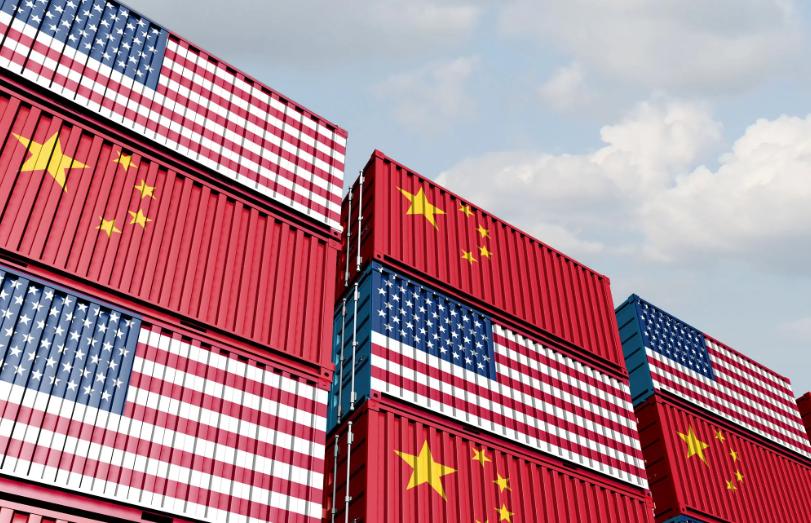
The new US-China agreement does three main things:
- The 10% “Fentanyl-related” Tariff is GONE. This was a blanket tax on all Chinese goods. It’s now canceled.
- The 24% “Equivalent” Tariff is still ON PAUSE. This other big, confusing tariff is now suspended for another year (until October 2026).
- Logistics are getting easier. Both sides are suspending some export controls and investigations. This means less risk of your shipment getting stuck.
Bottom Line: The two biggest, most confusing “blanket tariffs” are now off the table. Your costs are finally predictable again.
Why Was This So Confusing Before? (A Quick Explainer)
Your confusion was valid. Before, you were getting hit by “tariff stacking.”
Imagine paying:
- The Normal Base Tariff
- PLUS a Section 301 Tariff (if your product was on “the list”)
- PLUS a Section 232 Tariff (if it was steel/aluminum)
- PLUS the 10% Fentanyl-related Tariff (on everything)
- PLUS the 24% Equivalent Tariff (on everything)
It was a mess. Now, you only need to worry about the first three.
So, What is the Actual Tariff Amount Now?
This is the most important question. After the October 30 changes, the answer is:
There is NO single “total tariff” anymore.
The tariff you pay now depends completely on your specific product.
Here are the 3 most common scenarios for importers:
Scenario 1: Your product is NOT on the 301 or 232 lists (e.g., many textiles, toys, general consumer goods).
- Your Tariff = Base Tariff (MFN Rate)
- (This is the “normal” tariff, usually low, e.g., 0-5%)
Scenario 2: Your product IS on a Section 301 list (e.g., electronics, machinery, handbags, many industrial parts).
- Your Tariff = Base Tariff + Section 301 Tariff
- (e.g., 0% Base + 25% = 25% Total)
Scenario 3: Your product IS on the Section 232 list (e.g., steel or aluminum products).
- Your Tariff = Base Tariff + Section 232 Tariff
- (e.g., 1% Base + 50% = 51% Total)
(Note: In rare cases, a product can be on both 301 and 232 lists).
This is why our job as your sourcing agent is so important. We check the HS code for every product you want to source to tell you the exact rate.
What This Actually Means for Your Business

This is great news for you. Here’s why:
- You can actually calculate your costs. No more guessing. You just need to ask one question: “Is my product on the 301 or 232 list?” That’s it. Your profit margins are clear again.
- Your shipments will move more smoothly. With fewer controls and investigations, there’s less risk of your container getting stuck at the port. This means better cash flow for you.
- Sourcing from China makes sense again. If you were thinking of moving your supply chain because of the extra tariffs, this news makes China’s speed, cost, and quality even more attractive.
Beyond Tariffs: Why Your Sourcing Strategy Needs to Be Smarter
The tariff fog is lifting. This is great, but it also means your competitors are seeing the same cost reductions.
Starting now, the way to win is not just by surviving tariffs, but by optimizing your entire supply chain.
As a professional sourcing agent, we must remind you that tariffs are just one part of your Total Landed Cost. As you get ready to place new orders, beware of these hidden risks:
- Supplier Reliability: A “good price” is useless if the supplier is unreliable, cuts corners on quality, or is a flat-out scammer. How do you know who to trust?
- Product & Regulatory Compliance: This is even more critical than tariffs. Is your product CPSC compliant? Does your kitchenware need FDA testing? Does it meet Prop 65 standards for California? A compliance failure at the border is a 100% loss.
- Quality Control (QC): You can’t be in China to inspect your goods. If 20% of your shipment arrives damaged or defective, it will wipe out all the savings you made on tariffs.
This is why a professional sourcing agent is crucial. We aren’t just “tariff experts.” We are your boots on the ground in China—your QC team, your compliance managers, and your factory auditors, managing the entire process from sourcing to your US warehouse.
How We Help You Save Money (This is Our Job)

Even though things are simpler, winning in this new environment requires a smart partner. This is how we help:
- We Audit Your Suppliers & Manage QC. We are your eyes and ears. We conduct factory audits before you pay a deposit and perform on-site QC inspections before the final payment is made. This ensures you get what you paid for.
- We Manage All Product Compliance. Don’t guess about compliance. We work with accredited labs to manage all necessary testing (FDA, CPSC, Prop 65, etc.), ensuring your products are fully compliant before they ship.
- We Stabilize Your Logistics with Our US & China Warehouses. With the end of the $800 de minimis rule, managing freight is key.
- In China: We can consolidate goods from multiple suppliers into one shipment at our China warehouse, saving you huge freight costs.
- In the US: We manage the formal customs entry. Your goods arrive at our US warehouse, where we can inspect them again, store them, or distribute them directly to your customers.
Your Next Step
This is the best news importers have had in years. It’s time to re-check your costs and plan your 2026 sourcing.
Don’t guess on your tariffs.
Contact NicheSources today. We’ll give you a free tariff and supply chain “check-up.” Let’s make sure you’re not leaving money on the table.
Appendix: The Full 2018-2025 Tariff Timeline

[2018: The Trade War Begins]

2/1/2018: US first imposes 10% tariffs on Chinese goods.

3/8/2018 (Section 232 Tariffs): 25% tariff on steel and 10% on aluminum.

7/6/2018 (Section 301 List 1): 25% tariff on $34 billion of Chinese goods.

8/23/2018 (Section 301 List 2): 25% tariff on $16 billion of goods.

9/24/2018 (Section 301 List 3): 10% tariff on $200 billion of goods.

[2019: Escalation]

5/10/2019: Tariffs on List 3 (the $200B list) increase from 10% to 25%.

9/1/2019 (Section 301 List 4A): Tariffs on $300B of goods increase from 10% to 15%.

[2020: Phase One Deal]

2/14/2020: Tariffs on $120B of goods (part of List 4A) are reduced from 15% to 7.5%.

[2024: New 301 Actions]

5/14/2024: Biden administration applies new 25%-100% tariffs on ~$18B of specific goods (e.g., EVs, semiconductors).

[2025: Turmoil and Resolution]

2/1/2025 ("Fentanyl-related" Tariff): US imposes a 10% tariff on all Chinese goods.

3/4/2025: The 10% "Fentanyl-related" tariff is increased to 20%.

3/12/2025 (Section 232 Escalation): 25% tariff on steel and 25% on aluminum from all countries (including China).

4/2 - 4/9/2025 ("Equivalent" Tariffs): US adds "Equivalent" tariffs, stacking rates from 24% up to 145%.

5/10/2025 (Geneva Talks): Agreement reached. Most added tariffs canceled; 24% tariff suspended for 90 days.

5/14/2025: US amends executive order, formally suspending the 24% tariff.

8/18/2025 (Section 232 Further Escalation): Section 232 tariffs expand again, adding 407 steel/aluminum products, all subject to 50% tariffs.

10/30/2025 (Kuala Lumpur Consensus - LATEST!):

US cancels the "Fentanyl-related" tariff.

The 24% "Equivalent" tariff suspension is extended for one year.

you have not clearly stated the current total tariff amount. 🙁