Wholesale clothing manufacturers in China include factories and wholesale marketplaces that produce or supply apparel in bulk for overseas brands, retailers, and importers. Depending on the supplier, you may find anything from 50-piece private-label production to 500–1,000+ piece OEM programs, plus ready-stock options with little or no MOQ.
A factory might quote you $4.20 per hoodie, then require 500 pieces per color. If your first launch only needs 100, that MOQ matters more than the unit price. This is one of the most common gaps we see between how Chinese clothing factories price production and how smaller brands actually buy.
Quick Facts
- 15 suppliers independently re-verified in September 2026
- Lowest custom MOQ: 50 pieces at several factories on this list
- Marketplace options: no per-item MOQ for selected suppliers
- Typical first-order timeline: around 2–3 months door to door for custom production
How We Verified These Suppliers
We publish this guide as NicheSources, a China sourcing team based in Yiwu. For this 2026 update, we re-checked each supplier against company websites, B2B storefronts, review platforms, and available public records in September 2026.
Where a claim comes from the supplier itself, we say so. We also distinguish factories from wholesale marketplaces and flag issues such as conditional MOQs, outdated activity, unverified certifications, or inconsistent public information rather than presenting every supplier as equally suitable.
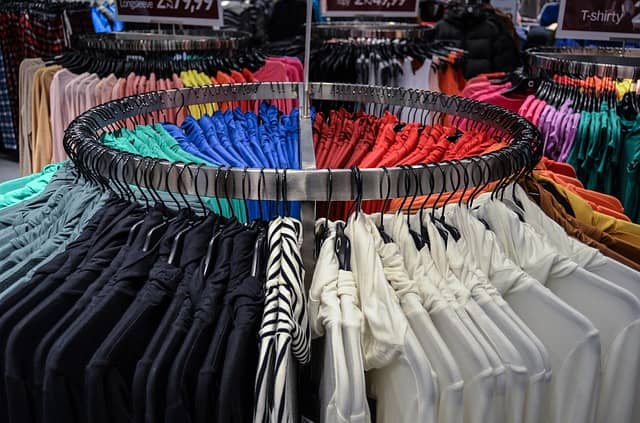
Quick Comparison: 15 Wholesale Clothing Suppliers in China
If you’re comparing suppliers, start with MOQ, specialization, and supplier type. A low-MOQ factory may suit a first private-label run, while a marketplace is usually better for testing ready-stock products without committing to custom production.
| Supplier | Type | Location | Specialty | MOQ From | Ideal For |
| D&J Fashion | Factory group | Guangzhou/HK + Jiangxi | Women’s fast fashion | ~200 pcs | Brands wanting a full supply-chain partner |
| Hongyu Apparel | Factory | Dongguan | Hoodies, tees, streetwear | 50 pcs | Startups needing low-MOQ streetwear |
| Yotex Apparel | Office + factory | Shanghai + Xiamen | Activewear, seamless | 500 pcs | Established activewear brands |
| Apparel CN | Factory | Huzhou, Zhejiang | One-stop private label | 50 pcs* | Low-MOQ private-label brands |
| Hucai Sportswear | Factory | Dongguan | Yoga and gym wear | 100 pcs | Activewear startups |
| Tosin Fashion | Factory | Dongguan | Women’s wear, Muslim attire | 50 pcs | Small women’s-fashion brands |
| Hujoin | Factory | Suzhou | Full-service custom apparel | 50–100 pcs | Indie designers |
| Vepeen Apparel | Factory | Guangzhou | Women’s dresses and separates | 50–100 pcs | Emerging women’s brands |
| MZ Garment Co | Factory-exporter | Xiamen | Swimwear, kids’ wear | 800 pcs | Bulk swimwear and kids’ programs |
| Maya Jeans | Factory + trading | Guangzhou (Xintang) | Denim | 50–100 pcs | Denim startups |
| SBC Clothing | Factory (HK registered) | Zhongshan/Foshan | Denim, casualwear, activewear | Mid-volume | Audited denim programs |
| Sichuan Ecogarments | Factory | Chengdu | Eco fabrics, baby/yoga wear | 100 pcs | Eco-conscious brands |
| Lanxin Apparel | Factory | Ningbo | Knit + woven OEM | 2 pcs stock / 500 custom | Trial-to-OEM scaling |
| Yaaku | Marketplace | Guangzhou | Women’s fast fashion | None | Price-driven boutiques and resellers |
| Nihao Styles | Marketplace | Yiwu | Trend-driven women’s wear | None | No-MOQ trend testing |
Which Supplier Fits Your Order?
For a quick shortlist:
- Testing styles with minimal commitment: Yaaku, Nihao Styles, or Lanxin’s in-stock styles.
- First private-label runs at 50–100 pieces: Hongyu, Tosin, Hujoin, Vepeen, or Apparel CN.
- Activewear or yoga: Hucai for lower MOQs; Yotex for larger technical-performance programs.
- Denim: Maya Jeans for smaller runs; SBC Clothing for more established mid-volume programs.
- Eco or organic collections: Sichuan Ecogarments.
- Women’s fast fashion with broader supply-chain support: D&J Fashion.
Factory vs Wholesale Marketplace: Which Should You Choose?
The 15 suppliers in this guide fall into two groups: clothing factories and wholesale marketplaces. The right choice depends on whether you are testing demand or building a differentiated product line.
| Clothing Factory | Wholesale Marketplace | |
| What you buy | Custom or private-label production | Ready-made stock designs |
| MOQ | Usually 50–1,000+ pcs per style | Often no per-item MOQ |
| Unit cost | Lower at higher volumes | Usually higher per piece |
| Customization | Fabrics, colors, labels, trims, packaging | Limited to what is already available |
| Exclusivity | Your custom design can remain exclusive to your brand | The same product can be sold to other buyers |
| Lead time | Weeks for sampling and bulk production | Usually days for stocked items |
| Ideal for | Proven products and long-term brand building | Product testing and fast restocking |
The biggest trade-off we see is exclusivity. A marketplace can be a practical way to test a dress, hoodie, or activewear style without committing to a factory MOQ, but the exact same item may also be available to competing stores.
With a factory, you usually commit to a higher MOQ and longer lead time in exchange for more control over the design, materials, sizing, labels, and packaging. For many smaller brands, the practical path is to test demand with stock products first, then move proven styles into private-label or custom production once the numbers justify the MOQ.
Clothing Factories in China
The 13 factories below cover everything from 50-piece startup runs to larger OEM programs. We’d shortlist them by product specialization first, then compare MOQ, lead time, and how much customization you actually need.
1. D&J Fashion
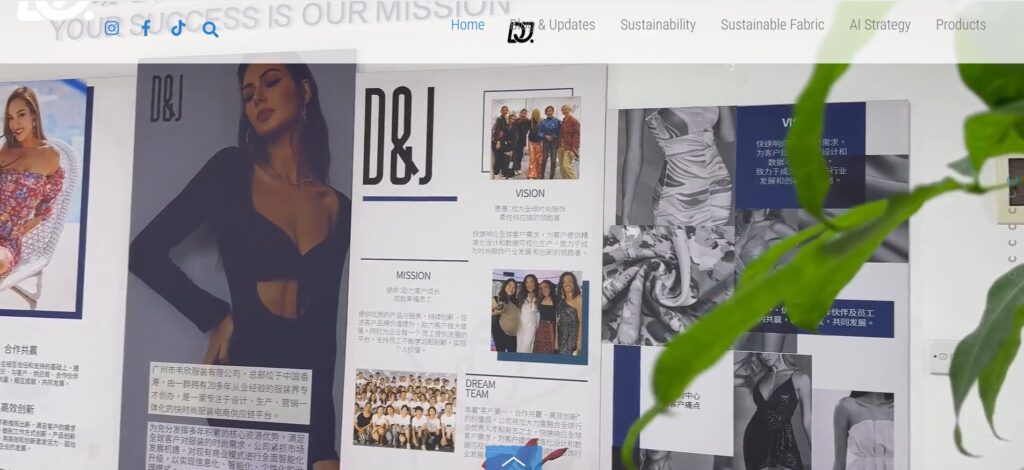
D&J Fashion is a vertically integrated women’s fast-fashion group founded in Hong Kong in 2010, with design and sales operations in Guangzhou/Hong Kong and its own factory in Ganzhou, Jiangxi. Its holding company, Riverstone Ltd, filed for a Nasdaq IPO in December 2025.
- Type: Factory group
- Location: Guangzhou/Hong Kong + Ganzhou, Jiangxi
- Specialty: Women’s dresses, jumpsuits, and tops
- MOQ: ~200–300 pcs/style, based on third-party reports
- Lead time: 20–30 days
- Scale: ~600,000 garments/month capacity, according to its SEC filing
Ideal For: women’s fashion brands wanting a full supply-chain partner design through logistics with Western-market infrastructure.
Caveat: The MOQ and lead-time figures come from third-party sources rather than the SEC filing. Also, Riverstone filed for an IPO; it should not be described as Nasdaq-listed.
2. Hongyu Apparel
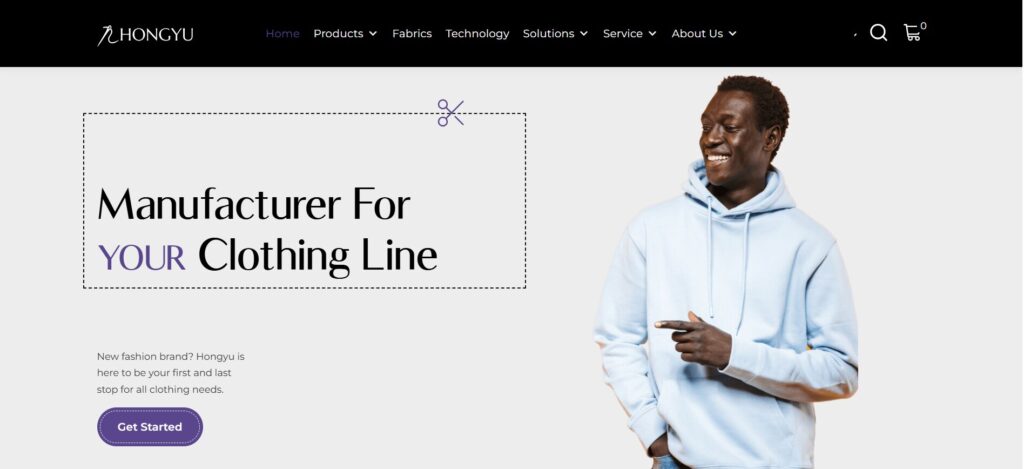
Hongyu Apparel is a custom clothing factory in Humen, Dongguan, producing hoodies, T-shirts, streetwear, dresses, swimwear, and kidswear. What makes it useful for smaller brands is that it publishes specific low-MOQ thresholds rather than simply advertising “small orders.”
- Type: Factory
- Location: Humen, Dongguan
- Specialty: Hoodies, tees, streetwear, plus broader custom apparel
- MOQ: 50 pcs for blanks/logo customization; 100 pcs per style/color for full cut-and-sew
- Lead time: Samples 7–15 days; bulk 12–30 days, company-stated
- Reputation: Alibaba storefront rated 4.7/5 across 15 reviews in 2026
Ideal For: startups and small brands wanting low-MOQ custom hoodies, tees, and streetwear.
Caveat: We found one detailed 2025 complaint around sample execution that was repeated across two sites. We’d still treat sampling as mandatory before placing a production order.
3. Yotex Apparel
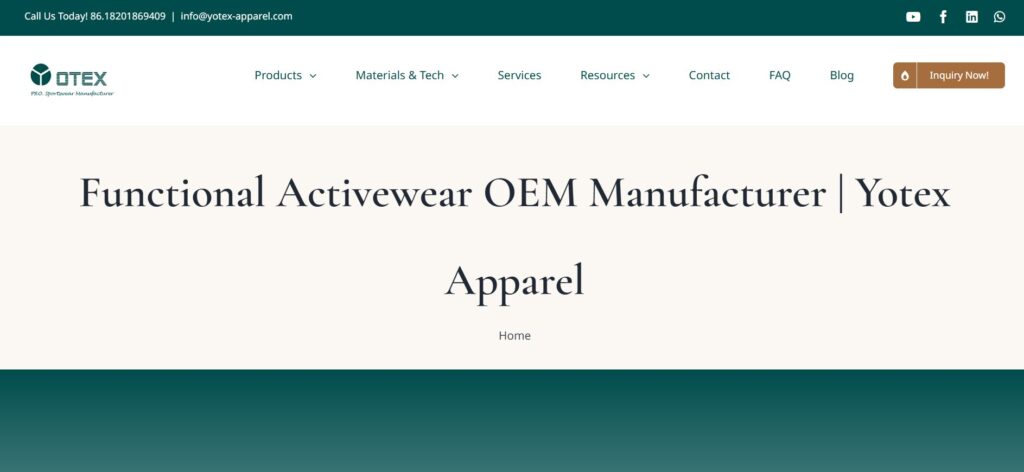
Yotex Apparel is a functional-apparel OEM with its business office in Shanghai and production in Xiamen. Its focus is more technical than the low-MOQ fashion factories on this list, covering activewear, leggings, seamless garments, and performance sportswear.
- Type: Office + factory
- Location: Shanghai + Xiamen
- Specialty: Activewear, seamless garments, performance sportswear
- MOQ: 500 pcs/style
- Lead time: ~35 days average
- Logistics: Offers LDP shipping to the US
Ideal For: established activewear/athleisure brands needing technical fabrics and US/EU logistics support.
Caveat: Yotex’s claimed brand-client roster is self-reported and not independently verified. Its 500-piece MOQ also makes it less suitable for early product testing.
4. Apparel CN
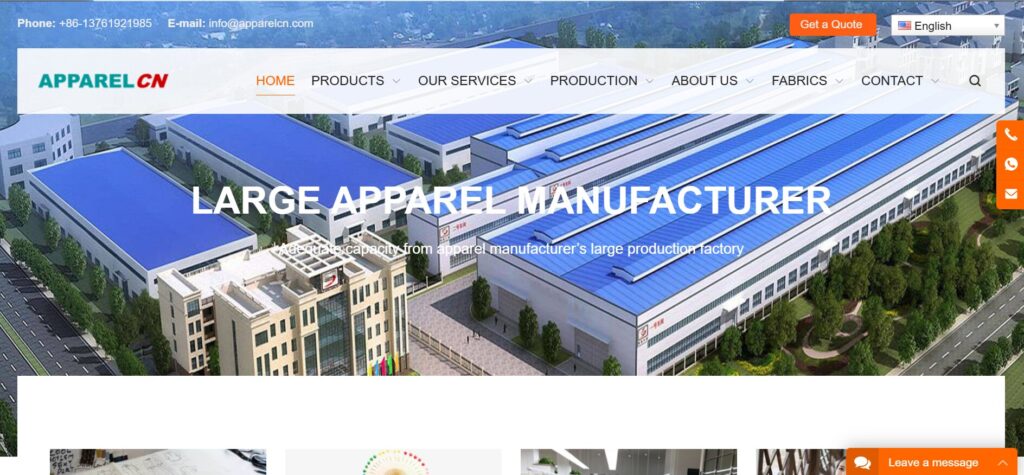
Apparel CN is a private-label clothing manufacturer in Deqing, Huzhou, operating under Shine Bright Group. It covers fabric sourcing, design refinement, sampling, trims, printing, embroidery, and packaging, while also offering stock designs for buyers not ready for fully custom production.
- Type: Factory
- Location: Deqing, Huzhou, Zhejiang
- Specialty: One-stop private-label apparel
- MOQ: From 50 pcs when factory-available fabric can be used
- Lead time: Not publicly confirmed
- Capacity: ~5 million pcs/year, company-stated
Ideal For: startup and mid-size brands wanting one-stop private-label manufacturing with a low entry MOQ.
Caveat: The 50-piece MOQ is conditional, so custom fabrics can push the requirement higher. A 2025 third-party review also mentioned slower after-sales responsiveness, so communication expectations should be agreed before paying a deposit.
5. Hucai Sportswear
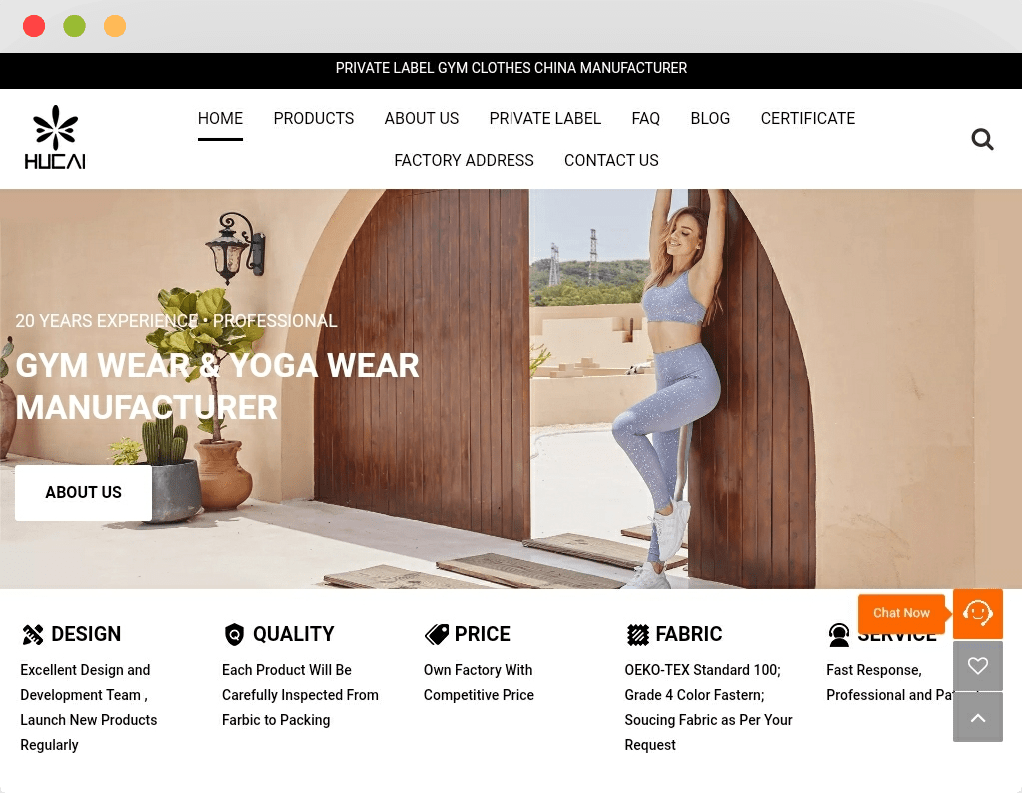
Hucai Sportswear is an activewear factory in Humen, Dongguan, founded in 1998. It produces sports bras, leggings, gym tees, tracksuits, and hoodies, with private-label services extending from pattern-making through custom packaging.
- Type: Factory
- Location: Humen, Dongguan
- Specialty: Yoga wear, gym wear, sportswear
- MOQ: 100–200 pcs depending on product
- Lead time: Samples 12–20 days; bulk 25–35 days
- Materials: Uses OEKO-TEX Standard 100 materials, company-stated
Ideal For: startup and growing activewear/yoga brands wanting low-MOQ private-label gym wear with full custom packaging.
Caveat: MOQ varies by product and sales channel. We’d confirm the exact MOQ for your specific style before paying for sampling.
6. Tosin Fashion
Tosin Fashion is a smaller OEM/ODM women’s-wear factory in Humen, Dongguan, operating since 2008. Its assortment covers dresses, jumpsuits, skirts, tops, and a dedicated Muslim/modest-wear category.
- Type: Factory
- Location: Humen, Dongguan
- Specialty: Women’s wear and Muslim/modest apparel
- MOQ: From 50 pcs per size/style/color
- Lead time: 7–14 days for standard orders, company-stated
- Services: White label and private label, including branded tags
Ideal For: small and startup women’s brands wanting low-MOQ custom production, including Muslim/modest wear.
Caveat: It is a relatively small operation and we could not verify an Alibaba or Made-in-China storefront. For seasonal orders, sample first and confirm available production capacity.
7. Hujoin
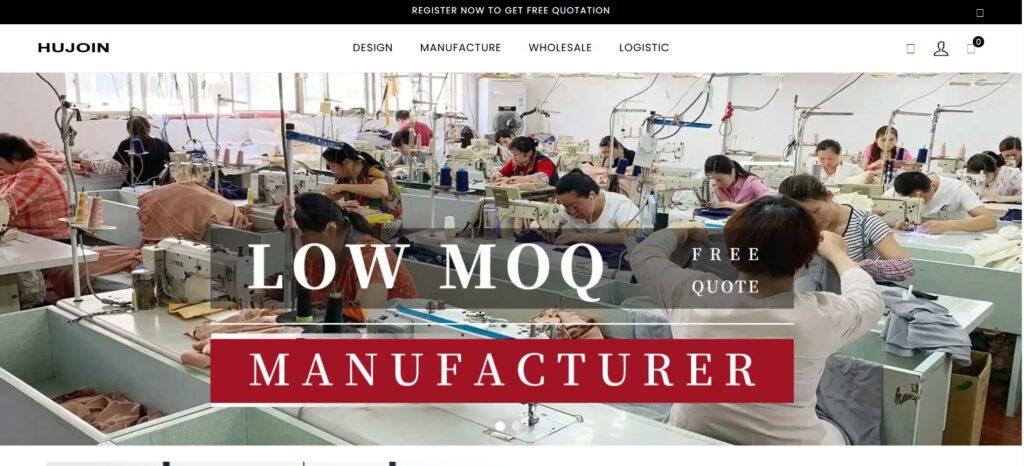
Hujoin is a small-order clothing manufacturer in Suzhou’s Wuzhong District offering fabric selection, design, printing, embroidery, labels, and production under one service model. Its capabilities span knitwear, woven garments, and down jackets.
- Type: Factory
- Location: Suzhou, Jiangsu
- Specialty: Full-service custom apparel
- MOQ: Typically 50–100 pcs, depending on style and process
- Lead time: Samples within 14 days
- Shipping: Air, rail, and sea options available
Ideal For: startups and indie designers needing low-MOQ private-label production with design-to-delivery support.
Caveat: Public sources give conflicting founding dates, and some categories may require much higher MOQs. Treat every quote as style-specific rather than assuming the headline 50-piece MOQ applies across its catalog.
8. Vepeen Apparel
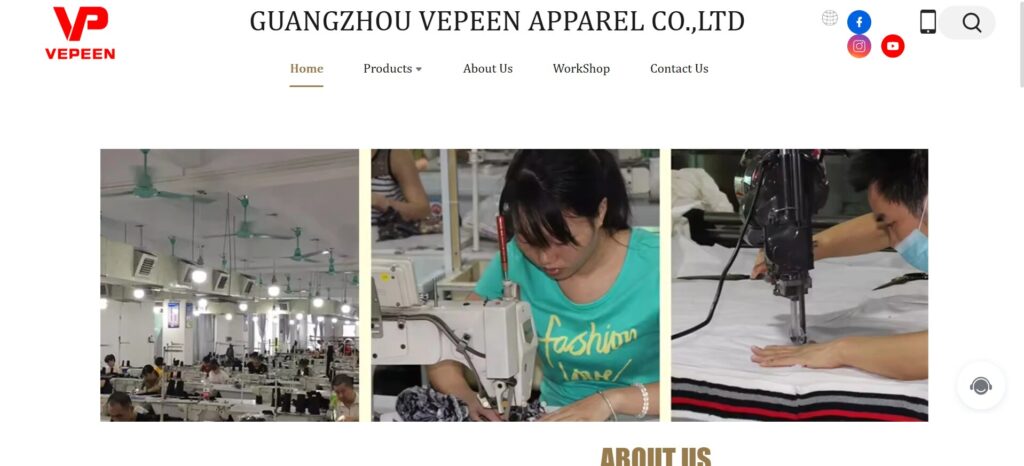
Vepeen Apparel is a women’s-clothing factory in Guangzhou’s Baiyun District, founded in 2015. It operates with roughly 60 workers and offers both ready designs and full OEM/ODM production across dresses, skirts, tops, blazers, pants, and denim.
- Type: Factory
- Location: Guangzhou, Guangdong
- Specialty: Women’s dresses and separates
- MOQ: 50–100 pcs
- Lead time: Not publicly confirmed
- Certification: ISO 9001 listed on its Made-in-China showroom
Ideal For: emerging women’s-fashion brands wanting a small, responsive Guangzhou factory at 50–100 pc MOQs.
Caveat: Its smaller workforce may help communication but can also limit capacity for large or complex programs. If you expect rapid scaling, confirm monthly capacity before committing.
9. MZ Garment Co
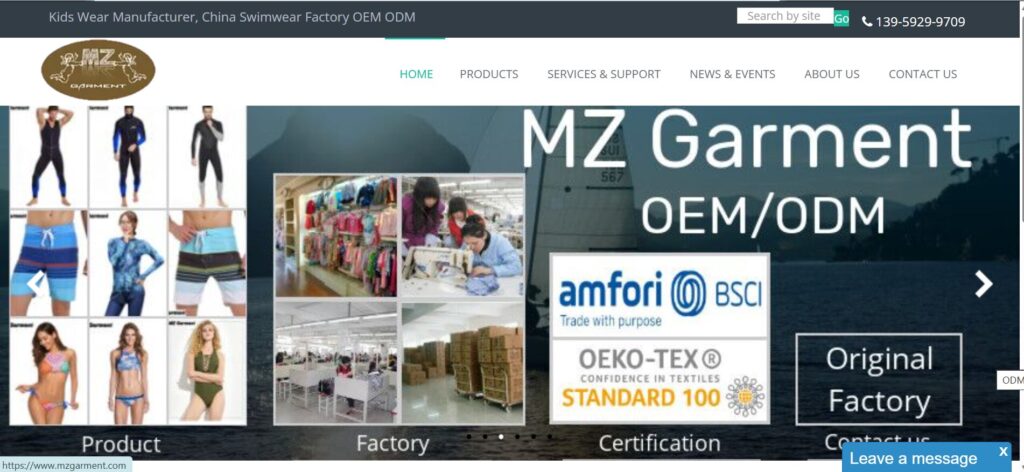
MZ Garment is a Xiamen-based manufacturer-exporter established in 2008, specializing in swimwear and kids’ clothing. Its range includes adult and children’s swimwear, Muslim swimwear, sportswear, and organic-cotton kids’ apparel.
- Type: Factory-exporter
- Location: Xiamen, Fujian
- Specialty: Swimwear and kids’ wear
- MOQ: Typically 800–1,000 pcs for custom OEM
- Lead time: Samples within 14 days; production 20–30 days
- Credibility marker: A Speedo board-shorts sample it produced in 2018 is documented by Australia’s Museum of Applied Arts & Sciences
Ideal For: established brands and chain stores needing bulk swimwear, kids’ organic cotton, or Muslim swimwear OEM.
Caveat: MZ Garment states that it works to BSCI guidelines, but we could not independently verify a current BSCI certificate. Ask for the current audit report and certificate number before relying on that claim.
10. Maya Jeans
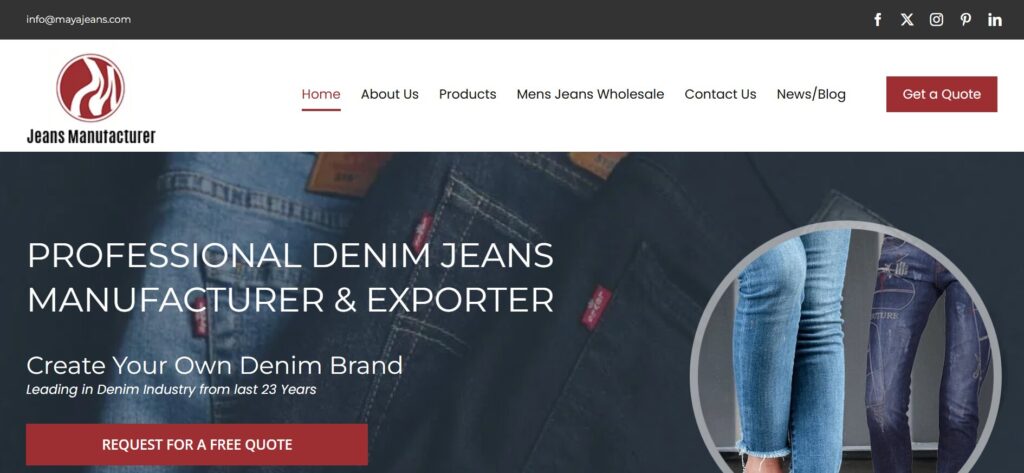
Maya Jeans is a denim factory in Xintang Town, Zengcheng District, Guangzhou, an established denim-production cluster. It manufactures jeans, skirts, shirts, vests, dresses, and jackets and handles multiple washing and finishing processes in-house.
- Type: Factory + trading arm
- Location: Xintang, Zengcheng District, Guangzhou
- Specialty: Denim apparel
- MOQ: ~50–100 pcs on some programs; 500+ on others
- Lead time: Not publicly confirmed
- Capacity: 80,000–100,000 pcs/month, company-stated
Ideal For: denim startups and boutiques wanting low-MOQ custom jeans with in-house washing.
Caveat: We could confirm activity through late 2024 but did not find clear 2025–2026 activity updates. Verify current operations directly before placing a sample order.
11. SBC Clothing
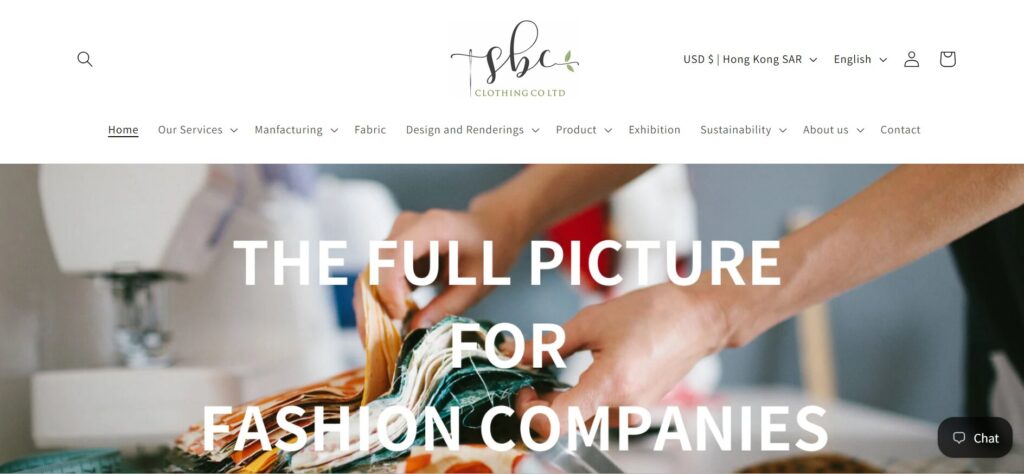
SBC Clothing is a Hong Kong-registered manufacturer with factories in Zhongshan and Foshan, Guangdong. Denim remains its core category, supported by an in-house washing department, although its current range also includes casualwear, swimwear, and activewear.
- Type: Factory, Hong Kong registered
- Location: Zhongshan + Foshan, Guangdong
- Specialty: Denim, casualwear, activewear
- MOQ: Mid-volume; no specific minimum confirmed.
- Lead time: Not publicly confirmed
- Capacity: ~2 million pcs/year, company-stated
Ideal For: brands wanting an audited denim and casual-wear factory with in-house washing at mid-volume orders.
Caveat: SBC self-reports ISO, BV, and VF audits and past/current work for major brands, but these claims should be verified before being used in supplier qualification. Its active site is sbcclothing.hk; the .com domain is defunct.
12. Sichuan Ecogarments
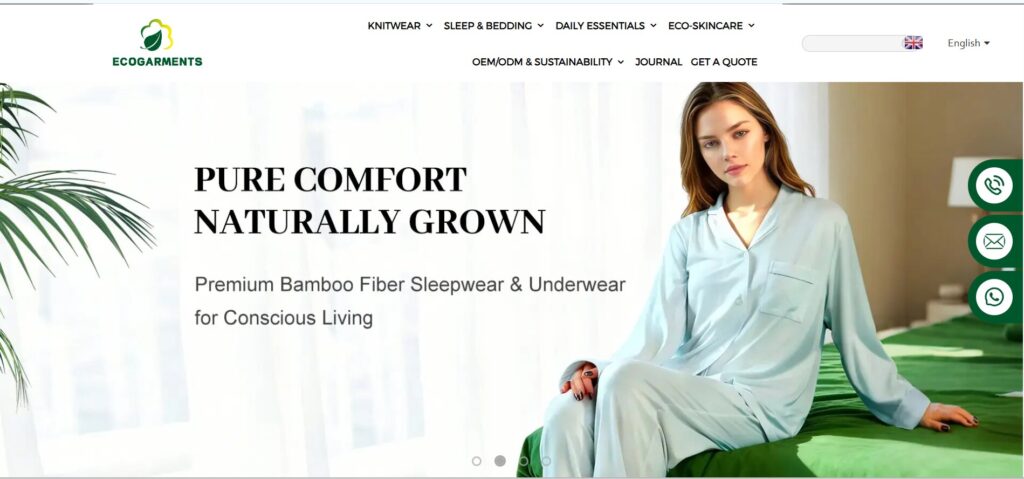
Sichuan Ecogarments is an eco-focused clothing factory in Chengdu producing baby clothing, yoga and fitness wear, sleepwear, underwear, and socks using materials such as bamboo, organic cotton, linen, hemp, Tencel, and recycled fabrics.
- Type: Factory
- Location: Chengdu, Sichuan
- Specialty: Eco fabrics, babywear, yoga and loungewear
- MOQ: 100 pcs per design per color, company-stated
- Lead time: Not publicly confirmed
- Services: White label and private label
Ideal For: eco-conscious baby, yoga, and loungewear brands wanting low-MOQ organic/bamboo private labels.
Caveat: Its OEKO-TEX claims apply to fabrics sourced from certified mills, not to the garment factory as a whole. It also claims GOTS-related credentials without publishing certificate numbers, so request documentation before making certification claims on your own products.
13. Lanxin Apparel
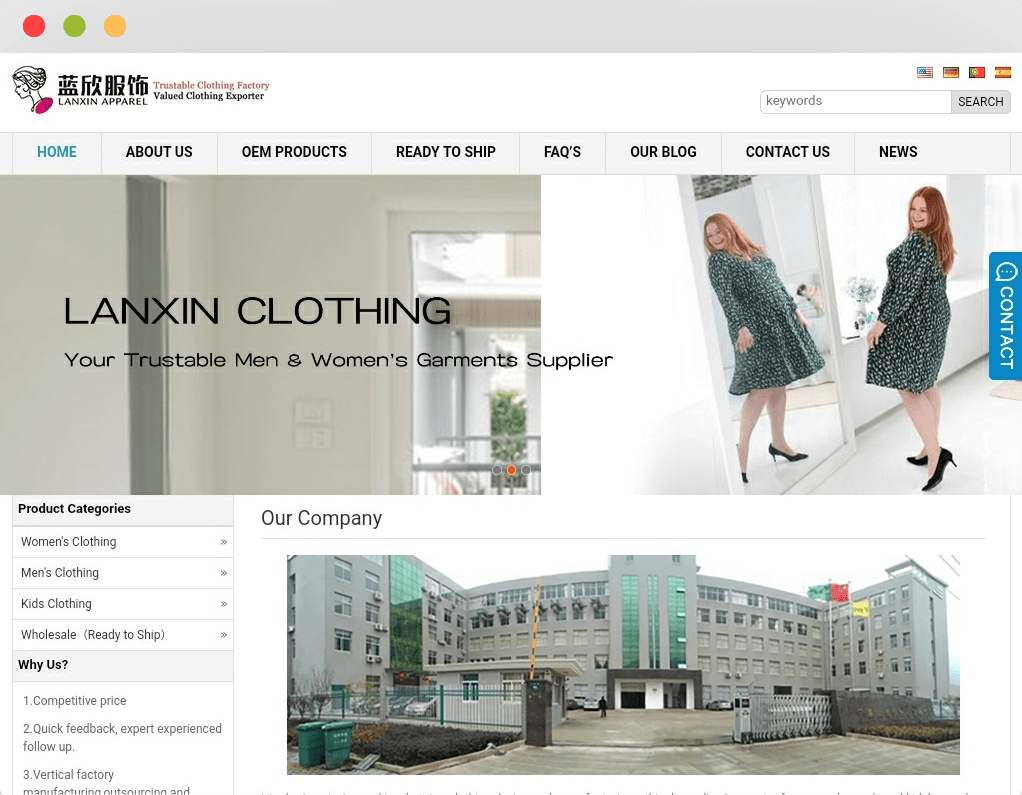
Lanxin Apparel is a knit-and-woven OEM manufacturer in Ningbo’s Haishu District covering sportswear, casualwear, dresses, and tees. It also offers in-stock wholesale styles, which gives buyers an unusually low-risk path from tiny trial orders into full custom production.
- Type: Factory
- Location: Ningbo, Zhejiang
- Specialty: Knit and woven OEM apparel
- MOQ: 2 pcs for in-stock styles; 500 pcs for custom-dyed OEM
- Lead time: 60–90 days for full custom OEM
- Export volume: US$1.5–2.5 million annually, per its GoldSupplier profile
Ideal For: brands that want to trial Ningbo-made styles at 2 pcs before committing to 500-pc custom runs.
Caveat: Its 60–90 day custom lead time is among the longest on this list. For seasonal launches, we’d work backward from the launch date before placing the order rather than treating production and shipping as separate planning steps.
Wholesale Clothing Marketplaces in China
For buyers who want to test styles without committing to factory MOQs, online wholesale marketplaces can be useful. We treat them differently from manufacturers because you are buying ready-made stock from multiple suppliers rather than developing an exclusive product.
14. Yaaku Wholesale Fashion
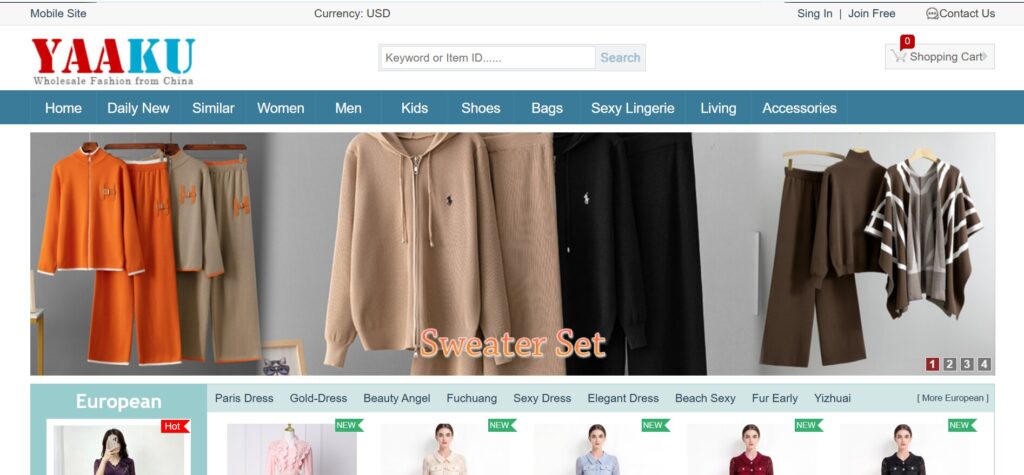
Yaaku is an online wholesale marketplace, not a factory, based in Guangzhou. It lists 38,000+ women’s fashion items sourced from different local manufacturers, including dresses, skirts, leggings, jackets, tops, and undergarments.
- Type: Online wholesale marketplace
- Location: Guangzhou
- Specialty: Women’s fast fashion
- MOQ: No per-item MOQ; orders above US$1,000 qualify for wholesale pricing tiers
- Shipping: Serves 50+ countries
- QC option: Warehouse visits are allowed for quality checks
Ideal For: boutiques and resellers wanting the lowest price points on this list for trendy women’s fashion, with no per-item MOQ.
Caveat: Because Yaaku sources from multiple manufacturers, fabric, sizing, and finishing can vary between batches. We’d sample first or inspect stock before placing a larger order.
15. Nihao Styles
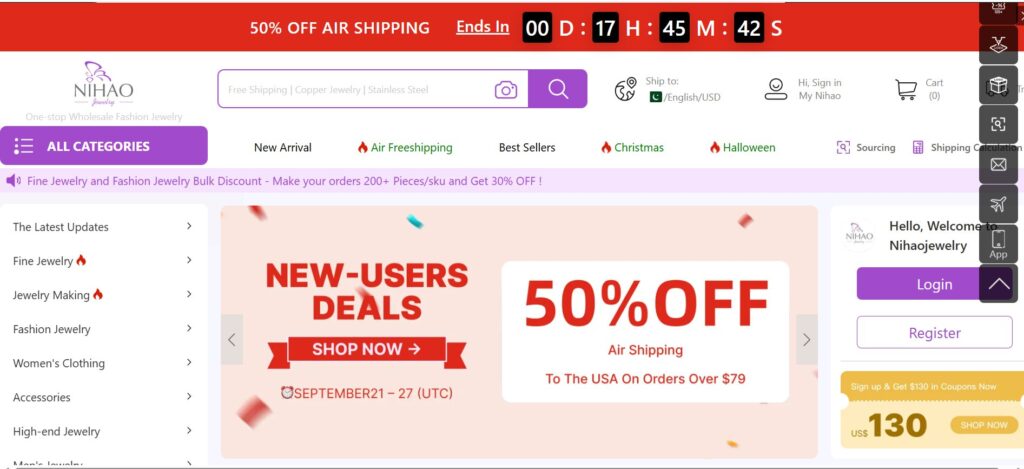
Nihao Styles is an online wholesale marketplace, not a factory, based in Yiwu. Launched in 2020 as the sister site of Nihaojewelry, it focuses on trend-driven women’s clothing and states that it adds 200–400 new products per day.
- Type: Online wholesale marketplace
- Location: Yiwu
- Specialty: Trend-driven women’s fashion
- MOQ: None
- Pricing: Volume-tiered discounts
- Shipping: Worldwide via DHL
- Branding: Branded packaging available for a fee
- Reputation: Around 4.5/5 on Trustpilot from roughly 238 reviews in 2026
Ideal For: boutique owners wanting no-MOQ, trend-driven women’s clothing with fast DHL shipping.
Caveat: The Trustpilot score is strong overall, but recurring complaints mention sizing inaccuracies, return friction, and occasional shipping issues. For that reason, we’d still start with a small test order before scaling.
If you prefer ready-stock clothing over custom production, NicheSources can also help you buy wholesale from China with consolidated quality inspection and shipping.
Can You Really Order 50 Pieces? 2026 MOQ Reality Check
Yes, but only in the right sourcing tier. In our experience, the lowest MOQs usually come from ready-stock products or factories willing to use existing fabrics. Once you add custom-dyed fabric, technical materials, complex washes, or vertically integrated production, MOQs rise quickly.
| Sourcing Tier | Typical MOQ | What It Usually Covers | Examples |
| Market stock / blanks | 3–10 pcs | Ready-made styles, blanks, market stock | Best for testing demand before custom production |
| Low-MOQ custom factory | 50–100 pcs/style | Custom labels, trims, colors, and cut-and-sew using available fabrics | Hongyu: 50 pcs; Tosin: 50 pcs; Hujoin: 50–100 pcs; Vepeen: 50–100 pcs; Apparel CN: 50 pcs when factory-available fabric is used |
| Traditional / complex production | 500–1,000+ pcs/style | Custom-dyed fabrics, performance wear, denim programs, and larger vertically integrated production | Yotex: 500 pcs; Lanxin custom OEM: 500 pcs; MZ Garment: 800–1,000 pcs |
Why Do Clothing Factories Have MOQs?
The real constraint is usually fabric economics, not the sewing line itself.
A single fabric roll can produce roughly 100–300 garments, depending on the garment and fabric width. If you only order 40 pieces, the factory may still need to buy a full roll and either absorb the leftover fabric or charge you for the waste.
Custom-dyed fabrics push the MOQ higher because the dye mill has its own minimum quantity per color. This is why factories can often offer 50-piece runs when you choose stock fabric, but may require 300–500+ pieces when you want a custom Pantone color or specially developed material.
From a sourcing perspective, the easiest ways to reduce MOQ are to use the factory’s available fabrics, limit the number of colors and size combinations, or accept a small-batch surcharge. We generally advise buyers to negotiate the production setup, not just ask the factory to “lower the MOQ.”
Last verified: September 2026. MOQs still vary by style, fabric, color, and production process, so always confirm the final MOQ before approving samples.
From our experience in Yiwu: MOQ negotiation is where first-time buyers overpay or over-commit. Our on-ground team verifies factories and negotiates MOQs with them directly. Discuss your project.
China’s Clothing Manufacturing Regions
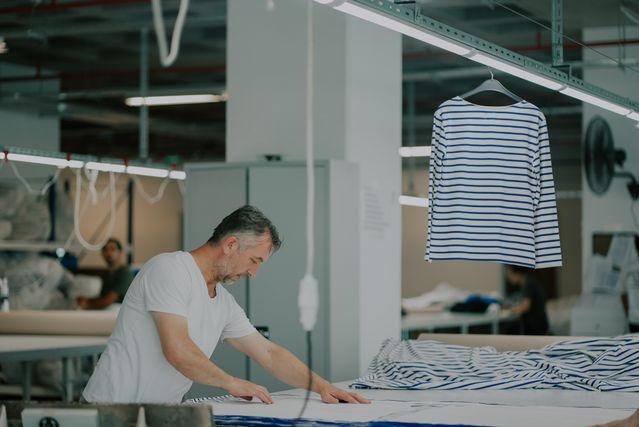
In China, clothing production is highly clustered. We usually start with the region before the factory, because the right cluster gives you better access to specialized fabrics, experienced workers, subcontractors, and faster sampling.
| Region / City | Specialty | Notable For |
| Guangzhou, Guangdong | Fast fashion, women’s wear | Major wholesale markets such as Baima, Shahe, and Shisanhang; fast product turnover |
| Dongguan / Humen, Guangdong | Women’s wear, streetwear, sportswear | Dense OEM/ODM factory network; home to suppliers such as Hongyu, Hucai, and Tosin |
| Zhongshan / Shaxi, Guangdong | Menswear basics | Strong production base for polos, T-shirts, sweaters, and casual menswear |
| Zengcheng / Xintang, Guangzhou | Denim | Known as one of China’s major denim hubs, with an established washing and finishing ecosystem |
| Hangzhou / Ningbo, Zhejiang | Knitwear, casualwear | Strong export infrastructure and access to Zhejiang’s textile supply chain |
| Xiamen, Fujian | Swimwear, activewear | Concentration of sportswear and swimwear manufacturers, including MZ Garment and Yotex production |
| Suzhou, Jiangsu | Small-batch custom apparel | More suitable for smaller custom runs and startup-friendly production |
| Chengdu, Sichuan | Eco and bamboo apparel | Emerging cluster for bamboo, organic, and sustainability-focused clothing |
From a sourcing perspective, this matters because a factory located inside the right cluster can usually access materials and specialist processes faster than one sourcing everything from another province.
For example, we’d look at Xintang for denim, Humen for streetwear or women’s fashion, and Xiamen for swimwear or activewear before comparing individual factories. That shortens the shortlist and makes supplier comparisons much more relevant.
Guangzhou Wholesale Clothing Markets
Guangzhou’s wholesale markets are useful for ready-stock sourcing, trend research, and small-batch testing. We would not treat most booths as factories, though many are distributors or trading businesses selling stock from multiple manufacturers.
| Market | Tier / Price Level | Best For | Typical MOQ Norms |
| Baima | Mid-to-high-end | Better-finished fashion apparel and boutiques targeting higher price points | Small bulk orders; often negotiable |
| Shisanhang | Mid-tier | Fast-moving women’s fashion and trend-led styles | Often starts from a few pieces per style |
| Shahe | Budget | High-volume, price-sensitive apparel sourcing | Commonly mixed cartons or larger bulk orders |
| Liuhua | Export-oriented | International buyers looking across multiple apparel categories | Varies significantly by booth |
Liuhua also has an online channel through liuhuamall.com, which can be useful if you want to browse suppliers before visiting in person.
The main thing we tell buyers is to separate market sourcing from factory sourcing. A booth may be able to give you a low MOQ and fast delivery because the goods are already made, but that does not mean it controls production.
If you need custom fabrics, private labels, consistent repeat batches, or exclusive designs, we would verify the actual manufacturer behind the booth before scaling. For stock products, these markets can still be one of the fastest ways to compare fabrics and pricing in person.
How to Find and Verify a Clothing Manufacturer in China
The right sourcing channel changes as your order size grows. We usually advise buyers to test first, then move closer to the factory as volume and customization increase.
Where Should You Look?
| Buyer Stage | Best Channels | Why |
| Testing: 0–100 pcs | Yaaku, Nihao Styles, Guangzhou wholesale markets | Low commitment and fast access to ready stock |
| First custom runs: 100–500 pcs | Low-MOQ factories, Alibaba Verified Suppliers + Trade Assurance | Better access to private label and custom production without enterprise-level MOQs |
| Scaling: 500+ pcs | Direct factory relationships, Canton Fair, CHIC Shanghai, sourcing agents | More leverage on pricing, customization, capacity, and QC |
For smaller brands, the mistake is often going straight to a large factory that is optimized for 1,000-piece runs. A factory that looks competitive on unit price can become a poor fit once you factor in MOQ, fabric minimums, and sampling costs.
How We Verify a Clothing Factory
Before we treat a supplier as a serious candidate, we would work through these six checks in order:
- Check the business license. Ask for the Chinese business license (营业执照) and confirm that the registered business scope includes manufacturing rather than only trading.
- Request a live factory video tour. Ask to see production lines, cutting tables, sewing stations, finishing, and packing areas — not just a showroom.
- Verify certification numbers. If the supplier claims ISO 9001, BSCI, OEKO-TEX, GOTS, or similar credentials, ask for the certificate number and check it in the issuing body’s database.
- Check export history. ImportYeti or Panjiva can help confirm whether the company has actual shipment history and experience exporting to your market.
- Order samples. Check fabric weight, stitching, measurements, sizing consistency, trims, printing, and colorfastness before approving bulk production.
- Use a pre-shipment inspection. The guide’s reference range is roughly $100–300 for an inspection before paying the remaining balance. This gives you a final QC checkpoint while you still have payment leverage.
One point we would not skip is the sample stage. A supplier can have a valid license and real production lines and still be the wrong factory for your quality standard or garment category.
MOQ also forms part of supplier verification. If a factory’s minimum is too high, you may be able to reduce it by using stock fabrics, fewer colors, or a simpler production setup. See our guide on how to negotiate low MOQ with Chinese suppliers before committing to the first bulk order.
FAQs about Sourcing Wholesale Clothing in China
Is It Cheaper to Source Bulk Clothing From China Wholesale Clothing Suppliers?
Yes.
China is colloquially termed as the world’s factory because it has a thriving manufacturing sector. Not just in clothing but in everything from tech to furniture. This success is a result of:
The Chinese government greatly incentivizing factories
Labor in China being more affordable compared to what it may cost in other countries
Chinese manufacturers having easier and affordable access to high-tech machinery due to the country’s incredible technological advancements
Chinese manufacturers having access to other thriving neighboring countries makes it easy for them to access raw materials
Each of these factors works to make the production of clothing items in China cheaper, efficient, and more innovative. Consequently, the prices offered by wholesale clothing vendors in China are simply unbe
How Do I Order Wholesale Clothing From China?
Purchase processes may vary from one wholesale clothing supplier to the next. Let us examine some of the scenarios you may encounter:
Online store orders- some suppliers have online stores where you simply add items to a cart and specify how many pieces, colors, and sizes you would like, and proceed to pay. It is a straightforward process.
Written correspondence- others, such as private label and white label clothing manufacturers, may require more detailed communication. You may, therefore, have to submit your orders via email or a formal order form.
In-person visits- visiting potential clothing suppliers in person gives you a chance to inspect their premises and products before placing your order. It provides better clarity for all parties and may even leave room for negotiation.
Ordering via a sourcing agent- a sourcing agent works as your representative to clothing manufacturers. They can help you find reliable suppliers, negotiate wholesale prices, and MOQ terms, handle quality inspection, and coordinate all purchase processes on your behalf including shipping.
What Qualities Should I Look For When Comparing Chinese Wholesale Clothing Vendors?
The truth is, once you begin looking for wholesale clothing suppliers in China, (whether in person or online) you will be spoiled for choice. The options can even get a little overwhelming.
So, it would be best to start by creating a definitive list of what you need in a manufacturer. Some non-negotiable requirements could include:
Verification details from the China Chamber of Commerce or other regulators to prove that the manufacturer/supplier is authentic.
High-quality clothing that can meet your customers’ expectations.
A product selection that offers a wide range of options in terms of size, design, color, and more.
Fair and affordable pricing that is within your budget.
Comfortable MOQ terms.
Ethical production processes.
Can Chinese manufacturers do custom designs and private labeling?
Yes. Many Chinese clothing factories offer several levels of customization, from adding your logo to an existing design through full OEM production from your tech pack.
A typical progression is:
White label: existing product + your branding
Private label: changes to fabric, colors, trims, labels, or packaging
OEM: factory produces your original design
ODM: factory also helps develop the design
More customization usually means a higher MOQ and longer deve
How long does clothing production take in China?
For a first custom order, plan roughly 2–3 months from sampling to delivery rather than looking only at factory production time.
Sampling may take 7–15 days, followed by roughly 20–45 days for bulk production after approval. Shipping then adds another leg, which varies considerably by method and destination.
Repeat orders are usually faster because patterns, fabrics, and specifications have already been approved.
Can I visit Chinese clothing factories in person?
Yes. Serious buyers can often arrange factory visits directly, while trade fairs such as the Canton Fair and CHIC Shanghai allow you to compare multiple suppliers during one trip.
A factory visit is most useful when you know what to inspect: production lines, machinery, sample rooms, current orders, finishing processes, and capacity. Buyers unfamiliar with Chinese manufacturing often use a sourcing agent to assist with translation and supplier assessment.
What is the difference between OEM and ODM clothing manufacturing?
With OEM, you provide the design or tech pack and the factory manufactures it. With ODM, the supplier contributes more of the product design and development before producing it under your brand.
OEM generally gives you greater control over the final garment. ODM can reduce development work if you do not already have a finished technical specification.
Should I trust claims that a factory manufactures for major brands?
Treat major-brand client lists as supporting evidence, not proof by themselves. Some factories publicly claim work for recognizable brands, but those relationships may be historical, indirect, or difficult to independently verify.
For SBC Clothing and Yotex, for example, the named client relationships are self-reported. We would still ask for relevant audit documents, references, or other verifiable evidence during supplier qualification.
How far ahead should I place a seasonal clothing order?
Work backward from your launch date using the supplier’s longest realistic lead time, then add sampling, revisions, inspection, and shipping.
This becomes particularly important with suppliers such as Lanxin, where full custom OEM production can take 60–90 days before international shipping is added. For seasonal apparel, late sampling can push the entire launch window rather than just delay production by a few days.
I believe fashion is not just about following trends, but about embracing what makes us feel empowered and comfortable
Hi Supplier
We have gone through your products on your website and we are urgently in need of your products found on your website.
Please could you send your latest catalogue along with a price list so we can prepare our order specification.
We await your urgent reply.
Thank You !
Best Regards,
MR.E Albert Walmsley
Purchasing Manager
AstraZeneca Plc
Cambridge, United Kingdom
Tel: +44(0)23485738099
[email protected]
Dear Visitor,
Thank you for your interest in our products. We have forwarded your request to our sales team.
In the meantime,If you have any urgent questions, please don’t hesitate to contact us through our website’s contact form or official email.
Best regards,
Niche Customer Service Team