The best material for dress socks depends on your price point and target customer. For private-label brands, bamboo viscose blends are usually the best choice for softness, breathability, and margin potential.
Merino wool blends are better for premium dress socks because they offer odor resistance, moisture control, and year-round comfort. Mercerized cotton is the safer option for affordable everyday dress socks with a clean, classic look.
For most brands, the best starting point is not a 100% natural fiber sock. A practical dress sock usually needs a blend of natural yarn with nylon and spandex or elastane for stretch, shape retention, and durability.
Key Takeaways
- Bamboo viscose blends are often the best material for private-label dress socks if you want softness, breathability, and strong margin potential.
- Merino wool blends are better for premium dress socks, especially for customers who care about odor resistance, moisture control, and year-round comfort.
- Mercerized cotton is a practical choice for affordable everyday dress socks because it offers a smooth look, familiar feel, and easier sourcing.
- Most dress socks are not 100% natural fiber. They usually need nylon, spandex, or elastane to improve stretch, fit retention, and durability.
- For sourcing, material choice affects more than comfort. It also changes FOB cost, MOQ, sample development, supplier region, and retail positioning.
What Are Dress Socks Usually Made Of?

Dress socks are usually made from natural fiber blends, not a single material. The main yarn is often cotton, bamboo viscose, merino wool, silk, or cashmere, but factories almost always add a small percentage of nylon, spandex, or elastane to improve stretch, fit, and durability.
Common dress sock materials include:
- Bamboo viscose: Soft, breathable, and smooth against the skin. Often used for comfort-focused or “sustainable feel” dress sock lines.
- Merino wool: A premium option with strong moisture control, odor resistance, and temperature regulation. Popular brands like Bombas Socks are also known for using Merino wool.
- Mercerized cotton: A polished cotton yarn with a smoother look, making it common in classic business dress socks.
- Pima or long-staple cotton: Softer and more durable than basic cotton, but usually positioned below merino or cashmere in premium value.
- Silk or cashmere blends: Used for luxury, formal, or gift-focused socks, but less common for everyday private-label lines because costs are higher.
In practice, a good dress sock is usually a blend. For example, a merino dress sock may use wool for comfort and performance, nylon for strength, and spandex for stretch. This is also why “100% cotton” socks are uncommon in factory sourcing. Pure cotton lacks elasticity, can slip down easily, and wears faster at stress points like the heel and toe.
Dress Sock Material Comparison Table
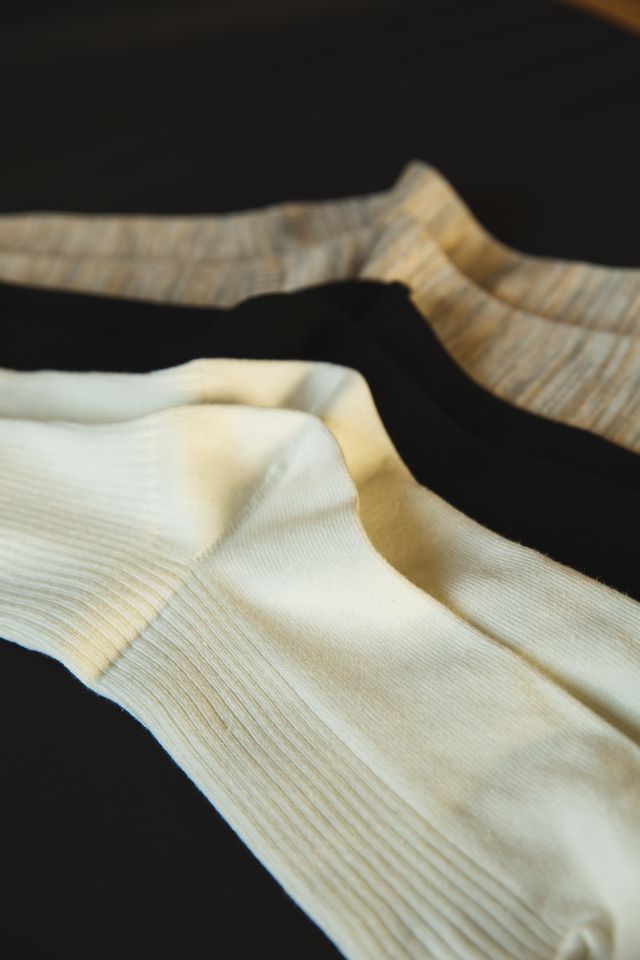
The best dress sock material depends on two things: how the sock feels to the customer and how practical it is to source at scale. For private-label buyers, comfort alone is not enough. You also need to consider MOQ, FOB cost, durability, and whether the factory can consistently produce the same blend across bulk orders.
| Material | Best For | Main Strength | Main Limitation |
| Bamboo Viscose Blend | Soft, breathable private-label socks | Smooth feel, good breathability, strong margin potential | Needs nylon/spandex support for better durability |
| Merino Wool Blend | Premium, travel, and cold-weather dress socks | Excellent moisture control, odor resistance, and temperature regulation | Higher FOB cost and stricter MOQ |
| Mercerized Cotton | Classic business dress socks | Polished look, familiar cotton feel, easier sourcing | Less moisture-wicking than bamboo or merino |
| Pima / Long-Staple Cotton | Cotton-focused premium lines | Softer and more durable than basic cotton | Usually less premium than merino or cashmere |
| Silk / Cashmere Blend | Luxury, formal, or gift socks | High-end feel and strong retail positioning | Expensive and less practical for daily wear |
| Polyester / Nylon Blend | Budget or functional socks | Durable, affordable, and useful for reinforcement | Weak premium perception if used as the main material |
Sourcing Snapshot
From a sourcing perspective, bamboo blends usually offer the best balance between softness, cost, and retail positioning. Merino wool works better for premium lines, but buyers should expect higher MOQs and stricter yarn requirements.
Mercerized cotton is the safer option for affordable everyday dress socks, especially if the goal is a clean business look rather than advanced moisture control.
| Material | Factory FOB Range | Typical MOQ | Best Sourcing Region |
| Bamboo / Cotton Blend | $0.70–$1.20 per pair | 500–1,000 pairs for OEM | Zhuji, Zhejiang |
| Mercerized Cotton | Around $1.69 per pair | 500–1,000 pairs | Zhuji, Zhejiang |
| Merino Wool Blend | $1.57–$3.00 per pair | 1,000+ pairs | Haining, Zhejiang |
| Cashmere Blend Wool | Around $10.00 per pair | 100+ pairs | Hangzhou / Guangdong |
Bamboo vs Merino Wool vs Cotton: Which Material Should Your Brand Choose?
For most private-label dress sock brands, the choice comes down to bamboo, merino wool, or cotton. Each material can work, but they serve different price points, customer expectations, and sourcing requirements.
Bamboo Viscose Blend
Best for: Soft, breathable dress socks with strong margin potential.
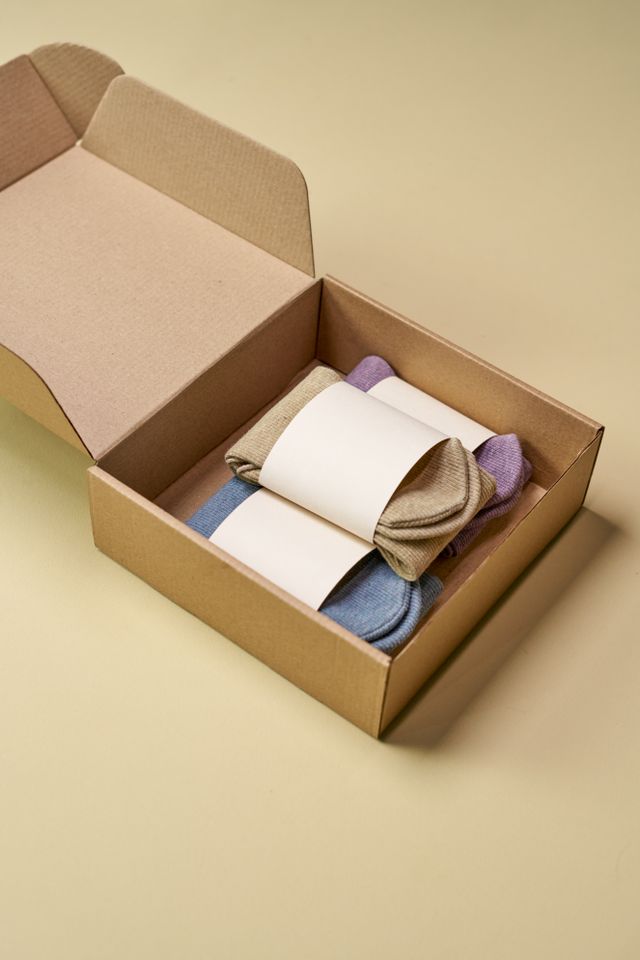
Bamboo viscose is a strong choice if your brand wants to sell comfort-focused dress socks at a premium-feel price point without the higher sourcing cost of merino wool. It feels smooth, has good breathability, and is often easier to position as a modern alternative to standard cotton socks.
Pros:
- Soft and smooth feel
- Good breathability for daily wear
- Strong perceived value at a relatively accessible FOB cost
- Works well for office, casual, and giftable sock lines
Cons:
- Needs nylon and spandex support for durability
- Higher bamboo ratios can slightly increase cost and production waste
- Quality can vary if the supplier uses inconsistent yarn blends
Merino Wool Blend
Best for: Premium, travel, cold-weather, and odor-resistant dress socks.
Merino wool is the better option if your target customer values performance. It handles moisture well, resists odor better than cotton, and can regulate temperature across seasons. This makes it suitable for premium dress socks, business travel socks, and higher-end retail positioning.
Pros:
- Excellent moisture control
- Strong odor resistance
- Good year-round comfort
- Supports higher retail pricing
Cons:
- Higher FOB cost than bamboo or cotton
- Usually stricter MOQ requirements
- Yarn sourcing and blend consistency matter more
- Can feel too warm or expensive for budget everyday lines
Mercerized Cotton
Best for: Classic, affordable business dress socks.
Mercerized cotton is a practical option for brands that want a clean, traditional dress sock. It has a smooth, polished look and a familiar cotton feel, which makes it easy for customers to understand. It is usually easier to source than merino wool and more suitable for budget or mid-range office sock lines.
Pros:
- Classic business-sock appearance
- Familiar feel for customers
- Easier to source at mid-range MOQs
- Good option for solid colors and simple patterns
Cons:
- Weaker moisture-wicking than bamboo or merino
- Lower odor resistance
- Pure cotton is not practical without elastic fibers
- Less premium positioning than merino wool
Pima or Long-Staple Cotton
Best for: Cotton-focused premium socks without moving into wool pricing.
Pima cotton and other long-staple cotton yarns offer a softer and smoother feel than standard cotton. They can work well for brands that want to market a better cotton sock while keeping the product familiar and easy to sell.
Pros:
- Softer than regular cotton
- Better durability than short-staple cotton
- Good for brands that want a natural cotton story
- Works well for simple, polished dress sock designs
Cons:
- Still less moisture-wicking than merino or bamboo
- May not justify a high retail price unless the finishing is strong
- Needs reinforcement yarns for fit and durability
Silk or Cashmere Blend
Best for: Luxury, formalwear, gift sets, or limited-edition SKUs.
Silk and cashmere blends are best used as specialty materials, not everyday dress sock materials. They create a luxury feel and can support premium packaging or gifting, but they are more expensive and less practical for high-volume daily wear products.
Pros:
- Strong luxury positioning
- Soft, premium hand feel
- Good for gift boxes and formal collections
- Can help differentiate a small premium product line
Cons:
- Much higher sourcing cost
- Less durable for everyday wear unless reinforced
- Smaller buyer audience
- Requires stronger QC around yarn composition and finishing
For most new brands, bamboo viscose is the easiest premium-feel starting point, merino wool is best for a higher-end performance line, and mercerized cotton is the safest option for affordable business dress socks.
Factory-Level Cost Analysis: Real Supplier Pricing by Material

Material choice directly affects your landed cost, MOQ, and retail positioning. For dress socks, the biggest cost difference usually comes from the main yarn, the blend ratio, and whether the order is stock/wholesale or fully custom OEM.
Here is the factory-level pricing landscape based on the supplier data in the brief:
| Material | Factory FOB per Pair | Typical MOQ | Factory Example | Region |
| Bamboo / Cotton Blend | $0.70–$0.99 | 10–50 pairs for stock orders | Haining Longna Textile Co. | Haining |
| Mercerized Cotton | Around $1.69 | 500–1,000 pairs for OEM | Zhuji Leo Knitting Co. | Zhuji |
| Merino Wool Blend 65/30/5 | $1.57–$2.21 | 1,000+ pairs | Haining Jisen Socks Co. | Haining |
| Cashmere Blend Wool | Around $10.00 | 100+ pairs | Hangzhou Tomoz Echo Co. | Hangzhou |
What This Means for Buyers
Bamboo blends usually offer the best margin opportunity. They have a soft, premium feel but still sit in a relatively accessible FOB range. This makes bamboo useful for brands that want to sell “comfort” and “breathability” without moving into expensive wool or cashmere pricing.
Merino wool works better for premium positioning. Merino costs more than basic bamboo or cotton blends, but it gives you stronger performance claims: moisture control, odor resistance, and temperature regulation. That makes it easier to justify a higher retail price, especially for business travel, winter, or premium everyday socks.
Mercerized cotton is a safer mid-range option. It does not have the same performance story as merino or bamboo, but it gives dress socks a clean, smooth, business-friendly look. For brands targeting classic office socks, it is easier to understand and easier to sell.
Cashmere blends are better for luxury or gift SKUs. At around $10 FOB per pair, cashmere blend socks are not ideal for a basic everyday line. They make more sense for limited collections, premium packaging, holiday gift sets, or luxury retail positioning.
Why Blend Ratio Changes the Final Cost
A small change in fiber ratio can affect both cost and production efficiency. For example, moving from a 60% bamboo blend to a 70% bamboo blend may only add about $0.05–$0.12 per pair, but it can improve the perceived retail value of the sock.
The trade-off is that higher natural fiber content can reduce yarn strength and increase production waste. That is why factories usually balance bamboo, cotton, or wool with nylon for strength and spandex/elastane for stretch.
For sourcing, this means the best question is not “Can you make bamboo socks?” A better question is: What blend ratio can you produce consistently at my MOQ, target FOB, and quality standard?
How Do Blend Ratios Affect Dress Sock Cost and Quality?
Blend ratio affects three things at once: unit cost, product feel, and production stability. A higher percentage of natural fiber usually improves comfort and retail appeal, but it can also make the sock harder to knit consistently.
For example, a 70% bamboo blend may cost only around $0.05–$0.12 more per pair than a 60% bamboo blend. That small FOB increase can still make sense if the higher bamboo content helps the brand position the sock as softer, more breathable, and more premium.
The trade-off is that natural fibers such as bamboo, cotton, and wool are not enough on their own. Dress socks usually need support fibers to perform well:
- Nylon improves strength, abrasion resistance, and toe/heel durability.
- Spandex or elastane adds stretch, recovery, and fit retention.
- Polyester can reduce cost and improve durability, but too much can weaken the premium feel.
A common premium merino dress sock blend is around 65% merino wool, 30% nylon, and 5% spandex. The wool gives comfort and performance, while nylon and spandex keep the sock durable and fitted. Without those support fibers, the sock may feel nice at first but lose shape, slip down, or wear out faster.
For buyers, the key is to specify the blend based on your product positioning:
- Use a higher bamboo or cotton ratio if softness and natural feel matter most.
- Use a higher nylon ratio if durability and repeat wear matter more.
- Keep spandex/elastane around 2–5% for stretch and recovery.
- Avoid chasing “100% natural fiber” unless the product is more about marketing than practical wear.
The best sourcing question is not just “What material do you use?” It is: Can you maintain this exact blend ratio across bulk production, and can you prove the yarn composition if needed?
Where Should You Source Dress Socks in China?
China’s sock manufacturing is highly regional. For buyers, the sourcing region matters because yarn access, factory specialization, knitting capability, and quality consistency are not the same everywhere.
Zhuji, Zhejiang
Best for: Bamboo, cotton, mercerized cotton, and high-volume dress socks.
Zhuji is one of China’s strongest sock manufacturing clusters and is commonly associated with large-scale sock production. It is a practical region for buyers sourcing bamboo viscose blends, cotton dress socks, basic jacquard patterns, and mid-range private-label lines.
Because the supply chain is concentrated, buyers can usually compare more suppliers, access more yarn options, and develop samples faster. For most bamboo or cotton dress sock projects, Zhuji is a logical starting point.
Look for:
- Experience with bamboo, cotton, and mercerized cotton blends
- Clear MOQ rules by color and design
- Consistent gauge and sizing across samples
- Ability to handle jacquard patterns if needed
Haining, Zhejiang
Best for: Merino wool blends and mid-to-high-end export dress socks.
Haining is stronger for buyers who want better-quality blends, especially merino wool dress socks for US or EU markets. Factories in this region are often more suitable for premium lines where yarn consistency, blend accuracy, and finishing quality matter more.
Merino wool sourcing also requires more control because the yarn is more expensive and MOQ requirements are usually stricter. If your product depends on claims like odor resistance, moisture control, or temperature regulation, Haining is usually a better fit than a basic low-cost sock supplier.
Look for:
- Experience with merino wool blend ratios
- Clear yarn composition documentation
- Export experience with US/EU buyers
- Stronger QC around shrinkage, pilling, and colorfastness
Guangdong
Best for: Functional socks, luxury private label, compression socks, and advanced OEM projects.
Guangdong is a better fit when the sock design requires more than a basic dress sock structure. This can include compression features, performance yarns, fine-gauge knitting, luxury private-label packaging, or more complex OEM development.
The trade-off is that Guangdong may not always be the lowest-cost region for simple bamboo or cotton dress socks. It makes more sense when your product needs better finishing, functional features, or a more premium development process.
Look for:
- Fine-gauge knitting capability
- Functional sock experience, such as compression or performance blends
- Strong sample development support
- Packaging and private-label finishing options
Quick Sourcing Guide by Region
| Region | Best For | Typical Buyer Fit |
| Zhuji, Zhejiang | Bamboo, cotton, mercerized cotton, jacquard dress socks | Brands looking for cost-effective private-label dress socks |
| Haining, Zhejiang | Merino wool and mid-to-high-end export socks | Brands building a premium or performance-focused line |
| Guangdong | Functional, luxury, compression, and advanced OEM socks | Brands needing more complex construction or premium finishing |
The main point is simple: do not choose a supplier only by the lowest FOB quote. A Zhuji supplier may be ideal for bamboo basics, while a Haining supplier may be safer for merino wool, and a Guangdong supplier may be better for technical or luxury private-label development. Matching the material to the right production region reduces sampling delays, quality issues, and bulk-order surprises.
MOQ, Customization, and Sample Fee Rules Buyers Should Know
MOQ rules for dress socks depend on whether you are buying stock designs or developing a custom private-label product. Stock socks are easier to start with, while OEM orders require higher volume because the factory has to manage yarn, color, pattern, packaging, and machine setup.

1. Stock Orders Can Start Low
For basic wholesale or ready-made styles, some suppliers may accept small orders of 10–50 pairs. This is useful for product testing, sample resale, or checking supplier quality before committing to a custom run.
The limitation is that stock orders usually give you less control over:
- Fiber blend
- Sock length
- Color options
- Packaging
- Logo placement
- Pattern design
2. OEM Orders Usually Require 500–1,000+ Pairs
For custom dress socks, most factories expect around 500–1,000 pairs per color or design. Solid-color dress socks may be accepted at the lower end, while jacquard patterns, custom graphics, and special yarn blends often require higher volume.
For merino wool socks, MOQ is usually stricter, often 1,000+ pairs, because factories may need to source specific wool yarn before production.
3. Jacquard Patterns Often Lock the MOQ
Patterns do not always increase the unit price dramatically, but they often increase the minimum order requirement. A simple solid-color sock may be possible at 500 pairs, while a custom jacquard pattern can push the MOQ to 1,000+ pairs.
This matters because every new pattern, colorway, or size variation can create a separate MOQ. For a new brand, it is usually safer to start with fewer designs and test demand before expanding the collection.
4. Sample Fees Are Usually $50–$100 Per Style
Most dress sock factories charge a sample fee of around $50–$100 per style. This covers yarn setup, knitting, logo development, color matching, and packaging mockups if needed.
Many suppliers deduct the sample fee from the bulk order once the buyer reaches a certain order value. But this should be confirmed before sampling, not after.
5. Your MOQ Depends on the Full Specification
Buyers often ask for MOQ before they finalize the product spec, but the real MOQ depends on the full order setup:
- Material and blend ratio
- Sock length: crew, mid-calf, or over-the-calf
- Solid color vs jacquard pattern
- Logo method
- Number of sizes
- Number of colorways
- Packaging requirements
- Yarn availability
A practical approach is to start with one core material, one length, and a small number of colorways. This keeps sampling cleaner, reduces MOQ pressure, and makes quality control easier during the first bulk order.
What Material Should You Avoid in Dress Socks?

For dress socks, avoid materials that look good in a supplier listing but create problems in daily wear. The main issues are poor breathability, weak stretch recovery, faster wear, and a cheap hand feel.
1. 100% Cotton
100% cotton sounds appealing, but it is usually not practical for dress socks. Pure cotton has poor elasticity, so the sock can slip down, lose shape, and wear out faster at the heel and toe.
This is why many “cotton socks” still include nylon, spandex, or elastane. The cotton gives softness and familiarity, while the support fibers help the sock hold its shape.
2. High-Polyester Blends
Polyester can be useful in small amounts, especially for durability and cost control. But dress socks with too much polyester often feel less breathable and less premium than bamboo, cotton, or merino blends.
For budget socks, polyester-heavy blends may work. For office, formal, or premium private-label lines, they can weaken the product’s perceived value.
3. Low-Spandex Blends
A dress sock needs enough stretch to stay fitted through the day. If the blend has too little spandex or elastane, the sock may feel loose, sag around the ankle, or fail to recover after washing.
For most dress socks, a small amount of spandex or elastane is important for fit retention.
4. Unverified “Bamboo” or “Wool” Claims
Avoid suppliers that cannot clearly explain or document the fiber blend. Terms like “bamboo socks” or “wool socks” can be vague if the actual composition includes only a small percentage of the claimed material.
For private-label buyers, this matters because inaccurate material claims can lead to customer complaints, inconsistent bulk quality, and labeling issues. Ask for the exact blend ratio before approving samples.
How NicheSources Helps You Source the Right Dress Sock Material
Sourcing dress socks is not just about choosing bamboo, cotton, or merino wool. You also need the right blend ratio, MOQ, factory region, sample process, and QC checks.
NicheSources can help with:
- Material selection: Match bamboo, merino wool, mercerized cotton, or luxury blends to your target customer and price point.
- Blend consultation: Decide whether a 60%, 70%, or other fiber ratio makes sense for your margin, comfort claims, and durability needs.
- Factory matching: Connect with suppliers based on specialization, such as Zhuji for bamboo/cotton socks, Haining for merino wool, and Guangdong for functional or luxury socks.
- Sample development: Coordinate samples, usually around $50–$100 per style, and confirm whether the fee can be deducted from a bulk order.
- MOQ guidance: Clarify whether your design requires 500 pairs, 1,000+ pairs, or higher based on material, color, pattern, and customization needs.
- Quality control: Check yarn composition, gauge consistency, stretch recovery, toe seams, colorfastness, sizing, packaging, and labeling before shipment.
- Shipping support: Help consolidate orders and estimate landed cost before products leave China.
NicheSources works on a 5–10% commission model with no upfront sourcing fee. To compare materials, verify supplier options, or develop samples, you can request a free sourcing quote.
Final Recommendation: Which Dress Sock Material Should You Choose?
If you are building a premium-feel dress sock line with good margin potential, start with a bamboo viscose blend. It offers softness, breathability, and strong perceived value without the higher sourcing cost of merino wool.
If you are targeting luxury, travel, or cold-climate customers, choose a merino wool blend. It costs more and usually requires higher MOQ, but it gives stronger performance claims around odor resistance, moisture control, and temperature regulation.
If you want a classic, affordable business sock, choose mercerized cotton. It is easier for customers to understand, works well for office wear, and is more practical for everyday private-label lines.
If you are unsure which material fits your brand, start with sample development before committing to bulk production. A small difference in blend ratio can change the sock’s feel, cost, durability, and final retail positioning.
FAQs
What is the best material for socks?
For dress socks, the best materials are usually bamboo viscose blends, merino wool blends, and mercerized cotton. Bamboo is best for softness and breathability, merino wool is best for odor resistance and premium positioning, and mercerized cotton is best for classic everyday business socks.
Should dress socks be wool or cotton?
Choose wool if you want premium dress socks with better moisture control, odor resistance, and temperature regulation. Choose cotton or mercerized cotton if you want a more affordable, classic office sock. For private-label brands, wool usually supports a higher retail price, while cotton is easier to position for everyday wear.
What material should you avoid in socks?
Avoid 100% cotton and very high-polyester blends for premium dress socks. Pure cotton lacks stretch and can lose shape, while polyester-heavy socks may feel less breathable and less premium. A better option is a balanced blend with cotton, bamboo, or wool plus nylon and spandex for durability and fit.
Are polyester dress socks good?
Polyester dress socks can be good for budget or performance-focused products, especially when durability and cost control matter. However, polyester-heavy socks often feel less breathable and less premium than bamboo, merino wool, or mercerized cotton blends. For private-label dress socks, polyester is usually better as a support fiber than the main selling material.
What are the disadvantages of merino wool socks?
Merino wool socks cost more to produce, often require higher MOQs, and need stronger quality control around yarn composition, shrinkage, and pilling. They are excellent for premium dress socks, but they may not be the best choice for budget brands or buyers who want low-risk, low-MOQ production.
Why don’t they make 100% cotton socks anymore?
100% cotton socks are uncommon because cotton has poor elasticity. Pure cotton socks can slip down, stretch out, and wear faster at the heel and toe. Most factories add nylon, spandex, or elastane to improve strength, stretch, and shape retention, even when the sock is marketed as a cotton sock.
How thick should dress socks be?
Dress socks should usually be thin to medium thickness. They need to fit comfortably inside dress shoes without bunching, but still have enough structure to hold their shape. Over-the-calf dress socks may need slightly stronger elasticity, while lightweight office socks should stay thin, breathable, and smooth.
What are expensive socks made of?
Expensive socks are often made from merino wool, cashmere blends, silk blends, Pima cotton, or high-quality bamboo viscose. The higher price usually comes from better yarn, finer knitting, stronger finishing, premium packaging, and stricter quality control. For sourcing, luxury fibers also require more careful supplier verification.