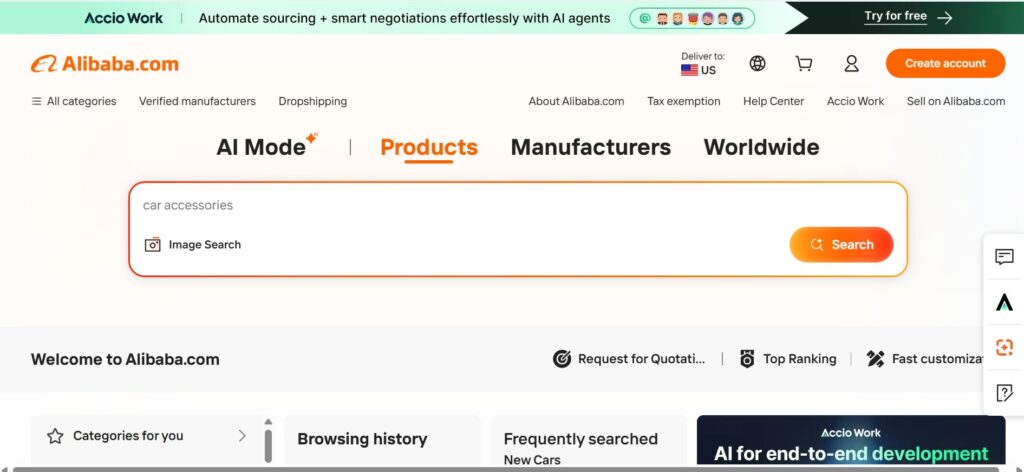
A product listed at $4 on Alibaba might actually cost you $6.91 per unit by the time it reaches your warehouse. That’s roughly $1.30 in freight and another $1.61 in import duties and fees. The difference can eat into your profit margins before you’ve sold a single item.
And shipping costs have become harder to predict. Since August 29, 2025, the US has suspended its $800 duty-free de minimis exemption, meaning even small sample orders can face import duties and clearance fees.
Alibaba shipping costs depend on your shipment’s weight, volume, destination, shipping method, and agreed delivery terms. Beyond international freight, your total landed cost may include origin handling, insurance, customs clearance, duties, and final delivery.
In this guide, we’ll break down 2026 shipping rates, explain the charges behind your quotes, and share nine practical ways to reduce your Alibaba shipping costs.
Alibaba Shipping Costs: Quick Facts (November 2026)
| Question | Quick answer |
| How much is express shipping? | Approximately 5-10 per kg |
| How much is air freight? | Approximately 4-8 per kg |
| How much is sea freight? | LCL: 50-150 per CBM, plus destination charges |
| What does a 20ft container cost? | Approximately 1,500-6,500 for ocean freight |
| Why are small orders expensive? | Fixed handling fees, dimensional weight, and customs charges |
| Are US imports under $800 duty-free? | No. Applicable duties now apply regardless of shipment value, subject to exceptions. |
| What’s the lowest-cost option for bulk orders? | Usually sea freight, based on total landed cost |
| What should you check before ordering? | Your HTS duty rate and a fully itemized freight quote |
These are indicative planning ranges, primarily for China-origin international shipping. Actual rates vary by destination, shipment size, season, and included services. Freight quotes may exclude substantial additional costs, so always compare the complete landed cost.
Why Is Alibaba Shipping So Expensive?
Alibaba shipping is expensive because you’re paying for more than transportation. Small order quantities, packaging dimensions, freight handling fees, and import duties can all increase your final bill.
Here are six reasons Alibaba shipping costs can be surprisingly high, especially for small businesses importing from China.
1. Small Orders Can’t Spread Fixed Shipping Fees
Shipping a small order often costs disproportionately more because certain fees remain the same regardless of how many products you import.
For example, suppose your shipment has $400 in combined documentation, handling, customs clearance, and delivery fees. Here’s how that affects your costs:
| Order quantity | Fixed fees per unit |
| 20 units | $20.00 |
| 100 units | $4.00 |
| 500 units | $0.80 |
Illustrative example, excluding product costs and variable freight charges.
The more units you ship together, the less these fixed fees contribute to each product’s landed cost.
Our advice: If you’re importing small quantities from China, compare the savings from a larger shipment against the cost of holding additional inventory. Increasing your order quantity only makes sense when you can sell the extra stock.
2. Couriers Charge for Package Size, Not Just Weight
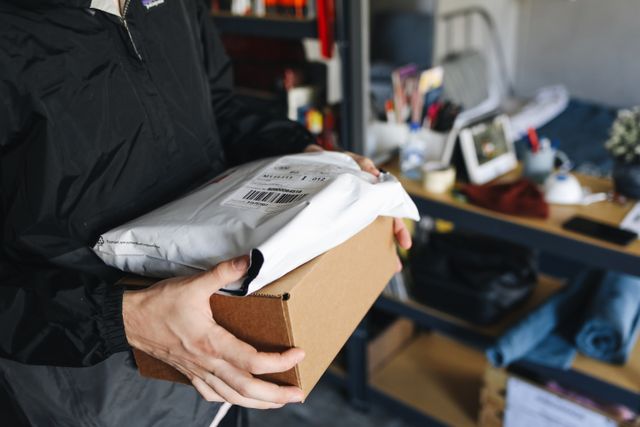
Shipping companies often calculate charges using volumetric weight, which measures how much space your products occupy.
For example, a carton measuring 60 × 50 × 40 cm has a volumetric weight of 24 kg using a courier divisor of 5,000. Even if the carton physically weighs just 10 kg, you could be charged for 24 kg.
This makes lightweight, bulky products such as pillows, plush toys, and home decor particularly expensive to ship by air.
Our advice: Ask your supplier for final carton dimensions and packaging options. Reducing unnecessary packaging can lower your volumetric shipping weight without reducing the quantity ordered.
3. Alibaba’s Listed Shipping Price Often Uses Air Freight
Many Alibaba product listings display express or air shipping estimates, particularly for smaller orders.
Air transportation costs considerably more than sea freight. Alibaba’s own sourcing guidance indicates that air freight can cost around three times as much as ocean freight, sometimes more.
However, the lower ocean freight rate doesn’t automatically mean a lower door-to-door cost. Small sea shipments may incur substantial port handling and destination charges.
Our advice: Request both air and sea freight quotations for the same shipment, including all destination charges, before deciding.
4. Suppliers May Add a Margin to Shipping Quotes
When your Alibaba supplier arranges freight, they typically obtain a rate from a logistics provider and include shipping in their quotation.
Some suppliers add a margin to cover coordination, documentation, and administrative work. A 10–20% markup is a useful comparison scenario, although actual margins vary and aren’t necessarily disclosed.
For example, a $1,000 forwarder rate could become a 1,100-1,200 supplier quote with that markup.
Our advice: Get an independent freight forwarder quote using the same shipment details and delivery terms. This helps you determine whether the supplier’s shipping price is competitive.
5. Fuel Prices and Peak Seasons Affect Freight Rates
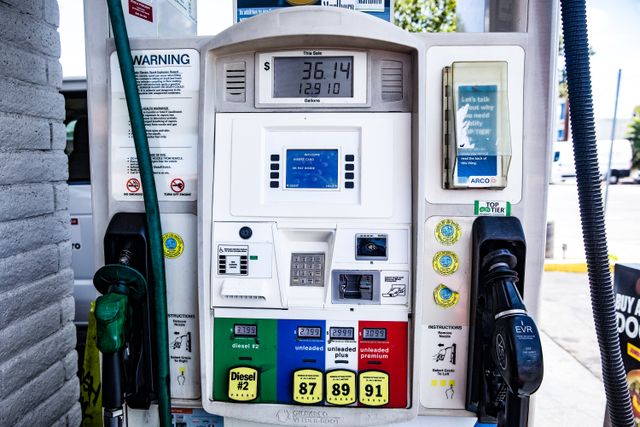
International shipping rates fluctuate with fuel costs, carrier capacity, demand, and congestion.
Prices can rise during the August–October shipping peak and in the weeks leading up to Chinese New Year, when businesses rush to move inventory before factory closures.
For example, a shipment quoted at $2,000 could increase to $2,400 after a 20% rate adjustment. That’s an illustration of how volatility affects your budget, not a prediction of seasonal increases.
Our advice: Request an updated quote before placing your order, particularly if your supplier’s production lead time extends several weeks. Where possible, schedule inventory purchases outside peak shipping periods.
6. US Import Duties Now Apply to Low-Value Shipments
A major change for US importers took effect on August 29, 2025, when the United States suspended its $800 de minimis duty-free exemption.
As of November 2026, even a $30 Alibaba sample shipment can be subject to import duties and clearance charges. The exemption no longer automatically applies to low-value imports, although specific statutory exceptions remain.
Your additional costs depend on the product’s tariff classification, country of origin, applicable tariffs, and carrier clearance arrangements. Brokerage fees may also apply, although their amounts vary and some courier services bundle clearance into their rates.
Our advice: Verify your product’s Harmonized Tariff Schedule (HTS) classification and request a quote that specifies whether duties and customs clearance are included.
These costs don’t necessarily indicate that a supplier is overcharging you. Most come from identifiable shipping and customs mechanisms, and each offers an opportunity to reduce expenses.
What Do Alibaba Shipping Costs Include?

Alibaba shipping costs include international freight, packaging, handling, customs clearance, import duties, and delivery to your destination. Depending on your supplier’s quotation, some charges may already be included while others are billed separately.
Here’s how the total cost typically breaks down when importing from China.
| Cost component | What it covers | Typical cost or calculation |
| Product cost | Price paid to the supplier | Unit price × quantity |
| Export packaging | Cartons, pallets, protective packaging | Often included; confirm with supplier |
| Origin charges | Factory pickup, trucking, terminal handling (THC), export documents | Varies by shipment and origin port |
| International freight | Air, sea, or express transportation | Based on weight, volume, route, and shipping method |
| Cargo insurance | Protection against covered loss or damage | Indicatively 0.1–0.33% of insured cargo value |
| Destination charges | Terminal handling, customs bond, brokerage, and port fees | Budget roughly 100-450 for applicable clearance and handling services; actual fees vary |
| Import duties and taxes | Customs tariffs and government processing fees | Based on destination country and product classification |
| Last-mile delivery | Transportation from the arrival port or airport to your warehouse | Depends on distance, shipment size, and delivery location |
For US imports, the duty calculation deserves particular attention. Depending on the product, you may pay the standard HTS tariff rate plus additional Section 301 tariffs, commonly 7.5% or 25% on covered Chinese products. Some categories have higher rates or exclusions, so these percentages aren’t universal.
Formal US customs entries also incur a Merchandise Processing Fee (MPF) of 0.3464% of the entered value, subject to a $34.58 minimum and $670.86 maximum as of October 2026. Ocean imports may additionally incur a 0.125% Harbor Maintenance Fee.
One detail we always suggest checking is which costs your supplier’s shipping quote actually covers.
For example, EXW generally leaves most transportation arrangements to the buyer, FOB covers specified costs through loading at the origin port, and DDP places substantially more delivery and import responsibilities on the seller. That changes which charges appear separately on your invoice.
For a breakdown of these arrangements, see our guide on how Alibaba shipping works, including shipping methods and Incoterms.
Our advice: Request an itemized door-to-door quotation before placing an order. This makes it easier to compare suppliers and identify destination charges that may otherwise come as a surprise.
Alibaba Shipping Costs by Method (2026 Rates)
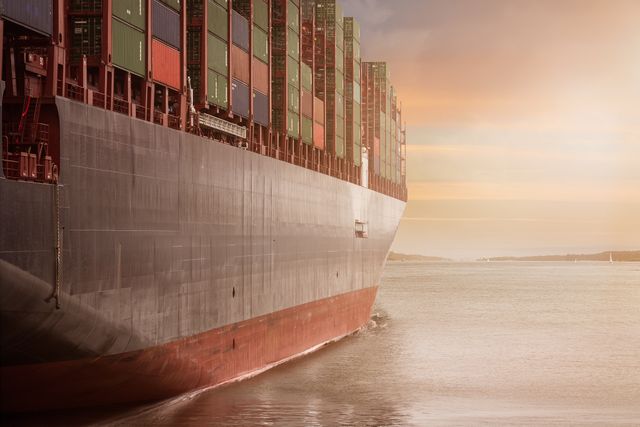
Alibaba shipping costs vary considerably by shipping method, shipment size, and destination. Express delivery generally costs more per kilogram, while sea freight becomes more economical as order volume increases.
Here’s a comparison of indicative shipping rates from China as of November 2026.
| Shipping method | Estimated shipping cost | Suitable for |
| Express courier (DHL, FedEx, UPS) | 7-16 per kg | Samples and small parcels |
| Air freight | 5-10 per kg | Urgent shipments around 100–500 kg |
| Sea freight (LCL) | 50-165 per CBM, plus destination charges | Smaller bulk shipments, typically 2–15 CBM |
| Sea freight (FCL, 20ft) | 4,900-8,400 per container on sampled US routes | Larger wholesale orders |
| Rail freight (China–Europe) | Approximately 170-220 per CBM for shared rail cargo | Mid-sized shipments to Europe |
| Postal shipping / ePacket | Varies by route and service availability | Small parcels on supported routes |
Rates are indicative, primarily based on late-2026 China–US freight quotations, with rail figures for China–Europe. They are not guaranteed door-to-door prices. Duties, customs clearance, insurance, and destination handling may be charged separately.
Why Your Carton May Cost More Than Its Weight Suggests
Air freight and express couriers usually charge based on whichever is higher: actual weight or volumetric weight.
The calculation is straightforward:
- Express courier: Length × Width × Height (cm) ÷ 5,000
- Air freight: Length × Width × Height (cm) ÷ 6,000
For example, a carton measuring 100 × 50 × 50 cm has a volumetric weight of 50 kg with the express courier formula. Even if the actual weight is only 20 kg, the courier may charge for 50 kg.
At $8 per chargeable kg, that’s $400 in base freight charges instead of $160.
Our advice is to confirm carton dimensions before requesting quotations. Even small packaging adjustments can make a substantial difference for lightweight, bulky products.
When Air Freight Can Cost Less Than Sea Freight
Sea freight usually has a lower base transportation rate, but it isn’t always the most economical choice for small shipments.
For orders below approximately 150 kg or 1 CBM, air freight can sometimes cost less than LCL sea shipping once destination handling, customs clearance, and local delivery are included.
For example, an LCL shipment may attract 150-300 or more in local handling charges before you account for the ocean freight itself. These fixed charges can outweigh the savings on a small shipment.
We suggest comparing complete air and LCL quotations whenever your order is near this threshold. The actual crossover depends on the route, cargo dimensions, and included services.
What Happened to ePacket Shipping in 2026?
ePacket and other postal shipping options are no longer as economical for US-bound Alibaba orders as older guides suggest.
The US suspended its $800 duty-free exemption in August 2025 and introduced a new postal import entry process effective July 24, 2026. These changes have increased the customs-related costs and administrative requirements for many low-value parcels.
Postal shipping remains possible on supported routes, including certain European destinations, but availability, import duties, and VAT must be checked separately.
For small US-bound orders, we generally suggest comparing courier quotations that include customs clearance and applicable duties.
Landed Cost: The Number That Matters
The shipping quote alone won’t tell you whether importing from Alibaba is profitable. You need to calculate your landed cost per unit, which includes everything you spend to get the products from your supplier to your warehouse.
The formula is:
Landed Cost = Product Cost + Freight + Insurance + Import Duties + Customs Fees + Delivery
Then divide the total by the number of units to determine your actual cost per product.
Example: Importing 500 Units from Alibaba to the USA
Let’s say you’re importing 500 products from China at $4 each, with an $800 freight quote. We’ll assume a 5.7% standard import duty and a 25% Section 301 tariff for this example.
| Cost component | Amount (USD) |
| Product cost (500 × $4) | $2,000.00 |
| Freight and delivery (assumed all-in) | $800.00 |
| Cargo insurance | $12.00 |
| Standard import duty (5.7%) | $114.00 |
| Section 301 tariff (25%) | $500.00 |
| Merchandise Processing Fee (MPF) | $34.58 |
| Customs brokerage | $150.00 |
| Total landed cost | $3,610.58 |
| Landed cost per unit | $7.22 |
Illustrative US import calculation for November 2026. It assumes a formal customs entry, a $2,000 dutiable value, and no additional tariffs or fees. The $34.58 MPF minimum is effective from October 1, 2026. Actual charges depend on classification and shipment details.
Your supplier’s $4 product now costs $7.22 per unit, roughly 81% more before storage, marketing, and other selling expenses.
This is why we suggest comparing suppliers and shipping methods based on landed cost per unit rather than freight rates alone. A lower shipping quote isn’t necessarily better if it comes with higher destination charges.
Before confirming your order, verify the product’s HTS classification and applicable tariffs with a customs broker. Section 301 rates vary by product, and additional trade measures may apply.
We also suggest keeping a 15–25% contingency buffer against estimated logistics and import charges, particularly for first-time shipments. This is a planning allowance, not a standard industry fee; the amount needed depends on your route, quotation terms, and potential inspection or handling charges.
How to Choose the Best Alibaba Shipping Method
The most cost-effective Alibaba shipping method depends on your order’s weight, volume, destination, and delivery urgency. We suggest comparing the total landed cost of at least two shipping options before confirming an order.
Here’s a quick decision guide:
| Your shipment | Shipping option to consider | Why |
| Samples or small orders under 100 kg | Express courier | Fewer handling steps and simpler clearance for small parcels |
| Urgent orders around 100–500 kg | Air freight | Often more economical than express courier at higher weights |
| Bulk orders above 2 CBM | Sea freight (LCL) | Shares container space, reducing freight costs |
| Larger orders around 13–15 CBM or more | Sea freight (FCL) | A dedicated container may offer better value than LCL |
| Mid-sized shipments from China to Europe | Rail freight | Worth comparing against air and sea on supported routes |
| First order with minimal logistics involvement | DDP shipping | Seller-arranged delivery with import clearance and duties included in the agreed price |
These are starting points, not fixed thresholds. Freight rates and the LCL-to-FCL crossover vary by route, season, cargo dimensions, and destination charges.
Don’t Choose Sea Freight Just Because Its Rate Is Lower
One mistake we suggest avoiding is sending a very small order by sea simply because the quoted freight rate looks attractive.
For example, a 20 lb (approximately 9 kg) shipment may cost less on the ocean leg, but port handling, customs clearance, and inland delivery can eliminate those savings. You could also wait several additional weeks for your inventory.
For shipments below roughly 150 kg or 1 CBM, it’s worth comparing air freight against LCL sea freight on a door-to-door basis.
Our advice: Start with your shipment size and delivery deadline, then compare itemized quotes. If the faster method costs slightly more but helps you avoid stockouts or unnecessary handling fees, it may be the more economical choice overall.
How to Reduce Alibaba Shipping Costs: 9 Practical Ways
You can reduce Alibaba shipping costs by consolidating orders, comparing freight forwarders, optimizing packaging, and choosing shipping methods that match your order size.
We’ve outlined nine strategies below, starting with the ones worth checking first for most small importers.
1. Consolidate Orders from Multiple Suppliers

If you’re buying from several Alibaba suppliers, shipping each order separately means paying multiple freight and handling charges.
Instead, you can have suppliers send their products to a single warehouse in China, where the goods are inspected, repacked, and combined into one shipment.
This can reduce duplicated pickup, documentation, customs clearance, and delivery costs. However, you’ll need to account for warehouse receiving fees and domestic transportation.
Our advice: Consolidation is especially worth considering when sourcing multiple products for the same destination. Compare the combined shipment cost against separate deliveries before committing.
2. Request a Sea Freight Quote
Alibaba listings may display express or air shipping estimates, particularly for smaller orders. However, the displayed method varies by listing and seller.
According to Alibaba’s shipping guidance, air freight can cost around three times as much as ocean freight, sometimes more.
For example, if an air shipment costs $1,500, the equivalent ocean freight leg might cost around $500. That’s an illustrative comparison; port charges and local delivery can narrow the difference.
Our advice: If your inventory isn’t urgently needed, request a sea freight quote alongside the air option. Compare total door-to-door costs rather than transportation rates alone.
3. Compare Independent Freight Forwarder Quotes
Suppliers often arrange shipping through their preferred logistics partners. While convenient, their quotes may include an additional coordination margin.
For comparison, a supplier charging $1,200 for freight might be using a forwarder whose underlying rate is $1,000. That represents a 20% markup, although actual margins vary and aren’t always disclosed.
Request quotes from at least two independent China freight forwarders using identical shipment details.
Our advice: A 10–20% saving is a useful comparison scenario, not a guaranteed discount. Ensure every quotation includes the same origin charges, destination fees, and delivery terms.
4. Reduce Packaging Volume
Lightweight but bulky products can cost more to ship because carriers calculate charges using volumetric weight.
Suppose your carton has a chargeable weight of 50 kg. Reducing its dimensions enough to bring that down to 35 kg could lower the weight-based freight charge by 30%, assuming volumetric weight remains the billing basis.
Ask your supplier whether they can use smaller cartons, remove unnecessary empty space, or pack products more efficiently.
Our advice: Packaging changes are particularly valuable for pillows, textiles, and lightweight home accessories. However, don’t sacrifice protective packaging just to reduce freight charges, especially for fragile products.
5. Split Urgent and Non-Urgent Inventory
If you need inventory quickly but want to avoid paying air freight rates for the entire order, consider splitting your shipment.
For example, you could ship 10% of a 1,000-unit order by air and the remaining 90% by sea.
The first shipment helps maintain stock availability while the larger shipment travels at a lower freight rate.
Our advice: This works when the additional handling costs are lower than the air freight savings and the cost of potential stockouts. Ask your forwarder to calculate both shipments before splitting the order.
6. Negotiate EXW or FOB Shipping Terms
Your supplier’s quoted shipping terms determine which logistics costs are included and how much control you have over transportation.
With EXW, you arrange collection and most subsequent shipping activities. Under FOB, the supplier generally handles export arrangements and delivery onto the vessel at the named loading port.
These terms can make it easier to negotiate the main freight leg through your own forwarder.
Our advice: Request comparable EXW, FOB, and DDP quotations. For newer importers, FOB can offer a practical balance between controlling international freight and leaving origin export arrangements to the supplier.
For a detailed comparison, see our EXW vs. FOB guide.
7. Avoid Peak Shipping Seasons When Possible
Freight rates can increase during periods of high demand, particularly August through October and the weeks leading up to Chinese New Year.
During these periods, limited carrier capacity, factory schedules, and port congestion can affect both pricing and delivery availability.
Ordering earlier can help you avoid last-minute premium freight charges, although off-peak shipping doesn’t guarantee lower rates.
Our advice: Plan around your supplier’s production lead time and expected inventory demand. Request updated rates before booking rather than relying on quotations received several months earlier.
8. Increase Order Size When It Makes Financial Sense
Larger shipments can reduce the fixed shipping cost per unit because documentation, clearance, and certain handling charges are spread across more products.
Using the earlier $400 fixed-fee example, ordering 500 units instead of 100 reduces that portion of shipping costs from $4 to $0.80 per unit.
However, a larger order also ties up more working capital and may increase storage costs.
Our advice: Calculate your landed cost at multiple order quantities, factoring in supplier MOQ, storage expenses, and expected sales. Ordering more inventory is only worthwhile when the savings justify the additional stock.
9. Verify Your HTS Code and Import Duties
For US-bound Alibaba orders, incorrect product classification can lead to unnecessary duties, unexpected charges, or customs penalties.
Certain China-origin goods are subject to additional Section 301 tariffs, depending on their Harmonized Tariff Schedule (HTS) classification.
You can review applicable Section 301 measures through the Office of the United States Trade Representative.
Our advice: Confirm the product’s classification and applicable duty rates with a customs broker before purchasing. Accurate classification helps you budget correctly and identify any lawful tariff exclusions; never change the declared classification simply to obtain a lower rate.
How Consolidation Works in Yiwu
For businesses sourcing multiple products, consolidation is one of the most practical ways to simplify shipping from China.
Consider an importer purchasing products from three different suppliers in Zhejiang and Guangdong.
Instead of arranging three international shipments, the suppliers can deliver their goods to a consolidation warehouse in Yiwu. The products can then undergo quality inspection, carton optimization, and preparation for a single LCL or FCL shipment.
This creates an opportunity to combine cargo handling, customs clearance, and final delivery arrangements.
At NicheSources, our Yiwu-based team can help coordinate this process, including supplier communication, quality inspection, and freight consolidation.
The actual savings depend on warehouse fees, domestic freight, shipment volume, and destination. We suggest comparing the combined landed cost against individual shipments to confirm whether consolidation is worthwhile.
Copy-and-Paste Template: Negotiate Shipping Costs with Your Alibaba Supplier
One of the easiest ways to start reducing shipping costs is to ask your supplier for more detailed quotations.
You can use this message:
Supplier Shipping Quote Request
Copy
Hi [Supplier Name],
Before confirming our order, could you please provide:
1. An itemized shipping quote showing origin charges, international freight, destination handling, customs clearance, and final delivery separately.
2. Shipping quotations under EXW, FOB, and DDP terms, including the named ports or delivery locations.
3. Final carton dimensions, gross weight, total carton count, and shipment volume (CBM) for [quantity] units.
4. Both air freight and sea freight options, including estimated total costs.
5. Confirmation of whether duties, taxes, and insurance are included in each quote.
We’re also comparing quotations from independent freight forwarders, so accurate packing details will help us make a decision.
Thank you!
The goal is to obtain comparable quotes with clear cost breakdowns. Once you know exactly what each supplier and forwarder includes, you can negotiate more effectively and avoid unexpected charges after shipping.
How to Manage Alibaba Shipping

You have three main ways to manage Alibaba shipping: let your supplier arrange delivery, hire your own freight forwarder, or work with a sourcing agent.
The right choice depends on your order volume, logistics experience, and how much control you want over shipping costs.
1. Let Your Alibaba Supplier Arrange Shipping
This is usually the simplest option for first-time buyers. Your supplier coordinates transportation through their logistics partner and provides a shipping quote alongside your product order.
You can request DDP (Delivered Duty Paid) shipping, where the seller is responsible for arranging import clearance and paying applicable duties under the agreed terms.
The downside is limited pricing transparency. You may not know how much the supplier pays their forwarder or whether the quote includes an additional margin.
Our advice: Supplier-arranged shipping works well for samples and occasional purchases. Just request an itemized quotation and confirm exactly what’s included before paying.
2. Hire Your Own Freight Forwarder
If you’re importing regularly, using an independent freight forwarder gives you greater control over shipping arrangements.
You can negotiate transportation rates, compare carriers, and review individual freight charges instead of relying entirely on your supplier’s quote.
However, you’ll also need to coordinate shipment details, customs documentation, and any problems that arise during transportation.
Our advice: This approach makes sense when you’re handling repeat or higher-volume orders. The potential savings should justify the additional coordination involved.
US importer tip: For formal customs entries, ask your customs broker for a copy of CBP Form 7501 (Entry Summary). It records the declared import value and applicable duties and fees, making it useful for reconciling landed costs and maintaining accounting records.
3. Work With a Sourcing Agent
A China sourcing company can coordinate supplier orders, quality inspections, warehouse consolidation, and international shipping on your behalf.
This is particularly useful when buying from several Alibaba suppliers, as you can combine products into fewer shipments and reduce duplicated logistics work.
For example, NicheSources charges a service fee typically ranging from 5–10% of order value, depending on the arrangement. That adds to your sourcing costs, but consolidation, quality inspection, and centralized coordination may offset some of the expense.
Our advice: Compare the agent’s total service and shipping costs against managing everything independently. A sourcing agent is most valuable when the savings and reduced coordination outweigh the additional fee.
DDP vs. DAP: Who Handles Customs?
Under DDP, the seller is responsible for import clearance and duties. Under DAP (Delivered at Place), the buyer takes responsibility for import clearance and applicable duties. However, the actual importer of record must be confirmed separately, particularly when local regulations restrict foreign sellers from acting as importers.
Regardless of which shipping arrangement you choose, make sure the quotation clearly separates origin charges, international freight, destination handling, and import costs.
Get a Transparent Alibaba Shipping Quote
From our experience coordinating sourcing and logistics in Yiwu, comparing itemized freight quotations is one of the most useful ways to identify unnecessary costs.
At NicheSources, we can help you consolidate supplier orders, arrange quality inspections, and compare shipping options based on your shipment’s actual requirements.
Request a Free Freight Quote to see what shipping your Alibaba order could cost.
Tools to Calculate Alibaba Shipping Costs

You can estimate Alibaba shipping costs using the platform’s shipping calculator, online freight comparison tools, or quotes from freight forwarders.
However, most calculators only provide an initial estimate. They may exclude import duties, customs brokerage, destination handling, and local delivery, so the displayed rate isn’t necessarily your final shipping cost.
Here are three ways to calculate and compare your expenses.
| Tool | What it helps you calculate | Main limitation |
| Alibaba shipping estimates | Shipping costs for a specific supplier’s products | May exclude customs duties and additional destination charges |
| Freightos | Compare freight rates across available routes and services | Coverage varies; check whether local charges, taxes, and clearance are included |
| Freight forwarder quote forms | Obtain shipment-specific freight and delivery quotations | Accuracy depends on the shipment details provided and quote inclusions |
We suggest using online calculators to establish a price range, then requesting an itemized forwarder quote before committing to an order.
To get a more accurate estimate, have your carton dimensions, gross weight, total CBM, destination address, and product HS code ready.
Watch Out for CIF Shipping Quotes
One mistake worth avoiding is assuming a CIF (Cost, Insurance, and Freight) quote covers delivery to your warehouse.
Under CIF terms, the supplier pays for transportation and minimum cargo insurance to the named destination port. However, you’re generally still responsible for import duties, customs clearance, applicable destination handling charges, and transportation beyond the port.
A CIF quote may therefore look more affordable than a door-to-door quotation, even though you’ll have additional expenses after arrival. Supplier-arranged freight can also include margins that aren’t separately disclosed.
Our advice: Request FOB and DDP quotations for the same shipment, then calculate the total landed cost under each arrangement. This gives you a clearer comparison of transportation costs and the convenience of supplier-managed delivery.
For more details, see our guide to CIF shipping terms.
FAQs about Alibaba Shipping Costs
Navigating Alibaba shipping can seem complex, but understanding the logistics can significantly cut costs. Below are the most common questions related to Alibaba shipping to help you manage your expenses effectively.
What Documents Do You Need for Alibaba Shipping?
For Alibaba shipping, you will typically need a Bill of Lading, Commercial Invoice, Packing List, and often a Certificate of Origin.
Complete and accurate documentation is essential to avoid delays in customs and additional fees.
It’s advisable to check with the supplier or a freight forwarder to ensure all required documents for your specific shipment are prepared.
Does Alibaba Have Free Shipping?
Alibaba itself does not offer free shipping.
Shipping costs are usually determined by individual suppliers and can vary based on the weight, volume, and distance of shipment.
Some suppliers may offer free shipping promotions, but these are not standard and should be confirmed before purchasing.
What Do I Need to Get a Shipping Quotation?
To receive an accurate shipping quotation, you need to provide details such as product weight and dimensions, quantity, Incoterms (shipping terms), and the destination address. Providing precise information can help avoid unexpected charges.
Who Pays for Shipping on Alibaba?
ypically, you, the buyer, pay for shipping costs on Alibaba. However, shipping terms can be negotiated with the supplier.
Terms like FOB (Free on Board) imply the seller covers costs until the goods reach the port of origin, and you cover the costs from there onwards. Always clarify shipping terms before finalizing a purchase.
Do You Need Shipping Insurance?
While not mandatory, shipping insurance is highly recommended. It safeguards your cargo against loss or damage during transit for a relatively low cost, which is a smart investment if you’re shipping valuable goods.
Depending on the order value, insurance rates can vary from 0.11-0.33% of the cost of your goods.
Is Alibaba or AliExpress Cheaper for Shipping?
AliExpress can be more economical for individual products because it uses retail parcel-shipping arrangements, sometimes with delivery costs included in the listed price.
Alibaba generally offers better shipping economics for larger wholesale orders, particularly when you consolidate products into a single freight shipment.
For small test orders, compare the total delivered price on both platforms. For bulk purchasing, calculate landed cost per unit, including import duties.
Is DDP Shipping Worth the Extra Cost?
DDP shipping can be worthwhile for first-time importers who prefer a single quotation covering transportation, import clearance, duties, and delivery.
However, suppliers may include an additional margin for managing these responsibilities. Once you’re importing regularly, working with your own forwarder may provide greater cost transparency.
We suggest comparing an all-inclusive DDP quotation with the total landed cost of an FOB shipment before deciding.
Can I Get a Refund if My Alibaba Shipment Is Lost or Damaged?
Yes, eligible orders may qualify for refunds through Alibaba’s Trade Assurance program if goods are missing, damaged, or fail to meet agreed terms.
Alibaba’s standard refund window is generally 30 days after delivery, extended to 60 days for eligible Enterprise buyers. Check your order’s specific protection period.
Keep order agreements, tracking records, photos, and supplier communications on Alibaba.
If the damage occurred during transit, you may also have a separate cargo insurance claim, depending on your policy.