Flip a new Coach bag inside out and there’s a good chance the origin tag says Vietnam. That surprises some buyers because Coach is a New York brand, but its manufacturing network has been global for decades.
Coach designs its products in New York, while production is handled by independent manufacturing partners. From a sourcing perspective, that matters because Coach’s supply chain shows how large fashion brands spread production across specialized manufacturing clusters rather than relying on a single country.
Quick Facts: Where Coach Bags Are Made
| Question | Answer |
| Where are Coach bags mainly made in 2026? | Vietnam, Cambodia, the Philippines, and India |
| How large is Tapestry’s Tier 1 supplier network? | 112 facilities across 16 countries |
| Are Coach bags still made in China? | Yes. Tapestry’s June 2026 supplier list includes 20 facilities in China, although China is no longer listed as a primary manufacturing country |
| Are Coach bags made in the USA? | No large-scale bag production. Four US Tier 1 facilities remain for specialty work |
| Does a country label prove authenticity? | No. A Coach bag made in China, Vietnam, or another approved manufacturing country can be authentic |
Where Are Coach Bags Made In 2026?
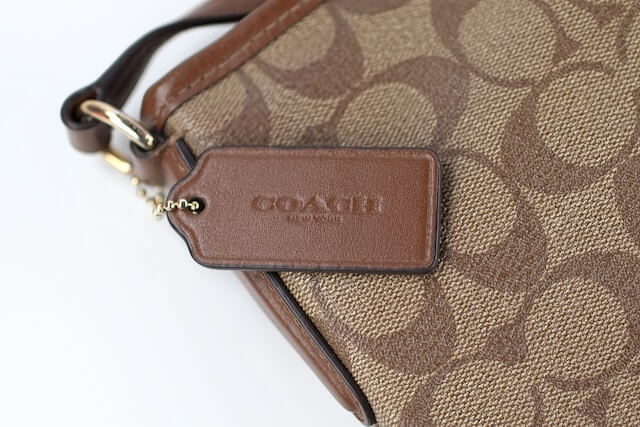
Coach products are primarily manufactured in Vietnam, Cambodia, the Philippines, and India, according to Tapestry’s FY2026 Form 10-K, filed on August 13, 2026. Tapestry also states that no single vendor accounts for 10% or more of Coach’s inventory purchases, which tells us the brand deliberately spreads production across multiple suppliers rather than relying on one factory or country.
Tapestry’s June 2026 Tier 1 supplier list gives us a more detailed look at that network. It includes 112 finished-goods facilities across 16 countries:
| Country | Tier 1 Facilities | Main Locations |
| Vietnam | 28 | Ninh Binh, Ho Chi Minh City, Hai Phong, Ninh Thuan, Dong Nai |
| China | 20 | Guangdong, Zhejiang, Shandong |
| Cambodia | 11 | Phnom Penh, Kandal |
| India | 11 | Tamil Nadu, Uttar Pradesh, Karnataka, Andhra Pradesh |
| Philippines | 8 | Pampanga, Central Luzon, Cordillera, Davao, Tarlac |
| Other countries | 34 | Turkey, Peru, Thailand, Indonesia, USA, Bangladesh, Myanmar, Rwanda, Portugal, Italy, Malaysia |
There is one important limitation to keep in mind. This is Tapestry’s supplier list, not a Coach-handbag-only factory list. It also covers Kate Spade and Stuart Weitzman, and some facilities make footwear, jewelry, hardware, cashmere, or other products. We therefore use these figures to understand Tapestry’s manufacturing footprint rather than claiming every listed factory produces Coach bags.
Vietnam Is Coach’s Largest Manufacturing Hub
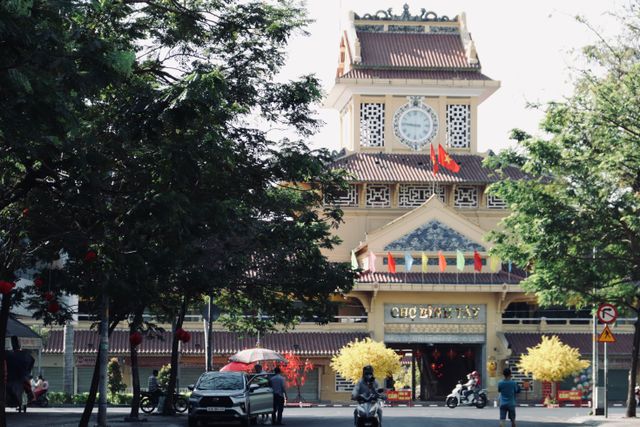
Vietnam has the largest Tier 1 footprint in the network, with 28 facilities. The factories are spread across both northern and southern manufacturing regions, including Ninh Binh and Ho Chi Minh City with five facilities each, Hai Phong with four, Ninh Thuan with three, and Dong Nai with two.
What stands out to us is factory scale. Three Vietnamese facilities fall into Tapestry’s 5,001–10,000 worker band, while another nine employ between 1,001 and 5,000 workers. That makes Vietnam particularly well suited to high-volume production where brands need large, export-oriented factories with established leather-goods and footwear supply chains.
Vietnam’s importance is not completely new either. Tapestry filings showed Vietnamese suppliers becoming significant to Coach well before the current shift away from China, so the 2026 footprint looks more like the continuation of a long-term sourcing strategy than a sudden relocation.
Cambodia Is Concentrated Around Phnom Penh
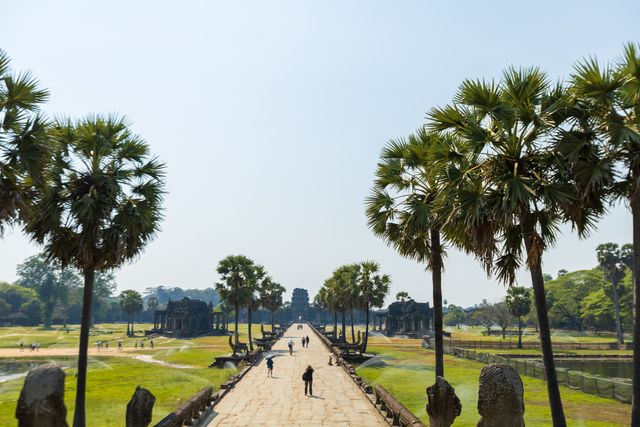
Cambodia has 11 Tier 1 facilities, with 10 located in Phnom Penh and one in Kandal. That makes its manufacturing footprint much more geographically concentrated than Vietnam’s.
From a sourcing perspective, that concentration is useful because factories, labor pools, logistics providers, and subcontractors can develop around the same production zone. Tapestry’s list also includes larger Cambodian plants, showing that the country is used for meaningful production volume rather than only small specialty orders.
India Draws on Established Leather Clusters

India also has 11 Tier 1 facilities, including five in Tamil Nadu, three in Uttar Pradesh, two in Karnataka, and one in Andhra Pradesh.
Tamil Nadu is especially relevant because it is one of India’s established leather and leather-goods manufacturing regions. For buyers, this helps explain why India fits naturally into Tapestry’s supply chain: the country already has the workforce and supplier ecosystem required for leather products, small goods, and detail-intensive manufacturing.
The Philippines Relies on Larger Factories

Tapestry lists eight Tier 1 facilities in the Philippines, spread across Pampanga, Central Luzon, Cordillera, Davao, and Tarlac. Seven of those eight facilities fall into the 1,001–5,000 worker range.
That factory profile suggests the Philippines is used for labor-intensive production at a meaningful scale. Bag manufacturing still depends heavily on skilled stitching, assembly, finishing, and inspection, so large workforces remain valuable even when production processes are standardized.
Is Coach Still Made in China?
Yes. Coach still uses manufacturing facilities in China, but China is no longer one of its primary production countries. That distinction matters because older articles often make it sound as if Coach either still relies heavily on China or has left the country entirely. Neither is accurate.
Tapestry’s filings show the shift clearly. In FY2020, China was still listed among Coach’s primary manufacturing locations alongside Vietnam, Cambodia, and the Philippines. By FY2026, the primary countries were Vietnam, Cambodia, the Philippines, and India instead.
China has not disappeared from the supply chain, though. Tapestry’s June 2026 Tier 1 supplier list still includes 20 facilities in China, broken down as follows:
| Location | Tier 1 Facilities |
| Guangdong | 15 |
| Zhejiang | 3 |
| Shandong | 2 |
| Total | 20 |
What we find more revealing than the facility count is their size. Every Chinese facility on the list has 1,000 workers or fewer, while Vietnam and Cambodia include much larger plants. Several Chinese suppliers also specialize in hardware, metal components, jewelry, and other supporting categories rather than high-volume handbag assembly.
From a sourcing perspective, that looks like a change in China’s role rather than a complete exit. Guangdong in particular still has one of the deepest handbag supply chains in the world, so it makes sense for a global brand to keep access to its component suppliers, technical capabilities, and smaller production lines even after moving more volume elsewhere.
Tariffs also helped accelerate that shift. Starting in 2019, US Section 301 measures added a 25% tariff to affected handbags imported from China, making alternative production bases such as Vietnam more attractive for US-bound goods. At the same time, spreading production across several countries reduces the risk of depending too heavily on any single manufacturing market.
So if you come across an authentic-looking older Coach bag marked “Made in China,” the label itself is not a red flag. China was a major part of Coach’s offshore manufacturing network for years, and genuine Chinese-made Coach bags remain common on the resale market.
Who Makes Coach Bags? Verified Suppliers
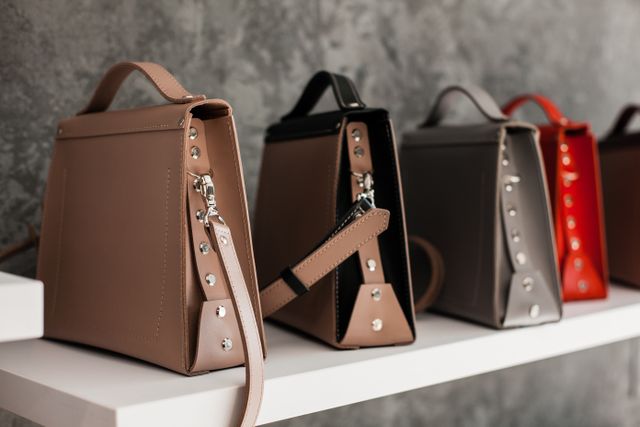
Coach does not own the factories that make its products. Instead, it works with independent manufacturers, and Tapestry says no single vendor accounts for 10% or more of Coach’s inventory purchases. That diversified model is common among large fashion brands because it reduces dependence on any one supplier or production country.
One thing we want to be careful about here is verification. Tapestry publishes a Tier 1 supplier list, but it does not disclose which factory makes which Coach model or even which Tapestry brand each facility serves. So the suppliers below fall into different categories: some have documented Coach relationships, while others are confirmed Tapestry contractors but cannot be tied publicly to a specific Coach bag.
Simone Is a Long-Standing Luxury Handbag Manufacturer
Simone Accessories Collection is one of the most credible names connected with Coach. The South Korean ODM was founded in 1987 and has been reported by Korean business publications as a major contract manufacturer for global luxury and premium handbag brands, including Coach.
There is also a useful correction here. Some older articles refer to a supplier called “Guangzhou Shimen Handbags.” That appears to come from the Chinese transliteration of Simone rather than a separate major Coach manufacturer. Simone opened manufacturing operations in Guangzhou in the 1990s and later expanded across Southeast Asia.
Tapestry’s June 2026 supplier list still includes Simone-linked facilities in Vietnam and Cambodia, including a Vietnam factory in the 5,001–10,000 worker band. That does not tell us which Coach styles are produced there, but it confirms Simone remains inside Tapestry’s current manufacturing network.
Jiangsu Mediyang Is Better Treated as a Historical Supplier
Jiangsu Mediyang Leather & Leather Goods has been associated with Coach production in historical company and Chinese business records. The manufacturer operates in China’s leather-goods sector and has held certifications such as ISO 9001, ISO 14001, LWG, and WRAP.
However, Mediyang does not appear on Tapestry’s June 2026 Tier 1 list. For that reason, we would not present it as a confirmed current Coach supplier. It is more accurate to describe it as a documented historical manufacturing partner.
Fulin Supplies Synthetic Leather, but the “50%” Claim Is Misleading
Fulin Plastic Industry, based in Hai Phong, Vietnam, produces synthetic leather and identifies Coach among the brands it has supplied. Its role is therefore better understood as a materials supplier rather than evidence that it assembles finished Coach handbags.
A statistic repeated across several articles claims Fulin supplies “about 50% of Coach’s synthetic leather.” We would not use that figure. The source material instead indicates that roughly 50% of Fulin’s own production is exported, which is a completely different claim. There is no primary source in the supplied research supporting a 50% share of Coach’s synthetic-leather purchases.
K H Exports Has a Strong Presence in India
K H Exports India Private Ltd appears across multiple facilities in Tapestry’s June 2026 supplier list, including four facilities in Tamil Nadu. That lines up with the region’s established leather and leather-goods manufacturing base.
Trade reporting has also linked K H Exports with Coach over a long period. Still, we would avoid claiming that a particular Coach bag or collection comes from one of these plants unless Coach or Tapestry confirms it directly.
Superl Operates Across Several Coach Manufacturing Regions
Superl Hong Kong Limited is another major contractor represented in Tapestry’s supplier network, with facilities across the Philippines, Cambodia, and China.
For us, suppliers like Superl illustrate how Coach’s production network actually works. Large manufacturers often operate several factories across different countries, allowing brands to shift capacity, manage tariff exposure, and balance labor availability without changing manufacturing partners entirely.
The broader takeaway is that there is no single “Coach factory.” Production sits inside a network of large leather-goods manufacturers and component suppliers spread across Asia. And because Tapestry does not publish brand-to-factory or model-to-factory assignments, any website claiming a specific factory makes a specific Coach bag should be treated cautiously unless it provides primary evidence.
Stella International Is Part of Tapestry’s Vietnam Network
Stella International is a large footwear and leather-goods manufacturer with three facilities in Vietnam listed in Tapestry’s June 2026 Tier 1 supplier network.
The important caveat is the same as with Superl and K H Exports: Tapestry’s supplier disclosure confirms Stella works within its manufacturing network, but it does not identify which facilities produce Coach products specifically. Since Stella is also heavily involved in footwear manufacturing, we should avoid presenting all three plants as confirmed Coach handbag factories.
That distinction actually strengthens the section because it shows we’re separating verified Tapestry suppliers from suppliers we can directly connect to Coach.
When Did Coach Stop Making Bags in the USA?
Coach stopped operating its own US manufacturing network in April 2002, when it closed its last company-owned factory in Lares, Puerto Rico. From fiscal 2003 onward, Coach production was fully outsourced to independent manufacturers.
The shift was gradual rather than a single move from New York to Asia. Coach first moved production out of Manhattan while keeping it in the US, then progressively increased its use of offshore contractors through the late 1990s and early 2000s.
| Period | What Happened |
| 1941 | Coach was founded in a Manhattan loft on West 34th Street, where bags were made in New York |
| 1950s | Miles Cahn developed the glove-tanned leather that became central to Coach’s identity |
| 1970s | Production moved from Manhattan to Coach’s own plant in Carlstadt, New Jersey |
| 1985 | Sara Lee acquired Coach, while US manufacturing continued |
| Fiscal 1999 | Coach significantly reduced Carlstadt operations and increased outsourced production, primarily outside the US |
| October 2000 | Coach closed its Medley, Florida factory |
| April 2002 | The Lares, Puerto Rico factory closed, ending Coach’s company-owned manufacturing |
| Fiscal 2003 | Coach production became 100% outsourced to independent contractors |
One correction is worth making because it is repeated surprisingly often: Coach did not move handbag production to China in the mid-1970s. The 1970s move was from Manhattan to New Jersey. The real offshore transition happened mainly between fiscal 1999 and 2002, when Coach sharply increased contractor production outside the US.
Does Coach Still Manufacture Anything in the USA?
Tapestry’s June 2026 Tier 1 supplier list still includes four US facilities, so the US has not disappeared from the supply chain entirely. Two of those are embroidery studios on West 36th Street in New York, close to where Coach originally started.
We would not describe these as evidence of current US handbag manufacturing, though. They appear to support embellishment, specialty work, and other limited production functions, rather than mass-market bag assembly. So for a modern Coach bag, a “Made in USA” label would be unusual, while it can be perfectly legitimate on vintage pieces from Coach’s earlier manufacturing era.
How to Tell Where Your Coach Bag Was Made
The most reliable way to check where a Coach bag was made is to look inside the bag for the country-of-origin tag. On modern bags, this is usually a small cloth tag sewn into an interior seam or pocket and marked “Made in Vietnam,” “Made in Cambodia,” “Made in India,” and so on.
Older Coach bags can be less straightforward because the brand’s labeling system has changed several times. In practice, we check the seam tag, creed patch, serial format, and production era together rather than relying on one code.
Check the Seam Tag First
For newer Coach bags, the sewn-in seam tag is the best place to start. It usually carries the country of origin and, on some newer styles, production or style information that used to appear on the leather creed patch.
This matters because the creed itself is no longer a consistent location marker across every generation of Coach bag.
Use the Creed Patch for Older Bags
Coach introduced its leather creed patch in the 1970s, and older bags often include a serial number beneath the creed text. Over time, the serial-number format changed, and some production information moved away from the creed and onto interior tags.
Collector communities have mapped certain production codes to countries, but Coach has not publicly released a definitive country-code chart. We would therefore use the table below as a supporting clue, not as proof of origin or authenticity.
| Code Digits Seen | Commonly Associated Country |
| 20, 67, 73, 90, 201 | China |
| 57, 61, 80, 81, 92 | Vietnam |
| 11, 22, 40, 54, 79, 91 | Cambodia |
| 21, 32, 47, 77, 78 | Philippines |
| 08, 36, 44 | India |
| 39, 200, 202 | Indonesia |
| 23, 30, 66, 97 | Myanmar |
| 96, 98 | Bangladesh |
Because these codes are community-compiled rather than officially published by Coach, a mismatch should prompt further checking rather than an automatic fake verdict.
What Does “F” Mean on a Coach Bag?
An “F” before the style number generally identifies a bag made specifically for Coach Factory or outlet channels. It is an outlet marker, not an authenticity warning.
That distinction is useful because buyers sometimes assume an “F” means fake. In reality, outlet products can have different materials, trims, or construction choices from full-price retail lines while still being genuine Coach products.
Can an Authentic Coach Bag Say “Made in Italy”?
Yes, particularly on certain older Coach collections. Coach produced some higher-end lines in Italy during roughly 1992 to 1998, including collections such as Madison and Sheridan.
For a vintage bag from that period, “Made in Italy” can therefore be completely legitimate. For a much newer bag, though, we would check the style, era, and other authenticity details more carefully rather than relying on the country label alone.
The key point is simple: country of origin helps date and contextualize a Coach bag, but it does not authenticate it by itself. The label, creed, style number, construction, and production era should all make sense together.
Does the Manufacturing Location Affect Quality?

Not by itself. Coach applies centralized material standards and factory-level quality controls across its supplier network, so a bag made in Vietnam should not be assumed to be better or worse than one made in Cambodia, India, China, or the Philippines.
Tapestry’s filings describe sourcing offices in major production countries that help oversee raw-material selection, manufacturing, and on-site quality inspection at independent factories. From our sourcing perspective, this is the part that matters most: consistency comes from controlling specifications and inspection standards, not from the country name on the label.
Coach Controls Materials Across Its Factory Network
Leather and other key materials are approved centrally rather than left entirely to individual factories. Tapestry has also set a target for more than 90% of its leather to come from Leather Working Group Gold- or Silver-rated tanneries, adding another layer of standardization around leather sourcing.
The same principle applies to construction. Stitching, hardware, edge finishing, lining, and other specifications are defined by the brand and then executed by different manufacturing partners.
That is why we would be cautious about claims such as “Vietnam-made Coach is higher quality” or “China-made Coach is lower quality.” Individual defects can happen at any factory, but the country of origin alone does not tell you how well a specific bag was made.
Country of Origin Does Not Prove Authenticity
A genuine Coach bag can carry a Made in Vietnam, China, Cambodia, India, or Philippines label. Counterfeiters can copy those labels too, so origin is useful for checking whether a bag makes sense for its production era, but it cannot authenticate the bag by itself.
For a quick authenticity check, we would look at five things together:
- Creed and stamping: lettering should be clean, evenly spaced, and appropriate for the bag’s era.
- Stitching: seams should be straight and consistent, especially around handles and interior patches.
- Hardware: engravings should be clean and zippers and closures should operate smoothly.
- Style number: it should correspond with the actual model rather than an unrelated Coach design.
- Seller and provenance: buying through Coach or an authorized retailer gives much stronger assurance than relying on a country tag.
So the safest rule is simple: use the origin label as one piece of evidence, never as the final verdict on quality or authenticity.
The Manufacturing Process of Coach Bags
Leather Tanning
Leather tanning is a very important part of making Coach bags.
To begin, the hides (animal skins) are cleaned to remove dirt, blood, salt, and hair. Following this, the hides go through many stages to turn them into leather. These stages include soaking, liming, de-liming, bating, pickling, and tanning. As a result, tanning makes the hides strong and long-lasting.
Moreover, it also makes them resistant to chemicals, moisture, and tiny organisms. There are different ways to tan leather, such as using vegetables, chrome, or zeolite.
Quality Assurance and Repairs
Coach use different methods to train their team and make sure everyone understands the quality standards.
This includes giving regular feedback, hands-on training, and setting clear rules for quality.
In addition to quality assurance, they also offer a repair service for their bags. They have a special workshop called the Coach Repair Workshop.
Expert craftspeople work there and can fix things like stitching and replace hardware (like zippers and buckles).
Ultimately, this repair service is part of Coach’s effort to be sustainable. They want to keep bags from ending up in landfills and reduce their impact on the environment.
Environmental Practices in Supply Chain
Coach has taken steps to reduce its environmental impact across material sourcing, production, and packaging:
The company has a Restricted Substances List (RSL) that bans the use of toxic and hazardous substances like solvents and heavy metals.
Coach only works with manufacturers that provide safe workplace conditions and adhere to the highest labor standards.
They also use environmentally friendly packaging. For example, DMFu has been removed from silica gel packs in response to European regulations.
The Role of Sourcing Agents in Global Manufacturing
Coach’s triumph in China proves the immense potential of partnering with global manufacturers.
By collaborating with Chinese suppliers like Guangzhou Shimen Handbags and Jiangsu Changshu Mediyang, Coach has optimized costs while maintaining quality and craftsmanship.
However, navigating the global sourcing landscape can be daunting.
For sellers looking to replicate Coach’s success, the importance of sourcing agents in facilitating seamless international manufacturing cannot be overstated.
Sourcing agents like NicheSources bridge the gap between companies and global manufacturers. We simplify the process of finding reliable suppliers and high-quality materials globally.
We offer comprehensive support and guidance to startups and small enterprises, enabling them to:
- Procure high-quality raw materials at cost-effective prices and establish long-term relationships with reliable suppliers
- Create distinctive proprietary brand products through private labeling and customization services
- Offer customized packaging to bring your eco-friendly packaging ideas to life.
- Streamline the procurement process, enhance efficiency, and effectively manage risks
- Achieve rapid expansion with flexible minimum order quantities (MOQs) and convenient logistics solutions
Coach’s Sustainability and Circular Programs

Coach’s sustainability efforts extend beyond the materials used in its bags. Through parent company Tapestry, the brand also sets standards for supplier conduct, factory audits, labor practices, traceability, and product circularity across its manufacturing network.
Supplier Standards and Factory Audits
Tapestry’s Supplier Code of Conduct sets baseline requirements for its manufacturing partners, including minimum working-age rules, restrictions on forced labor and recruitment fees, and country-of-origin disclosure requirements.
Tier 1 suppliers are also subject to semi-announced third-party audits. When issues are identified, suppliers can be required to complete corrective-action plans rather than simply passing or failing a one-time inspection.
Tapestry also publishes a Modern Slavery and Child Labor Statement, which outlines how it approaches forced-labor risk, supplier due diligence, and responsible sourcing across its supply chain.
Coach (Re)Loved Extends the Life of Existing Bags
Coach launched Coach (Re)Loved) in 2021 as a circular program for used products. Customers can trade in eligible Coach items, which may then be repaired, refurbished, resold, or deconstructed and remade into new pieces.
From a manufacturing perspective, this matters because extending a bag’s useful life reduces the need to replace it with a newly produced item. It also gives Coach a commercial route for recovering value from products that would otherwise leave its supply chain entirely.
Coachtopia Focuses on Recycled and Upcycled Materials
In 2023, Coach expanded its circularity strategy with Coachtopia, a sub-brand built around recycled, repurposed, and upcycled materials.
Tapestry has also invested in supply-chain traceability, including its use of the TrusTrace platform and publication of Tier 1 supplier data through Open Supply Hub. Those disclosures are especially useful for buyers because they make Coach’s manufacturing footprint more transparent than the country label on a finished bag alone.
What Bag Buyers Can Learn from Coach
Coach’s supply chain shows something we see often in handbag sourcing: consistent quality comes from controlling materials, specifications, and inspection standards across factories. The country matters, but the production system matters more.
For smaller brands, the useful takeaway is that many of the same manufacturing clusters used by global fashion companies are also open to private-label and OEM buyers:
- Guangdong, China, especially Guangzhou and Dongguan, has one of the deepest handbag supply chains, with access to leather goods factories, hardware suppliers, packaging vendors, and supporting workshops.
- Ho Chi Minh City and Dong Nai, Vietnam are better suited to larger export-oriented production runs and established overseas brands.
- Tamil Nadu, India has a strong leather-goods base and is particularly relevant for leather handbags, wallets, and other small leather products.
You Probably Cannot Use Coach’s Exact Factories
This is where expectations need to be realistic. Large contractors such as Simone typically work with established brands and high production volumes, so a smaller ecommerce seller is unlikely to place an order with the same facility making for Coach.
That does not mean you need to compromise heavily on manufacturing capability. In practice, we look for factories in the same production clusters that already make similar leather goods, understand export requirements, and can meet the buyer’s specification without requiring luxury-brand volumes.
MOQs Depend on Material and Customization
For genuine-leather handbags, established factories often work around 100–300 pieces per style, although the actual MOQ can move up or down depending on the leather, hardware, color count, mold requirements, and level of customization.
From our side, we would normally evaluate more than the headline MOQ. A lower MOQ is not especially useful if the factory cannot maintain consistent leather grading, hardware finish, stitching, or color matching across the run.
The practical process is usually:
- Define the material, dimensions, hardware, lining, and packaging requirements.
- Shortlist factories already producing comparable handbag categories.
- Confirm a realistic MOQ and sample cost before committing to production.
- Approve a pre-production sample and written specifications.
- Inspect the finished order before shipment.
That is essentially the same control logic used by larger brands, just scaled to a smaller order.
If you are developing your own handbag line, a product sourcing service can help identify suitable factories, while private labeling and branding covers logos, packaging, and custom presentation. For China-based production, we can also coordinate shipping from China after inspection.
Want Coach-tier quality for your own bag line? NicheSources offers free product sourcing with quotes in 2 business days. Request a free quote.
Frequently Asked Questions
If I Want to Source Bags Similar to Coach, Which Countries Should I Consider?
If you’re looking to source high-quality bags similar to Coach, consider working with manufacturers in China, Vietnam, or Cambodia. These countries have the necessary expertise and resources to create bags that meet international standards and can compete with well-known brands like Coach.
How Can I Ensure the Quality of Bags Sourced from These Countries?
To ensure the quality of your sourced bags, partner with a reputable sourcing agent like NicheSources.com. We have extensive experience working with reliable manufacturers in China and can help you navigate the sourcing process to achieve the best results, including quality control and compliance with international standards.
What Are the Advantages of Sourcing Bags from the Same Countries as Coach?
Sourcing bags from countries where Coach manufactures, such as China, offers several advantages. These include access to skilled artisans, cost-effective production, and the ability to create bags that rival the quality of well-known brands. By leveraging these benefits, you can compete effectively in the market.
Are All Coach Bags Made in the United States?
No, not all Coach bags are made in the United States. While Coach is an American brand, they have a global manufacturing network that includes countries such as China, Vietnam, India, the Philippines, and Cambodia. This allows them to access a wide range of materials and craftsmanship while optimizing production costs.
Does Coach Manufacture Its Bags in China?
Yes, Coach does manufacture some of its bags in China. Two notable manufacturers that contribute to Coach’s production in China are Guangzhou Shimen Handbags and Jiangsu Changshu Mediyang. These manufacturers specialize in producing high-quality handbags using premium leather and fabrics.
Are Coach outlet bags made in the same countries as retail bags?
Yes, Coach Factory products can come from many of the same manufacturing countries as full-price Coach products. What differs is usually the product specification rather than the country itself.
Outlet lines may use different materials, trims, or construction choices because they are designed for a different price point. The country label therefore does not tell you whether a bag was made for retail or outlet distribution.
Where are Coach wallets made?
Coach does not publish a separate country list for wallets. Small leather goods are produced through the wider Tapestry contractor network, which includes significant capacity in Vietnam, India, the Philippines, Cambodia, and China. For any individual wallet, the sewn-in country-of-origin label is more reliable than assuming production based on the product category.
Are Coach bags made of real leather?
Many Coach bags use real leather, but not every Coach bag is made entirely from leather. The brand also uses materials such as coated canvas, suede, and synthetic components depending on the collection and style.
For buyers, the safest approach is to check the material specification for the exact model rather than judging from appearance alone. Tapestry has also set sourcing goals around leather from Leather Working Group-rated tanneries.
Do All Coach Bags Have Serial Numbers?
No. Coach’s identification system has changed over time, so not every genuine bag follows the same serial-number format.
Older bags often carried serial information on the leather creed, while newer products may place style or production information on separate interior tags.
For that reason, the absence of an older-style serial format should not be used by itself to declare a bag fake. The bag needs to be evaluated according to the labeling system used in its production era.
Can I Buy Authentic Coach Bags Directly From Its Factories?
You should be cautious with sellers claiming to offer “factory-direct Coach” products. Tapestry’s manufacturing partners produce goods under brand contracts, and the public supplier disclosures do not indicate that these factories are authorized to sell Coach-branded production independently.
For buyers, an alleged connection to a Coach factory is not proof of authenticity. Authorized Coach retail channels provide much stronger provenance than a supplier or reseller making an unverifiable factory claim.