Wholesale handbags from China include ready-stock purses, private-label collections, and fully customized OEM bags supplied by factories, trading companies, and partner-factory networks. Buyers can source PU, genuine leather, canvas, natural-fiber, and fashion handbags across different MOQ and price tiers. The right supplier depends on your design requirements, order volume, compliance needs, and preferred level of product sourcing support.
Quick Facts
| Factor | What to Expect |
| Main product types | PU handbags, leather bags, canvas bags, purses, clutches, backpacks, and natural-fiber bags |
| Typical supplier models | Direct factories, trading companies, and suppliers using partner-factory networks |
| MOQ range in this guide | Approximately 10–1,000 pieces, depending on the supplier and customization level |
| Indicative price range | Around $1 to $100+ per piece, depending on material, construction, and order specifications |
| Major sourcing hubs | Guangzhou, Dongguan, Shenzhen, Yiwu, and specialist manufacturing areas in Shandong |
| Common buying options | Ready stock, logo customization, private label, and full custom manufacturing |
| Key checks before ordering | Supplier type, MOQ, lead time, material specifications, quality inspection, and shipping terms |
Top Picks by Category
The right supplier depends on your MOQ, material, customization level, and target retail price. Use this shortlist to narrow the field before reviewing the full supplier profiles.
| Category | Top Pick | Why It Stands Out |
| Best for low-MOQ orders | B.S. Bag Factory | Starts at 50 pieces for genuine leather and 100 pieces for other materials, with OEM/ODM, branding, and stock options |
| Best for ready-stock testing | SL Bag | Offers 3,500+ PU styles, with orders from 10 pieces per color and in-stock dispatch in 3–10 days |
| Best for leather private label | Boshen Leather Goods | Established in 1993 and accepts custom leather programs from 50 pieces per style |
| Best for luxury OEM | Sitoy Group | Large-scale, HKEX-listed manufacturer with established luxury-production capabilities |
| Best for eco-friendly custom bags | Komely | Custom-only manufacturer using RPET, recycled fabrics, and mixed-material constructions |
| Best for natural-fiber handbags | Laizhou Ampang | Specializes in straw, rattan, raffia, bamboo, and other plant-fiber products |
| Best full-package manufacturing partner | J.D. Handbag Factory | Handles product development, material sourcing, and production across facilities in China and Cambodia |
| Best for flexible product testing | Handbagio | Lets buyers move from ready-made wholesale to light customization, ODM, and full OEM |
| Best for high-volume casual bags | Twinkling Star | Focuses on backpacks, travel bags, totes, and casual products at large production volumes |
The 12 Verified Wholesale Handbag Suppliers in China
1. B.S. Bag Factory
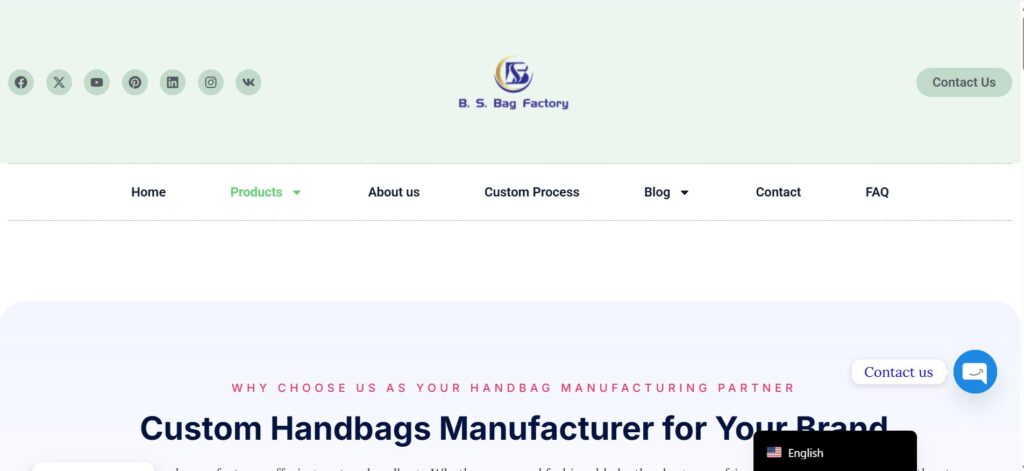
B.S. Bag Factory supplies women’s and men’s handbags, crossbody bags, backpacks, wallets, and totes in genuine leather, vegan leather, PU, canvas, and nylon. It combines ready-stock wholesale with OEM, ODM, and private-label services.
The company also offers logo application, custom hardware, product photography, and logistics support. Published timelines are 5–7 days for samples and 15–30 days for bulk production.
Its main weakness is limited public documentation. The website does not clearly show a registered company name or third-party factory audit, so we would request its business license and arrange a live factory tour before paying a large deposit.
- Location: Guangzhou, China claimed by the supplier
- Type: Factory offering stock wholesale and custom production
- Key features: Logo work, custom hardware, photography, OEM/ODM, private label
- MOQ: 50 pieces for genuine leather; 100 pieces across two colors for other materials
- Products: Handbags, crossbody bags, backpacks, wallets, and totes
- Ideal for: Startups and Amazon or Shopify sellers seeking a lower entry MOQ with broader production support
2. SL Bag
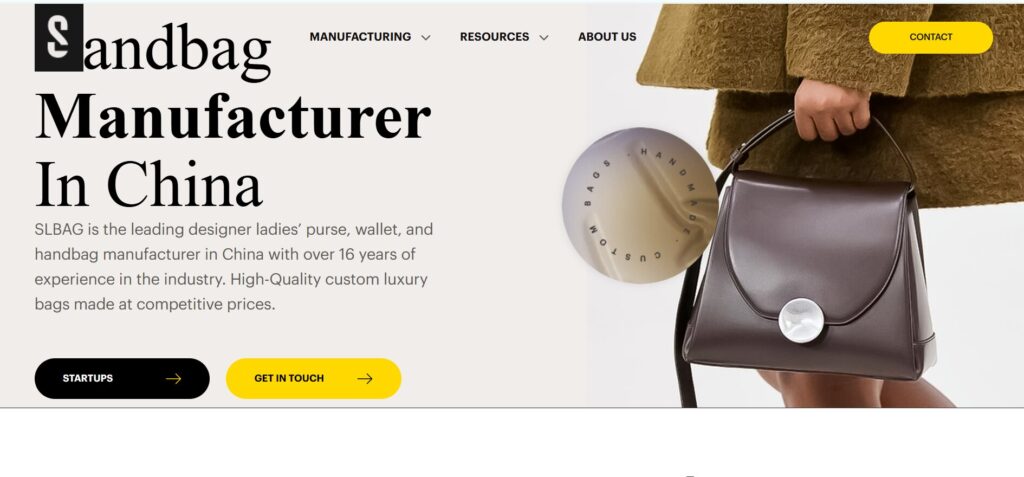
SL Bag is one of the stronger options for buyers who want to test ready-stock handbags before committing to custom development. Its catalog includes more than 3,500 styles made primarily from PU and semi-PU eco leather.
In-stock wholesale starts at 10 pieces per color, while custom orders generally begin at around 100 pieces. Ready-stock orders are reported to ship within 3–10 days, and the sample fee may be refunded after a confirmed order.
SL Bag operates through its own team and a partner-factory network. We recommend confirming which factory will produce your order and arranging a pre-shipment quality inspection, especially when reordering a previously tested style.
- Location: Huadu District, Guangzhou
- Type: Supplier with a partner-factory network
- Key features: 3,500+ styles, low ready-stock MOQ, refundable sample fee, worldwide shipping
- MOQ: 10 pieces per color for stock; around 100 pieces for custom orders
- Products: Wallets, sling bags, bucket bags, totes, and organizer bags
- Ideal for: Boutiques and ecommerce sellers testing several fashion styles in small quantities
3. Boshen Leather Goods
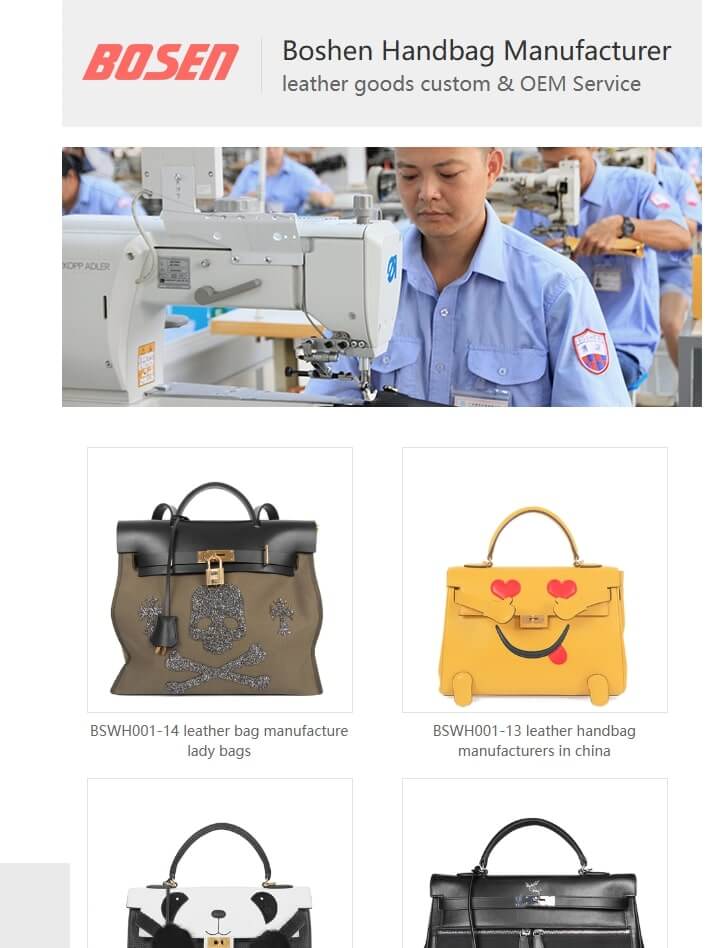
Boshen Leather Goods is a Guangzhou leather factory established in 1993. It has more than 200 workers, an 8,800-square-meter facility, and reported monthly output of 30,000–50,000 pieces.
The factory focuses on custom leather handbags and private-label development. Its in-house design team can help refine styles rather than simply manufacture from a finished specification.
Boshen starts from 50 pieces per style for many leather products, although cardholders generally require around 200 pieces. Samples take approximately 10–15 days, while bulk delivery is typically 5–7 weeks after confirmation.
- Location: Guangzhou
- Type: Direct leather factory
- Key features: Established in 1993, in-house design support, lower MOQ for leather production
- MOQ: From 50 pieces per style; approximately 200 for cardholders
- Products: Leather handbags, cardholders, totes, shoulder bags, and clutches
- Ideal for: Private-label leather brands seeking an established factory without starting at a very high MOQ
4. J.D. Handbag Factory
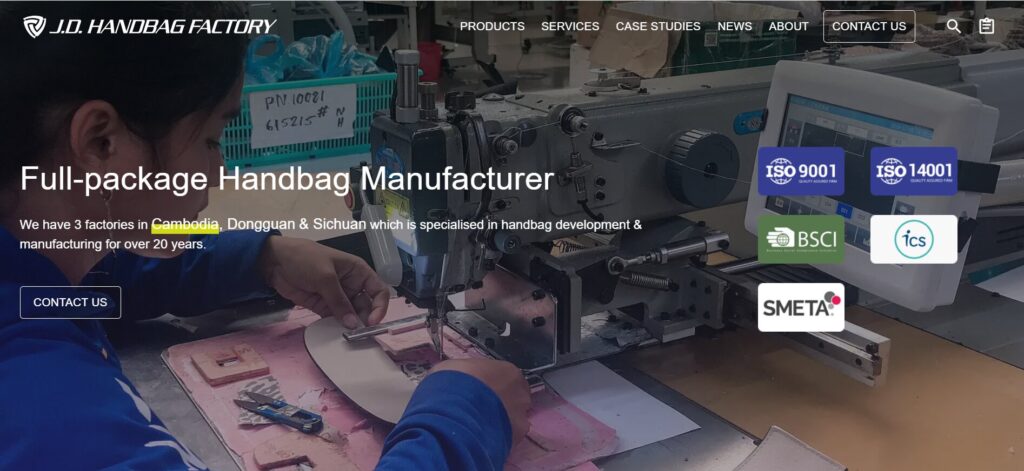
J.D. Handbag Factory is a branch of J.D. Leather Goods and has more than 20 years of experience in product development and manufacturing. It operates factories in Dongguan, Sichuan, and Cambodia.
The company works from tech packs, sketches, and physical samples across leather, PU, and fabric constructions. It can manage development, material sourcing, sampling, and production within one supplier relationship.
The Cambodia facility may help US importers diversify production outside mainland China. However, the company does not publish an MOQ, and certifications sometimes mentioned by third-party listicles are not clearly displayed on its own website.
- Location: Dongguan, Guangdong, with additional factories in Sichuan and Cambodia
- Type: Full-package manufacturer
- Key features: Product development, material sourcing, multi-location manufacturing, works from sketches or samples
- MOQ: Unpublished, confirm during quotation
- Products: Fashion handbags, totes, crossbody bags, clutches, waist bags, and backpacks
- Ideal for: Small-to-mid-sized brands seeking one OEM partner and US buyers considering tariff diversification
5. Diiamo
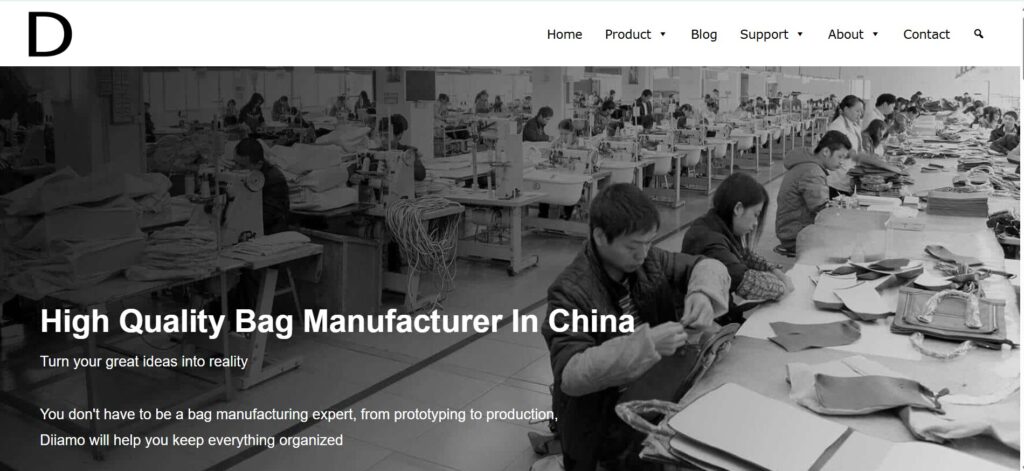
Diiamo is a Guangzhou custom handbag manufacturer with more than 10 years in business. The company says it began as a five-person family workshop before expanding into a larger production operation.
Its main materials include PU, PVC leather, recycled fabrics, and canvas. Other materials may be available depending on the design and quotation.
The 100-piece custom MOQ makes Diiamo accessible to newer brands that are not ready for a 300- or 500-piece production run. The supplier also describes itself as a Macy’s-audited vegan supplier, although buyers should request the latest supporting audit documents during quotation.
- Location: Guangzhou
- Type: Custom handbag factory
- Key features: Startup-oriented MOQ, vegan materials, recycled-material options, custom production
- MOQ: 100 pieces for custom orders
- Products: Beaded bags, canvas bags, diaper bags, crossbody bags, totes, and shoulder bags
- Ideal for: Startup and vegan brands developing smaller custom collections
6. Handbagio
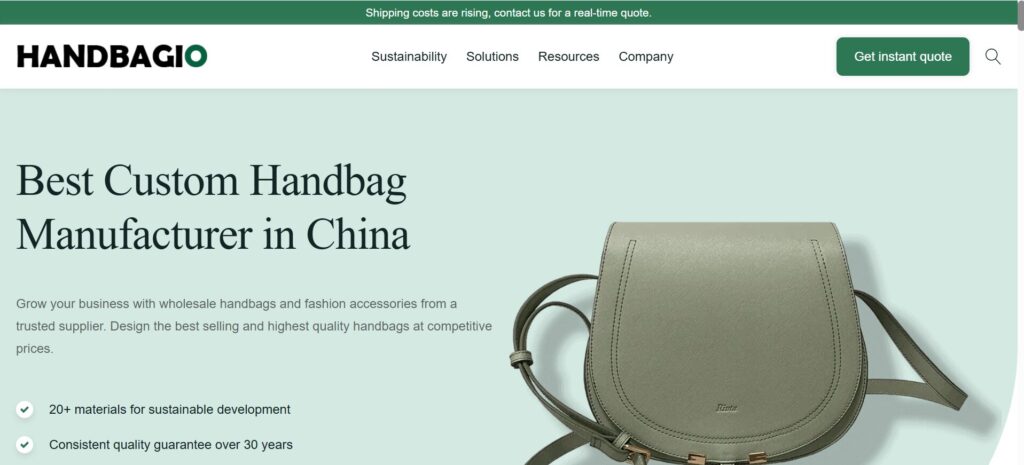
Handbagio, part of Rivta, offers both wholesale and custom handbag production. Its material range includes more than 20 options, including RPET fabrics and vegan leather alternatives.
Its main advantage is flexibility. Buyers can begin with ready-made wholesale products, add light customization, modify an existing ODM design, or move into full OEM development.
That progression is useful when a brand wants to test demand before paying for new patterns, tooling, or exclusive product development. MOQ varies by the selected production route and must be confirmed during quotation.
- Location: China
- Type: Custom and wholesale manufacturer
- Key features: Ready-made to full-OEM progression, 20+ material options, sustainable-material choices
- MOQ: Confirm during quotation
- Products: Custom handbags and fashion accessories
- Ideal for: Brands validating a category before committing to proprietary tooling or full OEM production
7. Komely
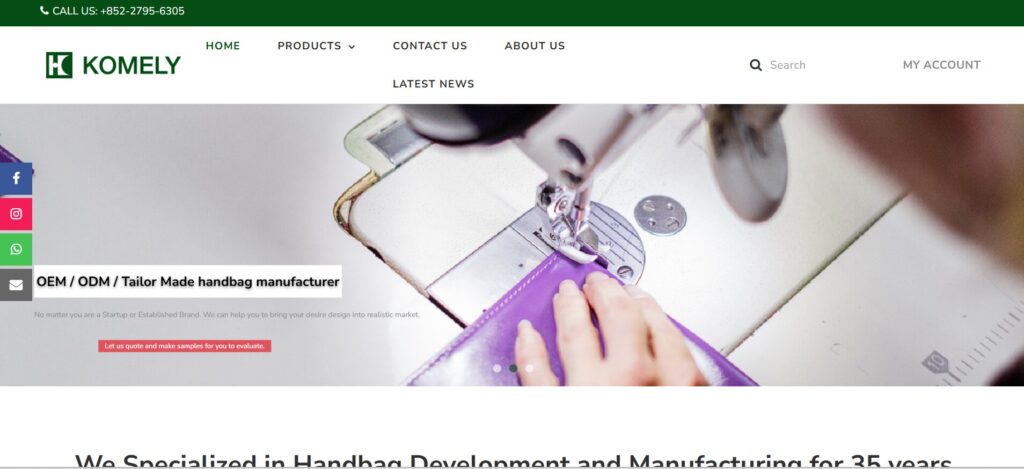
Komely Enterprises has manufactured handbags since 1980. The company is headquartered in Hong Kong and operates a factory in Dongguan, Guangdong.
It works primarily from client designs rather than selling ready-stock collections. Materials include RPET, recycled fabrics, and mixed constructions such as woven fibers combined with leather.
Komely does not publish a fixed MOQ because terms depend on production-line availability and project complexity. Its in-house research and development team may also support clients that have a concept but not a production-ready design.
- Location: Dongguan, Guangdong; headquarters in Hong Kong
- Type: Custom-only factory
- Key features: 45+ years in manufacturing, in-house development, RPET and recycled materials
- MOQ: No fixed MOQ confirm during quotation
- Products: Custom handbags, wallets, eco bags, and mixed-material designs
- Ideal for: Eco-conscious brands developing fully custom collections with an experienced manufacturer
8. Yuchuang Leather Goods
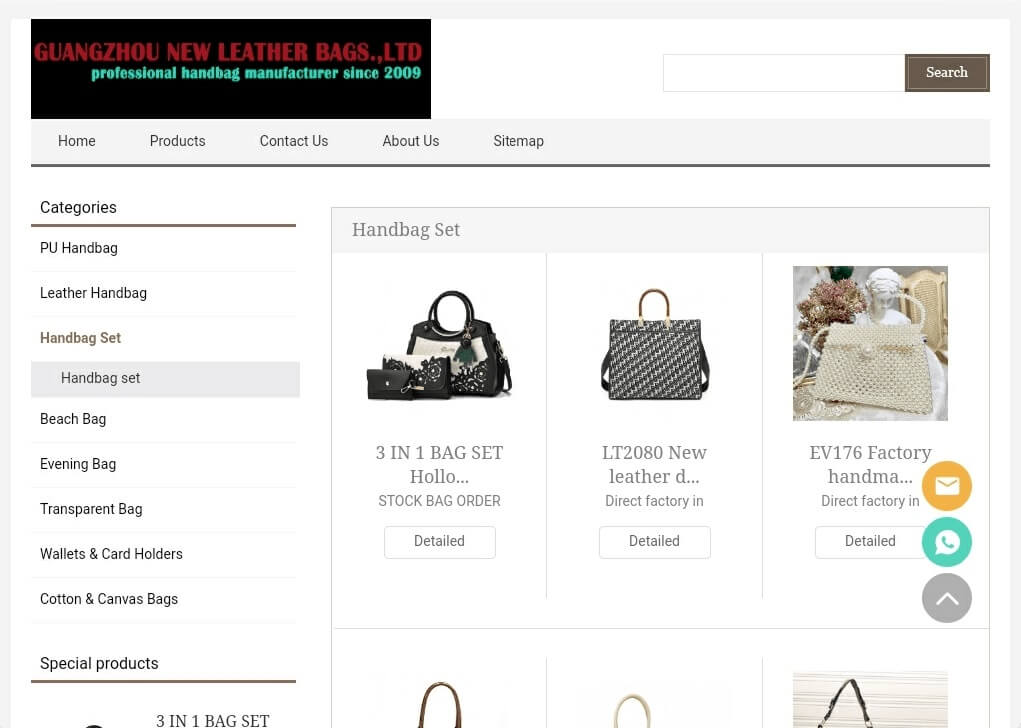
Yuchuang Leather Goods has manufactured bags and wallets in Guangzhou’s Baiyun District since 2000. The supplier reports more than 200 staff, a 30-person research and development team, and monthly capacity of approximately 120,000 pieces.
Its range includes cosmetic bags, clutches, bucket bags, totes, and RFID wallets. Confirmed cooperation with ALDO indicates experience producing to established retail requirements.
The MOQ is 300 pieces per color, samples take around 3–7 days, and production lead times generally run 35–50 days. Yuchuang has limited public web visibility, so buyers may need to contact it through sourcing channels or a local agent.
- Location: Baiyun District, Guangzhou
- Type: Leather bag and wallet factory
- Key features: 25+ years in manufacturing, established-brand production experience, design-to-shipping support
- MOQ: 300 pieces per color
- Products: Cosmetic bags, clutches, bucket bags, totes, and RFID wallets
- Ideal for: Established brands needing retail-grade leather production at larger volumes
9. Twinkling Star
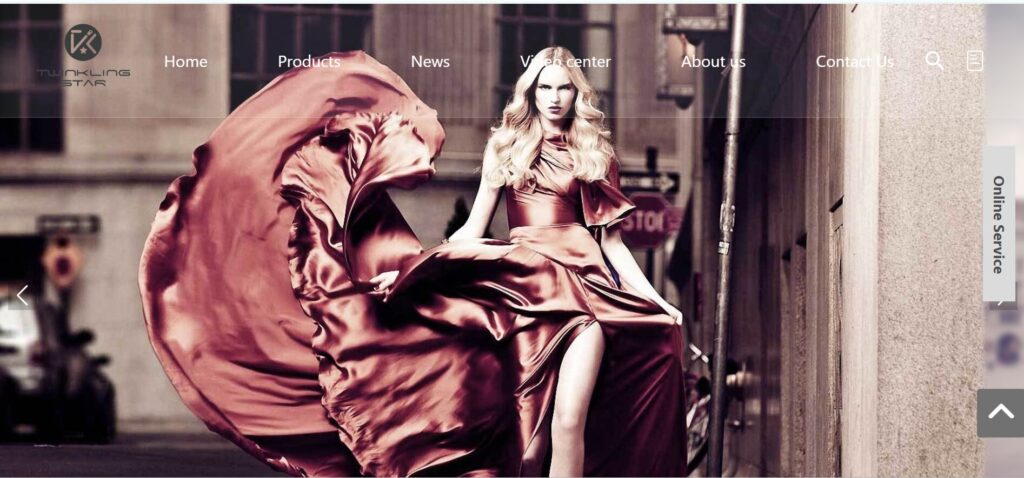
Twinkling Star is a Quanzhou factory operating since the mid-1990s. It has approximately 400 employees and 16 production lines.
Despite appearing in handbag lists, its core strength is backpacks, travel bags, school bags, sports bags, and other casual categories. Reported capacity is around 350,000 backpacks per month.
HKTDC listings show a 1,000-piece MOQ and lead times of approximately 45–60 days. The company has worked with international brands and retailers and has been audited under BSCI and GRS programs.
- Location: Quanzhou, Fujian
- Type: High-volume casual, backpack, and travel-bag factory
- Key features: Large production capacity, international OEM experience, recycled-material programs
- MOQ: 1,000 pieces according to HKTDC listings
- Products: Travel bags, tote bags, shoulder bags, school bags, sports bags, and recycled bags
- Ideal for: Mid-size brands ordering casual or travel products at scale
10. Dason
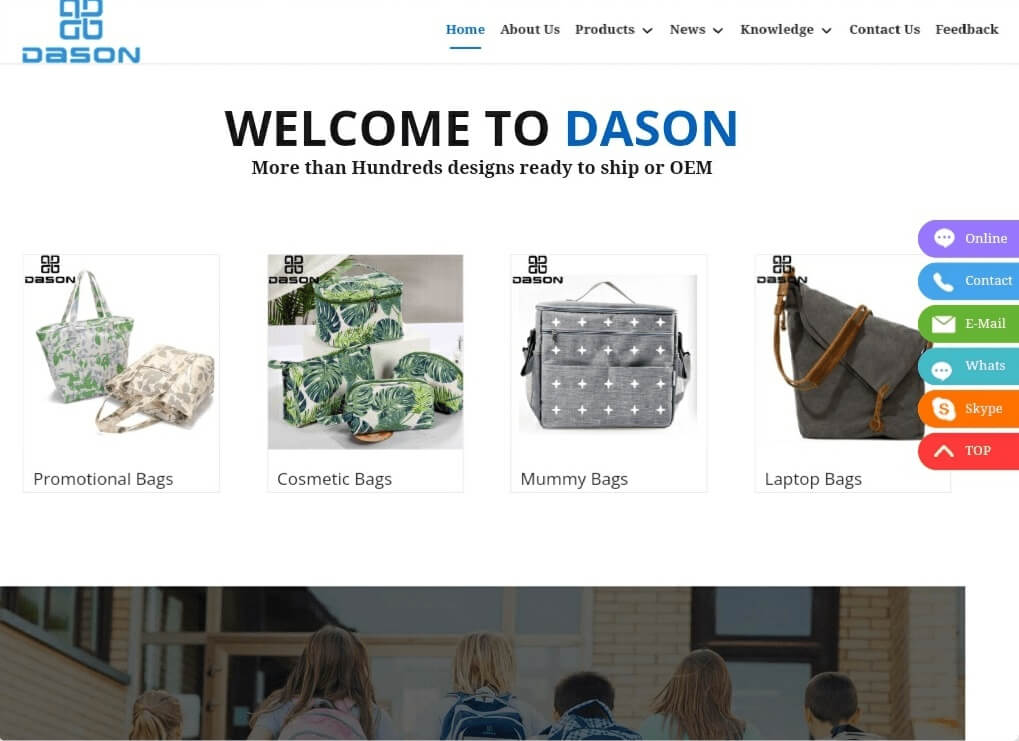
Dason focuses on practical lifestyle bags rather than premium fashion handbags. Its product range includes travel bags, casual handbags, diaper bags, waterproof dry bags, and beach bags.
The supplier sells through Alibaba, where buyers can use platform payment protection. Its reported lead time is around 35–40 days, while MOQ varies between ready-stock and custom products.
The registered Alibaba entity is a trading company that claims access to a 300-worker factory. We would treat it as a trading-front arrangement and request production-site details, factory audit documents, and pre-shipment inspection for larger orders.
- Location: Quanzhou, Fujian
- Type: Trading company with an own-factory claim
- Key features: Practical product categories, Alibaba Trade Assurance, in-stock and custom options
- MOQ: Varies by style confirm during quotation
- Products: Travel bags, casual handbags, diaper bags, dry bags, and beach bags
- Ideal for: Buyers sourcing functional lifestyle categories through a protected B2B platform
11. Laizhou Ampang
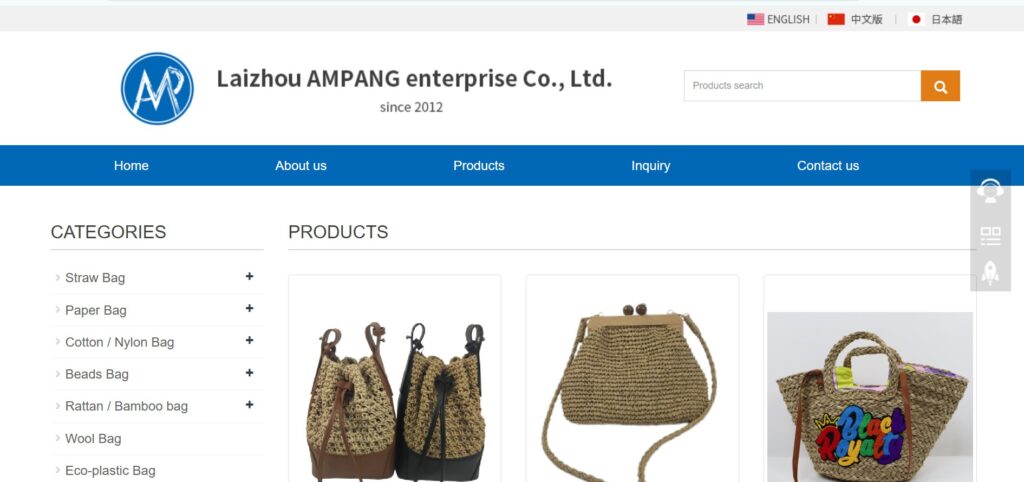
Laizhou Ampang is a small Shandong factory established in 2012. It employs approximately 51–100 people and specializes in bags made from natural plant fibers.
Materials include straw, raffia, rattan, cattail, corn husk, willow, bamboo, and water hyacinth. The company also manufactures hats and baskets, making it useful for buyers building a coordinated resort or summer collection.
MOQ generally ranges from around 100–200 pieces depending on the design. The supplier has exhibited at the Canton Fair and East China Fair and exports to the EU, US, and Japan.
- Location: Laizhou, Yantai, Shandong
- Type: Small natural-fiber factory
- Key features: Plant-fiber specialization, artisan styles, trade-fair participation
- MOQ: Approximately 100–200 pieces depending on design
- Products: Straw, raffia, rattan, bamboo, and other plant-fiber handbags, hats, and baskets
- Ideal for: Resort, beach, and eco boutiques seeking distinctive seasonal products
12. Sitoy Group
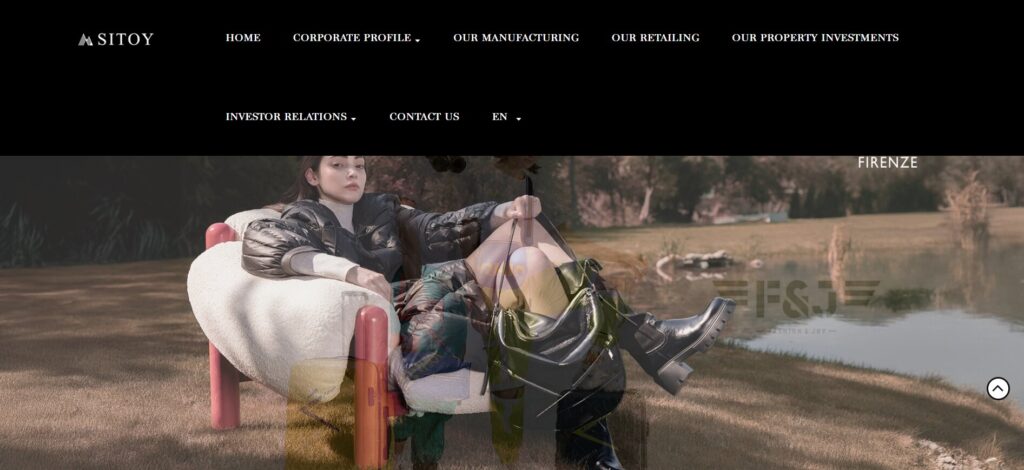
Sitoy Group is the largest and most established manufacturer in this list. Founded in 1968 and listed on the Hong Kong Stock Exchange since 2011, it operates production facilities in Dongguan, Yingde, and Indonesia.
The group reports approximately 8,300 production employees in China, 1,500 in Indonesia, 120 production lines, and a monthly capacity of roughly one million pieces. Its historical customer roster includes internationally recognized luxury and lifestyle brands.
Sitoy manufactures high-end leather handbags, small leather goods, travel products, and department-store private-label collections. MOQs are unpublished, but its operating scale makes it unsuitable for startups and low-volume test orders.
- Location: Hong Kong headquarters; factories in Dongguan, Yingde, and Indonesia
- Type: Large-scale luxury OEM and ODM manufacturer
- Key features: HKEX-listed group, multi-country production, approximately one million pieces of monthly capacity
- MOQ: Unpublished—large-volume programs only
- Products: High-end leather handbags, small leather goods, and travel products
- Ideal for: Established mid-to-luxury brands and large retail private-label programs
Ready to source handbags from China? NicheSources offers free product sourcing and typically provides quotes within two business days. Request a free quote.
For buyers focused specifically on fashion categories, our guide to wholesale women’s handbags covers that segment in more detail.
Physical Wholesale Markets for Handbags in China
Physical markets are most useful when you want to compare materials in person, review many ready-stock styles in one day, or place low-MOQ trial orders. For fully custom OEM or private-label programs, working directly with a factory is usually more efficient.
Guihuagang Leatherware Market, Guangzhou
Guihuagang is one of China’s largest handbag wholesale areas. Its dense network of buildings and stalls carries women’s handbags, wallets, backpacks, clutches, and other fashion accessories.
It is a strong option for:
- Ready-stock fashion handbags
- Low-MOQ style testing
- Comparing many vendors quickly
- Sourcing PU and mid-range leather products
The main challenge is supplier overlap. Several stalls may sell similar products from the same upstream factories, so buyers should compare materials, stitching, hardware, and quoted terms rather than choosing on appearance alone.
Baiyun World Leather Trading Center, Guangzhou
Baiyun World Leather Trading Center offers a broad selection of handbags, wallets, backpacks, and leather accessories. It is useful for buyers comparing PU, synthetic leather, and genuine leather products across different price tiers.
We would use this market mainly for:
- Side-by-side material comparison
- Ready-stock sourcing
- Identifying potential suppliers for follow-up factory visits
- Reviewing mid-tier fashion and leather goods
A market stall is not always the manufacturer. Ask whether the seller owns production, works with partner factories, or operates purely as a wholesaler.
Shiling International Leather City, Huadu
Shiling International Leather City sits close to Guangzhou’s leather-goods manufacturing cluster. Its main advantage is access to both finished-bag suppliers and upstream material vendors.
Buyers can compare:
- Leather and PU materials
- Linings and edge paint
- Zippers, buckles, locks, and other hardware
- Ready-made handbags
- Factories offering OEM and ODM services
This market is particularly useful for private-label buyers because you can review materials and components before meeting nearby factories.
Yiwu International Trade City, Zhejiang
Yiwu International Trade City includes handbags and purses within a much larger general-merchandise market. It is a practical choice when bags are only one category in a mixed-product sourcing trip.
Yiwu works well for:
- Ready-stock handbags and accessories
- Small wholesale orders
- Combining bags with packaging, jewelry, apparel accessories, or gifts
- Importers consolidating products from multiple vendors
Its strength is assortment rather than deep handbag specialization. For technical leather development or complex custom designs, Guangzhou or Dongguan is usually a better fit.
Baigou Wholesale Markets, Hebei
Baigou is known for high-volume, budget-friendly bags and luggage. Its markets offer mass-market handbags, backpacks, school bags, and travel products at competitive factory-direct pricing.
This cluster is better suited to:
- Volume-driven retailers
- Basic PU and synthetic-material bags
- Mass-market styles
- Buyers prioritizing unit economics
Quality can vary widely, so samples and pre-shipment inspection are essential. A low quoted price may reflect lighter materials, weaker hardware, or simplified internal construction.
Should You Visit a Market or Source Online?
| Choose a physical market when you need to… | Choose online sourcing or an agent when you need to… |
| Touch and compare materials | Develop a custom design |
| Review dozens of styles quickly | Add private-label packaging and branding |
| Buy ready stock below roughly 100 pieces per style | Manage production remotely |
| Combine products from several categories | Verify factories and arrange quality inspection |
| Visit China for other sourcing work | Consolidate orders and coordinate shipping |
For most remote buyers, learning how to buy wholesale from China through vetted factories, protected platforms, or a local sourcing partner is more efficient than traveling solely to visit handbag markets.
Common Platforms for Finding Handbags
Online sourcing platforms serve different buyer needs. Alibaba and Made-in-China are stronger for OEM, ODM, and private-label orders, while DHgate and AliExpress are more suitable for small ready-stock tests. Platform badges can help narrow the field, but they do not replace supplier verification, paid samples, or quality inspection.
| Platform | Best For | Typical MOQ Profile | Customization | Main Risk |
| Alibaba | Broad supplier search, OEM/ODM, and private-label production | Around 50–500+ pieces | Full customization, including logos, materials, colors, patterns, and packaging | Trading companies and factories are mixed together; quality varies widely |
| Made-in-China | Industrial-scale factories and buyers who want detailed supplier filters | Mid-to-high MOQ | Full OEM and ODM options | Verification takes time, and supplier quality is inconsistent |
| Global Sources | Export-oriented and higher-spec suppliers serving US and European buyers | Generally higher MOQ | Full customization | Fewer suitable options for small or niche orders |
| DHgate | Low-quantity ready-stock tests | Low MOQ | Limited | Inconsistent quality and limited control over production |
| AliExpress | Very small test orders and early product validation | Very low MOQ | Minimal | Higher per-unit logistics costs and little manufacturing control |
For most buyers, Alibaba is the broadest starting point. However, a smaller platform with fewer suppliers may still be a better fit when you need higher-spec production, lower test quantities, or a more specialized product category.
Factory vs Trading Company: How to Verify a Handbag Supplier
A factory owns or directly controls production, while a trading company sources capacity from one or more factories and adds a margin. Both models can work, but buyers should know which one they are dealing with because it affects pricing, communication, quality control, and lead-time reliability.
How to Verify a Chinese Handbag Supplier
Use this five-step process before placing a bulk order:
- Check the business license
Ask for the Chinese business license and review the registered business scope. Manufacturing terms such as 生产 or 制造 indicate production activity, while 贸易 usually points to trading. - Request a live factory tour
Ask the supplier to walk through the production floor on a live video call. A prerecorded promotional video does not prove the supplier currently controls the facility. - Order a paid sample
Compare the sample against a written specification sheet covering materials, dimensions, hardware, stitching, lining, logo placement, and packaging. - Use a third-party factory audit for larger orders
An independent audit can confirm the factory address, production lines, workforce, machinery, and basic quality-management processes. - Treat platform badges as a starting filter
An Alibaba “Verified Supplier” badge confirms that the business was reviewed. It does not necessarily prove the company owns the factory shown in its listing.
Common Supplier Red Flags

Be cautious when a supplier:
- Refuses to provide a business license
- Avoids a live factory video call
- Will not accept a paid sample order
- Cannot explain its production lines or monthly capacity
- Gives an unusually low quote without a material breakdown
- Pushes for full payment outside Trade Assurance or another protected channel
- Claims to offer factory-direct branded luxury handbags
- Changes its company name, bank account, or factory address during negotiation
A trading company is not automatically a problem. The issue is whether it discloses its role and can consistently manage production, inspections, and delivery.
RFQ Checklist for Handbag Suppliers
Send the same RFQ to every shortlisted supplier so you can compare quotations properly.
| RFQ Item | What to Ask |
| Supplier type | Are you the manufacturer, a trading company, or a supplier using partner factories? |
| MOQ | What is the MOQ per style, color, and material? |
| Tier pricing | Quote 100, 300, 500, and 1,000 pieces where possible |
| Sample terms | What is the sample fee, lead time, and refund policy? |
| Materials | Specify outer material, lining, hardware, zipper, edge paint, and reinforcement |
| Customization | Quote logo printing, embossing, metal plates, custom hardware, and pattern changes separately |
| Packaging | Price dust bags, boxes, hang tags, inserts, and export cartons |
| Production timing | Confirm sample time and bulk lead time in writing |
| Compliance | Which tests or certificates can be arranged for the target market? |
| Payment terms | Confirm deposit percentage, balance timing, and protected payment options |
| Shipping terms | Request EXW, FOB, and DDP quotes where available |
| Inspection | Confirm whether third-party pre-shipment inspection is permitted |
From our experience in Yiwu, supplier verification is one of the main problems buyers face before production begins. Our on-ground team can handle business checks, factory audits, sampling, and quality inspection so you can compare suppliers on verified terms rather than sales claims.
How Much Do Wholesale Handbags from China Cost?
Wholesale handbag prices depend on the material, hardware, lining, construction, branding, order volume, and packaging. Ready-stock PU bags sit at the lowest end, while custom leather and luxury-grade OEM programs require significantly higher budgets. Always compare quotations using the same specifications and shipping terms.
Typical Factory-Direct Price Ranges
| Product Tier | Typical Unit Price | What to Expect |
| In-stock PU fashion bags | $1–$8 | Existing styles, basic materials, limited customization, and low trial quantities |
| Mid-range PU or canvas bags | $5–$15 | Better hardware and construction, with options for logos and branded packaging |
| Genuine leather handbags | $10–$40+ | Private-label production, stronger materials, and stricter quality-control requirements |
| Premium or luxury OEM bags | $40–$100+ | High-spec leather, custom patterns, premium hardware, and more complex construction |
These are sourcing benchmarks rather than guaranteed quotes. A supplier offering a handbag far below the expected tier may be using thinner material, lower-grade hardware, simplified lining, or weaker reinforcement.
How Does Customization Affect MOQ?
The more production changes you request, the higher the MOQ usually becomes.
| Customization Level | Typical MOQ | Why It Changes |
| Ready-stock product | From 10 pieces per color | No new development or material setup |
| Logo on an existing style | Around 50 pieces per color | Limited production changes |
| Custom color on an existing pattern | Around 300 pieces | The factory may need custom-dyed material |
| New pattern or structural design | Around 500 pieces | Requires sampling, pattern development, and possible tooling |
| Large retail or luxury program | 1,000+ pieces or unpublished | Production lines and materials are allocated at scale |
These figures are practical reference points. Exact MOQ depends on the supplier, material availability, number of colors, and whether the order can share components with existing production.
What Additional Costs Should Buyers Budget For?
The quoted unit price may not include every project cost. Ask suppliers to separate the following items:
- Sample development and courier fees
- Logo printing, embossing, or metal branding
- Custom molds for hardware
- Pattern and tooling charges
- Lining and material upgrades
- Dust bags, boxes, hang tags, and inserts
- Product testing and compliance documents
- Quality inspection
- Freight, duties, and customs clearance
A lower unit price can become less competitive once these charges are added. For a fair comparison, request EXW, FOB, or DDP pricing under the same product specification.
What Are Typical Handbag Production Lead Times?
Ready-stock bags may ship within days, while a first custom order can take two to three months door to door.
| Stage | Typical Lead Time |
| Stock sample | Around 3–7 days |
| Custom sample | Around 7–15 days |
| Ready-stock order | Around 3–10 days |
| Custom bulk production | Around 30–60 days |
| Air freight | Around 5–10 days |
| Sea freight | Around 25–45 days |
Complex hardware, custom-dyed materials, multiple sample revisions, and peak-season production can extend these timelines. We recommend confirming both the sample schedule and bulk completion date in writing before paying the deposit.
How Can You Negotiate a Lower MOQ?
Factories are more likely to reduce MOQ when the trial order creates minimal disruption to their production line.
- Select in-stock materials and standard colors.
- Add a logo without changing the bag structure.
- Accept a slightly higher unit price for the first run.
- Limit the number of colors and hardware finishes.
- Place orders during a factory’s quieter production period.
- Combine styles that use the same materials and components.
- Use the first order to establish a repeat-order forecast.
In practice, repeat buyers usually gain more flexibility than first-time customers because the supplier already has approved samples, patterns, and production specifications.
Private Label and Customization: What Can You Change?
Private-label production usually means adapting an existing factory design with your branding, colors, materials, hardware, or packaging. Full OEM development creates a new bag from your tech pack, sketch, or physical sample.
OEM, ODM, Private Label, and White Label
| Model | How It Works | Best For |
| OEM | The factory manufactures your original design | Brands with a finished concept or tech pack |
| ODM | You modify an existing factory design | Faster development with lower tooling costs |
| Private label | Products are made and packaged under your brand | Ecommerce brands building a branded collection |
| White label | You resell a generic product also available to others | Fast market testing |
For most new brands, ODM plus private labeling is the most practical starting point.
What Can You Customize?
| Option | Typical Impact |
| Logo | Lowest cost and MOQ impact |
| Packaging | Easy to add once artwork is ready |
| Lining or color | May increase material requirements and MOQ |
| Hardware | Standard parts are flexible; custom molds cost more |
| Material | Affects price, durability, testing, and lead time |
| Pattern or structure | Highest development cost and MOQ impact |
Common logo options include printing, embossing, metal plates, woven labels, and custom zipper pulls.
What Should You Customize First?
For a first order, prioritize the changes customers notice most:
- Logo
- Exterior color and material
- Hardware finish
- Lining
- Packaging
Avoid major structural changes unless the bag’s shape or function is central to the brand.
What Should You Send the Factory?
Provide a simple specification pack with:
- Bag dimensions and reference images
- Exterior and lining materials
- Hardware type and finish
- Logo size and placement
- Pocket, closure, and stitching details
- Packaging requirements
- Quantity and delivery date
Approve a physical sample before bulk production and use it as the quality standard for inspection.
Our private labeling and branding service can coordinate samples, packaging, factory communication, and pre-shipment quality inspection.
Designer Bags, Dupes, and Replicas: What Is Legal?
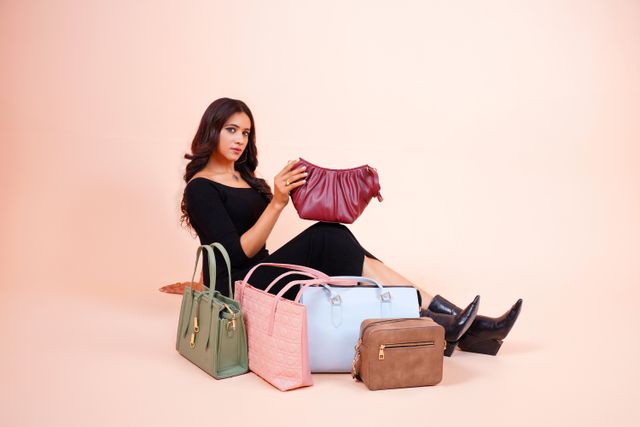
Most “factory-direct” designer handbags sold through Chinese wholesale channels are not authentic. Some brands legally manufacture selected products or components in China, but authorized production does not mean the factory can sell branded goods independently.
Are Designer Bags from China Authentic?
Authentic products must come through the brand or an authorized distributor. Sellers offering wholesale Hermès, Louis Vuitton, Chanel, or similar luxury bags without authorization are usually selling counterfeits, even when listings use terms such as “original quality,” “1:1,” or 原单.
Importing or reselling these products can lead to:
- Customs seizure
- Marketplace account suspension
- Trademark complaints
- Fines or legal claims
- Loss of inventory and payment
What Is the Difference Between a Dupe and a Counterfeit?
| Product Type | What It Copies | Risk Level |
| Counterfeit | Protected logos, monograms, trademarks, or branded packaging | Illegal in most markets |
| Dupe or inspired design | General style without brand logos | Lower risk, but trade-dress infringement may still apply |
| Original private-label design | Your own branding and product specifications | Safest option for long-term selling |
Removing a logo does not automatically make a design legal. Distinctive shapes, patterns, closures, or decorative elements may also be protected.
Can You Buy Authentic Designer Handbags Wholesale?
Legitimate options include:
- Authorized distributor agreements
- Department-store closeout or liquidation stock
- Authenticated pre-owned B2B suppliers
- Direct agreements with the brand
These channels normally require clear invoices, business registration, resale documentation, and proof of authenticity.
For most ecommerce sellers, developing an original private-label handbag is more practical than sourcing designer replicas. It gives you control over branding, pricing, and product development without the legal and platform risks attached to counterfeit inventory.
For those interested in pursuing high-quality imitations or alternatives, check out these recommended resources for more details on how to find reliable suppliers:
The Role of Sourcing Agents
A sourcing agent helps buyers find and verify handbag suppliers, negotiate pricing and MOQ, manage samples, arrange quality inspection, and coordinate shipping. Fees commonly run around 5–10% of the order value, depending on the service scope.
When Is a Sourcing Agent Useful?
A sourcing agent is usually worth considering when:
- You cannot visit China to verify factories
- You are developing a private-label or custom handbag
- Your order combines products from several suppliers
- You need pre-shipment quality inspection
- You want help negotiating MOQ, payment terms, or lead times
- You need order consolidation and shipping support
The main value is risk control. Finding suppliers is relatively easy; confirming who actually manufactures the product and keeping quality consistent across production is harder.
When Can You Work Directly with a Supplier?
You may not need an agent when:
- You are placing a small ready-stock test order
- The supplier accepts protected payment through Trade Assurance
- Your specifications are simple
- You already have an approved sample and reliable repeat-order history
A useful rule is to compare the agent fee with the likely cost of a sourcing mistake. If incorrect materials, missed inspections, or production delays would cost more than the fee, local support is often justified.
NicheSources is based in Yiwu and supports supplier verification, sampling, negotiation, quality inspection, order consolidation, and shipping. With no upfront sourcing cost, you pay a 5–10% service fee after approving the quote. You can also compare other options in our guide to the best China sourcing agents.
FAQs about Sourcing Wholesale Handbags From China
What Are the Advantages of Sourcing Bulk Handbags From China?
There are many other countries from which you can source wholesale handbags. So, why China?
Affordability- handbag factories in China benefit from government support, economies of scale, and relatively affordable labor. These factors enable them to sell handbags at very friendly prices.
Variety- not only are there hundreds of wholesale handbag vendors and manufacturers in China but they also strive to deliver unique designs in a bid to stand out to consumers. As a result, the diversity of bags in the market is simply unmatched.
Shipping– China has highly developed rail, airport, and shipping port networks. This makes it easy for manufacturers to ship handbag orders to most global destinations at fair rates.
How can I make sure bulk production matches the approved sample?
Use the approved sample as the formal quality standard and attach a written specification sheet to the purchase order. Define materials, dimensions, hardware, lining, stitching, logo placement, packaging, and acceptable tolerances.
Ask the supplier to keep one sealed reference sample while you retain another. Before shipment, arrange a pre-shipment quality inspection that compares random units against both the sample and the specification sheet. Photos alone are not enough because material thickness, zipper performance, edge paint, and reinforcement are difficult to judge remotely
Should I order one handbag style or several styles in my first shipment?
A focused first order is usually easier to manage. Testing one or two styles limits your inventory risk and makes it easier to identify whether sales performance comes from the product, color, price, or marketing.
Ordering many designs can spread the MOQ across too many slow-moving SKUs and complicate inspection. Where the supplier allows it, test several colors of the same construction instead of unrelated designs.
This also improves production consistency because the factory can use the same materials, hardware, patterns, and packaging across the order.
What Factors Should I Consider When Sourcing Wholesale Purses From China?
The kind of handbags you choose will significantly impact your sales. Therefore, it would be wise to consider:
Stitchwork
Just like in clothing, the quality and durability of a bag is determined by how well it is stitched together. Aim for neatly done stitches and smooth even edges.
The Materials
Handbags made of low-quality materials may be cheap but they will not serve your customers well. It would be better to buy handbags with quality types of leather and durable interior linings even if they come at a slightly higher price.
Customers’ Preferences
Different handbag designs appeal to different customers. Students, for example, may favor large handbags with multiple compartments. In contrast, fashion-conscious shoppers may prefer luxury bags.
Pro Tip: Make an effort to research your market before you begin sourcing.
Design Authenticity
You will encounter lots of designer handbag replicas in the Chinese market. Some are cheaply done while others are very well executed. Do not be duped into paying steep prices for them.
What quality defects are most common in wholesale handbags?
Common defects include uneven stitching, loose threads, weak handle reinforcement, scratched hardware, inconsistent edge paint, poor zipper alignment, incorrect dimensions, color variation, and lining that is not securely attached.
Leather orders may also show natural surface variation, while PU bags can suffer from peeling or weak bonding. Your inspection checklist should rank defects by severity and define what is acceptable.
Functional problems, incorrect branding, and major material substitutions should be treated more seriously than minor cosmetic marks that do not affect usability.
What should be included in a handbag purchase contract?
The contract should include the exact product specifications, quantity, unit price, MOQ breakdown, approved materials, logo details, packaging, sample standard, inspection method, production deadline, shipping term, and payment schedule.
It should also state what happens if the goods fail inspection or arrive late. Attach technical drawings, color references, and photographs rather than relying on chat messages.
Confirm whether rework, replacements, refunds, or discounts apply to defective units. The supplier’s registered company name and bank account details should match the business documents you verified.
How can I check whether a supplier’s sustainability claims are credible?
Ask for specific evidence rather than accepting labels such as “eco-friendly” or “recycled.” For RPET or recycled fabrics, request current transaction certificates, material specifications, and supplier documentation that traces the material source.
For vegan leather, confirm the actual composition because “vegan” only means animal-free and does not automatically mean environmentally preferable. Certifications should match the company, factory, material, and production period involved in your order. When claims cannot be verified, describe the product by its confirmed material composition instead of making broad sustainability promises.
What packaging is needed for wholesale handbag shipments?
Basic export packaging usually includes individual protective bags, shape-supporting material, and outer cartons. Premium products may also need dust bags, branded boxes, tissue paper, hang tags, care cards, or barcode labels.
Packaging should prevent crushed structures, scratched hardware, moisture damage, and strap deformation during transit. Ask for carton dimensions and weights before booking freight because oversized packaging can increase shipping costs.
For leather and coated materials, avoid packing that traps excessive moisture. Confirm whether retail packaging is included in the unit price or quoted separately.
How Do I Find the Right Wholesale Handbags China Suppliers?
The first step would be to figure out exactly what kind of handbags you would like to buy, your preferred quantity, and your budget. Also, consider whether you will require other services such as branding or dropshipping fulfillment from your supplier.
Once you have defined these requirements, you can begin a self-guided search. Here are some of the ways you could find your ideal handbag wholesaler.
Trade Fairs
Hundreds of handbag manufacturers showcase their products at fashion trade fairs and exhibitions. You can visit different stands, compare products and prices then zero in on the suppliers with agreeable terms
Pro Tip: While the Canton Fair is arguably the most famous trade show in China, there are other niche exhibitions that solely focus on fashion items like handbags. You can find more details about them on an online trade show calendar.
Online Marketplaces
A quick search on Chinese online marketplaces could help you find lots of wholesale handbag vendors. Better yet, you can use filters to narrow down your search results to the handbag selections that you prefer.
Sourcing Agents
A China-based sourcing agent would know the right handbag suppliers to reach out to once you provide them with a brief of your needs. In a nutshell, they handle sourcing tasks on your behalf at a fee.