Pick up a Ninja appliance in the US in 2026 and the label may say Vietnam, Thailand, Malaysia, Indonesia, or Cambodia rather than China. That reflects a major shift in SharkNinja’s US supply chain but it does not mean Ninja has stopped manufacturing in China altogether.
Ninja products are manufactured through third-party factories across Asia. For the US market, production has been shifted largely outside China, while China still accounts for the majority of SharkNinja’s global production volume. The exact country can vary by product, market, and production batch.
Quick Facts
- Brand: Ninja, owned by SharkNinja
- Made in the USA? No evidence of large-scale US manufacturing of finished Ninja appliances
- US-bound production: Vietnam, Thailand, Malaysia, Indonesia, and Cambodia
- China’s current role: Still a major manufacturing base for SharkNinja’s global business
- Production model: Third-party contract manufacturing rather than one dedicated “Ninja factory”
- Best way to verify your appliance: Check the country-of-origin marking on the product or rating label
The important distinction is where the product is being sold. SharkNinja’s supply chain changed significantly for US-bound goods, while its global production network remains much more China-dependent. That US-versus-global split is the key to understanding where Ninja products are actually made in 2026.
| Destination market | Where Ninja products are made in 2026 | What to know |
| United States | Vietnam, Thailand, Malaysia, Indonesia, Cambodia | SharkNinja moved US-bound production out of China by the end of 2025 |
| Global markets | China plus factories elsewhere in Asia | China still produces the majority of SharkNinja’s global volume |
| Specific appliance/model | Varies by production run and destination | Check the product’s rating label for the exact country of origin |
This distinction matters for us as a sourcing company because large brands rarely depend on a single factory or country. Ninja’s supply chain is a good example of how product sourcing can be diversified across manufacturing hubs while keeping China involved where its supplier ecosystem still makes commercial sense.
Who Owns Ninja?
Ninja is owned by SharkNinja, Inc., the same company behind the Shark home-appliance brand. Shark and Ninja are separate consumer brands, but they have operated under one corporate parent for years.
The timeline is fairly straightforward:
- 1994: Mark Rosenzweig founded Euro-Pro Operating LLC in Montreal, Canada.
- 2009: Euro-Pro launched the Ninja brand, initially building its reputation around high-powered blenders and kitchen appliances.
- 2015: Euro-Pro officially changed its corporate name to SharkNinja, bringing the Shark and Ninja brands under one public-facing identity.
- 2017: Chinese entrepreneur Xuning Wang acquired SharkNinja and later combined it with Joyoung through JS Global.
- 2023: SharkNinja separated from JS Global and became an independent publicly traded company on the New York Stock Exchange under the ticker SN.
Are Shark and Ninja the Same Company?
Yes, at the corporate level. Shark and Ninja are two brands owned by SharkNinja, Inc. Shark mainly covers cleaning and home-care products, while Ninja is centered more heavily on cooking, food preparation, and beverage appliances.
So if you see different manufacturing countries on a Shark vacuum and a Ninja air fryer, that does not mean they come from unrelated companies. They sit within the same broader SharkNinja supply chain, although individual products can be assigned to different factories and countries.
Where Are Ninja Products Made in 2026?
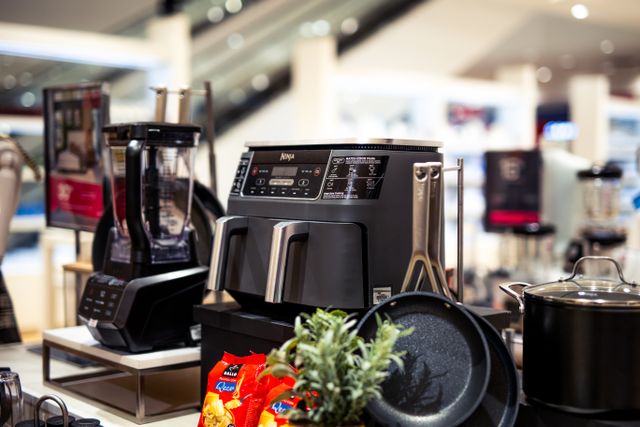
The clearest answer is that Ninja products are made across China and Southeast Asia, but the manufacturing mix depends heavily on the destination market. SharkNinja does not manufacture products itself; its third-party suppliers assemble them primarily in China, Vietnam, Malaysia, Thailand, Indonesia, and Cambodia, according to its FY2025 Form 10-K filed in March 2026.
That distinction matters because the story is very different for products sold in the United States versus SharkNinja’s global production.
The US-Market Story: Production Moved Out of China
SharkNinja started diversifying manufacturing after the US introduced additional tariffs on Chinese imports in 2018. Rather than simply finding one replacement country, the company spent several years developing supplier capacity across Southeast Asia.
The shift accelerated through 2024 and 2025:
- In February 2024, management said it already had visibility to producing nearly two-thirds of US sales volume outside China and planned to move almost all US volume out by the end of 2025.
- By May 2025, SharkNinja expected roughly 90% of US volume to be producible outside China by the end of Q2.
- In its February 2026 earnings call, management said it had reached the point where nearly 100% of US volume could be manufactured outside China.
The alternative manufacturing network includes Vietnam, Thailand, Malaysia, Indonesia, and Cambodia. From a sourcing perspective, this is a useful distinction: SharkNinja built redundant capacity rather than replacing China with a single new manufacturing hub.
The 2026 Twist: Tariffs Changed the Equation Again
The interesting part is that SharkNinja’s China exit was never as permanent as some headlines suggested.
On February 20, 2026, the US Supreme Court struck down tariffs imposed under the International Emergency Economic Powers Act. The government subsequently introduced a temporary global surcharge, significantly narrowing the tariff difference between China and several Southeast Asian sourcing markets.
By May 2026, CEO Mark Barrocas said tariff rates for China and alternative production countries had become similar across about 66% of SharkNinja’s business. That gave the company more freedom to shift manufacturing into or out of China depending on factory cost, capacity, and tariff exposure.
This is where SharkNinja’s dual-sourcing strategy becomes important. Its FY2025 10-K states that most products are dual-sourced, meaning the company can use competing factories rather than depending on one manufacturing location.
By August 2026, tariff rates had diverged somewhat again: SharkNinja was assuming minimum rates of 10% for Indonesia, Malaysia, and Cambodia and 12.5% for China, Vietnam, and Thailand for the remainder of the year.
So we would avoid describing Ninja as having simply “left China.” The more accurate description is that SharkNinja built enough production capacity outside China to move US orders wherever the economics make sense.
What Hasn’t Changed: China Still Builds Most Global Volume
Globally, China remains SharkNinja’s largest manufacturing base.
Its FY2025 Form 10-K states that SharkNinja’s assembly suppliers are primarily based in China and separately says that third-party suppliers in China manufacture a majority of its products. Southeast Asian factories supplement that network rather than replacing it globally.
SharkNinja does not disclose a precise country-by-country percentage of global production, so we should not invent one. What its filings establish is the broader split:
| Market / production view | 2026 manufacturing picture |
| US-bound Ninja products | Nearly all can be produced outside China, primarily across Southeast Asia |
| Global SharkNinja production | China still manufactures the majority of products |
| Individual products | Often dual-sourced, so production country can change by order or batch |
That is why two genuine Ninja appliances can carry different countries of origin. For any specific model, the rating label on the appliance remains the most reliable way to confirm where that particular unit was made.
Where Is Each Ninja Product Made?
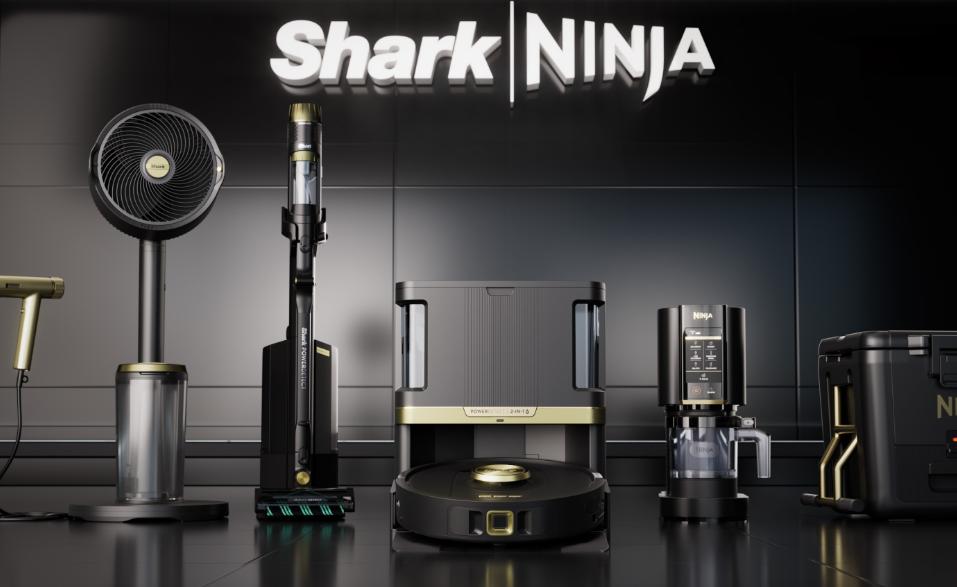
There is no reliable one-country answer for an entire Ninja product category. SharkNinja uses multiple third-party factories and dual-sources many products, so an air fryer, blender, or coffee maker sold in one market may come from a different country than the same product family sold elsewhere.
For 2026, this is the safest way to interpret the available evidence:
| Ninja product category | Manufacturing picture in 2026 | What we can verify |
| Air fryers / Foodi ovens | China and Southeast Asia | Older and non-US batches are widely documented from China. SharkNinja now has US-bound capacity across Vietnam, Thailand, Malaysia, Indonesia, and Cambodia, so origin can vary by batch and market. |
| Blenders / food processors | China and Southeast Asia | Customs records still show Ninja blender models manufactured in China for some international markets. SharkNinja does not publish a fixed country for every blender model. |
| Coffee makers | Multiple Asian suppliers | Retail records show China-made DualBrew units, but this should not be treated as the origin of every current Ninja coffee maker. |
| Ninja CREAMi | China remains documented for several markets | Current retail listings for models such as the NC300/NC301 and NC501 identify China as the country of origin. That does not establish China as the origin for every CREAMi production run worldwide. |
| Cookware | Supplier and market dependent | SharkNinja does not publicly provide a dependable model-by-model manufacturing database, so we would not assign one country to the entire cookware range. |
| Grills, multicookers and other kitchen appliances | China and Southeast Asia | These sit within the same diversified SharkNinja contract-manufacturing network; exact production origin varies by SKU, batch, and destination market. |
The key point is that product category does not determine country of origin. In sourcing terms, SharkNinja allocates production across suppliers according to capacity, cost, tariff exposure, and destination market rather than permanently assigning every product line to one country.
That is also why older online answers saying, for example, “all Ninja air fryers are made in China” should be treated cautiously. They may accurately describe a particular model or historical production run, but SharkNinja’s US supply chain changed substantially through 2025 and 2026.
Check the Rating Label for Your Exact Ninja Product
If you want to know where your specific Ninja appliance was made, the rating label is more useful than any online model list.
Look for:
- “Made in” or “Country of Origin” on the rating plate or product label.
- Model and serial number, usually printed on the same label.
- Packaging information, which may also state the country of origin.
For example, retail records currently identify several CREAMi models as China-made, while SharkNinja has simultaneously built manufacturing capacity outside China for US-bound products.
So we would use any model-level table, including ours as a general reference only. For a definitive answer, check the label on the actual unit because the manufacturing country can change between production batches.
Why Not Just Make Ninja Products in the U.S.?
Ninja doesn’t manufacture most products in the US because the appliance supply chain it depends on is concentrated in Asia. That includes component suppliers, tooling, electronics, molding, motors, heating elements, and final assembly.
SharkNinja CEO Mark Barrocas put it simply in a 2025 Fortune interview: “The product is not made here. The components are not made here.”
SharkNinja instead relies on third-party factories in China and Southeast Asia. That gives it access to established supplier networks and lets it shift production between countries when costs, tariffs, or capacity change.
From a sourcing perspective, this is the key point: moving the final assembly is easier than rebuilding the full component ecosystem behind a product. That is why SharkNinja expanded production into Vietnam, Thailand, Malaysia, Indonesia, and Cambodia rather than moving large-scale appliance manufacturing to the US.
US production could still make sense for simpler products. Barrocas has mentioned coolers as one example because they involve fewer components and less complex assembly.
Were Ninja Products Made in China?
Yes. China has historically been the center of Ninja’s manufacturing network, and it remains important today. SharkNinja’s FY2025 filing says its assembly suppliers are still primarily based in China and that Chinese third-party suppliers manufacture a majority of its products globally.
Much of China’s small-appliance manufacturing capacity is concentrated in established industrial clusters. Shunde in Guangdong is a major home-appliance hub, while Cixi and Yuyao in Zhejiang have dense networks for small appliances, plastics, motors, tooling, and related components.
China’s role has changed, however. For the US market, SharkNinja spent several years building production capacity in Vietnam, Thailand, Malaysia, Indonesia, and Cambodia. Globally, China remains central to both finished-product assembly and the wider component supply chain.
So the most accurate 2026 answer is: Ninja products were historically heavily made in China, and many still are but US-bound production has become far more diversified across Southeast Asia.
The Factories Behind Ninja: What We Can Verify
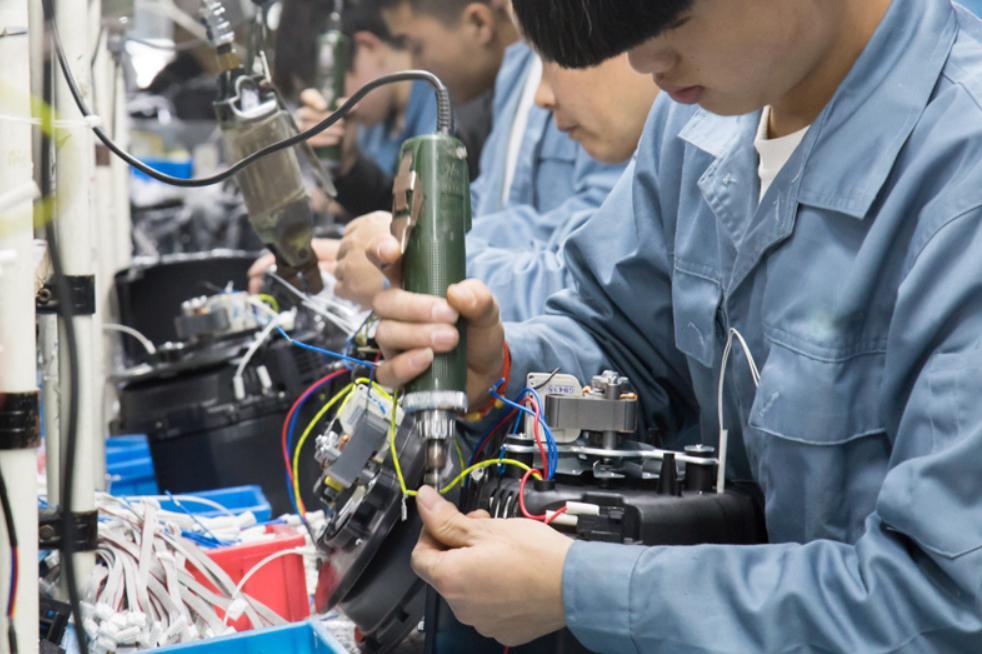
SharkNinja does not publicly publish a full factory list, so we should be careful about naming suppliers as confirmed Ninja manufacturers unless there is direct evidence.
One supplier we can link more confidently is Zhejiang Biyi Electric Appliance Co., Ltd. Biyi’s 2025 annual report lists SharkNinja among its major international customers and says it received SharkNinja coffee-machine orders during the year. Its disclosures also show a Thailand kitchen-appliance factory that began production in April 2025, designed for air fryers, coffee machines, and other small appliances.
Vietnam is also clearly part of the current network. US customs records show Global Star Technology Vietnam shipping Ninja blenders and ice-cream makers, including CREAMi-related models, to SharkNinja Operating LLC in 2026. That proves a trade relationship, although customs data alone does not tell us whether every unit was manufactured entirely in that facility.
| Supplier / facility | Country | What we can verify |
| Zhejiang Biyi Electric Appliance | China | Biyi publicly identifies SharkNinja as a customer and reports SharkNinja coffee-machine business |
| Biyi Thailand facility | Thailand | Kitchen-appliance plant operational since 2025; makes air fryers, coffee machines and related products |
| Global Star Technology Vietnam | Vietnam | Customs records show Ninja blenders and ice-cream makers shipped to SharkNinja |
There are many other major appliance factories across China and Southeast Asia that serve international brands, but we would not label them as Ninja suppliers without direct filings, customs records, or company disclosures.
That distinction matters for buyers too. A factory may advertise experience producing similar air fryers or blenders, but that does not prove it currently manufactures for SharkNinja. Supplier relationships should be verified separately from general manufacturing capability.
What Ninja’s Supply Chain Teaches Importers
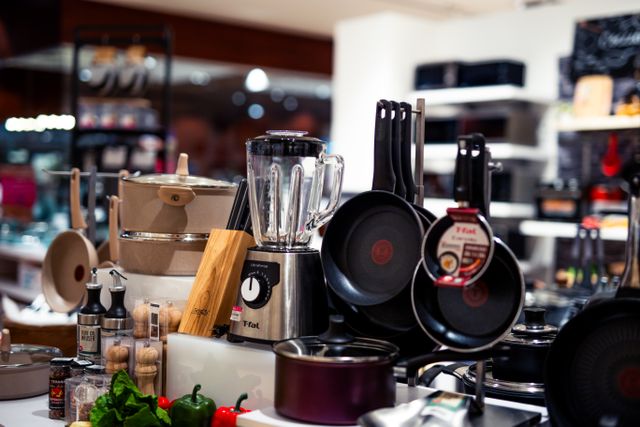
Ninja’s supply chain is a useful example of how larger brands reduce sourcing risk. The lesson is not simply “source from China” or “move out of China.” It is to build a supplier network that gives you options.
1. Supplier Clusters Matter
China still has an advantage in small appliances because factories sit close to component suppliers, tooling shops, packaging vendors, and logistics providers.
For importers, that usually means:
- faster access to replacement components
- easier product customization
- more supplier options within one region
- simpler consolidation across factories
This is why moving assembly to another country does not always remove China from the supply chain.
2. Dual-Sourcing Reduces Risk
SharkNinja uses multiple suppliers for many products rather than depending on one factory. That gives it flexibility when tariffs, capacity, or costs change.
Smaller importers can use the same principle on a simpler scale: qualify a primary factory, but keep at least one backup supplier for important SKUs.
3. Cost Should Be Compared at Landed Level
Factory price alone does not tell you which supplier is cheaper.
We normally look at:
- unit price
- tooling
- MOQ
- freight
- duties and tariffs
- inspection cost
- defect risk
- lead time
A slightly higher factory quote can still produce a lower landed cost if the supplier has better yields, shorter lead times, or more reliable shipping.
4. Quality Control Has to Be Built Into the Process
Large brands do not rely on a supplier simply saying a product is ready. Importers should also build checks into each stage.
A basic QA workflow should include:
- Approve a pre-production sample.
- Confirm materials, dimensions, packaging, and performance requirements in writing.
- Check production during the run if the order is large or complex.
- Carry out a pre-shipment inspection before releasing the final balance.
- Keep an approved sample as the reference standard for future orders.
From our experience in Yiwu, inconsistent supplier execution is the #1 issue our clients face before working with us. Our on-ground team handles supplier verification, production follow-up, and pre-shipment quality inspection so you don’t have to. Discuss your project.
Quality Assurance in Cross-Border Manufacturing
Manufacturing overseas can raise a few eyebrows, especially when it comes to quality.
But brands like Ninja show that with the right systems in place, you can produce high-quality products even from thousands of miles away.
Here’s how to keep quality in check when sourcing internationally:
- Be specific with your specs: List out materials, motor power, dimensions, safety features, the more detailed, the better.
- Work with certified factories: Look for ISO 9001, CE, UL, or RoHS certifications to ensure they meet global standards.
- Use third-party inspections: Hire local QA teams to check products during and after production.
- Set clear AQL limits: Agree on how many defects (if any) are acceptable before a shipment is rejected.
- Start with samples and pilot runs: Always test a small batch before committing to full-scale production.
- Stay in touch throughout the process: Regular check-ins = fewer surprises and better results.
FAQS
Can the Same Ninja Model Be Made in Different Countries?
Yes. SharkNinja dual-sources many products, so the same model can be produced by different factories or in different countries depending on the production run, destination market, capacity, and cost. This is why country-of-origin information found online may not match the label on your own appliance.
Why Do Retailers List Different Countries of Origin for the Same Ninja Product?
Retail listings can reflect different production batches. A retailer may receive one shipment from China and another from Vietnam or elsewhere in Southeast Asia. Product pages are also not always updated when sourcing changes, so the physical country-of-origin label is more reliable than an online listing.
Are Ninja Products Assembled in One Country Using Parts from Another?
Yes, that is possible and common in appliance manufacturing. Final assembly may happen in Vietnam, Thailand, or another country while components come from suppliers elsewhere in Asia. The “Made in” label reflects legal country-of-origin rules for the finished product rather than the origin of every individual component.
Does the Manufacturing Country Affect Ninja Product Quality?
Country alone is not a reliable measure of quality. Product quality depends more on factory capability, component specifications, process controls, testing, and inspection. SharkNinja qualifies third-party suppliers and maintains quality controls across its manufacturing network rather than relying on one country for quality.
Does “Made in Vietnam” Mean a Ninja Product Is Authentic?
A Vietnam origin is completely plausible for an authentic Ninja product. SharkNinja has deliberately expanded manufacturing outside China, including Vietnam. Country of origin should not be used by itself to judge authenticity; seller credibility, packaging, model information, and the product’s labeling are more useful checks.
Can Customs Data Confirm Which Factory Makes a Ninja Product?
Sometimes, but it has limits. Customs records can connect a supplier with shipments to SharkNinja and may identify product descriptions or model numbers. However, they do not always prove that the supplier manufactured every component or that the relationship still applies to every current production run.
Can Ninja’s Manufacturing Countries Change Again?
Yes. SharkNinja has already shifted production significantly in response to tariffs and supply-chain risk. Because many products are dual-sourced, manufacturing can move between qualified factories as costs, duties, lead times, and capacity change. Country-of-origin information should therefore be treated as batch-specific rather than permanent.