Bad Chinese cosmetics OEM selections lead to wasted deposits, non-compliant shipments rejected by US/EU customs, or formula ownership conflicts.
Your factory choice hinges on product type, MOQ, formula ownership and target-market regulatory requirements.
This guide walks you through vendor vetting and AQL inspection to avoid costly cosmetic manufacturing mistakes.
Key Takeaways
- Cost: Indicative factory prices vary widely by product. Lip products may start below USD 1, while complex makeup and skincare products can cost several dollars or more per unit before testing, packaging, freight, and other costs.
- MOQ: Stock products may start at a few dozen to several hundred units, while private-label labeling often requires 500–1,000 units. Custom packaging can raise MOQs to 1,000–10,000 units, and fully custom formulations may require several thousand units or more.
- Compliance: You handle market compliance. US sellers face FDA MoCRA rules. EU sales require a Responsible Person, a Product Information File, and CPNP notification.
- Verification: Website logos prove nothing. Verify certificates, demand a pre-production sample matching your artwork, and run an AQL inspection before paying the balance.
- Best Use Case: China OEM can be cost-effective for brands seeking private-label or custom manufacturing, but clearly assign compliance responsibilities among the manufacturer, importer, and Responsible Person for the target market.
OEM vs ODM vs Private Label: Picking Your Cosmetics OEM Manufacturer in China
Before you contact a Cosmetics OEM Manufacturer in China, you must decide which production model fits your brand. Before contacting a cosmetics OEM manufacturer in China, decide which production model fits your project. The model affects customization, MOQ, development time, and how you address formula and IP rights in the contract.
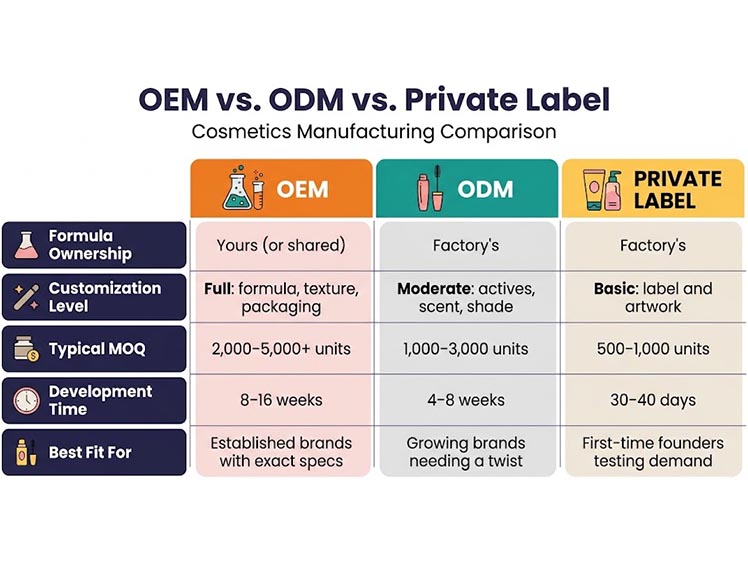
Here is a quick look at how the three main models compare:
| Model | Formula Ownership | Customization Level | Typical MOQ | Development Time | Best Fit For |
| OEM | Yours (or shared) | Full: formula, texture, packaging | 2,000–5,000+ units | 8–16 weeks | Established brands with exact specs |
| ODM | Factory’s | Moderate: actives, scent, shade | 1,000–3,000 units | 4–8 weeks | Growing brands needing a twist |
| Private Label | Factory’s | Basic: label and artwork | 500–1,000 units | 30–40 days | First-time founders testing demand |
If this is your first beauty brand, ODM or private label is the smartest place to start. You pick a stable, tested formula, apply your custom branding, and get to the market fast. OEM makes more sense once you have a unique, proprietary formula worth protecting.
Regardless of your choice, if you sell in the US, you must follow FDA MoCRA regulations. For U.S. sales, the manufacturing facility generally must register with FDA and renew its registration every 2 years.
OEM can make more sense when you need a highly customized formula or specific technical specifications, but the manufacturing agreement should define formula ownership and exclusivity.
For a deeper breakdown of intellectual property rights, unit economics, and contract terms between these manufacturing paths, explore our OEM vs ODM: A Detailed Comparative Guide.
Where to Find a Cosmetics OEM Manufacturer in China
Finding the right factory usually starts with looking in the right city. China organizes its manufacturing by specialty. Knowing where to search saves you time and connects you with the most capable suppliers.
Guangzhou Houses the Densest Baiyun-Huadu Cosmetics Supply Chain
Guangdong is one of China’s major cosmetics manufacturing clusters, with a particularly strong concentration around Guangzhou. Specifically, Guangzhou’s Baiyun and Huadu districts pack everything you need into one bustling area.
- Fast Production: Formulation labs, raw material traders, and noisy bottle-filling lines sit just a short drive apart.
- Flexible Orders: Because factories source packaging components locally, they can often quote lower minimum orders.
However, you must carefully verify the manufacturer’s credentials. Pristine GMP cleanrooms share zip codes with unlicensed workshops. Recent NMPA regulation updates make compliance stricter than ever. Checking licenses upfront protects your brand from costly delays.
Zhejiang, Shanghai, and Other OEM Hubs
If Guangzhou doesn’t fit your needs, other regions focus on different product tiers.
- Zhejiang (Yiwu): This area specializes in affordable color makeup and fast-moving beauty tools.
- Shanghai and Suzhou: They are also important locations for larger international cosmetics manufacturers, including COSMAX and Intercos.
- Jiangsu and Shandong: These provinces offer massive capacity for bath, body, and daily personal care items.
Physical Wholesale Markets: Inspect Your Goods
Sometimes you need to feel a lotion’s texture or check a compact’s hinge before making a deal. Physical markets let you do exactly that.
- Guangzhou Markets: Meibo City and Xingfa Plaza pack thousands of suppliers into a few busy blocks.
- Yiwu Markets: District 3 of the Yiwu International Trade City features a section dedicated solely to budget makeup and accessories on its third floor.
These massive markets work perfectly for hands-on research and buying stock goods. Conversely, they do not suit custom OEM projects. Counterfeit items can circulate in these stalls. So treat market purchases as test samples to verify, never as final inventory to sell.
Once you pinpoint the ideal regional hub for your cosmetics line, follow our step-by-step roadmap in How to Get a Product Manufactured to navigate the production process from initial design to finished goods.
How to Find and Shortlist Cosmetics Manufacturers
Finding the right factory takes time, but knowing exactly where to look makes the process much easier. Here is an honest assessment of your 4 main sourcing channels.
- B2B Platforms: Websites like Alibaba, Made-in-China, and Global Sources are excellent starting points. You can filter suppliers by their certifications, sales history, and minimum order requirements. Use supplier verification badges and platform records as screening signals, not as proof of manufacturing quality. Independently verify the factory’s legal entity, certificates, production site, and quality systems.
- Trade Shows: Meeting suppliers face-to-face can replace weeks of slow emails. Major events like the Canton Fair in Guangzhou, the China Beauty Expo in Shanghai, and Cosmoprof Asia in Hong Kong let you test lotion textures, inspect packaging weight, and negotiate directly at the booth.
- Search Engines and Directories: Online searches are useful, but they come with a catch. Many articles ranking the “most suitable cosmetic manufacturers in China” are actually written by the factories themselves. Treat those lists as lead-generation tools, not verified proof of quality.
- Sourcing Agents: A China-based agent is worth their fee if you are ordering below factory minimums, combining multiple product categories, or designing custom packaging. They provide on-the-ground quality control, which protects remote buyers from costly mistakes.
Whichever channel you use to find a cosmetics OEM Manufacturer in China, follow the same workflow to stay safe. First, contact 8 to 12 factories. Then narrow your list to 3 to 5 finalists based on product fit, rather than just the lowest quote.
Explore our guide to the Top 15 Cosmetic Packaging Suppliers in China to match your custom formulas with dependable container manufacturers.
Which Leading Cosmetics OEM Manufacturers Dominate the Chinese Market?
No single best Cosmetics OEM Manufacturer in China exists. Instead, the factory landscape splits into three distinct tiers:
- Global manufacturing giants
- Large local factories
- Smaller category specialists
Here is a simple rule to keep you safe: Factory size alone does not determine MOQ. Ask for a product-specific MOQ based on formula, packaging, and production requirements.
If you run a small startup brand, a massive factory will give you very little attention. Conversely, if your product uses highly technical chemicals, a focused specialist will beat a broad generalist every time.
| Manufacturer | Established | Location | Main Focus | Publicly Reported Certifications/Systems | Buyer Fit |
| COSMAX China | 2004 | Shanghai / Guangzhou | Large-scale ODM | Verify current certificates | Larger-scale brands |
| Intercos China | — | Suzhou / Shanghai | Color cosmetics, product development | Verify current certificates | Premium/international projects |
| Nox Bellcow | 2004 | Zhongshan | Masks, wipes, skincare | ISO 9001 / ISO 22716 etc. | Mask/skincare projects |
| Bawei | 2006 | Guangzhou | Skincare, masks, personal care | ISO 9001 / ISO 22716 etc. | Skincare/private label |
| TY Cosmetic | 2009 | Guangzhou | Skincare, personal care, OEM/ODM | Verify current certificates | Startup to scaling brands |
| Ariel Cosmetic | 1998 | Guangzhou | Skincare/private label | ISO 22716 / GMPC etc. | Export-oriented skincare |
| Cindi | 2010 | Guangzhou | Cosmetics/OEM/ODM | Verify current certificates | Private-label projects |
| Kasey Beauty | — | Yiwu | Color cosmetics | ISO 22716 etc. | Makeup projects |
Verify certification status against the current certificate, issuing body, scope, and expiry date. Don’t assume larger factories always require larger orders. Ask for a product-specific minimum order quantity, or MOQ.
Also, not every supplier keeps its minimum private: Kasey Beauty currently states that fully customized products generally start at 12,000 pieces, while selected in-stock items may have lower MOQs.
1. COSMAX China: Development Support
COSMAX is the Chinese arm of a massive South Korean group. They are the world’s largest cosmetics ODM. They have operated in Shanghai since 2004 and Guangzhou since 2010.
- They supply prominent global brands. COSMAX combines Korean R&D capabilities with manufacturing operations in China.
- COSMAX operates large-scale R&D and manufacturing facilities, making it better suited to brands with substantial production
- Extremely high minimum orders. They offer limited support to small clients.
- It is generally better suited to established brands with substantial development and production requirements.
- Confirm project-specific MOQs directly with the relevant China entity before shortlisting.
Intercos focuses on cosmetic development, production, and packaging. This Italian group powers much of the world’s high-end color makeup. They run two advanced plants in the Suzhou Industrial Park.
- They create premium textures and forecast luxury trends years in advance.
- Prestige-grade product development.
- Higher-end development and larger-scale production requirements may make Intercos less suitable for early-stage brands.
- Skip them if you are a startup testing your very first product line.
3. Nox Bellcow: Masks and Wipes
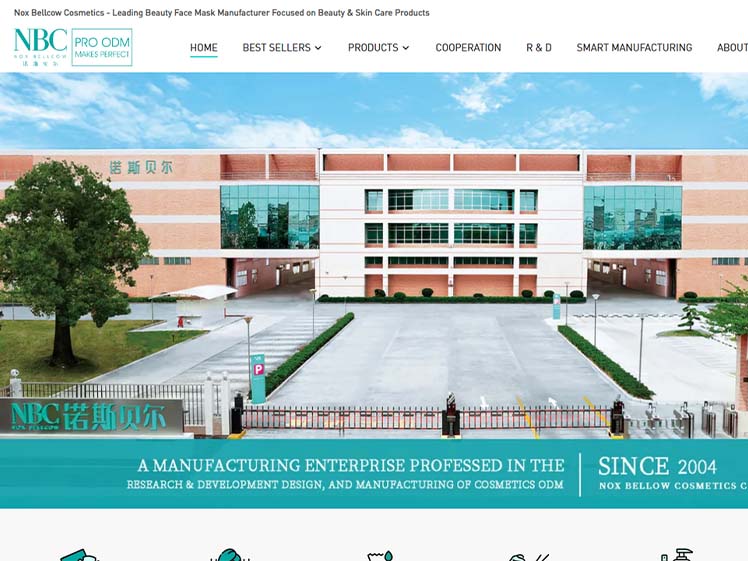
Founded in 2004, Nox Bellcow focuses on sheet masks, wet wipes, and skincare, with a manufacturing base in Zhongshan, Guangdong. Their facilities use automated machinery that can cut and fold thousands of sheet masks per hour, reflecting massive production scale.
- They source advanced mask fabrics and liquid essence technology that few competitors can match.
- Incredible category depth and production speed.
- They specialize in just one format.
- Skip them if sheet masks are not the core focus of your brand.
4. Guangdong Bawei Biotechnology: Existing Formula Options
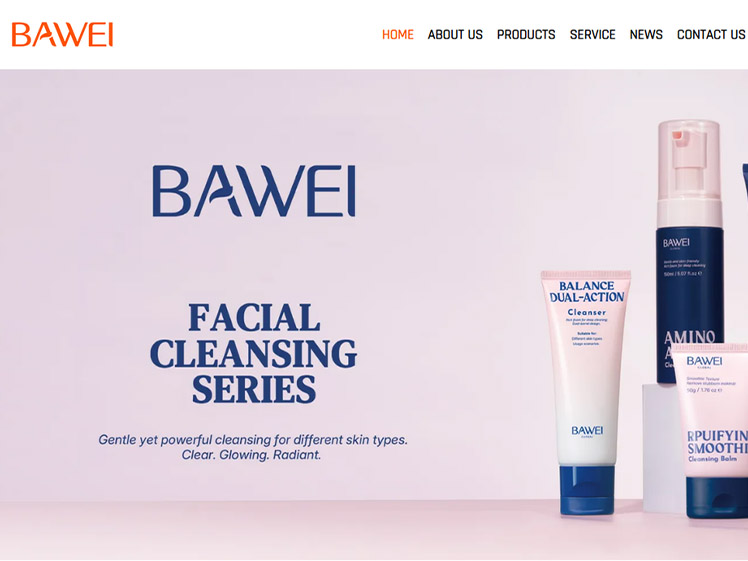
Started in Guangzhou in 2006, Bawei holds ISO 9001, ISO 22716, and GMPC systems.
- Speed to market. Bawei says it has more than 6,000 mature stock formulas. If you want a specific vitamin serum, they likely have a stable version ready.
- Deep catalogs for effective skincare and personal care.
- They are weaker in color cosmetics.
- Skip them if bright eyeshadows and lipsticks are your main focus.
5. TY Cosmetic: Multi-Category Projects
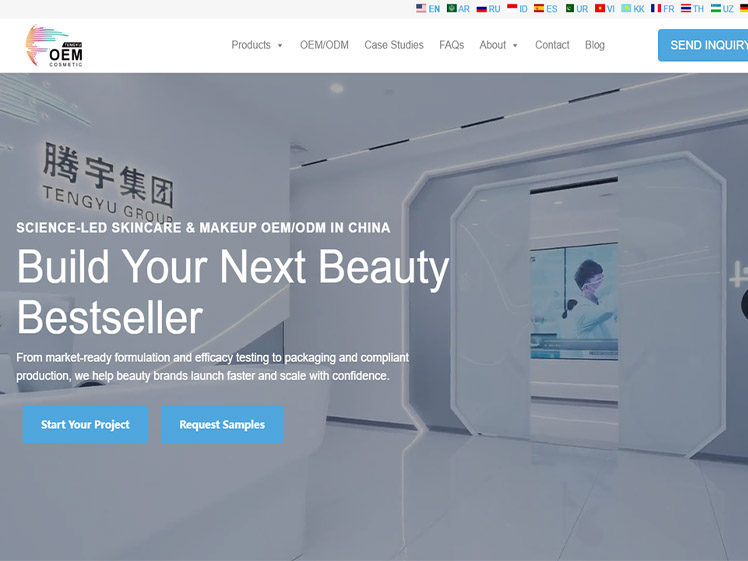
TY Cosmetic is a Chinese skincare manufacturer started in 2009. They run 3 GMP factories and 68 production lines. It’s a private label makeup manufacturer with flexible options.
- They offer breadth and export fluency. One factory can produce your hair care, skincare, and makeup lines all at once. They know the paperwork for dozens of countries.
- Because they do everything, they lack deep, niche focus.
- Skip them if your hero product is a highly complex, chemical-heavy formula that requires a specialized lab.
6. Ariel Cosmetic: Documentation Support
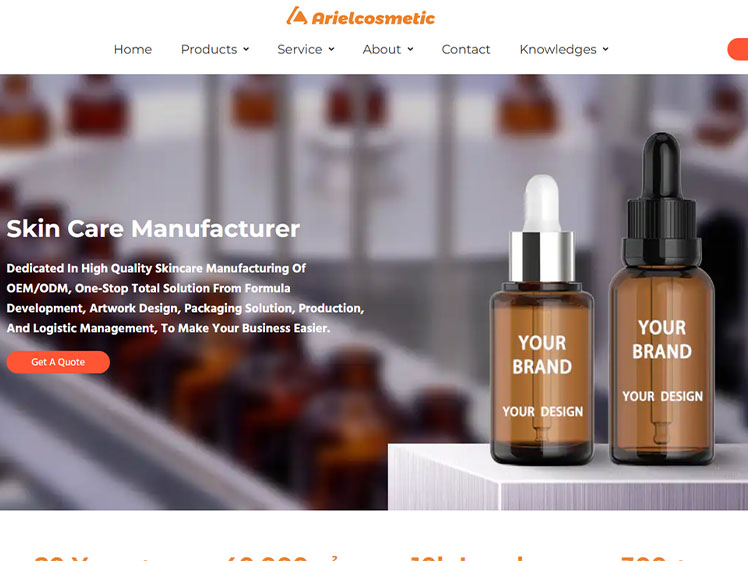
Ariel is a Guangzhou cosmetic manufacturer that focuses on North American and European clients.
- Ariel Cosmetic specializes in MoCRA-compliant export documentation.
- Public sources have shown inconsistent company history details, so verify the legal entity and certificate records before contracting.
- Do not skip the verification steps. Check every certificate number yourself before moving forward.
7. Guangzhou Cindi Cosmetics: The E-commerce Makeup Maker
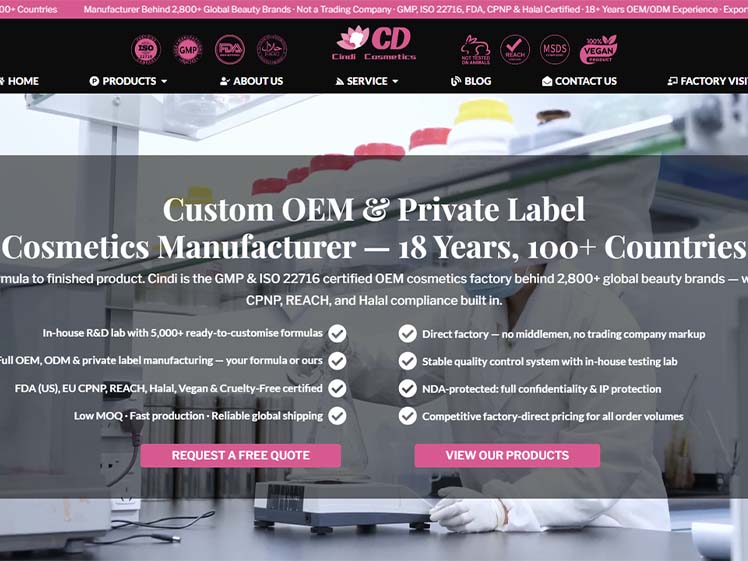
Operating since 2010, the Cindi Guangzhou factory focuses on color makeup.
- Their equipment and workflow are perfectly tuned for fast-moving online retail brands.
- Total focus on makeup categories and online shipping logistics.
- Impostor websites sometimes misuse their brand name to scam buyers.
- Only share your custom artwork after you verify you are speaking to the official factory team.
8. Kasey Beauty: The Trend-Speed Makeup House
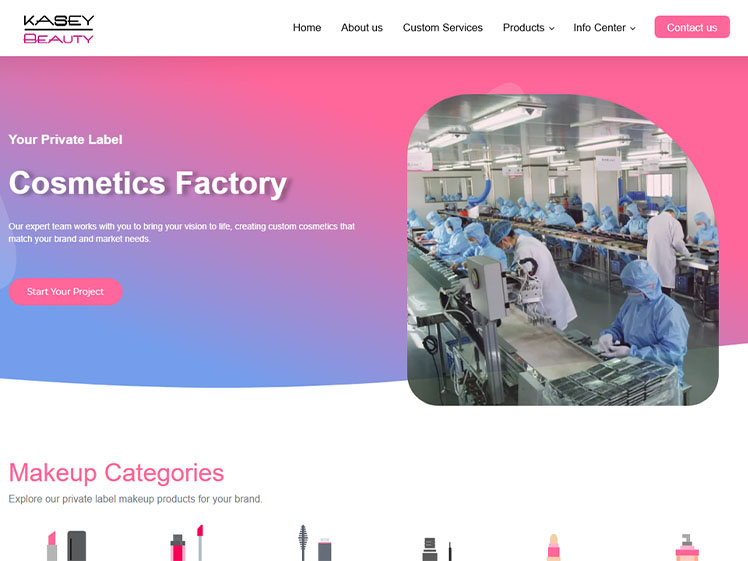
Based in Yiwu, Kasey creates custom eyeshadows, mascaras, and brow products.
- They quickly catch rapid color trends, leveraging Yiwu’s famous small-commodities supply chain.
- They specialize in color makeup and offer flexibility on stock items.
- Fully custom colors require large commitments, usually starting around 12,000 pieces.
- Skip them if you need a fully custom chemical formulation below that volume.
Choosing a factory is just the beginning. Use this list to find three candidates that match your size. Ask them to fill out a standard Request for Quote (RFQ) so you can compare their prices fairly.
How Much Do Prices, MOQs, and Timelines Actually Cost?
When you talk to a Cosmetics OEM Manufacturer in China, the hardest part is getting a straight answer on price. Factories often advertise incredibly low minimum orders and dirt-cheap prices. However, your actual costs change the moment you add a custom logo or a unique ingredient.
Let’s break down what you will actually pay:
The Truth About Minimum Orders (MOQs)
A factory might advertise a 100-piece Minimum Order Quantity (MOQ). Usually, this only gets you a generic product in a blank stock bottle. Every change you make adds a new limit:
- Stock product: 50–500 units. You buy what is already sitting on the shelf.
- Your label on a stock bottle: 500–1,000 units. This covers a basic label printing run.
- Custom packaging and printed logos: 1,000–10,000 units. The packaging supplier dictates these numbers.
- Full custom formula: 2,000–12,000 units. These are indicative ranges, not industry-wide standards. Packaging components, formula complexity, testing, and supplier capacity can change the MOQ significantly.
Realistic Unit Prices by Category
How much does a single item cost? Indicative factory price ranges by formula, ingredients, packaging, order volume, testing requirements, and Incoterms.
- Lip makeup (gloss, lipstick): USD 0.35–4.50
- Eye makeup (mascara, eyeliner): USD 1–5
- Face makeup (foundation, blush): USD 2-6
- Skincare (serums, cleansers): USD 1-8
- Hair care (oils, masks): USD 2.50–6
Basic formulas sit at the lower end. If you want complex active ingredients like encapsulated peptides, prices jump. A simple private-label serum costs around USD 2, but a high-end cream in custom airless pump packaging can easily exceed USD 10 per unit.
Samples, Timelines, and Your Total Budget
Before ordering thousands of items, you must test a physical sample.
- Sample Fees: It varies by factory and product. A basic stock sample may cost USD 10, while custom formula development can cost more. Factories usually ship within 7 business days and often deduct this upfront fee from your final production order.
- Lead Times: A private label run takes 30 to 40 days after artwork approval. A custom OEM formula requires 8 to 16 weeks. Stability and safety substantiation can add significant lead time, especially for new formulas. The required work depends on the formula, market, claims, and available safety data.
- Total Budget: A small private-label launch may be possible with a 5-figure product and compliance budget, but the actual total depends heavily on SKU count, MOQ, packaging, testing, freight, and market requirements. A premium launch involving custom molds, multiple SKUs, extensive testing, and market-specific regulatory work can require a substantially larger budget.
Your customization choices drive the final bill. Stick to stock formulas if you need to protect your startup budget.
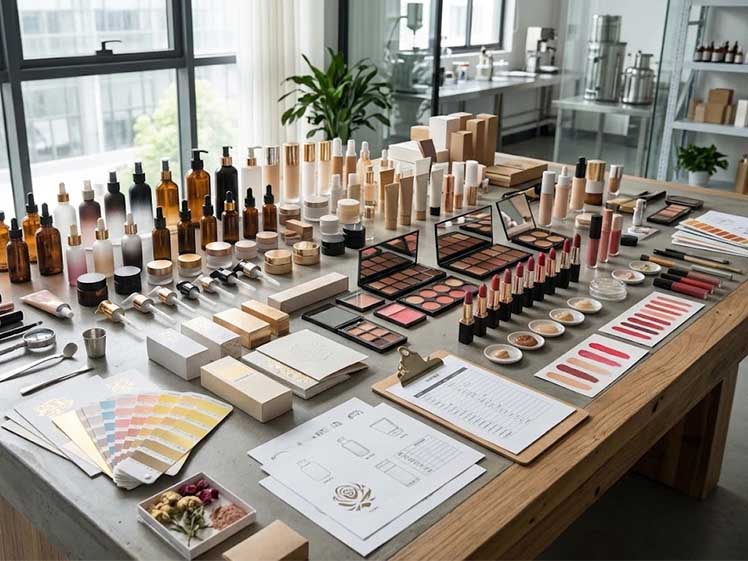
Compliance: Selling China-Made Cosmetics in the US and EU
The factory mixes the lotion, but you make it legal to sell. Budget for compliance paperwork long before you pay for production.
United States: MoCRA Is Not Optional
FDA generally does not preapprove cosmetic products before marketing, but certain color additives require specific FDA approval or certification. However, under the Modernization of Cosmetics Regulation Act (MoCRA), factories must register with the FDA every 2 years through platforms like Cosmetics Direct.
The Responsible Person must list each marketed cosmetic product with the FDA, including its ingredients, and update the listing annually. Watch out for two common traps buyers miss:
- The small business exemption: Certain small businesses may qualify for exemptions from MoCRA facility registration and product listing if their average U.S. gross annual cosmetic sales for the previous 3-year period are below the applicable inflation-adjusted threshold. The exemption does not apply to certain products, including cosmetics that regularly contact the eye’s mucous membrane, are injected, are intended for internal use, or are intended to alter appearance for more than 24 hours without consumer removal.
- Words matter: Claiming a cream “moisturizes” keeps it a cosmetic. Claiming it “treats acne” makes it an unapproved drug. In fact, the FDA sent recent warning letters to skincare brands for making acne-treatment claims without drug approval.
Before approving artwork, review product claims, ingredient claims, SPF claims, acne claims, and other therapeutic language for the destination market. Sunscreen is heavily regulated as an OTC drug. Never import sunscreen based just on a factory’s marketing sheet.
European Union: The Strict Gatekeeper
To sell cosmetics in the EU, you must designate a Responsible Person established in the EU. The Responsible Person must maintain a Product Information File (PIF), including the Cosmetic Product Safety Report (CPSR), and submit the required product notification through the Cosmetic Products Notification Portal (CPNP) before placing the product on the market.
Keep the PIF must be kept for 10 years after the last batch is placed on the market.
| Requirement | What It Means |
| EU Responsible Person | EU-based legal/natural person responsible for compliance |
| CPSR + PIF | Safety assessment and supporting product documentation |
| CPNP | Pre-market electronic notification |
The Factory Document Checklist
Demand this stack of paperwork from any Cosmetics OEM Manufacturer in China:
- Certificate of Analysis (COA) for each batch
- MSDS/SDS safety data sheets
- Stability test data
- Preservative challenge testing (for water-based formulas)
- A full INCI ingredient list noting all allergens
- GMP / ISO 22716 certificates
Always verify the certificate number directly with the issuing agency, rather than trusting a blurry photo on the factory’s website.
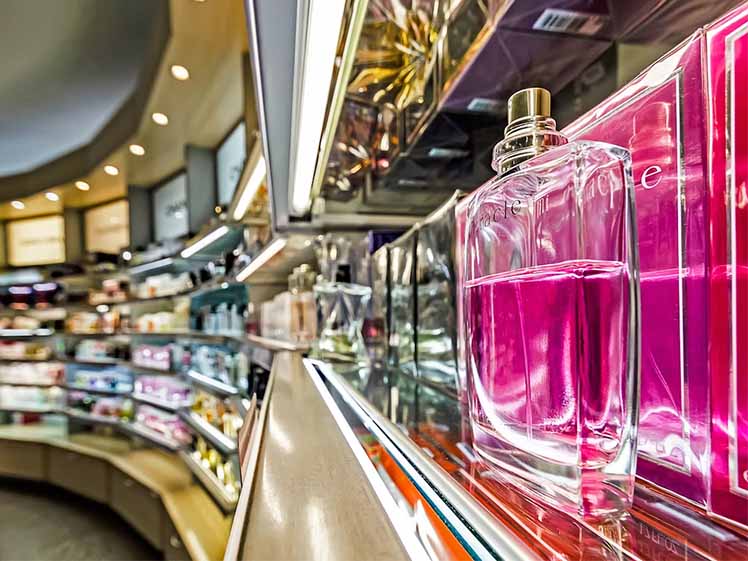
How to Verify a Cosmetics Factory Before You Pay
A polished website cannot prove that a factory meets your needs. Before paying a deposit, check who will make your products, what your contract covers, and how you will inspect the order.
Cosmetics from China Factory Verification Checklist
- Check Business License: Request the factory’s legal and Chinese names, unified social credit code, and permitted business scope, not just a trading company’s details.
- Verify Certificates: Confirm GMP or ISO 22716 numbers, issuer, address, expiry, and scope directly with the issuing body.
- Review Facility: Request a production-floor video call, equipment list, quality-control lab details, and sample batch records.
- Approve a Pre-Production Sample: It should match your formula, shade, scent, packaging, and printed artwork.
- Set Ownership Terms. Cover custom formulas, resale rights, artwork, and molds. Before sharing private details, have qualified counsel review your NDA or NNN agreement. The latter addresses disclosure, misuse, and attempts to bypass your business. US trade guidance recommends planning IP protection early.
- Agree on Inspection: Use an agreed AQL sampling plan for pre-shipment inspection. AQL inspection is a sampling method and does not guarantee that every unit is defect-free.
- Start Small: Track complaints and shipping damage before increasing orders.
Cosmetics OEM RFQ Template
Use this request for quotation to compare matching offers:
We need a cosmetics OEM/ODM supplier for [US/EU/UK].
- Product: [serum/lip gloss]
- Quantity: [units per SKU]
- Formula: [stock/custom/ingredients]
- Packaging: [bottle/tube/box]
Please provide:
- MOQs by formula and packaging option.
- Sample cost and lead time; bulk production lead time.
- Business license, factory address, and GMP/ISO 22716 certificates.
- Target-market test reports and regulatory documents.
- INCI ingredient list, COA results, and applicable SDS documentation for ingredients, raw materials, or hazardous materials.
- EXW and FOB quotations under Incoterms® 2020, including the named place/port and payment terms.
- Permission for third-party audits and pre-shipment inspection.
Keep approvals and agreed changes in writing. Clear records help you resolve differences before production starts.
Cosmetics OEM Sourcing With NicheSources
Managing factory visits, language barriers, and time zone gaps across the Pacific can challenge any brand owner. If you cannot travel to China in person, a bilingual China sourcing agent like NicheSources can help you verify business licenses, run hands-on AQL inspections, and consolidate boxes in local warehouses.
To match your project with the right Cosmetics OEM Manufacturer in China, follow these practical rules:
- First-Time Founders: Start with an ODM or private-label model. Launch one hero product using an in-stock formula and simple packaging at a 500–1,000 unit MOQ to test real customer demand first.
- Makeup Brands: Shortlist color-cosmetics specialists in Guangzhou or Yiwu. Remember that packaging factories usually set your true order minimums for custom compacts or lipstick tubes.
- Scaling Brands: Move to high-capacity tiers like COSMAX or Nox Bellcow to access advanced formulation labs and certified cleanroom systems.
- SPF and Skin Treatments: Budget for legal reviews before production starts, because the US FDA regulates sunscreens and acne formulas as OTC drugs.
An on-the-ground partner protects your budget by catching an altered certificate or an off-color production sample before shipping.
FAQ
Who are the top cosmetic manufacturers in China?
There is no single best manufacturer. The right factory depends on product category, MOQ, formula requirements, certifications, and target market. COSMAX handles massive cosmetic ODM in China, while Intercos Suzhou crafts premium color makeup. Nox Bellcow focuses on sheet masks and wet wipes, Guangdong Bawei formulates skincare, and TY Cosmetic excels at export private label cosmetics manufacturing in China.
What is the difference between OEM and ODM cosmetics manufacturing?
OEM generally refers to manufacturing a product to the buyer’s specifications, which may include a custom formula. Formula ownership, exclusivity, and related intellectual property rights depend on the development agreement and manufacturing contract. ODM means you customize a factory’s existing, pre-tested recipe. It is cheaper and faster to launch, but the factory usually retains the formula rights unless you negotiate a different contract upfront.
How much does it cost to manufacture cosmetics in China?
Unit prices range from USD 0.35 for basic lip gloss to over USD 8 for complex, active-heavy skincare serums. This depends heavily on your packaging choices. Product samples usually cost USD 50-150 each. When you factor in lab testing, custom boxes, and ocean freight, a minimal private-label brand launch typically requires an all-in budget of around USD 10,000 to start up safely.
Do I need FDA approval to sell cosmetics?
You do not need FDA pre-market approval to sell standard cosmetics in the United States. Under MoCRA, the Responsible Person must list each marketed cosmetic product with FDA and update the listing annually, subject to applicable exemptions. If you claim your lotion treats acne, or if you sell sunscreen, the FDA regulates those items as drugs. This triggers strict lab testing rules before you can sell a single bottle.
Where can I buy cosmetics wholesale in China?
Start your search online using verified listings on Alibaba, Global Sources, or Made-in-China. If you visit in person, explore Guangzhou’s Meibo City and Xingfa Plaza, or browse Yiwu’s International Trade City District 3. These busy physical markets work well for testing stock goods. However, counterfeit products circulate there, so treat purchases strictly as test samples and verify them first.
How can I start my own cosmetic brand?
Launching takes 5 clear steps:
- Pick a specific niche and hero product.
- Choose a private-label model to test the market quickly.
- Shortlist three to five certified factories and order samples.
- Carefully verify their business licenses and compliance documents.
- Place a small pilot order.
Watch your initial customer sales data closely before you scale up production.
Launch Your Brand with a Cosmetics OEM Manufacturer in China
Picking a cosmetics OEM manufacturer in China is only half your job. The right factory should match your product category, MOQ, target market, compliance requirements, and quality-control process.
NicheSources handles this hard work directly on the ground in China. Our bilingual team provides supplier verification, secure payment processing, warehouse consolidation, and hands-on AQL quality control.
Ready to begin? Request a free sourcing quote. Share your product specs, target order quantity, destination market, and deadline to receive verified factory options with transparent pricing.