Adidas products are manufactured through a global network of independent suppliers, with most production concentrated in Asia. In 2025, Vietnam, Indonesia, and China were its three largest sourcing countries by volume. Adidas also works with factories across Europe, the Americas, and Africa for footwear, apparel, accessories, and sports equipment.
Unlike brands that own most of their production facilities, Adidas relies primarily on outsourced manufacturing partners. This allows the company to source different product categories from regions with the right materials, labor skills, machinery, and export infrastructure.
From a sourcing perspective, the country on the label tells you where the final product was manufactured, but it does not determine authenticity or quality on its own. Supplier approval, material controls, production standards, and inspection processes matter far more.
Adidas Manufacturing Quick Facts
| Fact | Detail |
| Headquarters | Herzogenaurach, Germany |
| Primary manufacturing regions | Asia-Pacific, Europe, the Americas, and Africa |
| Top three sourcing countries by volume | Vietnam (27%), Indonesia (18%), and China (16%) |
| Total disclosed facilities | 880 facilities: 444 primary suppliers, 238 licensee facilities, and 198 wet-process facilities |
| Manufacturing model | Production is largely outsourced to independent suppliers |
| Main product categories | Footwear, apparel, accessories, and sports gear |
| Sustainability focus | Workplace Standards, supplier audits, and increased use of recycled materials |
| Official sources | Adidas Annual Report 2025 and Adidas 2026 Global Factory List |
Where Are Adidas Made? Global Manufacturing Overview
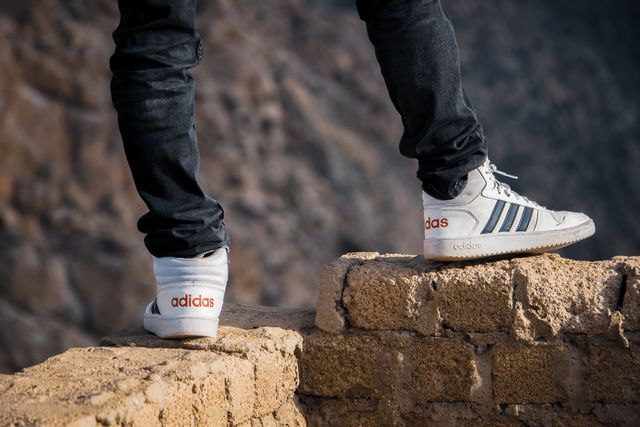
Adidas products are made across Asia-Pacific, Europe, the Americas, and Africa, but production is heavily concentrated in Asia. Vietnam, Indonesia, and China account for the largest shares of Adidas sourcing volume because these countries have established footwear, apparel, textile, and accessories supply chains.
Adidas does not publish a simple one-country manufacturing model. Instead, it spreads production across different regions based on factory specialization, material access, labor capabilities, logistics, and proximity to key markets.
| Region | Primary Countries | Main Products | Notes |
| Asia-Pacific | Vietnam, China, Indonesia, Cambodia, India, Pakistan | Footwear, apparel, accessories, sports balls | Adidas’ largest manufacturing region by volume |
| Europe | Germany, Turkey, Italy | Heritage and premium footwear, apparel for European markets | Lower volume, with more specialized production |
| Americas | Brazil, Mexico, USA, Argentina | Regional footwear and apparel | Supports faster access to North and South American markets |
| Africa | South Africa, Tunisia, Madagascar, Mauritius | Textiles and regional apparel | Smaller but gradually expanding supplier base |
In practice, where an Adidas product is made depends on the category, model, production run, and supplier capacity. Footwear is commonly sourced from Vietnam, Indonesia, and China, while apparel production is spread more widely across Asia and other regional supplier markets.
This global structure also helps Adidas reduce dependence on a single country. If labor costs, tariffs, capacity, or shipping conditions change in one region, production can be shifted across approved suppliers without rebuilding the entire supply chain.
The Evolution of Adidas Manufacturing

Adidas started as a small German shoe business and gradually developed into a global manufacturing network. The biggest shift came when the brand moved away from relying mainly on European production and began working with large supplier networks across Asia.
| Period | What Changed |
| 1920s–1940s | Adi Dassler made sports shoes by hand in Herzogenaurach, Germany. |
| 1950s–1970s | Adidas expanded production as demand grew among athletes and sports teams. |
| 1980s–2000s | More manufacturing moved to China, Vietnam, Indonesia, and other Asian markets. |
| 2010s–Present | Production became more technical, with advanced materials, automation, and greater focus on sustainability. |
Adidas Manufacturing by Product Category
Adidas does not manufacture every product category in the same countries. Footwear production is concentrated mainly in Vietnam, Indonesia, and China, while apparel and accessories are spread across a broader supplier network that includes Cambodia, India, Pakistan, Turkey, and several regional markets.
The exact country mix can change by product line, supplier capacity, and production season. Adidas also does not publish a fixed country-to-product map for every SKU, so the tables below show the main manufacturing patterns rather than guaranteed origins for individual products.
Where Are Adidas Shoes Made?
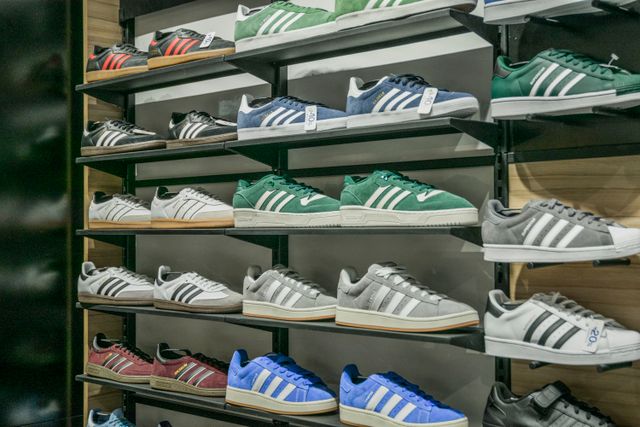
| Primary Manufacturing Countries | Typical Products | Why These Locations Are Used |
| Vietnam | Running shoes, lifestyle sneakers, soccer footwear | Large-scale footwear capacity, experienced labor, and established export infrastructure |
| Indonesia | Lifestyle sneakers, performance footwear, soccer shoes | Strong footwear specialization and long-established supplier networks |
| China | Running shoes, sneakers, sports footwear components | Advanced component supply chains, tooling capabilities, and product-development support |
| Germany | Selected heritage and premium footwear | Specialized, lower-volume production, including the Copa Mundial |
| Brazil and Argentina | Regional footwear lines | Production closer to Latin American markets |
Footwear manufacturing requires more specialized equipment than basic apparel production. Factories may handle outsole molding, stitching, bonding, lasting, finishing, and performance testing under one production system or through nearby subcontractors.
For importers, this means a factory that produces casual sneakers may not be suitable for technical running shoes or soccer cleats. The right supplier depends on the construction method, required materials, testing standards, and expected order volume.
Where Are Adidas Clothes Made?

| Primary Manufacturing Countries | Typical Products | Manufacturing Strengths |
| Vietnam | Sportswear, training apparel, teamwear | Large production capacity and experience with global sports brands |
| China | Activewear, jackets, technical apparel | Broad fabric access, trims, printing, and customization capabilities |
| Cambodia | T-shirts, trackwear, basic sportswear | Large-scale cut-and-sew manufacturing |
| India | Cotton apparel, sportswear, selected textiles | Strong textile and garment manufacturing base |
| Pakistan | Sportswear, teamwear, performance apparel | Textile production and sports-goods manufacturing |
| Turkey | Apparel for European markets | Shorter lead times into Europe and strong textile capabilities |
| Madagascar, Mauritius, and Tunisia | Selected apparel and textile products | Regional production serving European and African markets |
Apparel sourcing is more geographically distributed because garment factories can specialize by fabric, construction, finishing, or destination market. Basic T-shirts and track pants require different capabilities from compression wear, waterproof jackets, or seamless activewear.
In practice, buyers should evaluate fabric sourcing, shrinkage control, color consistency, stitching quality, printing durability, and size tolerances rather than choosing a supplier based only on country.
Where Are Adidas Accessories and Sports Gear Made?
| Primary Manufacturing Countries | Typical Products | Key Capabilities |
| China | Bags, caps, gloves, protective gear, footwear components | Broad material access, molding, hardware, packaging, and product development |
| Pakistan | Sports balls, gloves, and selected sports equipment | Established sports-goods manufacturing clusters |
| Vietnam | Bags, accessories, and selected equipment | Scalable sewn-product and footwear-adjacent production |
| India | Bags, textiles, and selected sports accessories | Textile, leather, and general manufacturing capabilities |
| Cambodia | Fabric-based accessories and bags | Cut-and-sew production capacity |
| European suppliers | Specialized or premium accessories | Smaller-volume and category-specific manufacturing |
Accessories and gear cover a much wider range of manufacturing processes than footwear or apparel. A backpack may require fabric cutting, webbing, zippers, foam, and hardware, while a football may involve laminated materials, panel cutting, printing, stitching, and pressure testing.
This is why buyers should avoid treating “sports accessories” as one supplier category. A factory should be assessed against the exact product, materials, compliance requirements, and testing process needed for the order.
Adidas Model-Specific Manufacturing Locations
Adidas does not publish a fixed country-to-model map. The same shoe may be produced in different factories depending on the colorway, production batch, market, and supplier capacity. For that reason, the locations below describe where each model is typically or commonly manufactured, rather than guaranteeing the origin of every pair.
| Adidas Model or Line | Typical Manufacturing Countries | Manufacturing Notes |
| Adidas Samba | Indonesia, Vietnam, China | Standard releases are commonly made in Asia. Selected premium or limited editions may come from Italy or Germany. |
| Adidas Gazelle | Vietnam, Indonesia, China | Lifestyle suede versions may be produced across several approved footwear suppliers. |
| Adidas Campus | Vietnam, Indonesia, China | Includes classic Campus styles and newer Campus 00s releases. |
| Adidas Stan Smith | Vietnam, Indonesia, China | Production location can vary by material, colorway, and regional release. |
| Adidas Superstar | Vietnam, Indonesia, China | The shell-toe design requires molded components alongside stitched upper production. |
| Adidas Ultraboost | Vietnam, China | Commonly made in factories equipped for technical knitted uppers, cushioning systems, and performance footwear assembly. |
| Adidas Predator | Vietnam, China | Soccer cleats require specialized tooling, outsole construction, bonding, and performance testing. |
| Adidas Copa Mundial | Germany | The heritage leather soccer boot is associated with Adidas production in Scheinfeld, Germany. |
Where Are Adidas Samba Shoes Made?
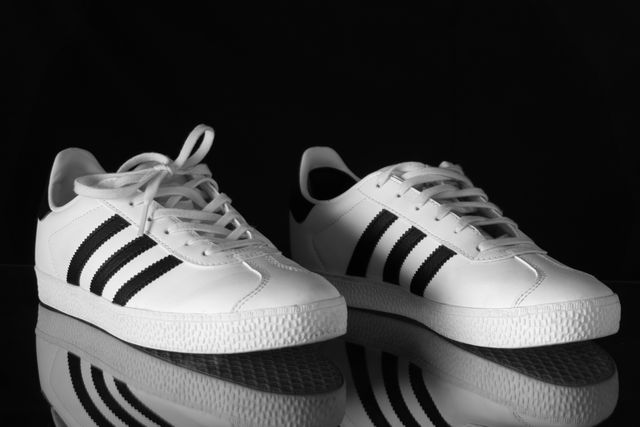
Adidas Samba shoes are commonly made in Indonesia, Vietnam, or China. However, the production country can vary between standard releases, special editions, and regional batches.
This means two authentic Samba pairs may carry different country-of-origin labels. The label alone does not confirm whether a pair is genuine. Buyers should also check the article number, size-tag details, stitching, materials, packaging, retailer, and overall consistency with the specific release.
Where Are Adidas Gazelle and Campus Shoes Made?
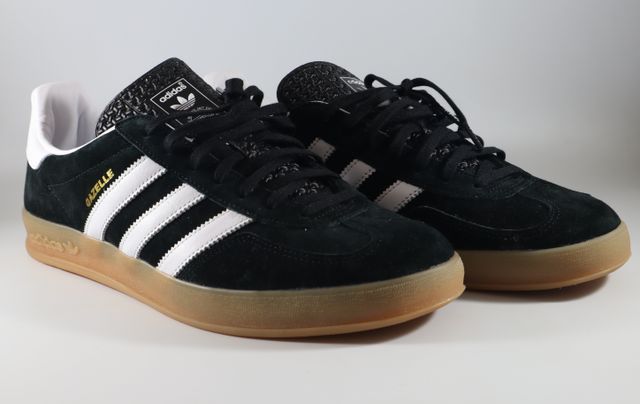
Adidas Gazelle and Campus shoes are typically produced in Vietnam, Indonesia, and China. These countries have large footwear clusters capable of handling suede uppers, rubber outsoles, stitching, bonding, and high-volume assembly.
For models such as the Campus 00s, Adidas may divide orders between multiple approved suppliers. Production can therefore shift without any meaningful change in the intended design or quality standard.
Where Are Adidas Stan Smith and Superstar Shoes Made?
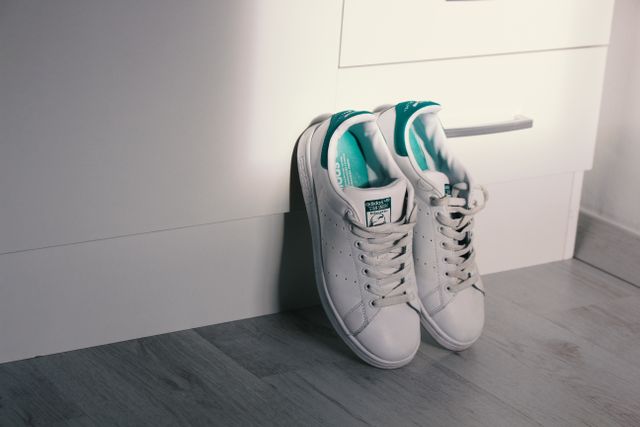
Stan Smith and Superstar shoes are also commonly manufactured in Vietnam, Indonesia, and China. Their exact origin depends on the production run and supplier assigned to the order.
Although both are classic lifestyle shoes, their manufacturing requirements differ. The Superstar uses its recognizable molded shell toe, while Stan Smith versions may use leather, synthetic leather, or alternative materials. Those material and component requirements influence which factory receives a particular production program.
Where Are Adidas Ultraboost and Predator Shoes Made?
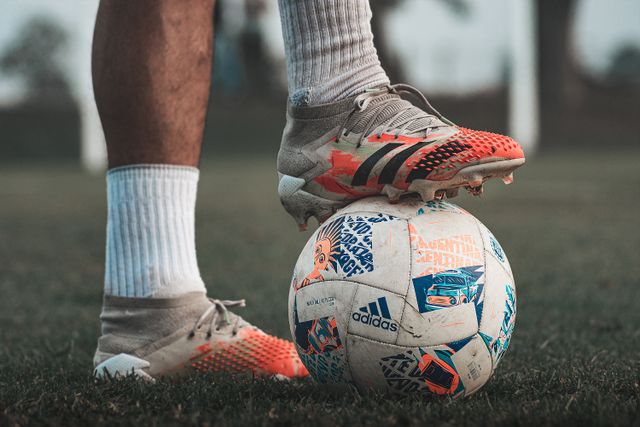
Adidas Ultraboost and Predator footwear is often made in Vietnam and China, where suppliers can support more technical construction.
Ultraboost production may involve knitted uppers, molded heel components, specialized cushioning, and precision assembly. Predator soccer boots can require engineered uppers, studs or molded outsoles, bonding processes, and performance testing.
For brands developing similar footwear, this distinction matters. A factory experienced in basic canvas sneakers may lack the tooling, testing systems, and component network required for technical running shoes or soccer cleats.
Is the Adidas Copa Mundial Still Made in Germany?

The Adidas Copa Mundial is associated with manufacturing in Scheinfeld, Germany, making it an exception within Adidas’ largely outsourced Asian footwear network. Its German origin supports the model’s positioning as a heritage leather soccer boot.
However, buyers should still verify the country-of-origin label on the individual product. Adidas may use different production arrangements for related Copa lines, updated variations, or market-specific releases. The German manufacturing claim should therefore be applied specifically to the Copa Mundial rather than every shoe carrying the Copa name.
Factors Influencing Adidas Product Locations
As a seller looking for manufacturers, understanding the factors that influence Adidas’ choice of production locations can provide valuable insights for your own business.
Here are several key factors that contribute to their decision-making process:
1. Skilled Workforce
A talented and experienced workforce is essential for ensuring high-quality products. Adidas primarily produces its products in Asia, where they have access to a large pool of skilled labor.
2. Quality Standards
Maintaining impeccable quality standards is important for a globally recognized brand like Adidas. They work with many independent manufacturing partners to ensure that their products meet strict quality requirements.
3. Ethical and Sustainability Practices
Adidas is committed to social and environmental compliance throughout its supply chain. They invest in long-term partnerships with suppliers who adhere to their ethical and sustainable standards.
4. Cost Efficiency
Low-cost production is important for keeping prices competitive in the market. Adidas typically chooses manufacturing locations with lower labor and operational costs, such as Asian countries.
5. Market Proximity

Adidas needs to be close to its major markets for faster product distribution. Producing in regions like Asia allows them to cater more efficiently to the rapidly growing markets in the continent.
6. Infrastructure and Logistics
Efficient infrastructure and logistic networks are essential for timely product delivery. Adidas looks for manufacturing facilities in regions with well-developed transportation and communication networks.
7. Supplier Network
A strong and reliable supplier network ensures that Adidas can source the necessary raw materials for its products. They maintain a diverse network of suppliers spread across various geographical regions.
8. Technology and Automation
Adidas seeks out manufacturing locations with access to cutting-edge technology and automation, enabling them to produce their products more efficiently and sustainably.
Vietnam Province & Factory Detail
Vietnam is Adidas’ largest sourcing country by volume, and its supplier network is concentrated across several major manufacturing provinces and cities. The strongest clusters are in southern Vietnam, where footwear, apparel, packaging, and export logistics are closely connected.
| Province / City | Primary Supplier Facilities | Estimated Workers | Main Production Focus |
| Ho Chi Minh City | 17 | 61,181 | Footwear, apparel, logistics |
| Tay Ninh | 11 | 10,847 | Footwear |
| Dong Nai | 10 | 21,223 | Footwear, apparel |
| Thanh Hoa | 5 | 23,902 | Footwear |
| Vinh Long | 5 | 22,828 | Footwear, apparel |
| Dong Thap | 5 | 12,843 | Footwear, apparel |
| Can Tho City | 4 | 16,098 | Footwear |
Ho Chi Minh City has the largest disclosed concentration, with 17 primary supplier facilities and more than 61,000 workers. Its importance goes beyond final assembly. The wider southern manufacturing corridor gives suppliers access to materials, subcontractors, packaging vendors, ports, and freight services.
Dong Nai and Tay Ninh are also important footwear hubs. These areas support large export-oriented factories capable of handling stitching, lasting, bonding, outsole assembly, finishing, and quality control at scale.
Thanh Hoa, Vinh Long, Dong Thap, and Can Tho provide additional capacity for footwear and apparel. In practice, this regional spread allows Adidas to distribute production across multiple supplier sites rather than relying on a single factory campus.
For importers, the main takeaway is that Vietnam is highly capable at large-scale footwear production, but many of its major factories are geared toward established brands and repeat volume. Smaller private-label brands may face higher MOQs, longer development cycles, or less flexibility than they would with some Chinese OEM suppliers.
China Province & OEM Factory Cluster Detail
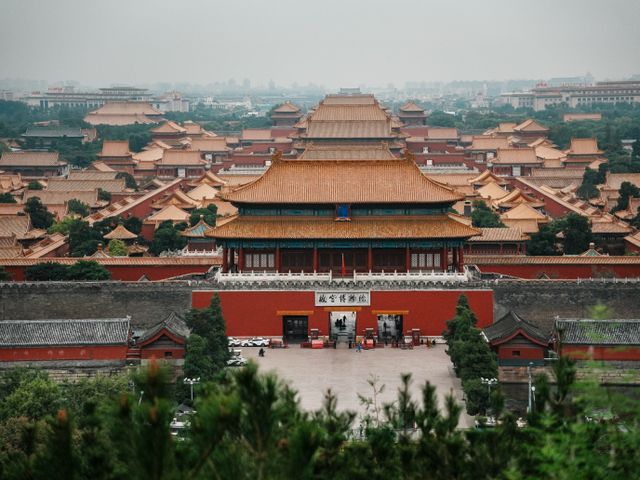
China remains one of Adidas’ most important manufacturing bases because its sportswear supply chain is concentrated in specialized provincial clusters. These regions combine final assembly factories with nearby suppliers for fabrics, soles, trims, hardware, packaging, printing, and logistics.
| Province | Primary Supplier Facilities | Estimated Workers | Main City / Cluster Focus | Typical Products |
| Guangdong | 26 | 26,724 | Dongguan, Guangzhou, Shenzhen, Qingyuan | Footwear, apparel, accessories, packaging |
| Fujian | 9 | 3,801 | Putian, Quanzhou, Jinjiang, Xiamen | Footwear, textiles |
| Jiangsu | 9 | 11,260 | Suzhou, Changzhou, Taicang | Apparel, performance fabrics |
| Zhejiang | 8 | 5,768 | Yiwu, Ningbo | Accessories, apparel |
| Shandong | 8 | 2,905 | Qingdao | Knitwear, socks, activewear basics |
| Liaoning | 7 | 3,352 | Dalian, Dandong | Footwear, apparel |
| Hunan | 7 | 7,830 | Changde | Footwear, apparel |
Guangdong
Guangdong has the largest disclosed concentration of primary Adidas supplier facilities in China. Its network supports footwear, apparel, accessories, molded components, trims, packaging, and export logistics.
For importers, the main advantage is supplier density. Product development can move faster when material vendors, component makers, packaging suppliers, and assembly factories are located within the same region.
Fujian
Fujian is one of China’s best-known footwear manufacturing clusters. Putian, Quanzhou, and Jinjiang have long-established ecosystems for sneaker production, including outsoles, uppers, textiles, molds, and assembly.
This cluster is especially relevant for private-label sneaker brands, although factory capability varies widely. Buyers still need to verify tooling, material control, compliance, and experience with the required construction method.
Jiangsu and Zhejiang
Jiangsu is stronger in apparel and performance fabrics, while Zhejiang supports accessories, apparel, packaging, and general merchandise sourcing.
Our Yiwu location gives us direct access to Zhejiang’s supplier ecosystem and convenient links to nearby manufacturing provinces. This is useful when a project combines apparel or footwear with branded packaging, bags, accessories, or promotional items.
Shandong, Liaoning, and Hunan
These provinces provide additional capacity for knitwear, socks, activewear basics, footwear, and apparel. They may offer a better fit for certain product categories or order sizes than the most heavily concentrated coastal clusters.
The practical takeaway is that “sourcing from China” is too broad a strategy on its own. The right province depends on your product construction, materials, MOQ, customization requirements, and target lead time.
Ready to source sportswear from China? NicheSources offers free product sourcing with quotes in 2 business days. Our Yiwu-based team can identify factories in the right cluster for your product and arrange supplier verification, sampling, and pre-shipment inspection. Request a free quote.
Why China Remains a Key Manufacturing Hub for Adidas
China remains strategically important to Adidas because it offers more than factory capacity. Its main advantage is a deep, vertically connected supply chain that supports product development, component sourcing, assembly, packaging, and export logistics within the same manufacturing regions.
Vertically Integrated Supply Chains
In major clusters such as Guangdong, Fujian, Jiangsu, and Zhejiang, factories can source fabrics, soles, foam, trims, zippers, labels, packaging, and molded components from nearby suppliers.
This proximity reduces coordination time and makes it easier to replace materials or solve production issues without moving the entire order to another region. For complex footwear and technical apparel, that network can be as important as the final assembly factory itself.
Advanced Manufacturing Capabilities
Chinese suppliers cover a wide range of production processes, including:
- Automated fabric cutting
- 3D knitting
- Outsole and component molding
- Bonded and seamless construction
- Technical printing and embroidery
- Custom packaging and labeling
- Performance-fabric development
These capabilities allow Adidas to source both finished products and specialized components from China. They are also useful for brands developing private-label sneakers, activewear, bags, or sports accessories that require more than standard cut-and-sew production.
More Flexible MOQ Options
Large Adidas orders are placed with established suppliers, but the broader Chinese OEM market also includes factories that accept smaller development runs.
In our sourcing work, MOQ flexibility usually depends on whether the buyer uses existing materials and molds or requests fully custom components. A private-label activewear order may be possible at a lower volume than a custom sneaker requiring new outsole tooling, multiple sizes, and original molds.
China is often more accessible for growing brands because suppliers may support:
- Smaller trial orders
- Mixed colors or sizes
- Existing mold selection
- Gradual volume increases
- Custom labels and packaging
Mature Logistics Infrastructure
China’s manufacturing clusters are connected to major ports such as Shenzhen, Ningbo, and Shanghai. Frequent shipping routes make it easier to compare sea freight, air freight, rail, and DDP options across major markets.
The logistics network also supports consolidation. A buyer sourcing apparel, bags, packaging, and accessories from different factories can combine them in one warehouse before inspection and shipment. This can reduce fragmented freight costs and simplify inventory coordination.
Faster Product Development
China remains particularly strong for sampling and product iteration. Suppliers can often develop prototypes, source alternative materials, adjust specifications, and prepare pre-production samples without relying on overseas component vendors.
This matters for seasonal collections and brands testing new products. However, fast sampling does not eliminate the need for clear specifications. We recommend defining measurements, materials, tolerances, colors, packaging, and inspection criteria before approving bulk production.
China’s continued role in the Adidas supply chain reflects this combination of supplier density, technical capability, MOQ flexibility, logistics, and product-development support. For independent brands, the same advantages are available at a smaller scale when the project is matched with the right factory cluster and managed through proper sampling and quality control.
Read More:
- Where Are Salomon Shoes Made
- Where Are Nike Shoes Made?
- Where Are Keen Shoes Made
- Where Are Asics Made
- Where Are Puma Shoes Made
Behind the Scene: Health, Safety, and Compliance in Adidas Factories

Adidas requires suppliers to follow its Workplace Standards, which cover labor rights, workplace safety, environmental practices, and responsible production. Because Adidas relies mainly on independent manufacturers, supplier monitoring is central to how the company manages risk across its global factory network.
Workplace Standards
Adidas’ Workplace Standards apply to contracted factories and set expectations for areas such as:
- Wages and working hours
- Worker health and safety
- Freedom from forced or child labor
- Non-discrimination and fair treatment
- Environmental management
- Grievance and remediation procedures
These standards help create a consistent compliance framework across countries with different labor laws and manufacturing conditions.
Supplier Audits and Monitoring
Adidas uses factory assessments, supplier ratings, and follow-up reviews to evaluate compliance. When issues are identified, suppliers may be required to complete corrective-action plans and demonstrate that problems have been resolved.
Audits are useful, but they are only one part of supplier control. In practice, brands also need ongoing checks during sampling, production, and final inspection. A factory may pass a compliance review while still producing inconsistent sizing, stitching, color matching, or packaging.
For importers, this is an important distinction: social compliance and product quality should be managed as separate workstreams.
Recycled and Lower-Impact Materials
Adidas has expanded the use of recycled materials across footwear and apparel, including recycled polyester and product lines developed around lower-impact material choices.
However, recycled content still requires verification. Buyers should ask suppliers for material specifications, certificates, test reports, and traceability documents rather than relying on verbal claims or generic sustainability labels.
Product Quality Controls
Quality standards depend on the product category. Footwear may require checks for sole bonding, sizing, flex performance, color consistency, and material defects. Apparel inspections typically focus on measurements, stitching, shrinkage, print durability, and fabric performance.
For private-label brands, we recommend defining:
- Approved materials and color references
- Measurement tolerances
- Construction and stitching requirements
- Packaging specifications
- Testing requirements
- Acceptable quality limits
- Pre-shipment inspection criteria
Adidas’ system shows why supplier selection alone is not enough. Consistent production depends on documented specifications, regular monitoring, and inspections before goods leave the factory.
Sourcing Implications for Importers & Sellers
Adidas’ supplier footprint offers a useful benchmark for brands sourcing footwear, apparel, and sports accessories. The main lesson is that each manufacturing cluster serves a different purpose, so your decision should be based on product complexity, MOQ, customization, lead time, and target market.
| Sourcing Need | Most Relevant Cluster | Why It Fits | Main Trade-Off |
| Technical footwear at scale | Vietnam or Indonesia | Strong footwear specialization, experienced labor, and large export factories | Higher MOQs and less flexibility for early-stage brands |
| Private-label sneakers with custom development | Fujian or Guangdong, China | Access to molds, soles, uppers, packaging, and nearby component suppliers | Requires careful supplier vetting because capability varies widely |
| Performance apparel | Jiangsu, Guangdong, Vietnam | Established technical fabric, sewing, printing, and finishing capabilities | Fabric minimums may increase the practical MOQ |
| Basic activewear and teamwear | Cambodia, Vietnam, China, Pakistan | Scalable cut-and-sew production and established textile supply chains | Lower pricing may come with fewer development services |
| Sports balls and selected equipment | Pakistan | Mature sports-goods cluster, especially for stitched and bonded balls | Narrower supplier base for unrelated accessories |
| Bags, caps, accessories, and packaging | Guangdong or Zhejiang, China | Broad material access and easier multi-product consolidation | Different product types may still require separate factories |
| Lower-volume product testing | China | More access to stock materials, existing molds, mixed orders, and flexible OEMs | Unit costs are usually higher at small volumes |
| Regional production for Europe | Turkey or selected EU suppliers | Shorter transit times and easier replenishment for European markets | Typically higher manufacturing costs |
| Heritage or premium positioning | Germany or Italy | Specialized production and stronger origin-based brand storytelling | Limited capacity and significantly higher costs |
What Should Importers Evaluate Before Choosing a Cluster?
Country selection should come after the product specification is clear. A supplier cannot quote accurately without knowing the materials, construction, sizes, colors, testing needs, packaging, and expected order quantity.
We recommend comparing suppliers on:
- Experience with the exact product construction
- MOQ by style, color, and size
- Sampling and tooling costs
- Material traceability
- Production lead time
- Compliance documentation
- Inspection access
- Export and fulfillment capabilities
A footwear factory that looks competitive on price may become expensive once mold fees, size runs, material minimums, and testing are included. Apparel orders can face the same issue when custom fabric dyeing or performance finishes create higher upstream minimums.
When Does China Make More Sense Than Vietnam or Indonesia?
China is often the practical choice when your brand needs smaller development runs, multiple product categories, frequent sampling, or custom packaging. Its supplier density also makes it easier to replace materials and coordinate products from several factories.
Vietnam and Indonesia tend to be stronger when the design is already finalized and the order volume justifies a large footwear production line. They may be less suitable when you are still testing demand or changing specifications between samples.
Through our product sourcing service, we help brands identify the cluster that fits the product rather than sending the same request to unrelated factories. We can also compare quotations, verify suppliers, coordinate samples, and arrange pre-shipment inspection.
Industry Note: NicheSources has helped DTC brands, Amazon sellers, Shopify retailers, and importers streamline sourcing from China. Our process reduces supplier search time and ensures every order is pre-shipment inspected to your standards. See how we work.
Frequently Asked Questions
Are Adidas Made in China Original?
Yes, Adidas products made in China are 100% original as long as they come from authorized manufacturers. China is one of Adidas’ major production hubs, with factories producing shoes, apparel, and accessories for both domestic and global markets.
Of course, there’s always a risk of counterfeit products but if you source from official Adidas retailers, authorized distributors, or directly from Adidas you should be fine. Checking product details like stitching, packaging, and tags can also help verify if an item is genuine
Who Are the Major Suppliers for Adidas Products?
Adidas outsources most of its production to a variety of suppliers around the world. They are committed to transparency and public disclosure, so they have fully disclosed their global factory lists and published detailed information about their suppliers.
What Are the Primary Adidas Manufacturing Locations?
Adidas manufactures most of its products in Asia and Europe, with China being the leading country for production, followed by Vietnam, Indonesia, and India.
In addition, they also have factories in countries like the United States, Germany, Italy, France, and the United Kingdom.
Does the manufacturing country affect Adidas sizing?
The country of manufacture should not intentionally change Adidas sizing because approved suppliers work from the same technical specifications.
However, buyers may still notice small differences between production batches due to materials, construction methods, tooling, or acceptable manufacturing tolerances. This is more likely across different versions of a model than between countries alone.
For resale inventory, sellers should verify the exact SKU and size chart instead of assuming every shoe with the same model’s name fits identically.
How Can I Find Shoe Manufacturers?
If you are looking for shoe manufacturers, you can start by researching options from various online resources.
One such resource is the Top 14 Shoe Manufacturers in China, which provides a list of potential suppliers.
Moreover, you can find specific wholesale sneaker suppliers in China to get the right manufacturing partner for your business needs.
Remember to evaluate potential manufacturers for quality assurance, production capacity, and their commitment to ethical business practices before making a final decision.
Are Adidas factories exclusive to Adidas?
Most Adidas suppliers are independent manufacturers rather than factories owned or exclusively controlled by Adidas. Many also produce for other international brands, provided they keep designs, tooling, materials, and production information separated. This is common in footwear and apparel manufacturing.
However, working in the same factory does not give another brand access to Adidas designs or specifications. Importers must develop their own products, molds, branding, and technical files instead of requesting replicas of protected products.
What information should I prepare before requesting a sportswear quotation?
Prepare a clear product specification before contacting suppliers. Include reference images, target materials, measurements, size range, colors, logo placement, packaging, expected order quantity, destination country, and any testing requirements.
For footwear, specify the construction type, outsole design, upper materials, size run, and whether existing molds are acceptable. Detailed information produces more accurate quotations and makes supplier comparisons easier.
Vague requests often lead to misleading prices that exclude tooling, material minimums, packaging, or testing.
What quality checks are important for private-label sneakers?
Private-label sneaker inspections should cover sizing, symmetry, stitching, bonding, sole attachment, color consistency, logo placement, material defects, packaging, and carton quantities.
Depending on the product, brands may also require flex, abrasion, slip-resistance, or chemical testing. A pre-shipment inspection should compare finished units against the approved sample and written specification.
For complex footwear, quality control should begin during material approval and production rather than relying only on a final inspection after the full order is completed.
Can one supplier manufacture footwear, apparel, and accessories?
Some large suppliers manage several product categories, but most factories specialize in a narrower process. Footwear, apparel, bags, and molded accessories require different machinery, workers, materials, and quality-control systems.
A supplier claiming to produce everything may be outsourcing much of the order to subcontractors. For multi-category collections, importers often achieve better results by using specialist factories and consolidating finished goods through one warehouse.
This requires more coordination but usually provides stronger product-specific capabilities and clearer quality accountability.