Salomon is one of the most recognized names in outdoor footwear, known for its trail running shoes, hiking boots, and performance gear. But many people wonder: where are Salomon shoes actually made?
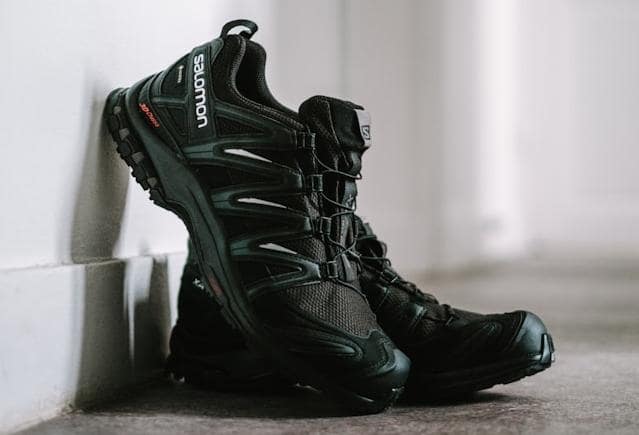
Salomon shoes are primarily made in Vietnam and China, while a small number of models are produced in France. If you flip over the tongue of a Speedcross or X Ultra, there’s a good chance you’ll see an Asian country of origin. Meanwhile, select performance models such as the S/LAB Phantasm 2 ASF carry a “Made in France” label.
Quick Facts
| Fact | 2026 Update |
| Headquarters & design | Annecy, France |
| Main production countries | Vietnam and China |
| Made in France | 4 confirmed models through ASF 4.0 |
| European expansion | New ASF 4.0 facility in Barcelos, Portugal |
| Parent company | Amer Sports (NYSE: AS) |
| Largest shareholder | Anta Sports 39.49% as of June 2025 |
| Salomon sales in 2025 | More than $2 billion, up 35% year over year |
In the sections below, we’ll break down where different Salomon shoes are made, which models come from France, and why the country on the label can vary even within the same product line.
Who Owns Salomon? (Quick Background)
Salomon is owned by Amer Sports, the Finnish sporting-goods group that has traded on the New York Stock Exchange under the ticker AS since February 2024. Despite several ownership changes, Salomon’s headquarters, design center, and R&D operations remain in Annecy, France, where the company was founded.
Here’s how ownership has changed over time:
- 1947: François Salomon founded the company in Annecy, initially producing saw blades and ski edges.
- 1997: Adidas acquired Salomon and created adidas-Salomon AG.
- 2005: Amer Sports bought Salomon from Adidas for €485 million.
- 2019: An investor consortium led by China’s Anta Sports acquired Amer Sports in a deal valued at about €4.6 billion.
- 2024: Amer Sports returned to the public markets through its NYSE IPO.
- 2025: Anta Sports remained Amer Sports’ largest shareholder, holding 39.49% as of June 30, 2025.
So, Salomon is still a French brand by origin, design, and headquarters, but it operates within a Finnish-listed global group whose largest shareholder is Chinese. That distinction matters because Salomon’s product development remains centered in France, while manufacturing relies on Amer Sports’ broader international supplier network.
Where Are Salomon Shoes Manufactured?
Most Salomon shoes are made in Vietnam and China, with smaller-scale production in France and new European capacity coming online in Portugal. Amer Sports does not publish a Salomon-only country split, so exact production shares by model are not public. What we can verify is the broader sourcing pattern, Salomon’s disclosed supplier network, and specific European factory programs.
Vietnam Handles Much of the Volume
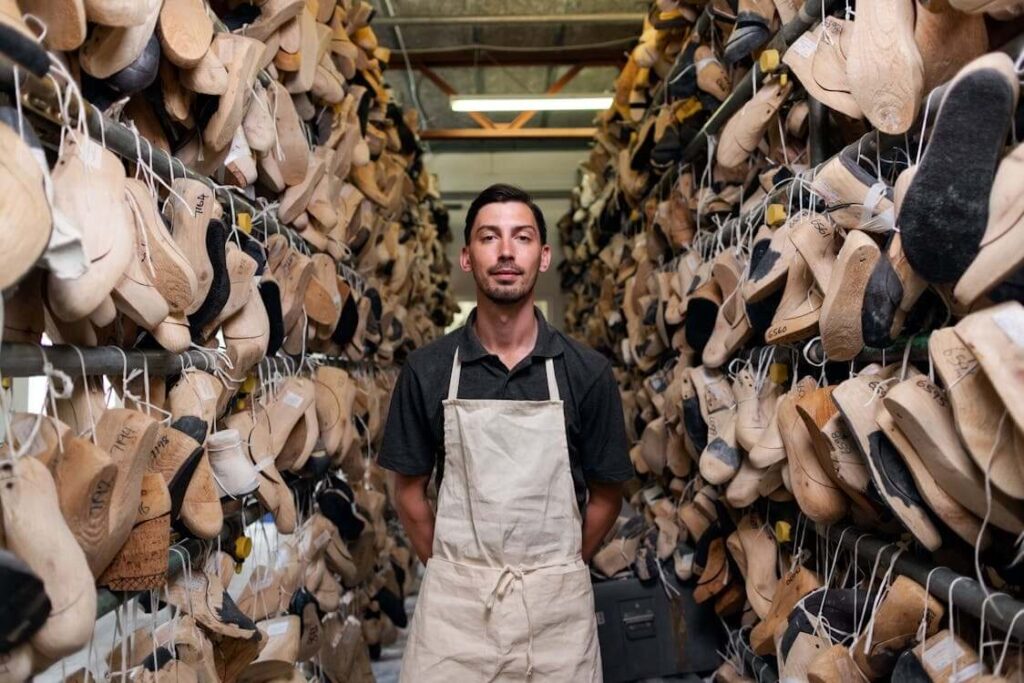
Vietnam is one of the most important manufacturing bases in Amer Sports’ footwear network and is widely reported as its largest sourcing country. High-volume Salomon trail and hiking models are commonly labeled Made in Vietnam, including lines such as the X Ultra and XA Pro.
From a sourcing perspective, Vietnam makes sense for this type of footwear. The country has a mature athletic-shoe manufacturing base capable of handling large production runs, technical assembly, and the supplier coordination needed for performance footwear.
That does not mean every pair of a given model comes from Vietnam. Production can shift by batch, market, or supplier, so the label on the shoe remains the most reliable way to confirm origin.
China Remains a Key Production Base
China is still a major part of Salomon’s supply chain, even as Amer Sports has gradually reduced its overall sourcing exposure there. Greater China represented about 27% of Amer Sports sourcing in 2025, down from 33% in 2022.
China remains particularly relevant because of its deep footwear supply chain. Factories can source tooling, synthetic uppers, midsoles, outsoles, textiles, and packaging within established manufacturing clusters.
That supplier density is one reason we still see many performance sneaker manufacturers in China serving technically demanding footwear categories.
Cambodia and Indonesia Appear on Some Labels
Some Salomon shoes have also appeared with Made in Cambodia or Made in Indonesia labels, including reported examples from recovery footwear such as the RX Moc and RX Slide. However, these should be treated carefully.
Amer Sports does not publish a model-by-model Salomon production list for these countries. The evidence comes from retail labels rather than an official country allocation, so we would describe Cambodia and Indonesia as reported production locations, not confirmed primary manufacturing hubs.
For buyers, this is also why country of origin alone should never be used to judge whether a Salomon shoe is genuine.
France Produces Select Models at ASF 4.0
Salomon also produces a small number of shoes in France through ASF 4.0, an automated footwear factory in Ardoix. The €10 million facility was announced in 2020, inaugurated in 2021, and began production in 2022. It is controlled by textile company Chamatex, with Salomon, Babolat, and Millet participating as shareholders.
The factory uses four automated production lines and was designed for a capacity of up to 500,000 pairs per year. But that number needs context.
Actual production has been reported at roughly 500 pairs per day with around 90 employees, meaning the widely quoted 500,000-pair figure is a design target rather than current output. French production therefore represents only a small fraction of Salomon’s global footwear volume.
Confirmed Made-in-France models include:
- Metacross
- Captiv ASF 4.0
- S/LAB Phantasm 2 ASF
- XA Meta
Even these shoes are not entirely sourced within France. Components such as midsoles and outsoles can still come from Asia before final assembly takes place at ASF 4.0.
Portugal Expands Salomon’s European Production
Salomon’s European footprint is expanding through a second ASF 4.0 facility in Barcelos, Portugal.
Announced in November 2025, the factory is scheduled to begin production in July 2026, with Salomon among the first brands using the facility. Initial capacity is planned at around 500,000 pairs annually, with expansion targeting 1.5 million pairs per year by 2030.
The strategic split is straightforward: Ardoix remains focused on development and industrialization, while Portugal provides more room to scale automated European production. For Salomon, that creates a larger European manufacturing base without replacing the much bigger Asian supplier network.
Which Salomon Models Are Made Where?
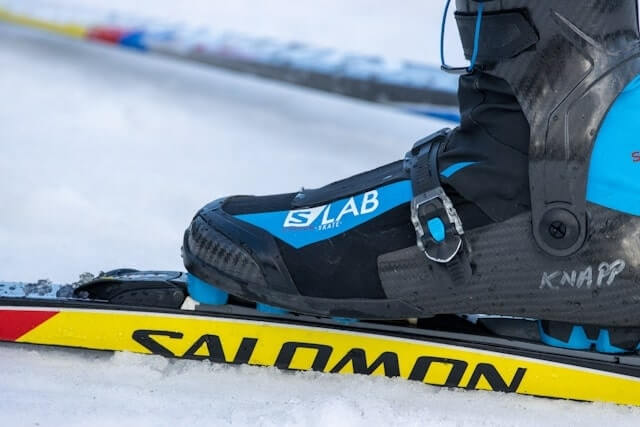
Salomon does not publish a fixed model-by-country production list, and the same model can be made in different countries depending on the batch, market, or production run. The table below combines officially confirmed French-made models with documented retail-label sightings for Asian production.
| Salomon Model | Category | Reported / Confirmed Origin | What We Know |
| Speedcross 6 | Trail running | China / Vietnam | Both origins have appeared on retail labels |
| X Ultra / X Ultra 360 | Hiking | Vietnam | Commonly reported on product labels |
| XA Pro 3D | Trail running | Vietnam | Documented retail-label origin |
| XT-6 / XT-4 | Lifestyle / trail | China / Vietnam | Origin can vary by production run |
| Quest 4 / Quest Element | Hiking boots | Vietnam / China | Both countries have appeared on labels |
| RX Moc / RX Slide | Recovery | Cambodia | Label-reported; not officially allocated by Salomon |
| S/LAB Phantasm 2 ASF | Road racing | France | Officially produced through ASF 4.0 |
| Metacross | Trail running | France | One of the first ASF 4.0 models |
| Captiv ASF 4.0 | Hiking | France | Official ASF 4.0 production |
| XA Meta | Trail running | France | Retail-confirmed as designed and made in France |
The key point is that model name alone is not enough to determine origin. A Speedcross or XT-6 sold in one market may carry a different country label from the same model sold elsewhere.
If you want to confirm your own pair, check the country-of-origin label inside the tongue or inner lining. That label is more reliable than an online model list because Salomon can shift production between approved factories over time.
Made in China or Vietnam, Original or Fake?
A Salomon shoe made in China or Vietnam is not automatically fake. Both countries are established parts of Salomon’s production network, so a genuine XT-6, Speedcross, or XA Pro can legitimately carry either label. Country of origin should never be your main authenticity test.
Counterfeit Salomons do circulate through unofficial channels, including in Southeast Asia. Replica pairs are openly listed on some regional marketplaces, which makes the seller and product details far more useful than the “Made in” tag itself.
If you are unsure about a pair, check these four things:
- Seller channel: Buying from Salomon, an authorized retailer, or a verified brand store gives you the strongest assurance. Be more cautious with unknown marketplace sellers.
- Price: A price dramatically below normal retail is a warning sign, especially for popular models such as the XT-6.
- Build details: Compare stitching, logo placement, sole pattern, Quicklace components, materials, and overall shape against official product photos. Authentication guides commonly flag inconsistent stitching, labels, and construction as signs worth investigating.
- Label and box: Check that the model or style information on the inner label matches the box and the corresponding product sold by Salomon.
We would not reject a pair simply because it says “Made in Vietnam” or “Made in China.” Salomon can also shift the same model between approved factories and production runs, so two genuine pairs do not always have identical country labels.
How Salomon Manages Its Supply Chain
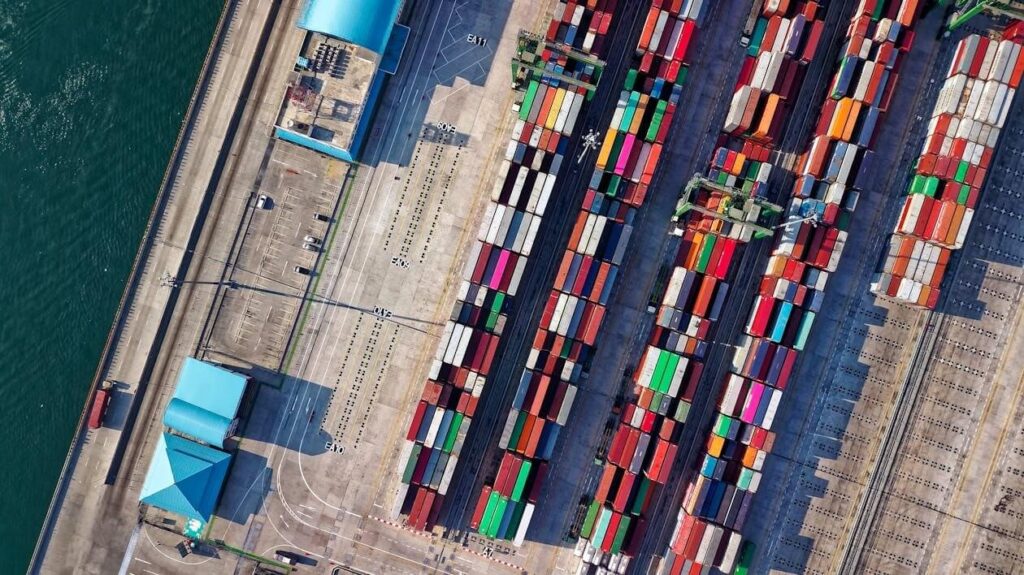
Salomon relies mainly on third-party manufacturers rather than owning the factories that make its shoes. In 2025, 86% of Amer Sports products were sourced from third parties, while Salomon reported 42 Tier 1 finished-goods suppliers across 17 production countries, plus 10 footwear subcontractors and 70 Tier 2 material suppliers.
That scale only works if suppliers, components, and production locations are managed as one network. Five parts of Salomon’s approach stand out to us.
1. It Spreads Production Across Qualified Suppliers
Salomon uses specialist contract manufacturers for processes such as technical upper construction, sole bonding, and performance footwear assembly.
The benefit is flexibility. Production can be distributed across multiple suppliers rather than depending heavily on one factory. Amer Sports also reports that no single Tier 1 supplier accounts for more than 15% of its overall supply.
From a sourcing perspective, this is one of the simplest ways to reduce disruption risk: qualify suppliers before you actually need the backup capacity.
2. Asia Handles Scale While Europe Adds Proximity
Salomon’s network gives different production regions different roles. Asian suppliers provide the capacity needed for global volumes, while France and increasingly Portugal supports production closer to European customers.
ASF 4.0 also gives Salomon a nearby environment for testing automation and industrializing new footwear before scaling production.
For smaller brands, the same principle can apply without owning multiple factories: choose suppliers based on what each location does well rather than forcing one factory to handle every requirement.
3. Components Come From a Global Supplier Network
The final assembly location does not tell the whole sourcing story. Even some Salomon shoes labeled Made in France still use midsoles and outsoles sourced from Asia.
One notable exception is the Matryx upper material used in the S/LAB Phantasm 2 ASF, which is produced by Chamatex close to the French factory.
This is common in footwear manufacturing: the assembly factory may depend on several upstream material and component suppliers, making Tier 2 visibility just as important as choosing the final manufacturer.
4. Automation Helps Shorten the Production Cycle
Salomon is also testing whether automation can make European footwear production more viable. ASF 4.0 uses four automated production lines, while the new Portugal facility is intended to scale that model further.
The value is not simply replacing labor. Automation can improve repeatability, reduce certain manual steps, and shorten the distance between product development and manufacturing.
5. Country Diversification Helps Manage Tariff Risk
Tariffs have added another reason to avoid concentrating footwear production in one country.
Amer Sports said in its Q1 2025 earnings call that, of its U.S. revenue exposure, roughly 8 percentage points of sourcing came from China, 8 from Vietnam, and 6 from the rest of Asia. Management said mitigation measures including supplier negotiations and pricing actions had kept the tariff impact limited at that stage.
For us, the practical takeaway is straightforward: supplier diversification is increasingly about more than capacity. Tariffs, lead times, shipping routes, and country-specific risk all need to be considered before deciding where to manufacture.
From our experience in Yiwu, supplier verification is usually one of the first issues brands need to solve before placing a larger order. NicheSources can help verify factories, inspect production, and coordinate sourcing on the ground. Discuss your project.
Why Are Salomon Shoes So Popular?

Salomon’s popularity comes from combining genuine outdoor performance with strong crossover appeal in fashion and everyday wear. The brand exceeded $2 billion in sales in 2025, up 35% year over year, while footwear alone had already passed $1 billion in 2024.
The main drivers are straightforward:
- Performance credibility: Salomon has decades of experience in trail running, hiking, and alpine sports, backed by technologies such as Contagrip and Quicklace.
- Gorpcore demand: Technical shoes like the XT-6 fit naturally into the outdoor-inspired streetwear trend.
- Collaborations and celebrity exposure: Limited releases and high-profile visibility have helped the brand reach buyers outside traditional outdoor categories.
- Everyday versatility: Many Salomon models work for trails, travel, and casual wear, widening their audience.
Salomon’s role as a Premium Partner of the Milano Cortina 2026 Winter Olympics, outfitting around 27,000 staff and volunteers, adds another major visibility boost in 2026.
What Salomon’s Manufacturing Can Teach Entrepreneurs
Salomon’s manufacturing strategy is useful because it shows how a global brand balances capacity, technical capability, speed, and risk across different production locations. For smaller ecommerce brands, the scale is different, but the principles still apply.
1. Don’t Depend on One Factory or Country
Salomon spreads production across Vietnam, China, France, and now Portugal. That helps reduce exposure to factory disruptions, shipping delays, and changing tariffs.
From our perspective, the practical lesson is to qualify a backup supplier before you need one. Even if most of your volume stays with a primary factory, having approved samples and pricing from another supplier gives you options when lead times or landed costs change.
2. Match Suppliers to the Job
Different parts of Salomon’s network serve different purposes: Asian suppliers provide scale and technical manufacturing depth, while European production gives the brand more proximity and faster development cycles.
We suggest evaluating factories the same way. One supplier may be stronger for large-volume production, while another may be better for lower MOQs, customization, or faster sampling.
3. Focus on Efficiency, Not Just Unit Price

ASF 4.0 shows why labor cost alone does not determine whether a factory is competitive. Automation, shorter transport routes, less waste, and faster production cycles can offset higher operating costs.
For a smaller brand, that usually means looking beyond the factory quote. Quality issues, rework, delays, and poor communication can easily erase a small saving on unit cost.
4. Build Sustainability Into Operations
Salomon uses European production partly to shorten supply routes, while Amer Sports has also set emissions-reduction targets.
You do not need Salomon’s scale to apply the same thinking. Consolidated shipping, recyclable packaging, better inventory planning, and regional warehousing can all reduce waste while improving logistics.
5. Stay Global but Serve Markets Locally

Salomon combines a global supplier network with production closer to important markets. Its French operation, for example, gives the brand local provenance and shorter routes into Europe.
For ecommerce brands, the equivalent might be manufacturing in Asia while using local warehouses, market-specific packaging, or faster fulfillment options in your largest sales regions.
Source Footwear from China with NicheSources
Salomon’s supply chain shows why footwear sourcing is rarely about finding the lowest factory price. You also need to think about supplier capability, MOQ, lead time, quality control, shipping, and country risk before committing to production.
That is where we help. From our base in Yiwu, NicheSources works with brands that need support finding and verifying footwear suppliers, developing private-label products, managing production, arranging quality inspection, and coordinating international shipping.
If you are comparing factories in China, we can help you evaluate the options before you place a larger order, with no upfront sourcing fee.
Frequently Asked Questions
Are All Salomon Shoes Made in France?
No. In fact, the vast majority of Salomon shoes are still made in Asia, mainly Vietnam and China. That’s where the brand can produce high volumes at competitive costs while maintaining quality standards.
The French factory (ASF 4.0) is much smaller in scale and focuses on specialized production. Its capacity is around 500,000 pairs per year, which is a fraction of Salomon’s global output. Shoes made here are mainly for the European market, and they highlight Salomon’s push toward faster, more sustainable, and more localized production.
So, if your Salomon shoes say “Made in France,” they’re part of a limited batch. If they say “Made in Vietnam” or “Made in China,” that’s completely normal and represents the bulk of global supply.
Is Salomon Moving More Production Back to Europe?
Salomon is expanding European production, but there is no indication that Europe is replacing its Asian manufacturing network. The ASF 4.0 factory in France remains relatively small, while the newer Portugal facility is designed to add more regional capacity over time.
Is Salomon a good brand?
Yes, Salomon is widely regarded as a premium brand, especially in the fields of mountaineering, hiking, and trail running. Their shoes are known for:
Excellent traction suitable for various terrains
High durability to withstand harsh outdoor environments
Good comfort for long-term wear
Innovative designs, such as quick-lace systems.
Customer reviews are generally very positive, particularly praising the quality and performance of Salomon shoes. Many users report that their Salomon shoes perform excellently even after years of use.
Does Adidas own Salomon?
No, Salomon is no longer owned by Adidas. The ownership changes of Salomon are as follows:
1997: Acquired by Adidas, company renamed to Adidas-Salomon AG
2005: Sold to Amer Sports
2019: Amer Sports acquired by a consortium led by Anta Sports
Therefore, Salomon is currently a brand under the Anta Sports group.
How Can I Find Shoe Manufacturers?
Finding the right shoe manufacturer is crucial for producing high-quality, innovative footwear like popular brands. Here are some effective strategies:
Research Chinese manufacturers: China is a global hub for shoe production. You can find comprehensive lists of reputable shoe manufacturers in China that specialize in various types of footwear, from athletic shoes to fashion sneakers.
Explore wholesale options: Many manufacturers that supply wholesale sneakers in China also offer custom manufacturing services. These suppliers often have the capacity and technology to produce innovative designs and high-quality footwear.
Attend trade shows: International footwear trade shows are excellent venues to meet potential manufacturers and see their capabilities firsthand.
Utilize sourcing agents: Experienced sourcing agents can connect you with reliable manufacturers that match your specific requirements.
Network within the industry: Build relationships with industry professionals who can provide valuable recommendations and introductions.
Are Salomon Shoes Handmade or Machine-Made?
It depends on the factory and model. Conventional contract manufacturing still involves multiple assembly processes, while Salomon’s ASF 4.0 operation in France uses four automated production lines for stages including cutting and assembly. Even there, automation does not mean the entire shoe is produced without human involvement.