Shipping from China to Germany involves more than choosing between sea, rail, and air freight. Importers also need to account for transit time, German customs duty, 19% import VAT, destination charges, and the new EU rules introduced in 2026.
For example, a $10,000 FOB order of stainless-steel bottles can reach roughly $15,200 in landed cost after freight, an example 6.5% customs duty, and import VAT are added. Knowing these costs before you place the order helps you choose the right shipping method and avoid margin surprises.
As a China freight forwarder , we usually see the biggest budgeting mistakes when importers compare freight rates without accounting for customs duty, VAT, destination charges, and final delivery. The figures in this guide are September 2026 market ranges, so use them for planning rather than as fixed quotes.
Shipping from China to Germany at a Glance
| Method | Cost (September 2026) | Transit Time | Best For |
| Express courier | $7.50–13/kg | 3–7 days | Samples and urgent parcels under 150 kg |
| Air freight | $3.80–10/kg | 4–10 days | 150–500 kg of time-sensitive cargo |
| Rail freight | $4,000–7,000 per 40ft-equivalent | 14–25 days | 100 kg–15 CBM when sea is too slow and air is too expensive |
| Sea freight LCL | $45–125/CBM | 35–55 days | Smaller commercial shipments with flexible timelines |
| Sea freight FCL | $1,800–3,500 for 20ft; $3,000–6,000 for 40ft | 35–55 days | Larger or recurring bulk shipments |
These are September 2026 market ranges rather than fixed quotes. Final costs vary by origin, destination, cargo type, season, and whether the quote includes customs clearance and delivery in Germany.
Which Shipping Method Should You Choose?
A practical starting point is to match the shipping method to your shipment size and deadline:
- Under 150 kg: express courier is usually the simplest option for samples and urgent parcels.
- 150–500 kg: air freight generally gives a better balance of speed and cost than express.
- Over 500 kg: sea freight usually becomes more economical if the shipment is not urgent.
- 100 kg–15 CBM: rail is the middle option when you can accept 14–25 days but do not want to wait 35–55 days for sea freight.
- Around 13–15 CBM: compare LCL and FCL quotes directly. This is where a full container often starts to make more financial sense than paying per CBM.
Shipping Methods from China to Germany
There are four practical ways to ship from China to Germany: sea, rail, air, and express courier. We usually narrow the choice by looking at shipment size, required delivery time, and total landed cost rather than freight price alone.
Sea Freight: Best for Larger, Flexible Shipments
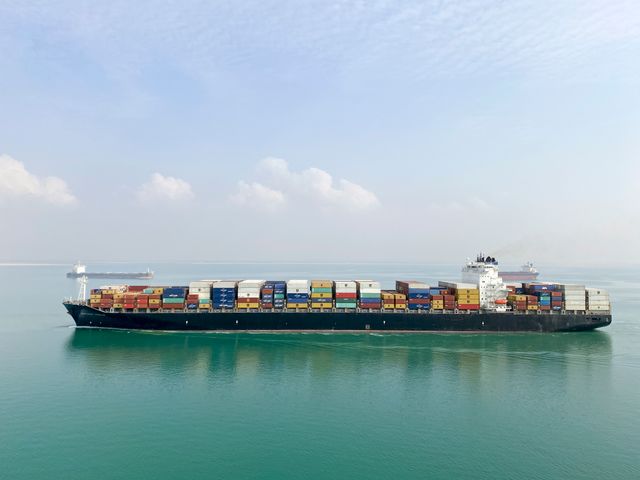
Sea freight is usually the most cost-efficient option for larger commercial orders, especially when you can plan around a 35–55 day port-to-port transit time. September 2026 rates are around $1,800–3,500 for a 20ft container, $3,000–6,000 for a 40ft container, or $45–125 per CBM for LCL.
You have two main options:
- FCL shipping: You book the full container. This normally makes the most sense for larger or recurring shipments, with the cost crossover often appearing around 13–15 CBM.
- LCL shipping: Your goods share container space with other importers, and you pay according to volume. It is useful when you do not have enough cargo to justify a full container.
The headline freight rate is only part of the cost. LCL in particular can include consolidation, deconsolidation, terminal handling, customs, and delivery charges at destination, so we recommend comparing the all-in cost of LCL and FCL once a shipment approaches the 13–15 CBM range.
For a deeper explanation of how container shipping works, see our guide to ocean freight.
Top-Rated China Freight Forwarder
Expert Shipping Solutions for Your Needs
Rail Freight: The Middle Ground Between Sea and Air
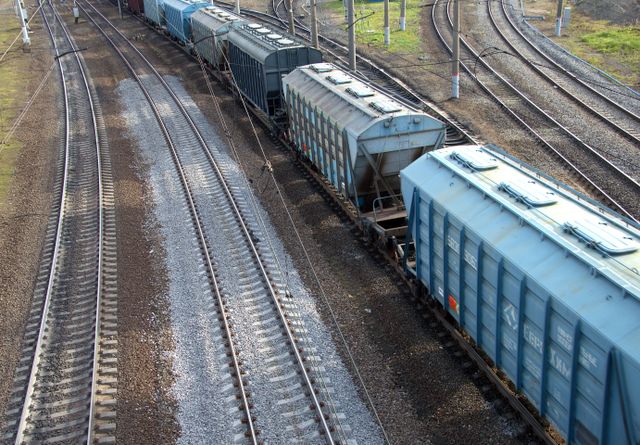
Rail is especially useful on the China–Germany route because it fills the large gap between slow sea freight and expensive air freight. Transit is typically 14–25 days, with September 2026 rates around $4,000–7,000 per 40ft-equivalent.
China-Europe trains commonly depart from hubs such as Xi’an, Chengdu, and Yiwu, with German connections through Duisburg, Hamburg, and Munich. There are two main routing options to understand.
Northern Corridor: This route runs through Kazakhstan, Russia, Belarus, and Poland before reaching Western Europe. Transit is generally around 14–18 days, making it the faster rail option.
The trade-off is compliance risk. Because the route passes through Russia and Belarus, some insurers restrict coverage and some companies will not use it under their internal sanctions policies. We recommend confirming the exact routing, insurance terms, and sanctions screening before booking.
Middle Corridor: This alternative avoids Russia and Belarus, moving through Central Asia, across the Caspian Sea, the South Caucasus, and onward toward Europe. Transit is typically around 18–25 days.
It takes longer and capacity can be tighter, but it gives importers an alternative when the Northern Corridor does not fit their insurance or compliance requirements.
For shipments from roughly 100 kg to 15 CBM, rail is worth comparing whenever 14–25 days is acceptable. It can be particularly useful for replenishment orders that cannot wait for sea freight but do not justify air-freight rates.
Top-Rated China Freight Forwarder
Expert Shipping Solutions for Your Needs
Air Freight: Fast Shipping for Time-Sensitive Cargo
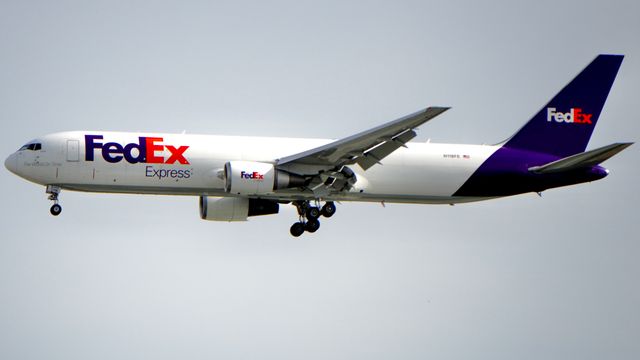
Air freight generally takes 4–10 days and costs around $3.80–10/kg in September 2026. It works well for higher-value goods, urgent inventory, and shipments in the roughly 150–500 kg range where express courier becomes expensive but sea or rail is too slow.
Germany’s major air-freight gateways include:
- Frankfurt (FRA)
- Munich (MUC)
- Leipzig/Halle (LEJ)
- Cologne Bonn (CGN)
Berlin is served by Berlin Brandenburg Airport (BER). Berlin Tegel closed in 2020 and should no longer appear in current China–Germany shipping plans.
One cost point we always check with air freight is chargeable weight. Carriers charge according to whichever is higher: actual weight or volumetric weight, so a large but lightweight shipment can cost much more than its scale weight suggests.
Top-Rated China Freight Forwarder
Expert Shipping Solutions for Your Needs
Express Courier: Simplest for Samples and Urgent Parcels

DHL, FedEx, and UPS are usually the simplest option for small, urgent shipments. Express shipping from China to Germany typically costs $7.50–13/kg and takes around 3–7 days door-to-door.
Express is especially practical for samples, replacement parts, and smaller parcels because pickup, international transport, customs processing, and final delivery are handled within one network.
The convenience comes at a higher per-kilogram price. Once a shipment approaches roughly 150 kg, we usually compare it against standard air freight because the savings can become significant without adding much transit time.
Top-Rated China Freight Forwarder
Expert Shipping Solutions for Your Needs
Shipping Costs from China to Germany

Rates below are September 2026 market ranges for common China–Germany shipping routes. They are useful for budgeting, but they are not fixed quotes; the final rate changes with your origin city, destination, cargo type, shipment size, and booking date.
| Shipping Method | September 2026 Rate | Typical Transit |
| Express courier | $7.50–13/kg | 3–7 days |
| Air freight | $3.80–10/kg | 4–10 days |
| Rail freight | $4,000–7,000 per 40ft-equivalent | 14–25 days |
| Sea freight LCL | $45–125/CBM | 35–55 days |
| Sea freight FCL 20ft | $1,800–3,500/container | 35–55 days |
| Sea freight FCL 40ft | $3,000–6,000/container | 35–55 days |
| DDP sea | $180–380/CBM | Sea transit + pickup, customs and delivery |
| DDP air | $4–6.50/kg | Air transit + customs and delivery |
How Chargeable Weight Changes Air Freight Costs
Air freight is priced on chargeable weight, which is whichever is higher: the shipment’s actual weight or its volumetric weight.
For standard air freight:
Volumetric weight (kg) = Length × Width × Height in cm ÷ 6,000
For example, a carton measuring 60 × 50 × 40 cm has a volumetric weight of 20 kg. If the carton physically weighs only 12 kg, the airline will still charge for 20 kg.
This is why packaging matters. Across sourcing and shipping projects, we often see lightweight but bulky products become unexpectedly expensive by air simply because the cartons occupy too much aircraft space.
When Does FCL Become Cheaper Than LCL?
For smaller sea shipments, LCL usually makes sense because you pay only for the space you use. However, LCL also carries fixed charges for consolidation, documentation, handling, and deconsolidation.
At around 13–15 CBM, those per-CBM and handling costs can make a full 20ft container more economical than LCL. We recommend requesting both LCL and FCL quotes once your shipment enters this range rather than assuming LCL will remain cheaper because the container is not full.
Base Freight Is Not Your Final Shipping Cost
A $2,000 ocean-freight quote does not necessarily mean your shipment will cost $2,000 to reach your warehouse. German destination charges such as terminal handling charges (THC), customs handling, documentation, and final delivery can add hundreds of dollars per shipment.
When we compare freight quotes, we look at the complete cost from the supplier to the final destination. An unusually low base rate can become the more expensive option once destination charges are added, so always ask for an itemized quote before comparing forwarders.
How Long Does Shipping from China to Germany Take?

Shipping from China to Germany can take anywhere from 3 days to around 55 days, depending on the method. Express is the fastest, followed by air and rail, while sea freight requires the longest lead time.
| Route / Method | Typical Transit Time |
| Express courier | 3–7 days door-to-door |
| Air freight | 4–10 days airport-to-airport |
| Rail freight | 14–25 days |
| Shanghai → Hamburg | 38–52 days |
| Ningbo → Hamburg | 35–50 days |
| Shenzhen/Guangzhou → Bremerhaven | 35–48 days |
For sea freight, we recommend planning around the full 35–55 day range rather than relying on older 25–30 day estimates.
Why Sea Freight Takes Longer in 2026
Many older shipping guides still quote 25–30 days from China to Germany, but those figures reflect more direct Suez Canal routings. With carriers rerouting around the Cape of Good Hope, ocean transit can increase by roughly 10–14 days.
Seasonality adds another layer. Congestion at Shanghai and Ningbo can stretch schedules, especially during the August–October peak season, while Chinese New Year can create factory, trucking, and sailing delays around the holiday period.
For inventory planning, we would build in an additional 1–2 week buffer for sales-critical sea shipments rather than planning around the carrier’s fastest published transit time.
German Customs, VAT & the 2026 EU Reform
Importing into Germany became more expensive for some low-value shipments in 2026. The biggest change is the removal of the €150 customs-duty exemption, while standard commercial shipments still follow the usual TARIC duty, import VAT, and EORI requirements.
The €150 Duty-Free Threshold Ended in July 2026
As of September 2026, goods in qualifying low-value consignments of €150 or less are no longer automatically duty-free. Council Regulation (EU) 2026/382 introduced a temporary €3 customs duty per item based on tariff classification, effective July 1, 2026 through July 1, 2028.
The wording can be confusing because “per item” does not mean €3 for every physical unit. The European Commission explains that it is based on tariff classification:
- Five identical T-shirts in one parcel → €3
- One T-shirt + one watch → €6
- Three different tariff classifications → €9
So sellers shipping mixed-product parcels need to account for the number of tariff lines, not simply the number of units in the box. The measure applies to low-value distance-sale consignments regardless of whether VAT is handled through IOSS, special arrangements, or the standard VAT route.
IOSS still exists. It continues to handle VAT collection for qualifying B2C shipments up to €150; the new €3 duty is a separate customs charge that now sits alongside it.
Product Identifiers (PIDs) can be submitted voluntarily from July 1, 2026 and become mandatory from November 1, 2026 for the affected low-value e-commerce imports. The separate EU handling fee discussed alongside the reform is still only proposed as of September 2026, so we would not build an assumed amount into landed-cost calculations yet.
How German Customs Duty and Import VAT Work
For normal commercial imports above the low-value regime, customs duty depends on the product’s TARIC classification. There is no single “China import duty”: rates vary significantly by product, material, and sometimes country-specific trade measures.
For example, German Customs lists illustrative rates ranging from 0% for many electronics to around 8–12% for textile clothing and up to approximately 17% for some footwear. These figures are only examples; always check the current TARIC classification for the exact product before confirming your landed cost.
Germany then applies import VAT at:
- 19% standard rate
- 7% reduced rate for qualifying categories such as certain books and food products
For a straightforward planning calculation:
Customs duty = customs value × TARIC duty rate
Import VAT ≈ 19% × (customs value + customs duty)
The customs value generally includes the goods plus transport and insurance to the EU border. German Customs also notes that certain additional transport and incidental costs to the first destination within the EU can form part of the VAT taxable amount, so the simplified formula above should be treated as planning math rather than a substitute for the customs declaration.
You Need an EORI Number for Commercial Imports
Businesses carrying out customs formalities in Germany normally need an EORI number to identify themselves to customs. German Customs issues the number free of charge, and businesses can apply through the Zoll Portal before the first shipment needs clearance.
Germany processes electronic customs declarations through ATLAS, its automated customs system. Your customs broker or freight forwarder will normally handle the filing, but you remain responsible for supplying the correct product description, customs value, TARIC code, and supporting documents.
Worked Example: From $10,000 FOB to Landed Cost
Here is how we would estimate the landed cost before placing an order.
Assume an importer buys $10,000 FOB of consumer goods in China and pays $2,000 for freight and insurance to Germany. For illustration, we will use a 4% customs-duty rate; the actual rate must be confirmed against the product’s TARIC code.
| Cost | Calculation | Amount |
| FOB goods value | — | $10,000 |
| Freight + insurance | — | $2,000 |
| Customs value (CIF) | $10,000 + $2,000 | $12,000 |
| Customs duty | 4% × $12,000 | $480 |
| Import VAT | 19% × ($12,000 + $480) | $2,371.20 |
| Estimated landed cost | $12,000 + $480 + $2,371.20 | $14,851.20 |
That means a $10,000 factory order becomes roughly $14,851 before any additional German inland delivery, customs-broker, storage, or terminal charges.
This is why we calculate landed cost before comparing suppliers. A lower factory price can easily be offset by a higher duty classification, inefficient packaging, or expensive freight, so the relevant figure for an importer is the cost after the goods clear German customs, not the FOB price alone.
Product Compliance for Germany
Customs clearance does not automatically mean a product is legal to sell in Germany. Importers also need to meet the EU and German rules that apply to the product itself, and these requirements should be checked before production because correcting labels, documentation, or packaging after arrival is usually much more expensive.
- CE marking: Required for regulated categories such as electronics, toys, machinery, and certain protective equipment. Importers in these categories should confirm the applicable EU legislation, technical documentation, and conformity requirements before shipment.
- REACH: Controls restricted chemicals and substances in products sold in the EU. It is particularly relevant to importers of textiles, plastics, coatings, accessories, and other products containing regulated materials.
- WEEE: Applies to electrical and electronic equipment placed on the German market. Electronics sellers need to understand their registration and waste-electronics obligations before selling.
- VerpackG: Businesses placing packaged goods on the German market generally need to comply with Germany’s packaging rules, including registration through the LUCID Packaging Register where applicable. This matters to almost every ecommerce importer, not only manufacturers of packaging.
- CBAM: The EU’s definitive CBAM phase began in January 2026. Importers dealing with covered carbon-intensive goods such as steel and aluminum should check whether their products fall within scope and whether the applicable threshold and reporting obligations affect them.
- PPWR: The EU Packaging and Packaging Waste Regulation becomes applicable from August 12, 2026, introducing broader requirements around packaging design, recyclability, labeling, and waste reduction. Importers using custom packaging should factor these rules into packaging development rather than treating compliance as a final shipping step.
From a sourcing perspective, we prefer to identify these requirements before approving mass production. A factory being able to manufacture a product does not necessarily mean its documentation, materials, or packaging meet the requirements for sale in Germany.
IOSS and Small Parcels Under €150
IOSS is designed for B2C ecommerce sales where individual consignments entering the EU have an intrinsic value of €150 or less. It allows the seller or marketplace to collect German VAT at checkout and report it through the Import One-Stop Shop, which can make customs clearance smoother because the customer does not need to pay VAT when the parcel arrives.
The July 2026 customs change does not remove IOSS. As of September 2026, the new €3 duty per tariff category applies separately, so IOSS now handles the VAT layer while the €3 charge sits on top as customs duty.
For sellers, the practical choice is usually:
- Use IOSS when shipping qualifying low-value B2C orders directly to individual customers and you want VAT collected at checkout.
- Use DDP when you want the supplier or logistics provider to manage freight, customs duty, VAT, and delivery under one shipping arrangement.
- Do not use IOSS for commercial inventory restocking. Bulk shipments to your own warehouse, 3PL, or fulfillment center clear under normal commercial import procedures instead.
For low-value direct-to-customer shipping, we would compare the administrative simplicity of IOSS with the all-in cost and Importer-of-Record structure of DDP before deciding which model fits the business.
DDP vs FOB vs CIF vs EXW
The Incoterm you agree with your supplier determines who arranges transport, who pays each stage, and when shipping risk transfers from the seller to the buyer. For Germany-bound imports, we usually compare FOB and DDP first because they give importers the clearest choice between controlling the freight themselves and outsourcing the entire journey.
| Incoterm | Who Pays Main Freight? | Who Pays German Duty & VAT? | When Risk Transfers | Best For |
| EXW (Ex Works) | Buyer | Buyer | Usually when goods are made available at the supplier’s premises | Experienced importers wanting control from factory pickup onward |
| FOB (Free on Board) | Buyer | Buyer | Once goods are loaded aboard the vessel at the Chinese port | Repeat importers using their own freight forwarder |
| CIF (Cost, Insurance and Freight) | Seller pays freight and minimum insurance to the named destination port | Buyer | Once goods are loaded aboard the vessel in China | Importers comfortable handling German customs and destination charges |
| DDP (Delivered Duty Paid) | Seller | Seller | Generally when goods are delivered at the named destination, ready for unloading | Importers wanting a predictable door-to-door arrangement |
DDP Offers Simplicity, but Check the Importer of Record
Under DDP, the seller is responsible for getting the shipment to the agreed destination and handling export formalities, freight, German import clearance, customs duty, and import taxes required under the agreed arrangement. This makes DDP attractive when you want one landed price instead of coordinating several providers.
However, DDP does not mean you should ignore the customs structure. Before accepting a door-to-door shipping from China quote, ask:
“Who will be named as the importer on the German customs declaration?”
A transparent provider should be able to explain which legal entity is importing the goods, which EORI is being used, and how duty and VAT are being declared. If the only explanation is that the shipment will be “cleared under a partner’s name,” ask for the arrangement in writing before proceeding.
We treat an unclear Importer-of-Record structure as a warning sign because incorrect valuation, classification, or use of an undisclosed importing entity can create customs and tax problems later.
FOB Gives Importers More Control
With FOB, the Chinese supplier handles the goods up to loading at the agreed port and completes Chinese export clearance. From there, you or your forwarder arrange the international freight, German customs clearance, and delivery.
For repeat commercial imports, we often prefer this structure because it makes the logistics chain easier to audit. You can compare forwarders independently, see destination charges clearly, and retain control over the customs declaration rather than relying on a supplier’s bundled shipping price.
CIF Can Hide Destination Costs
CIF sounds comprehensive because the supplier pays freight and insurance to the German destination port, but the buyer still handles import clearance, duties, VAT, terminal charges, and onward delivery.
That distinction causes many budgeting surprises. A competitive CIF price from China can still result in substantial charges once the container reaches Hamburg or Bremerhaven, so ask for the expected destination fees before comparing CIF against FOB.
EXW Gives Maximum Control and Maximum Responsibility
EXW places most of the logistics responsibility on the buyer from the supplier’s premises onward. You need to arrange factory pickup, export procedures, international freight, German customs clearance, and final delivery.
We generally reserve EXW for importers with an established forwarder or sourcing team in China. For smaller buyers, the extra coordination at origin can outweigh any apparent saving in the factory quote.
Key Ports, Airports & Rail Terminals
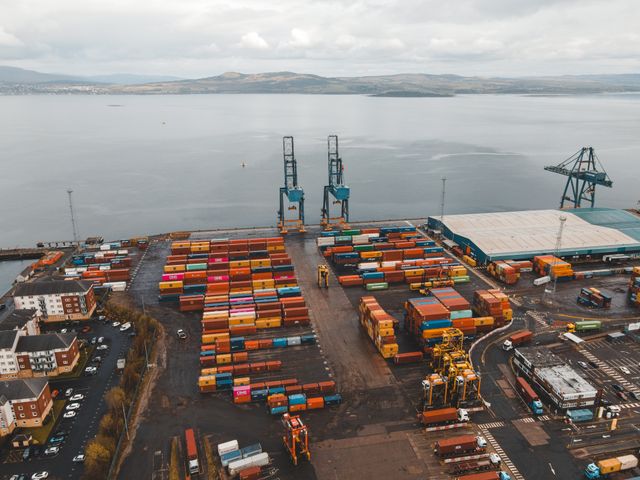
The main gateway depends on where your supplier is located in China and where the shipment needs to arrive in Germany. Choosing the nearest practical origin and destination can reduce inland trucking time and cost.
| Transport Mode | China Gateways | Germany Gateways |
| Sea freight | Shanghai, Ningbo-Zhoushan, Shenzhen, Guangzhou | Hamburg, Bremerhaven, Wilhelmshaven |
| Air freight | Shanghai Pudong (PVG), Guangzhou Baiyun (CAN), Shenzhen Bao’an (SZX) | Frankfurt (FRA), Munich (MUC), Leipzig/Halle (LEJ), Cologne Bonn (CGN) |
| Rail freight | Xi’an, Chengdu, Yiwu | Duisburg, Hamburg, Munich |
Main Sea Freight Gateways
Shanghai and Ningbo-Zhoushan are the main choices for suppliers in eastern China, while Shenzhen and Guangzhou serve the Pearl River Delta and much of southern China.
In Germany, Hamburg and Bremerhaven handle most China-bound container traffic, with Wilhelmshaven providing another deep-water option.
Main Air Freight Gateways
Most China–Germany air freight moves through PVG, CAN, or SZX on the China side. In Germany, the main cargo airports are Frankfurt, Munich, Leipzig/Halle, and Cologne Bonn.
For Berlin-bound cargo, the current airport is Berlin Brandenburg (BER). Tegel is no longer relevant for freight planning.
Main Rail Freight Hubs
Xi’an, Chengdu, and Yiwu are major departure points for China–Europe rail services. On the German side, Duisburg is the key rail destination and one of Europe’s most important inland logistics hubs, with onward connections to Germany and neighboring EU markets.
Common Mistakes That Cost German-Bound Importers Money

- Using outdated freight assumptions. Sea freight that was once budgeted at 25–30 days can now take 35–55 days, so old landed-cost models can understate both freight and inventory-holding costs.
- Ignoring the new €3 duty on low-value parcels. Since July 2026, qualifying consignments under €150 are no longer automatically duty-free, and the €3 charge applies per tariff category.
- Shipping before your EORI is ready. Commercial imports into Germany need an EORI number for customs declarations. Delays at this stage can hold up the entire shipment.
- Booking sea freight in peak season without a buffer. August–October congestion and Chinese New Year disruptions can push already-long transit times further, so we normally allow 1–2 extra weeks for sales-critical inventory.
- Accepting DDP without checking the Importer of Record. Ask who will be named on the customs declaration and whose EORI is being used. An unclear IOR structure is a risk, especially if duties or values are being declared incorrectly.
- Sticking with LCL beyond the break-even point. Once a shipment reaches roughly 13–15 CBM, compare it against FCL. A 20ft container can become cheaper than paying LCL rates plus consolidation and destination handling fees.
How to Choose a Reliable Freight Forwarder
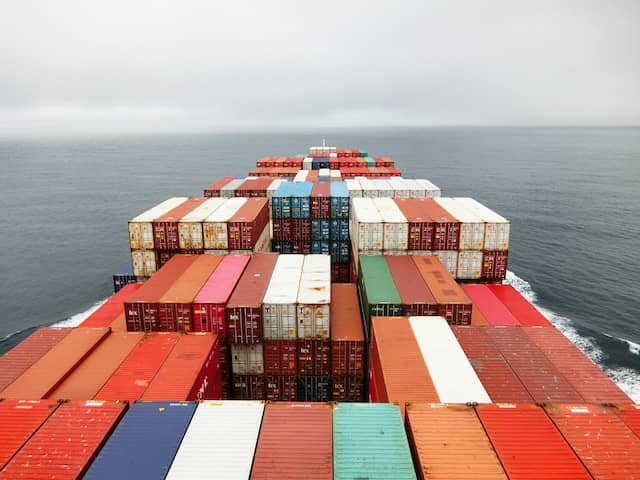
A freight forwarder from China to Germany should be evaluated on more than the headline rate. The right partner should understand the route, explain every charge clearly, and be able to handle German customs without relying on vague third-party arrangements.
- Look for China–Germany route experience. A forwarder should be able to quote sea, air, and rail, including the Northern and Middle rail corridors where relevant. Route knowledge matters because each option has different transit, insurance, and compliance considerations.
- Ask for an itemized all-in quote. Freight, origin charges, destination handling, customs brokerage, duty, VAT, and final delivery should be shown separately. This makes it much easier to compare providers and avoid a low base rate that becomes expensive after arrival.
- Confirm German customs capability. The forwarder should be comfortable working with EORI numbers, TARIC classifications, ATLAS declarations, and the 2026 low-value import rules. If they cannot explain how your shipment will clear, that is a sign to keep looking.
- Under DDP, ask who the Importer of Record is. A reliable provider should name the legal importer and explain which EORI will appear on the customs entry. Avoid arrangements where the answer is simply “our partner handles it” without further documentation.
For a broader checklist, see our guide to freight forwarding services. When comparing providers, request a freight forwarding quote with every major charge itemized.
From our experience in Yiwu: unclear landed-cost quotes are one of the most common problems importers face before working with us. Our team checks the freight structure, customs charges, and DDP importer arrangement before you approve the shipment. Discuss your project.
FAQs about Shipping from China to Germany
Navigating the complexities of shipping from China to Germany involves understanding the best practices and key logistical points. Here, we answer some common questions that can help streamline your shipping process.
What Are the Busiest Shipping Ports in China?
China has several major ports that handle a vast amount of international freight. The Port of Shanghai is the world’s busiest container port, followed closely by the Port of Shenzhen. Efficiently using these ports can save you time and money.
What Are the Best Freight Options to Send Goods from China to Germany?
You have multiple options, such as sea freight for larger shipments, which is more cost-effective, and air freight for urgent deliveries. Rail freight is a balanced option in terms of speed and expense.
What Is Germany’s Import Duty from China?
The import duty varies depending on the type of goods you’re importing. Typically, it ranges from 0% to 20%, but you can use the EU’s TARIC database to get exact rates for your products.
What Is Not Allowed to Be Shipped to Germany?
Certain items are prohibited or restricted by German customs, such as counterfeit goods, certain meats, and plants. Always check the latest regulations before shipping to avoid any legal issues or delays.
What documents do I need to ship from China to Germany?
Most commercial shipments require a commercial invoice, packing list, transport document, and EORI number. The transport document will normally be a bill of lading for sea freight, an air waybill for air freight, or a rail waybill for rail shipments.
Regulated products may also need supporting compliance documents such as CE documentation, test reports, or declarations of conformity. Your forwarder should confirm the exact document set before pickup.
Can I combine products from several Chinese suppliers into one shipment?
Yes. Multiple supplier orders can be delivered to a consolidation warehouse in China, checked, repacked if necessary, and shipped together as one larger consignment.
This can reduce duplicated international freight and destination charges, especially when several small orders would otherwise ship separately.
The trade-off is that one delayed supplier can hold up the combined shipment, so consolidation works best when production schedules are coordinated
What information does a freight forwarder need to give an accurate quote?
At minimum, provide the pickup city, German destination, number of cartons, carton dimensions, gross weight, total CBM, product description, cargo value, and preferred Incoterm.
You should also flag batteries, liquids, magnets, branded goods, or other restricted cargo upfront. Incomplete shipment data is one of the main reasons an initial freight estimate changes once the goods are ready.
Can batteries and electronics be shipped from China to Germany?
Yes, but batteries and battery-powered products are subject to additional transport and compliance requirements. Lithium batteries, in particular, may require specific testing, labeling, packaging, and carrier approval depending on the battery type and shipping mode.
Tell the forwarder exactly what battery is inside the product before requesting a quote. Do not describe battery cargo as ordinary goods simply to obtain a lower rate.
What happens if the HS or TARIC code is wrong?
An incorrect classification can lead to the wrong duty rate, customs delays, requests for additional documentation, or reassessment after import.
The product description, material, function, and intended use all affect classification. If the code is uncertain, confirm it before shipment rather than relying solely on the code shown on a supplier’s invoice.
When should I book freight before Chinese New Year?
Book earlier than you would during normal periods because factories, trucking companies, warehouses, and carriers all experience capacity pressure around Chinese New Year.
The exact timing changes each year and by shipping mode, so there is no single booking deadline. We normally recommend planning production and freight together rather than waiting until the goods are finished to secure space.
Can I inspect my goods before they leave China?
Yes. A pre-shipment quality inspection can be completed after production and before the goods are handed over to the forwarder.
This gives you an opportunity to verify quantities, workmanship, packaging, labels, and agreed specifications while the goods are still close to the supplier. Correcting a production issue in China is generally much easier than dealing with it after customs clearance in Germany.