Freight collect vs freight prepaid defines who the carrier or freight forwarder invoices for ocean transportation charges. For U.S. wholesalers importing goods from China, this simple billing choice impacts freight cost transparency, shipment routing control, cash flow planning, and the logistics workload your buying team manages.
However, freight payment terms are not the same as risk transfer or cost allocation under Incoterms. Your sales contract and chosen Incoterms® rule govern delivery obligations, risk of loss, and supplementary cost responsibilities. This guide focuses on China-to-U.S. ocean freight, where these billing distinctions directly affect your landed cost.
Key Takeaways
- Freight prepaid means the shipper pays the carrier.
- Freight collect means the consignee pays freight charges before cargo release.
- Who pays the freight bill does not determine ownership or risk transfer; Incoterms control liability.
- Prepaid & Add is a widely used hybrid arrangement: the supplier pays the carrier, then charges the buyer for freight separately.
- FOB defines risk transfer, not who gets invoiced for freight.
- Always specify Incoterms® 2020 for international orders to avoid conflicts between U.S. domestic and global trade rules.
What Does Freight Prepaid Mean?
In a “Freight Prepaid” arrangement, the shipper (usually the factory in China) pays the carrier’s freight charges for the main leg of the journey. The supplier typically pays the upfront bill to the freight forwarders before the Bill of Lading (B/L) is released.
Pros and Cons of Freight Prepaid
Pros:
- Simpler Workflow: The buyer receives a single invoice covering goods and shipping.
- No Carrier Account Needed: Ideal for low-volume buyers without direct contracts with shipping lines.
- Price Certainty: You know the total cost (as quoted by the supplier) before the ship sails.
Cons:
- Hidden Markups: Suppliers often add a margin (10-15%) to the actual freight cost for “handling.”
- Zero Routing Control: You cannot choose the carrier, vessel speed, or specific arrival port.
- Administrative Blindness: You lack visibility into the actual carrier rate and fuel surcharges.
Use professional packaging sourcing to set dimensions before the forwarder quotes your shipping price.
What Does Freight Collect Mean?
Choosing collect vs prepaid freight means the carrier bills the buyer (Consignee) directly. This is common when the buyer wants to leverage their own volume discounts or maintain strict control over their inbound logistics.
Pros and Cons of Freight Collect
Pros:
- Cost Transparency: You see the exact carrier rate with no hidden supplier markups.
- Routing Control: You choose the carrier and transit time, which is vital for tight delivery windows.
- Consolidation Savings: You can use shared container shipping from multiple factories into one invoice.
Cons:
- Higher Admin Load: Your accounting team must audit and pay carrier invoices directly.
- Billing Risks: If your carrier account is inactive, the carrier will freeze the cargo at the port.
- Accessorial Fees: You are directly responsible for surcharges if the factory provides wrong dimensions.
Neither payment method determines cargo risk or ownership. Those issues are governed separately by the sales contract and applicable Incoterm.
Why Importers Choose to Pay on Arrival
Importers may use freight collect when they have established carrier or forwarder relationships, negotiated freight rates, or an inbound routing program that gives them greater control over transportation. However, the collect designation itself doesn’t guarantee carrier selection or routing control.
This setup is effective when you:
- Require suppliers to follow a strict inbound routing guide.
- Need to share container shipping from multiple factories.
- Demand transparent invoices from the shipping line.
Buyer-controlled routing can improve cost visibility and may create savings when the buyer has negotiated carrier rates or sufficient shipment volume. Read on for more tactics to cut shipping costs.
Avoiding Common Billing Traps
Handling your own freight can lead to surprise accessorial fees. If sizes are wrong, carriers re-weigh the load and charge a remeasurement penalty. Using an inactive carrier account number stops your shipment.
If billing information is incomplete or invalid, the shipment may require a billing correction or payment resolution before release, depending on the carrier’s terms. Confirm the payer, account details, cargo quantity, and agreed freight terms before booking.
Freight Collect vs Freight Prepaid: Side-by-Side Comparison
Comparing collect vs prepaid freight shows how your daily tasks change.
| Feature | Freight Prepaid | Freight Collect |
| Who Pays Carrier? | Shipper (Supplier) | Consignee (Buyer) |
| Who Picks Carrier? | Supplier / Factory | Buyer / Importer |
| Cash Flow Impact | Paid early (with product PO) | Paid later (upon arrival/release) |
| Control Over Routing | Low | High |
| Risk of Loss/Damage | Decided by Incoterm | Decided by Incoterm |
| Best For | Hands-off, low-volume buyers | High-volume buyers seeking transparency |

Is FOB Freight Collect or Prepaid?
FOB under Incoterms® 2020 is intended for sea and inland waterway transport when delivery is made on board the vessel. It does not by itself determine whether the carrier bills the freight as prepaid or collect.
Incoterms® 2020 and typical freight-billing alignment:
| Incoterm® 2020 | Typical Billing Alignment* | Responsibility Note |
| EXW / FOB / FCA | Freight Collect | Buyer arranges and pays main freight. |
| CIF / CFR | Freight Prepaid | Seller pays main ocean/air freight. |
| DAP / DDP | Freight Prepaid | Seller pays freight and usually delivery. |
Prepaid and Add vs Third-Party Freight
Not every shipment fits a simple prepaid or collect arrangement. Two other billing setups you may encounter are prepaid and add and third-party freight. Understanding who is billed can help you avoid confusing the freight payment method with the actual economic cost of shipping.
What Is Prepaid and Add?
With prepaid and add, the shipper pays the carrier or freight forwarder first, then adds the agreed transportation charge to the buyer’s invoice.
For example, a supplier may quote:
- Product Cost: USD 8,000
- Freight Amount: USD 650
- Total Invoice: USD 8,650
The supplier pays the carrier, and the agreed freight amount is then added to the buyer’s invoice.
What Is Third-Party Freight?
With third-party freight, neither the shipper nor the consignee is necessarily the party billed directly by the carrier. A 3PL, sourcing agent, parent company, or the carrier bills a designated third party rather than the shipper or consignee.
For example, a buyer may use a third-party logistics provider to arrange pickup from the supplier and bill the buyer under the provider’s freight account.
Prepaid, Collect, and Third-Party at a Glance
| Billing Arrangement | Who is Normally Billed for Freight? | Common Use |
| Freight Prepaid | Shipper | Supplier or seller arranges the shipment and pays the carrier |
| Freight Collect | Consignee or designated receiver | Buyer or receiver pays the carrier under agreed billing terms |
| Prepaid and Add | Shipper first, then buyer is charged | Supplier pays the carrier and adds freight to the buyer’s invoice |
| Third-Party | A designated third party | Buyer, 3PL, agent, or another company controls the freight account |

China Importing: Watch Destination Charges
When importing from China, the ocean freight shown on a quote may not be your total transportation cost. Depending on the service and Incoterm, you may also face local fees. Common examples include destination terminal handling charges (DTHC), CFS charges, customs clearance fees, documentation fees, and final delivery charges.
Common Destination-Side Charges
| Charge | What It Generally Covers | What to Check |
| DTHC | Handling of the container or cargo at the destination terminal | Whether it is included in the quoted freight |
| CFS Charges | Receiving, handling, and processing LCL cargo at a container freight station | Whether the quote is port-to-port or includes CFS handling |
| Customs Clearance | Customs entry and related broker services | Whether customs brokerage is included and which party handles import clearance |
| Duties and Taxes | Import duties, tariffs, and applicable taxes | Which party is responsible under the agreed Incoterm and applicable law |
| Delivery | Transportation from the port, terminal, or CFS to the final destination | Whether trucking or last-mile delivery is included |
| Documentation or Local Fees | Certain destination administrative or carrier charges | Which fees are included or excluded from the quote |

How to Write Freight Terms on a Purchase Order
Vague phrases like “Shipping Included” or “FOB China” ruin purchase orders. When suppliers guess your shipping rules, you lose money.
Keep the key shipping instructions explicit:
- Incoterm: e.g., FCA Shenzhen, Incoterms® 2020
- Freight Billing: Prepaid, Collect, Prepaid and Add, or Third-Party
- Payer/Account: Identify the designated freight payer or account
- Included Charges: State which freight and local fees are included or excluded
- Documents: Specify relevant PO, booking, packing list, and B/L or sea waybill references
Check that your PO and B/L match on freight payment instructions, weights, and carton counts. Clear instructions reduce the risk of billing disputes and unexpected charges.
How NicheSources Can Help Coordinate China Freight
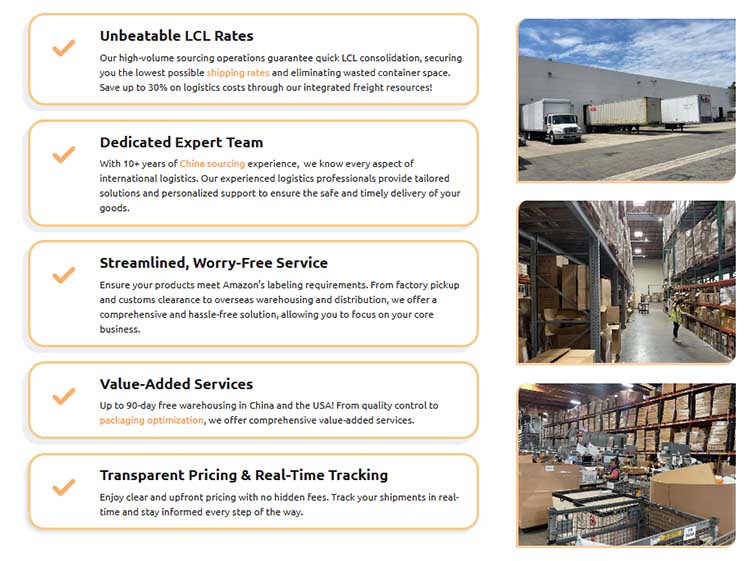
If you buy direct from China, letting each factory handle shipping creates high costs. Different dates and carton sizes make shipments messy. Coordinate your logistics to avoid fragmented loads and save money on every order. An integrated partner like NicheSources centralizes this operational workflow.
Instead of fighting through individual factory negotiations, a centralized workflow allows you to:
- Keep your billing choices consistent on every purchase order. This stops billing errors and keeps your cargo moving on time.
- Use a central warehouse to check carton counts and group LCL cargo before handing your goods to freight forwarders to start the shipment.
- Consolidate fragmented factory orders into a single outbound container, which can reduce duplicated handling and fragmented freight arrangements.
- Check pallet dimensions, stack heights, and retail inserts before shipping to stop carrier remeasurement fees.
Confirm your Incoterms and payment methods in writing before mass production ends. Clear instructions prevent missed pickups and stop carrier billing disputes before the ship leaves the dock.
Conclusion
Freight collect vs freight prepaid identifies who is billed for the agreed transportation charges. It does not replace the applicable Incoterm or sales contract, which determine other costs, delivery, and risk responsibilities.
Keep your billing instructions separate from your Incoterms on each purchase order. Keep the freight-payment instructions consistent across your purchase order, booking instructions, and applicable transport documents to reduce the risk of billing disputes or shipment delays.
Review your commercial invoices against your B/L before the factory ships to avoid terminal delays and keep your supply chain on track.
NicheSources provides reliable ocean freight services from China for wholesale importers. Contact us to audit your logistics documentation and prevent shipment disputes.
FAQs
Is FOB collect or prepaid?
FOB can be either freight prepaid or freight collect. FOB under Incoterms® 2020 defines delivery, risk transfer, and cost responsibilities; it does not, by itself, determine the carrier’s billing designation. See the Incoterms® 2020 table above for typical alignment.
Does prepaid freight mean shipping is free?
No. Freight prepaid describes who pays the carrier, not whether the buyer is charged separately for shipping. The seller may absorb the cost, include it in the product price, or add it separately. Without a clear list of included and excluded charges, your total cost after applicable logistics may exceed the quoted freight amount.
Can freight be prepaid and then billed to the customer?
Yes, this is called Prepaid and Add. The shipper pays the carrier and then adds the exact carrier charge to the buyer’s invoice. If the agreement requires freight to be passed through at cost, you can request supporting carrier or forwarder documentation to verify the amount charged.
Does freight collect mean the buyer chooses the carrier?
No. Freight collect identifies the party responsible for the freight charge. It does not by itself determine who selects the carrier or arranges transportation. The buyer often arranges the carrier under a buyer-controlled routing program, but carrier selection depends on the contract and shipping arrangement.
What happens if the consignee rejects freight collect charges?
If the consignee refuses or cannot process the collect charge, the carrier may require payment resolution before release. It may assess storage or other applicable charges, depending on its terms.
To avoid billing disputes, ensure your team approves the freight quote in writing. Constant communication between the factory and your warehouse helps prevent cargo from getting stuck at the terminal.