Asics is one of the most trusted names in athletic footwear, known for its technical performance and long-standing reputation among runners and sports professionals alike.
But if you’re a seller or product researcher, a simple question matters more than ever: where are Asics shoes actually made?
Currently, Asics shoes are primarily made in countries like Vietnam, Indonesia, and China, where manufacturing costs are lower.
In this guide, we’ll break down which countries manufacture Asics shoes, what roles each region plays, whether quality differs by location, and how the brand’s supply chain is structured.
Quick Facts About Asics
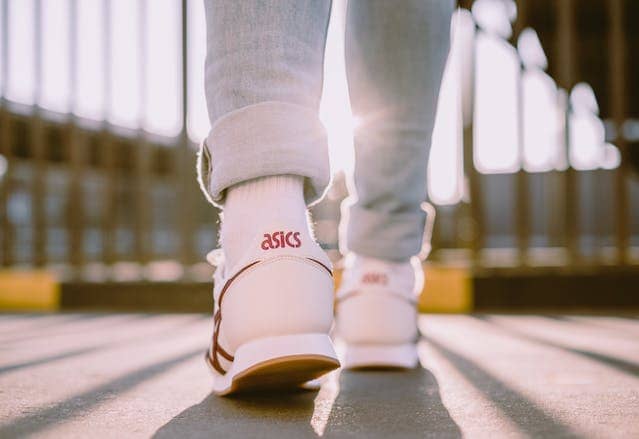
- Founded: 1949 in Kobe, Japan (originally as Onitsuka Co., Ltd.)
- Rebranded: Became ASICS in 1977 – short for Anima Sana In Corpore Sano (“a sound mind in a sound body”)
- Headquarters: Kobe, Japan
- Product Focus: Performance running shoes, volleyball shoes, training gear, lifestyle footwear
- Global Reach: Distributed in 150+ countries
- Brand Extensions: Owns Onitsuka Tiger (lifestyle segment) and ASICS Tiger (heritage fashion)
- Manufacturing Strategy: Heavy reliance on OEM factories in Asia (primarily Vietnam, Indonesia, China), with limited production in Japan for premium lines
Where Are Asics Shoes Manufactured?
Most Asics shoes are manufactured in Vietnam, Indonesia, China, and to a lesser extent, Japan.
While the brand was founded in Japan and still maintains premium production facilities there, the bulk of manufacturing is outsourced to high-efficiency OEM partners across Asia.
This global sourcing strategy helps Asics balance cost, scalability, and market responsiveness, especially for its high-demand performance and running lines.
Country Breakdown of Asics Manufacturing
| Country | Est. Share | Notable Models Produced | Notes |
| Vietnam | ~43% | GEL-Kayano, GEL-Nimbus, general trainers | Largest production hub, skilled labor, and developed supply chain |
| Indonesia | ~28% | Mid-range running shoes, court shoes | Long-term OEM partnerships |
| China | ~13% | Apparel, limited footwear | Focus shifting toward textiles/apparel |
| Japan | <5% | GEL-Lyte III, premium Japan S line | Premium quality, limited-volume output |
Asics works with OEM manufacturers across these regions to maintain consistency in build quality, even across different production sites. Each facility must meet strict performance and durability standards, especially for flagship lines in running and cross-training.
The choice of country often depends on product type, material complexity, and target market segment. We’ll discuss the role of each country in more detail in the upcoming section.
The Role of Asics’ Different Manufacturing Locations
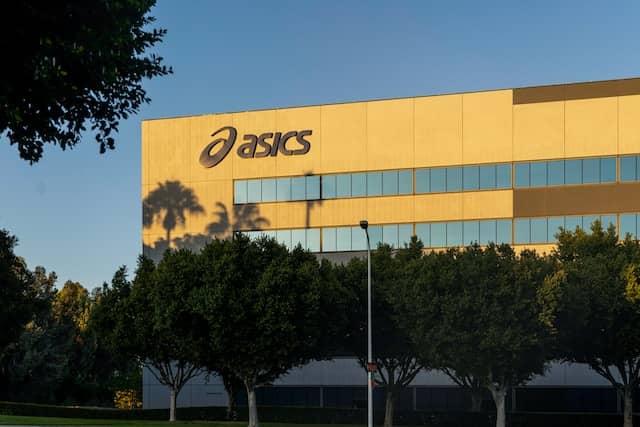
While Asics is a Japanese brand, its manufacturing is globally distributed, each location serving a distinct role in terms of product category, volume, and strategic value.
Below is a closer look at the core manufacturing countries and why they matter to Asics’ operations.
Vietnam – The Manufacturing Powerhouse
Vietnam is Asics’ largest production base, responsible for an estimated 40–45% of its total footwear output. The country offers a strong combination of:
- Skilled labor in athletic shoe assembly
- Established OEM factories in regions like Ho Chi Minh City, Binh Duong, and Dong Nai
- Export infrastructure tailored for global distribution
Key models like the GEL-Kayano, GEL-Nimbus, and other high-performance running shoes are commonly made here. Vietnam’s reputation for both quality consistency and cost efficiency makes it the backbone of Asics’ volume production.
Indonesia – A Long-Term Strategic Partner
Indonesia accounts for around 25–30% of Asics’ footwear manufacturing. The brand has maintained long-term OEM relationships in the country, particularly for:
- Mid-range running and training shoes
- Court shoes and multi-purpose sneakers
Indonesia is known for its large, experienced footwear labor pool and well-developed rubber and synthetic material sourcing, both important in performance shoe construction.
China – Transitioning Toward Apparel and Select Footwear
Once a major base for Asics, China’s role has shifted in recent years due to rising labor costs and strategic realignment. Today, China focuses more on:
- Textile and apparel manufacturing (including branded sportswear)
- Select footwear production for domestic or regional markets
It still plays a valuable role in terms of material supply chains and production agility, but footwear output has declined in favor of Vietnam and Indonesia.
Japan represents a small percentage of Asics’ total manufacturing (<5%) but plays a vital branding and quality leadership role. Key points:
- Home to Asics’ Institute of Sports Science and high-precision R&D
- Produces limited-run models like the GEL-Lyte III and Japan S series
- Associated with premium craftsmanship, often targeting collectors and athletes
Shoes made in Japan typically use the highest-grade materials, and command higher retail prices due to craftsmanship, heritage, and limited availability.
Together, these locations form a multi-tiered sourcing strategy that allows Asics to optimize for cost, quality, delivery speed, and brand positioning, while reducing risk through geographic diversification.
Factors Influencing Asics’ Choice of Manufacturing Locations
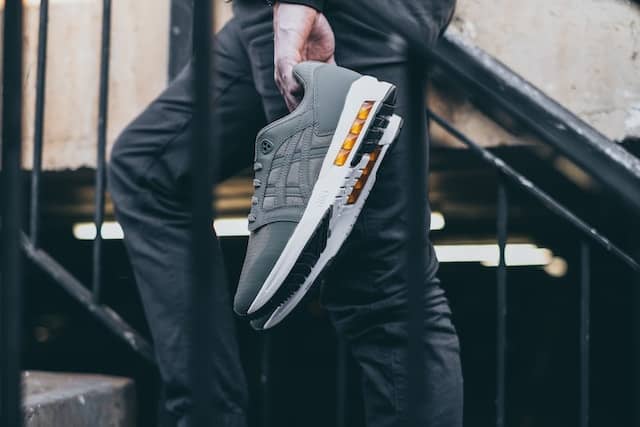
When considering manufacturing locations for your business, many factors influence the decision-making process. For Asics, several aspects are crucial in determining their manufacturing locations, including:
1. Workforce Expertise
When producing high-quality athletic footwear, having skilled workers is essential. As a seller, you must ensure that the selected location has qualified professionals to manufacture your products efficiently.
2. Cost Efficiency
To remain competitive, price plays a significant role in choosing manufacturing locations. Asics shoes are made in Vietnam, Indonesia, and other countries where the manufacturing cost is low, allowing them to pass these savings onto their customers.
3. Quality Standards
Maintaining high quality standards is crucial for any brand, especially one as renowned as Asics. They ensure that their factories can produce shoes up to their expected quality specifications.
4. Ethical and Sustainable Manufacturing Practices
Being an ethically responsible company is important to Asics, and they ensure that their factories comply with international labor laws and environmental standards. For example, Asics actively works with suppliers to reduce energy usage in factories.
5. Supply Chain Optimization
Efficient distribution and supply chain networks are vital when producing shoes for a global market. Asics strategically chooses their manufacturing locations to ensure timely and cost-effective distribution to their customers worldwide.
6. Global Market Distribution
Asics operates in multiple countries, which allows them to better serve their customer base by producing shoes closer to where they are sold.
7. Technology and Innovation
A company like Asics, known for its innovative designs, utilizes advanced technologies to stay ahead in the industry.
Their manufacturing and innovation processes focus on using cutting-edge technologies such as bio-based materials and solution dyeing.
As a seller, you need to consider these factors when choosing your business’s manufacturing locations. By evaluating these aspects, you can find an ideal location that meets your company’s priorities and ensures success in the market.
Asics’ Manufacturing Process
Asics is known for producing high-performance athletic footwear, and its manufacturing process reflects that commitment to function, durability, and innovation.
While the brand uses OEM manufacturers in multiple countries, the production process is tightly standardized across regions to ensure consistency.
Here’s a breakdown of the typical stages in Asics’ footwear manufacturing:
1. Material Sourcing and Preparation
Asics uses a combination of synthetic materials, performance fabrics, and specialty foams to create lightweight yet durable shoes. Key materials include:
- Gel cushioning compounds developed in-house
- Mesh uppers for breathability and flexibility
- EVA or FlyteFoam midsoles for shock absorption
- Rubber outsoles sourced from regional suppliers
Materials are often sourced close to manufacturing sites to reduce lead times and streamline logistics.
2. Cutting and Component Assembly
Once materials are delivered, the production process begins with automated cutting of fabric panels, midsoles, and outsole components. The pieces are then stitched, fused, or glued together, depending on the model design.
Upper components are combined with eyelets, tongue padding, and branding elements. In higher-end models, this process may involve precision stitching or hand-assembly for added quality control.
3. Lasting and Shaping
The assembled upper is then fitted onto a foot-shaped mold called a “last.” This step gives the shoe its final structure and shape.
The shoe is heated and cooled to lock in structural integrity. Proper lasting ensures that the final product fits comfortably and maintains form even under repeated impact, a critical factor for running and training shoes.
4. Sole Attachment and Compression Bonding
Once the upper is formed, it’s bonded to the midsole and outsole. Depending on the shoe type, this may involve:
- Compression molding for EVA midsoles
- Glue-based lamination for multi-density soles
- Direct-injection molding in performance-grade models
This step is often automated, but monitored closely for alignment and sole durability.
5. Quality Control and Testing
Asics follows strict quality protocols at each stage of production. Finished shoes undergo:
- Flex tests for durability
- Tread and grip tests for traction
- Fit assessments across size ranges
- Visual and structural inspection
Select performance lines are tested further at Asics’ Institute of Sports Science in Japan for biomechanics and performance validation.
6. Packaging and Fulfillment
Once shoes pass inspection, they’re packaged with product tags, manuals, and barcodes, ready for global or domestic distribution.
In premium lines (like Japan-made models), special boxes and inserts may be included to highlight craftsmanship.
This standardized yet flexible approach allows Asics to maintain high-quality output across different factories while adjusting materials, labor intensity, and volume depending on the target market and price tier.
Bonus: How to Find Manufacturers Like Asics’ Suppliers
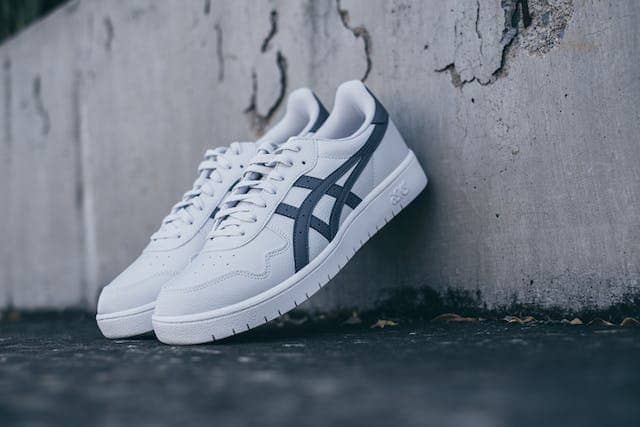
If you’re inspired by Asics’ global sourcing strategy and want to find similar OEM or ODM manufacturers, especially in Asia, there are a few smart ways to approach the search.
1. Use Verified B2B Platforms
Platforms like Alibaba, Made-in-China, and GlobalSources list thousands of footwear factories — many with experience producing for well-known athletic brands. Use filters like:
- Product Type: Running shoes, sneakers, sports footwear
- Business Type: OEM/ODM manufacturers
- Certifications: ISO 9001, BSCI, Sedex
2. Check for Key Certifications
Reliable manufacturers typically hold industry-recognized certifications:
- BSCI or Sedex (ethical labor practices)
- ISO 9001 (quality management)
- SA8000 or WRAP (social compliance for apparel/shoes)
These give you a baseline for professionalism, quality control, and global trade readiness.
3. Start with Small MOQs and Sampling
Even with large OEMs, you can:
- Request samples to verify materials, fit, and workmanship
- Negotiate small-batch MOQs to test the market before scaling
- Ask about private label or customization options
Factories that cater to brands like Asics are usually open to scalable partnerships, as long as your specs and timelines are clear.
4. Consider a Sourcing Agent or Partner
If you’re unfamiliar with factory audits, compliance checks, or overseas logistics, a sourcing agent (like NicheSources) can help:
- Vet manufacturers
- Negotiate pricing
- Handle QC and shipping
This approach saves time and reduces the risk of choosing the wrong supplier.
We’ve written guides on many popular brands and how they operate. If you’d like to read more or want some inspiration then here’s a reading list:
- Where Are Asics Made
- Where Are Hoka Shoes Made
- Where Are Keen Shoes Made
- Where Are Van Shoes Made
- Where are Nike Shoes Made
- Where Are Adidas Made
- Where Are Salomon Shoes Made
- Where Are Puma Shoes Made
Frequently Asked Questions
Is Asics a Chinese Company?
No, Asics is a Japanese company, founded in 1949 and headquartered in Kobe, Japan. While some products are manufactured in China, the brand remains fully Japanese-owned and operated.
Is Asics Owned by Nike?
No, Asics is not owned by Nike. The two are completely separate companies. Asics operates independently and is one of the few global athletic brands not owned by a larger conglomerate.
Are All Asics Shoes Made in Asia?
Yes, the vast majority of Asics shoes are made in Asian countries, primarily Vietnam, Indonesia, China, and Japan. Each location plays a different role, from mass-market production to premium model manufacturing.
What Models Are Still Made in Japan?
Select models like the GEL-Lyte III OG and Japan S series are still made in Japan. These are often limited-edition, premium-grade shoes with higher-quality materials and craftsmanship.
Which Asics Shoes Are Best for Running?
Top-rated running models include the GEL-Kayano, GEL-Nimbus, GT-2000, and Novablast. These are widely praised for their cushioning, stability, and durability, and are typically made in Vietnam or Indonesia.
Why Is Asics So Popular?
Asics has gained a reputation for creating high-quality athletic shoes that cater to the needs of both professional athletes and casual walkers alike. Their innovative designs, exceptional comfort, and durability make them a top choice for consumers worldwide.
Are Asics and Onitsuka Tiger the Same?
Although both brands originate from the same founder, Kihachiro Onitsuka, they have since evolved into separate entities.
Asics is known for its performance-driven athletic shoes, whereas Onitsuka Tiger focuses on creating fashionable and stylish footwear.
How to Find and Work with Shoe Manufacturers?
Finding the right shoe manufacturer for your business involves research, communication, and negotiation.
Start by looking for credible suppliers of wholesale sneakers and assessing their manufacturing capabilities, quality control, and lead times.
Establish clear communication channels to ensure a smooth business relationship and work collaboratively to deliver top-quality products that your customers will love.
Finding Manufacturers in China with Niche
As a seller looking for manufacturers for your business, knowing where Asics are made can help you understand the benefits of sourcing products from countries like China.
China is known for its affordable labor and skilled workforce. As a result, thousands of companies worldwide choose Chinese manufacturers to produce their products.
A good sourcing agent can help navigate the complex Chinese manufacturing landscape and find suppliers that align with your business requirements and goals.
Sourcing agents like NicheSources can provide valuable assistance by handling the entire procurement process, from identifying suitable manufacturers to negotiating prices and managing quality control.
By leveraging our experience and network, we help you find reliable Chinese manufacturers, mitigating the risks and challenges of doing business overseas.
To start your journey towards finding a reliable manufacturer in China, request a free sourcing quote and learn how outsourcing your production can help grow your business.