Kitchen knife brands are companies that design, manufacture, or market knives for home and professional kitchens. We generally group them into German and European workhorses, Japanese precision brands, American commercial specialists, and newer direct-to-consumer labels. The important distinction is that a brand’s home country does not always tell you where its knives are actually made.
Quick Facts: Kitchen Knife Brands in 2026
- 25 brands compared across German, Japanese, American, European, and modern DTC categories.
- Oldest brand on our list: Zwilling J.A. Henckels, founded in Solingen, Germany, in 1731.
- Professional-kitchen staples: Victorinox, Dexter-Russell, Mercer Culinary, and F. Dick.
- Japanese specialists: Shun, MAC, Global, Tojiro, KAI, and Miyabi.
- Manufacturing origin matters: several Western and Japanese-positioned brands manufacture some or all of their knives in China.
- Major Chinese production hub: Yangjiang, Guangdong, produces everything from entry-level OEM knives to premium branded cutlery.
Kitchen Knife Brands at a Glance
The table below compares all 25 brands by brand origin, actual manufacturing location, knife style, price tier, and ideal buyer. This distinction matters because a brand’s headquarters or marketing heritage does not always match where its knives are produced.
| Brand | Origin | Made In | Style | Price Tier | Ideal For |
| Wüsthof | Germany | Germany (Solingen) | German forged | Mid–High | Buyers wanting a long-term German chef’s knife |
| Zwilling J.A. Henckels | Germany | Germany for premium Zwilling lines | German forged | Mid–High | Buyers who want German heritage and a broad product range |
| Henckels International | Germany (brand) | China, Spain, Thailand | Stamped Western | Budget | Entry-level knife and block sets |
| F. Dick | Germany | Germany | Professional / butcher | Mid | Butchers, meat processors, and commercial kitchens |
| Messermeister | USA | Germany, Portugal, Italy depending on line | German-style | Mid | Buyers prioritizing ergonomics and distinctive handles |
| K Sabatier | France | France (Thiers) | French forged / carbon steel | Mid–High | Traditional French-knife and carbon-steel buyers |
| Victorinox | Switzerland | Switzerland | Commercial workhorse | Budget | Beginners, culinary students, and high-volume kitchens |
| BergHOFF | Belgium | Mostly China | Design-led Western | Budget–Mid | Style-focused retail programs |
| Shun | Japan | Japan (Seki City) | Japanese Damascus | High | Premium home kitchens and gift buyers |
| Global | Japan | Japan (Niigata) | Japanese all-steel | Mid–High | Buyers who prefer lightweight, agile knives |
| MAC | Japan | Japan (Seki City) | Japanese workhorse | Mid | Professionals and performance-focused home cooks |
| Miyabi | Germany (brand) | Japan (Seki) | Premium Japanese | High–Premium | Damascus and premium gift markets |
| Tojiro | Japan | Japan (Niigata) | Japanese value | Budget–Mid | Buyers choosing their first Japanese knife |
| KAI | Japan | Japan (Seki City) | Entry-level Japanese | Budget | Buyers seeking Japanese-made knives at accessible prices |
| Bob Kramer | USA | USA for custom knives; licensed production varies | Artisan / custom | Premium | Collectors and premium knife buyers |
| Dexter-Russell | USA | USA | Commercial workhorse | Budget | Restaurant supply and high-volume professional kitchens |
| Mercer Culinary | USA | Taiwan | Culinary-school / commercial | Budget | Culinary students and professional kitchens |
| Cutco | USA | USA | Direct-sales Western | Mid | US-made gift and home-kitchen markets |
| Cuisinart | USA | China | Appliance-brand cutlery | Budget | Value-oriented block sets and mass retail |
| Made In | USA | France (Thiers) | French forged / DTC | Mid–High | Buyers interested in restaurant-focused DTC knives |
| Cangshan | USA | China (Yangjiang, own factory) | Design-led premium | Mid–High | Premium Chinese manufacturing and design-led retail |
| Dalstrong | Canada | China (Yangjiang) | Design-forward hybrid | Mid | E-commerce buyers prioritizing styling and presentation |
| Misen | USA | China | DTC hybrid | Mid | Buyers comparing modern direct-to-consumer brands |
| Kamikoto | Japan (marketing) | Mainly China (Yangjiang); Ganjo line in Japan | Single-bevel aesthetic | Mid–High | Gift-box presentation and design-focused buyers |
| Imarku | China | China (Yangjiang) | Amazon-native value | Budget | High-volume e-commerce and entry-level buyers |
| Tramontina | Brazil | Brazil | Value workhorse | Budget | Entry-level retail and volume programs |
Which Kitchen Knife Brand Should You Choose? A 30-Second Decision
If you do not want to compare all 25 brands individually, we’d narrow the choice using four questions.
- Working with a limited budget? Start with Victorinox, Mercer Culinary, Tojiro, or KAI. These brands give you practical entry points without moving immediately into premium-tier pricing.
- German durability or Japanese precision? Choose German-style knives such as Wüsthof or Zwilling if you prefer heavier blades, tougher steel, and more forgiving edges. Choose Japanese brands such as MAC, Shun, or Tojiro if you prioritize thinner blades, sharper edges, and better edge retention but expect more careful handling.
- One knife or a full set? For most kitchens, we’d start with a chef’s knife and add a paring or bread knife as needed. A block set makes more sense when you know you will regularly use most of the included pieces.
- Building your own kitchen knife brand? Brand-name comparisons only tell part of the story. Skip to “Reselling Branded Knives vs Building Your Own Brand” for the private-label, MOQ, manufacturing, and sourcing considerations that matter to importers and retailers.
What Are the Main Types of Kitchen Knife Brands?
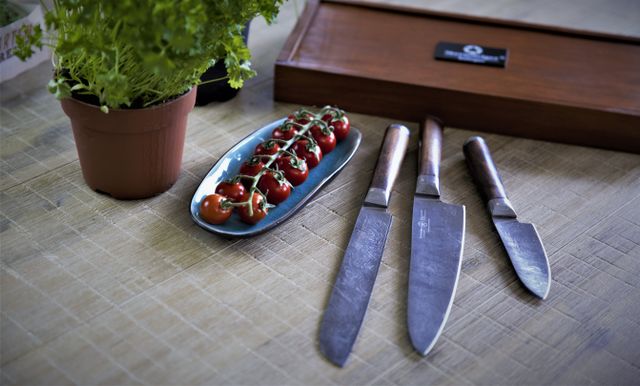
We generally divide kitchen knife brands into four groups: German/Western, Japanese, American commercial, and modern DTC brands. The biggest differences are steel hardness, edge geometry, blade profile, and how much maintenance the knife expects from the user.
| Type | Typical Steel / Hardness | Typical Edge Angle | Blade Profile | Best For | Examples |
| German / Western | Tougher stainless, usually around 56–58 HRC | 15–20° per side | Thicker blade, curved belly | Rocking cuts, durability, general prep | Wüsthof, Zwilling, F. Dick |
| Japanese | Harder stainless or powder steel, often 60–63+ HRC | 12–15° per side | Thinner, flatter profile | Precision slicing, vegetables, fine prep | Shun, MAC, Tojiro, Miyabi |
| American commercial | Mid-hardness stainless, varies by line | 15–20° per side | Utility-focused Western shapes | Restaurants, culinary schools, high-volume prep | Dexter-Russell, Mercer Culinary |
| Modern DTC | Varies widely by supplier and product line | Often 15° per side | Usually Western/Japanese hybrids | Design-led retail and e-commerce | Made In, Misen, Cangshan, Dalstrong |
Why Is Japanese Knife Steel Usually Harder?
Japanese knives typically use harder steel because they are designed to hold a thinner, more acute cutting edge for longer. A blade hardened above 60 HRC can support a finer edge without rolling as quickly during normal slicing.
There is a trade-off. Harder steel is generally less forgiving of twisting, bones, frozen food, and hard cutting surfaces, so chips can occur if the knife is misused.
German knives usually sit lower on the Rockwell scale. Their tougher, more flexible edges may need sharpening sooner, but they tolerate heavier kitchen work better.
For buyers sourcing knives in bulk, we would not judge either approach as inherently superior. The right specification depends on the intended user: higher HRC for precision and edge retention; moderate HRC for durability, easier sharpening, and commercial abuse.
The 25 Best Kitchen Knife Brands in 2026
We’ve grouped these kitchen knife brands by manufacturing tradition and market position rather than trying to force them into a subjective 1–25 ranking. For each brand, we’re looking at where it comes from, where its knives are actually made, what differentiates it, and the buyer it makes the most sense for.
German & European Heritage Brands
1. Wüsthof
Wüsthof has been family-owned in Solingen since 1814 and remains one of the benchmark names in German kitchen knives. What stands out to us is that its knives continue to be produced in Solingen rather than shifting entry-level production elsewhere.
- Origin: Germany
- Made In: Germany (Solingen)
- Standout: Classic series, PEtec edge, lifetime warranty
- Price: $55–330; Classic 8-inch around $150–170
- Ideal For: Buyers looking for a long-term, professional-grade German chef’s knife
2. Zwilling J.A. Henckels
Founded in Solingen in 1731, Zwilling is one of the oldest cutlery companies on this list. Buyers should pay particular attention to the logo: premium twin-logo ZWILLING lines such as Pro and Four Star are made in Germany, while Henckels International is the lower-priced line manufactured across China, Spain, and Thailand.
- Origin: Germany
- Made In: Germany for Zwilling lines; China, Spain, and Thailand for Henckels International
- Standout: FRIODUR ice-hardened blades; wide range from accessible Henckels products to premium Zwilling knives
- Price: $20–160+
- Ideal For: Buyers wanting German heritage across several price levels, provided they verify the specific line
3. F. Dick
F. Dick dates to 1778 and has a particularly strong position in professional butcher and meat-processing knives. We see it as a more trade-focused brand than many of the consumer-oriented German names.
- Origin: Germany
- Made In: Germany (Deizisau and Bayreuth)
- Standout: 1905, Premier Plus, and Red Spirit ranges; extensive butcher and sharpening products
- Price: $30–130
- Ideal For: Butchers, meat processors, and commercial kitchens
4. Messermeister
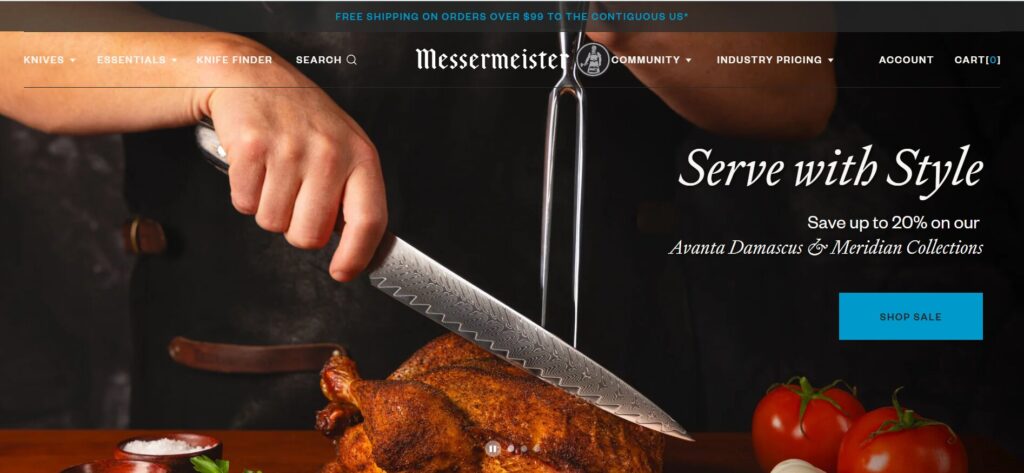
Messermeister is an American brand built around German-style knife design. Manufacturing depends on the range, with knives produced in Germany, Portugal, and Italy, so we would always check the individual collection rather than assuming one country of manufacture.
- Origin: USA
- Made In: Germany, Portugal, and Italy depending on the line
- Standout: Meridian Elite and Oliva Elite collections, including distinctive olive-wood handles
- Price: $50–200
- Ideal For: Home cooks who like German-style knives but want more design and handle options
5. K Sabatier
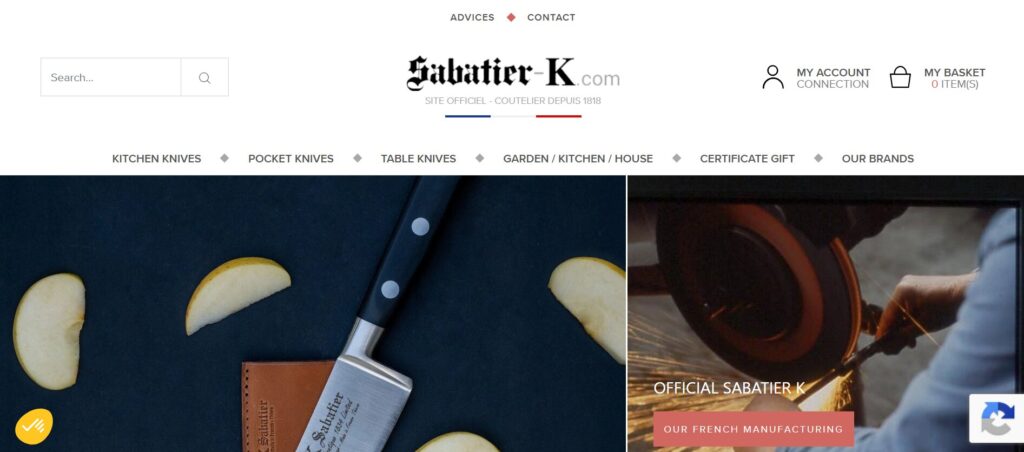
K Sabatier comes from the Sabatier Aîné & Perrier family tradition in Thiers, with roots around 1810. The important sourcing detail is the name: Sabatier itself was never a protected trademark, so numerous unrelated manufacturers use it; K Sabatier identifies the original Thiers producer covered here.
- Origin: France
- Made In: France (Thiers)
- Standout: Traditional French profiles and the Au Carbone carbon-steel range
- Price: About $85–165
- Ideal For: Buyers seeking traditional French-made knives or carbon steel
6. Victorinox
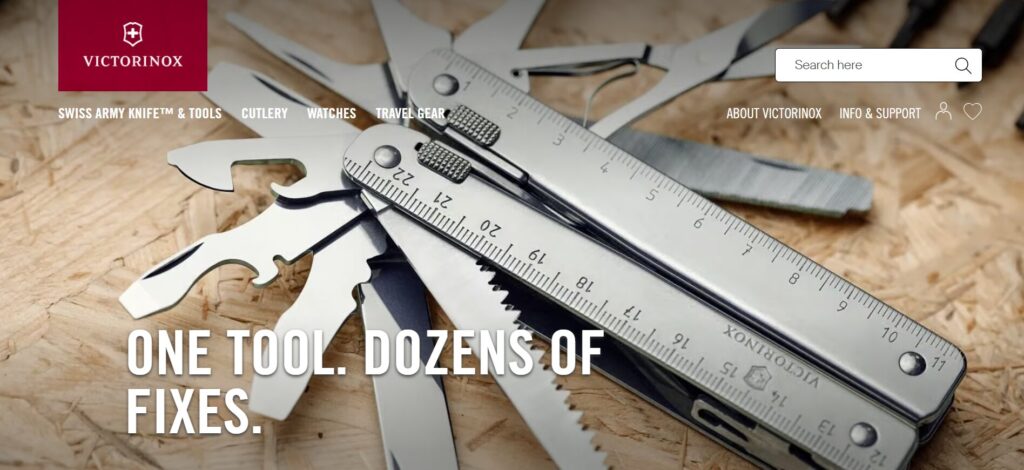
Victorinox is better known globally for the Swiss Army Knife, but its professional kitchen range has become equally relevant for buyers prioritizing function and value. The Fibrox Pro is the standout because its non-slip handle and practical construction suit both first-time buyers and commercial kitchens.
- Origin: Switzerland
- Made In: Switzerland
- Standout: Fibrox Pro series with slip-resistant handles and commercial-kitchen positioning
- Price: $22–110
- Ideal For: Beginners, culinary students, and high-volume kitchens
7. BergHOFF
BergHOFF is a Belgian design-led kitchenware company founded in 1994, with knives forming part of a much wider product catalog. Unlike the heritage European brands above, most of its knife production is outsourced to China.
- Origin: Belgium
- Made In: Mostly China
- Standout: Leo and Essentials collections; design-focused positioning
- Price: $15–60 per knife
- Ideal For: Retailers and buyers prioritizing visual design at accessible price points
Japanese Precision Brands
8. Shun
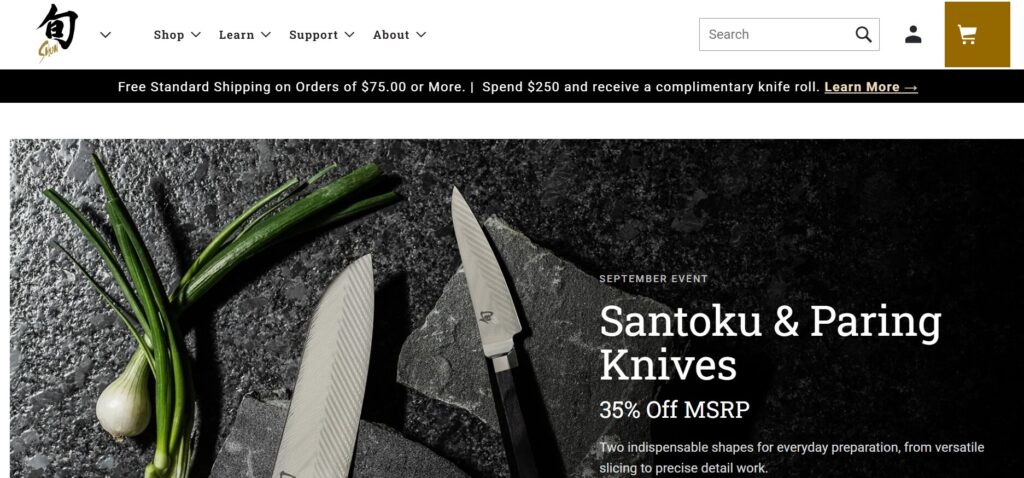
Shun is Kai Corporation’s premium knife brand and is produced in Seki City, Japan. Its Damascus-clad VG-MAX blades, approximately 60–61 HRC hardness, and recognizable pakkawood handles give it a strong position in the premium Japanese category.
- Origin: Japan
- Made In: Japan (Seki City)
- Standout: VG-MAX Damascus construction and lifetime sharpening service
- Price: $100–300; Classic 8-inch around $170–200
- Ideal For: Premium home kitchens and buyers who value Japanese aesthetics alongside manufacturer support
9. Global
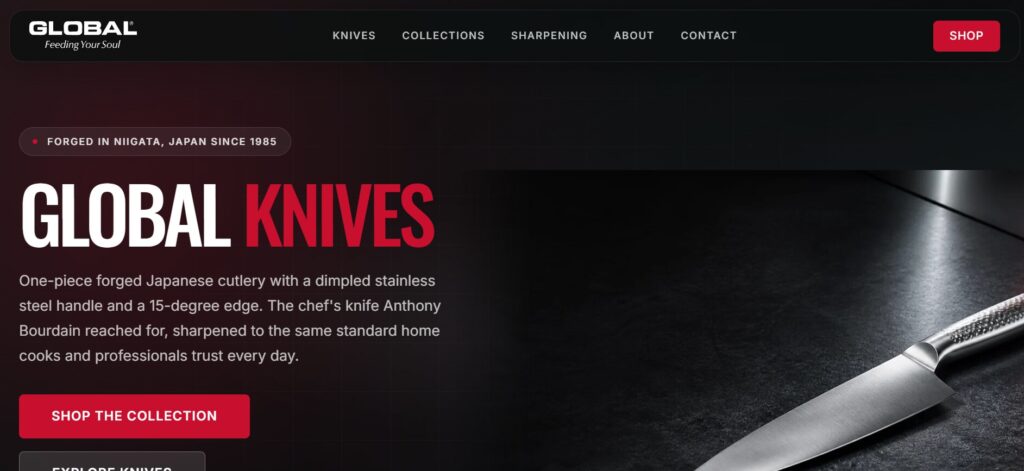
Global takes a noticeably different approach from traditional Japanese knife brands. Yoshikin manufactures the knives in Niigata using CROMOVA 18 steel and a seamless stainless-steel construction, including hollow handles filled with sand to manage balance.
That metal handle is also something we would evaluate personally before choosing the brand—it produces a very different grip from wood or polymer handles.
- Origin: Japan
- Made In: Japan (Niigata)
- Standout: One-piece stainless design, CROMOVA 18 steel, and distinctive hollow handle
- Price: $66–165; G-2 chef’s knife around $100
- Ideal For: Buyers who prefer lightweight handling and easy-cleaning all-steel construction
10. MAC
MAC has manufactured knives in Seki City since 1964 and is positioned much more around cutting performance than decorative finishes. Its Professional MTH-80 is the signature example: thin, approximately 59–61 HRC, and designed with dimples to reduce food sticking.
- Origin: Japan
- Made In: Japan (Seki City)
- Standout: Professional MTH-80 and performance-focused blade geometry
- Price: $80–250, with higher-tier lines reaching around $400
- Ideal For: Professional chefs and serious home cooks prioritizing cutting performance
11. Miyabi
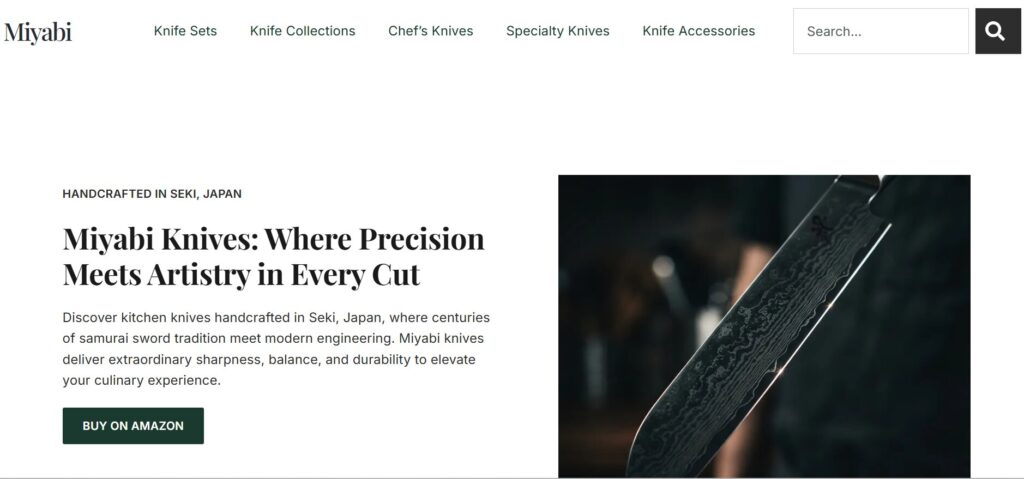
Miyabi is owned by Zwilling but manufactures its knives in a dedicated facility in Seki, Japan. Its harder SG2/MC63 powder steels can reach 61–66 HRC, placing certain Miyabi lines above many mainstream Japanese knives in hardness and edge-retention potential.
- Origin: Germany (brand ownership)
- Made In: Japan (Seki)
- Standout: Honbazuke finishing, CRYODUR treatment, and premium SG2/MC63 steel options
- Price: $140–400+
- Ideal For: Premium buyers, gift markets, and customers drawn to high-hardness Damascus knives
12. Tojiro
Tojiro is manufactured by Fujitora Industry in Niigata and is one of the more accessible routes into Japanese knife construction. The DP series is the key reference point, pairing VG-10 steel at around 60 HRC with much lower pricing than many premium Japanese brands.
- Origin: Japan
- Made In: Japan (Niigata)
- Standout: DP Gyuto 210 mm using VG-10 steel
- Price: $30–160; DP Gyuto around $55
- Ideal For: Buyers choosing their first Japanese knife or prioritizing performance per dollar
13. KAI
KAI’s Seki Magoroku and Wasabi ranges sit below Shun within the wider Kai portfolio. For us, their main appeal is straightforward: they give buyers access to genuinely Seki-made Japanese knives without immediately moving into premium-tier pricing.
- Origin: Japan
- Made In: Japan (Seki City)
- Standout: Wasabi and Seki Magoroku ranges; Wasabi uses Daido 1K6 stainless steel at around 58 HRC
- Price: $30–80
- Ideal For: Buyers seeking an entry point into Japanese-made kitchen knives
American Icons & Pro Workhorses
14. Bob Kramer
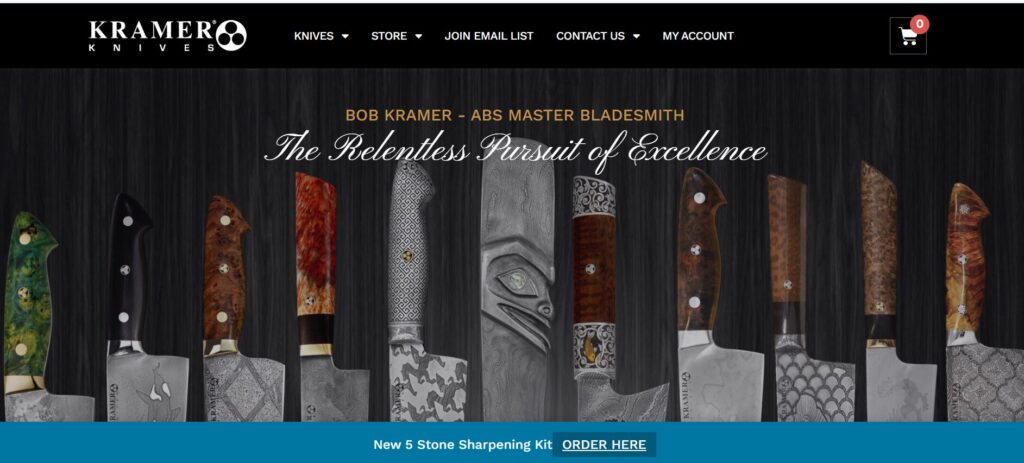
Bob Kramer occupies a different category from mass-market knife brands. His own US-made custom knives sell at collector prices, while the more accessible Kramer by Zwilling products are licensed knives produced to his designs.
We would keep those two markets separate when comparing prices because they are fundamentally different products.
- Origin: USA
- Made In: USA for custom knives; licensed line produced through Zwilling
- Standout: Custom Damascus and specialist collector knives alongside the licensed Zwilling range
- Price: $250–500 for licensed knives; $2,000–$20,000+ for customs
- Ideal For: Collectors and buyers looking for premium halo products
15. Dexter-Russell
Dexter-Russell has operated in Massachusetts since 1818 and remains closely associated with US commercial foodservice. Rather than focusing on luxury presentation, ranges such as Sani-Safe and SofGrip are built around professional usability and replaceable working tools.
- Origin: USA
- Made In: USA
- Standout: NSF-certified Sani-Safe and SofGrip commercial ranges
- Price: $20–100
- Ideal For: Restaurant suppliers and high-volume commercial kitchens
16. Mercer Culinary
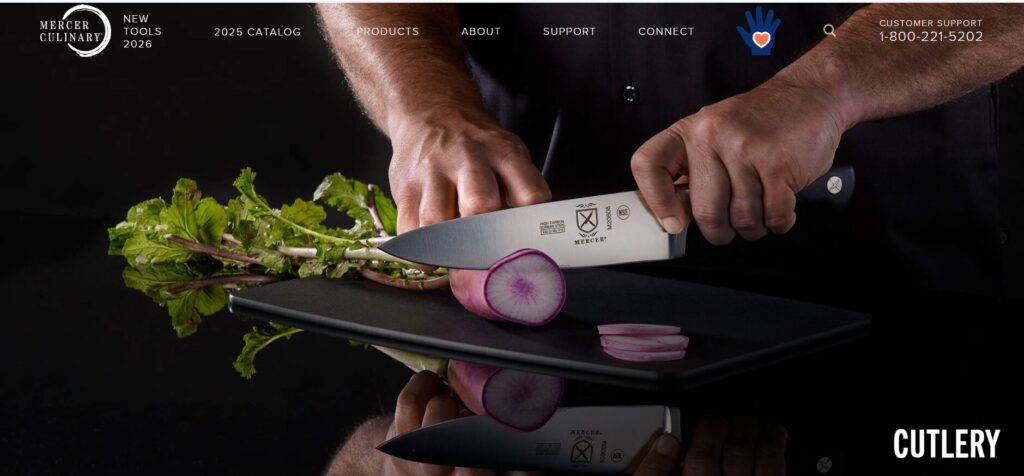
Mercer is particularly well established in culinary education and commercial kitchens. Its Millennia line provides NSF-certified knives around the $20 level, while Genesis moves into forged construction; the brand is now owned by CFS Brands and manufactured in Taiwan.
- Origin: USA (CFS Brands)
- Made In: Taiwan
- Standout: Millennia and Genesis ranges
- Price: $20–100
- Ideal For: Culinary students and commercial kitchens working within tighter equipment budgets
17. Cutco
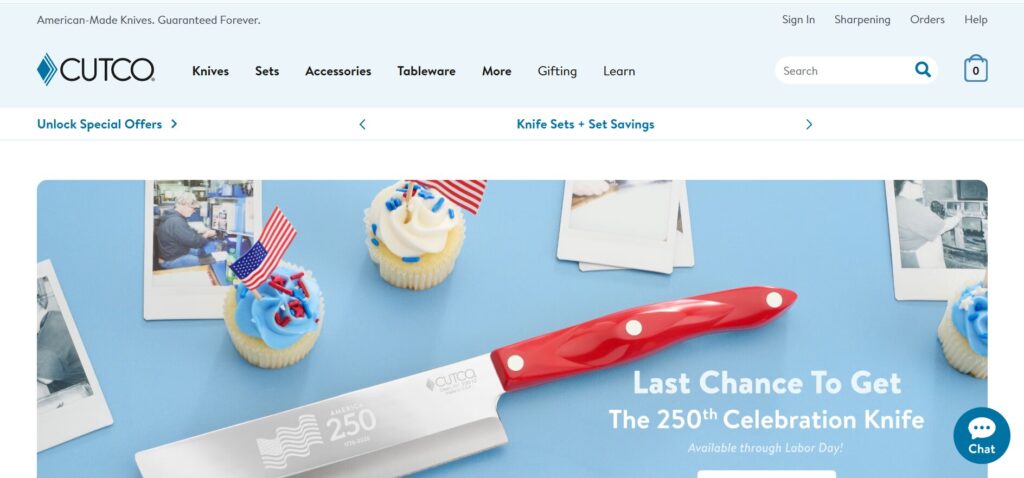
Cutco manufactures its knives in Olean, New York, and has built its business around direct sales and long-term service. Its Double-D edge and Forever Guarantee differentiate it more through durability and after-sales support than specialist steel specifications.
- Origin: USA
- Made In: USA
- Standout: Double-D edge, Forever Guarantee, and sharpening service
- Price: Around $80–115 for paring and utility models
- Ideal For: Buyers prioritizing US manufacturing, gifting, and long-term service support
18. Cuisinart
Cuisinart is an American appliance and kitchenware brand whose kitchen knives are manufactured in China. We view the knife category primarily as an extension of its broader retail presence, with multi-piece block sets being a bigger strength than specialist chef’s knives.
- Origin: USA
- Made In: China
- Standout: Triple Rivet block sets and broad retail availability
- Price: $20–80 for individual products; selected sets around $95–130
- Ideal For: Entry-level block sets and retailers cross-selling kitchenware categories
DTC & Modern Disruptor Brands
19. Made In
Made In launched in Austin in 2017 and built its position through a direct-to-consumer model and chef partnerships. Despite the American branding, its chef’s knives are produced in Thiers, France, using X50CrMoV15 steel hardened to around 58–60 HRC.
- Origin: USA
- Made In: France (Thiers)
- Standout: French manufacturing and partnerships with professional chefs
- Price: Around $100–129
- Ideal For: Buyers and brand builders studying premium DTC positioning
20. Cangshan
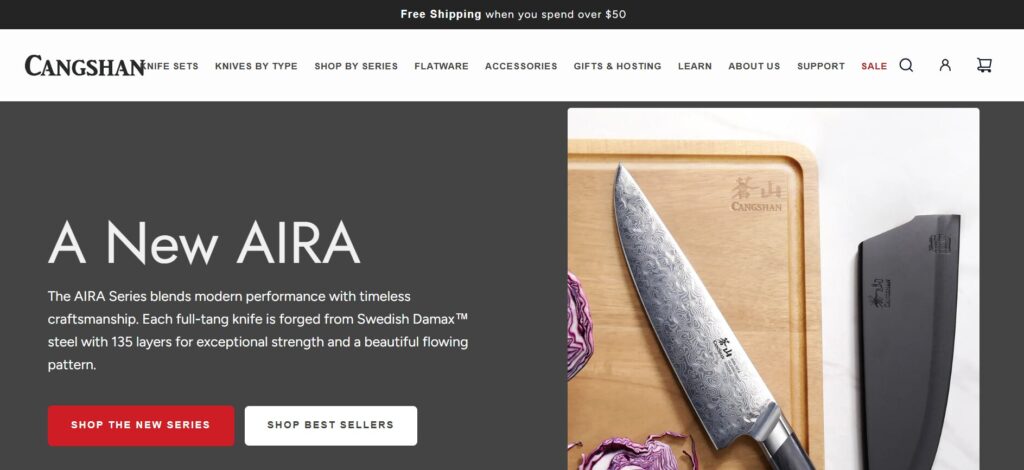
Cangshan is particularly relevant from a sourcing perspective because it shows the upper end of what Chinese knife manufacturing can produce. The US-headquartered company operates its own factory in Yangjiang and uses materials including German X50CrMoV15 and Swedish Sandvik steels.
- Origin: USA
- Made In: China (Yangjiang, own factory)
- Standout: Own-factory manufacturing, multiple design awards, and the Thomas Keller Signature Collection
- Price: $50–300
- Ideal For: Buyers evaluating premium Chinese manufacturing and private-label benchmarks
21. Dalstrong
Dalstrong was founded in Canada in 2014 and has built a substantial e-commerce presence around bold product styling and clearly separated knife series. Production takes place in Yangjiang, China, including lines such as Shogun and Gladiator.
- Origin: Canada
- Made In: China (Yangjiang)
- Standout: Shogun and Gladiator series; strong Amazon and Shopify positioning
- Price: $60–220
- Ideal For: Design-led e-commerce and buyers who value presentation alongside performance
22. Misen
Misen launched through Kickstarter in Brooklyn in 2015 with a direct-to-consumer pricing proposition. Its knives are manufactured in China using Japanese-origin steel specifications, with the range moving from AUS-10 to ACUTO440 in its 2025 update.
- Origin: USA
- Made In: China
- Standout: Direct-to-consumer model and lifetime sharpening service
- Price: Around $98 for the chef’s knife
- Ideal For: Buyers and founders studying DTC knife branding and pricing
23. Kamikoto
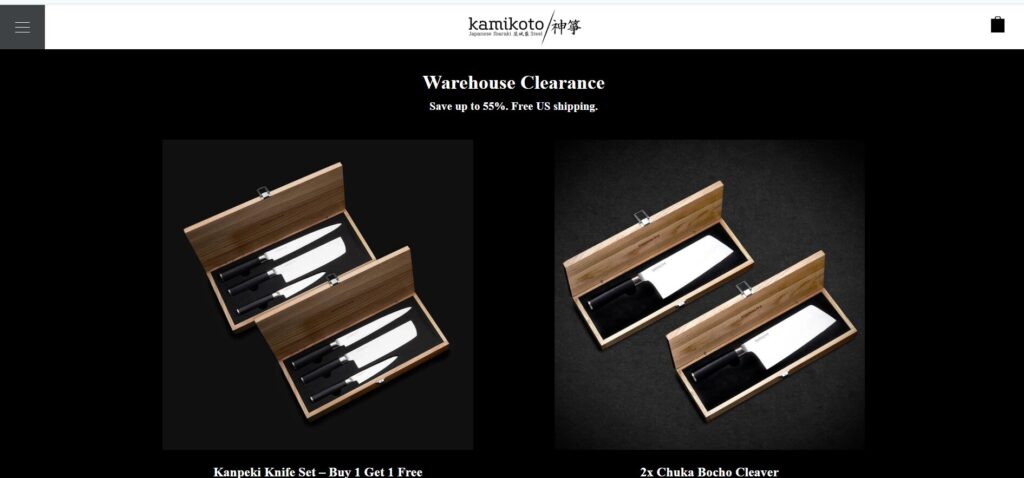
Kamikoto is worth examining carefully because its Japanese positioning does not describe the manufacturing origin of most of its products. The brand states that most knives are handmade in Yangjiang, China from SUS420J2 steel at roughly 53 HRC, while the Ganjo range is positioned as being produced in Niigata, Japan.
For us, this is a useful reminder to separate brand story, manufacturing origin, and steel specification when evaluating any knife company.
- Origin: Japan (brand positioning)
- Made In: Mainly China (Yangjiang); Ganjo series in Niigata, Japan
- Standout: Single-bevel styling, wooden presentation boxes, and lifetime guarantee
- Price: $100–300 list pricing
- Ideal For: Presentation-focused buyers who understand the brand’s manufacturing and steel specifications
Budget & Amazon-Native Brands
24. Imarku
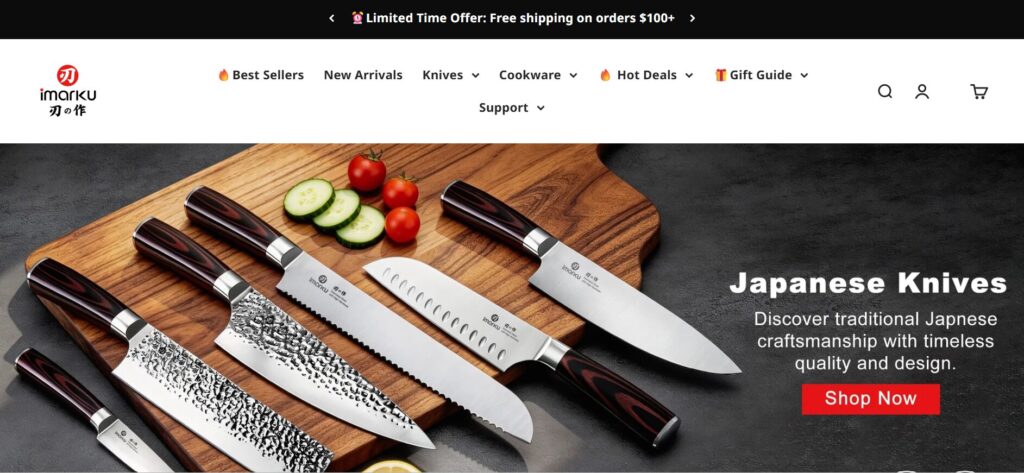
Imarku represents the high-volume, marketplace-led end of the kitchen knife market. The Chinese brand is associated with Shenzhen Bolton Technology and manufactures in Yangjiang, competing around accessible pricing and Amazon-oriented distribution.
- Origin: China
- Made In: China (Yangjiang)
- Standout: 8-inch chef’s knives around the $30–40 level and a lifetime warranty
- Price: $30–50
- Ideal For: E-commerce sellers studying the volume segment their own private-label knives may compete against
25. Tramontina
Tramontina was founded in Brazil in 1911 and manufactures its value-focused kitchen knives there. Compared with many newer marketplace brands, its advantage is a long operating history and broad international distribution.
- Origin: Brazil
- Made In: Brazil
- Standout: Accessible pricing and wide global distribution
- Price: $15–50
- Ideal For: Entry-level and volume retail programs
Honorable Mentions
Kiwi (Thailand) for ultra-accessible blades; Güde and Robert Herder for Solingen heritage; Opinel for French cutlery; Lamson and Rada for US-made knives; Misono, Sakai Takayuki, and Masamoto for deeper Japanese options; and Chicago Cutlery as a US brand whose knives are now manufactured in China.
Top Kitchen Knife Brands by Category
If you want to narrow the list quickly, these are the brands we would shortlist by use case rather than trying to name one universal winner.
| Category | Top Pick | Runner-Up | Why |
| Best Overall German | Wüsthof Classic | Zwilling Pro | Both are forged in Solingen and built around durable Western geometry; Wüsthof is the more straightforward benchmark pick. |
| Best Overall Japanese | MAC Professional MTH-80 | Shun Classic | MAC prioritizes cutting performance and a thin profile, while Shun adds stronger premium presentation and manufacturer support. |
| Best Value | Victorinox Fibrox Pro | Mercer Millennia | Both are practical commercial-style knives with low replacement cost and strong value for high-volume use. |
| Best for Professional Kitchens | Dexter-Russell | Mercer Culinary | NSF-focused ranges, commercial ergonomics, and pricing that makes sense when knives are used hard and replaced regularly. |
| Best Damascus / Premium Finish | Miyabi | Shun | Miyabi offers harder SG2/MC63 steels in premium ranges, while Shun is the more accessible premium Damascus option. |
| Best for Beginners | Victorinox | Tojiro | Victorinox is forgiving and easy to maintain; Tojiro is a logical first step into harder Japanese steel. |
| Best for Resellers | Victorinox | Wüsthof | Both have established brand recognition, making them easier to position without extensive customer education. |
| Best Private-Label Benchmark | Cangshan | Imarku | Cangshan shows what premium Yangjiang manufacturing can achieve, while Imarku represents the high-volume marketplace end of the same production ecosystem. |
Where Are Kitchen Knife Brands Actually Made?
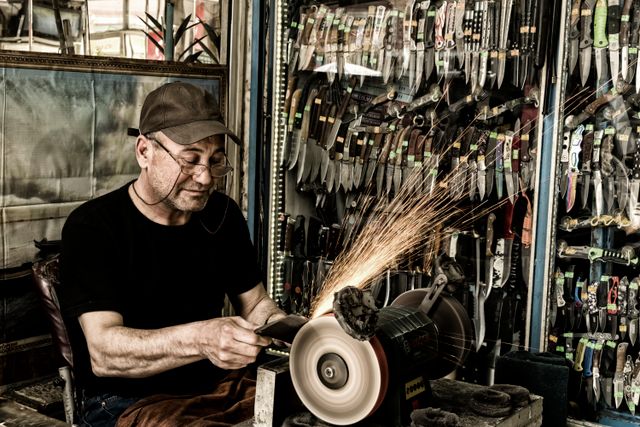
A kitchen knife brand’s country of origin and manufacturing country are often different. We pay attention to both because a German, American, or Japanese brand name does not necessarily mean the knife itself was made there.
| Manufacturing Reality | Brands |
| Made in the brand’s home country | Wüsthof and premium Zwilling lines (Germany); F. Dick (Germany); K Sabatier (France); Victorinox (Switzerland); Shun, Global, MAC, Tojiro, KAI (Japan); Dexter-Russell and Cutco (USA); Tramontina (Brazil) |
| Western brand with Asian production | Henckels International (China/Spain/Thailand), BergHOFF (mostly China), Cuisinart (China), Misen (China), Mercer Culinary (Taiwan) |
| Western-owned, made elsewhere in Europe or Japan | Made In (France); Messermeister (Germany/Portugal/Italy by line); Miyabi, a Zwilling-owned brand, made in Japan |
| China-made and positioned openly around Chinese manufacturing | Cangshan, Imarku |
| China-made despite Japanese or Japanese-style positioning | Kamikoto, Dalstrong; Imarku also has Japanese-origin marketing claims despite Chinese ownership and manufacturing |
Why Yangjiang Matters in the Kitchen Knife Industry
From a sourcing perspective, Yangjiang, Guangdong is one of the most important knife-manufacturing clusters to understand. Brands such as Cangshan, Dalstrong, Kamikoto, and Imarku all have manufacturing ties there, but they occupy very different price and positioning levels.
That is why we would never judge a knife by “Made in China” alone. In practice, the real variables are the factory, steel specification, heat treatment, finishing, and QC standard the buyer requires. Cangshan is a useful example: it operates its own Yangjiang factory and produces premium lines using steels such as X50CrMoV15 and Sandvik, while the same regional supply base also supports much lower-priced marketplace knives.
For a deeper look at the cluster, see our guide to Yangjiang and Longquan knife manufacturing.
From our experience in Yiwu: supplier verification is the #1 issue our clients face before working with us. Our on-ground team handles factory audits and background checks so you don’t have to. Discuss your project.
Kitchen Knife Steel Cheat Sheet for Buyers
When we compare kitchen knife brands or prepare a sourcing specification, we look at steel grade, target HRC, and heat treatment together. A label like “high-carbon stainless steel” is too vague on its own; two knives using the same nominal steel can perform very differently if the heat treatment and finishing are inconsistent.
| Steel | Typical HRC | Common Use | What Buyers Should Know |
| X50CrMoV15 | 56–58 HRC | German-style chef’s knives | Tough, corrosion-resistant, and relatively easy to sharpen. A practical choice for Western-style knives and commercial use. |
| VG-10 / VG-MAX | 60–61 HRC | Japanese chef’s knives and Damascus lines | Holds a finer edge than typical German steel, but requires more careful handling to reduce chipping risk. |
| AUS-10 | 58–60 HRC | Mid-tier Japanese-style and DTC knives | A useful middle ground between toughness and edge retention. Often seen in modern hybrid knife ranges. |
| 5Cr15MoV | 55–58 HRC | Chinese OEM and private-label knives | One of the common workhorse steels in Yangjiang. It can perform well when the factory controls heat treatment and consistency properly. |
| SG2 / MC63 | 61–66 HRC | Premium Japanese and Damascus knives | Powder steel with strong edge retention and premium positioning, but higher material and processing requirements. |
What HRC Should You Specify?
For sourcing, we would match the hardness to the intended customer rather than simply asking for the highest number.
- 55–58 HRC: Better for entry-level, commercial, and high-volume knives where toughness and easier maintenance matter.
- 58–60 HRC: A useful middle range for upgraded private-label knives that need better edge retention without becoming too fragile.
- 60–63+ HRC: Better suited to Japanese-style precision knives and premium ranges, where buyers accept more careful maintenance.
- Above 63 HRC: Usually belongs in specialist or premium powder-steel products rather than mass-market kitchen lines.
Our sourcing rule is simple: put the exact steel grade, acceptable HRC range, and heat-treatment requirement in the purchase specification. Then verify those requirements during quality inspection rather than relying on whatever steel description appears in a supplier listing.
Reselling Branded Knives vs Building Your Own Brand
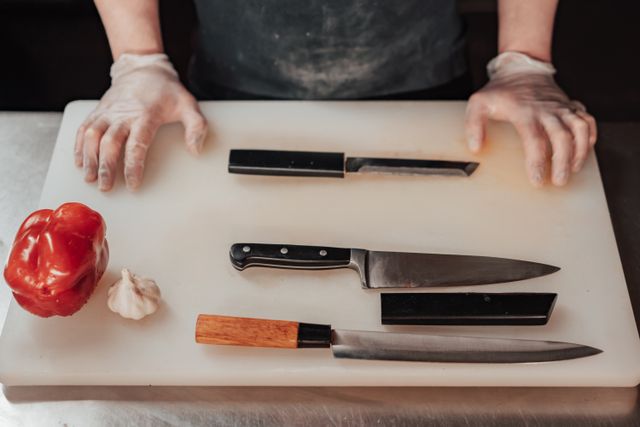
For retailers and ecommerce sellers, there are two very different ways to enter the kitchen knife market: resell an established brand through authorized distribution, or develop a private-label line through an OEM manufacturer. We would choose between them based on speed to market, control, and how much operational work you want to take on.
Reselling Branded Kitchen Knives
Reselling is the faster route because the product, packaging, and customer demand already exist. The main constraint is authorization.
Recognized knife brands often sell through approved distributors or dealer networks. Before listing branded products, we would confirm:
- Whether the supplier is an authorized distributor.
- Whether the brand permits resale on Amazon, eBay, or your own ecommerce store.
- Whether there are territory or marketplace restrictions.
- Whether products purchased outside authorized channels retain the manufacturer’s warranty.
This matters because a low wholesale price does not automatically mean you have permission to market the product using the brand’s trademarks or participate in its warranty program.
Building a Private-Label Kitchen Knife Brand
Private labeling requires more setup, but it gives you control over the product specification, logo, packaging, positioning, and future product range.
A typical sourcing process looks like this:
- Define the knife specification. Set the blade type, steel grade, HRC range, handle material, edge geometry, finish, and target price before requesting quotations.
- Shortlist suitable manufacturers. For China sourcing, Yangjiang is one of the major knife-manufacturing clusters and supports everything from entry-level stamped knives to higher-spec forged and Damascus products.
- Develop and approve samples. Test blade geometry, edge consistency, handle finishing, balance, packaging, and overall workmanship before approving mass production.
- Finalize branding and packaging. Laser-etched logos and customized boxes are standard private-label options, while more substantial product changes move the project closer to OEM development.
- Inspect production before shipment. We would verify the finished order against the approved sample and purchase specifications rather than relying solely on factory QC.
For private-label projects, the working ranges in our current sourcing brief are approximately 300–1,000 units per SKU for MOQ and 30–60 days for production lead time. These are planning ranges rather than universal factory rules; actual terms depend on the knife, materials, customization, and supplier.
What Compliance Should Importers Check?
Compliance should be settled before mass production, particularly when selling into the US or EU.
For kitchen knives and related food-contact components, buyers should confirm the documentation required for their destination market, including relevant FDA requirements for the US and LFGB food-contact requirements for the EU where applicable. We would request supporting documentation from the supplier and make the required standards part of the sourcing specification rather than assuming a factory’s existing certificates automatically cover your exact product.
Which Route Makes More Sense?
| If Your Priority Is… | Better Starting Point |
| Launching quickly with recognized products | Reselling established brands |
| Minimizing product-development work | Reselling |
| Controlling packaging and brand identity | Private label |
| Creating your own knife specifications | Private label / OEM |
| Building a product line competitors cannot list identically | Private label |
| Testing market demand before committing to production | Branded resale first, then private label |
For many sellers, the practical progression is to validate demand first and move into private labeling once they know which knife styles, price points, and customer segments actually convert.
Related Guides:
- Best Kitchen Knife Manufacturers in 2026
- OEM Knife Manufacturers: How to Source Custom Knives from China
- Private Label Knife Manufacturers Guide
Ready to source kitchen knives from China? NicheSources offers free product sourcing with quotes in 2 business days. Request a free quote.
FAQs about Kitchen Knife Brands List
Read the answers to the following most frequently asked questions about kitchen knife brands list to increase your knowledge.
How to Start Your Own Kitchen Knife Brand?
You can start your own kitchen knife brand by contacting private label knife manufacturers. They manufacture knives on your behalf and also put your business logo on your knives.
You just have to find some reliable OEM manufacturers of knives and discuss your demands with them. After agreeing on terms and conditions like price, MOQ, and lead time, you will place the order.
Can You Resell Branded Knives?
Yes. Reselling branded knives is a wonderful idea. Many sellers are selling branded knives because they are easy to sell.
Branded knives already have demand in the market. End users know and trust those brands. So, selling them via your store will be easy.
What Are the Best Kitchen Knives in the World?
The best kitchen knives can vary based on personal preference, but some top contenders include:
ProCook Professional X50 Contour Chef’s Knife – Best overall choice.
Victorinox Fibrox Chef’s Knife – Best value option.
Wüsthof Classic Cook’s Knife – Highly regarded for its balance and durability.
Zwilling Pro 20cm Chef’s Knife – A versatile universal knife.
Global G-2 Cook’s Knife – Known for its sleek design and sharp edge.
These knives have been praised for their quality, comfort, and performance in various cooking tasks.
If you’re planning to launch your own brand, you should check out our list of the Best Kitchen Knife Manufacturers in 2024.
Can You Earn More by Selling Branded Knives?
If you start your own kitchen knife brand and promote it well, you will earn more than general knife sellers.
But your profit margins will be squeezed if you resell items from a famous brand that other sellers are also selling.
What Should You Look For While Sourcing Kitchen Knives?
First of all, you should look for the supplier’s reliability. If a supplier is reliable, you will have smooth business transactions. Otherwise, you will surely face problems regarding product quality, availability, lead times, etc.
You should also confirm the raw materials used to manufacture knives as they determine the life and quality of the knives.
The best is to source knives via a professional product sourcing company like NicheSources. You will not have to worry about anything. Just share your requirements, and the sourcing agent will fulfill them in all respects.
What Brands of Knives Do Professional Chefs Use?
Professional chefs often rely on trusted brands known for their quality and performance. Some popular choices include:
Wüsthof – Renowned for its classic German knives.
Henckels – Offers a wide range of reliable kitchen cutlery.
Shun – Known for high-quality Japanese knives.
MAC – Favored for its sharpness and agility.
Mercer Culinary – Commonly found in culinary schools for its affordability and performance.
These brands are favored by chefs for their durability and effectiveness in the kitchen.
What Knife Does Gordon Ramsay Use?
Gordon Ramsay is known to use Wüsthof knives, particularly the Wüsthof Classic line. He appreciates their balance, sharpness, and overall quality, making them a staple in his kitchens. Ramsay often emphasizes the importance of having a reliable chef’s knife for efficient cooking.
Are German or Japanese kitchen knives better?
German knives are usually better for durability and forgiving everyday use, while Japanese knives are better for thin, precise cutting.
German brands such as Wüsthof and Zwilling commonly use tougher steel around 56–58 HRC, which tolerates heavier chopping and is relatively easy to maintain.
Japanese brands such as Shun, MAC, and Tojiro commonly use harder steel around 60 HRC or above, allowing thinner edges and stronger edge retention.
We would choose based on cutting style and maintenance habits rather than assuming one tradition is universally superior
What is the difference between Wüsthof Classic and Zwilling Pro?
Wüsthof Classic and Zwilling Pro are both premium German-style knife lines made in Solingen, so the choice largely comes down to design and handling preference.
Both sit in a similar mid-to-high price category and emphasize forged construction, durability, and Western blade geometry. Wüsthof’s Classic line uses the company’s PEtec edge, while Zwilling highlights its FRIODUR ice-hardening process.
For most buyers, we would compare the grip, bolster design, balance, and current pricing rather than expecting a dramatic difference in the basic role these two knife lines are designed to perform.
Is Victorinox or Mercer better for beginners?
Victorinox and Mercer are both strong beginner options, with Victorinox favoring lightweight simplicity and Mercer offering several professional-style choices at accessible prices.
Victorinox’s Fibrox Pro is known for its slip-resistant handle and commercial-kitchen practicality. Mercer’s Millennia line targets culinary students and professional kitchens with similarly accessible pricing, while its Genesis range provides a step toward forged construction.
If we were choosing a first knife, we would focus on whichever handle feels more secure and comfortable, because both brands prioritize practical working performance over premium presentation.
Are expensive kitchen knives always better?
Higher-priced kitchen knives are not automatically better for every buyer because much of the additional cost can come from harder steels, elaborate finishes, branding, or handcrafted production.
A Victorinox or Mercer knife can make more sense in a busy commercial kitchen than a delicate premium Japanese blade. At the other end, Miyabi’s powder steels or Bob Kramer’s custom work target buyers who value edge retention, craftsmanship, or collectability.
We recommend matching price to the actual use case instead of assuming that moving into a higher price tier always produces a proportionate improvement.
What does the Sabatier name mean on a kitchen knife?
“Sabatier” does not identify one single knife manufacturer, so buyers need to check the specific company behind the name. The term was never protected as one exclusive trademark, and numerous manufacturers have used Sabatier branding over time.
The brand covered in our list is K Sabatier from Thiers, France, associated with the Sabatier Aîné & Perrier lineage.
This makes Sabatier a good example of why brand-name research matters: two knives carrying similar heritage language can come from completely different manufacturers, production systems, and quality levels.