Every sourcing guide tells you to buy in bulk for better prices. But what if you have a $1,500 budget, want to test 30 units, and don’t have space for hundreds of unsold products?
Importing small quantities from China generally means buying below a supplier’s standard minimum order quantity (MOQ), often fewer than 50–100 units per product or around $2,000 in total order value. You can source these products through low-MOQ suppliers, wholesale marketplaces, or sourcing agents, then ship them by courier, air freight, or consolidated sea freight.
There’s also an important change for US importers: since August 2025, the $800 duty-free de minimis exemption has been suspended, including for shipments from China. As of November 2026, small orders are still viable, but applicable duties and import fees must be included in your calculations.
Quick Facts: Importing Small Quantities from China
| Factor | What to know |
| Typical small order | Under 50–100 units or approximately $2,000 in value |
| Low-MOQ sourcing channels | Alibaba, DHgate, AliExpress, 1688, sourcing agents |
| Shipping under 50 kg | Express courier is often the simplest option |
| Shipping 50–200 kg | Compare courier and air freight quotes |
| Shipping over 2 CBM | Consider LCL sea freight |
| US import duties | No general $800 de minimis exemption; applicable duties and fees apply |
| US customs entry | Informal entry generally below $2,500; exceptions a apply |
| Estimated shipping time | Express: 3–8 days; air: 8–15 days; LCL sea: 35–50 days, depending on route and clearance |
Shipping thresholds and delivery times are planning estimates, not guaranteed rates. Customs information reflects November 2026 rules.
At NicheSources, we help businesses source products in China without committing to large factory orders. Whether you’re testing your first product or comparing low-MOQ suppliers, this guide explains how to choose a sourcing channel, negotiate quantities, manage shipping, and calculate your actual import costs.
You can also explore our product sourcing service if you’d prefer support with supplier selection and order coordination.
Definition of Small Quantity Order in a Business
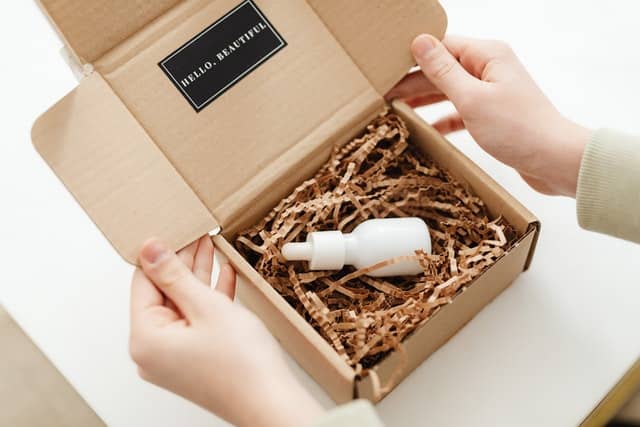
A small quantity order is generally an order that falls below a supplier’s standard minimum order quantity (MOQ). MOQ refers to the minimum number of units a supplier is willing to sell in one order, usually to cover production, materials, and handling costs.
There’s no universal definition of a small order in China. We typically evaluate it based on three factors:
- Supplier MOQ: If a factory requires 100 units but you only need 30, you’re placing a small quantity order. Some suppliers offer ready-stock products with MOQs as low as 1–10 units.
- Shipping volume and weight: Shipments under approximately 50 kg are often suited to express couriers. For larger orders, air freight or consolidated sea freight may offer better value depending on the shipment’s dimensions.
- Total order value: Orders below roughly $2,000 are often considered small in practical sourcing terms. For US imports, shipments valued at $2,500 or less generally qualify for informal customs entry, subject to exceptions.
For example, you might want to import 30 pairs of dog shoes when the factory’s MOQ is 100 pairs. Rather than committing to excess inventory, you could look for a supplier with existing stock or negotiate a smaller trial order at a slightly higher unit price.
Our advice: Don’t focus only on meeting a supplier’s MOQ. A smaller order makes financial sense when the combined product cost, shipping, duties, and handling fees still leave enough margin for your business.
What Does Importing Small Quantities Mean in E-commerce?
E-commerce is the business in which you buy and sell using online methods. There are websites like Alibaba from where you buy things and you sell them via your website or through other platforms like Amazon, eBay, etc.
In these business models, importing in small quantities would refer to a small number of items you buy from any of the e-commerce websites.
Here again, the factors that would define the order as “small” would be the comparison with the general order practices in this industry and the MOQs set by the major wholesale suppliers.
For example, in the below screenshot, you can see that the minimum MOQ is 50 pieces to import dog shoes.
If you want to import those shoes but you don’t want more than 30 items, you would fall under the category of small quantity buyers.
Why Import in Small Quantities?

Importing small quantities from China allows businesses to test products, manage inventory, and reduce financial risk without committing to large wholesale orders.
Here are five common reasons businesses choose this approach:
1. Limited sourcing budget: Small orders let you work with the capital you have. Instead of spending $1,500 on 500 units of one product, you can start with fewer units and reserve part of your budget for shipping, customs duties, and marketing.
2. Starting a new business: If you’re launching an ecommerce store, you may not know which products customers will actually buy. Ordering 20–50 units allows you to validate demand before investing in larger quantities.
3. Testing multiple products: Small orders let you spread your budget across different products. For example, testing three products with 30 units each can help you identify which deserves a larger reorder.
4. Selling seasonal or trending products: Demand for holiday decorations, seasonal accessories, and trend-driven products can decline quickly. Smaller batches reduce the risk of holding inventory that becomes difficult to sell once demand drops.
5. Limited storage space: Large orders require space and may introduce additional warehousing fees. Small shipments can often be stored at home or in a small fulfillment facility until your sales volume justifies larger inventory.
From our perspective, small quantity importing works particularly well for product validation. Once you’ve confirmed demand, you can gradually increase order quantities, negotiate better factory pricing, and lower your shipping cost per unit.
Pros and Cons of Ordering Small Quantities
Importing small quantities from China reduces your initial investment, but it also means higher per-unit costs and fewer customization options. Before placing an order, we recommend weighing these trade-offs against your budget and sales expectations.
Pros of Ordering Small Quantities
- Lower upfront investment: Buying 50 units at $4 each ties up just $200 in inventory, compared to $2,000 for 500 units. This leaves more capital for shipping, marketing, and future orders.
- Lower storage costs: A few cartons can often be stored at home or in a small fulfillment facility, avoiding the expense of renting warehouse space.
- Less dead stock: If a product doesn’t sell, you’re left with fewer unsold units. You can also recover some costs through bundles or clearance sales rather than holding large amounts of dead stock.
- More product testing opportunities: Instead of investing your entire budget in one product, you can test several SKUs and use actual sales data to decide what to reorder.
- Greater flexibility: Small orders make it easier to change suppliers, adjust product specifications, or discontinue underperforming products without major inventory losses.
Cons of Ordering Small Quantities
– Higher unit prices: Suppliers spread production and handling costs across fewer units. For example, a product quoted at $3 for 500 units might cost $3.60 for 50 units. Request pricing at multiple quantities to identify when larger orders become economical.
– Limited product selection: Some factories won’t accept orders below their MOQ, particularly for custom products. Look for ready-stock alternatives, but confirm materials, dimensions, and other specifications before ordering.
– Inconsistent product quality: Small orders may come from different production batches or suppliers. Request samples and maintain a product specification sheet to keep quality requirements consistent.
– Higher shipping costs per unit: Small shipments cannot spread fixed freight charges across many products. With LCL sea freight, origin and destination handling charges can add hundreds of dollars; roughly 150-300 per end is a useful illustration, although actual fees vary significantly by port and service. Compare the complete door-to-door cost with courier shipping before choosing LCL.
– Limited customization: Simple logo printing or engraving may add approximately 0.50-1 per unit for some small orders, excluding setup charges. Custom molds, materials, or packaging often require higher MOQs, so consider labels or branded packaging applied after production.
– Additional supplier verification: If your preferred factory refuses a small order, switching suppliers means checking samples, business credentials, and production capabilities again. Working with an established sourcing agent can reduce this workload.
The Repeat-Order Risk: Can You Get the Same Product Again?
One problem we encourage small importers to consider is whether their supplier can fulfill the same order consistently.
Many low-MOQ suppliers sell ready-stock inventory from existing production batches. When your first 30 or 50 units sell out, the supplier may no longer have that exact model, color, or material available.
This creates problems for businesses that rely on consistent product quality and repeat purchases.
We suggest a three-step approach:
- Document your approved product. Keep a physical sample, detailed specifications, product photos, and supplier model numbers. These give you a reference for comparing future batches.
- Confirm future availability. Ask whether the product is regularly manufactured or simply leftover stock. For promising products, negotiate reserved inventory or a written replenishment arrangement.
- Move proven products to scheduled production. Once sales justify the factory’s MOQ, negotiate a repeat production order with consistent specifications and pre-shipment quality checks.
Our advice: Before committing to a small order, ask your supplier: “If I sell all 50 units, can you supply another 200 with exactly the same specifications?”
Their answer will help you determine whether you’ve found a reliable long-term supplier or merely a source for one-time product testing.
How to Choose Products for Importing Small Quantities?

The best products for small quantity importing are lightweight, compact, easy to restock, and relatively simple to ship. Even with competitive factory pricing, bulky packaging or complicated import requirements can make a small order unprofitable.
We recommend evaluating products against four criteria before contacting suppliers.
1. Choose Products with Consistent Demand
Look for products that customers purchase throughout the year rather than relying entirely on short-lived trends.
Consistent demand also makes reordering easier. Suppliers are more likely to maintain stock of regularly purchased products, reducing the risk of having to find a replacement after your first batch sells out.
2. Limit Product Variations
Every additional size, color, or design can increase your effective MOQ.
For example, selling a T-shirt in five sizes and four colors creates 20 SKUs. With a 100-unit order, that’s only five pieces per variation, assuming your supplier allows mixed quantities.
We suggest starting with a limited selection of popular variations and expanding based on actual sales.
3. Prioritize Lightweight, Compact Products
Shipping costs can quickly eliminate the savings from sourcing in China, especially for small orders.
Compact products with a higher selling price relative to their weight generally offer better economics. Here’s how different product categories compare:
| Better suited to small orders | Products requiring extra caution |
| Phone cases and compact accessories | Furniture and bulky home goods |
| Jewelry and fashion accessories | Pillows and oversized plush toys |
| Small beauty tools | Lithium battery-powered devices |
| Craft supplies and small hardware | Liquids, powders, and cosmetics |
| Socks, caps, and basic apparel | Glassware and fragile ceramics |
These are starting points rather than guarantees. Electronics, beauty tools, and other compact products can still have certification requirements.
4. Check Import Restrictions Before Ordering
Some products require testing, certification, special packaging, or additional customs documentation regardless of order quantity.
For example, children’s toys may require CPSC compliance in the US, while certain electronics require FCC authorization. These requirements can make importing 20 units nearly as complicated as importing 2,000.
Our advice is to verify destination-country requirements before ordering samples, particularly for food, cosmetics, electronics, and children’s products.
How Volumetric Weight Affects Small Orders
One cost many first-time importers overlook is volumetric weight, also called dimensional weight.
Couriers generally calculate shipping charges using whichever is greater: the package’s actual weight or its volumetric weight.
Consider a carton measuring 60 × 40 × 40 cm, with an actual weight of 10 kg.
| Calculation | Express courier | Standard air freight |
| Formula | 60 × 40 × 40 ÷ 5,000 | 60 × 40 × 40 ÷ 6,000 |
| Volumetric weight | 19.2 kg | 16 kg |
| Actual weight | 10 kg | 10 kg |
| Chargeable weight | 19.2 kg | 16 kg |
The divisors are commonly used industry conventions; confirm the applicable divisor with your carrier.
Using an illustrative express shipping rate of 6-10 per chargeable kilogram, your 10 kg carton would cost approximately 115-92 in base freight, excluding duties, surcharges, and other fees.
That’s why we recommend requesting packaging dimensions alongside product weight. Reducing unnecessary packaging can sometimes save more than negotiating a slightly lower unit price.
For further details, see our guide to volumetric weight.
What About Batteries, Liquids, and Powders?
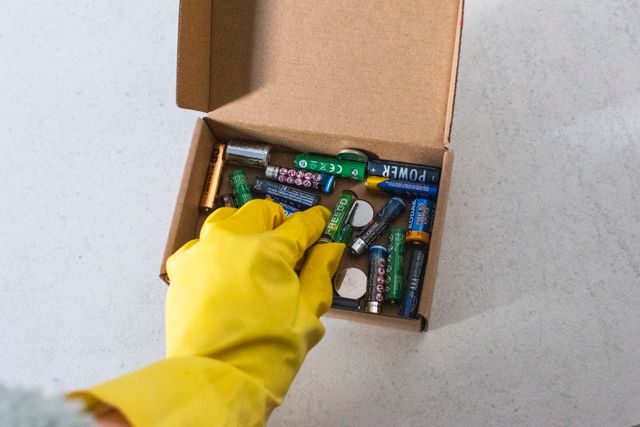
Products containing lithium batteries, certain liquids, or hazardous chemicals may be classified as dangerous goods, requiring specialized handling and documentation.
Before importing these categories, check the following:
- Lithium batteries: Request the UN38.3 test summary and confirm the carrier’s packaging, labeling, and documentation requirements.
- Liquids and chemicals: Ask for a Safety Data Sheet (SDS, formerly MSDS) where applicable, and confirm whether the product is regulated as dangerous goods.
- Battery-powered electronics: Check whether batteries are installed, packed separately, or shipped alone, as transport restrictions differ.
According to IATA’s 2026 battery guidance, lithium battery test summaries must be made available where required, but an SDS is not automatically required for battery transportation.
Our recommendation: For your first small import, prioritize straightforward products without batteries or hazardous materials. You’ll have more shipping options, fewer documentation requirements, and a clearer picture of your landed costs.
How to Find Low MOQ Suppliers in China?
You can find low MOQ suppliers in China through wholesale marketplaces, domestic sourcing platforms, physical markets, and sourcing agents. The right option depends on your order quantity, product requirements, budget, and whether you can handle purchasing and shipping yourself.
We recommend comparing these six sourcing channels before contacting individual suppliers.
| Sourcing channel | Typical MOQ | Price level | Language & payment | Best for |
| Alibaba Ready to Ship | 1–50 units | Moderate | English, Trade Assurance | First wholesale orders |
| DHgate | 1–10 units | Moderate–high | English, platform payments | Small reseller bundles |
| AliExpress | 1 unit | Higher | English, card payments | Samples and product testing |
| 1688 via agent | 2–10 units for some ready-stock items | Lower | Chinese, RMB/Alipay or agent | Domestic wholesale pricing |
| Yiwu markets & trade fairs | Varies; mixed cartons possible | Low–moderate | In-person or agent-assisted | Comparing multiple suppliers |
| Sourcing agent | Depends on underlying suppliers | Supplier price + service fee | English, agent-managed | Multi-supplier purchasing, QC, shipping |
MOQ ranges and price levels are indicative, not platform-wide guarantees. They vary by product, supplier, customization, and order size.
Which Sourcing Channel Should You Choose?
Use these starting points to narrow your options:
- Testing fewer than 20 units? Start with AliExpress or DHgate, particularly for standard products requiring no customization.
- Buying 30–300 units of one product? Compare Alibaba Ready-to-Ship suppliers and negotiate a trial order.
- Working with a limited budget across several products? Consider 1688 through a sourcing agent who can combine purchases into one shipment.
- Need specific materials, branding, or product modifications? Contact factories directly or work with an agent to check whether your order meets customization requirements.
- Want to inspect suppliers in person? Explore Yiwu International Trade City or attend a relevant trade fair.
Your destination also matters. For US, EU, and UK orders, verify import requirements and request shipping quotes before selecting the lowest-priced supplier.
1. Alibaba: Start with Ready-to-Ship Suppliers
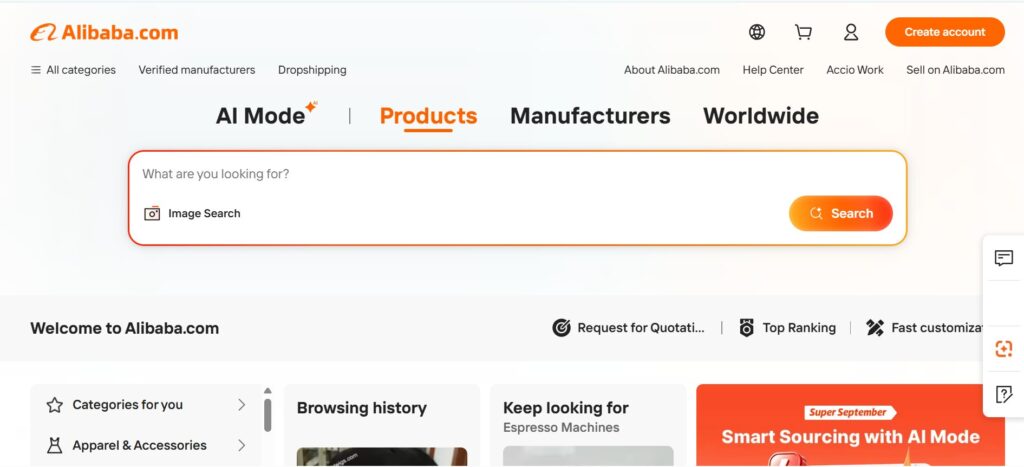
Alibaba is one of the most accessible options for international buyers looking for low MOQ suppliers in China.
Its Ready-to-Ship listings cover products available for direct purchase, generally without lengthy production requirements. Alibaba states that qualifying products can be dispatched within 15 days.
To find suitable suppliers:
- Search for your product on Alibaba.com.
- Apply the Ready to Ship and Trade Assurance filters.
- Narrow results by minimum order quantity.
- Compare at least three suppliers on product specifications, shipping charges, and lead time.
- Confirm your exact order requirements before paying through Alibaba.
One common issue is that the advertised MOQ may apply separately to each color, size, or variation.
For example, a supplier advertising an MOQ of 100 units might require 100 black units and another 100 white units. Always confirm whether you can mix variations within the stated minimum.
We also recommend keeping product specifications and payment arrangements within Alibaba’s Trade Assurance order process, since protection depends on the agreed terms and eligibility.
Related Guide: Buying from Alibaba: A Step-by-Step Guide to Suppliers and Payment Protection
2. 1688: Access China’s Domestic Wholesale Market
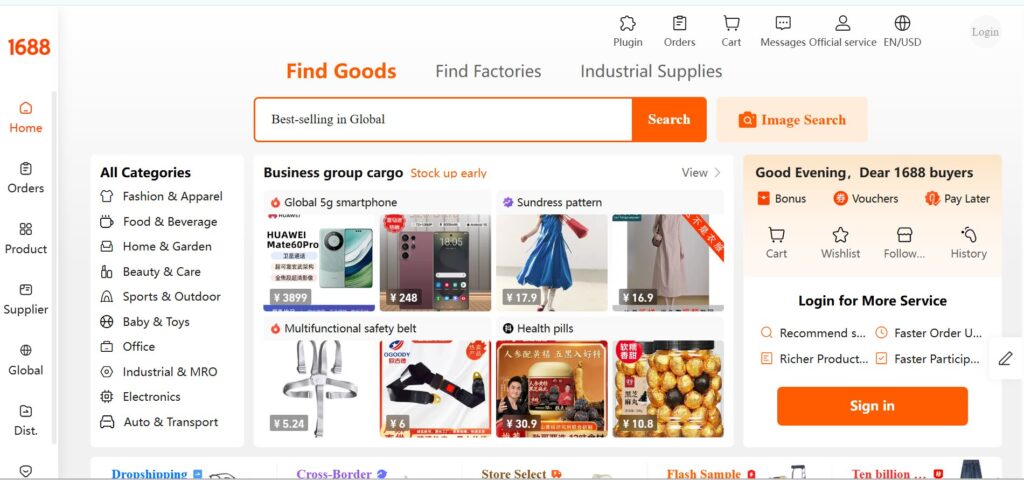
1688 is Alibaba Group’s domestic wholesale marketplace, primarily serving Chinese businesses.
Unlike Alibaba, which focuses on international trade, 1688 connects buyers with domestic manufacturers, wholesalers, and trading companies. Some ready-stock listings accept orders of just 2–10 units.
The main advantage is pricing. Depending on the product and supplier, comparable listings may be 20–40% lower than Alibaba.com prices, although this is an illustrative sourcing range rather than a verified platform-wide average.
However, purchasing internationally presents several challenges:
- Listings and supplier communications are primarily in Chinese.
- Many suppliers expect RMB payments through Alipay or supported domestic payment methods.
- Most sellers primarily arrange delivery within mainland China.
- Buyers must distinguish actual factories from wholesalers and trading companies.
A China sourcing agent can manage these steps by purchasing from 1688 suppliers, receiving goods at a Chinese warehouse, inspecting products, and consolidating shipments for export.
Our advice: Compare the final landed cost rather than the listing price. A 25% product-price saving may disappear once domestic shipping, agent fees, international freight, and customs charges are included.
3. DHgate and AliExpress: Suitable for Very Small Orders
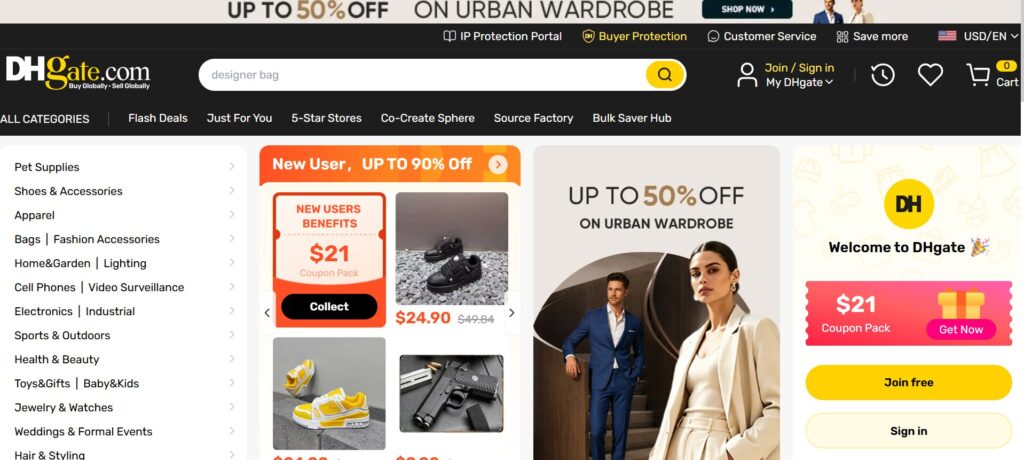
DHgate sits between wholesale marketplaces and consumer-focused retail platforms.
Many sellers offer individual products or small bundles without requiring buyers to negotiate factory MOQs. This makes DHgate practical when you need 5–10 units of an existing product.
AliExpress is generally more suitable for purchasing individual samples or testing products before committing to wholesale inventory.
The trade-off is higher per-unit pricing, especially compared with domestic wholesale channels.
For both platforms, we recommend checking seller history, product reviews, shipping options, and refund conditions. Keep payment and dispute communications within the platform wherever possible.
Related Guide: Why Is DHgate So Cheap? Understanding Its Pricing Model
For more alternatives, explore our comparison of Chinese wholesale websites.
4. Yiwu Markets and Trade Fairs
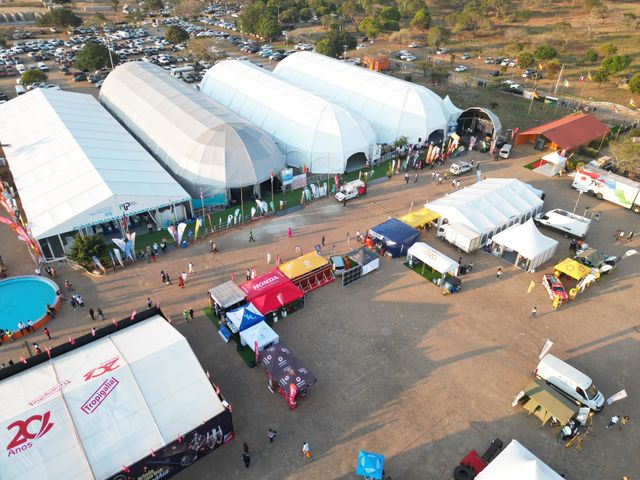
Physical wholesale markets are worth considering when you want to compare several suppliers, inspect samples, or purchase ready-stock products across multiple categories.
Two major options are:
- Yiwu International Trade City: A year-round wholesale market specializing in consumer goods, accessories, household products, and other merchandise. MOQ requirements vary by individual supplier.
- Canton Fair: A major trade exhibition held in Guangzhou during spring and autumn sessions. The autumn 2026 edition ran from October 15 to November 4, covering different product categories across three phases.
The 2026 Yiwu International Commodities Fair also took place from October 21–24. Future fair dates should be confirmed through the official organizers before planning a visit.
You can negotiate face-to-face, examine product samples, and compare suppliers during the same trip. However, not every exhibitor accepts small orders, and travel expenses may outweigh the savings on a limited purchase.
For overseas buyers, working with a Yiwu sourcing agent offers another way to access these suppliers without visiting China personally.
5. Sourcing Agents: When Do Their Fees Make Sense?
A sourcing agent becomes particularly useful when you’re purchasing from multiple Chinese suppliers or need assistance with verification, quality inspection, and international logistics.
For example, NicheSources operates from Yiwu and helps businesses coordinate sourcing, purchasing, inspection, and shipping through one service.
Our stated service fee is typically 5–10% of the order value, depending on the project.
To understand when an agent might be worthwhile, consider this illustrative comparison:
| Cost component | Alibaba direct | 1688 through agent |
| Product cost | $1,000 | $750 |
| Agent fee (8%) | $0 | $60 |
| Total before shipping | $1,000 | $810 |
| Potential saving | — | $190 (19%) |
This example assumes the same product specifications and a 25% lower supplier price on 1688. Actual savings depend on supplier quotes, quality requirements, domestic transport, and other costs.
A sourcing agent may also consolidate purchases from several suppliers, reducing the number of international shipments you need to arrange.
We generally suggest comparing an agent-assisted quote with a direct supplier quote when you have multiple SKUs, limited supplier access, or an order large enough for potential savings to offset the service fee.
Ready to source products from China? NicheSources offers free product sourcing with quotes in 2 business days. Request a free quote.
How Do Suppliers Set Their MOQs?
Chinese suppliers set their minimum order quantities (MOQs) based on production costs, material requirements, and order profitability. Factories generally require higher MOQs for custom manufacturing, while wholesalers selling ready-stock products can accept much smaller orders.
Four factors typically determine a supplier’s MOQ:
- Production setup costs: Factories incur costs for machinery setup, labor, and production scheduling regardless of batch size. Producing 500 units spreads these fixed costs more efficiently than producing 50.
- Raw material requirements: Material suppliers have their own MOQs. For example, a clothing manufacturer may need to purchase an entire roll of fabric even if your order uses only a fraction.
- Order handling costs: Processing, packaging, and managing 20 separate small orders usually requires more administrative work than fulfilling one large order.
- Customization requirements: Products with custom colors, logos, molds, or materials often require dedicated production runs, increasing the minimum quantity.
Typical MOQs by Product Category
| Product category | Typical MOQ | What affects it |
| Apparel and clothing | 100–500 units | Fabric, sizing, colors, customization |
| Small electronics | 100–200 units | Components, assembly, testing |
| Promotional products | Around 500 units | Printing methods, logo setup |
| Ready-stock consumer goods | 2–50 units | Available inventory, supplier type |
| Custom-manufactured products | 500+ units in many categories | Tooling, materials, production complexity |
These are indicative sourcing ranges, not fixed industry standards. Actual MOQs vary considerably by product, factory, and order specifications.
From our perspective, the easiest way to lower an MOQ is to reduce the supplier’s production requirements.
Choosing an existing design, standard material, or available color allows the supplier to fulfill your order from ready stock or an existing production batch.
If you’re only testing demand, we recommend asking for the supplier’s minimum quantity for an uncustomized product before negotiating a new production run.
How to Negotiate with Suppliers to Lower MOQs?

You can negotiate a lower MOQ with Chinese suppliers by making a smaller order financially worthwhile for them. This usually means accepting standard products, offering flexible production terms, or demonstrating realistic potential for repeat business.
From our sourcing perspective, trial orders can work, especially when suppliers have ready stock or spare production capacity. However, promising future orders alone rarely guarantees a lower MOQ.
Here are eight practical ways to negotiate:
1. Accept a slightly higher unit price. A supplier may agree to 50 units instead of 200 if you accept a 10–20% price premium. This can still be more economical than investing in excess inventory that might never sell.
2. Choose existing products. Request standard colors, materials, and designs instead of custom manufacturing. Removing customization allows suppliers to fulfill smaller orders from available inventory.
3. Offer flexible lead times. If your delivery schedule allows it, ask whether the factory can produce your order between larger production runs. This reduces scheduling pressure and may make a smaller batch acceptable.
4. Use available materials. Ask which fabrics, components, or packaging materials the factory already has in stock. Using existing materials avoids triggering additional supplier MOQs.
5. Simplify packaging and branding. Standard packaging eliminates the minimum quantities associated with custom-printed boxes, labels, and inserts. You can introduce branded packaging once your sales justify larger orders.
6. Join an existing production run. If a factory is already manufacturing your desired product for another customer, ask whether it can add your 30–50 units to the same batch. This works best when you’re willing to accept identical specifications and the existing production schedule.
7. Combine multiple SKUs into one order. Instead of requesting 100 units of one product, ask whether the supplier will accept five products at 20 units each. Some wholesalers negotiate based on total order value, although factories may still enforce separate production MOQs for individual SKUs.
8. Propose a trial order with a written reorder plan. Explain your initial quantity and potential follow-up order. For example: “We’d like to test 50 units initially. If sales meet our targets, we plan to reorder 200 units within 60 days.” This demonstrates commercial intent without promising purchases you cannot guarantee.
What If the Supplier Still Refuses?
Ask whether they have ready stock, canceled-order inventory, or a similar standard product available in smaller quantities.
If the MOQ remains too high, compare alternatives through wholesale marketplaces or a sourcing agent.
Our advice: When negotiating, focus on reducing the supplier’s additional costs rather than repeatedly asking for a lower MOQ. A small order that fits an existing production process is much easier for a supplier to accept.
How to Ship Small Quantity from China?
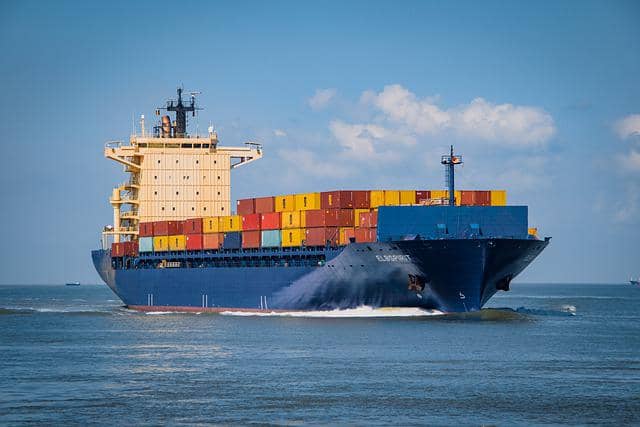
The most practical ways to ship small quantities from China are express courier, air freight, and LCL sea freight. Your best option depends on the shipment’s chargeable weight, volume (CBM), destination, and delivery deadline.
For smaller orders, we generally recommend starting with courier quotes before comparing air or sea freight. The lowest freight rate doesn’t always translate into the lowest delivered cost.
Which Shipping Method Should You Choose?
| Shipment size | Suggested method | Estimated delivery time | Cost considerations |
| Under 50 kg, small parcels | Express courier (DHL, FedEx, UPS) | 3–8 days | Convenient door-to-door service; higher per-kg rates |
| 50–200 kg | Compare courier and air freight | 5–15 days | Air freight may save money, but airport handling and delivery fees apply |
| 200–500 kg | Air freight | 8–15 days | Often more economical per kg than courier; compare with LCL for bulky cargo |
| Over 2 CBM | Consider LCL sea freight | 35–50 days | Lower freight cost per CBM, but fixed port and handling charges apply |
These are approximate planning ranges for standard cargo, not guaranteed transit times. Add supplier production lead time, and confirm the route, customs clearance, and delivery terms with your forwarder.
Remember that both weight and volume matter. A lightweight but bulky shipment may be expensive by air because carriers calculate chargeable weight using package dimensions.
You can find more details in our guide to shipping from China.
Why LCL Isn’t Always Cheaper for Small Orders
LCL (Less than Container Load) allows you to share container space with other importers instead of paying for an entire container.
However, LCL freight is generally charged using the greater of shipment volume in CBM or weight in metric tons, known as the weight/measurement (W/M) rule. Many forwarders apply a minimum charge of 1 CBM or 1 revenue ton, sometimes higher.
You also need to account for:
- Origin warehouse and port handling charges
- Export documentation and customs processing
- Destination terminal and handling fees
- Customs clearance and final delivery
For planning purposes, handling and documentation fees can run into hundreds of dollars, with 150-300 per end being a possible illustrative allowance on some routes. Actual charges can be considerably higher.
For example: If you’re shipping only 0.5 CBM, you might still pay the minimum 1 CBM freight charge plus fixed fees at both ports. That’s why we recommend comparing complete door-to-door air and LCL quotes before selecting sea freight for shipments below approximately 2 CBM.
Related Guide: FCL vs LCL Shipping: Which Is More Economical for Your Order?
How Consolidated Shipping Reduces Costs
If you’re ordering products from several Chinese suppliers, consolidating shipments can reduce international shipping costs.
Instead of paying to ship three separate parcels internationally, you can have each supplier deliver their goods to a consolidation warehouse in China.
The process typically works as follows:
- Receive products: Suppliers deliver their orders to one warehouse.
- Inspect and combine: The warehouse checks quantities, inspects products if requested, and repacks them into fewer cartons.
- Arrange international shipping: The combined shipment is dispatched by courier, air freight, or LCL sea freight.
Some consolidation warehouses offer approximately 7–30 days of complimentary storage, although this varies by provider. You should confirm storage limits, handling fees, and any charges for additional days.
The main trade-off is timing. If one supplier takes 10 days longer than the others, your consolidated shipment may need to wait. We recommend coordinating supplier dispatch dates and setting a cutoff for warehouse consolidation.
For businesses purchasing from 1688 or multiple factories, our order fulfillment service can help coordinate receiving, inspection, consolidation, and international dispatch.
Should You Request DDP Shipping?
For first-time importers, we recommend comparing quotes that include DDP (Delivered Duty Paid) shipping.
Under DDP terms, the seller is responsible for arranging import clearance and paying applicable duties and taxes, making the total delivery cost easier to estimate. Confirm that the provider can legally fulfill these responsibilities in your destination country.
Always request an itemized quote showing transportation, customs clearance, duties, and final delivery. You can learn more in our guides to DDP shipping and shipping Incoterms.
Finally, if your products contain lithium batteries, liquids, or other potentially dangerous goods, confirm carrier acceptance before booking. Additional testing, documentation, and packaging requirements may apply under IATA’s 2026 regulations.
For those products, refer to the battery and restricted-product checklist in our earlier product selection section.
Customs, Duties & the End of De Minimis (2026)
As of November 2026, importing small quantities from China into the US no longer qualifies for the old $800 duty-free de minimis exemption. Even a $50 commercial shipment must now be assessed under applicable customs rules, duties, taxes, and fees.
According to US Customs and Border Protection (CBP), the US suspended de minimis treatment for shipments from all countries on August 29, 2025. The change means small importers can no longer assume low-value parcels will enter duty-free. Statutory exceptions and product-specific exemptions may still apply.
Informal vs. Formal Customs Entry
As of November 2026, the US generally uses a $2,500 value threshold to distinguish informal and formal customs entries.
| Requirement | Informal entry | Formal entry |
| Shipment value | Generally $2,500 or less | Generally over $2,500 |
| Paperwork | Simplified customs entry | Full customs declaration |
| Customs bond | Usually not required | Generally required |
| Import duties | Applicable duties and fees | Applicable duties and fees |
| Who handles it | Courier, importer, or broker | Usually customs broker or importer |
Certain products require formal entry regardless of value, including some goods subject to additional regulatory requirements or trade remedies. An informal entry may also require a bond in specific circumstances.
For example, if you’re importing $1,500 worth of ordinary household accessories, you may qualify for informal entry. However, that doesn’t eliminate applicable tariffs or courier clearance charges.
How Much Import Duty Will You Pay?
US import duties depend on your product’s Harmonized Tariff Schedule (HTS) classification, country of origin, and applicable trade measures.
For many China-origin products, the calculation can include:
- Base import duty: The standard tariff rate assigned to your product’s HTS classification.
- Section 301 tariffs: Additional duties commonly ranging from 7.5% to 25% on affected categories, with higher rates for certain products.
- Other applicable tariffs: Additional trade measures may apply depending on the product and import date.
- Customs processing fees: Merchandise Processing Fees (MPF), brokerage charges, and other applicable entry costs.
These charges can stack, although exclusions and special tariff rules may change the calculation.
To check your product:
- Visit the official USITC Harmonized Tariff Schedule.
- Search for your product and identify its applicable 10-digit HTS code.
- Check the base duty rate and applicable Chapter 99 provisions.
- Verify Section 301 duties and any exclusions using the USTR Section 301 tariff search.
- Ask your customs broker to confirm the total applicable rate before placing your order.
The USITC published its 2026 HTS Revision 23 on November 10, 2026, so older tariff tables may no longer reflect the current rules.
What Documents Do You Need?

Most small commercial shipments require basic customs documentation, even when a courier handles clearance.
| Document | Who typically prepares it | Purpose |
| Commercial invoice | Supplier | Declares product description, quantity, value, and origin |
| Packing list | Supplier | Details carton contents, weights, and dimensions |
| Air waybill or bill of lading | Carrier or forwarder | Documents international transportation |
| Customs entry | Courier, broker, or importer | Declares goods to customs |
| Customs bond | Importer through a broker or surety | Secures obligations when required |
| Product compliance documents | Manufacturer, testing laboratory, and/or importer | Demonstrates applicable regulatory compliance |
We recommend checking that the commercial invoice includes accurate product descriptions, values, and country-of-origin information. Vague descriptions such as “accessories” can create classification problems.
Country-of-Origin Marking and Product Compliance
As of November 2026, most China-origin products imported into the US must display appropriate country-of-origin markings, such as “Made in China.”
CBP generally requires markings to be legible, conspicuous, and sufficiently permanent to reach the ultimate purchaser, with specific exceptions allowing container marking or other treatment.
Certain products also require regulatory compliance regardless of how few units you import:
- FDA: Applicable requirements for food, cosmetics, medical devices, and other FDA-regulated products.
- FCC: Equipment authorization and related requirements for covered electronic and radio-frequency devices.
- CPSC: Testing and certification for regulated consumer products, including applicable children’s products.
For example, importing just 20 regulated children’s toys does not remove applicable CPSC testing and certification obligations. As of November 2026, CPSC electronic certificate filing requirements also apply to covered imported products.
What About EU and UK Imports?
As of November 2026, commercial importers in the EU and UK generally need the appropriate EORI registration, while import VAT and applicable customs duties must be considered based on local rules. The EU and UK operate separate customs systems, so confirm the destination’s specific requirements before shipping.
Our advice: Before approving a small order, request the product’s HTS classification, check whether additional tariffs apply, and obtain a shipping quote that clearly identifies who pays customs duties and clearance fees.
What Does a Small Order Really Cost?
The actual cost of importing small quantities from China goes beyond the supplier’s quoted unit price. You also need to account for international shipping, customs duties, handling fees, and any products that arrive damaged or unsellable.
We recommend calculating your landed cost per sellable unit before placing an order.
Landed cost per unit = (Product cost + Shipping + Customs duties + Import fees + Other expenses) ÷ Sellable units
Let’s compare two hypothetical orders to see how shipment size affects your costs.
Example 1: Importing 20 Units by Courier
Suppose you’re testing a product that costs $4 per unit and shipping 20 units to the US by express courier.
| Expense | Cost |
| Product cost (20 × $4) | $80 |
| Express courier shipping (8 kg × $8) | $64 |
| Customs duties and import fees | $45 |
| Payment and platform fees | $15 |
| Total landed cost | $204 |
| Landed cost per unit | $10.20 |
Although the supplier charges just $4 per product, your actual cost reaches $10.20 per unit, assuming all 20 units arrive sellable.
That’s 155% higher than the original product price.
This is why we encourage first-time importers to treat small orders primarily as product validation opportunities. The higher per-unit cost may be acceptable for testing demand, but it could make long-term resale difficult.
Example 2: Importing 200 Units with Consolidated LCL Shipping
Now suppose you’re purchasing 200 units from two suppliers and combining their orders into one LCL sea freight shipment.
| Expense | Cost |
| Product cost (200 × $3.50) | $700 |
| Consolidation, LCL freight, and final delivery | $260 |
| Customs duties and import fees | $140 |
| Total landed cost | $1,100 |
| Landed cost per unit | $5.50 |
In this example, increasing the order quantity and consolidating shipping reduces the landed cost to $5.50 per unit, compared with $10.20 in the smaller courier example.
That’s approximately 46% lower per unit.
However, these examples use different supplier prices and freight arrangements, so the difference cannot be attributed to order quantity alone.
Both examples are illustrative, not live shipping quotes. Actual freight charges, customs duties, and fees depend on product classification, origin, shipment dimensions, destination, and applicable tariffs. The LCL example assumes a consolidated shipping arrangement priced at $260, which may not be available on every route.
How Much Should You Mark Up Imported Products?
As a starting point, we suggest evaluating products that can retail for approximately 3–4 times their landed cost.
For example:
| Landed cost per unit | Retail price at 3× | Retail price at 4× |
| $5 | $15 | $20 |
| $10 | $30 | $40 |
| $15 | $45 | $60 |
| $20 | $60 | $80 |
This is only a rule of thumb. Your required margin depends on the product category, advertising costs, marketplace commissions, returns, fulfillment expenses, and customer acquisition strategy.
A product with a $10 landed cost and a $30 selling price generates $20 in gross profit before these additional selling expenses.
Our advice: When importing small quantities, focus on two cost-saving opportunities: combining purchases into fewer shipments and increasing order quantities once demand is validated. Both can help distribute fixed import costs across more units without committing to unnecessary inventory.
How to Avoid Scams while Importing Small Quantities

Even a small order from China carries risks, including misleading product listings, inconsistent quality, and suppliers who disappear after receiving payment.
We recommend taking a few precautions before paying any supplier, regardless of how small your order is.
1. Use Secure Payment Methods
When ordering through Alibaba, prioritize suppliers offering Trade Assurance and complete payments through Alibaba’s designated payment channels.
Trade Assurance provides order protection based on agreed purchase terms and eligibility requirements. If a supplier fails to meet those terms, you may be able to request a refund or open a dispute.
However, protection isn’t automatic. Make sure your order clearly documents the product specifications, quantity, quality requirements, and shipping deadline.
Avoid suppliers who insist on moving payments outside the platform.
2. Verify the Supplier’s Business Credentials
Before placing an order, request the supplier’s Chinese business license and confirm its registered company name.
You can also check the company’s registration details through China’s National Enterprise Credit Information Publicity System.
Look for consistency between the registered business, supplier profile, invoice, and payment account. If you’re purchasing factory-direct, ask for a video walkthrough or evidence that the supplier operates the manufacturing facility.
Remember that a verified business registration doesn’t guarantee product quality or reliable delivery.
3. Order Samples Before Committing
A sample allows you to examine materials, construction, packaging, and functionality before purchasing a larger quantity.
For example, spending 30-50 on a sample and shipping could help you avoid committing several hundred dollars to a product that doesn’t meet your requirements.
We suggest keeping an approved sample as a reference and asking the supplier to match it during future production or fulfillment.
4. Never Pay into Personal Bank Accounts
Be cautious if a supplier asks you to transfer business payments to an individual’s bank account, particularly when the account name differs from the registered company.
For direct factory purchases, use a verified company bank account and confirm any changes to payment instructions through a previously established contact channel.
Also avoid sending large advance payments before verifying the supplier and agreeing on inspection and delivery terms.
Alibaba also advises buyers to keep conversations within its Message Center, since order records and documented terms can be important evidence during disputes.
From our experience in Yiwu: Supplier verification is one of the biggest concerns businesses face before sourcing from China. Our on-ground team helps with supplier background checks, factory verification, and quality inspections so you can make more informed purchasing decisions. Discuss your project with NicheSources.
FAQs about Importing Small Quantities from China
Does Buying Small Quantities Cause Quality Inconsistency?
In some cases, yes. Buying small quantities can cause quality inconsistency. As discussed earlier, a complete batch of production is most likely to be sold in high MOQs. If you order in low quantities, you may get different quality in different orders as the products may come from a variety of production batches having different specifications.
Do You Need a License to Import Small Quantities from China?
No. Whether you buy in bulk quantities or small, you don’t need to have a license to import them from China.
Depending upon the type of the products, you may have to obtain a certification or import permit set by the country of destination. But in most cases, that would be irrespective of the product quantity.
Can I Buy Just 1 Item from
Alibaba?
Yes, some Alibaba suppliers allow you to purchase a single item, particularly through sample orders or ready-stock listings.
However, the unit price may be higher than the
advertised bulk price, and international shipping can cost more than the product itself. If you’re testing a single product, we suggest comparing Alibaba with AliExpress or DHgate, where single-unit purchases are more common.
Do You Have to Buy in Bulk
from Alibaba?
No, Alibaba does not require every buyer to purchase in bulk. Minimum order quantities are established by individual suppliers, and some accept smaller trial orders.
Look for suppliers offering ready-stock products
or contact them directly to negotiate quantities.
If a listing requires 200 units, ask whether the
supplier can provide 20–50 units from existing inventory. You may need to accept a higher unit price.
Why Do Chinese Suppliers
Set Minimum Order Quantities?
Chinese suppliers set MOQs to cover production setup, raw materials, labor, and order handling costs.
For example, a clothing manufacturer may need to
purchase an entire fabric roll even if you only need 30 shirts.
Factories are generally more flexible when you
purchase products already in stock or join an existing production run. Custom materials and designs usually require larger orders because they introduce additional setup costs.
How Long Does It Take to
Import from China?
Small orders shipped from China typically take 3–8 days by express courier, 8–15 days by air freight, or approximately 35–50 days by LCL sea freight.
These are approximate shipping estimates, excluding production lead time.
Ready-stock products may dispatch within days,
while made-to-order products can require several additional weeks.
We recommend confirming the supplier’s dispatch
date separately from the forwarder’s delivery estimate.
Is Importing Small Quantities from China Still Profitable in 2026?
Yes, importing small quantities from China can still be profitable, provided your selling price covers the complete landed cost and operating expenses.
As a starting rule of thumb, we suggest evaluating products that can retail for approximately 3–4 times their landed cost. This ratio varies by category and business model.
For example, a product costing $6 landed and
selling for $24 leaves $18 before advertising, fulfillment, platform commissions, returns, and other expenses.
Small orders work especially well for validating
demand. Once sales become predictable, larger orders and consolidated shipping may help improve margins.