Finding wholesale suppliers is easy enough. Finding one that fits your budget, offers reasonable minimum order quantities (MOQs), and delivers products you can confidently resell is where things get complicated. A supplier that works well for an established retailer might be completely unsuitable for a small Shopify store testing its first products.
A wholesale supplier sells products in bulk to businesses for resale, typically at prices below retail. However, today’s wholesale sourcing options go beyond traditional distributors. You can buy through B2B marketplaces, supplier directories, direct wholesalers, dropshipping platforms, or sourcing agents, each with different costs, requirements, and levels of buyer protection.
We’ve put together 25 wholesale suppliers and sourcing platforms for 2026, comparing their pricing, minimum orders, buyer protection, and independent reputation to help you narrow down the right options for your business.
Quick Facts (November 2026)
- 25 suppliers and platforms across different sourcing models and regions.
- Supplier costs and MOQs: Compare membership fees, order minimums, and purchasing requirements.
- Trust and reliability: Independent review scores, buyer protections, and potential drawbacks.
- Best for: Small businesses, online resellers, established retailers, and private-label brands.
The 30-Second Answer: Best Wholesale Suppliers
If you’re short on time, we’d start by matching your business model to the right type of supplier. For example, Faire is worth considering for boutique inventory, while Alibaba offers a wider selection for bulk purchasing and private-label manufacturing.
Here’s a quick comparison of leading wholesale suppliers and platforms for 2026.
| Supplier | Type | Best For | Minimum Order (MOQ) | Buyer Cost | Buyer Protection |
| Alibaba | B2B marketplace | Bulk sourcing and private label | Supplier-set | Free to browse | Trade Assurance on eligible orders |
| 1688 | China wholesale marketplace | Domestic China factory pricing | Supplier-set | Free to browse; agent costs extra | Limited for overseas buyers |
| DHgate | B2B/B2C marketplace | Small-batch product testing | Single units available | Free to browse | Platform dispute process |
| Made-in-China | B2B marketplace | Machinery and industrial products | Supplier-set | Free to browse | Secured Trading Service on eligible orders |
| Global Sources | B2B marketplace | Asian manufacturers and trade-show sourcing | Supplier-set | Free buyer access | Supplier verification programs |
| Faire | Curated marketplace | Independent boutiques and retailers | Brand-set | Free retailer access | Eligible first-order returns and payment terms |
| DollarDays | Direct wholesaler | US bulk general merchandise | Case quantities | No membership fee | Supplier return policy |
| Kole Imports | Direct wholesaler | Discount stores and closeout inventory | Case quantities | No membership fee | Supplier return policy |
| SaleHoo | Wholesale directory | Finding pre-screened suppliers | Varies by listed supplier | Paid membership | Membership refund policy; supplier deals separate |
| Wholesale Central | Wholesale directory | Finding US wholesalers for free | Varies by listed supplier | Free | No transaction protection |
Note: MOQs, payment terms, and buyer protections can vary by supplier, product, and order eligibility. Confirm current conditions before placing an order.
Which Wholesale Supplier Should You Choose?
Here’s how we’d narrow down your options based on what you’re selling and how you plan to operate:
- Running a boutique or independent retail store? Start with Faire for established brands, flexible ordering minimums, and potential payment terms.
- Looking for factory-direct pricing from China? Compare Alibaba and 1688. Alibaba is generally more accessible internationally, while 1688 may require a sourcing agent to handle purchasing, quality checks, and shipping.
- Testing products without a large inventory commitment? Consider DHgate, where many sellers allow single-unit or small-batch orders. Check seller reputation and product authenticity carefully.
- Stocking a discount store or general merchandise business? Look into DollarDays or Kole Imports for case-level purchasing and US-based inventory.
- Want a shortlist of wholesale suppliers? Use Wholesale Central for free discovery or SaleHoo if you prefer a paid, screened supplier directory.
- Need help with supplier selection, negotiation, and quality inspection? A China sourcing agent may be worth considering, particularly for private-label products or larger orders.
For more specialized options, see our guide to wholesale suppliers for small businesses.
We’ll compare the remaining suppliers by category below, including their costs, limitations, and independent reputation.
Types of Wholesale Suppliers
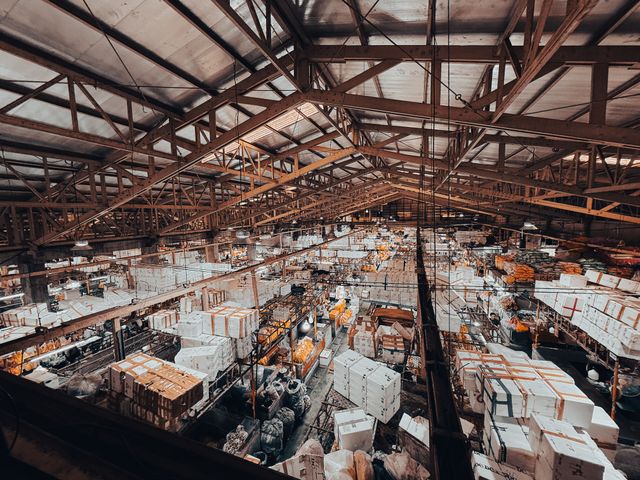
Not all wholesale suppliers operate the same way. Some sell directly from their own warehouses, while others connect you with manufacturers or handle sourcing and fulfillment on your behalf.
We recommend understanding these differences before comparing suppliers. The sourcing model affects your minimum order quantity (MOQ), product pricing, buyer protection, and how much work you’ll need to manage yourself.
| Supplier Type | How It Works | Best For | Examples |
| B2B Marketplace | Connects buyers with multiple suppliers, often providing payment and dispute protection | Bulk purchasing, private label, and product testing | Alibaba, DHgate, Faire |
| Wholesale Directory | Lists suppliers you contact and negotiate with independently | Finding suppliers across different niches | SaleHoo, Wholesale Central |
| Direct Wholesaler | Sells inventory directly from its own warehouse or distribution network | Retailers buying ready-made stock in bulk | DollarDays, Kole Imports |
| Dropshipping Platform | Connects your store with suppliers that ship individual customer orders | Ecommerce sellers avoiding upfront inventory purchases | Spocket, Doba |
| Sourcing Agent | Finds manufacturers, negotiates pricing, coordinates inspections, and arranges shipping | Private-label brands and businesses sourcing from China | NicheSources |
What Should You Consider Before Choosing?
Each model comes with different responsibilities and trade-offs.
- Marketplaces offer broad supplier access and may provide transaction protection, but product quality and MOQs vary between sellers.
- Directories simplify supplier discovery, although you’ll typically handle verification, payments, and disputes independently.
- Direct wholesalers can make domestic restocking more convenient, but case-pack requirements and available inventory may limit flexibility.
- Dropshipping platforms reduce upfront inventory investment, though higher per-unit costs and subscription fees can affect margins.
- Sourcing agents handle much of the supplier coordination and quality control, but their service fees need to make financial sense for your order size.
For example, if you’re testing five products with a limited budget, a dropshipping platform or small-order marketplace may be the practical starting point. If you’re developing a private-label product with custom packaging, working directly with a manufacturer or through a sourcing agent gives you more control over production specifications.
Ultimately, we’d compare the total landed cost, supplier reliability, and operational workload before committing to any sourcing model.
Related Guide: Wholesale vs. Retail: Key Differences Explained
Best Wholesale Suppliers by Category
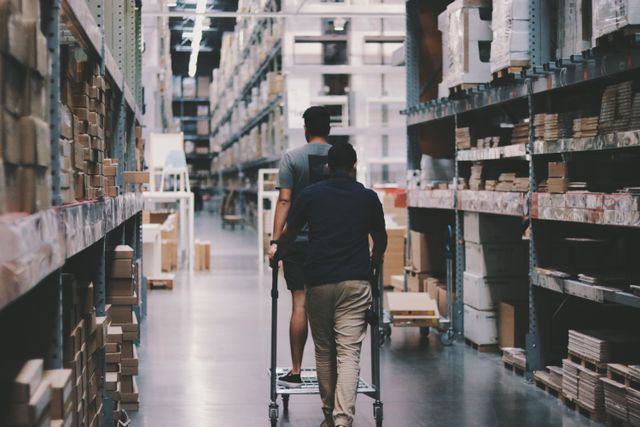
The right wholesale supplier depends on what you’re selling, your order volume, and whether you need ready-made inventory or custom manufacturing.
To make the comparison easier, we’ve shortlisted our top picks for different business needs.
| Category | Our Top Pick | Why We Chose It |
| Best for China sourcing | Alibaba | Extensive manufacturer selection with Trade Assurance on eligible orders |
| Best for factory-direct pricing | 1688 | Access to China’s domestic wholesale market, often with lower listed prices |
| Best for boutiques | Faire | Curated brands, relatively low order minimums, and payment terms for eligible retailers |
| Best for small-batch testing | DHgate | Many sellers accept single-unit or low-quantity orders |
| Best for US general merchandise | DollarDays / Kole Imports | Case-level purchasing without mandatory membership fees |
| Best free supplier directory | Wholesale Central | Free access to US wholesale supplier listings |
| Best paid supplier directory | SaleHoo | Screened supplier database with membership-based access |
| Best for Amazon and eBay supplier research | Worldwide Brands | Directory of certified wholesalers and dropshipping suppliers |
| Best for dropshipping | Spocket | US/EU supplier network with ecommerce integrations |
| Best for Japanese products | Super Delivery | Access to Japanese wholesale brands and international ordering |
| Best for sourcing from India | IndiaMART | Large supplier network across Indian manufacturing categories |
| Best for wholesale clothing | FashionGo | Access to Los Angeles apparel vendors and boutique inventory |
| Best for managed China sourcing | NicheSources | Supplier sourcing, negotiation, quality inspection, and shipping coordination |
Our recommendation: If you’re just starting out, prioritize suppliers with manageable MOQs and limited upfront commitments. For established businesses, compare factory pricing, landed costs, product consistency, and restocking reliability before choosing.
We’ll break down each supplier below, including its pricing model, advantages, limitations, and available trust signals.
Best Global B2B Marketplaces
Global B2B marketplaces connect businesses with manufacturers, wholesalers, and trading companies, primarily across China and other Asian manufacturing hubs.
They’re useful for bulk purchasing, private-label manufacturing, and comparing factory quotations. However, supplier reliability, minimum order quantities (MOQs), and buyer protection vary considerably between platforms.
If you’re sourcing from China, we also recommend exploring our guides to Chinese wholesale websites and how to buy wholesale from China.
1. Alibaba
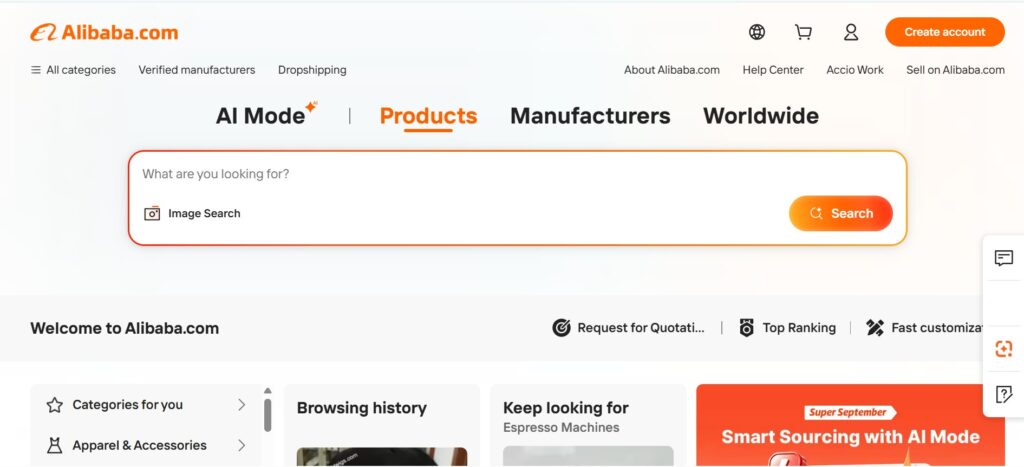
Alibaba is one of the largest global B2B marketplaces, connecting international buyers with Chinese and overseas manufacturers, wholesalers, and trading companies.
Best for: Businesses sourcing bulk inventory, private-label products, and custom manufacturing.
- MOQ: Supplier-set, from single units to hundreds for custom orders.
- Buyer cost: Free to browse; transaction fees may apply.
- Buyer protection: Trade Assurance covers eligible orders and provides dispute resolution.
- Manufacturing: OEM/ODM production, private labeling, and custom packaging are widely available.
Watch out:
- Verified Supplier badges don’t guarantee consistent product quality.
- Trading companies may advertise themselves as manufacturers, so verify production capabilities before ordering.
Trust: Trustpilot: 3.5/5 from 30,260 reviews (November 2026).
Related Guide: How to Find the Right Alibaba Suppliers
2. 1688
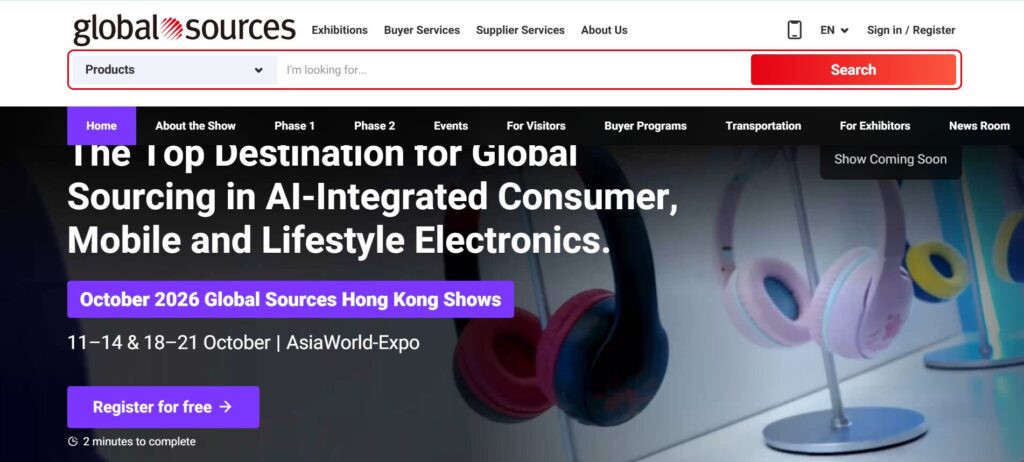
1688 is Alibaba Group’s domestic Chinese wholesale marketplace, primarily serving local manufacturers, distributors, and retailers.
We’d consider it when sourcing costs are a priority, particularly if you’re comfortable working with a Chinese purchasing agent.
Best for: Importers seeking factory-direct pricing and domestic Chinese wholesale inventory.
- MOQ: Supplier-set; bulk quantities are common.
- Buyer cost: Free marketplace access; agent and payment fees may apply.
- Pricing: Domestic-market prices can be lower than export-oriented Alibaba listings.
- Payments: WorldFirst supports eligible cross-border payments.
Watch out:
- The platform and most supplier communications are in Chinese.
- International buyers may need a sourcing agent for inspections, consolidation, and export logistics.
- Alibaba.com’s Trade Assurance doesn’t cover 1688 purchases.
Trust: No meaningful platform-wide independent review profile. A Trustpilot subdomain listing has only 2 reviews, insufficient for assessment (November 2026).
Related Guide: Types of Suppliers in China
3. DHgate
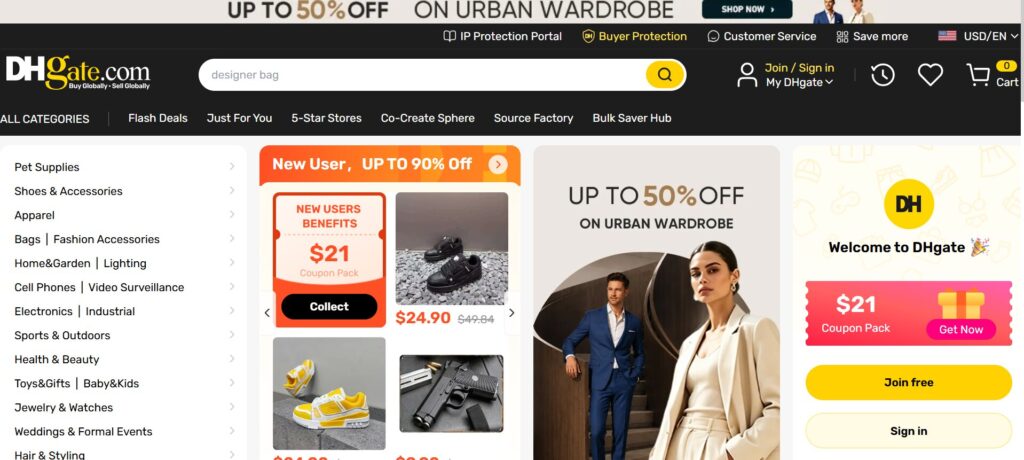
DHgate is a Chinese cross-border marketplace combining retail-style purchases with small-batch wholesale ordering.
Its low minimum orders make it accessible to sellers evaluating product demand before investing in bulk inventory.
Best for: Small businesses testing products in limited quantities.
- MOQ: Many listings support single-unit purchases.
- Buyer cost: Free marketplace access; shipping and product costs vary.
- Product range: Consumer electronics, accessories, apparel, and general merchandise.
- Buyer protection: Platform dispute and refund procedures.
Watch out:
- Customer reviews frequently mention refund difficulties and inconsistent product quality.
- Counterfeit and unauthorized branded products present significant resale risks.
- Supplier reliability can vary between orders.
Trust: Trustpilot: 1.6/5 from 34,581 reviews (November 2026).
Given its reputation, we’d limit DHgate to carefully vetted test purchases rather than depending on it for ongoing inventory.
4. Made-in-China
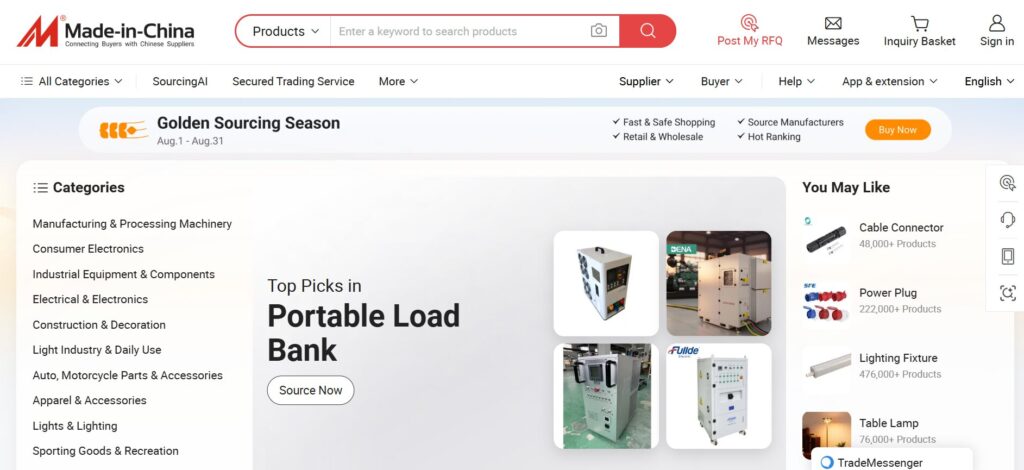
Made-in-China connects international buyers with Chinese manufacturers, with particular strength in industrial machinery, equipment, and manufacturing supplies.
Best for: Importers sourcing industrial products, machinery, and factory equipment.
- MOQ: Supplier-set, with negotiation available for bulk purchases.
- Buyer cost: Free supplier browsing and inquiries.
- Verification: Audited Supplier reports from independent organizations, including SGS and TÜV Rheinland.
- Buyer protection: Secured Trading Service (STS) for eligible transactions.
Watch out:
- Supplier audits verify business information and capabilities, but don’t guarantee product quality.
- Some buyers report difficulties with refunds and dispute resolution.
Trust: Trustpilot: 4.0/5 from 1,312 reviews (November 2026).
We’d prioritize suppliers with accessible audit reports and arrange independent product inspections before major equipment purchases.
5. Global Sources
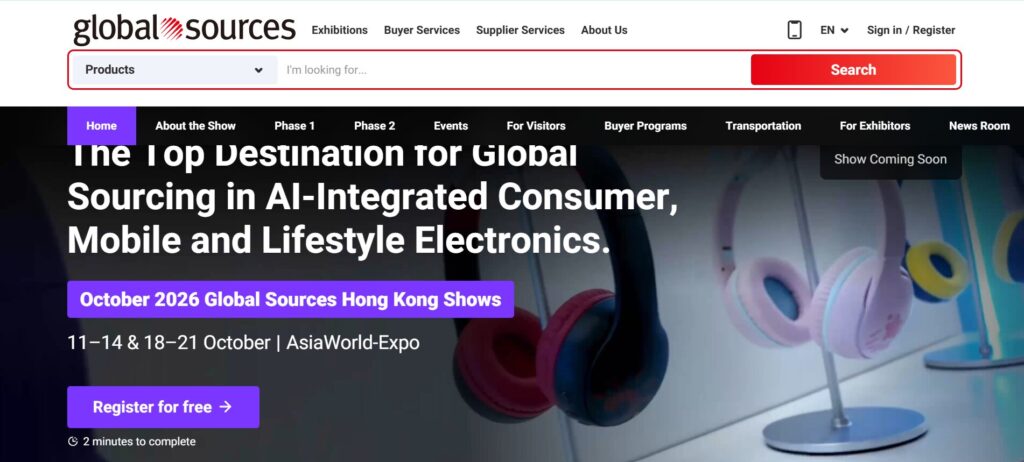
Global Sources is a Hong Kong-based B2B sourcing platform combining online supplier discovery with physical trade exhibitions.
Best for: Importers identifying Asian manufacturers and meeting suppliers at international trade shows.
- MOQ: Supplier-set, generally oriented toward bulk orders.
- Buyer cost: Free supplier discovery and inquiries.
- Verification: Verified Supplier program for reviewing business credentials.
- Trade shows: Hong Kong sourcing exhibitions, including April and October events.
Watch out:
- Supplier verification doesn’t eliminate the need for independent due diligence.
- Reviews include allegations of fraudulent supplier contacts, undelivered goods, and off-platform payment requests.
Trust: Trustpilot: 1.3/5 from 63 reviews (November 2026).
Given the limited and predominantly negative review sample, we’d use Global Sources for supplier discovery while independently verifying every potential trading partner.
6. HKTDC Sourcing
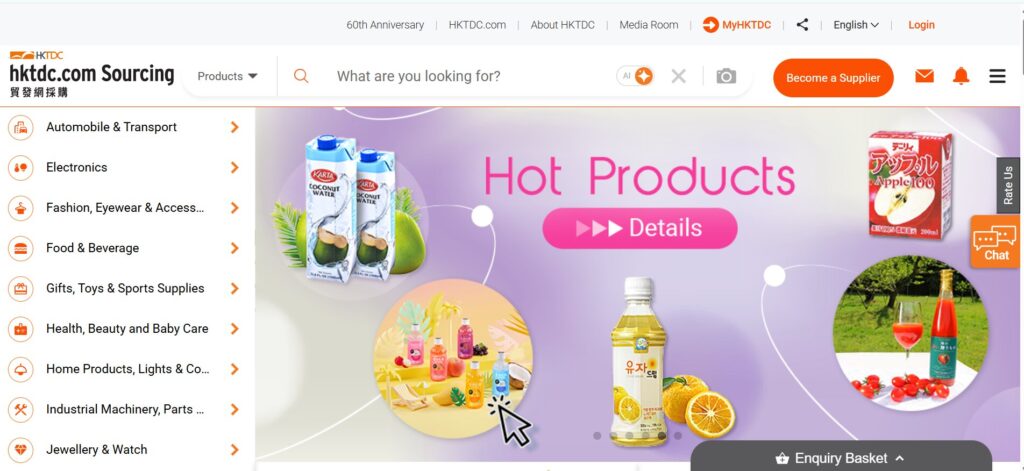
HKTDC Sourcing is operated by the Hong Kong Trade Development Council, a statutory organization supporting international trade through supplier directories and exhibitions.
Best for: Businesses discovering Hong Kong suppliers and establishing trade-show connections.
- MOQ: Negotiated directly with individual suppliers.
- Buyer cost: Free access to supplier discovery and inquiries.
- Supplier network: Manufacturers, exporters, and trading companies across multiple industries.
- Trade shows: Access to HKTDC exhibitions and supplier networking opportunities.
Watch out:
- HKTDC primarily facilitates supplier discovery; purchases are generally negotiated outside the platform.
- Buyers must independently verify suppliers and arrange secure payment terms.
Trust: Trustpilot: 2.3/5 from 7 reviews (November 2026). The sample is too small for a dependable reputation assessment.
We’d use HKTDC to build a supplier shortlist, particularly when planning face-to-face meetings.
Best Curated Wholesale Marketplaces for Retailers
Curated wholesale marketplaces are especially useful for boutiques, independent retailers, and ecommerce stores looking for ready-made inventory from established brands.
Unlike factory-focused marketplaces, these platforms primarily help retailers discover products they can stock and resell. We recommend comparing brand selection, order minimums, payment terms, and return policies before choosing one.
7. Faire
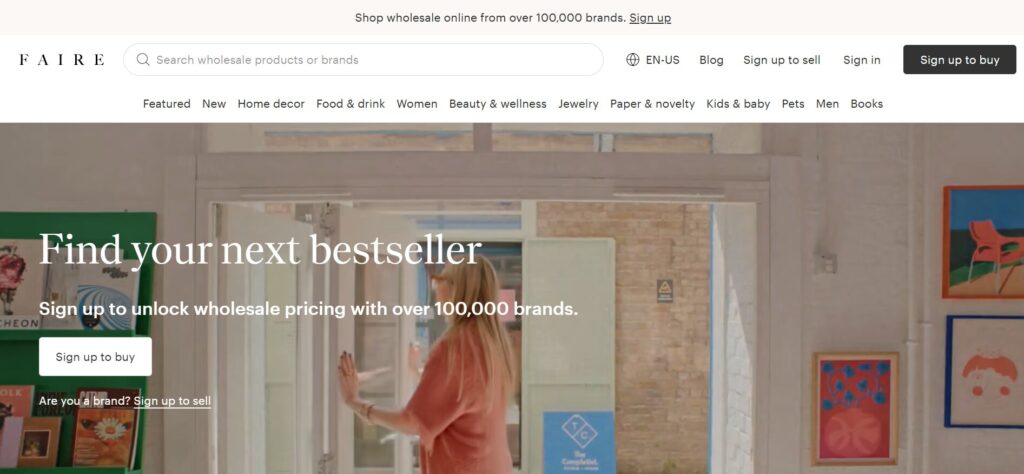
Faire is a wholesale marketplace connecting independent retailers with over 100,000 brands worldwide. It’s particularly useful for boutiques looking to discover new products without committing to large opening orders.
Best for: Independent boutiques and retailers sourcing branded, ready-to-sell inventory.
- MOQ: Set by individual brands, with relatively low opening minimums available.
- Buyer cost: Free retailer registration and marketplace access.
- Payment terms: Net-60 payment terms for eligible retailers.
- Returns: Free returns on qualifying first orders from each brand, generally within 60 days.
Watch out:
- Product pricing and minimum orders vary by brand, so compare margins before purchasing.
- Faire isn’t designed for custom manufacturing or private-label production.
- Payment terms require eligibility approval, and return restrictions apply.
Trust: Trustpilot: 4.5/5 from 12,207 reviews (November 2026).
We’d prioritize Faire for retailers building a curated product assortment, especially when testing unfamiliar brands.
8. FashionGo
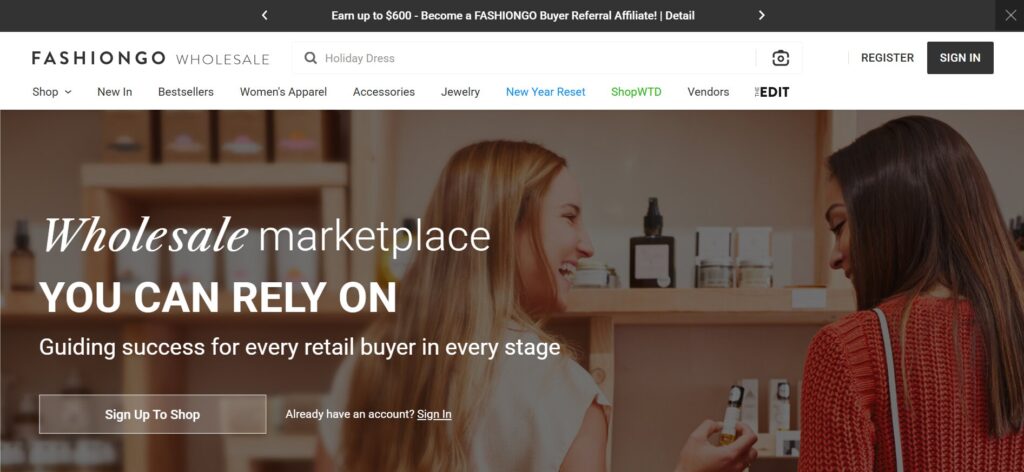
FashionGo is a Los Angeles-based wholesale fashion marketplace connecting retailers with over 1,400 vendors selling apparel, accessories, footwear, and other fashion products.
Best for: Clothing boutiques and ecommerce fashion retailers sourcing inventory from US-based wholesale vendors.
- MOQ: Vendor-set, often based on clothing packs or minimum order values.
- Buyer cost: Free registration for qualifying retailers with business documentation.
- Payment terms: Dynamic Net Terms of 30, 45, or 60 days for approved buyers.
- Shipping: Consolidation and promotional shipping benefits are available on eligible orders.
Watch out:
- Product quality, sizing consistency, and fulfillment reliability vary between vendors.
- Some vendors ship internationally, so check shipping origins and estimated delivery dates.
- Returns and exchanges depend on vendor policies.
Trust: Trustpilot: 2.0/5 from 117 reviews (November 2026). Complaints include customer support, shipping costs, and product discrepancies.
We’d recommend starting with a small order from one vendor to evaluate sizing, fabric quality, and fulfillment before expanding your inventory.
Related Guide: Best Wholesale Clothing Vendors
9. SeeBiz
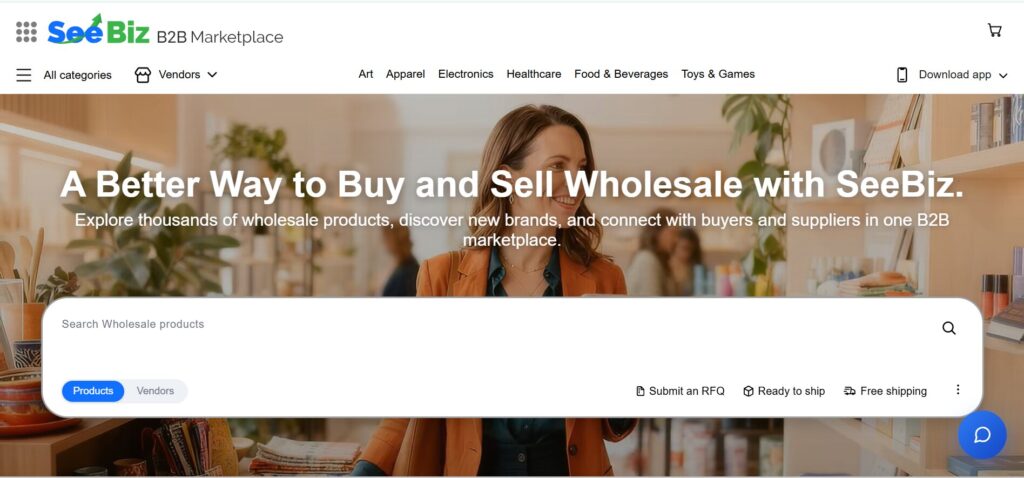
SeeBiz is a US-based wholesale marketplace that combines supplier discovery with business networking features, allowing retailers and wholesalers to connect through product listings and direct communication.
Best for: US retailers discovering domestic wholesalers and building supplier relationships.
- MOQ: Determined by individual vendors.
- Buyer cost: Free for buyers; seller subscription plans are listed at $600 for six months or $1,200 annually.
- Product discovery: Wholesale listings across general merchandise and retail categories.
- Networking: Business profiles and direct communication tools for connecting with vendors.
Watch out:
- Independent supplier verification is essential, particularly when negotiating directly.
- SeeBiz doesn’t guarantee individual vendors’ product quality or shipping performance.
- Its independent review footprint is limited compared with larger marketplaces.
Trust: No meaningful Trustpilot or BBB review profile could be established as of November 2026. Its App Store listing also lacks sufficient ratings for an aggregate score.
We’d treat SeeBiz as an additional supplier discovery channel, particularly for identifying smaller US wholesalers. Before placing substantial orders, request samples and verify each vendor independently.
Best US Direct Wholesale Suppliers
US-based direct wholesalers are worth considering if you want ready-to-sell inventory without international shipping, customs clearance, or lengthy import lead times.
These suppliers generally sell merchandise from domestic warehouses, often in case packs rather than individual units. We’d compare minimum order requirements, shipping costs, return policies, and inventory availability before choosing one.
For more options, check our guide to wholesale suppliers in the USA.
10. DollarDays
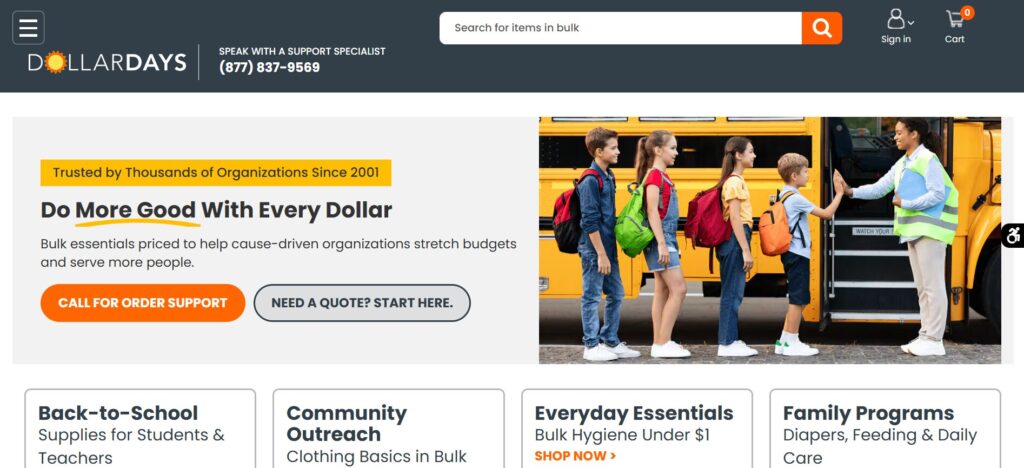
DollarDays is a Phoenix-based wholesale distributor supplying bulk general merchandise to retailers, nonprofits, schools, and organizations across the US.
Best for: Small retailers and organizations purchasing everyday merchandise in bulk.
- MOQ: No minimum order value or quantity, although most products are sold by the case.
- Buyer cost: No membership fee; accessible without a resale certificate.
- Products: Household essentials, school supplies, clothing, and general merchandise.
- Returns: Requests must be submitted within 14 days of delivery; case lots must remain unopened.
Watch out:
- Case-pack quantities limit flexibility when testing individual products.
- Returns don’t allow partial case quantities, and shipping costs can affect margins.
Trust: Trustpilot: 4.5/5 from 17 reviews; BBB: A+, with no complaints recorded in the previous three years (November 2026). The Trustpilot sample is small.
11. Kole Imports
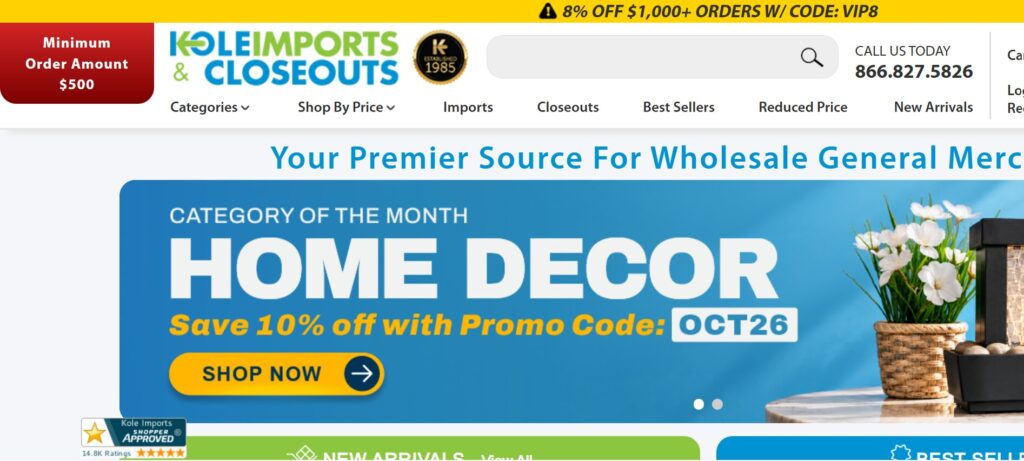
Kole Imports is a California-based wholesale distributor specializing in general merchandise, overstock, and closeout inventory.
Best for: Discount stores, flea-market vendors, and ecommerce resellers purchasing assorted merchandise.
- MOQ: $250 minimum for standard wholesale orders, with product-specific case quantities.
- Buyer cost: No mandatory membership subscription.
- Products: Household products, toys, seasonal merchandise, and accessories.
- Ordering: Bulk purchasing and a separate dropshipping program for qualifying orders.
Watch out:
- Closeout merchandise may not be consistently available for reordering.
- Customer reviews mention occasional damaged products and difficulties meeting minimum orders for replacements.
Trust: Trustpilot: 4.3/5 from 551 reviews (November 2026).
We’d check stock availability before building a permanent product line around closeout inventory.
12. All Time Trading
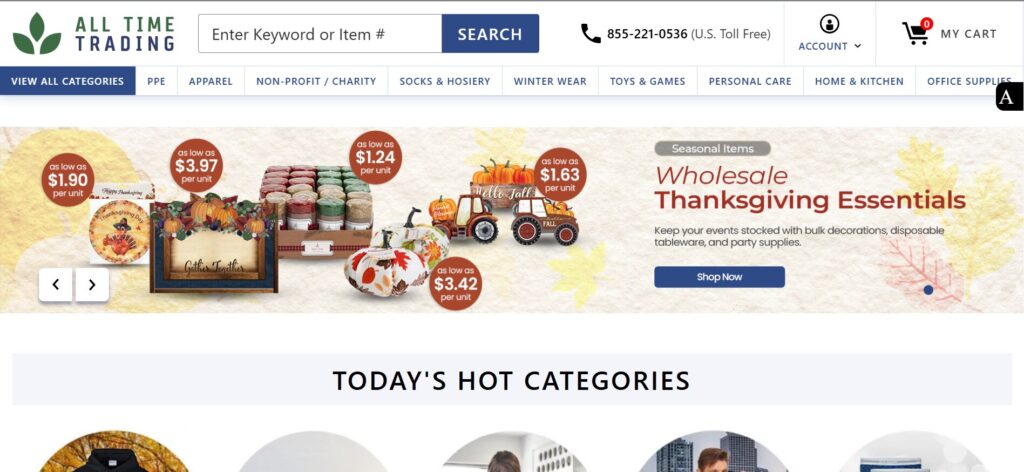
All Time Trading is a Brooklyn-based wholesale distributor offering general merchandise, apparel, and closeout products in case quantities.
Best for: Discount retailers and resellers looking for small initial case orders.
- MOQ: One case per product, with no stated overall dollar minimum.
- Buyer cost: No mandatory membership fee.
- Ordering: Case-level to truckload purchasing, depending on available inventory.
- Payments: Orders are charged after inventory availability is confirmed.
Watch out:
- Closeout products may sell out without being restocked.
- Inventory availability and final case quantities should be confirmed before payment.
- Limited independent reviews make supplier reputation difficult to assess.
Trust: Trustpilot: 2.9/5 from just 2 reviews (November 2026). This is insufficient for a reliable reputation assessment.
We’d start with one case and evaluate product condition, fulfillment accuracy, and delivery before increasing order volume.
13. International Wholesale
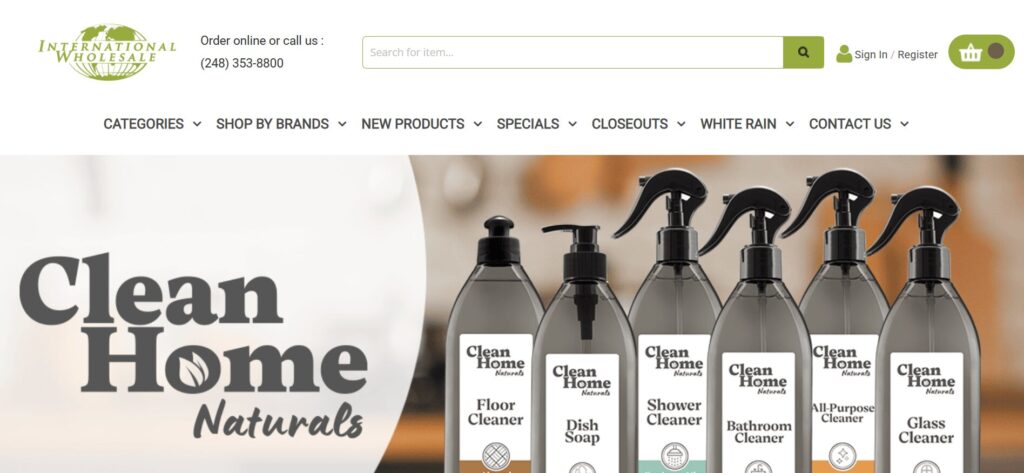
International Wholesale is an established Michigan-based distributor serving dollar stores, discount retailers, convenience stores, and other wholesale buyers.
Its physical showroom and warehouse in Allen Park make it particularly relevant for retailers interested in sourcing domestic general merchandise.
Best for: Dollar stores and independent retailers seeking an established US wholesale distributor.
- MOQ: Not consistently published; confirm minimum quantities and order values directly.
- Buyer cost: No publicly confirmed mandatory membership fee.
- Products: General merchandise, everyday essentials, and seasonal inventory.
- Ordering: Online supplier inquiries and access to a physical showroom.
Watch out:
- Purchasing requirements and wholesale pricing may require direct confirmation.
- Its showroom-oriented model may be less convenient for fully automated ecommerce operations.
Trust: BBB: A+ accredited, with 1 complaint recorded over the previous three years; Trustpilot: 3.0/5 from 3 reviews (November 2026).
We’d consider it for recurring general merchandise and seasonal products, provided minimum orders and restocking arrangements meet your needs.
14. Wholesale Goodz
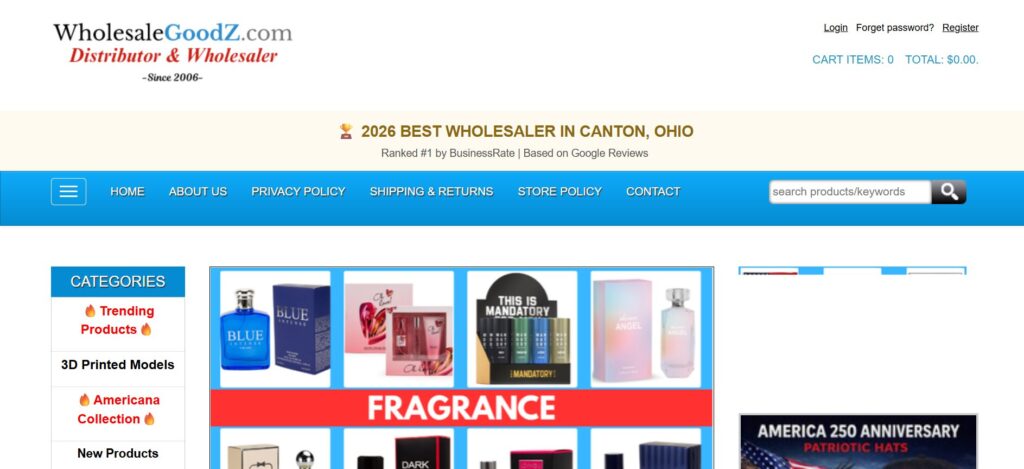
Wholesale Goodz is the online wholesale operation of R & M Wholesale USA Inc., a Canton, Ohio-based distributor supplying general merchandise to small retailers.
Best for: Dollar stores, flea-market sellers, and small businesses working with modest purchasing budgets.
- MOQ: $100 minimum order value, with product-specific quantity requirements.
- Buyer cost: No publicly listed membership subscription.
- Products: General merchandise, clothing accessories, household items, and seasonal products.
- Payments: Credit/debit cards and PayPal accepted; orders must be prepaid.
Watch out:
- Some products require purchases by the dozen, increasing the effective minimum for individual items.
- No credit terms are offered, so purchases require upfront payment.
- Limited independent reputation data makes a small initial order advisable.
Trust: No meaningful independent Trustpilot or BBB review profile identified as of November 2026.
We’d consider Wholesale Goodz for testing a small assortment of general merchandise, particularly if the $100 starting order fits your inventory budget.
Best Wholesale Supplier Directories
Wholesale directories help you find manufacturers, distributors, and wholesalers without searching for suppliers individually.
Unlike marketplaces, directories generally don’t process orders or manage payments. You’ll contact suppliers directly, negotiate pricing, and arrange fulfillment yourself.
We’d recommend starting with a free directory if you’re comfortable verifying suppliers independently. Paid directories can save research time, especially when you’re unfamiliar with a product category.
For a deeper comparison, see our guide to online supplier directories.
15. Wholesale Central
Wholesale Central is a US-based wholesale directory operating since 1996, connecting retailers with wholesalers, manufacturers, and distributors.
Best for: Small retailers looking for US wholesale suppliers without paying directory membership fees.
- MOQ: Set by individual suppliers.
- Buyer cost: Free access, with no registration required for basic supplier discovery.
- Supplier selection: General merchandise, apparel, household goods, and other retail categories.
- Features: Supplier listings, product searches, and trade-show information.
Watch out:
- Supplier listings vary in reliability, and some may be outdated.
- Transactions happen directly with suppliers, without platform-level payment protection.
- Verify business credentials before placing orders, even when a listing displays a verification badge.
Trust: Trustpilot: 3.9/5 from 23 reviews (November 2026). The small sample includes mixed supplier-quality feedback.
16. SaleHoo
SaleHoo is a New Zealand-based supplier directory established in 2005, offering access to more than 8,000 screened wholesale and dropshipping suppliers.
Best for: Beginners and ecommerce sellers who prefer a researched supplier database.
- MOQ: Varies by supplier; dropshipping options may allow single-unit orders.
- Buyer cost: Current Starter pricing is 9/monthbilledannually (108/year), with a $299 lifetime option; older directory offers advertise $67/year.
- Supplier network: 8,000+ vetted suppliers across multiple regions.
- Research tools: Product research, supplier filters, and tools for estimating ecommerce profit margins.
- Refunds: 60-day money-back guarantee on eligible memberships.
Watch out:
- Membership doesn’t include product purchasing or fulfillment costs.
- Supplier screening doesn’t guarantee competitive pricing or product quality.
- Subscription renewals and differences between legacy and current plans deserve attention.
Trust: Trustpilot: 4.1/5 from 456 reviews (November 2026).
We’d compare SaleHoo’s paid directory against free supplier searches before subscribing, particularly if you only need one or two vendors.
17. Worldwide Brands
Worldwide Brands is a US-based wholesale supplier directory operating since 1999, specializing in certified wholesalers and dropshipping suppliers.
Best for: Established ecommerce sellers researching legitimate wholesale distributors for Amazon, eBay, and independent stores.
- MOQ: Supplier-set, ranging from dropshipping orders to bulk purchases.
- Buyer cost: Its official help center lists $299 for lifetime directory access; promotional prices may vary.
- Supplier network: More than 8,000 certified suppliers and millions of listed products.
- Verification: Suppliers undergo a certification process before inclusion.
Watch out:
- The upfront membership cost may be difficult to justify for occasional supplier research.
- Some listed suppliers may also be discoverable through free directories.
- Certification doesn’t guarantee brand authorization, Amazon approval, or attractive resale margins.
Trust: Trustpilot: 4.1/5 from 349 reviews (November 2026).
We’d evaluate Worldwide Brands if you expect to research suppliers regularly. Before paying, confirm that the directory covers your product niche and target market.
18. TopTenWholesale
TopTenWholesale is a B2B supplier directory connecting retailers with manufacturers, distributors, importers, and wholesale businesses.
Best for: Retailers researching wholesale merchandise, manufacturers, and closeout inventory.
- MOQ: Determined by individual suppliers.
- Buyer cost: Free supplier browsing and buyer registration.
- Supplier network: The platform advertises access to 3,000+ suppliers across 100+ product categories.
- Features: Product requests, supplier inquiries, trade-show listings, and Made in USA supplier discovery.
Watch out:
- Supplier listings may vary in quality, accuracy, and availability.
- Buyers negotiate and pay suppliers directly, without marketplace-style escrow protection.
- Independent customer feedback is too limited to assess overall reliability confidently.
Trust: Trustpilot: 3.5/5 from just 3 reviews (November 2026), with no reviews posted during the preceding 12 months.
We’d use TopTenWholesale as an additional research channel, especially when looking for manufacturers or suppliers outside the larger marketplaces.
Best Wholesale and Dropshipping Platforms
Wholesale and dropshipping platforms let you sell products without purchasing inventory in bulk. They connect your ecommerce store with suppliers that fulfill individual customer orders, often with automated inventory updates and order processing.
We’d consider these platforms if you’re testing products or managing a large online catalog. However, subscription fees, product markups, and fulfillment reliability can significantly affect your margins.
For a closer comparison of the business models, see our guide to dropshipping vs wholesale.
19. Doba
Doba is a US-based dropshipping platform connecting online sellers with wholesale suppliers and products stocked in domestic warehouses.
Best for: Ecommerce sellers looking for US-focused inventory and automated product listings.
- MOQ: No bulk minimum for eligible dropshipping products.
- Buyer cost: Paid plans start around $29.99/month, with higher tiers offering additional integrations and automation.
- Integrations: Shopify, Amazon, eBay, Walmart, TikTok Shop, and other sales channels.
- Features: Product importing, inventory monitoring, and automated order management.
Watch out:
- Product costs can leave limited margins after marketplace fees and shipping.
- Subscription renewals and fulfillment delays feature in independent complaints.
- Supplier responsiveness varies, making test orders worthwhile before running paid advertising.
Trust: Trustpilot: 3.1/5 from 90 reviews (November 2026).
We’d calculate the expected profit per order and test fulfillment before committing to a long-term subscription.
20. Wholesale2b
Wholesale2b is a dropshipping aggregation platform that connects online stores with multiple wholesale suppliers and manages order routing through a central dashboard.
Best for: Dropshippers wanting automated fulfillment without managing individual supplier relationships.
- MOQ: No bulk purchasing requirement for dropshipping orders.
- Buyer cost: Free catalog browsing; store integration plans start at $49.99/month.
- Product catalog: More than 1.5 million products advertised.
- Integrations: Shopify, WooCommerce, eBay, Amazon, and other sales channels.
- Order processing: A $2 processing fee applies to eligible fulfilled orders.
Watch out:
- Separate integration subscriptions and processing fees can reduce margins.
- Product prices aren’t always competitive against major retail marketplaces.
- Inventory synchronization and customer support receive mixed feedback.
Trust: Trustpilot: 4.0/5 from 441 reviews (November 2026).
We’d compare the full order cost, including the product, shipping, platform subscription, and processing fees, before adding products to your store.
21. Spocket
Spocket is a dropshipping marketplace emphasizing suppliers based in the US and Europe, with ecommerce integrations and branded invoicing options.
Best for: Online retailers prioritizing domestic fulfillment and shorter delivery times.
- MOQ: Single-unit orders available through participating suppliers.
- Buyer cost: Starter plans begin at $39.99/month, with higher tiers for expanded product access.
- Supplier network: US, European, and international product suppliers.
- Fulfillment: Many domestic suppliers advertise delivery within approximately 2–7 business days.
- Branding: Branded invoicing available on eligible plans and orders.
Watch out:
- Supplier product costs can be higher than bulk factory-direct purchasing.
- Monthly subscriptions apply regardless of sales volume.
- Reviews report subscription cancellation and refund difficulties.
Trust: Trustpilot: 4.2/5 from 10,667 reviews (November 2026).
We’d evaluate Spocket for products where domestic delivery speed justifies the additional sourcing costs.
22. Inventory Source
Inventory Source is a US-based dropshipping automation platform that connects supplier inventory feeds with ecommerce stores and marketplaces.
It’s particularly useful for established sellers managing products from multiple suppliers.
Best for: Ecommerce businesses needing automated inventory synchronization and order routing.
- MOQ: Supplier-dependent; dropshipping suppliers typically fulfill individual orders.
- Buyer cost: Free supplier directory; inventory automation starts at $199/month, and full order automation at $299/month.
- Supplier network: Pre-integrated wholesale and dropshipping suppliers.
- Automation: Inventory updates, pricing synchronization, product uploads, and order routing on eligible plans.
- Integrations: Additional supplier connections cost $50/month each on current plans.
Watch out:
- Subscription costs can be difficult to justify for stores with limited sales.
- Inventory synchronization errors can result in overselling or canceled orders.
- Full order automation requires a higher-priced subscription.
Trust: Trustpilot: 1.7/5 from 128 reviews (November 2026). Reviews are mixed, with complaints involving synchronization reliability and customer support.
We’d evaluate Inventory Source once you’re managing enough products and suppliers for automation savings to outweigh its recurring costs.
Best Wholesale Suppliers Beyond the US & China
China and the US aren’t your only options for wholesale sourcing. Japan offers access to specialized consumer products, while India has a large manufacturing network for textiles, home goods, and industrial products.
We’d consider these markets if you’re looking to diversify suppliers, find region-specific products, or reduce dependence on a single sourcing country.
23. Super Delivery
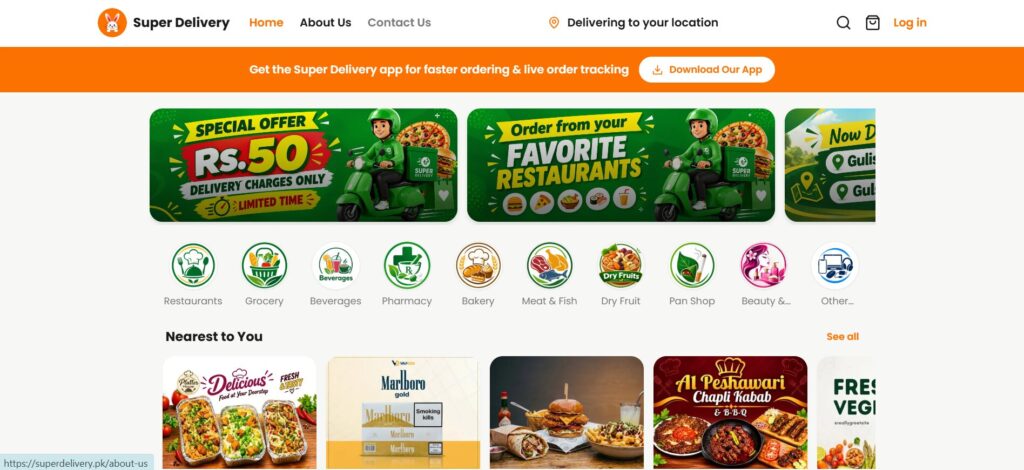
Super Delivery is a Japanese B2B wholesale marketplace operated by Raccoon Commerce, connecting international retailers with Japanese manufacturers and brands.
Best for: Retailers sourcing Japanese lifestyle products, stationery, homeware, and accessories.
- MOQ: No platform-wide minimum; many products can be ordered individually.
- Buyer cost: Free membership, with a ¥1,300 handling fee per international order, plus shipping.
- Supplier network: Access to thousands of Japanese vendors and an extensive wholesale product catalog.
- Shipping: International delivery through DHL, UPS, EMS, and other supported carriers.
Watch out:
- Wholesale prices may only become visible after registration.
- International shipping, customs duties, and handling fees can make small orders expensive.
- Product availability and individual vendor ordering requirements vary.
Trust: Trustpilot: 2.6/5 from 4 reviews (November 2026). This sample is too small for a reliable reputation assessment.
We’d consider Super Delivery for retailers building a differentiated Japanese product assortment. Calculate the landed cost before ordering, particularly for low-value items.
24. IndiaMART
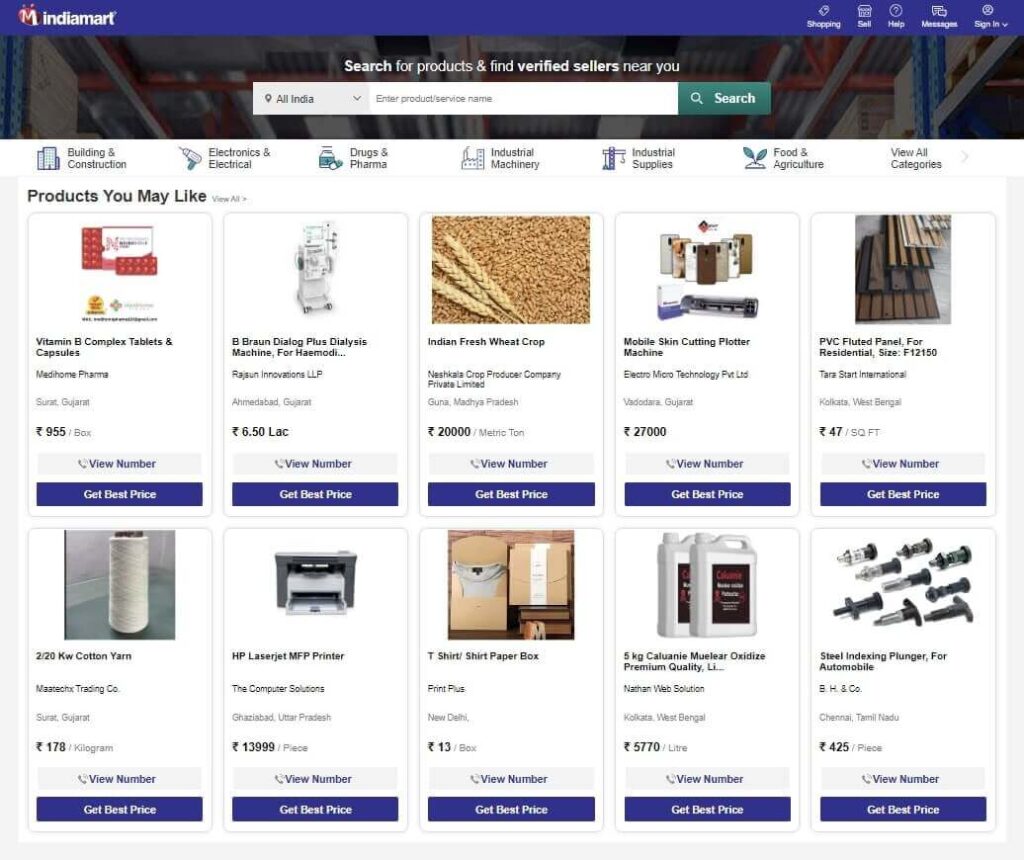
IndiaMART is one of India’s largest B2B marketplaces, connecting businesses with domestic manufacturers, exporters, and wholesale distributors.
Best for: Importers diversifying into Indian manufacturing, particularly textiles, homeware, and industrial products.
- MOQ: Supplier-set, depending on product and manufacturing requirements.
- Buyer cost: Free supplier discovery and inquiries.
- Supplier network: Approximately 8.9 million supplier storefronts as of September 2026.
- Sourcing options: Bulk purchasing, manufacturing inquiries, and supplier quotations.
Watch out:
- Supplier listings include manufacturers and trading companies, so verify factory ownership before ordering.
- Independent reviews report fraudulent sellers, payment disputes, and inconsistent customer support.
- IndiaMART doesn’t generally provide marketplace-wide escrow, quality inspections, or international logistics management.
Trust: Trustpilot: 1.7/5 from 511 reviews (November 2026).
We’d use IndiaMART primarily for supplier discovery, followed by independent business verification, sample testing, and secure payment arrangements. For substantial overseas orders, a local inspection partner can help reduce manufacturing and shipping risks.
Why These Wholesale Suppliers Aren’t on Our List
Wholesale supplier lists can become outdated quickly. Marketplaces shut down, businesses change their services, and some directories continue appearing in recommendations long after they’ve stopped being useful to buyers.
While updating this guide for November 2026, we revisited suppliers from our previous list and checked several other frequently recommended platforms. We excluded the following names because of closure, business model changes, limited verification, or concerns about their suitability for wholesale buyers.
| Supplier | Status (November 2026) | Why We Excluded It |
| TradeKey | Active, reputation concerns | Independent reviews include complaints about lead quality, paid memberships, and refund disputes. We couldn’t establish sufficient buyer protection to recommend it over other sourcing options. |
| TradeWheel | Active, different business model | Primarily connects buyers and sellers through listings and lead-generation services. Paid supplier memberships range from $499 to $7,999 annually; it doesn’t act as the wholesale seller or payment intermediary. |
| DIYTrade | Online, limited verification | Its B2B directory remains accessible, but we couldn’t establish sufficient recent independent reputation data or transaction protection to include it. |
| Tundra | Closed in 2023 | The commission-free wholesale marketplace shut down in mid-2023 and is no longer a purchasing option. |
| Handshake (Shopify) | Closed in 2023 | Shopify discontinued its Handshake marketplace and subsequently directed merchants toward Faire for wholesale selling. |
| Creoate | Entered administration in September 2026 | UK Companies House confirms that Creoate Limited entered administration on September 10, 2026. |
| Abound | Changed business model | Its traditional wholesale marketplace stopped operating in 2023. Carro acquired Abound in January 2024, including its dropshipping platform, Droply. |
| Etsy Wholesale | Closed in 2018 | Etsy officially discontinued its dedicated wholesale marketplace on July 31, 2018. |
| Essendant | Major restructuring in 2026 | The distributor exited the traditional independent office-products dealer channel and announced substantial layoffs and possible shutdown risks in 2026. |
| Bwanaz | Insufficient verification | We couldn’t establish enough current catalog depth or independent reputation data to compare it confidently with established wholesale platforms. |
What Does This Mean for Wholesale Buyers?
We recommend confirming three things before relying on any supplier mentioned in an online guide:
- Is the business still accepting wholesale orders? An accessible website doesn’t necessarily mean its original marketplace is operational.
- Does it actually sell wholesale products? Some platforms primarily provide supplier listings, paid lead generation, or software services.
- Can you verify its current reputation and transaction terms? Check recent reviews, payment protection, and supplier policies before committing funds.
Our goal with this list is to help you identify sourcing options you can realistically evaluate in 2026, rather than simply repeating names from older wholesale directories.
How to Find and Vet Wholesale Suppliers in 2026
Finding wholesale suppliers is relatively straightforward. The bigger challenge is determining whether a supplier is legitimate, offers competitive pricing, and can consistently fulfill your orders.
We recommend verifying suppliers before committing to bulk purchases, especially when sourcing internationally. A professional website or marketplace verification badge alone doesn’t guarantee reliability.
Here’s the five-step process we’d follow when evaluating a new supplier.
Step 1: Verify the Supplier’s Business Credentials
Start by confirming that the supplier is a legally registered business with a verifiable operating address.
- Check business registration through official government databases.
- Confirm the company’s address and contact information.
- Look for evidence of actual manufacturing or warehousing operations.
- Verify whether you’re dealing with a manufacturer, distributor, or trading company.
For Chinese suppliers, request a business license and check the registered company name against official records. If a supplier claims to manufacture products, ask for factory details and production capabilities.
Step 2: Check Reviews and Supplier Reputation
We recommend checking independent sources such as Trustpilot, BBB, and relevant reseller communities rather than relying exclusively on testimonials published by the supplier.
Pay attention to the number and recency of reviews. A supplier with hundreds of consistent reviews provides more reputation data than one with a five-star rating from only a handful of customers.
Look for recurring complaints about defective products, incorrect orders, shipping delays, or unresolved refunds.
Step 3: Request Samples and Compare Quotations
Before placing a bulk order, contact at least three suppliers with the same product specifications.
Ask each supplier to confirm:
- Unit pricing at different order quantities
- Minimum order quantity (MOQ)
- Sample costs and availability
- Production and shipping lead times
- Packaging, customization, and defect policies
We’d also request samples whenever practical. This helps assess material quality, dimensions, packaging, and whether the delivered product matches the listing.
Step 4: Confirm Payment Terms and Buyer Protection
Avoid paying suppliers through undocumented or unprotected payment arrangements.
For marketplace purchases, use the platform’s supported payment channels and review its protection conditions. For example, Alibaba’s Trade Assurance provides dispute resolution for eligible orders when payment and order requirements are met.
For direct supplier purchases, request a formal invoice or purchase agreement documenting product specifications, quantities, delivery terms, and refund conditions.
Be especially cautious about unexpected requests to transfer money to personal accounts or unrelated third parties.
Step 5: Place a Small Test Order
Even after verifying a supplier, we’d recommend testing fulfillment before committing to significant inventory.
A smaller initial order helps you evaluate:
- Whether the supplier meets its promised lead time
- Product quality and consistency
- Packaging and shipping accuracy
- Communication when problems arise
- How defects, shortages, or damaged goods are resolved
For private-label manufacturing, consider arranging a pre-shipment quality inspection before releasing the final payment.
Related Guide: How to Find Wholesale Suppliers for Your Business
What Are the Red Flags of a Wholesale Supplier?
Some warning signs deserve extra scrutiny before you send payment.
| Red Flag | Why It Matters |
| Prices significantly below comparable quotations | Could indicate misleading specifications, counterfeit goods, or an unreliable offer |
| Refusal to provide business registration | Makes it difficult to verify who you’re purchasing from |
| Requests for payment to personal accounts | Creates additional fraud and recovery risks |
| Unwillingness to provide samples or detailed specifications | Makes product quality harder to assess before production |
| Frequent changes to company names or payment details | May indicate an undisclosed intermediary or payment fraud |
| Pressure to pay immediately | Limits your opportunity to verify terms and compare alternatives |
One warning sign doesn’t automatically mean a supplier is fraudulent. However, we’d avoid committing to a substantial order until any inconsistencies are satisfactorily explained.
What Documents Do You Need to Buy Wholesale?
Documentation requirements depend on the supplier, your location, and whether you’re purchasing for resale.
For US businesses, the most common requirements include:
- Business registration or license: Some wholesalers require proof that you operate a legitimate business.
- Resale certificate or seller’s permit: May be required for tax-exempt inventory purchases, depending on state rules.
- Employer Identification Number (EIN): Some suppliers request this for business account verification, although an EIN isn’t a substitute for a resale certificate.
- Business contact and billing details: Usually required to establish an account and issue invoices.
Platforms such as Alibaba and DHgate generally allow buyers to browse and purchase without a US resale certificate. Retail-focused wholesale marketplaces like Faire may require business or resale verification.
For Amazon resellers, we’d also confirm whether the supplier can issue invoices and supply-chain documentation that meet Amazon’s requirements. Purchasing from a legitimate supplier doesn’t automatically guarantee approval to resell a restricted brand.
Need Help Verifying Suppliers in China?
Supplier verification can become time-consuming when you’re comparing factories, negotiating MOQs, and managing quality inspections remotely.
NicheSources’ Yiwu-based team can help with factory verification, supplier coordination, pre-shipment inspections, and international shipping.
What Does Wholesale Really Cost in 2026?
The wholesale price listed by a supplier is only part of what you’ll actually spend. Shipping, import duties, payment fees, and quality-related losses can significantly increase the final cost of your inventory.
We recommend calculating your landed cost per unit before comparing domestic and overseas suppliers. This gives you a more realistic picture of your potential profit margins.
How Do You Calculate Wholesale Landed Cost?
Landed cost is the total expense of purchasing and delivering products to your warehouse or fulfillment location.
Landed Cost per Unit = (Product Cost + Freight + Duties + Customs Fees + Other Expenses) ÷ Sellable Units
Other expenses may include quality inspections, payment processing, packaging, and damaged inventory.
For example, here’s an illustrative comparison of importing 200 units from China versus purchasing the same quantity from a US wholesaler.
| Cost Component | China Supplier | US Wholesaler |
| Product cost (200 units) | $600 | $760 |
| Freight and delivery | $150 | $60 |
| Import duties (illustrative) | $120 | $0 |
| Processing and handling | $30 | $0 |
| Total landed cost | $900 | $820 |
| Cost per unit | $4.50 | $4.10 |
These figures are hypothetical, not actual supplier quotations or product-specific duty calculations. Domestic sales tax, inspections, and other applicable expenses are excluded.
Despite the lower factory price of $3 per unit, the imported product costs more after shipping and import expenses.
This is why we’d compare complete delivered quotations rather than choosing the supplier with the lowest advertised unit price.
How Do US Tariffs Affect Wholesale Costs in 2026?
Two important changes affect businesses importing wholesale products into the United States.
1. The $800 de minimis exemption has been suspended.
Previously, many eligible shipments valued at $800 or less could enter the US without import duties.
According to US Customs and Border Protection (CBP), duty-free de minimis treatment ended for covered China-origin shipments on May 2, 2025, and was suspended for covered shipments from all countries on August 29, 2025. The suspension continued in 2026.
This means small wholesale orders and product-testing shipments can face applicable customs duties, taxes, and processing fees even when their declared value is below $800.
2. China import tariffs remain product-specific.
China-origin imports may face ordinary customs duties alongside additional tariffs under Section 301 or other applicable trade measures.
Importantly, US tariff policy changed again in February 2026 following the Supreme Court’s ruling on tariffs imposed under the International Emergency Economic Powers Act (IEEPA). Those IEEPA tariffs should not automatically be included in current quotations.
We’d recommend checking your product’s Harmonized Tariff Schedule (HTS) classification, country of origin, and applicable tariff exclusions before placing an order.
You can review current duties using the USITC Harmonized Tariff Schedule and USTR Section 301 tariff search.
How Can You Reduce Wholesale Sourcing Costs?
A few practical adjustments can improve your landed cost:
- Compare multiple quotations: Request pricing at different MOQs to identify volume discounts.
- Consolidate shipments: Combining products from multiple suppliers may reduce freight costs per unit.
- Compare domestic and overseas inventory: US wholesalers may offer better total costs for smaller orders.
- Request DDP quotes: Delivered Duty Paid shipping generally places agreed import clearance and duty costs on the seller. Confirm the importer-of-record arrangement and included charges.
- Inspect before shipping: Catching defects before international delivery can prevent expensive returns and replacement orders.
Our advice is to calculate landed costs at your expected order quantity and consider the effect on cash flow. A slightly higher unit price may be worth paying if it means faster restocking, fewer defects, or less inventory sitting in transit.
Source Wholesale Products Through a Sourcing Agent
If you’re sourcing products from China, managing suppliers, negotiating prices, checking product quality, and arranging international shipping can take considerable time.
A China sourcing agent handles these processes on your behalf, making it easier to work with manufacturers without coordinating every stage yourself.
We’d consider this option if you’re developing private-label products, ordering from multiple factories, or scaling beyond small test purchases. For simple domestic wholesale orders, buying directly may be more cost-effective.
25. NicheSources
NicheSources is a China-based product sourcing company headquartered in Yiwu, helping ecommerce businesses, retailers, and importers source products directly from Chinese manufacturers.
With over 10 years of China sourcing experience, our team assists with supplier verification, price negotiation, quality inspections, customization, and international logistics.
Best for: Ecommerce brands and importers looking for managed China sourcing, private-label manufacturing, and bulk order fulfillment.
| Service Parameter | NicheSources |
| Sourcing fee | Free sourcing and quotations; 5–10% service fee on order value |
| Upfront cost | $0 for initial sourcing and quotations |
| Quote turnaround | Within 2 business days |
| MOQ | Factory-dependent, with negotiation support |
| Supplier verification | Factory background checks and supplier coordination |
| Quality control | Pre-shipment inspections |
| Customization | Private labeling, product development, and custom packaging |
| Shipping | Sea, air, and express shipping; DDP quotations available |
| Warehousing | US and European warehouse support |
| Fulfillment | Order preparation, consolidation, and international fulfillment |
When Does Using a Sourcing Agent Make Sense?
We’d generally recommend considering an agent when your sourcing requirements become difficult to manage independently.
For example:
- Private-label products: You need manufacturers that can follow specific designs, packaging, and branding requirements.
- Multiple suppliers: You’re purchasing from several factories and want to consolidate products into fewer shipments.
- Quality control: You need inspections before releasing payments or shipping internationally.
- Larger orders: The potential savings from negotiated pricing, fewer defects, and consolidated freight may justify the service fee.
Watch out:
- The 5–10% service fee adds to your purchasing costs and may not be worthwhile for very small orders.
- Factory MOQs and production lead times still apply.
- NicheSources specializes in China sourcing, so businesses purchasing established US brands may be better served by domestic wholesalers or marketplaces like Faire.
Trust: NicheSources’ service details are provided by our own team. We don’t have an independently verified Trustpilot or BBB rating to report here, so we recommend evaluating our quotations, service scope, and contractual terms directly.
For businesses that have the time and experience to manage Chinese suppliers independently, purchasing through Alibaba or 1688 may cost less.
However, if supplier coordination, inspections, and shipping are taking time away from running your business, working with a sourcing agent may be worth the additional fee.
FAQs about Wholesale Suppliers
What Is the Best Wholesale Supplier for Small Businesses?
The best wholesale supplier depends on your product category, budget, and business model.
For independent boutiques, we’d start with Faire, which offers relatively low brand-set minimums and payment terms for eligible retailers. For general merchandise,
DollarDays and Kole Imports are worth comparing.
If you’re sourcing custom products from China, Alibaba offers broad manufacturer access, while 1688 may provide competitive domestic-market pricing.
Our recommendation is to start with suppliers whose minimum orders fit your budget, then compare landed costs, shipping times, and return policies before committing.
Which Wholesale Suppliers Have No Minimum Order?
Several wholesale and dropshipping platforms allow single-unit purchases, although conditions vary by supplier.
DHgate offers many products individually, while Super Delivery allows single-unit ordering from participating Japanese suppliers. Dropshipping platforms such as Spocket and Doba also support individual customer orders without requiring bulk inventory purchases.
DollarDays has no overall order minimum, but most merchandise is sold in case packs. All Time Trading similarly offers one-case minimums.
We’d distinguish between no minimum order value and no minimum quantity. A supplier may accept a small purchase while still requiring an entire case of one product.
How Do I Find Wholesale Suppliers for My Online Store?
We recommend starting with the sourcing channel that matches your product requirements.
For ready-made retail inventory, explore Faire or US direct wholesalers. For private-label products, search Alibaba or Made-in-China. Directories such as Wholesale Central and SaleHoo can help you identify additional suppliers.
You can also attend trade shows or work with a sourcing agent if you’re purchasing from overseas manufacturers.
Once you’ve shortlisted suppliers, request comparable quotations, verify their businesses, and order samples.
We’d avoid selecting a supplier based entirely on advertised wholesale prices without calculating shipping, fees, and potential returns.
Is It Better to Use Local Wholesale Vendors or Source from China?
Local wholesalers generally make more sense when delivery speed, smaller orders, and convenient restocking are your priorities.
For example, a US retailer can often replenish domestic inventory without arranging international freight or customs clearance.
China sourcing becomes attractive when you’re purchasing larger quantities, developing private-label products, or negotiating factory-direct pricing.
However, import duties, freight, inspections, and longer lead times can offset lower unit prices.
We’d recommend comparing both options at the same order quantity using total landed cost. Some retailers also combine domestic suppliers for seasonal inventory with overseas manufacturers for established product lines.
What Is the Difference Between a Wholesale Marketplace and a Directory?
A wholesale marketplace connects buyers and suppliers and may facilitate payments, orders, and dispute resolution. Examples include Alibaba, DHgate, and Faire.
A wholesale directory lists supplier information, but buyers usually negotiate and transact directly with those businesses. Examples include SaleHoo, Wholesale Central, and Worldwide Brands.
We’d choose a marketplace when transaction protection is important and a directory when the priority is discovering suppliers for independent evaluation
Wholesale vs Dropshipping Suppliers: What’s the Difference?
Wholesale suppliers generally sell products in bulk, requiring you to purchase and manage inventory.
Dropshipping suppliers fulfill individual customer orders, allowing you to sell without stocking products yourself.
Wholesale purchasing can provide lower unit costs and greater inventory control, while dropshipping reduces upfront inventory commitments.
Platforms such as Spocket and Doba support dropshipping, whereas suppliers like DollarDays primarily sell case quantities.
The better option depends on your available capital, expected order volume, and fulfillment requirements.
Can I Buy Wholesale Without a Business License or Resale Certificate?
Yes, some wholesale platforms allow purchases without a business license or resale certificate.
Alibaba and DHgate generally allow individuals and businesses to purchase products without US resale documentation. DollarDays also accepts orders without requiring a resale certificate.
However, other wholesalers and retail-focused marketplaces may verify your business before approving an account.
In the US, a resale certificate is commonly used to purchase qualifying inventory without paying sales tax upfront. It isn’t the same as an Employer Identification Number (EIN) or a general business license.
Requirements vary by state and supplier, so confirm the necessary documentation before ordering.
Is Amazon Business a Good Wholesale Source for Resellers?
Amazon Business can be useful for purchasing business supplies and products with quantity discounts, but we’d be cautious about using it as your primary resale inventory source.
A key concern is documentation. If you plan to resell branded products on Amazon, a retail purchase invoice or order confirmation may not satisfy Amazon’s selling-approval requirements.
Amazon may require invoices from manufacturers or authorized distributors, along with additional brand authorization documents.
Before purchasing inventory, verify the seller’s authorization, available documentation, brand restrictions, and expected resale margins. For ongoing branded resale, we’d prioritize established wholesale distributors.
How Do I Verify a Wholesale Supplier Is Legitimate?
Start by verifying the supplier’s legal business name, registration details, physical address, and trading history.
Next, check independent reviews and look for recurring complaints about payment disputes, counterfeit products, or failed deliveries.
also request samples and ask specific questions about production capacity, lead times, minimum orders, and defect handling.
When purchasing through marketplaces, use supported payment and buyer-protection systems wherever possible. For direct factory orders, request a written purchase agreement with clear specifications and payment terms.
If a supplier refuses basic verification or unexpectedly changes bank details, investigate before sending payment.