Hoka shoes are made in Vietnam, Indonesia, China, Cambodia, and Thailand. Production is concentrated predominantly in Vietnam and Indonesia, while less than 5% comes from China, according to Deckers Brands’ FY2026 Form 10-K. Hoka owns no factories; 12 independent contract factories manufacture its footwear.
This is an important correction to older “China-first” descriptions of Hoka’s supply chain. Deckers’ own disclosures show that final assembly has shifted toward Vietnam and Indonesia, while China remains highly important upstream for materials and components.
Hoka Manufacturing: Quick Facts
| Fact | Detail |
| Founded | 2009 in Annecy, France, by Nicolas Mermoud and Jean-Luc Diard |
| Owner | Deckers Brands, owner of UGG and Teva |
| HQ / design base | Goleta, California |
| HOKA revenue | About $2.2 billion in FY2025, up 23.6% |
| Production countries | Vietnam, Indonesia, China, Cambodia, Thailand |
| Production split | Predominantly Vietnam and Indonesia; under 5% China |
| Hoka footwear factories | 12 contract factories: 6 in Vietnam, 3 in Indonesia, 1 in China, 1 in Cambodia, 1 in Thailand |
| Factories owned by Hoka/Deckers | Zero, production is fully outsourced |
| Made in the USA? | No |
The 30-Second Answer
- Where are Hokas made? Mostly Vietnam and Indonesia, with smaller production in China, Cambodia, and Thailand.
- Who makes Hoka shoes? 12 independent contract factories disclosed by Deckers.
- What is China’s role? Limited final assembly, but a major materials base with 144 of 272 Tier 2 suppliers in March 2025.
- Are Hokas made in the USA? No. Design is based in California, while final assembly takes place in Asia.
- How do you verify your pair? Check the “Made in” marking on the tongue or box label.
The Origins of Hoka Shoes
Hoka was founded in 2009 by two French trail runners, Nicolas Mermoud and Jean-Luc Diard.
Their goal was to design running shoes that could handle steep descents while providing better cushioning and stability.
Unlike traditional running shoes at the time, Hoka introduced a maximalist approach featuring oversized midsoles that absorbed impact and offered a smoother ride.
The name “Hoka” comes from the Māori phrase “Hoka One One” (pronounced ho-kah oh-nay oh-nay), meaning “fly over the earth.” This reflects the brand’s emphasis on lightweight, high-performance footwear that enhances a runner’s experience.
Initially embraced by ultrarunners for its comfort and shock absorption, Hoka quickly gained traction among casual runners, hikers, and even medical professionals.
The brand’s innovative designs and focus on biomechanics helped it carve out a distinct space in the athletic footwear industry, leading to its acquisition by Deckers Brands in 2013,the same company behind UGG and Teva.
Today, Hoka continues to expand its offerings beyond running shoes, developing models for trail running, hiking, and everyday wear. Its commitment to comfort and performance has made it a top choice for athletes and footwear enthusiasts worldwide.
Hoka’s Global Manufacturing Overview
Hoka’s manufacturing network is part of the wider Deckers Brands supply chain, which includes factories producing Hoka, UGG, Teva, and other Deckers products. As of March 2025, Deckers disclosed 42 Tier 1 factories across seven countries, employing roughly 100,000 workers. Of those, 12 factories produced Hoka footwear.
Vietnam is the largest Tier 1 manufacturing base by both factory count and workforce, followed by China and Indonesia. But for Hoka specifically, the footprint is even more concentrated: 6 of its 12 footwear factories are in Vietnam and 3 are in Indonesia.
Deckers Tier 1 Factory Footprint by Country
| Country | Deckers Tier 1 Factories | Hoka Footwear Factories | Workers |
| Vietnam | 16 | 6 | 60,218 |
| China | 12 | 1 | 6,979 |
| Indonesia | 8 | 3 | 22,139 |
| Cambodia | 3 | 1 | 7,007 |
| Thailand | 1 | 1 | 406 |
| Philippines | 1 | 0 | 2,320 |
| Malaysia | 1 | 0 | 916 |
| Total | 42 | 12 | ~99,985 |
Source: Deckers Tier 1 factory disclosure, March 2025.
Which Factories Actually Make Hoka Shoes?
Deckers’ March 2025 disclosure identifies the following 12 factories as Hoka footwear manufacturers:
| Factory | Country / Province | Workers | Brands Made There |
| Ty Bach Co., Ltd. | Vietnam and Vinh Long | 6,418 | HOKA only |
| Yih Shuo Footwear Co., Ltd. | Vietnam and Dong Thap | 4,267 | HOKA, Teva |
| Vietnam Victory Sporting Goods Co., Ltd. | Vietnam and Ha Nam | 1,971 | HOKA, Ahnu |
| Amara Vietnam Footwear Co., Ltd. | Vietnam and Nam Dinh | 10,867 | UGG, HOKA |
| Freetrend Industrial A (Vietnam) Co., Ltd. | Vietnam, Thu Duc, Ho Chi Minh City | 8,077 | UGG, HOKA, Teva |
| Branch of Golden Star Co., Ltd. | Vietnam and Quang Ninh | 3,311 | UGG, HOKA, Teva |
| PT Yih Quan Footwear Indonesia | Indonesia, Semarang, Central Java | 3,329 | HOKA only |
| PT Adonia Footwear Indonesia | Indonesia and Central Java | 5,371 | UGG, HOKA |
| PT Pei Hai International Wiratama Indonesia | Indonesia and Jombang, East Java | 900 | HOKA only |
| Shoe Premier II (Cambodia) Co., Ltd. | Cambodia and Phnom Penh | 3,387 | UGG, HOKA |
| Xuchang Reshine Shoes Industry Co., Ltd. | China and Henan | 1,523 | UGG, HOKA, Teva, DXLabs, Ahnu |
| G L Bowron (Thailand) Co., Ltd. | Thailand and Bangkok | 406 | UGG, HOKA, Teva, DXLabs, Ahnu |
Where Are Hoka Shoes Made, by Country?
Hoka’s current manufacturing footprint is centered on Vietnam and Indonesia, with smaller-scale footwear assembly in China, Cambodia, and Thailand. Deckers’ FY2026 disclosures make that shift clear: Vietnam and Indonesia are now the predominant production countries, while China plays a much smaller role in final assembly than older articles suggest.
Vietnam: Hoka’s Largest Factory Base
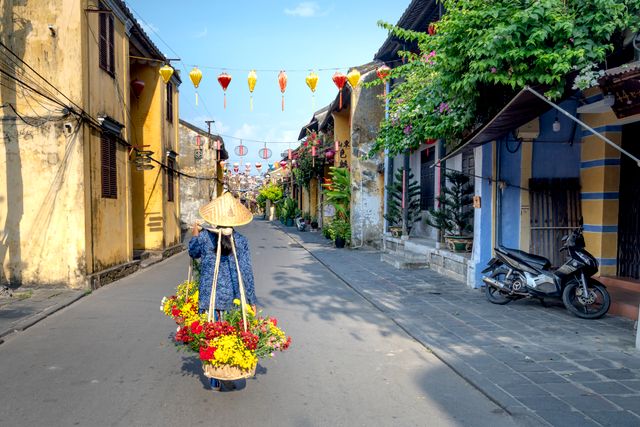
Vietnam is Hoka’s biggest footwear manufacturing base, with 6 of the 12 disclosed Hoka factories located there. The standout is Amara Vietnam Footwear Co., Ltd. in Nam Dinh, which employs 10,867 workers and is the largest single factory in Deckers’ March 2025 Tier 1 disclosure.
Other important sites include Ty Bach Co., Ltd. in Vinh Long, which produces Hoka exclusively, and Freetrend Industrial A in Thu Duc, Ho Chi Minh City, with 8,077 workers producing Hoka alongside UGG and Teva.
Vietnam’s role is still expanding. Deckers’ overall Tier 1 footprint there increased from 16 factories in March 2025 to 21 by April 2026, reinforcing its position as the group’s primary manufacturing cluster.
Indonesia: Hoka’s Other Core Production Country
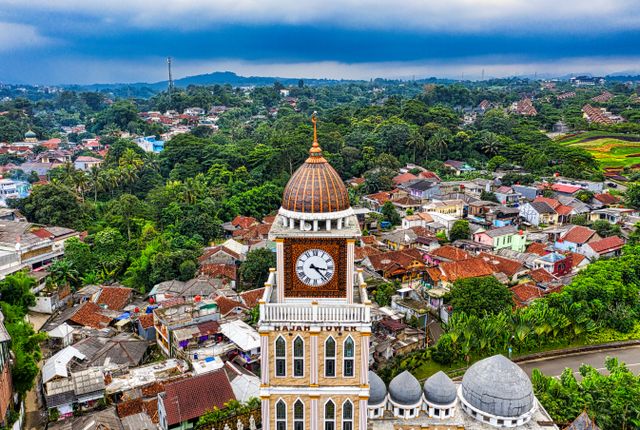
Indonesia is now just as important strategically as Vietnam. Deckers’ FY2026 10-K describes production as coming predominantly from Vietnam and Indonesia, which is a major update from older descriptions that focused almost entirely on Vietnam.
Hoka uses 3 factories in Indonesia, all located in Central or East Java. Two are particularly important because they manufacture Hoka only:
- PT Yih Quan Footwear Indonesia in Semarang, Central Java
- PT Pei Hai International Wiratama Indonesia in Jombang, East Java
The third, PT Adonia Footwear Indonesia, produces both UGG and Hoka. Two of Hoka’s three exclusive factories being located in Indonesia is a strong signal of how important the country has become to the brand’s production network.
China: Limited Assembly, Major Materials Role
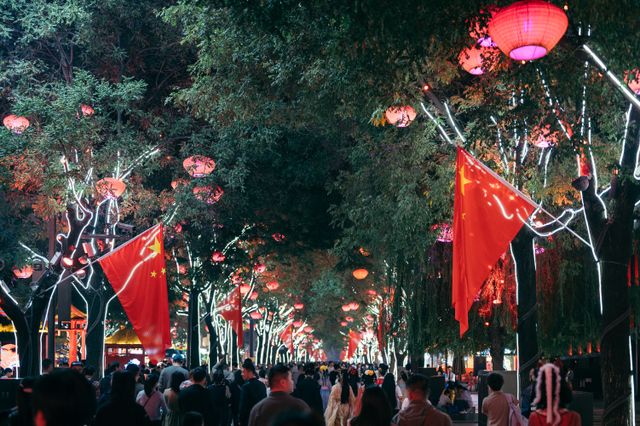
China now has just one disclosed Hoka footwear factory: Xuchang Reshine Shoes Industry Co., Ltd. in Henan, with 1,523 workers. Deckers also states that less than 5% of finished footwear production comes from China.
However, China remains deeply embedded in Hoka’s supply chain upstream. In March 2025, 144 of Deckers’ 272 Tier 2 material and component suppliers were located in China.
That is the more useful way to understand Hoka’s China exposure: assembly moved, materials stayed. A shoe assembled in Vietnam or Indonesia can still depend heavily on Chinese-made textiles, foam, rubber, and other components.
Cambodia and Thailand: Smaller Diversification Hubs
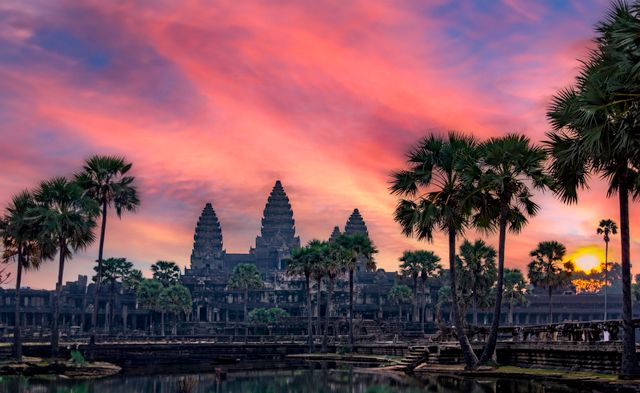
Hoka also uses one disclosed footwear factory in Cambodia and one in Thailand.
Shoe Premier II in Phnom Penh, Cambodia employs 3,387 workers and produces both UGG and Hoka. G L Bowron in Bangkok, Thailand employs 406 workers and manufactures several Deckers brands, including Hoka.
These countries are much smaller contributors than Vietnam or Indonesia, but they give Deckers additional production flexibility outside its two main hubs. For large footwear brands, that kind of diversification can help manage capacity, cost changes, and sourcing risk across different markets.
Where Are Specific Hoka Models Made?
Hoka does not publish fixed model-to-factory assignments, so the country of origin can vary between production runs. The table below reflects origins commonly seen on retail labels and should be treated as a guide, not a guarantee.
| Model / Line | Commonly Seen Origins | Notes |
| Clifton 9 / 10 | Typically Vietnam, Indonesia, sometimes China | Origin varies by production batch |
| Bondi 8 / 9 | Typically Vietnam, Indonesia | Check your own pair |
| Mach 6 / 7 | Commonly Vietnam, China | Batch-dependent |
| Speedgoat 5 / 6 | Commonly Vietnam | Trail line |
| Cielo X1 | Commonly Vietnam | Racing line |
| Hopara | Commonly Vietnam | Sandal/hybrid |
Why can the same Hoka model come from different countries? Deckers buys production capacity through individual purchase orders rather than relying on long-term manufacturing commitments. That gives it flexibility to allocate different runs according to factory capacity, cost, and supply-chain conditions. As a result, a Clifton made in Vietnam and another Clifton made in Indonesia can both be genuine.
How Can You Check Where Your Hoka Shoes Were Made?
For your exact pair, the product label is more reliable than any model-origin table.
- Check the tongue label. Look for the “Made in” line inside the shoe.
- Check the box label. The country of origin is usually repeated alongside the style and production information.
- Use the label as the final answer. Under 19 U.S.C. §1304, imported goods entering the US generally must be marked with their country of origin. In other words, the origin marking is a legal import requirement, not just decorative packaging.
So if you want to know where your Clifton, Bondi, Mach, or Speedgoat was actually made, check the label on the pair in your hands rather than assuming one country applies to every batch.
Why Does Hoka Manufacture in These Countries?
Hoka manufacturers in China, Vietnam, Cambodia, the Dominican Republic, and the Philippines for several strategic reasons.
These locations offer a balance of cost-efficiency, skilled labor, trade advantages, and supply chain stability, making them ideal for producing Hoka’s high-performance running and outdoor shoes.
1. Advanced Footwear Manufacturing Expertise
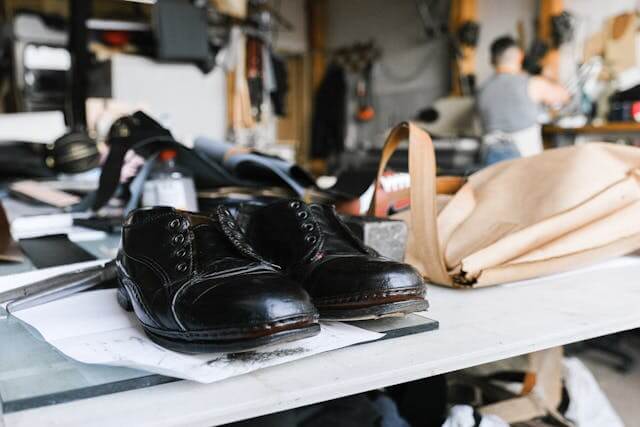
China and Vietnam, in particular, have decades of experience in producing sports and performance footwear. They provide:
- Highly skilled labor – Workers are trained in complex shoe assembly, including Hoka’s specialized cushioning technologies and durable outsoles.
- Cutting-edge technology – Factories in China and Vietnam use automated machinery for precise stitching, molding, and sole bonding, ensuring product consistency.
- Research & Development (R&D) support – Some of Hoka’s prototype testing and sample production occur in China before mass production.
2. Cost-Effective Production Without Sacrificing Quality
Labor costs in China have risen, but Vietnam, Cambodia, and the Philippines offer more affordable wages while maintaining high-quality standards. The cost advantages include:
- Lower wages in Vietnam and Cambodia compared to China – Reducing overall production costs.
- Optimized material sourcing – Proximity to textile and rubber suppliers helps lower material costs.
- Efficient large-scale production – High production capacity allows for mass manufacturing at competitive rates.
3. Trade Agreements and Tariff Benefits
Hoka benefits from trade agreements that help reduce import/export taxes:
- Vietnam is part of the CPTPP (Comprehensive and Progressive Agreement for Trans-Pacific Partnership), giving it favorable trade terms with key markets.
- Cambodia and the Philippines benefit from duty-free access to the EU and U.S. under preferential trade agreements.
- The Dominican Republic is part of CAFTA-DR (Central America-Dominican Republic Free Trade Agreement), making it easier to distribute shoes to North America.
These agreements allow Hoka to keep prices competitive in global markets.
4. Geographic Diversification for Supply Chain Stability
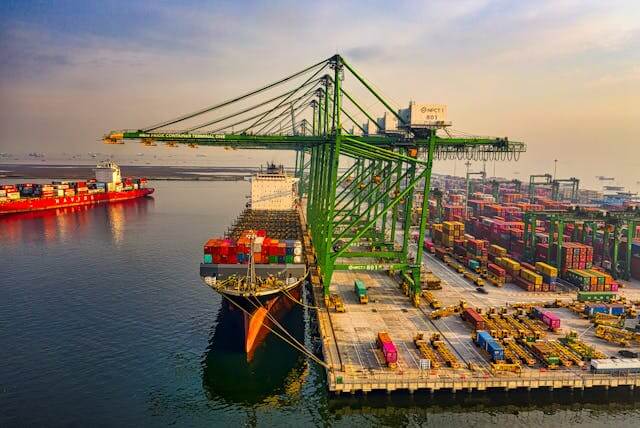
Manufacturing in multiple countries helps Hoka reduce risks related to tariffs, trade restrictions, and supply chain disruptions.
- China-Vietnam diversification – If issues arise in one country (e.g., factory shutdowns or tariffs), production can shift to the other.
- Cambodia and the Philippines – Help balance production loads and provide backup manufacturing options.
- The Dominican Republic – Acts as a regional hub to ensure faster deliveries to North America.
By spreading out production, Hoka minimizes risks and ensures steady supply to meet global demand.
The China → Vietnam → Indonesia Shift: Assembly Moved, Materials Stayed
Hoka’s manufacturing shift is easiest to see by comparing Deckers’ own disclosures year over year.
In its FY2025 10-K, Deckers said finished goods were sourced from Southeast Asia, “predominately from Vietnam.” By the FY2026 10-K, the wording had changed to “predominantly Vietnam and Indonesia.” That change matters because it shows Indonesia has moved from a secondary location to one of Deckers’ core production countries.
The Tier 1 factory counts point in the same direction:
| Country | March 2025 | April 2026 | Change |
| Vietnam | 16 | 21 | +5 |
| Indonesia | 8 | 10 | +2 |
| China | 12 | 9 | -3 |
For us, the important sourcing lesson is that Deckers is reducing its dependence on China for final assembly, while expanding capacity in Vietnam and Indonesia. But that only tells half the story.
In March 2025, 144 of Deckers’ 272 Tier 2 material and component suppliers were still based in China, compared with 84 in Vietnam and 12 in Indonesia. Even after the April 2026 update, China remained the largest Tier 2 base with 133 of 282 suppliers.
So the better way to describe Hoka’s supply chain is: assembly moved, materials stayed. A shoe assembled in Vietnam may still depend heavily on Chinese-sourced foam, textiles, rubber, or other components.
From our experience in Yiwu: Verifying material suppliers and managing tariff exposure are the #1 issues our clients face before working with us. Our on-ground team handles factory audits, supplier verification, and shipping planning so you don’t have to. Discuss your project.
2025–26 Tariffs: What They Mean for Hoka and Footwear Importers
The 2025 tariff changes became a real supply-chain cost for Deckers, and they show why sourcing geography now matters almost as much as factory pricing.
In May 2025, Deckers estimated that new tariffs could add up to $150 million to FY2026 cost of goods sold before mitigation. The company was less exposed to China than many footwear brands because under 5% of finished footwear came from there, but its heavy dependence on Vietnam created a different risk.
The pressure increased as the assumed US tariff on Vietnamese goods moved from 10% to 20%. By July 2025, Deckers revised its unmitigated tariff estimate to around $185 million.
Its response included:
- Selective US price increases beginning July 1, 2025
- Cost-sharing with factory partners
- Supply-chain mitigation intended to recover part of the added expense
- Continued diversification across Vietnam, Indonesia, Cambodia, and other production locations
Despite those headwinds, Deckers later raised HOKA’s FY2026 growth guidance to the mid-teens, suggesting the brand was able to absorb and manage a substantial portion of the disruption.
The tariff picture also changed again in FY2026. Deckers reported that certain tariffs imposed under the International Emergency Economic Powers Act (IEEPA) were invalidated by a US Supreme Court decision, although the company said the treatment of tariffs already paid remained uncertain.
For footwear importers, the broader lesson is clear: tariff exposure should be modeled before you commit production volume. Factory price alone does not determine landed cost. Assembly country, material origin, duty rates, shipping terms, and whether suppliers will share unexpected cost increases can materially change the economics of the same shoe.
The Manufacturing Process of Hoka Shoes
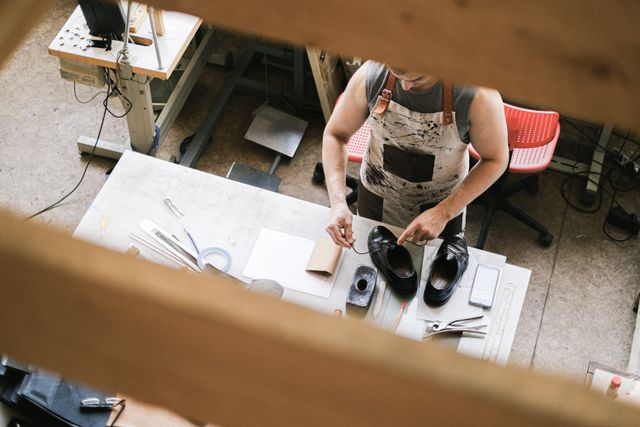
Hoka’s production process starts with product development and ends with assembly and quality control at its contract factories. The important part is that Deckers controls the specifications, while independent factories handle manufacturing.
- Design and athlete testing. Hoka’s product development is based in Goleta, California. Designs are tested with athletes before production, with features such as the brand’s oversized cushioning geometry and Meta-Rocker shape built into the specification.
- Materials are sourced. Hoka shoes typically use EVA-based foams, engineered mesh or knit uppers, and rubber outsoles. Deckers also reports the use of sugarcane-derived EVA in select products, although this should not be assumed to apply across the full Hoka range.
- Midsoles are molded. Hoka’s thick midsoles are generally produced using compression-molded foam constructions. Some models also use dual-density setups, combining different foam characteristics to balance cushioning and stability.
- Assembly, bonding, and QC. Contract factories stitch and assemble the upper, midsole, and outsole, then inspect finished footwear against Deckers’ specifications and supplier requirements. Factories are also subject to Deckers’ Ethical Supply Chain Supplier Code of Conduct and audit framework.
Ethics & Supply-Chain Transparency
Deckers gives us enough public data to evaluate Hoka’s supply chain on more than brand claims alone. In its FY2026 Statement Against Modern Slavery, Deckers says its products are made by independent third-party contractors, primarily in Asia, and that it actively monitors risks such as forced labor, child labor, wages, and worker health and safety.
Its transparency and compliance framework includes:
- Transparency Pledge participation. Deckers is a signatory and publicly maintains Tier 1 and Tier 2 supplier lists.
- Supply-chain mapping. It works with Infor Nexus to map suppliers and also publishes factory and supplier locations through Open Supply Hub.
- Regular audits. Tier 1 factories undergo announced and unannounced audits by Deckers’ own ethical sourcing team or accredited third parties.
- Recognized audit frameworks. Deckers references WRAP, SMETA, and BSCI, alongside tools such as FFC, SLCP, and Higg FSLM.
- Annual supplier certification. Suppliers must confirm compliance with the Ethical Supply Chain Supplier Code of Conduct and Restricted Substances Policy each year.
Importantly, Deckers also describes what happens after problems are found: corrective-action plans, more frequent audits, remediation, and, when necessary, termination of supplier relationships. Audit results feed into a Vendor Scorecard reviewed with suppliers and periodically by executive management.
So, are Hoka shoes ethically made? The safest answer is that Deckers has a relatively transparent, structured compliance system with public supplier disclosure and ongoing monitoring. That does not prove every factory is problem-free, but it gives buyers much more verifiable evidence than a simple ethical-sourcing claim.
What Footwear Sellers Can Learn from Hoka’s Supply Chain
Hoka’s sourcing model offers a useful blueprint for footwear sellers because it spreads risk across countries while keeping materials, factory capacity, and QC tightly controlled. The main lesson is to manage the whole supply chain, not just pick one factory and hope it scales.
1. Use multiple assembly countries to reduce tariff risk.
Deckers has expanded production across Vietnam, Indonesia, Cambodia, and Thailand rather than relying on a single country. For a growing footwear brand, a sourcing agent can apply the same logic by qualifying backup factories in different regions before volumes get large enough for tariffs or capacity shortages to become expensive problems.
2. Separate assembly from material sourcing.
Hoka shows why Vietnam or Indonesia for assembly and China for materials can be a practical combination. China still has the deepest supplier base for components such as foam, textiles, rubber, and hardware, even when final assembly happens elsewhere. That is why brands sourcing wholesale from China should evaluate Tier 2 suppliers as carefully as the assembly factory.
3. Keep purchase orders flexible.
Deckers buys production through individual purchase orders rather than locking every model into one factory long term. For smaller sellers, the equivalent is avoiding single-factory dependence and keeping at least one qualified backup supplier ready.
4. Judge quality by specifications and QC, not country.
Vietnam, Indonesia, and China can all produce high-spec footwear. What matters is the factory’s ability to follow your tech pack, material standards, tolerances, and inspection requirements. The same applies whether you are developing performance sneakers or wholesale women’s shoes.
In practice, this means your sourcing plan should cover factory selection, materials, QC, lead time, tariffs, and backup capacity together.
Ready to source footwear from China? NicheSources offers free product sourcing with quotes in 2 business days. Request a free quote today, no upfront cost.
Learn More:
- Where Are Salomon Shoes Made
- Where Are Adidas Made
- Where Are Keen Shoes Made
- Where Are Asics Made
- Where Are Puma Shoes Made
- Where are Nike Shoes Made
Frequently Asked Questions
Are Hoka Shoes Made in the USA?
No, Hoka shoes are not made in the USA. While Hoka is an American brand, its manufacturing takes place in overseas factories, primarily in China and Vietnam, with some production in other Asian countries.
These locations are chosen for their expertise in high-performance footwear manufacturing, access to advanced materials, and cost-efficient production.
Although Hoka doesn’t produce its shoes in the U.S., the brand is known for its rigorous quality control and innovative design processes, ensuring that its products meet high standards regardless of where they are made.
Which Company Is Behind Hoka Shoe Production?
Hoka shoes are produced by Deckers Brands, a global footwear company. Deckers also owns other popular shoe brands like Ugg and Teva.
Deckers Brands oversees the design, manufacturing, and distribution of Hoka shoes worldwide. Their expertise in the footwear industry has helped Hoka grow into a recognized brand for running and athletic shoes.
Are Hoka Shoes Made in the Same Factories as New Balance?
Hoka and New Balance have different manufacturing locations. Hoka shoes are primarily made in countries like Vietnam, China, Cambodia, Dominican Republic, and Philippines.
New Balance, on the other hand, produces some of its shoes in the United States and the United Kingdom. While both brands may use factories in Asia, they likely have separate manufacturing partnerships and facilities.
What Other Footwear Brands Are Made in China?
Many major footwear brands have production facilities in China. These include:
Nike
Adidas
Skechers
Puma
Reebok
China’s established manufacturing infrastructure and skilled workforce make it an attractive location for shoe production.
Are all Hoka factories dedicated only to Hoka?
No. Only three of the 12 Hoka footwear factories disclosed in March 2025 were Hoka-exclusive. Ty Bach in Vietnam, PT Yih Quan in Indonesia, and PT Pei Hai in Indonesia listed Hoka as their only Deckers brand. The remaining factories also manufactured products for brands such as UGG and Teva.
This does not mean products share specifications or production standards; contract factories can run separate lines and processes for multiple customers or brands within the same facility
What is the difference between Hoka’s Tier 1 and Tier 2 suppliers?
Tier 1 factories make or assemble finished products, while Tier 2 suppliers provide materials and components used by those factories. This distinction explains why a shoe’s country-of-origin label tells only part of the sourcing story.
A Hoka assembled in Vietnam may use materials supplied from China or another country. Deckers publicly tracks both levels of its network, reporting 45 Tier 1 factory partners and 282 Tier 2 suppliers in its April 2026 footprint.
Can Hoka’s manufacturing countries change from year to year?
Yes. Deckers regularly adjusts its supplier network, so factory counts and production allocation can change. Between March 2025 and April 2026, Deckers’ Tier 1 footprint in Vietnam increased from 16 to 21 factories, Indonesia grew from 8 to 10, and China declined from 12 to 9.
That is why older articles can quickly become inaccurate. For sourcing research, we prefer the latest Deckers factory disclosures rather than assuming a country breakdown remains fixed from one year to the next.
Does “Made in China” mean a Hoka shoe is fake?
No. A Made-in-China label does not make a Hoka counterfeit. Deckers’ March 2025 disclosure lists Xuchang Reshine Shoes Industry Co., Ltd. in Henan as an authorized factory producing Hoka alongside other Deckers brands.
China accounts for a relatively small share of finished footwear production today, which may make Chinese-made pairs less common, but legitimate production still exists there.
When checking authenticity, focus on the seller, product identifiers, construction, packaging, and origin markings together rather than the country alone
What happens if a Hoka supplier fails a Deckers compliance audit?
Deckers says non-compliance can trigger corrective action, additional audits, remediation, or ultimately termination of the supplier relationship.
Its FY2026 Statement Against Modern Slavery explains that audit findings feed into a Vendor Scorecard reviewed with suppliers and periodically by executive management.
Deckers says it generally works with factories to correct problems rather than immediately ending the relationship, but persistent failure to meet expectations can lead to termination.
The company also specifically monitors and responds to risks involving child labor, forced labor, wages, and workplace safety.
Can smaller footwear brands copy Hoka’s manufacturing strategy?
They can copy the structure, although usually at a smaller scale. The useful model is to separate material sourcing from final assembly, maintain backup manufacturing options, document specifications carefully, and avoid becoming dependent on one supplier.
Smaller brands may not have enough volume to qualify multiple large factories immediately, so this often happens gradually. A sourcing agent can help compare MOQ, lead time, material availability, QC capability, and landed cost before shifting production between China and Southeast Asian footwear suppliers.