You can have the designs, fabric direction, and branding ready, then hit a wall when the first factory comes back with a 3,000-piece MOQ per style. That is why choosing the right manufacturer is less about finding “a pajama factory” and more about matching your order size, fabric, compliance needs, and customization level to the right production model.
A pajama manufacturer produces sleepwear such as pajama sets, robes, nightgowns, and loungewear for other brands and retailers. Depending on the supplier, production may include private label customization, OEM/ODM development, or ready-made wholesale. Across the manufacturers we verified, MOQ requirements range from just 30 pieces to 10,000 pieces per style.
Quick Facts
| Detail | What We Found |
| Manufacturers reviewed | 22 |
| MOQ range | 30–10,000 pieces per style |
| Regions covered | China, Vietnam, Turkey, USA, UK, Australia, and Poland |
| Verification date | September 2026 |
| Lowest verified startup MOQ | 30 pieces |
| Supplier types included | Factories, factory/trading hybrids, trading companies, US/UK-managed hybrids, brands, and distributors |
The list includes 13 China-based options alongside manufacturers or supplier models in Vietnam, Turkey, the USA, the UK, Australia, and Poland.
22 Pajama Manufacturers at a Glance
Use this table to narrow the list by location, supplier type, MOQ, and use case before reviewing each manufacturer in detail. The list includes direct factories as well as trading companies, hybrid production models, and wholesale-only suppliers, so check the Type column carefully.
| Manufacturer | Location | Type | MOQ | Best For |
| Qingdao Glamour (Essence/Grace) | Qingdao, China | Factory | 100 pcs | Matching family pajamas and certified fabric options |
| PJGarment | Shantou, China | Factory | 100 pcs | Brands wanting a sleepwear-focused manufacturer |
| Cnpajama | Huzhou, China | Factory + partner network | Contact | High-volume wholesale and broad fabric selection |
| Hongyu Apparel | Dongguan, China | Factory + trading hybrid | 50–100 pcs | New brands needing design and development support |
| ZEKA Apparel | Dongguan, China | Factory | 30–50 pcs | Startups testing very small custom runs |
| PajamaWorks | Dongguan, China | Factory | 100 pcs | Buyers prioritizing an SGS-audited supplier |
| Shanghai Easun Group | Shanghai, China | Factory + trading group | Contact | Sleepwear bundled with home textiles or hotel products |
| Wuhan Dolucky | Wuhan, China | Factory | Contact | Larger knit sleepwear programs |
| Jspeed Industry | Shanghai, China | Factory group | 100 pcs | Brands requiring stronger compliance documentation |
| MGOO Fashion | Foshan, China | Factory | 50–100 pcs | Custom pajamas using sustainable-positioned fabrics |
| Wujiang First Textile | Suzhou, China | Factory | Contact | Luxury silk sleepwear programs |
| Shaoxing Jiarong | Shaoxing, China | Trading company | 100 pcs | Low-MOQ stock sleepwear and wearable blankets |
| Thygesen Vietnam | Phu Tho, Vietnam | Factory | 3,000–10,000 pcs | Large-volume programs requiring audited compliance |
| NARKONTEKS | Izmir, Turkey | Factory | Contact | EU-focused brands needing large-scale production |
| Royal Apparel | New York, USA | Factory | No MOQ on blanks; 1,200+ custom | Made-in-USA organic knitwear |
| Cord Apparel | Texas, USA | US-managed hybrid | 50 pcs | US startups testing small custom runs |
| Argus Apparel | Los Angeles, USA | US-managed hybrid | 100 pcs | US-based product development with offshore production |
| Hawthorn | London, UK | UK-managed hybrid | 50 pcs | UK and EU startups wanting local account management |
| GINIA | Sydney, Australia | Brand-wholesale | Wholesale terms | Retailers stocking established luxury sleepwear |
| MADA | Olsztyn, Poland | Distributor | Wholesale terms | EU retailers sourcing ready-made sleepwear |
| Nanchang Kingshine | Nanchang, China | Factory | 100–200 pcs | Buyers combining sleepwear with activewear |
| Quanzhou Body-Fits | Quanzhou, China | Trading company | Low; dropshipping supported | Fast-dispatch wholesale and dropshipping |
The MOQ differences are substantial: startup-friendly suppliers can begin around 30–100 pieces per style, while volume manufacturers such as Thygesen work at 3,000–10,000 pieces per style. Several suppliers do not publish fixed minimums, so those should be confirmed against your fabric, customization, and order size when requesting a quote.
Which Pajama Manufacturer Should You Choose?
Use these four filters to narrow the list in about 30 seconds:
- Order quantity: Choose ZEKA Apparel, Cord Apparel, or Hawthorn if you need fewer than 100 pieces. Choose PJGarment, MGOO Fashion, Hongyu Apparel, or Jspeed for roughly 100–500 pieces. Choose Qingdao Glamour, Cnpajama, or Wuhan Dolucky for 500–2,000-piece programs. Choose Thygesen Vietnam or NARKONTEKS if you are sourcing 2,000+ pieces and need large-scale production.
- Fabric preference: Choose Wujiang First Textile for specialist silk production. Choose MGOO, Royal Apparel, or Thygesen if bamboo, organic, or other sustainability-positioned fabrics are central to your line. Choose Cnpajama for larger fleece or flannel programs.
- Private label vs. ready-made: Choose a factory if you want custom/private-label pajamas with your own labels, packaging, fabrics, or designs. Choose GINIA for ready-made luxury sleepwear or MADA for multi-brand wholesale stock if you are a retailer that does not need custom manufacturing.
- Domestic vs. overseas: Choose Royal Apparel if verified Made-in-USA production is essential. Choose Cord Apparel, Argus Apparel, or Hawthorn if you want US/UK-based communication with overseas production options. Choose a China-based factory if factory-direct sourcing, broader supplier choice, and customization are your priorities.
Types of Pajama Manufacturers
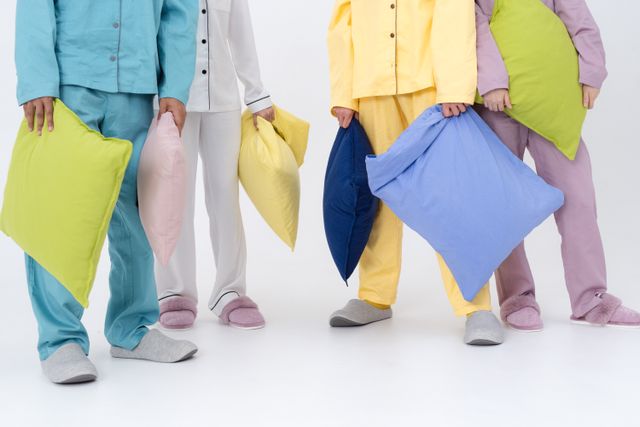
Not every pajama supplier works the same way. Before comparing prices or MOQs, we usually separate them by how they sell and how production is actually handled, because that determines your level of customization, control, and risk.
Private Label Manufacturers
Private label manufacturers let you put your branding on an existing product or base pattern, usually with changes to fabric, colors, labels, packaging, or minor design details.
This is often the most practical route for newer brands because product development is faster and less expensive than building a pajama style from scratch. Qingdao Glamour is one example from this list, offering branded sleepwear programs across pajama sets, robes, maternity, baby, and matching-family styles.
Wholesale Pajama Suppliers
Wholesale suppliers sell existing sleepwear styles in bulk rather than developing an exclusive product for your brand. You usually get lower development costs and faster ordering, but less differentiation.
Shaoxing Jiarong is a good example. It operates as a trading company in the Keqiao textile market and focuses on stock sleepwear, loungewear, robes, flannel pants, and wearable blankets at relatively low MOQs.
OEM Pajama Manufacturers
OEM manufacturers produce from your specifications. You typically provide a tech pack, measurements, construction details, fabric requirements, labels, and packaging instructions, and the factory manufactures the product accordingly.
Jspeed Industry fits this model well. It operates multiple factories and supports custom sleepwear production for brands that need more control over specifications and compliance documentation.
ODM Pajama Manufacturers
ODM manufacturers provide an existing product-development base that you can modify and brand. This works well if you do not have your own patterns or a complete tech pack.
Hongyu Apparel is one example because it combines manufacturing with design and development support for independent brands, making it more suitable for buyers who need help turning an idea into a production-ready style.
Factory vs. Trading Company vs. Brand or Distributor
The business model behind the supplier matters just as much as whether it offers OEM or private label.
| Supplier Type | How It Works | Example |
| Factory | Owns or directly operates production lines, giving you more direct control over manufacturing and QC. | Wuhan Dolucky, a vertically integrated knitwear manufacturer with its own fabric and garment production. |
| Trading company | Sources from partner factories and manages orders, communication, and sometimes consolidation. | Quanzhou Body-Fits, which works through partner factories and focuses on wholesale and dropshipping. |
| Brand / distributor | Sell finished products for resale rather than manufacturing products under your label. | MADA, a Polish distributor selling ready-made sleepwear from multiple brands through its B2B platform. |
A trading company is not automatically a poor choice. For smaller buyers, it can simplify sourcing across several categories. But if you need custom fabric, tighter QC control, or large-scale OEM production, we would usually prioritize a manufacturer with direct production capability.
22 Pajama Manufacturers to Consider in 2026
We grouped the suppliers by geography and business model so you can compare like with like. Some are dedicated sleepwear factories, others are broader apparel manufacturers, hybrids, trading companies, or wholesale-only options, so the Type and Ideal For fields matter as much as MOQ.
China Sleepwear Specialists
1. Qingdao Glamour Garment
Qingdao Glamour is a vertically integrated sleepwear manufacturer that also operates under the Essence Garment and Grace Sleepwear names. Its range is especially strong in matching-family and seasonal programs, with bamboo, modal, and organic cotton options available.
- Key products: Pajama sets, matching family and Christmas pajamas, robes, maternity and baby pajamas, plus sizes
- Location: Qingdao, Shandong, China
- Type: Vertical factory
- MOQ: Around 100 pcs
- Verification note: Alibaba Custom Manufacturer; OEKO-TEX 100 and CPC shown as verified, while BSCI/GOTS/GRS options are company-stated
- Ideal For: Mid-market brands sourcing matching-family programs with certified fabric options
2. PJGarment
PJGarment stands out because its catalog is focused entirely on sleepwear rather than general apparel. The Shantou operation runs eight production lines and states that it uses AQL 2.5 quality control.
- Key products: Pajama sets, robes, onesies, nightgowns, matching-family, maternity and plus-size sleepwear
- Location: Shantou, Guangdong, China
- Type: Sleepwear factory
- MOQ: 100 pcs/design
- Verification note: Legal entity Shantou Mubiaolong Clothing Co., Ltd. was third-party corroborated; ISO 9001 is self-claimed
- Ideal For: Brands that want a dedicated sleepwear supplier at a relatively low MOQ
3. Cnpajama
Cnpajama combines its own Huzhou factory with a wider partner-factory network, giving it access to an unusually broad fabric mix. That makes it more suited to buyers sourcing multiple sleepwear categories or materials through one supplier relationship.
- Key products: Fleece, coral fleece, flannel, jersey, satin and silk pajamas, robes, nightgowns, loungewear
- Location: Huzhou, Zhejiang, China
- Type: Factory + partner network
- MOQ: Contact supplier
- Verification note: Operating history was corroborated through web archives and a 2025 trade report
- Ideal For: Volume buyers that need a broad fabric range from one supplier
4. Hongyu Apparel
Hongyu is a broader custom-apparel manufacturer with factory roots dating back to 2003 and a legal entity registered in 2012. Sleepwear is one category within its wider offering, but its design and development support can be useful for founders who do not yet have production-ready specifications.
- Key products: Custom sleepwear, private-label apparel, general garments
- Location: Dongguan, Guangdong, China
- Type: Factory + trading hybrid
- MOQ: 50–100 pcs
- Verification note: Alibaba supplier history and platform performance data were available
- Ideal For: New brands that need design support alongside relatively low MOQs
5. ZEKA Apparel
ZEKA is a Humen knitwear factory founded in 2014 that has expanded into sleepwear. Its main advantage is order flexibility, although pajamas remain a secondary category and we could not verify independent customer reviews.
- Key products: Silk, bamboo and organic-cotton sleepwear; knitwear
- Location: Dongguan, Guangdong, China
- Type: Factory
- MOQ: 50 pcs/style; 30 pcs for some complex designs is company-stated
- Verification note: Alibaba-listed legal entity; no independent reviews found and no certifications verified
- Ideal For: Startups testing very small sleepwear runs
6. PajamaWorks
PajamaWorks is the sleepwear arm of an SGS-audited Alibaba Verified Manufacturer in Humen. The underlying factory has a longer apparel history, but the PajamaWorks sleepwear operation itself is newer, so we would still ask for recent sleepwear references before placing a larger order.
- Key products: Pajama sets, robes, nightwear, loungewear, labels and packaging
- Location: Dongguan, Guangdong, China
- Type: Factory
- MOQ: 100 pcs/design
- Verification note: SGS-audited Alibaba Verified Manufacturer status confirmed in 2026
- Ideal For: Buyers who value audited factory credentials and are comfortable with a newer sleepwear division
Established China Manufacturers
7. Shanghai Easun Group
Shanghai Easun combines manufacturing facilities with an import/export trading arm. Sleepwear is one part of a much broader home-textile and hotel-supplies business, which can be useful if you want to consolidate complementary products.
- Key products: Sleepwear, nightdresses, blankets, slippers, bedding
- Location: Shanghai, China
- Type: Factory + trading group
- MOQ: Contact supplier
- Verification note: Registry status, TÜV assessment and US customs activity were identified
- Ideal For: Buyers combining sleepwear with home-textile or hospitality products
8. Wuhan Dolucky Knitwears
Wuhan Dolucky is a vertically integrated knitwear manufacturer operating since 1993, with its own fabric plant and garment factories. Its in-house knitting, dyeing, printing and cutting capabilities make it better suited to larger knit programs than small experimental runs.
- Key products: Nightdresses, robes, one-, two- and three-piece pajama sets
- Location: Wuhan, Hubei, China
- Type: Vertical knit factory
- MOQ: Contact supplier
- Verification note: US trade records were found through August 2026; recent export mix skews toward women’s knit tops, so current sleepwear capacity should be reconfirmed
- Ideal For: Established brands sourcing knit sleepwear at scale
9. Jspeed Industry
Jspeed operates knitted and woven factories in China and has the strongest independently verified retailer history among the China entries in this list. Its documented Disney FAMA, BSCI and OEKO-TEX credentials make it particularly relevant for brands with stricter compliance requirements.
- Key products: Women’s sleepwear, nightgowns, pajama sets, lingerie, bras, swimwear
- Location: Shanghai HQ; factories in Fujian and Anhui
- Type: Factory group
- MOQ: 100 pcs custom
- Verification note: Disney FAMA, BSCI and OEKO-TEX 100 certificates verified; retailer history includes Target, Disney, TJ Maxx and LPP
- Ideal For: Brands requiring stronger retailer-grade compliance documentation
10. MGOO Fashion
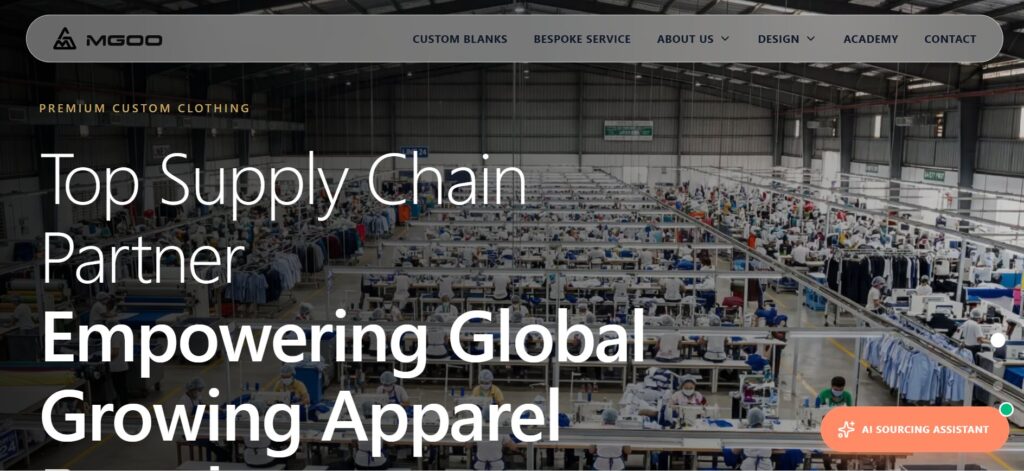
MGOO is a custom apparel factory with in-house printing and embroidery. Its sustainable-positioned fabric options come from partner mills rather than in-house textile production, which is worth clarifying when reviewing certification scope.
- Key products: Custom pajama sets, robes, satin sleepwear, recycled and sustainability-positioned fabrics
- Location: Foshan, Guangdong, China
- Type: Factory
- MOQ: Around 50–100 pcs
- Verification note: SGS-verified Alibaba supplier; Sedex audits are self-reported and GRS/GOTS relate to partner fabric mills
- Ideal For: Startups seeking custom pajamas with sustainable-fabric options
11. Wujiang First Textile
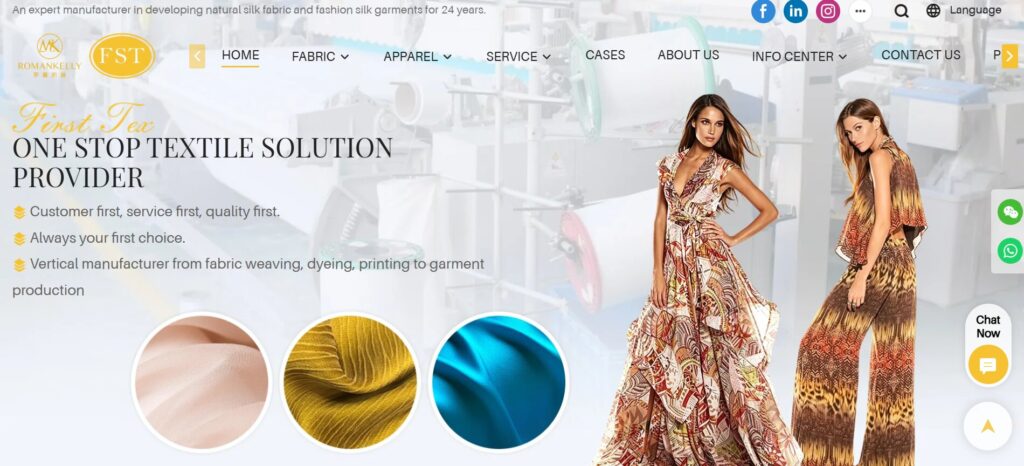
Wujiang First Textile is a vertical silk specialist in Shengze, one of China’s major silk-production centers. It handles weaving, dyeing or printing, and sewing within the same operation, giving luxury brands more control over the fabric-to-garment process.
- Key products: Silk pajamas, robes, eye masks, bedding, scarves
- Location: Suzhou, Jiangsu, China
- Type: Vertical silk factory
- MOQ: Contact supplier
- Verification note: Made-in-China Audited Supplier; OEKO-TEX 100 certified silk
- Ideal For: Luxury brands developing 100% silk sleepwear
12. Shaoxing Jiarong Home Products
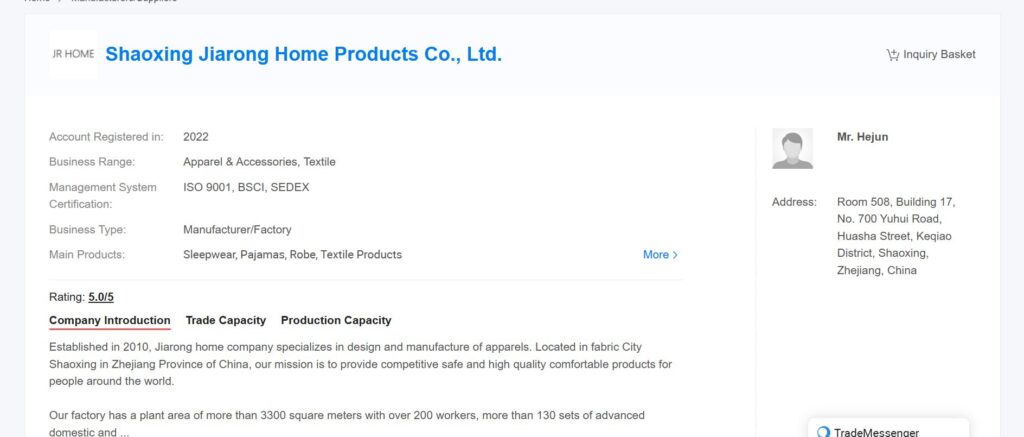
Shaoxing Jiarong is a trading company based in the Keqiao textile market rather than a direct factory. It sources from nearby manufacturers and consolidates stock products, which can make smaller wholesale orders easier but introduces a trading-company markup.
- Key products: Stock sleepwear, loungewear, wearable blankets, robes, flannel pants
- Location: Shaoxing, Zhejiang, China
- Type: Trading company
- MOQ: 100 pcs
- Verification note: Alibaba supplier profile verified; no certifications independently confirmed
- Ideal For: Small retailers wanting stock sleepwear without developing custom products
Vietnam
13. Thygesen Textile Vietnam
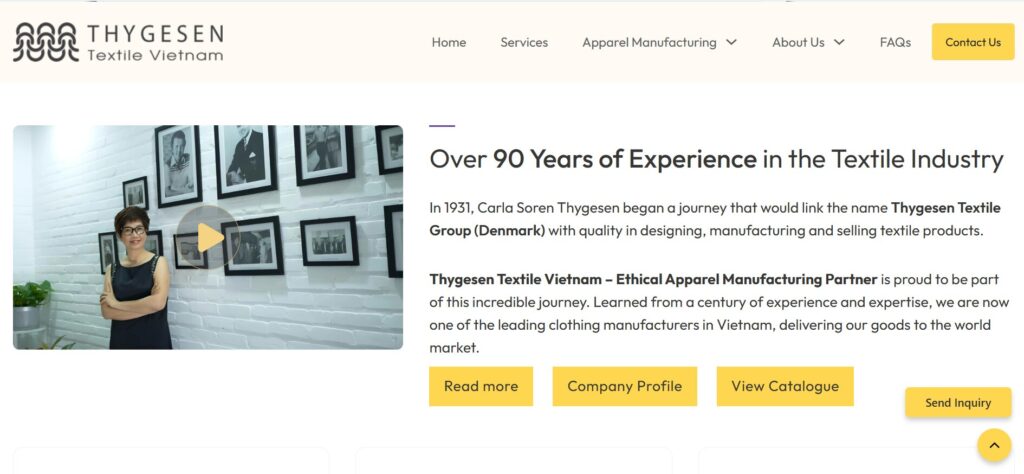
Thygesen Vietnam is a Danish-owned manufacturing group with knitting and garment facilities in Vietnam. Its compliance stack is one of the strongest on this list, but its 3,000–10,000-piece MOQs place it firmly in the scaling-brand rather than startup category.
- Key products: OEM/ODM pajamas, bamboo programs, GOTS/GRS/FSC fabrics, Tencel
- Location: Phu Tho, Vietnam
- Type: Vertical factory
- MOQ: 3,000–10,000 pcs/style
- Verification note: Registration cross-checked with Vietnam’s National Business Portal; certifications include ISO, OEKO-TEX, SA8000, WRAP and Better Work
- Ideal For: Established brands that need audited compliance at high volumes
Turkey
14. NARKONTEKS
NARKONTEKS is a large Turkish underwear and nightwear manufacturer operating across several production sites. Its combination of large-scale capacity and relatively short road-freight times into Europe makes it particularly relevant for EU-focused brands.
- Key products: Nightwear, homewear, loungewear, underwear, thermal and beachwear
- Location: Izmir, Turkey
- Type: Factory
- MOQ: Contact supplier
- Verification note: Registry and TÜBİTAK records corroborate the entity; certification profile includes ISO, BSCI, SEDEX, Disney FAMA and OEKO-TEX 100
- Ideal For: EU brands sourcing certified large-scale sleepwear production
USA
15. Royal Apparel
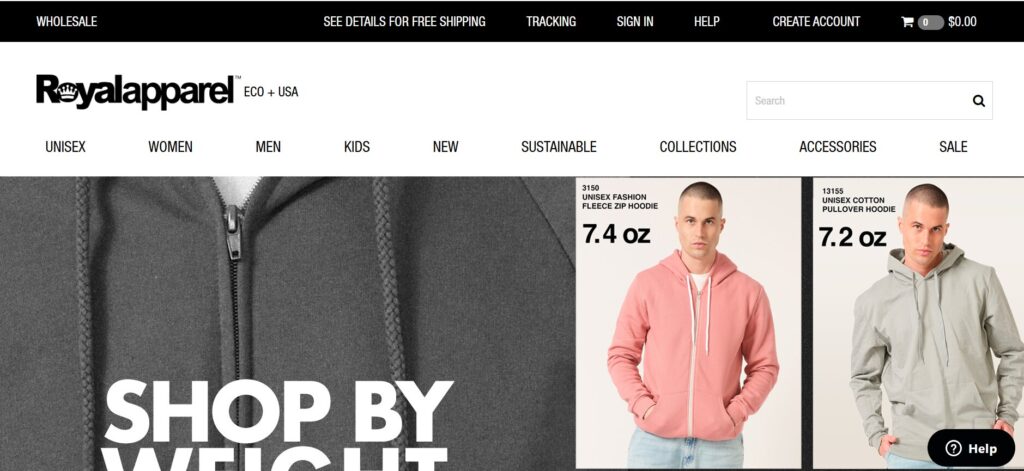
Royal Apparel is the clearest Made-in-USA manufacturing option in this list, with production in New York. Its sleepwear assortment is more knit-loungewear oriented than classic woven pajama sets, so product fit should be checked before shortlisting it.
- Key products: Sleep tees, lounge pants, thermals, kids’ one-pieces
- Location: Hauppauge, New York, USA
- Type: Factory
- MOQ: No minimum on blanks; around 1,200–1,800 units/style/color for custom
- Verification note: Made-in-USA operation corroborated through third-party industry sources
- Ideal For: Brands prioritizing US manufacturing and organic knitwear
16. Cord Apparel
Cord Apparel uses a hybrid model: US-based project management and smaller-run support, with global production partners available for larger orders. That can make communication easier for US startups, but you should confirm the country of manufacture for each specific quote.
- Key products: Pajama sets, couple sets, robes, bamboo, silk and cotton programs
- Location: Missouri City, Texas, USA
- Type: US-managed hybrid
- MOQ: Around 50 pcs/style
- Verification note: MOQ corroborated by multiple sources; no independent reviews found
- Ideal For: US startups wanting small test runs with domestic account management
17. Argus Apparel
Argus Apparel handles product development in Los Angeles while using offshore manufacturing for production. This structure can suit brands that want US-based patterns, tech packs and account management without paying fully domestic production costs.
- Key products: Custom and private-label pajamas in bamboo, silk, modal and organic cotton
- Location: Los Angeles, California, USA
- Type: US-managed hybrid
- MOQ: Around 100 pcs/style
- Verification note: Company profile corroborates basic business details; no independent reviews were found
- Ideal For: Brands wanting US-based development with offshore production economics
UK
18. Hawthorn
Hawthorn is a UK-registered apparel manufacturer that manages clients from London while using overseas production. It offers low minimums, but it is a general apparel supplier rather than a dedicated sleepwear specialist.
- Key products: Loungewear, sleepwear, custom apparel, tech-pack development
- Location: London, UK; overseas production
- Type: UK-managed hybrid
- MOQ: 50 pcs/style
- Verification note: UK registration and stated MOQ were corroborated
- Ideal For: UK and EU startups wanting local communication with low minimums
Brand & Distributor Options
19. GINIA
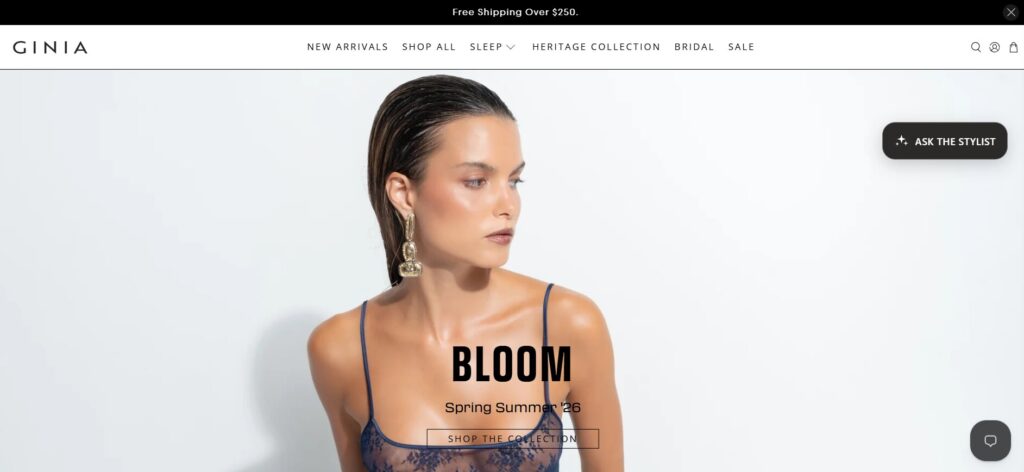
GINIA is a luxury sleepwear brand rather than a private-label manufacturer. It offers wholesale and stockist relationships, making it relevant for retailers that want finished premium sleepwear instead of developing their own collection.
- Key products: 19-momme silk pajamas, cotton, cashmere and wool sleepwear, robes and slips
- Location: Sydney, Australia
- Type: Brand-wholesale
- MOQ: Wholesale terms
- Verification note: Current retail presence and wholesale materials were identified
- Ideal For: Retailers stocking established luxury sleepwear
20. MADA
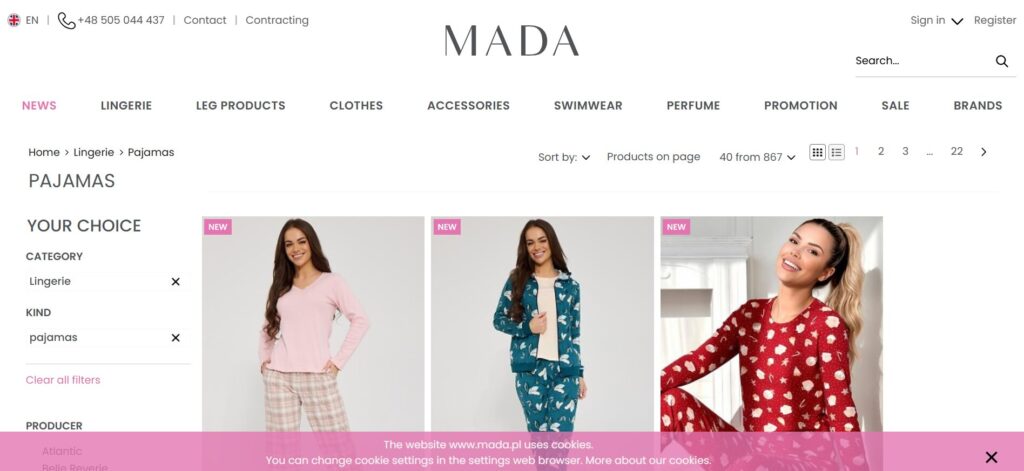
MADA is a Polish B2B distributor rather than a factory. It supplies ready-made products from multiple sleepwear and lingerie brands, which makes it more useful for retailers than businesses seeking custom manufacturing.
- Key products: Pajamas, nightshirts, robes, hosiery and lingerie
- Location: Olsztyn, Poland
- Type: Distributor
- MOQ: Wholesale terms
- Verification note: Active Polish corporate registration verified
- Ideal For: EU retailers sourcing ready-made sleepwear through a B2B distributor
Manufacturers With Important Caveats
21. Nanchang Kingshine Garment
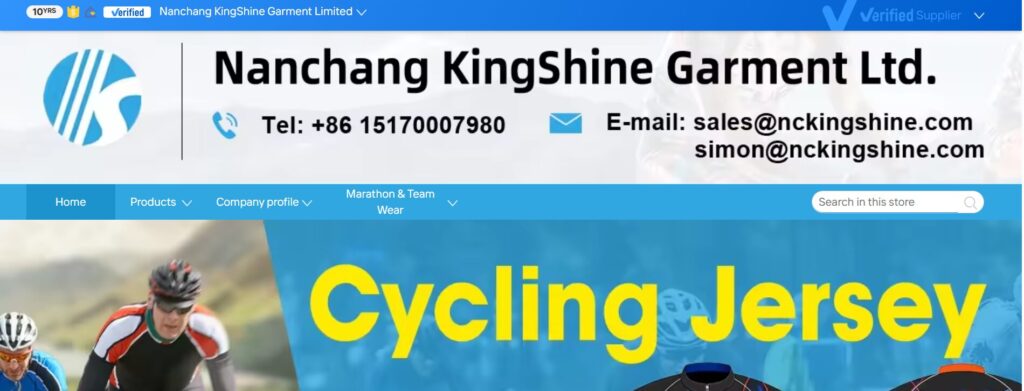
Nanchang Kingshine is a TÜV-verified manufacturer with genuine production capacity, but its current product mix has shifted toward activewear and uniforms. Sleepwear remains available, although we would confirm current production experience before using it for a pajama-only program.
- Key products: Fleece and loungewear sets, activewear, uniforms
- Location: Nanchang, Jiangxi, China
- Type: Factory
- MOQ: 100–200 pcs
- Verification note: TÜV verification and recent US import records were found; sleepwear is now a secondary line
- Ideal For: Buyers combining sleepwear and activewear with one supplier
22. Quanzhou Body-Fits
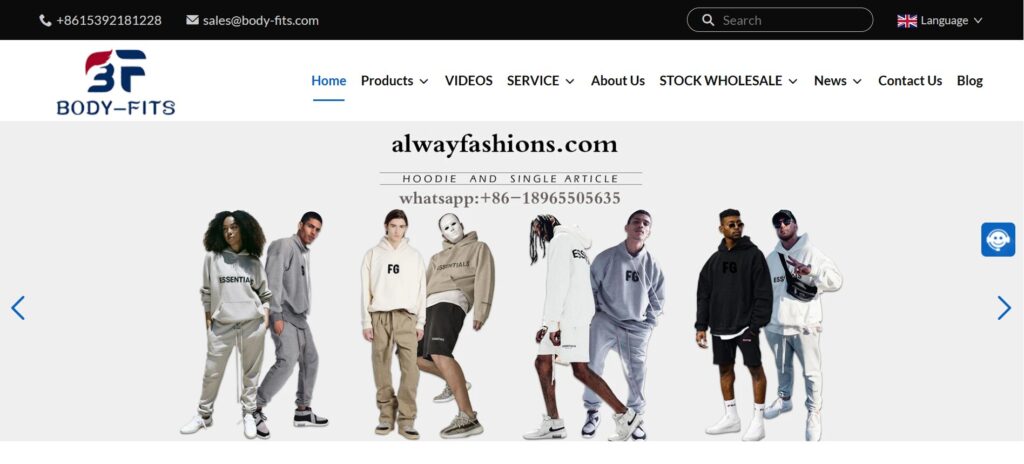
Body-Fits is a trading company that works with partner factories and focuses heavily on fast-dispatch wholesale and dropshipping. It can suit sellers prioritizing speed and low order thresholds, but some designer-style listings create IP risk, so we would stick to generic or clearly authorized designs.
- Key products: Women’s sleepwear, satin pajama sets, robes, onesies
- Location: Quanzhou, Fujian, China
- Type: Trading company
- MOQ: Low; dropshipping supported
- Verification note: Made-in-China Diamond Member; some capacity and certification claims remain company-stated
- Ideal For: Sellers looking for fast-dispatch wholesale or dropship sleepwear rather than custom development
What MOQ Really Means for Pajamas
For pajamas, MOQ is usually driven by fabric minimums rather than sewing capacity. A factory may be perfectly capable of sewing 50 sets, but if your custom color or print requires a minimum dye or printing run, the fabric mill effectively sets the order minimum.
A practical MOQ ladder looks like this:
| Production Route | Typical MOQ | Why the MOQ Changes |
| Stock fabric | 50–150 pcs | The factory buys fabric already available in existing colors or prints, so there is no custom dye lot to fund. |
| Custom dyed or printed fabric | 300–600 pcs | Custom Pantone colors or prints require minimum fabric runs before cutting and sewing begin. |
| Vertical mill production | 1,000+ pcs | Factories knitting or producing their own fabric need longer machine runs to make setup economically viable. |
This is why some low-MOQ pajama manufacturers can accept 30–50-piece test orders: they are typically working with stock fabric or existing materials rather than producing a custom textile from scratch.
For a startup, we would usually test the product using stock fabric first and reserve custom dyeing or printing for a repeat order once demand is clearer. Scaling brands have more room to meet 300–600-piece fabric minimums and gain tighter control over colors, prints, and material specifications.
How Much Does Pajama Manufacturing Cost?
Factory pricing depends heavily on fabric because the material itself can account for roughly 40–50% of the production cost. For a standard two-piece pajama set, these are useful 2026 reference ranges from the supplier data we reviewed.
| Fabric / Product | Typical Factory Cost per Set | Common Positioning |
| Cotton jersey | $5–12 | Everyday basics, volume retail |
| Satin / polyester charmeuse | $4–10 | Gifting, fashion-focused collections |
| Bamboo viscose / modal | $8–18 | Premium comfort, softer hand feel |
| Silk (19–22 momme) | $20–60+ | Luxury sleepwear |
| Kids’ cotton or bamboo sets | $4–12 | Children’s sleepwear |
These figures are best treated as quote benchmarks, not fixed prices. Construction complexity, custom dyeing, embroidery, trims, packaging, and order volume can all move the final factory price.
From Factory Price to Landed Cost
The FOB price is only the starting point. Your landed cost also needs to account for:
- international freight;
- import duties based on fabric composition and garment classification;
- customs and clearance costs;
- quality inspection or sourcing fees where applicable.
As a practical example from the underlying cost model, a kids’ bamboo pajama set quoted around $8–12 FOB can land at roughly $8–15 per set after freight and duty are added.
For budgeting, we would compare suppliers on landed cost rather than factory price alone. A factory that quotes $1 less per set can still be more expensive overall if freight is higher, defect rates are worse, or the order requires extra inspection and rework.
Which Fabric Is Best for Pajamas?
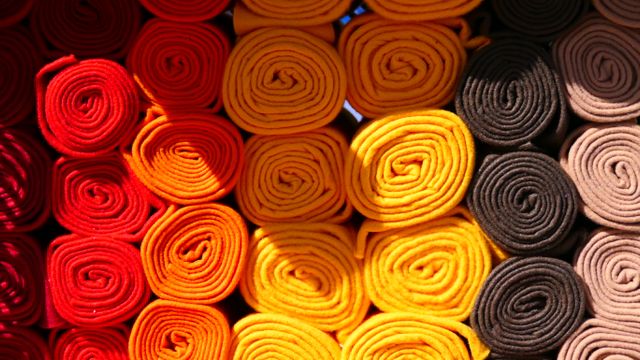
Fabric choice affects comfort, durability, positioning, labeling, and manufacturing cost. We usually narrow it down by the customer segment first, then confirm the GSM or momme specification before sampling.
| Fabric | Positioning | Spec to Request | Main Pitfalls |
| Cotton | Everyday, breathable, durable sleepwear | 140–180 GSM jersey; 120–160 GSM flannel | Can shrink if not pre-shrunk; lower-grade dye lots may fade |
| Bamboo viscose | Soft, premium-feel, temperature-regulating sleepwear | 160–220 GSM; pre-shrunk | Lower-quality knits can pill. In the US, the FTC requires appropriate labeling such as “rayon made from bamboo” rather than simply “bamboo” for regenerated rayon fiber. |
| Modal / Tencel | Premium comfort and drape | 160–200 GSM | Higher material cost and fewer sourcing options outside larger mills |
| Silk | Luxury sleepwear | 16–25 momme; 19+ momme is a stronger durability target | Lighter silk can tear more easily at seams and needs tighter QC |
| Flannel / fleece | Winter and cold-weather collections | Around 200–300 GSM fleece; brushed cotton for flannel | Bulky freight and pilling risk on lower-GSM fleece |
The fabric specs above come directly from the sourcing brief and are best used as sampling targets rather than absolute rules.
For a first collection, we would usually prioritize fabrics that are easy to source consistently and test for shrinkage, pilling, colorfastness, and seam performance before committing to bulk. For bamboo and silk in particular, the marketing claim alone is not enough; you need the actual fiber composition and fabric specification in writing.
How to Vet a Pajama Manufacturer
A polished website or Alibaba profile is not enough. We would verify the supplier’s legal identity, production capability, compliance knowledge, and quality controls before sending a meaningful deposit.
- Check the business license and export history.
Start with the legal entity, registered business scope, and founding date. Then compare those claims with export records where available. This helps catch suppliers that present themselves as long-established factories but have only recently registered or show little evidence of actual shipments. - Use a live video call to separate factories from trading companies.
Ask the supplier to walk you through the production floor during working hours. A real factory should be able to show the machinery, workers, and garment types relevant to your order; a trading company may need to arrange access through a partner factory. - Verify certificates with the issuing body.
Do not rely on a PDF attachment alone. Check OEKO-TEX, GOTS, and other certificate numbers in the issuer’s database and confirm that the certificate actually covers the factory, product category, and validity period you are being quoted. - Test their knowledge of children’s sleepwear compliance.
If you are sourcing kids’ pajamas for the US, ask how they handle 16 CFR 1615/1616 and CPSIA tracking labels. If the supplier cannot explain the requirements clearly, we would walk away rather than assume they can handle compliant production. - Pay for a pre-production sample and approve it in writing.
Do not approve bulk production from a catalog image or generic sample. Order a PP sample in the actual fabric, trims, sizing, and branding you specified, then document your approval so the factory has a clear production reference. - Inspect before releasing the balance.
A common structure is 30% deposit and 70% balance after inspection. Arrange a pre-shipment inspection once the order is fully produced and packed, then release the remaining payment only after the goods pass the agreed checks.
For us, the most important point is that each check should verify something specific: who the supplier is, whether they actually manufacture, whether their certifications are real, whether they understand your market’s rules, and whether the finished order matches the approved sample before the final 70% leaves your account.
OEM vs. ODM Pajama Manufacturing
If you do not have a complete tech pack, the ODM route is usually faster. You start with the manufacturer’s existing base pattern, then customize elements such as fabric, color, labels, prints, and packaging. This reduces development work, but gives you less control over the underlying fit and construction.
If you already have a full tech pack, OEM is the better fit. The factory manufactures to your specifications rather than adapting one of its own designs.
A production-ready tech pack should include:
- graded measurement specs;
- fabric composition and GSM;
- construction and stitch details;
- label and packaging artwork;
- tolerances and acceptance standards.
The more complete the tech pack, the easier it is for factories to quote accurately and reproduce the approved sample consistently in bulk.
How We Keep This List Honest
We re-verified this list in September 2026 using business registries, Alibaba and Made-in-China supplier profiles, and customs or trade records where available. That process did not just add new names, it also removed suppliers from the older version when their current business model, manufacturing claims, or sleepwear activity no longer held up.
| Removed in 2026 | Why We Removed It |
| Polywell Supply Management | Its current activity is focused more on sourcing-agent services and sports products, with no sleepwear manufacturing activity we could verify. |
| Westlife Underwear | We found it operating as a multi-brand retailer rather than a manufacturer. The “production hubs” previously cited were actually shipping and returns facilities. |
| Suzhou Kingsma | It is a trading company, and some of its production-capacity claims conflicted with information shown on its own platform profiles. |
| Linhai Danlin | The company appears to be genuine, but it is a very small workshop and its English-facing storefront has been inactive since 2022. |
We also excluded several frequently mentioned candidates because the available evidence was too weak or inconsistent for us to include them confidently:
- Billoomi Fashion: excluded after finding weak review signals and an active complaint site.
- Appareify: excluded because major client claims appeared mainly in paid advertorial-style content rather than independently verifiable sources.
- Xinglaika Apparel: excluded because company size and operating-history claims conflicted with its newer registration and smaller disclosed team.
That is also why we keep trading-company disclosures, hybrid production models, newer sleepwear divisions, and unverifiable certification claims visible instead of smoothing them over. A supplier can still be useful with caveats, the important part is knowing what you are actually buying from.
Need Help Verifying a China Supplier?
From our experience in Yiwu, supplier verification is one of the biggest issues buyers face before placing an order. NicheSources can help with factory background checks, supplier verification, pre-shipment quality inspection, and sourcing support before you commit to production.
Request a free sourcing quote to discuss your pajama project.
FAQs about Sleepwear Manufacturers
Is Dropshipping Sleepwear Profitable?
Yes, dropshipping sleepwear can be a profitable business if done right. Here’s why:
High Demand: Sleepwear is a necessity, making it a consistent seller. Customers are always looking for comfortable, stylish, and affordable options, especially with the growing trend of loungewear.
Diverse Target Market: Sleepwear appeals to various demographics, including men, women, children, and even niche markets like maternity or eco-friendly options. This diversity allows you to target different customer groups effectively.
Low Upfront Costs: Dropshipping eliminates the need for holding inventory, reducing the financial risks. You can offer a wide variety of sleepwear styles without worrying about stock management.
Customization Opportunities: Partnering with suppliers who offer private labeling or branding options can help you create unique products, allowing your sleepwear to stand out in a competitive market.
While the sleepwear industry is competitive, focusing on quality, unique designs, and effective marketing can help you carve out a successful niche. With proper planning and execution, dropshipping sleepwear has the potential to generate steady profits.
What Is the Best Fabric for Pajama/Sleepwear Production?
When shopping for pajamas, you are looking for fabrics that will permit airflow from your body to allow your body to rest and breathe well.
For this reason, fabrics such as linen, silk, and cotton are a good fit for you. However, there are so many other suitable fabrics that you can explore.
Is Private Labelling Sleepwear Worth It?
Yes, private labelling sleepwear can be highly profitable if you’re targeting the right audience and working with a reliable manufacturer.
It allows you to build your own brand, control pricing, and create a consistent customer experience. With growing demand for comfort-focused fashion and niche markets like eco-friendly, luxury, or matching family pajamas, private label brands can stand out with custom designs, packaging, and marketing.
That said, it’s important to:
Work with suppliers that support low MOQs if you’re just starting out
Choose products with proven demand (e.g. loungewear, maternity sleepwear)
Ensure quality and consistency through samples and testing
Private labelling works best when you’re ready to invest in branding and long-term growth, not just quick sales.
How long does pajama production usually take?
For a custom order, expect roughly 7–15 days for sampling and 25–45 days for bulk production, followed by shipping time.
Ocean freight to the US can add another 25–40 days, so a first order may take three to four months door to door.
For Christmas collections, aim to place production orders by June or July to reduce seasonal timing risk.
Can a pajama manufacturer create custom labels and packaging?
Yes. Many custom and private-label pajama manufacturers can add woven labels, care labels, hangtags, branded bags, and other packaging components. The exact options vary by supplier, so include packaging requirements in your initial RFQ rather than adding them after sampling.
Suppliers such as PajamaWorks and Cord Apparel explicitly include labeling or packaging among their available services.
Should I source pajamas from China, Vietnam, Turkey, or the USA?
The right country depends on your volume and commercial priorities. China offers the widest range of low-to-mid MOQ options in this list, while Thygesen Vietnam is geared toward larger 3,000–10,000-piece programs.
Turkey can work well for EU-focused brands because of shorter road freight, while Royal Apparel is the clearest option here for brands that specifically need Made-in-USA production.
Can I combine several pajama styles in one order?
Sometimes, but it depends on how the manufacturer calculates its minimums. A supplier may quote an MOQ per style, design, color, or fabric, rather than across the entire purchase order. This is why two 50-piece styles do not automatically satisfy a 100-piece MOQ.
Ask the factory to state its minimum separately for style, color, size mix, and fabric before sampling.
What information should I send when requesting a pajama manufacturing quote?
Give the supplier enough information to quote the same product you actually intend to manufacture. At minimum, send the pajama style, expected quantity, fabric composition and GSM or momme, size range, colors or prints, branding requirements, packaging, destination country, and whether you have a tech pack.
Clear specifications make supplier quotes much easier to compare and reduce revisions later.
Can I source pajamas without creating my own brand?
Yes. If you do not need custom branding, you can buy ready-made wholesale sleepwear instead of developing a private-label line. Suppliers such as MADA distribute finished products from existing brands, while GINIA offers wholesale relationships for retailers.
This route removes most product-development work but gives you much less control over design, packaging, and exclusivity