If you flip over the tongue of a newer pair of Vans, you’ll often find “Made in Vietnam,” “Made in China,” or “Made in Cambodia.” That can feel surprising for a brand that started by making shoes in its own Anaheim factory, but today those labels are completely normal.
Vans shoes are now made through independent contract factories used by parent company VF Corporation, with Vietnam, China, and Cambodia forming the main footwear production bases.
Quick Facts About Vans Manufacturing
| Fact | Details |
| Main production countries | Vietnam, China, and Cambodia |
| Manufacturing model | Independent contract factories within VF Corporation’s supply chain |
| US production | Mass production ended in the late 1990s |
| Parent company | VF Corporation, which acquired Vans in 2004 |
| Vans headquarters | Costa Mesa, California |
| Estimated production scale | Roughly 70–85 million pairs per year |
The important thing we want to establish upfront is that a Made in Vietnam, China, or Cambodia label is normal for authentic Vans. Later, we’ll break down where those factories are located, which countries commonly produce different Vans models, and how you can verify the origin of your own pair.
The Origins of Vans Shoes

In 1966, Paul Van Doren, James Van Doren, Gordon C. Lee, and Serge D’Elia founded the Van Doren Rubber Company, which would later become the globally known brand, Vans.
The company started out by manufacturing canvas deck shoes, which gained popularity due to their style, comfort, and functionality.
Vans quickly became synonymous with skateboarding culture, emphasizing footwear durability and grip. Thanks to their strong association with the sport, the company embraced the tagline “Vans Off The Wall.”
Over the years, Vans flourished into a global brand, merging with VF Corporation and expanding into various aspects of music and fashion.
Customization played a significant role in Vans’ growth. This personalized touch allowed customers to express their individuality through unique, tailor-made shoes.
In addition to their distinctive checkerboard pattern, Vans built brand identity by collaborating with popular figures and franchises, creating limited edition shoes.
Through innovation, adaptability, and effective partnerships, Vans has continued to thrive as a frontrunner in fashion and culture.
Where Are Vans Shoes Made?
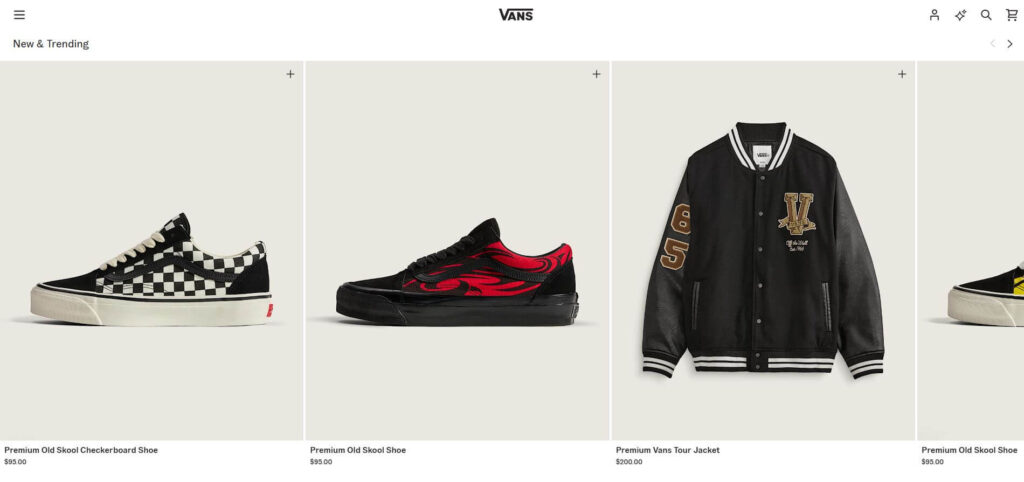
When we look at VF Corporation’s Q4 2025 factory disclosure, Vietnam is the largest footwear manufacturing base, followed by China and Cambodia. The list includes 90 footwear facilities across eight countries, which gives us the clearest current picture of the production network behind Vans and VF’s other footwear brands.
| Country | VF Footwear Facilities (Q4 2025) | What It Tells Us |
| Vietnam | 37 | Largest footwear manufacturing base in VF’s network |
| China | 28 | Second-largest base with a long-established footwear supply chain |
| Cambodia | 8 | Significant production base with confirmed Vans manufacturing |
| Brazil | 7 | Smaller regional footwear base |
| Bangladesh | 5 | Part of VF’s broader footwear sourcing network |
| Philippines | 2 | Secondary production location |
| Dominican Republic | 2 | Secondary production location |
| Thailand | 1 | Smallest footwear footprint on the list |
There is one important limitation to keep in mind: VF’s factory disclosure does not include a brand column. These 90 facilities serve VF Corporation’s wider portfolio, so we cannot say that every factory listed above produces Vans. The figures are best treated as VF footwear-factory counts rather than Vans-only factory counts.
Indonesia is also worth noting. Older Vans shoes can legitimately carry a Made in Indonesia label, but VF’s Q4 2025 list shows no footwear facilities there. Malaysia also shows zero footwear facilities. We’d treat that as a possible sign that production has been phased out or shifted elsewhere, rather than proof that Vans were never made in those countries.
Where Are Vans Shoes Made in Vietnam, China, and Cambodia?
VF’s Q4 2025 disclosure shows that its footwear manufacturing network is heavily concentrated in Vietnam, China, and Cambodia. Together, these three countries account for 73 of the 90 footwear facilities on the list, although VF does not disclose which individual factories manufacture Vans specifically.
Vietnam Is VF’s Largest Footwear Manufacturing Base

Vietnam has 37 footwear facilities, making it the largest footwear sourcing country in VF’s Q4 2025 network. What stands out to us is that production is spread across several established manufacturing regions rather than concentrated in a single province.
| Province / Municipality | Footwear Facilities |
| Thanh Hoa | 6 |
| Ho Chi Minh City | 6 |
| Phu Tho | 5 |
| Tay Ninh | 5 |
| Hung Yen | 4 |
| Ninh Binh | 3 |
| Other locations | 8 |
| Total | 37 |
Major supplier groups appearing in the Vietnam footwear data include Shing Tak Industrial, Huali Industrial Group, Fulgent Sun Group, and Pou Chen Group. This matters because Vans is sourcing within a much larger footwear manufacturing ecosystem rather than relying on company-owned factories.
Vietnam has also become strategically important across VF as a whole. VF’s FY2026 reporting identifies Vietnam among its major sourcing markets for products entering the US, while China represents less than 2% of VF’s US-bound units. That figure is VF-wide and includes categories beyond Vans footwear, so we would not use it as a Vans-specific production split.
China Remains Concentrated in Guangdong

China still has 28 footwear facilities in VF’s network, but the geographic concentration is much stronger than in Vietnam. 17 of the 28 are in Guangdong, meaning roughly 61% of VF’s listed Chinese footwear facilities are located in one province.
| Province | Footwear Facilities |
| Guangdong | 17 |
| Jiangxi | 6 |
| Shandong | 3 |
| Fujian | 2 |
| Total | 28 |
That concentration makes sense from a sourcing perspective. Guangdong has a mature footwear supply chain where shoe assembly can operate alongside suppliers of rubber components, textiles, trims, packaging, and other inputs. For a vulcanized shoe brand such as Vans, having these capabilities within the same manufacturing cluster can simplify supplier coordination and production.
China therefore remains an important part of VF’s footwear footprint even as the company has diversified more sourcing into Southeast Asia.
Cambodia Has a Smaller but Verifiable Vans Footprint

Cambodia has only 8 footwear facilities on VF’s Q4 2025 list, but there is stronger evidence connecting some Cambodian production directly to Vans.
The source material identifies Carlington in Kampong Cham as a Vans supplier, with trade records listing Vans as a major customer. VF’s current disclosure also includes LECROWN Shoes Industry Co., Ltd. in Kampong Cham under Carlington Industries, with a reported workforce range of 5,001–10,000 employees.
This is an important distinction. We can use VF’s factory list to measure the size of Cambodia’s footwear footprint, while trade records provide additional evidence that at least part of that capacity is actually being used for Vans. That gives us more confidence in calling Cambodia a current Vans production country than simply assuming every VF footwear facility makes Vans.
Which Countries Make Which Vans Models?
There isn’t a fixed model-to-country formula for Vans. The same style can be produced in different factories depending on the production batch, so we would never assume that an Old Skool or Sk8-Hi must come from one specific country.
Based on available label evidence and trade records, these are the origins most commonly associated with several popular Vans models:
| Vans Model | Commonly Seen Origins | What to Know |
| Old Skool | Vietnam, Cambodia, China | One of the clearest examples of a model produced across multiple countries |
| Sk8-Hi | Cambodia, Vietnam | Country of origin can vary between production runs |
| Slip-On | Cambodia, Vietnam | Commonly sourced from both countries rather than one dedicated factory |
| Knu Skool | Vietnam | Vietnam appears frequently in available label evidence |
| Anaheim Factory line | China, Vietnam | The name refers to Vans’ Anaheim heritage, not current US manufacturing |
We’d treat this table as a production pattern rather than a definitive factory map. Vans does not publish an official list assigning individual models to specific countries, and sourcing can shift between suppliers as production needs change.
For your own pair, the sewn-in country-of-origin label remains the most reliable answer. A Vans model being made in Vietnam instead of China, or Cambodia instead of Vietnam, is not unusual by itself and does not indicate that the shoes are counterfeit.
Why Did Vans Stop Making Shoes in the USA?
Vans originally made its shoes in Southern California. The Van Doren Rubber Company opened at 704 E. Broadway in Anaheim in 1966, where shoes were manufactured and sold directly to customers from the same location.
That model became harder to sustain as Vans grew. The company filed for Chapter 11 bankruptcy in 1984, and over the following decade it gradually wound down US manufacturing as production shifted toward lower-cost, large-scale footwear hubs in Asia.
| Year | What Happened |
| 1966 | Vans opens at 704 E. Broadway in Anaheim and manufactures shoes in California |
| 1984 | Vans files for Chapter 11 bankruptcy |
| 1995 | The Orange, California manufacturing plant closes |
| 1998 | The Vista, California factory closes, effectively ending large-scale US production |
| Late 1990s | Vans says manufacturing moved to China and Vietnam |
| 2004 | VF Corporation acquires Vans for $396 million |
| 2017 | Vans briefly returns to US production with the limited Style 113 Pro USA ArcAd release |
By 1998, Vans’ remaining large-scale US footwear production had ended. From a sourcing perspective, the move made sense: China and Vietnam offered established footwear clusters, larger contract-manufacturing capacity, and access to suppliers for rubber, canvas, adhesives, and other components in the same regions.
There has been one notable modern exception. In 2017, Vans released the Style 113 Pro USA ArcAd, a limited run of roughly 700 numbered pairs made in the United States. It was a special release rather than a return to domestic mass production, and Vans has continued to rely on overseas contract factories since then.
Factors Influencing the Production Locations of Vans Shoes

Vans strategically selects its manufacturing locations based on a combination of cost efficiency, production capabilities, and supply chain logistics. Several key factors determine where Vans shoes are made:
1. Cost-Effective Labor & Manufacturing Expertise
Countries like China, Vietnam, and Cambodia offer competitive labor costs while maintaining high production standards. Vans benefits from these locations by balancing quality and affordability in its manufacturing process.
2. Strong Supply Chain & Raw Material Access
- China is home to major textile and rubber suppliers, such as Cosmo Textile Co. (fabric) and TSRC (synthetic rubber), making it an ideal location for production.
- Indonesia and India provide essential materials like natural rubber and cotton, which are then shipped to Vans’ factories for assembly.
3. OEM & ODM Capabilities in China
- OEM (Original Equipment Manufacturer): Vans works with Chinese factories that specialize in mass-producing footwear based on Vans’ exact specifications. This ensures consistency across global markets.
- ODM (Original Design Manufacturer): These factories can create custom shoe designs similar to Vans, offering flexibility for businesses looking to produce private-label footwear with unique patterns and styles.
4. Trade Policies & Tariffs
- Many brands diversify their production across Vietnam and Cambodia to reduce dependency on a single country and navigate trade regulations effectively.
- Some Vans shoes are produced in Cambodia to take advantage of favorable trade agreements with Western markets.
5. Logistics & Distribution Network
- Finished Vans shoes are shipped to distribution centers in the U.S., such as the Vans Distribution Center in Santa Fe Springs, CA, before reaching global retail stores.
- Strategic factory locations in Asia help streamline the supply chain, ensuring timely delivery to global markets.
By leveraging these factors, Vans maintains efficient production while keeping costs manageable and quality consistent.
How Are Vans Shoes Manufactured
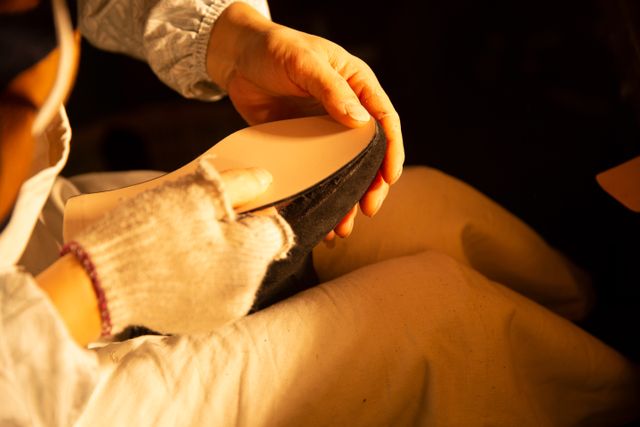
Most classic Vans are made using vulcanized construction, where the rubber sole is bonded to the upper using heat and pressure. Vans says a single pair can pass through the hands of up to 450 people during production, which shows how much manual work is still involved even in a relatively simple-looking sneaker.
The process can be broken down into five main stages:
- Rubber preparation: Raw rubber is mixed, milled, and rolled into sheets for the outsole and foxing.
- Sole forming: The rubber is cut and pressed into shape, including Vans’ signature waffle tread.
- Upper assembly: Canvas or suede panels are cut, stitched, and shaped around the shoe last.
- Sole attachment: The upper is joined to the sole, and rubber foxing tape is wrapped around the edge.
- Vulcanization: The assembled shoe is heated in an oven, curing the rubber and creating a permanent bond between the upper and sole.
What we find interesting is that Vans’ affordability comes partly from the simplicity and maturity of this construction. Classic styles rely on a relatively straightforward combination of canvas or suede, rubber, foam, and familiar tooling rather than highly engineered midsoles or complex knit uppers.
That does not mean the process is easy to replicate. Vulcanized footwear still requires dedicated rubber-compounding equipment, molds, ovens, and experienced operators, which is one reason production tends to stay concentrated in established footwear manufacturing clusters rather than moving freely between general-purpose factories.
Vans’ Supply Chain and Labor Compliance
Vans relies on VF Corporation’s network of independent contract factories. VF publishes a quarterly factory disclosure list, which gives useful visibility into where its suppliers operate, although it does not remove the need for ongoing audits and traceability.
A recent example shows why that matters. In September 2025, The Bureau of Investigative Journalism reported allegations involving Fulgent Sun Group, a VF supplier, and labor-transfer programs linked to Xinjiang. VF said its direct relationship with the Fujian facility had ended in February 2024 and that the materials in question did not enter VF products.
The practical takeaway is simple: public factory lists improve transparency, but large footwear supply chains still require supplier audits, material traceability, and subcontractor controls. A country-of-origin label tells you where the shoe was made, not the full labor history behind it.
How to Check Where Your Vans Were Made
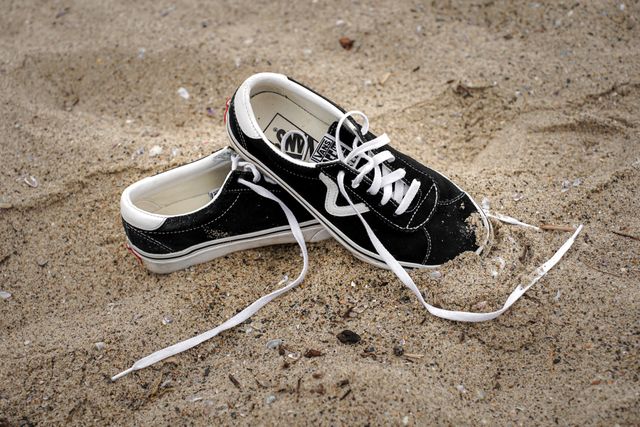
The easiest way to verify where your Vans were made is to check the label inside the shoe. That label should list the country of origin along with the style or product code.
We’d check three things:
- Tongue label: look for “Made in Vietnam,” “Made in China,” “Made in Cambodia,” or another country of origin.
- Box sticker: the country and product details should match what appears inside the shoe.
- Style/country details: inconsistencies between the shoe and box are a stronger warning sign than the country itself.
A Made in China, Vietnam, or Cambodia label is completely normal for authentic Vans. Country of origin alone is not a reliable way to judge whether a pair is fake.
What Importers Can Learn from Vans’ Sourcing Playbook

Vans’ supply chain offers a useful lesson for smaller footwear brands: don’t build production around a single factory or country. VF spreads footwear sourcing across Vietnam, China, Cambodia, and other markets, which gives it more flexibility when costs, tariffs, capacity, or lead times change.
For importers, we’d take three practical lessons from that model:
- Source within established manufacturing clusters. Guangdong, for example, combines footwear factories with suppliers for rubber, textiles, trims, packaging, and other components. That can reduce coordination problems and shorten development cycles.
- Qualify backup suppliers before you need them. Even at smaller MOQs, having a second factory approved for materials, workmanship, and specifications gives you options when capacity or pricing changes.
- Build QC into the sourcing process. Consistent specifications, samples, and pre-shipment inspections matter more as production is spread across multiple suppliers.
If you’re building your own footwear line, our product sourcing service can help you identify and compare suitable factories in China. You can also review our guide to wholesale sneakers manufacturers in China before shortlisting suppliers.
Need help sourcing footwear from China? NicheSources can match your requirements with suitable manufacturers and arrange quality inspection before shipment. Request a free quote.
Want to learn how other big brands make their shoes? Check these out:
Frequently Asked Questions
Are Vans Shoes American?
Yes, Vans is an American brand founded in 1966 in Anaheim, California. However, while the company is headquartered in the U.S., its shoes are now manufactured in various countries across Asia, including China, Vietnam, and Cambodia.
When Did Vans Stop Being Made in the USA?
Vans gradually shifted production overseas in the 1990s to reduce costs and compete with other major footwear brands. By the early 2000s, nearly all manufacturing had moved to Asia. In 2017, Vans briefly reintroduced a limited run of U.S.-made shoes, but regular production remains overseas.
Are There Any Vans Shoes Made in the USA?
While Vans originally produced their shoes in California, most of their manufacturing has since moved overseas.
It’s rare to find Vans shoes made in the USA today. Instead, the majority of their shoes are produced in countries like China, Vietnam, Indonesia, and Malaysia.
Where Do Vans Source Their Materials?
Vans sources its materials from various countries to ensure the quality and affordability of their products.
They have a global supply chain that includes countries such as China, Vietnam, Brazil, and others.
Their apparel and accessories, for example, are made in Georgia, Serbia, Bulgaria, and Turkey.
This strategy helps Vans maintain consistent quality across their product line.
What Are Some of the Best Shoe Manufacturers in China?
If you’re looking for reliable shoe manufacturers in China, there are many options to consider.
Some of the best manufacturers can be found on this list of suppliers of wholesale sneakers in China.
This resource can be a great starting point for sellers looking to find high-quality manufacturing partners for their businesses.
What Does “Anaheim Factory” Mean on Vans?
“Anaheim Factory” refers to Vans’ manufacturing heritage in Anaheim rather than a current US factory. Models carrying the name have been produced overseas, including in China and Vietnam, so the branding should not be interpreted as a “Made in USA” claim.
Are Vans Customs Made Differently From Regular Vans?
The base shoes come from Vans’ normal overseas manufacturing network. Vans says custom graphics are digitally applied to finished shoes, but it does not publicly disclose where every customization step takes place.
Are Older Vans Made in Indonesia Fake?
Not simply because they were made in Indonesia. Older Vans labels can show Indonesia even though VF’s Q4 2025 disclosure lists no Indonesian footwear facilities. That points to a change in the sourcing footprint over time rather than proving an older pair is counterfeit.
Does the Country of Origin Determine Vans Quality?
The available factory data does not support ranking Vans quality by country. A Vietnam, China, or Cambodia label primarily tells you where final manufacturing occurred; it does not by itself indicate a different quality tier.