You find a product listed for $4.20 per unit on Alibaba and a seemingly identical one for $2.10 on 1688. The lower price looks attractive until you realize the supplier only accepts domestic payments and doesn’t handle international shipping. Suddenly, sourcing that product becomes a lot more complicated.
A product sourcing website is an online platform that connects businesses with manufacturers, wholesalers, or dropshipping suppliers. The four main types are B2B marketplaces, wholesale directories, dropshipping platforms, and sourcing agents that help manage purchasing, supplier verification, and fulfillment.
Choosing the right platform affects your product costs, minimum order quantities (MOQs), shipping arrangements, and the amount of supplier management you’ll need to handle yourself.
In this guide, we’ve compared 22 product sourcing websites to help you find the right option for your business, whether you’re testing your first product, buying wholesale inventory, or developing a private label brand.
Quick Facts
- Websites compared: 22
- Platform categories: 5
- Free for buyers: 19 of 22 (some restrictions apply)
- Comparison criteria: Fees, MOQs, ideal use cases, limitations, and Trustpilot ratings where available
- Last updated: October 2026
Pick a Product Sourcing Platform in 30 Seconds
The right sourcing platform depends on what you’re selling, your order size, and how much of the sourcing process you’re comfortable managing yourself. Here’s where we’d suggest starting.
| If you want to… | Start with |
| Develop private label or custom products | Alibaba for finding manufacturers and negotiating customization. Consider 1688 with an agent as order volumes grow. |
| Buy wholesale products for resale | Faire for boutique brands, Wholesale Central for US wholesalers, or DHgate for small batches. |
| Start dropshipping or test products | AliExpress for single-unit orders, Spocket for US/EU suppliers, or Banggood for its dropshipping program. |
| Access factory-direct pricing in China | 1688, Taobao, or Yiwugo. Budget for sourcing assistance, quality checks, and international shipping. |
| Outsource the sourcing process | A sourcing agent, especially for custom products, multiple suppliers, or orders above approximately 3,000-5,000. |
| Source a specific product category | Start with platforms that carry your category, then compare individual suppliers based on manufacturing capabilities, MOQs, and quality standards. |
Our advice: Don’t compare suppliers on unit price alone. Request quotes that account for shipping, duties, quality inspection, and any sourcing fees. A lower factory price doesn’t always translate into a lower landed cost.
What Is Product Sourcing?

Product sourcing is the process of finding reliable suppliers to purchase products for your business, whether you plan to sell them online, in a retail store, or through wholesale channels.
This includes everything from researching and selecting manufacturers to negotiating prices and arranging delivery.
There are several ways to source products:
- Direct from manufacturers (often for private label or wholesale)
- Through sourcing agents who manage the process for you
- Via online sourcing platforms that connect you to vetted suppliers
- From local wholesalers or trade shows
A good sourcing strategy helps ensure product quality, reduces costs, and improves your profit margins making it a core part of building a successful business.
Types of Product Sourcing Websites
Not all product sourcing websites work the same way. Understanding these four types will help you choose a platform based on your budget, order volume, and how much work you’re willing to handle.
1. B2B Marketplaces
B2B marketplaces like Alibaba, Made-in-China, and IndiaMART connect buyers with manufacturers, wholesalers, and trading companies. You can compare suppliers, request quotations, negotiate minimum order quantities (MOQs), and arrange custom manufacturing.
These platforms offer plenty of supplier choices, but you’re responsible for verifying suppliers, checking product quality, and negotiating terms.
2. Wholesale Directories
Wholesale directories like Wholesale Central and SaleHoo provide searchable lists of suppliers, often organized by product category or location. They help you discover potential wholesalers and contact them directly.
Unlike marketplaces, directories generally don’t process transactions or manage orders, so you’ll need to negotiate payment terms, arrange shipping, and verify suppliers independently.
3. Dropshipping Platforms
Dropshipping platforms such as AliExpress, Spocket, and Banggood let you source products without purchasing inventory in bulk. Suppliers fulfill individual customer orders, making these platforms particularly useful for testing products with limited upfront investment.
The main trade-offs are higher per-unit costs, less control over packaging, and shipping times that depend on the supplier’s location.
4. Sourcing Agents
Sourcing agents like NicheSources help businesses find manufacturers, negotiate prices, inspect products, and coordinate international shipping. They’re particularly useful for custom manufacturing, larger orders, or sourcing from Chinese platforms such as 1688 that can be difficult for overseas buyers to manage independently.
If you’re searching for product sourcing companies or sourcing services rather than websites, you’re likely looking for a sourcing company that manages the process for you. You can also explore our guide to the best China sourcing agents to compare your options.
Product Sourcing Websites Comparison Table (2026)
We’ve compared all 22 sourcing websites based on buyer costs, minimum order quantities (MOQs), supplier selection, and reputation. Use this table to narrow down your options before reviewing each platform in detail.
| Website | Type | Cost for Buyers | MOQ Guidance | Best For | Trust (Trustpilot) |
| Alibaba | B2B marketplace | Free; card fees ~2.95–2.99% | Low for stock; 300–1,000 units for custom | Private label and custom manufacturing | ~3.5/5 |
| Made-in-China | B2B marketplace | Free | Custom orders often 300–1,000 units | Industrial equipment and machinery | ~3.9/5 |
| Global Sources | B2B marketplace + trade shows | Free | Often $500+ per order | Asian manufacturers and trade fairs | Predominantly 1-star reviews |
| DHgate | Cross-border wholesale | Free | Single units to small batches | Small-batch product testing | 1.6/5 |
| TradeKey | B2B marketplace | Free basic; paid tiers 500-5,000 | Supplier-set | Middle East and African suppliers | ~2.3–2.4/5 |
| EC21 | B2B marketplace | Free basic; paid 369-495/year | Supplier-set | Korean and global suppliers | Not verified |
| AliExpress | Retail/wholesale marketplace | Free | No MOQ | Dropshipping and product testing | ~2.2/5 |
| IndiaMART | B2B marketplace | Free | Supplier-set | Sourcing from India | ~1.7–1.8/5 |
| 1688 | China domestic wholesale | Free; agent fees extra | Supplier-set | Factory-direct sourcing in China | Not verified |
| Taobao | China retail marketplace | Free; agent fees may apply | No MOQ | Domestic Chinese products and small orders | ~1/5, unclaimed profile |
| Yiwugo | Yiwu wholesale marketplace | Free | Typically 100-300 per supplier | Small commodities and Yiwu suppliers | Not verified |
| Faire | Wholesale marketplace | Free for retailers | Brand-set | Boutique and independent retailers | ~4.6/5 |
| Wholesale Central | Wholesale directory | Free | Supplier-set | Finding US wholesalers | 3.9/5 (23 reviews) |
| SaleHoo | Supplier directory | $67/year or $127 lifetime* | Supplier-set | Beginners seeking vetted suppliers | ~4.2–4.3/5 |
| HKTDC | B2B marketplace + trade shows | Free | Supplier-set | Electronics, gifts, and trade fairs | No verified score; institutional verification |
| Spocket | Dropshipping platform | 24-299.99/month | No MOQ | US/EU dropshipping | ~4.5/5 |
| Banggood | Retailer + dropshipping | Free | No MOQ | Single-unit orders and multi-warehouse fulfillment | 4.3/5 (main site) |
| FashionTIY | Wholesale/dropshipping supplier | Free | Low MOQ | Fashion and accessories | 1.6/5 |
| NicheSources | Sourcing agent | Free quotes; 5–10% service fee | Project-dependent | Managed China sourcing | Not verified |
| Sourcing Allies | Sourcing agent | Custom project pricing | Not published | Industrial manufacturing in China/Vietnam | Not verified |
| Bay Source Global | Sourcing agent | Request a quote | Factory-dependent | Product development and China manufacturing | No verified score |
| Linc Sourcing | Sourcing agent | Performance-based; rates unpublished | Project-dependent | European businesses sourcing from China | Not verified |
MOQ requirements vary by supplier, product specifications, and customization. Fees and Trustpilot ratings reflect the supplied October 2026 comparison data, not live checks. SaleHoo pricing needs reconfirmation following its 2026 plan changes.
22 Best Product Sourcing Websites in 2026
Group 1: Global B2B Marketplaces
These marketplaces connect international buyers with manufacturers, wholesalers, and trading companies. They’re particularly useful for comparing quotations, finding custom manufacturing partners, and expanding your supplier network.
We recommend evaluating suppliers individually because verification standards, payment protection, and product quality controls differ across platforms.
1. Alibaba
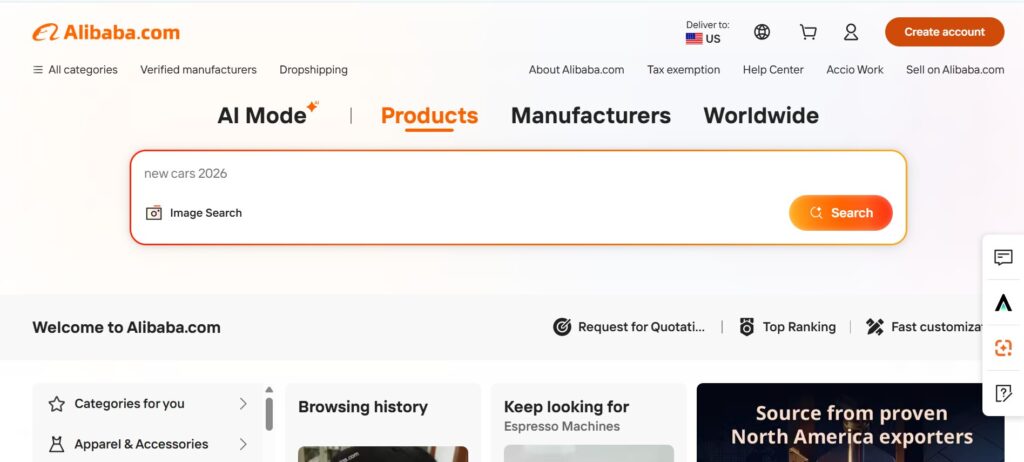
Alibaba is one of the world’s largest B2B sourcing platforms, connecting businesses with manufacturers, trading companies, and wholesalers across a wide range of product categories. It’s a practical starting point for private label products because buyers can compare factory quotations, request samples, and negotiate customization requirements.
The platform offers Trade Assurance for eligible orders and has expanded AI-assisted sourcing through Accio. However, protection depends on the agreed order terms, and custom manufacturing MOQs vary considerably between suppliers.
Ideal For: Businesses sourcing private label products, custom manufacturing, and wholesale inventory from international suppliers.
Cons:
- Comparing quotations requires checking specifications, packaging, shipping terms, and MOQs to ensure suppliers are quoting for equivalent products.
- Trade Assurance does not eliminate quality disputes or guarantee a refund in every situation.
Trust: Trustpilot 3.6/5 from approximately 29,800 reviews (October 2026). Reviews include both successful transactions and complaints involving shipping delays and disputes.
For payment options, see our guide to Alibaba payment methods.
2. Made-in-China
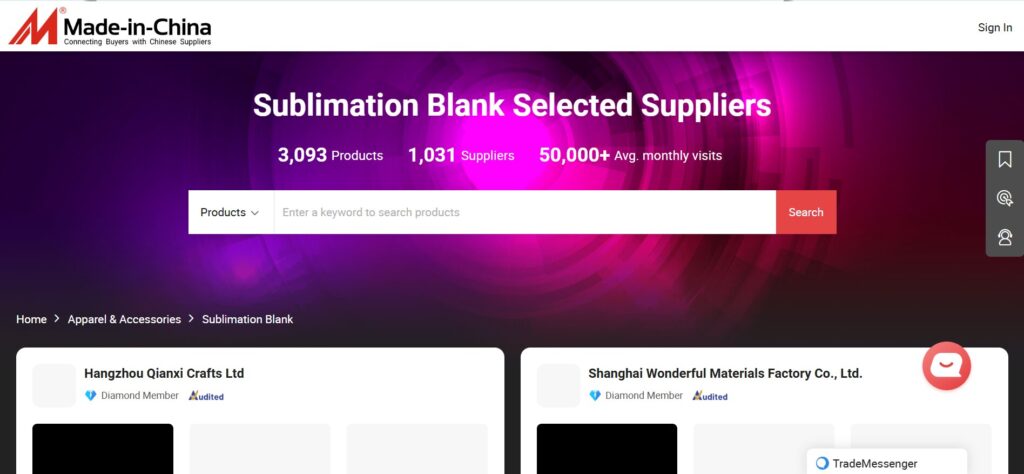
Made-in-China connects overseas buyers with Chinese manufacturers, with particularly useful supplier coverage in machinery, hardware, industrial equipment, and manufacturing components. The platform provides third-party Audited Supplier reports, which can include information about production capabilities and quality control systems.
Its Secured Trading Service (STS) supports eligible online transactions, although payment processing fees may apply. Buyers should review the supplier’s audit report and the specific STS terms before making a deposit.
Ideal For: Industrial buyers and importers sourcing machinery, equipment, and technical manufacturing components.
Cons:
- Custom equipment and tooling can involve substantial upfront deposits and extended production lead times.
- STS dispute procedures may still require extensive documentation to resolve delivery or specification issues.
Trust: Trustpilot 4.0/5 from approximately 1,267 reviews (October 2026).
For deeper reads, see Is Made-in-China Legit? and our Made-in-China vs Alibaba
3. Global Sources
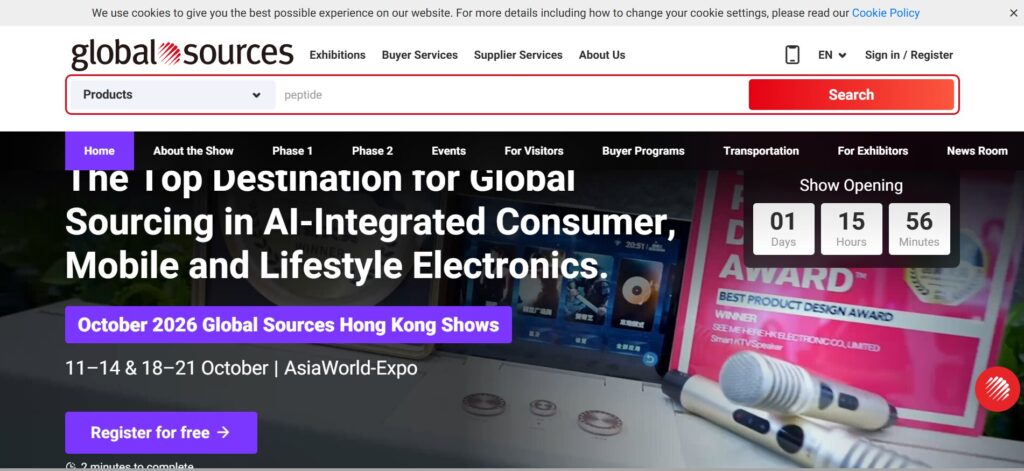
Global Sources combines online supplier discovery with international trade exhibitions, particularly in Hong Kong. Its strengths include consumer electronics, mobile accessories, gifts, lifestyle products, and opportunities to meet potential manufacturers face-to-face.
The platform is especially relevant when you want to evaluate suppliers through both online research and physical exhibitions. However, listings and trade-show participation should be treated as starting points for verification rather than guarantees of supplier reliability.
Ideal For: Importers seeking established Asian exporters and manufacturers they can potentially meet at trade exhibitions.
Cons:
- Buyers seeking very small orders may find fewer suitable suppliers than on retail-oriented marketplaces.
- Reviews include complaints about suspicious supplier responses, misleading listings, and unsuccessful transactions.
Trust: Trustpilot 1.3/5 from 61 reviews, with approximately 90% rated one star. The small review sample and strongly negative feedback justify additional caution.
4. DHgate
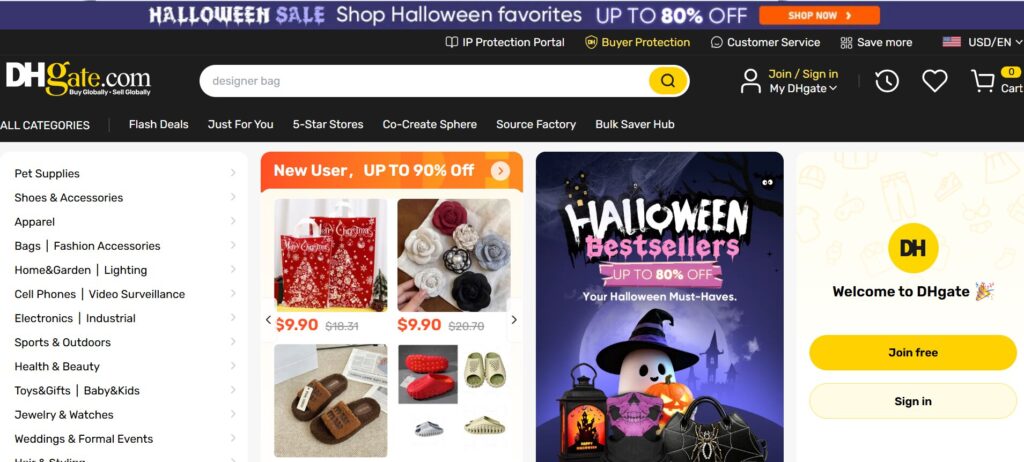
DHgate is a Chinese cross-border wholesale marketplace that allows buyers to purchase products in small quantities, sometimes starting with a single unit. This makes it useful for product testing and small ecommerce businesses that aren’t ready to commit to large manufacturing orders.
The platform covers electronics, fashion accessories, home products, and general merchandise. Buyers should pay particular attention to seller history, intellectual property risks, and return terms before placing orders.
Ideal For: Small ecommerce sellers testing products or purchasing limited wholesale quantities.
Cons:
- Branded-lookalike and potentially counterfeit listings can create intellectual property and customs risks.
- Buyer reviews frequently describe incorrect products, difficult refunds, and inadequate dispute handling.
Trust: Trustpilot 1.7/5 from approximately 34,500 reviews (October 2026).
Read Why Is DHgate So Cheap? for more information about its pricing model.
5. TradeKey
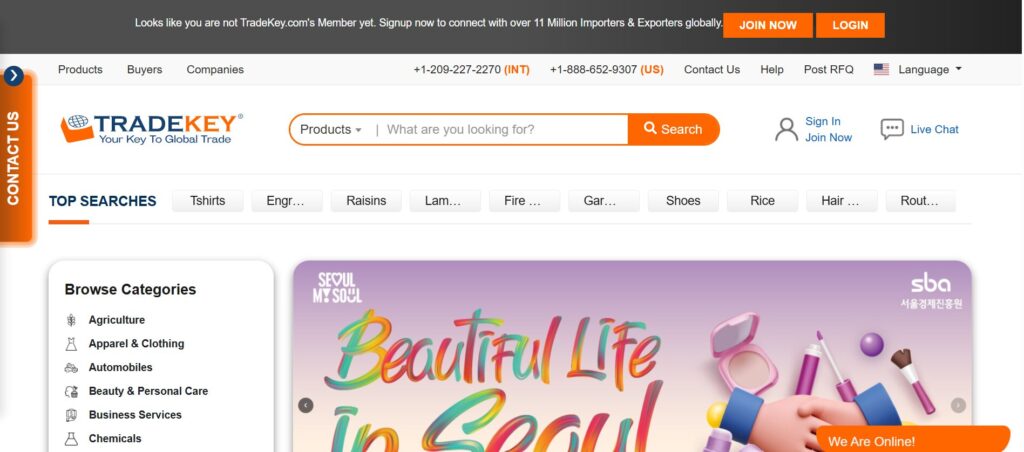
TradeKey is an international B2B marketplace connecting importers and exporters across multiple regions, including markets outside China’s major manufacturing networks. It offers supplier discovery, trade leads, and paid services intended to improve business visibility.
Its usefulness depends heavily on the quality of the individual leads and suppliers. We would suggest starting with basic access and verifying potential trading partners before considering any premium service.
Ideal For: Buyers exploring international supplier networks, particularly in the Middle East, Africa, and other emerging markets.
Cons:
- Paid memberships do not guarantee qualified leads or completed transactions.
- Several customer reviews report disappointing paid services, refund disputes, and difficulty obtaining support.
Trust: Trustpilot 1.8/5 from 90 reviews (October 2026). The review sample is relatively small, but the complaints warrant caution.
6. EC21
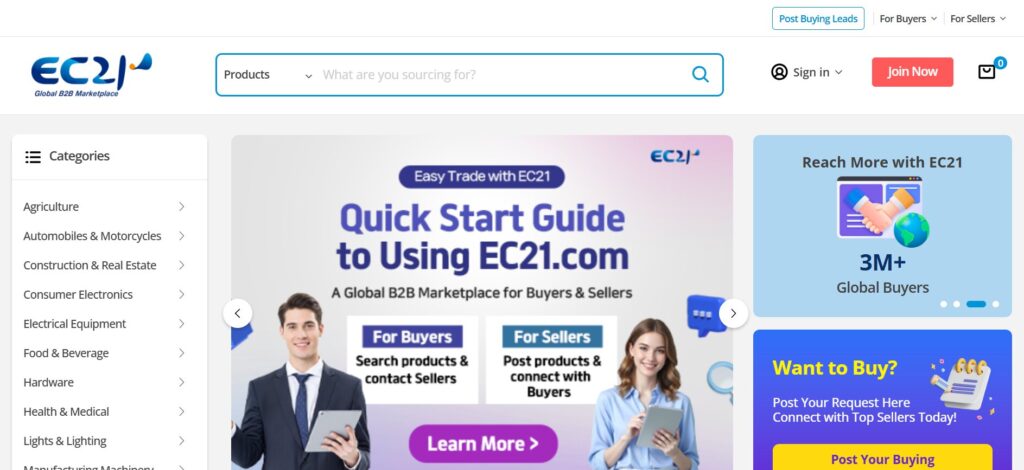
EC21 is a South Korea-based B2B marketplace connecting buyers with manufacturers, exporters, and wholesalers from multiple countries. It can be useful for discovering Korean suppliers and comparing sourcing options outside the largest China-focused marketplaces.
Basic access is available, while its published premium plans include Trade OK at $495/year and Trade PRO at $1,395/year before eligible discounts. These premium services are primarily relevant to businesses seeking greater visibility and trading features.
Ideal For: Importers researching Korean manufacturers and alternative international supplier networks.
Cons:
- Supplier listings require independent verification, particularly when distinguishing manufacturers from trading companies.
- Paid features may offer limited value to occasional buyers who only need supplier contact information.
Trust: A reliable current Trustpilot rating for EC21 could not be established during this review.
7. AliExpress
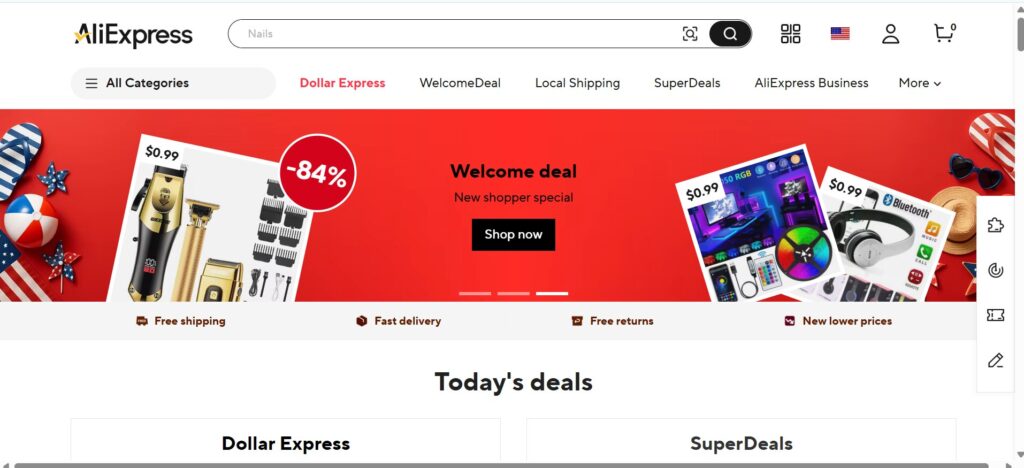
AliExpress is Alibaba Group’s international ecommerce marketplace, allowing buyers to order individual products from sellers across numerous consumer categories. For new dropshippers, its main advantage is the ability to test products without purchasing wholesale inventory.
We generally suggest using AliExpress to evaluate samples and demand before approaching manufacturers for larger orders. Shipping methods, return eligibility, and fulfillment capabilities should be reviewed at the listing level.
Ideal For: Beginner dropshippers and ecommerce sellers testing products without minimum order quantities.
Cons:
- Product and shipping costs per unit can make scaling less economical than negotiated wholesale sourcing.
- Inconsistent seller performance and complicated refunds can create customer-service problems for dropshippers.
Trust: Trustpilot 1.9/5 from approximately 188,600 reviews (October 2026).
8. IndiaMART
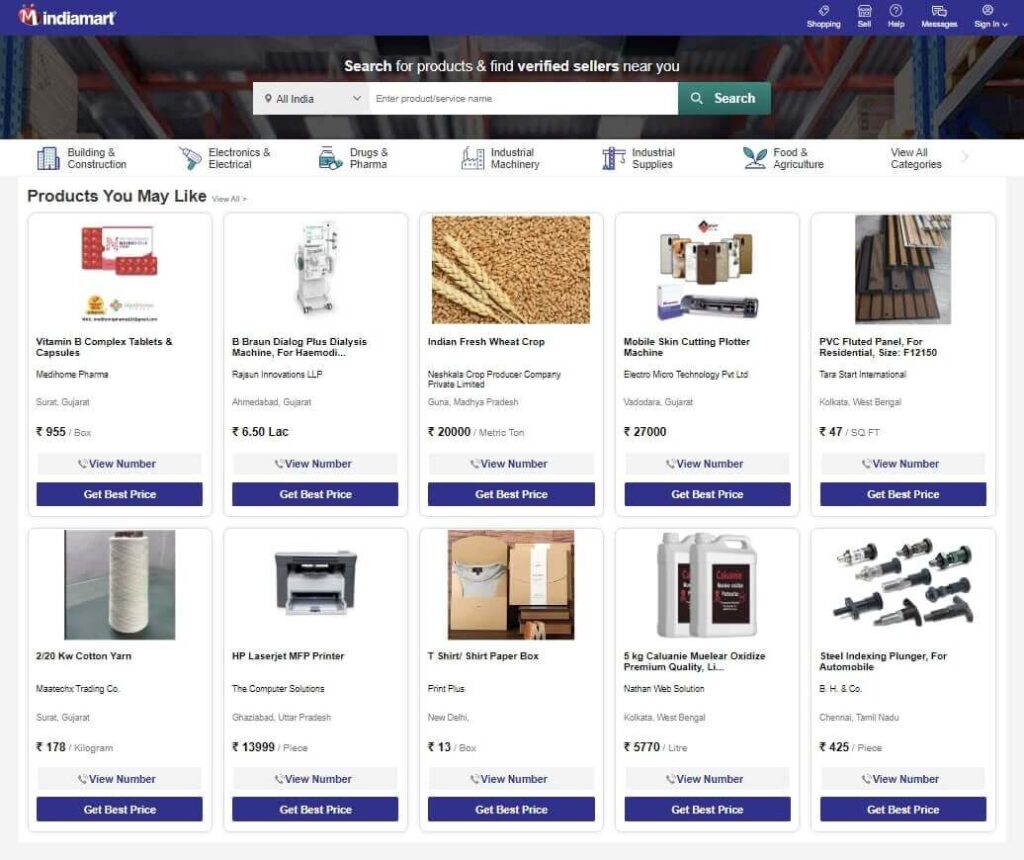
IndiaMART is a major Indian B2B marketplace connecting businesses with domestic manufacturers, wholesalers, and service providers. It offers sourcing opportunities across textiles, industrial goods, packaging, handicrafts, machinery, and other categories.
The platform is useful for importers exploring India as an alternative manufacturing market, particularly when supplier diversification is a priority. However, buyers need to establish payment protection, quality inspection, and international shipping arrangements with individual suppliers.
Ideal For: Businesses seeking Indian manufacturers and wholesalers or diversifying their supplier base beyond China.
Cons:
- Buyer protection and overseas transaction support are less standardized than on some transaction-focused marketplaces.
- Reviews include complaints involving payments, supplier reliability, and limited support when orders go wrong.
Trust: Trustpilot 1.7/5 from approximately 504 reviews on its mobile-domain profile (October 2026).
Group 2: China Domestic & Factory-Direct Platforms
Domestic Chinese marketplaces can provide access to manufacturers and wholesalers serving China’s local market. Their prices may be attractive, but buyers need to account for domestic freight, international logistics, product inspection, and export requirements.
For overseas businesses, a sourcing agent or freight forwarder can help manage these additional steps. However, direct purchasing is also possible in some circumstances.
9. 1688
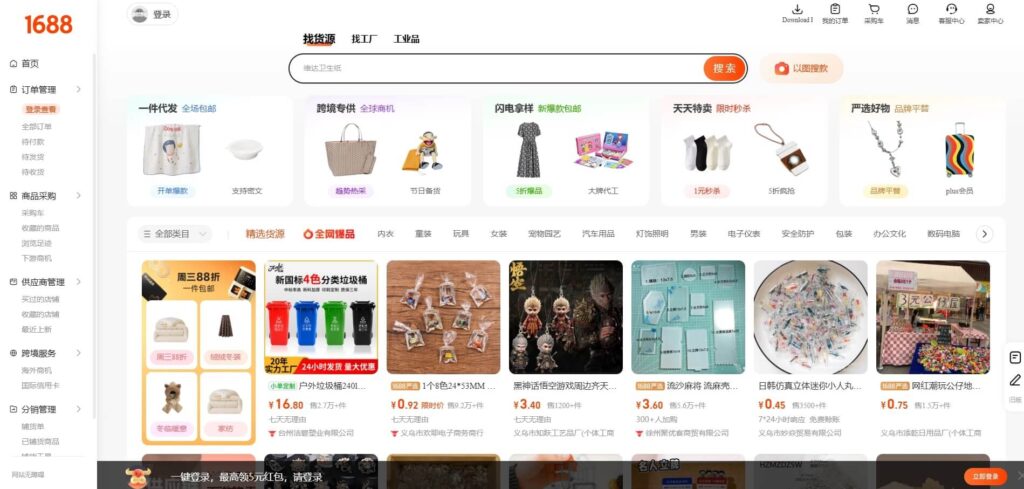
1688 is Alibaba Group’s domestic Chinese wholesale marketplace, connecting businesses with factories, wholesalers, and trading companies. It is particularly useful for comparing domestic supplier prices and sourcing products that may also appear on international B2B marketplaces.
Overseas payment access has improved through WorldFirst’s official 1688 World Pay service, which lets eligible international businesses pay suppliers without opening a Chinese bank account. However, payment access does not automatically cover quality inspection, order consolidation, or international shipping.
Ideal For: Importers seeking domestic Chinese wholesale pricing who can handle local purchasing arrangements or use a sourcing agent.
Cons:
- The Chinese-language purchasing experience and domestic supplier practices can complicate communication and disputes.
- Domestic freight, inspection, export arrangements, and agent fees may reduce the advantage of lower listed prices.
Trust: No reliable current Trustpilot rating was established for 1688.
10. Taobao
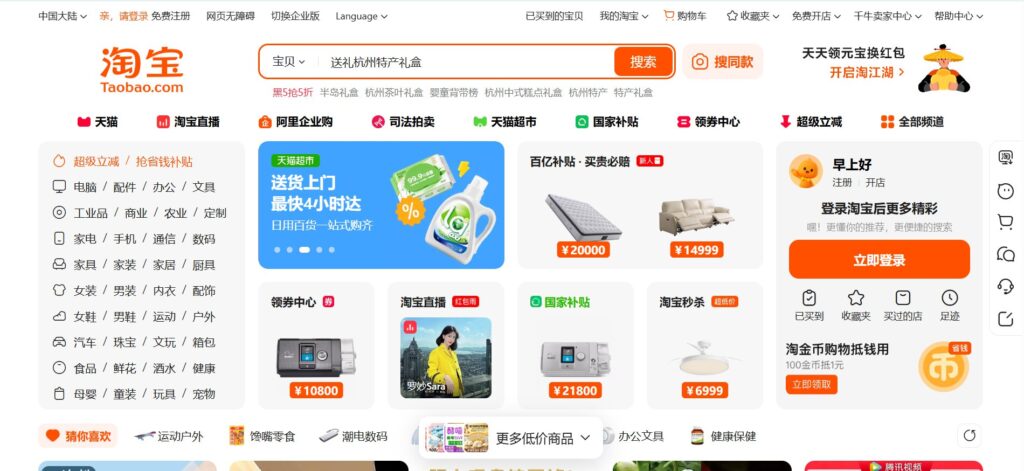
Taobao is Alibaba Group’s Chinese consumer marketplace, offering clothing, accessories, home products, electronics, and other everyday merchandise. Unlike manufacturing-focused marketplaces, many Taobao listings support single-unit orders, making it useful for purchasing samples or testing niche products.
Cross-border purchasing and shipping options are available for some destinations, while buyers in other markets may need a purchasing agent or freight forwarder. We would use Taobao primarily for product discovery and small-batch testing rather than as a long-term manufacturing solution.
Ideal For: Sellers purchasing samples, niche Chinese consumer products, or small quantities without wholesale MOQs.
Cons:
- International returns can be expensive, particularly when defective products must be shipped back to China.
- Retail sellers may be unable to provide consistent wholesale inventory or custom manufacturing.
Trust: Trustpilot 1.6/5 from 187 reviews on an unclaimed profile (October 2026).
11. Yiwugo
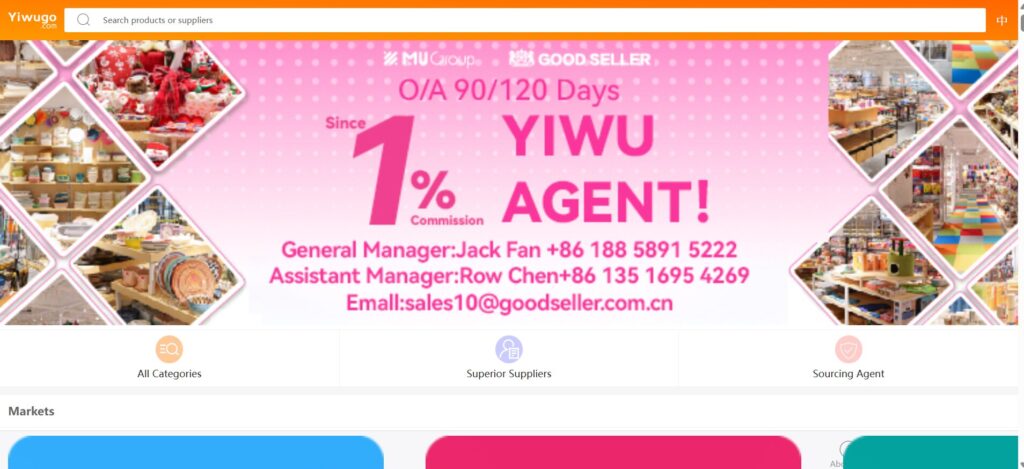
Yiwugo is the online supplier platform associated with China’s Yiwu International Trade Market. It specializes in the small commodities commonly sold through Yiwu’s physical wholesale market, including household accessories, toys, gifts, jewelry, and seasonal merchandise.
For buyers sourcing several product categories, the platform can help identify potential suppliers before arranging purchasing and consolidation. NicheSources’ location in Yiwu is especially relevant here because local sourcing support can simplify communication, supplier visits, and export coordination.
Ideal For: Wholesalers and ecommerce retailers sourcing small consumer products from Yiwu-based suppliers.
Cons:
- Many suppliers primarily operate in Chinese and may require domestic payment arrangements.
- Buyers generally need to arrange independent product inspection, consolidation, and international logistics.
Trust: No reliable current Trustpilot rating was established for Yiwugo.
Group 3: Wholesale Marketplaces & Directories
These platforms are useful for businesses purchasing existing products for resale. Some provide an online checkout and payment terms, while others only help buyers identify wholesalers and establish direct supplier relationships.
12. Faire
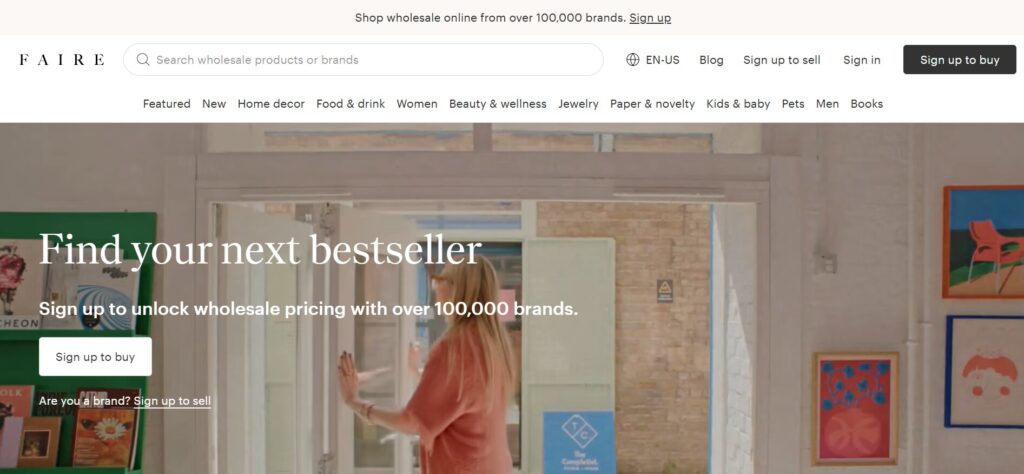
Faire is a wholesale marketplace connecting independent retailers with consumer brands across categories including home goods, beauty, apparel, gifts, and lifestyle products. Its main advantage is simplifying wholesale discovery and purchasing for retailers that want to stock established products.
Eligible retailers can access 60-day payment terms and free returns on qualifying first orders. Brands selling through the marketplace generally pay commissions, with published North American terms including 15% plus a $10 fee for new marketplace customers; commission arrangements differ in some other regions.
Ideal For: Boutique owners and independent retailers purchasing branded wholesale inventory.
Cons:
- Brand-set MOQs and wholesale pricing may leave limited margins in competitive product categories.
- Faire focuses on existing branded products rather than custom manufacturing or private label development.
Trust: Trustpilot 4.6/5 from approximately 12,200 reviews (October 2026).
13. Wholesale Central
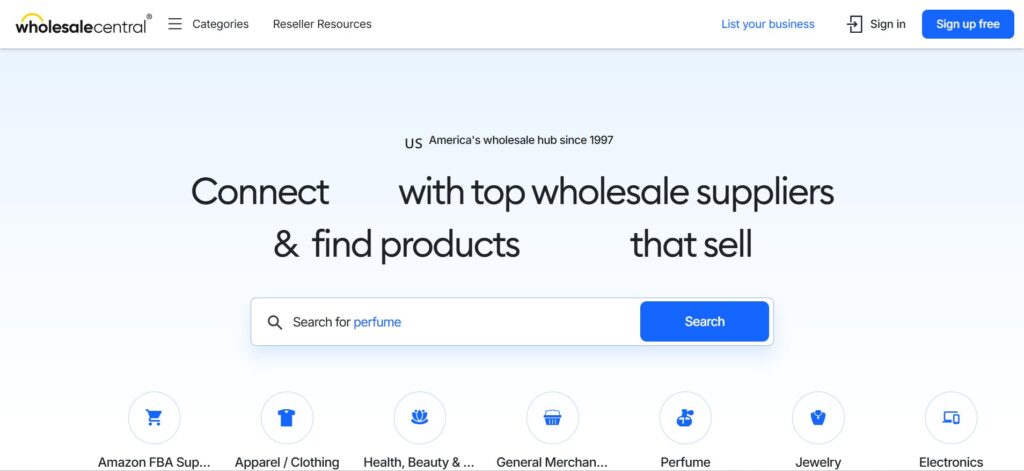
Wholesale Central is a US wholesale supplier directory that helps retailers discover domestic wholesalers, distributors, and merchandise suppliers. Buyers can browse listings and contact suppliers without purchasing a directory membership.
Because the service primarily facilitates supplier discovery, businesses need to negotiate pricing, payment, and delivery directly with each wholesaler. We recommend checking business registration, product authorization, and supplier references before placing substantial orders.
Ideal For: US retailers searching for domestic wholesalers without paying directory access fees.
Cons:
- Some supplier listings may be outdated or insufficiently verified.
- Transactions and disputes are handled outside the directory, with no integrated buyer protection.
Trust: Trustpilot 3.9/5 from just 23 reviews (October 2026). This is too small a sample to establish a reliable reputation assessment.
14. SaleHoo
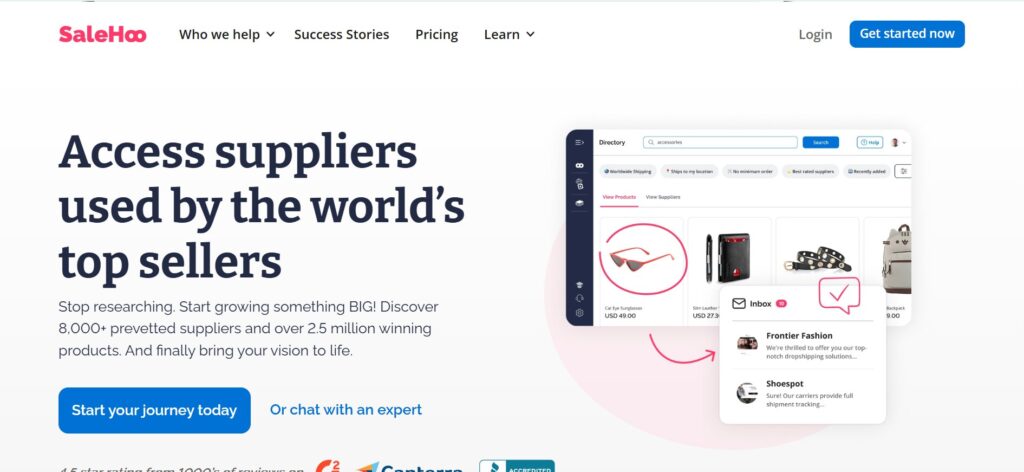
SaleHoo is a New Zealand-based supplier directory and ecommerce research platform offering access to more than 8,000 vetted suppliers and a claimed database of 2.5 million products. Its offering now combines supplier research, Shopify product importing, educational resources, and other ecommerce tools.
Its current published pricing lists Starter at $9/month billed annually or $299 as a one-time payment, and Pro at $49/month billed annually or $1,699 one-time. These prices replace the older $67/year and $127 lifetime figures in the original draft.
Ideal For: Beginner ecommerce sellers who want curated supplier discovery and product research tools.
Cons:
- Access to a vetted directory does not guarantee favorable supplier pricing or profitable products.
- Lower-tier plans limit supplier contacts and Shopify product imports, while advanced plans require a larger investment.
Trust: Trustpilot 4.1/5 from 456 reviews (October 2026).
15. Hong Kong Trade Development Council
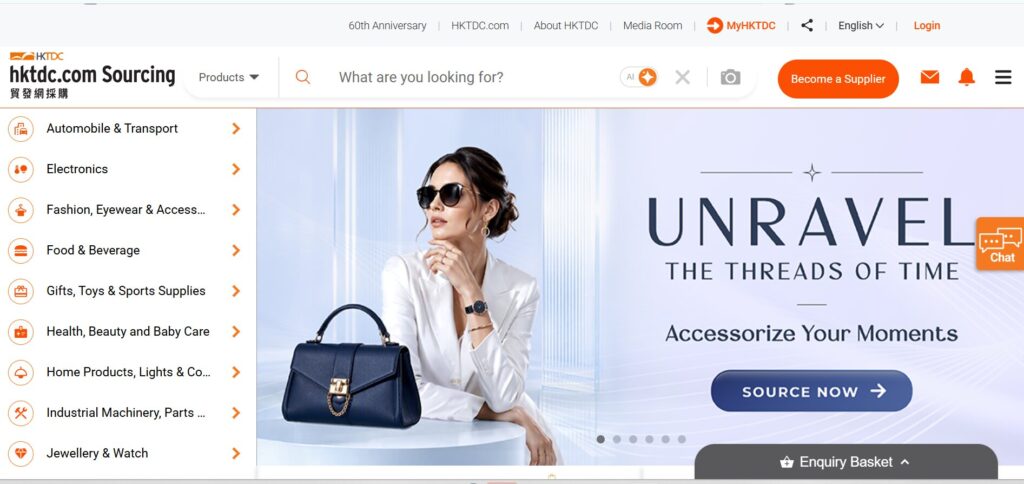
HKTDC Sourcing is operated by the Hong Kong Trade Development Council and connects international buyers with suppliers through online listings, exhibitions, and business-matching opportunities. It is particularly relevant for electronics, gifts, jewelry, fashion accessories, and consumer lifestyle products.
Its institutional trade-promotion role and supplier verification features make it useful for building an initial shortlist. However, buyers should still evaluate manufacturing capabilities, samples, and product-specific compliance before committing to production.
Ideal For: Importers sourcing Asian consumer products who value trade fairs and structured supplier discovery.
Cons:
- Its strongest supplier coverage is concentrated in categories traditionally represented at Hong Kong trade exhibitions.
- Supplier verification does not replace factory audits or independent quality inspections.
Trust: No reliable current Trustpilot score was established. HKTDC’s status as a statutory trade-promotion organization provides institutional context, but it is not a supplier performance guarantee.
Group 4: Dropshipping & Wholesale Suppliers
These platforms help ecommerce sellers source individual products or small batches without the upfront investment associated with bulk manufacturing.
We recommend comparing the full cost of fulfillment, including subscription charges, shipping, returns, and customer support. These expenses can make a significant difference to product margins.
16. Spocket
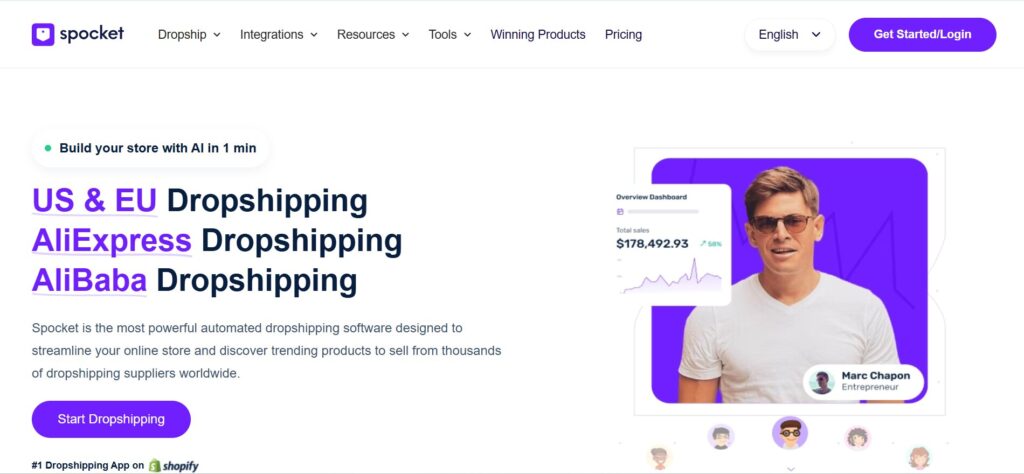
Spocket is a dropshipping platform that connects ecommerce sellers with suppliers, particularly those serving US and European markets. It integrates with online stores and offers supplier discovery, product importing, automated ordering, and branded invoicing.
Its official pricing page lists monthly plans beginning at $39.99, with higher tiers providing additional functionality. The platform currently advertises a seven-day trial, making it important to review the renewal terms before subscribing.
Ideal For: Shopify and WooCommerce dropshippers prioritizing US/EU supplier access and automated fulfillment.
Cons:
- Subscription fees add fixed costs before you generate any sales.
- Recent customer reviews frequently mention unexpected charges, cancellation difficulties, and refund disputes.
Trust: Trustpilot 4.2/5 from approximately 10,664 reviews (October 2026). Despite the overall score, recent billing-related complaints deserve attention.
17. Banggood
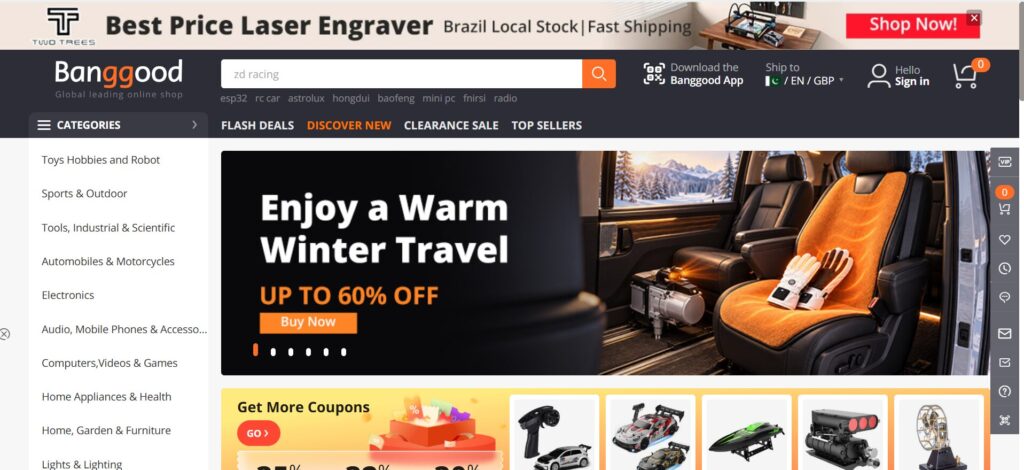
Banggood is a China-based international retailer selling electronics, tools, hobby products, home goods, and other consumer merchandise. It also offers dropshipping services, allowing ecommerce sellers to fulfill individual orders without purchasing inventory upfront.
Unlike an open supplier marketplace, Banggood generally serves as the retailer, giving buyers a more centralized ordering experience. Its international warehouse options can help shorten delivery times for selected products, although availability varies by destination.
Ideal For: Dropshippers sourcing consumer electronics, gadgets, tools, and other general merchandise.
Cons:
- Stock availability and delivery times differ by warehouse and destination.
- Customer complaints include missing items, warranty difficulties, and inconsistent after-sales support.
Trust: Trustpilot 4.3/5 from approximately 62,600 reviews for the main website. Its mobile-domain profile scores substantially lower, at 1.4/5 from a much smaller review sample.
For more information, see Is Banggood Legit?.
18. FashionTIY
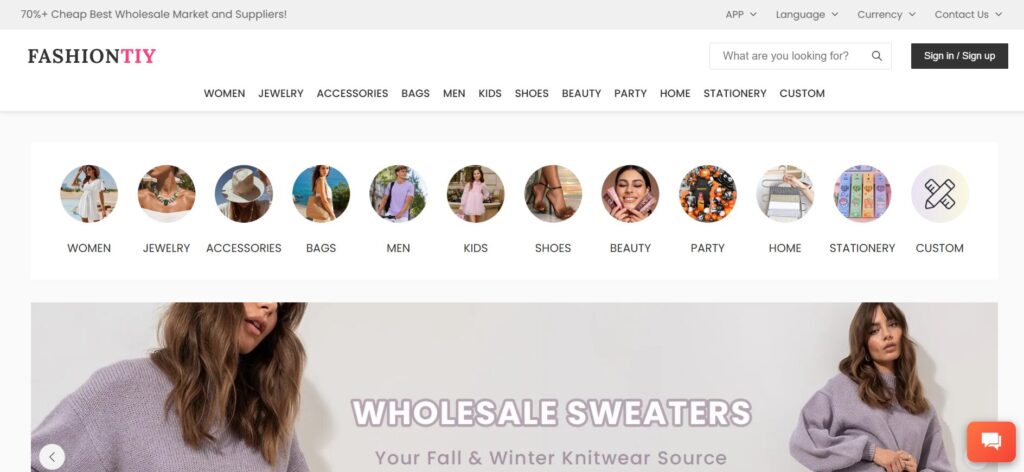
FashionTIY is a wholesale and dropshipping supplier offering clothing, jewelry, fashion accessories, home products, and other consumer merchandise. It targets smaller retailers looking for product variety without committing to large factory production runs.
Although the business lists a US corporate address, its operations and fulfillment have significant connections to China. We recommend confirming stock location, shipping charges, processing times, and return conditions before placing an order.
Ideal For: Small fashion and accessories retailers sourcing a variety of products in limited quantities.
Cons:
- Customer reviews describe delayed deliveries, unclear order information, and difficulties resolving problems.
- International fulfillment may be unsuitable for businesses requiring consistent domestic delivery times.
Trust: Trustpilot 2.2/5 from 124 reviews (October 2026), with 70% of reviews rated one star. This is higher than the 1.6/5 recorded in the original brief, but still indicates considerable customer dissatisfaction.
Group 5: Sourcing Agents & Done-for-You Services
Sourcing agents help businesses manage supplier selection, price negotiations, production coordination, inspections, and shipping.
They’re particularly useful when you’re developing custom products, buying from multiple factories, or scaling an existing product line. Service fees should always be compared against the time saved and the scope of work included.
19. NicheSources
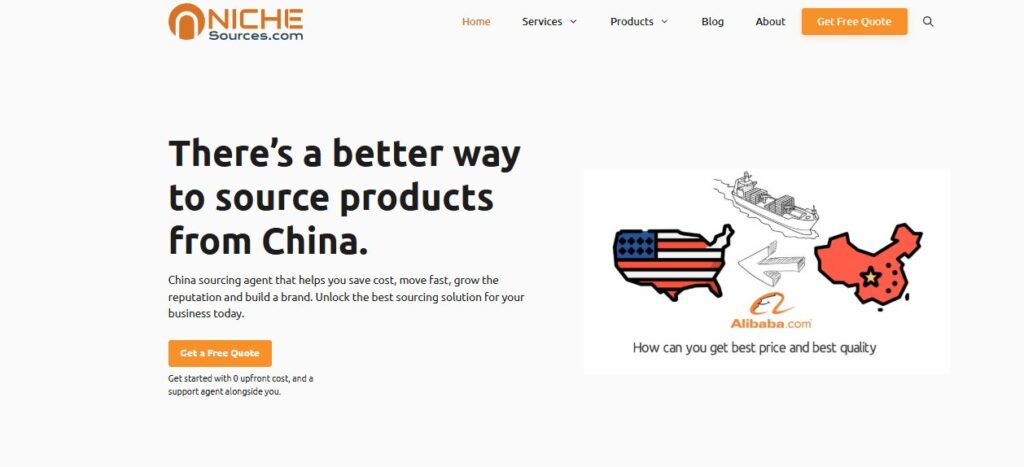
NicheSources is our China sourcing business, headquartered in Yiwu, where we work with manufacturers and wholesale suppliers across different consumer product categories. We help ecommerce brands, retailers, and importers with supplier research, product customization, quality inspection, order consolidation, and international fulfillment.
According to our service information, we offer free sourcing quotations, typically within two business days, and charge a 5–10% service fee on approved orders. Our location near Yiwu International Trade City is particularly useful for projects involving multiple small-commodity suppliers.
Ideal For: Ecommerce brands and importers seeking managed China sourcing, private label development, quality control, and international fulfillment.
Cons:
- Our service fee may be unnecessary for buyers who already have reliable factories and established logistics arrangements.
- Our core expertise is China sourcing, making us less suitable for businesses seeking exclusively domestic US or European manufacturing.
20. Sourcing Allies
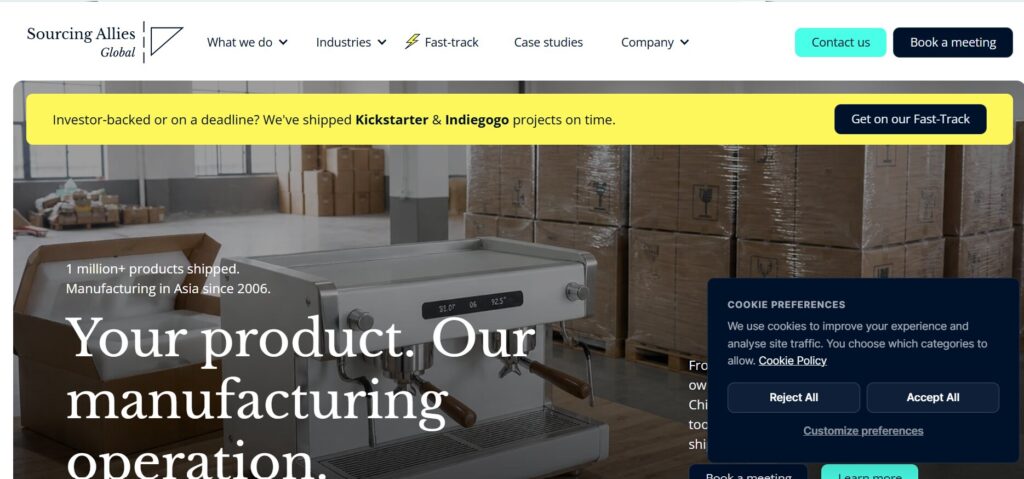
Sourcing Allies is a Swedish-owned manufacturing and sourcing company founded in 2006, with operations focused on China, Vietnam, and India. Its services cover factory selection, engineering review, tooling, component manufacturing, assembly, quality control, and shipping.
The company states that it has shipped more than one million products and specializes in technical manufacturing processes such as injection molding, metal stamping, and die casting. This makes it particularly relevant for businesses developing products that require coordinated manufacturing across several suppliers.
Ideal For: Businesses developing industrial components, engineered products, and complex manufacturing projects in Asia.
Cons:
- Its technical manufacturing focus may be excessive for simple consumer-product sourcing.
- Project-specific pricing and MOQs are not publicly standardized, requiring an individual quotation.
Trust: No sufficiently reliable, current independent Trustpilot rating was established during this review.
21. Bay Source Global
Bay Source Global is a US-based sourcing and manufacturing services company focused on product development, supplier qualification, and offshore manufacturing. Its services include new product development, contract manufacturing, quality control, and production management.
A distinguishing feature is its project-management approach, which provides clients with real-time visibility into production and order status through a centralized dashboard. This can be useful for companies coordinating custom manufacturing projects with several production milestones.
Ideal For: US businesses seeking support with product development, factory qualification, and managed manufacturing in China.
Cons:
- The company does not publish standardized service fees, making comparisons difficult without a detailed proposal.
- Manufacturing MOQs and production timelines must be established for each project and supplier.
Trust: A reliable current Trustpilot rating was not established. The absence of a verified score should not be interpreted as either positive or negative evidence of service quality.
22. Linc Sourcing
Linc Sourcing is a Swedish-owned procurement company with approximately 30 years of experience and offices in Sweden and Shanghai. It provides supplier identification, evaluation, negotiations, quality inspections, order management, and international logistics coordination.
Its services emphasize managing the purchasing process for international businesses, including consolidating products from multiple suppliers. The company also describes its use of factory visits, supplier audits, and ongoing performance monitoring.
Ideal For: European businesses seeking ongoing procurement support and Chinese supplier management.
Cons:
- Standard service rates are not published, so buyers must request project-specific quotations.
- Businesses sourcing very small quantities may find a full-service procurement arrangement less economical than direct marketplace purchasing.
Trust: No reliable current Trustpilot rating was established during this review.
Need Help Managing Your China Sourcing Project?
Finding potential suppliers is relatively straightforward. Confirming their manufacturing capabilities, managing production specifications, arranging inspections, and coordinating delivery requires more work.
At NicheSources, our Yiwu-based team can help manage these steps, from supplier research and product development to quality inspection and international fulfillment.
What 10 Years of China Sourcing Taught Us About These Platforms
After more than 10 years in China sourcing, we’ve learned that the biggest risks often appear after you’ve found a supplier. Here are three things we’d encourage every importer to consider before placing an order.
1. A Verified Supplier Badge Doesn’t Guarantee Product Quality
Supplier verification means different things across platforms. For example, Alibaba’s Gold Supplier membership is paid, while its Verified Supplier program includes third-party assessments of business registration and manufacturing capabilities. However, even these inspections don’t guarantee the quality of your specific order.
We recommend four checks before bulk production: verify the business license, request a live factory video tour, order samples, and arrange an independent inspection. A basic third-party product inspection can cost approximately 150-300, although full factory audits may cost more.
2. Lower 1688 Prices Don’t Always Mean Lower Landed Costs
You may find the same product listed for significantly less on 1688 than on Alibaba. However, you’ll need to account for domestic shipping, agent fees, quality inspection, international freight, and import duties before calculating your actual savings.
For example, a product priced at $2 on 1688 versus $3 on Alibaba appears to offer a 33% saving. Once you add the extra purchasing and logistics expenses, that advantage could shrink considerably.
For orders below $500, we often suggest comparing the delivered prices on AliExpress or DHgate before arranging separate sourcing and shipping services. There is no universal $5,000 break-even point; product weight, quantity, shipping method, and supplier terms determine which route is more economical.
3. The 2025–2026 Tariff Changes Have Reshaped Small-Parcel Sourcing
In April 2025, DHgate surged to the No. 2 position among free iPhone apps in the US as buyers explored factory-direct purchasing amid rising tariffs. However, the economics of importing smaller orders changed shortly afterward.
The US suspended de minimis duty-free treatment for covered goods from China and Hong Kong on May 2, 2025, then extended the suspension to shipments from all countries on August 29, 2025. The suspension remained in effect in 2026.
For ecommerce sellers, this means import duties, taxes, customs processing, and carrier charges need to be included in product-testing budgets. Before ordering, compare the full delivered cost and confirm whether the shipping quote includes applicable duties under DDP terms.
Top Product Sourcing Websites by Category
Based on their pricing, supplier coverage, ordering requirements, and available buyer protections, here are our top picks for different sourcing needs in 2026.
| Category | Our Pick | Why We Recommend It |
| Best for beginners and product testing | AliExpress | No MOQ, single-unit ordering, and buyer protection for eligible orders. |
| Best for private label products | Alibaba | Extensive OEM/ODM supplier selection, customization options, and Trade Assurance. |
| Best for China factory-direct pricing | 1688 (+ agent) | Access to domestic wholesale prices, particularly useful for larger orders after accounting for sourcing and shipping costs. |
| Best for US/EU dropshipping | Spocket | Access to US/EU suppliers, automated fulfillment, and potentially shorter delivery times. |
| Best free wholesale directory | Wholesale Central | Free access to US wholesale supplier listings without membership fees. |
| Best vetted supplier directory | SaleHoo | Over 8,000 listed vetted suppliers and product research tools; paid plans start at $9/month billed annually. |
| Best for boutique retailers | Faire | Curated wholesale brands, up to 60-day payment terms for eligible retailers, and qualifying first-order returns. |
| Best for sourcing from India | IndiaMART | Extensive Indian supplier network; independent supplier verification and payment safeguards are essential. |
| Best for trade-show sourcing | HKTDC | Combines online supplier discovery, third-party verification programs, and Hong Kong trade exhibitions. |
| Best for done-for-you China sourcing | NicheSources | Free sourcing quotations, supplier management, quality inspections, and a stated 5–10% service fee on approved orders. |
Our recommendation: If you’re just testing a product, start with a platform that allows small orders. For custom manufacturing or larger purchases, compare several suppliers and calculate your landed cost before choosing between direct sourcing and an agent.
How to Vet a Supplier You Found on These Websites

Finding a supplier on Alibaba, 1688, or another sourcing platform is relatively easy. The harder part is confirming that they can deliver the product you ordered, at the agreed quality, price, and lead time.
Before placing a bulk order, we recommend following these seven checks:
1. Verify the business license. Ask for the supplier’s registered business name and license. For Chinese suppliers, cross-check the information through the National Enterprise Credit Information Publicity System (NECIPS). Make sure the registered business activities match what the supplier claims to manufacture.
2. Request a live factory video tour. Ask the supplier to show their production lines, machinery, quality control area, and warehouse during a video call. This helps you assess their capabilities and identify trading companies presenting themselves as manufacturers.
3. Arrange a third-party inspection. Independent inspections commonly cost around 100-300 for basic product checks, depending on location and scope. For bulk orders, arrange a pre-shipment inspection before paying the final balance to check product specifications, quantities, packaging, and visible defects.
4. Order samples before committing. Request a paid sample and evaluate its materials, dimensions, finish, packaging, and functionality. For custom products, approve a final pre-production sample that the manufacturer can use as a reference during production.
5. Use protected payment methods. Where available, pay through Alibaba Trade Assurance, Made-in-China’s Secured Trading Service (STS), or reputable escrow arrangements. Avoid suppliers who pressure you to move payments outside the platform, particularly to personal or unrelated bank accounts. Remember that payment protection depends on the platform’s specific terms.
6. Check the supplier’s account history. Review how long they’ve operated on the platform, their transaction history where available, customer feedback, and previous product listings. A long-established account is a positive signal, although it doesn’t guarantee reliability.
7. Watch for counterfeit products. Marketplaces such as DHgate and AliExpress may contain branded-lookalike products or unauthorized replicas. Avoid listings using protected logos, packaging, or designs without authorization, as these products can expose your business to customs seizures and intellectual property disputes.
Our advice: Don’t rely on a supplier’s verified badge alone. A business license confirms registration, a sample helps establish product expectations, and a pre-shipment inspection checks whether the finished order meets those expectations. Each step addresses a different sourcing risk.
FAQs about Sourcing Websites
Why Do You Need a Sourcing Website?
Using a sourcing website provides you access to a wide range of suppliers, helping you streamline procurement processes and save costs.
These platforms enable businesses to scale and manage inventory efficiently, with options like Alibaba, which boasts over 8 million suppliers.
Can I Trust Suppliers on Sourcing Websites?
The best answer here is a cautious yes.
Always do your diligence and handle all transactions with caution because you simply can never be too sure that a supplier is as forthright as they claim to be. Make an effort to:
Ask questions
Request supplier registration details
Keep a record of transactions
Take advantage of buyer protection provisions if they are available
Which Are the Best Websites for Sourcing Products?
As we often say on this blog, sourcing is a very specific process. Therefore, it is best to always begin by defining your sourcing requirements so that you can have a clear idea of the type of sourcing website that would be ideal for you.
That said, we recommend that you aim for sourcing websites that:
Audit suppliers
Offer some form of buyer protection or escrow payments
Have a fair return or dispute resolution policy
Offer MOQs and prices that suit your sourcing plan
Offer quality products
Are There Sourcing Sites for US Based Sellers Only?
Yes, there are several sourcing websites that cater specifically to US-based sellers or operate with a strong focus on the U.S. market. These platforms are ideal if you want faster shipping times, simplified logistics, and fewer import regulations.
Here are a few examples:
Faire – A wholesale marketplace connecting U.S. retailers with independent brands. Great for curated, boutique-style products.
Spocket – While it connects sellers to global suppliers, it has a strong emphasis on U.S. and EU-based dropshipping suppliers.
Wholesale Central – A long-standing directory of U.S.-based wholesalers across various categories.
Head Start Gear Zone & Cali Headwear – These and other niche suppliers on our list are based in the U.S. and serve American retailers directly.
Are product sourcing websites free to use?
Many sourcing websites offer free buyer registration, including Alibaba, DHgate, IndiaMART, and Wholesale Central. However, registration fees are only one part of the cost.
Some platforms charge suppliers through memberships or commissions. For example, Faire generally charges brands a 15% commission on marketplace orders, with additional fees for certain first orders.
Other services require subscriptions. SaleHoo’s Starter plan currently costs $9/month billed annually, or $299 as a one-time payment.
Always distinguish free account access from transaction fees, subscriptions, and shipping costs.
What’s the difference between a sourcing website and a sourcing agent?
A sourcing website gives you access to suppliers, while a sourcing agent manages some or all of the purchasing process on your behalf.
With a marketplace, you’re generally responsible for negotiations, samples, inspections, and shipping arrangements. An agent can coordinate these activities for an agreed fee.
For orders around 3,000-5,000, we suggest comparing the agent’s fee with the potential savings in purchasing, consolidation, and quality control. Order complexity matters more than any fixed spending threshold. Our guide explains how much sourcing agents charge.
How do I know if a supplier on a sourcing website is legitimate?
Start by confirming that the business’s registered name matches its license, invoices, and payment details. For Chinese suppliers, you can cross-check company information through the National Enterprise Credit Information Publicity System.
We also recommend checking whether the supplier has experience producing your specific product. Ask for relevant certifications, export documentation, and examples of previous manufacturing work where appropriate.
Even a registered company can deliver defective products, so business verification should be followed by sampling and quality controls.
Alibaba vs. 1688 vs. AliExpress: Which should I use?
A practical sourcing progression is AliExpress for testing, Alibaba for wholesale or customization, and 1688 for evaluating domestic Chinese supplier pricing.
AliExpress allows you to test individual products without committing to inventory. Alibaba becomes useful when you need larger quantities, consistent specifications, or private label packaging.
Once order volumes become predictable, you can compare quotations from 1688 suppliers against your existing landed costs. Moving to 1688 only makes sense if the savings justify the additional purchasing and logistics arrangements.
What is the cheapest way to source products from China?
The most economical sourcing method depends on your total landed cost, including the product, transportation, duties, payment charges, and inspections.
For example, an order of 100 units at $2 each costs $200 before shipping. If additional purchasing and delivery expenses total $150, your landed cost becomes $3.50 per unit.
That’s why AliExpress or DHgate can sometimes be more economical for small test orders, while negotiating directly with manufacturers may offer better economics at higher volumes.
Is Worldwide Brands worth it in 2026?
Worldwide Brands may be worth considering if you specifically want access to its directory of certified wholesalers and dropshipping suppliers.
Its official website currently lists lifetime membership at $299, including directory updates.
SaleHoo also offers supplier research and ecommerce tools, but its updated one-time Starter price is $299, so the old $127 lifetime comparison is no longer accurate.
Before paying for either service, check whether its supplier database covers your target category, location, required margins, and fulfillment model. A large directory is only useful if its suppliers match your business.

Hello, dear family member. I just want to express that this post is fantastic, well-written, and includes nearly all the crucial information. I would love to see more posts like this.
This post is so helpful! I didn’t realize there were so many sourcing websites available for 2024. I’m especially intrigued by the options you mentioned for sustainable sourcing. Can’t wait to try them out and see how they can improve my inventory strategy!
Thanks for the kind words! We’re thrilled you found value in our insights on sourcing websites. Let us know if we can assist with your sourcing projects.