The first manufacturer to reply is not necessarily the one that can deliver your product. A low unit price means little if the minimum order is too large, the sample uses different materials or the production schedule misses your launch.
To find private label manufacturers, start with a clear product brief, search within the right category and compare suppliers against the same requirements. Then verify their capability, approve a physical sample and agree on production terms before committing to a bulk order.
This guide focuses on finding and checking the manufacturer, with published minimum orders, sample costs and production times to help you compare quotes. Still planning everything from product selection to launch? Start with our guide to how to private label products.
What does a private label manufacturer do?
A private label manufacturer makes products sold under your brand. The work can range from putting your logo on an existing item to developing a product around your specifications.
Suppliers do not always use “private label,” “white label,” “OEM” and “ODM” consistently. Describe the work you need instead of relying on the label.
| Production route | What changes | What to settle first |
|---|---|---|
| Existing product with your branding | Logo, label, hangtag or packaging; the underlying product stays largely the same. | Branding minimums, artwork, packaging and whether other brands sell the same product. |
| Modified existing design | Materials, color, dimensions, features or other agreed details. | Which changes are feasible, additional sampling and component minimums. |
| Custom development | A new design, pattern, formulation or tooling arrangement. | Development charges, testing, ownership, production minimums and revision costs. |
Your logo does not automatically give you exclusive rights to the design or formula. Put the agreed ownership, permitted use and any exclusivity in writing, with qualified legal advice where needed.
How to find private label manufacturers in 7 steps
1. Define the product before searching for a factory
“Can you make this cheaper?” invites suppliers to change things you may care about. A useful brief explains what must stay the same and where you are open to alternatives.
Give each supplier the same information:
- Product: reference photos or drawings, intended use and the features your customer needs.
- Specification: materials, dimensions, colors, finish and any performance requirements.
- Branding: logo placement, decoration method, labels, inserts and retail packaging.
- Quantity: initial total, the split by variation and a realistic reorder plan.
- Market: destination country, sales channel and relevant product requirements.
- Commercial target: target unit cost, delivery location and required arrival date.
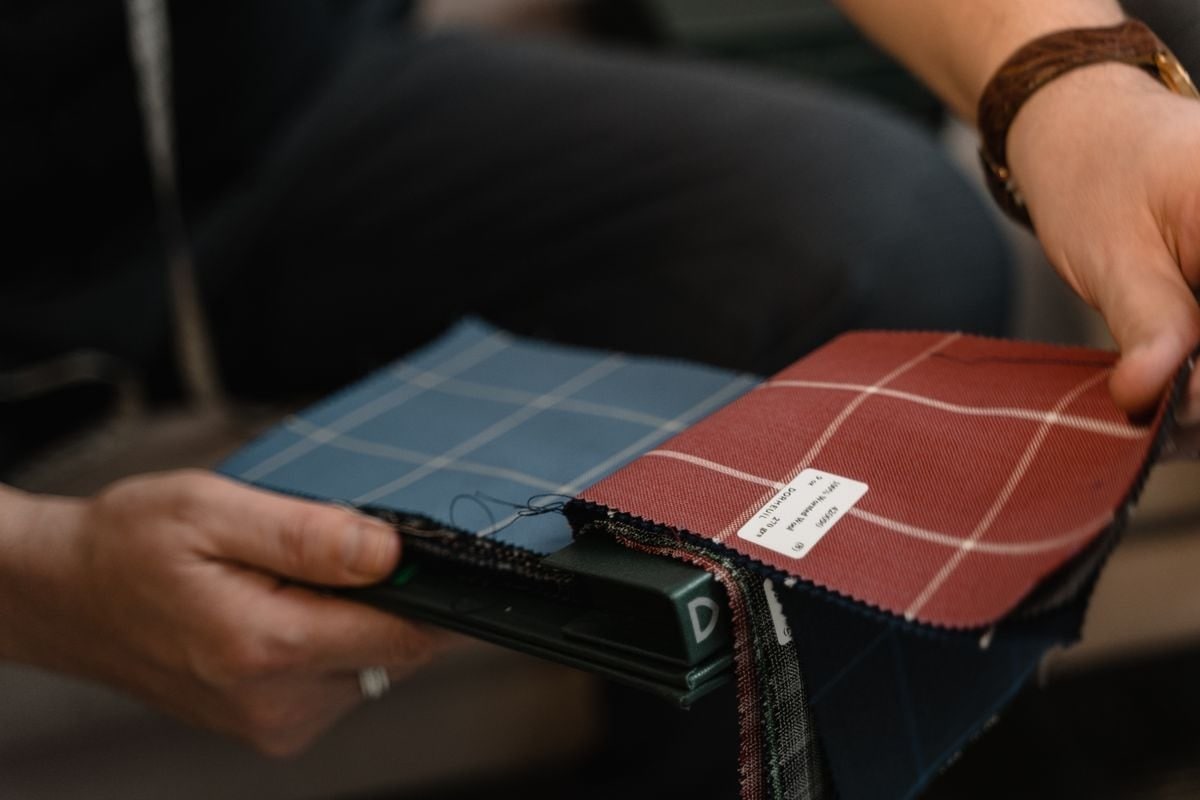
For clothing, that might mean a measurement chart and fabric weight. For a candle, it might mean the vessel, fill weight and burn-performance requirements. The point is to make quality measurable before comparing prices.
You do not need a finished technical pack to begin a conversation. Clear references can establish feasibility, but the final production specification should be settled before bulk manufacturing starts. Share designs you own or have permission to use.
Separate essentials from negotiable features. If the fit and fabric composition define your product, keep them fixed while asking about standard colors or simpler packaging. Otherwise, one supplier may quote a cheaper material while another prices your original specification, leaving you with a misleading price comparison.
2. Search by product category and manufacturing capability
A broad search for “private label manufacturers” mixes unrelated factories. Search for the product and process you need: private label swimwear, cut-and-sew apparel, candle filling or custom molded accessories.
| Search channel | Useful for | What to check |
|---|---|---|
| Category-specific guides | Finding suppliers that already work with your product type. | Follow up on current capability and terms; a listing is a starting point, not approval. |
| Alibaba and manufacturer directories | Comparing several potential suppliers and production locations. | Business type, factory identity, assessment scope and who performs the work. |
| Trade-show exhibitor lists | Finding specialists and arranging product discussions. | Confirm that the exhibitor offers private labeling, not just branded wholesale. |
| Industry referrals | Finding a supplier with relevant experience. | Ask what product and order size the referral actually involved. |
| A sourcing partner | Coordinating factory search, samples, purchasing and inspection. | Scope of work, fees, inspection arrangements and responsibility for problems. |
Start with the guide that matches your product:
- Apparel: private label clothing manufacturers, swimwear manufacturers, activewear manufacturers, hosiery manufacturers and intimate apparel manufacturers.
- Accessories: private label jewelry manufacturers and watch manufacturers.
- Home fragrance: private label candle manufacturers.
- Beauty and personal care: private label hair-product manufacturers and wet-wipes manufacturers.
- Small first orders: low-MOQ clothing manufacturers and clothing manufacturers for startups.
For other categories, browse the full private label manufacturer directory. Treat each shortlist as a starting point: confirm current terms directly before ordering.
Local or overseas? Compare both where practical. A nearby supplier can make visits, sample revisions and replenishment easier. An overseas specialist may offer a better match for the material, tooling or order size. Neither location guarantees lower delivered cost or better quality. Include freight, import requirements, communication and the time needed to replace a defective batch.
Already decided to source in China? Our guide to finding a manufacturer in China covers the country-specific search process.
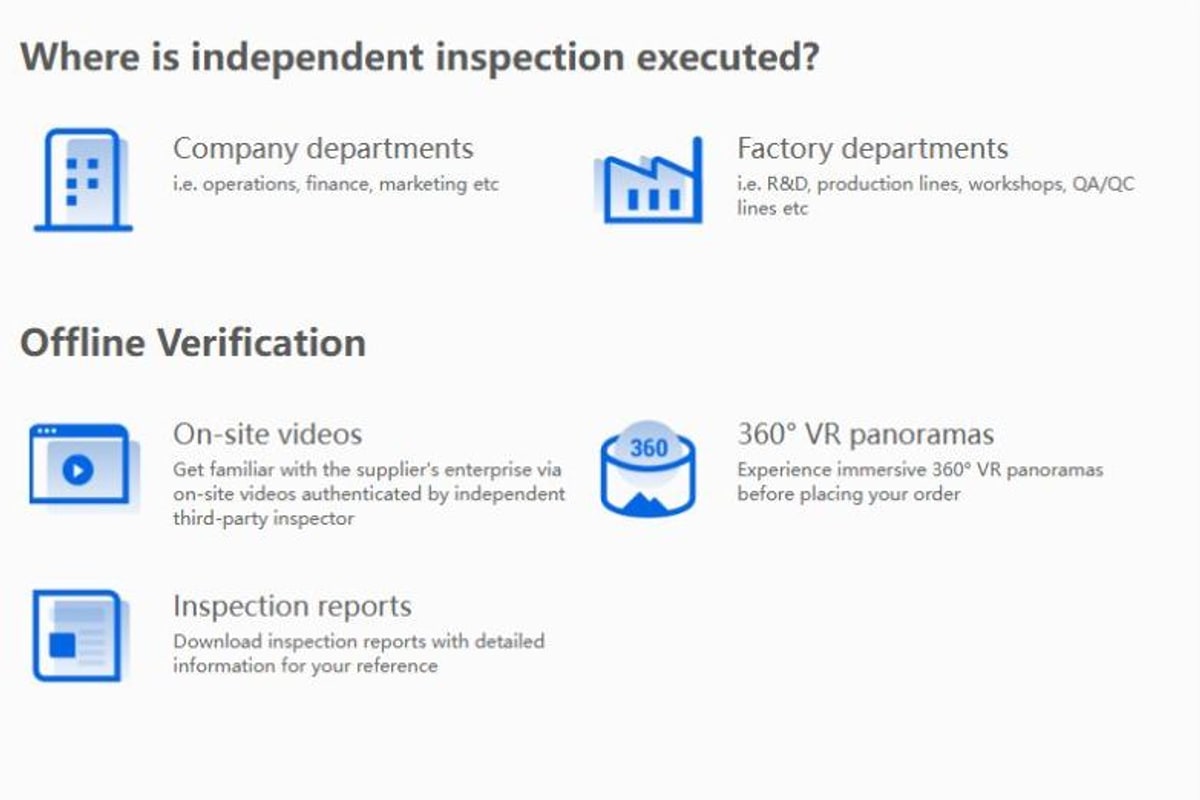
3. Verify who will actually make the product
Ask for the legal company name, registered address, production address and the name that will appear on the invoice. Establish whether you are speaking with the factory, a trading company or an agent.
A trading company can be useful, particularly when several factories contribute to an order. The problem is an undisclosed production arrangement that leaves you unable to verify the work or resolve defects.
For Alibaba suppliers, read the assessment report rather than stopping at the badge. Alibaba’s Verified Supplier program describes checks covering business type, factory location, production capability, subcontracting and quality-control processes. Those checks are useful evidence, not a guarantee that your specific product meets your market’s requirements.
Before paying for production, request evidence that answers these questions:
- Capability: Can the factory show the equipment and previous work relevant to your material and manufacturing process?
- Capacity: Which production slot is available, and which operations will be subcontracted?
- Quality: How are incoming materials, in-process work and finished products checked?
- Testing: Do reports identify the correct product, material, manufacturer and applicable standard?
- Traceability: Can a finished batch be connected to its production and material records?
A live factory call or an independent inspection can help you check what a website cannot. Verify important test documents with the issuing organization when possible; a certificate for a different product is not evidence for yours.
Match the evidence to the decision. Business registration establishes an entity; it does not prove that entity operates the production line. A factory assessment describes the site and scope inspected, while a product test report covers the identified sample and tests. Compare names, addresses, dates and product references across the records. Resolve mismatches before relying on a badge or certificate.
For US-bound products: identify the applicable rules before ordering. Under the CPSC certificate and eFiling update, general imports subject to CPSC certification requirements must have certificate data filed electronically from July 8, 2026. This does not cover every consumer product. Confirm the requirements for your category and entry with your compliance adviser or customs broker.
4. Compare minimum orders, total costs and complete lead times
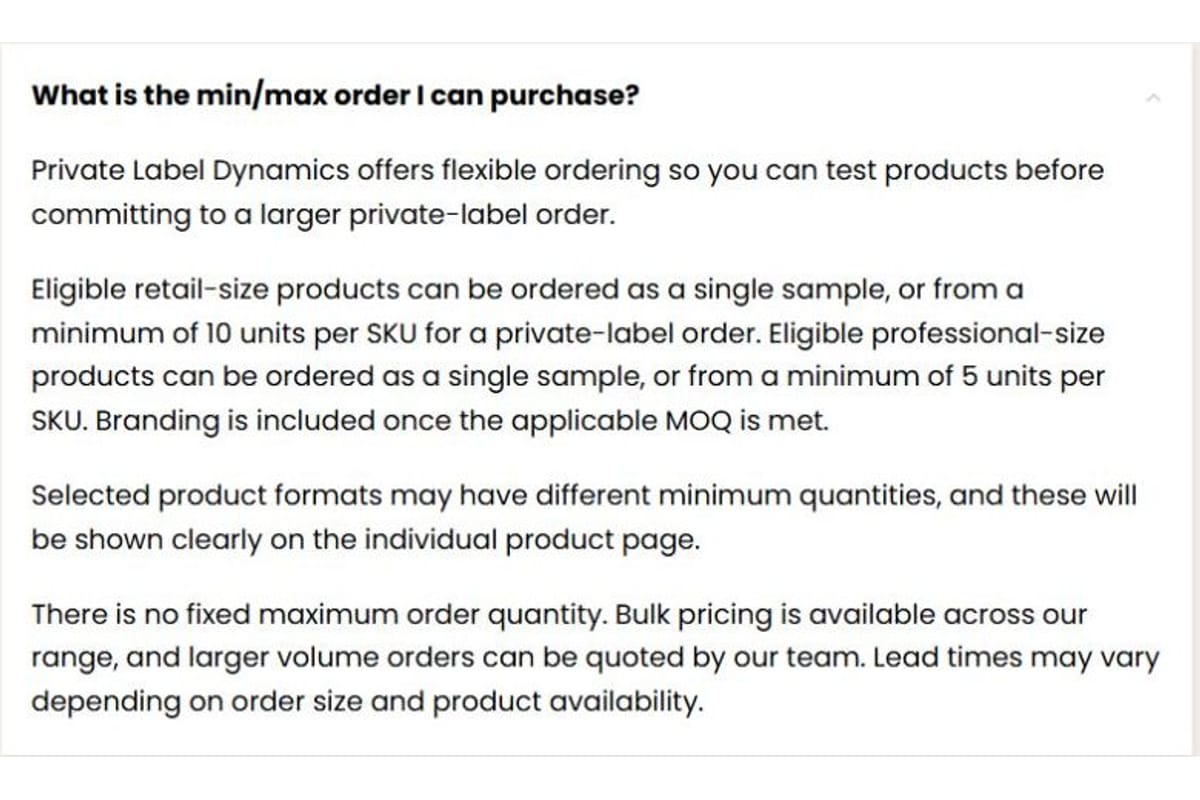
Minimum order quantity, or MOQ, can apply to the whole order, each style, each color or an individual component. A factory willing to make a small run may still require a larger purchase of printed boxes or custom fabric.
Ask for both the product MOQ and every customization minimum. Then ask how the quantity can be divided across sizes and colors.
Calculate the minimum for your assortment. Using Hawthorn’s published starting point of 50 per design and color, two designs in three colors would require at least 300 garments if each combination qualifies for that minimum. It would not mean 50 garments split across the entire range. Ask how sizes divide within each combination and whether any fabric or decoration raises the minimum.
MOQ and lead-time benchmarks by category
Use these October 2026 manufacturer-published examples to judge a quote against a comparable production route. They are starting points, not category-wide averages. A ready formula, custom garment and newly developed candle vessel require different work.
| Category and source | Published starting MOQ | Sampling | Bulk production |
|---|---|---|---|
| Apparel: custom casualwear Hawthorn FAQ |
From 50 garments per design/color; design-dependent. | 2–4 weeks from order placement; part of an MOQ order. | Around 4–6 weeks after sample approval; complexity and workload affect timing. |
| Beauty: existing-formula skincare Skincraftlab ordering guide |
From 500 units per SKU for its private-label tier. | Branded samples ship in 3–7 days. | Approximately 20 days after sample confirmation, with deposit required to start production. |
| Home: private-label candles AsterCandle order terms |
About 250 units per order, up to 5 scents; fully custom vessels/packaging usually 250–500+. | Typically 1–2 weeks. | Typically 3–6 weeks; 8–14 weeks for fully custom vessels or packaging. |
| Accessories: custom jewelry OEM Jewelry Lab FAQ |
500 pieces per style and plating color. | About 10 days from approved 3D file; tooling adds 2–20 days before sampling. | About 25 days after sample approval. The supplier gives 40–50 working days before shipment for a first order needing a steel die. |
How to read a higher quote: ask which requirement raises the minimum or extends the schedule. A new formula, custom-dyed fabric or bespoke vessel is not comparable with a stocked base. Have the supplier price a simpler version alongside your preferred specification. If the extra quantity comes from packaging, ask whether standard containers or labels would reduce it.
For a like-for-like product, an unexplained jump in MOQ or timing is a reason to seek another quote—not proof of overcharging. Compare the same customization, testing, quantity split and production start point. Add sample delivery, your approval time and freight separately; confirm whether a supplier’s “days” means calendar or working days.
If the minimum exceeds your budget, negotiate the feature creating it. Ask about an existing mold, stocked material, standard vessel or fewer colorways before requesting a lower quantity of an unchanged custom design. Get both versions priced, including setup fees. A smaller batch at a higher unit price may expose less cash than a large batch you have not yet proved you can sell.
Separate the unit price from development and delivery
For example, Bali Swim lists custom-design development at US$99 per design, with 50% credited toward production of that design; revisions are separate. Its published bulk price guide lists US$13–15 for a women’s swimwear top or bottom and US$26–30 for a simple bikini set, based on a 250–499-piece order. Final pricing depends on fabric, construction and volume. Confusing “piece” and “set” can materially distort a budget.
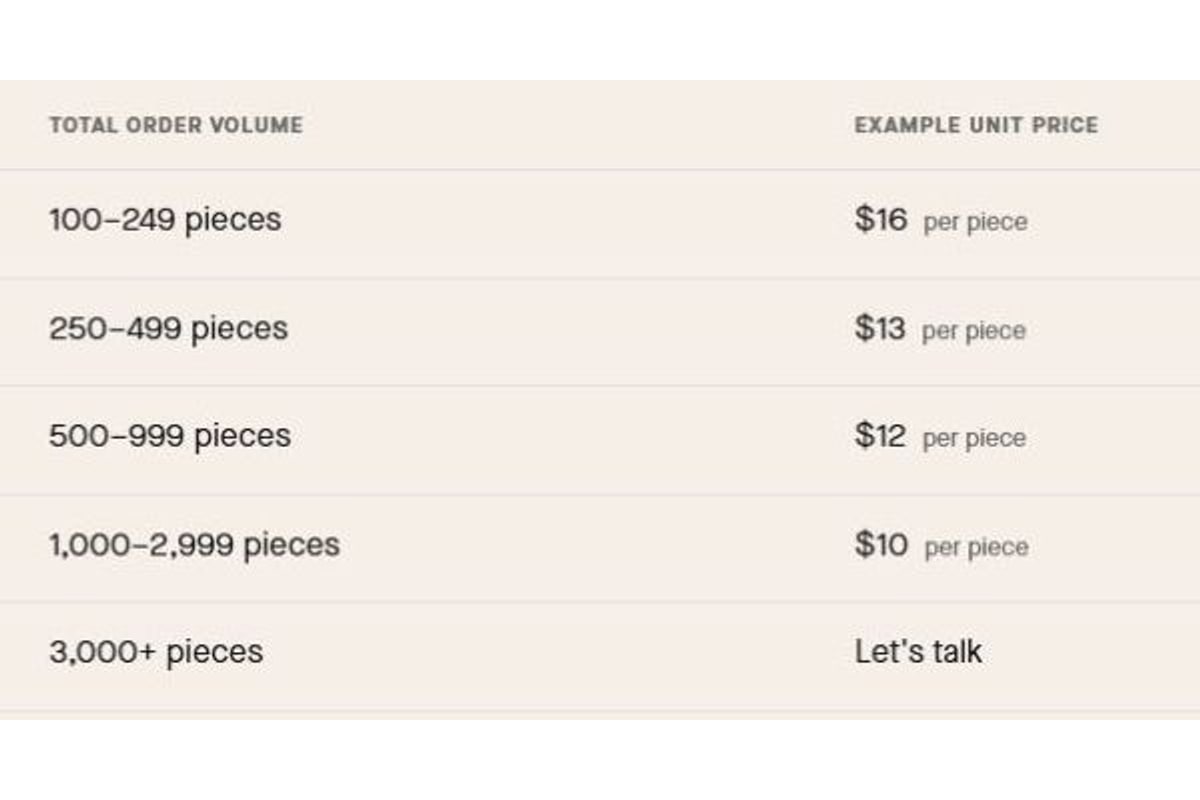
Ask suppliers to separate:
- Product cost, quantity breaks and quote currency.
- Samples, revisions, development, molds or other tooling.
- Labels, printing, packaging and setup charges.
- Testing and agreed inspections.
- Freight, insurance, customs clearance, duties and taxes where applicable.
- Delivery to your warehouse or fulfillment provider.
Compare quotes for the same specification, quantity and delivery arrangement. “Shipping included” should identify the destination and exclusions. Ask who handles import clearance and whether taxes and duties are included; the headline product price rarely answers all of this.
Compare the first order and the reorder separately. Development or tooling may be charged once, while packaging, inspections and freight recur. A sample credit should show its qualifying order and expiry conditions, if any. Ask whether a lower reorder price assumes unchanged materials, a minimum batch or no new artwork; it is not automatically available on every future order.
Delivered cost per sellable unit includes the product, non-credited development, packaging, testing, inspections, freight and applicable import costs, divided by the units you can actually sell. Keep recoverable taxes separate in your cash-flow calculation. Do not spread a one-time mold charge over hoped-for future sales when deciding whether you can fund the first order.
Work backward from the arrival date
Build the schedule around the actual steps: sample development, your review, revisions, material purchasing, production, inspection, shipping and receipt.
Ask what starts each clock. “Production takes four weeks” may mean four weeks after the deposit, approved sample, artwork and materials are all ready. It does not necessarily mean four weeks from your first email. Have the supplier confirm whether its estimate uses calendar or working days.
Hawthorn’s 2–4-week prototype and 4–6-week bulk targets add up to roughly 6–10 weeks across those two stages, assuming no gap between them. Your review, revisions, shipping and any additional checks still sit outside that arithmetic. Ask which activities can overlap and which require written approval before the next stage begins.
5. Approve a sample that production can be measured against
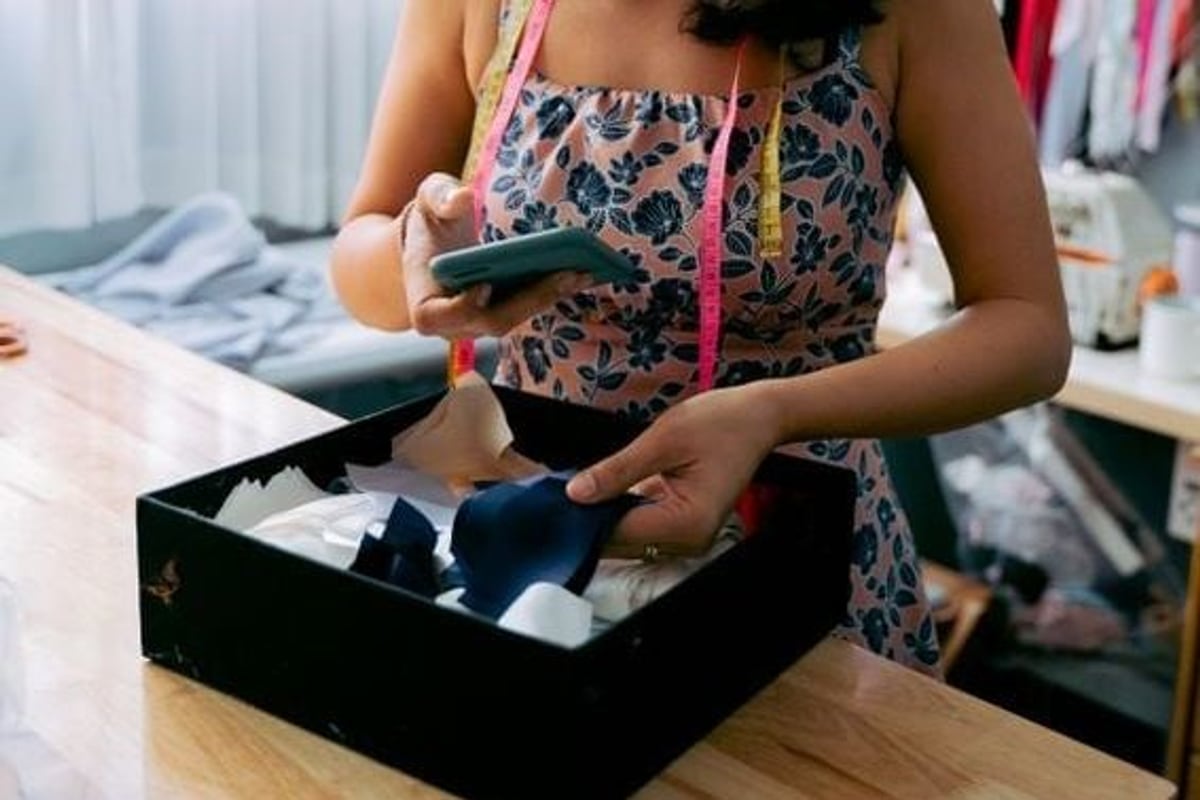
A stock sample shows general workmanship. It may not show how your chosen fabric, color, logo or packaging will perform. Before bulk production, approve a sample that represents the version you intend to sell.
Keep an approved reference sample and a written specification. Record the version and approval date, and ensure the factory retains the same reference. Photos help document appearance, but do not replace measurements or functional checks.
| Check | What to record | What to resolve before approval |
|---|---|---|
| Materials and dimensions | Material grade or composition, measurements and agreed tolerances. | Substitutions, inconsistent sizing or a sample that differs from the quotation. |
| Function and durability | Tests appropriate to the product and its intended use. | Failures, weak components or unsupported performance claims. |
| Branding and finish | Logo position, colors, decoration method and finish. | Incorrect artwork, peeling print or uneven workmanship. |
| Packaging and labeling | Pack contents, barcodes, required information and carton marks. | Missing labels, poor protection or inconsistent product identification. |
For apparel, assess fit and relevant wash or shrinkage performance. For a candle, evaluate the vessel, wick and wax together under an appropriate test plan. A visually attractive sample is only one part of approval.
A prototype, pre-production sample and production sample answer different questions. The prototype tests the design. The pre-production sample confirms the agreed materials and construction. A sample selected from the finished batch checks whether the factory reproduced that approved version. Ask which type is being supplied and whether anything will change before bulk production.
Turn subjective feedback into an acceptance rule. “Logo too low” should become an agreed position and tolerance; “fabric feels different” should trigger a check against the specified material and retained swatch. Record every approved revision in one updated specification so an earlier sample cannot accidentally become the factory’s reference.
6. Agree on production terms before paying the deposit
The purchase order and agreement should refer to the approved specification, quantity breakdown and packaging requirements. Do not leave important decisions scattered across chat messages.
Settle the payment milestones, inspection stage, dispatch target and procedure for defects or delays. Agree whether material changes or subcontracting need your approval. For custom work, address the ownership, storage and future use of molds, patterns, artwork and other development outputs.
Write down the remedy as well as the quality requirement. If a batch fails inspection, who pays for sorting, rework, replacement goods and reinspection, and when must the correction be complete? If tooling is yours, clarify how it is identified, maintained and released when you change suppliers. Have material contract terms reviewed for the relevant jurisdiction.
Make sure the payee matches the agreed contracting entity, or that any difference is documented and independently confirmed. Verify bank-detail changes through a known contact before transferring funds.
Warning signs include pressure to skip samples, unrelated test reports, unexplained company-name changes, refusal to identify the production site and a quote that becomes vague whenever you ask about exclusions. A low MOQ is not a reason to overlook them.
7. Start with a pilot order and measure the result
Use the first production run to confirm that the supplier can reproduce the approved sample consistently. Keep the assortment manageable so you can identify whether a problem comes from the material, variation or production process.
Agree on checks before shipment, while corrections are still possible. On arrival, record shortages, defects, packaging damage and actual delivery timing. Use that evidence to decide what happens next.
Give the inspector the approved sample, current specification, quantity split and defect definitions before the visit. Have samples selected from the batch rather than accepting only pieces chosen by the supplier. Separate appearance checks from functional tests and required laboratory testing; a clean-looking shipment can still have a material or safety problem.
For sampling inspections, ASQ’s acceptance-sampling framework uses defined plans and acceptance quality limits. Agree with the inspector on the lot, sample size and acceptance criteria appropriate to the product. A sample-based pass is not proof that every unit is defect-free, and it does not replace applicable compliance testing. Resolve a failed result and document the recheck before authorizing shipment under your agreed terms.
| Pilot-order result | Next decision |
|---|---|
| The batch meets the agreed checks, and the delivered cost supports your margin. | Consider a reorder after confirming demand, material availability and replenishment timing. |
| Correctable defects or packaging problems remain. | Hold the reorder until the supplier completes the agreed correction and you verify the result. |
| Safety, compliance or material-substitution issues remain unresolved. | Do not release affected goods for sale. Resolve the issue with qualified support and reassess the supplier. |
Work out the delivered cost per sellable unit, not just the invoice price divided by the number ordered. Unsellable units and replacement work can change the economics of an apparently cheaper supplier.
What should your first inquiry include?
A concise request gets better answers than a long brand introduction. Send the product brief and ask each shortlisted manufacturer to answer the same questions:
- Can you make this specification, and which operations take place in your own facility?
- What are the minimums per order, style, color and custom component?
- What are the unit, sample, development and packaging charges?
- What starts the sample and production lead times, and what is excluded?
- Which product-specific test documents can you provide for the destination market?
- What are the payment, inspection, shipping and defect-resolution terms?
Keep the responses side by side. A supplier that identifies a practical limitation early may be a better partner than one that agrees to everything without asking how the product will be used.
Frequently asked questions
Where can I find a manufacturer for my product?
Start with category-specific supplier guides, manufacturing directories, relevant trade-show exhibitor lists and industry referrals. Search by product and process, then verify the company behind the listing. A sourcing partner can help when you need local factory coordination or several suppliers.
Do I need a tech pack before contacting manufacturers?
No. References, measurements and a clear description can start a feasibility discussion. Custom products eventually need a detailed, approved specification. Ask who prepares it, what development costs and how revisions are handled before production begins.
How much more does custom development cost than relabeling?
There is no reliable universal percentage. Custom work can add design, tooling, testing and additional sample rounds. Compare a ready-made and a custom quote for the same category, separating one-time charges from the recurring unit price.
Can startups find low-MOQ private label manufacturers?
Yes, especially when using existing products or standard materials. Check whether the minimum applies per SKU, color or whole order. Low minimums can come with higher unit prices or limited customization; they do not replace supplier verification or sample approval.
How long do sampling and the first production run take?
The route and product determine the schedule. Hawthorn targets 2–4 weeks for a prototype after order placement, followed by around 4–6 weeks for bulk manufacturing after sample confirmation. Those are production stages, not a door-to-door delivery promise. Include your review time, revisions and freight in the launch plan.

Find a manufacturer that fits your product and budget
NicheSources helps buyers source non-food consumer goods across 70+ product niches. Our product sourcing service covers supplier selection, price and MOQ comparisons, purchasing, quality checks and shipping coordination. We can also coordinate product branding when your order needs its own labels or packaging.
Request a private label sourcing quote with your product references, preferred materials, branding requirements, first-order quantity and destination. Include your target cost and launch date so we can assess suitable manufacturers and the tradeoffs before you commit to production.