A product that costs $4 on AliExpress might look profitable until you factor in shipping, import duties, and fulfillment costs. With the US ending duty-free de minimis treatment for low-value imports in 2025, finding the right supplier matters more than ever.
AliExpress alternatives are marketplaces, dropshipping platforms, wholesale suppliers, and sourcing agents that offer other ways to buy products. Depending on your business, they can provide faster US/EU shipping, better bulk pricing, automated fulfillment, or more control over product quality and branding.
We’ve put together 21 AliExpress alternatives for 2026, comparing their pricing, shipping options, strengths, and limitations. Whether you’re testing products for a Shopify store, buying wholesale, or building a private-label brand, we’ll help you narrow down the options.
Quick Facts: AliExpress Alternatives in 2026
| Category | What to know |
| Platforms covered | 21 options across dropshipping, wholesale, sourcing agents, and consumer marketplaces |
| US import rules | De minimis treatment ended for China/Hong Kong on May 2, 2025, and globally on August 29, 2025 |
| Faster US shipping | Look for suppliers with US warehouse inventory |
| Bulk sourcing | Alibaba and 1688 are worth evaluating for factory-direct pricing |
| Free starting options | CJdropshipping, SourcinBox, and Wholesale Central |
| Branding and QC | Sourcing agents can help with private labeling, supplier coordination, and pre-shipment inspection |
Why Look Beyond AliExpress in 2026?
AliExpress remains useful for testing products without purchasing inventory upfront. However, changes to US import rules, shipping expectations, and supplier requirements have made it worth exploring alternatives, especially once you’re handling consistent orders.
Here are four reasons we’d consider other sourcing options in 2026.
1. US Import Duties Have Changed the Cost Equation
The US ended its $800 de minimis duty-free exemption for imports from China and Hong Kong on May 2, 2025, followed by a worldwide suspension on August 29, 2025.
Previously, many low-value AliExpress orders could enter the US without import duties. Now, shipments are subject to applicable import charges, even when the product costs just a few dollars.
Here’s a simplified example of how duties can affect your margins:
| Cost component | Before | After (illustrative) |
| Product cost | $5.00 | $5.00 |
| Shipping | $3.00 | $3.00 |
| Import duty (assumed 20%) | $0.00 | $1.00 |
| Total cost | $8.00 | $9.00 |
| Selling price | $15.00 | $15.00 |
| Gross profit before other expenses | $7.00 | $6.00 |
This example assumes a 20% duty on the $5 product value solely to demonstrate the calculation. Actual rates, customs valuation, and additional import fees vary by product and shipment.
That extra dollar reduces your gross profit by roughly 14%. Across hundreds of orders, the difference becomes significant.
For sellers importing consistently, we suggest comparing the total landed cost of AliExpress orders against bulk sourcing or US-warehouse fulfillment. You can also read our US-China tariffs guide for more context.
2. Shipping Times Can Affect Customer Retention
Many AliExpress products still ship directly from China, making delivery times less predictable than sourcing from local inventory.
For US or European customers, suppliers with domestic warehouses can reduce delivery times and simplify returns.
The trade-off is cost. Locally stocked products may have higher unit prices, but shorter delivery windows can reduce customer complaints, cancellations, and refund requests.
3. Product Quality Varies Between Suppliers
AliExpress connects buyers with numerous independent sellers, so product consistency can vary even between listings for seemingly identical items.
A sample might look perfect, while a later batch arrives with different materials, finishes, or packaging.
We suggest looking for suppliers that support sample inspections, consistent manufacturing specifications, and pre-shipment quality checks when you’re ready to scale.
4. Branding Options Are Limited
AliExpress works well for selling generic products, but building a recognizable brand often requires greater control over packaging, product specifications, and supplier relationships.
For example, private labeling may involve custom logos, branded inserts, packaging design, and minimum order quantities that ordinary AliExpress sellers cannot accommodate.
Wholesale manufacturers and sourcing agents can help coordinate these requirements directly with factories.
Our recommendation: Continue using AliExpress if you’re still testing demand. Once you identify products generating consistent sales, compare specialized dropshipping platforms, wholesale suppliers, and sourcing agents based on your margins, shipping requirements, and branding goals.
Best AliExpress Alternatives: Quick Picks
The best AliExpress alternative depends on what you’re selling, where your customers are located, and how much control you need over sourcing and fulfillment.
If you’re unsure where to start, here’s how we’d narrow down the options:
| If you want to… | Our pick | Why choose it |
| Start dropshipping without a subscription | CJdropshipping | Free entry-level plan, product sourcing, and automated fulfillment |
| Deliver faster to US customers | Zendrop | US warehouse fulfillment and Shopify automation |
| Source products from US/EU suppliers | Spocket | Access to domestic suppliers and shorter shipping routes |
| Build a branded dropshipping business | NicheDropshipping | Human quality inspections, private labeling, and custom packaging |
| Buy wholesale or develop private-label products | Alibaba | Direct supplier negotiations, bulk pricing, and customization |
| Find competitive China factory prices | 1688.com | Domestic Chinese wholesale pricing, typically accessed through an agent |
| Outsource bulk sourcing and quality control | NicheSources | Supplier sourcing, factory coordination, inspections, and consolidated shipping |
| Fulfill orders within Europe | BigBuy | EU-based inventory, dropshipping integrations, and European fulfillment |
Our advice: If you’re testing products, start with a platform that doesn’t require a large upfront commitment. Once sales become consistent, compare suppliers based on total landed cost, fulfillment reliability, and opportunities to improve your margins.
Types of AliExpress Alternatives
Not every website like AliExpress works the same way. Some let you purchase individual products, while others connect you with wholesale manufacturers or handle sourcing and fulfillment for your business.
We generally divide AliExpress alternatives into five categories:
| Type | How it works | Best for |
| Consumer marketplaces | Buy individual products from retailers or marketplace sellers | Personal shopping and product research |
| Dropshipping platforms | Source products and automate order fulfillment through store integrations | Sellers who don’t want to hold inventory |
| Wholesale marketplaces | Connect directly with manufacturers and wholesalers, often with minimum order quantities (MOQs) | Bulk buying and private-label brands |
| Supplier directories | Find wholesalers and contact them to negotiate pricing and terms | Businesses researching domestic suppliers |
| Sourcing agents | A dedicated team helps find suppliers, negotiate prices, inspect products, and arrange shipping | Growing businesses needing hands-on sourcing support |
How Do the 21 Alternatives Compare?
Here’s a quick comparison of all 21 platforms covered in this guide.
| Platform | Type | Best for |
| CJdropshipping | Dropshipping platform | All-in-one sourcing and fulfillment |
| Zendrop | Dropshipping platform | US-focused dropshipping |
| Spocket | Dropshipping platform | US/EU supplier access |
| SourcinBox | Sourcing agent platform | Agent-assisted dropshipping |
| NicheDropshipping | Sourcing agent | Branded dropshipping and quality control |
| DSers | Dropshipping automation tool | Automating AliExpress orders |
| Doba | Dropshipping platform | Multi-channel sellers |
| Modalyst | Dropshipping platform | Fashion and lifestyle products |
| Alibaba | Wholesale marketplace | Bulk purchasing and private labeling |
| 1688.com | Wholesale marketplace | Domestic Chinese wholesale sourcing |
| NicheSources | Sourcing agent | Hands-off bulk sourcing from China |
| DHgate | Wholesale marketplace | Small-batch wholesale orders |
| Banggood | Online retailer with dropshipping program | Electronics and gadgets |
| Wholesale2b | Supplier directory and automation | US supplier integration |
| Wholesale Central | Wholesale directory | Finding US wholesalers |
| Costway | Retailer with dropshipping program | Home and garden products |
| BigBuy | Wholesaler and dropshipping platform | European fulfillment |
| Temu | Consumer marketplace | Product research and personal shopping |
| Amazon | Consumer marketplace | Retail purchasing and selling |
| eBay | Consumer marketplace | Liquidation and unique products |
| Etsy | Specialized marketplace | Handmade products and original designs |
Which type should you choose? For product testing, we’d start with a dropshipping platform. For larger orders or custom products, wholesale marketplaces offer more flexibility. If you’re managing multiple suppliers or need quality inspections before shipping, a sourcing agent may be worth considering.
Keep in mind that consumer marketplaces such as Temu, Amazon, and Etsy aren’t direct substitutes for wholesale sourcing. Their selling policies and fulfillment models differ from platforms built specifically for dropshipping.
The 21 Best AliExpress Alternatives in 2026
We’ve organized these 21 alternatives into five categories: dropshipping and fulfillment platforms, wholesale suppliers, US-based suppliers, European suppliers, and consumer marketplaces.
For each option, we’ll cover its best use case, shipping options, pricing, advantages, limitations, and what to watch out for before committing.
Our focus is on helping you find a platform that fits your business model and budget, whether you’re testing your first product or sourcing inventory at scale.
Dropshipping & Fulfillment Platforms
If you’re running a Shopify store or selling through other ecommerce channels, dropshipping platforms can help you source products, automate orders, and manage fulfillment without holding inventory yourself.
We’ve shortlisted eight AliExpress alternatives here, ranging from free automation tools to dedicated sourcing agents. Each has different strengths depending on your order volume, target market, and branding requirements.
1. CJdropshipping: Best Free All-in-One Platform
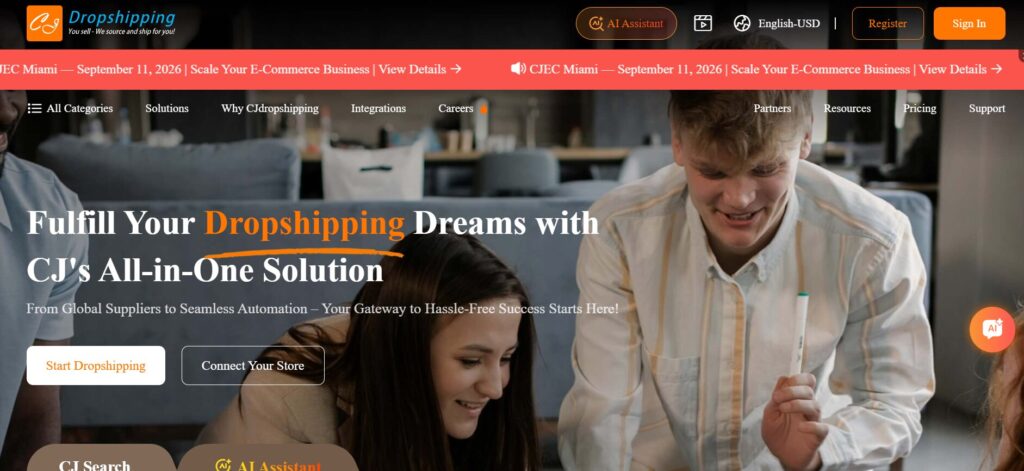
CJdropshipping is one of the closest alternatives to AliExpress for dropshippers. It combines product sourcing, order fulfillment, and store integrations in one platform, with warehouses in China, the US, and other international markets.
We’d consider CJdropshipping if you’re testing multiple products and want to avoid paying a monthly subscription before generating consistent sales.
- Best for: Beginners and growing stores looking for an all-in-one dropshipping solution.
- Shipping: Approximately 3–8 days for eligible US warehouse stock; China-direct delivery varies by shipping line and destination.
- Pricing: Free basic plan with five daily sourcing requests. Paid plans include Plus (15.99/month), prime (19.99/month), and Advanced ($59.99/month).
- Pros: Free starting plan, product sourcing requests, multiple ecommerce integrations, custom packaging options.
- Cons: Shipping costs vary considerably by product; inventory availability needs checking; customer support and dispute resolution can be inconsistent.
- Watch for: CJdropshipping’s Trustpilot rating is currently unavailable following a breach of its review guidelines. We suggest testing samples and fulfillment reliability before transferring significant order volume.
2. Zendrop: Best for Fast US Fulfillment
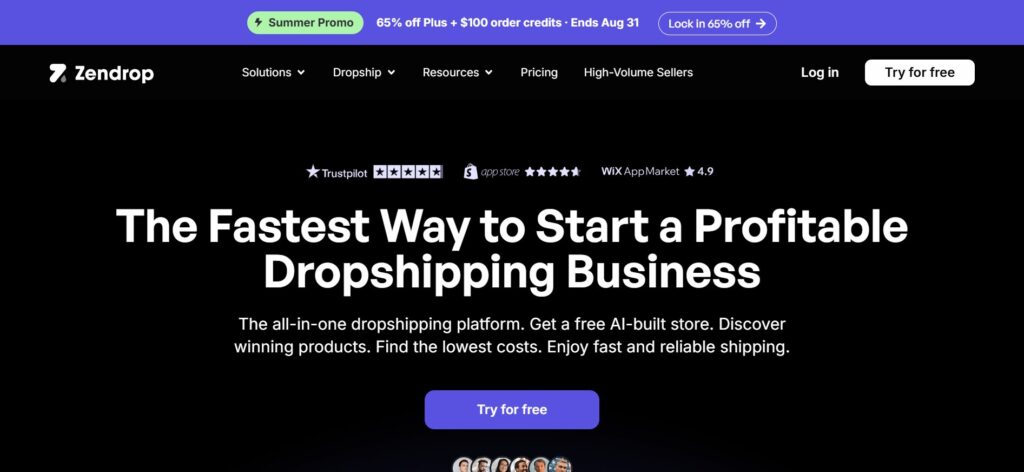
Zendrop is a dropshipping platform focused on automated fulfillment, with access to both China-based products and inventory stored in US warehouses.
Its biggest advantage is domestic fulfillment for eligible products. If most of your customers are in the US, we’d compare Zendrop’s locally stocked catalog against CJdropshipping before choosing between them.
- Best for: Shopify sellers prioritizing US delivery times and automated fulfillment.
- Shipping: Typically 3–5 business days for eligible US stock; approximately 10–15 days for China-direct shipments.
- Pricing: Free browsing is available. Usage-based plans range from $29 to $79/month depending on linked products; some existing accounts use $49/month Pro or $79/month Plus plans.
- Pros: US fulfillment options, automated order processing, product sourcing, access to a large catalog.
- Cons: Higher product costs can reduce margins; branding options depend on the program; subscription costs require monitoring.
- Watch for: Zendrop has a 4.6/5 Trustpilot rating, but some customer reviews raise billing concerns. Check which pricing model applies to your account before connecting products.
3. Spocket: Best for US and EU Suppliers
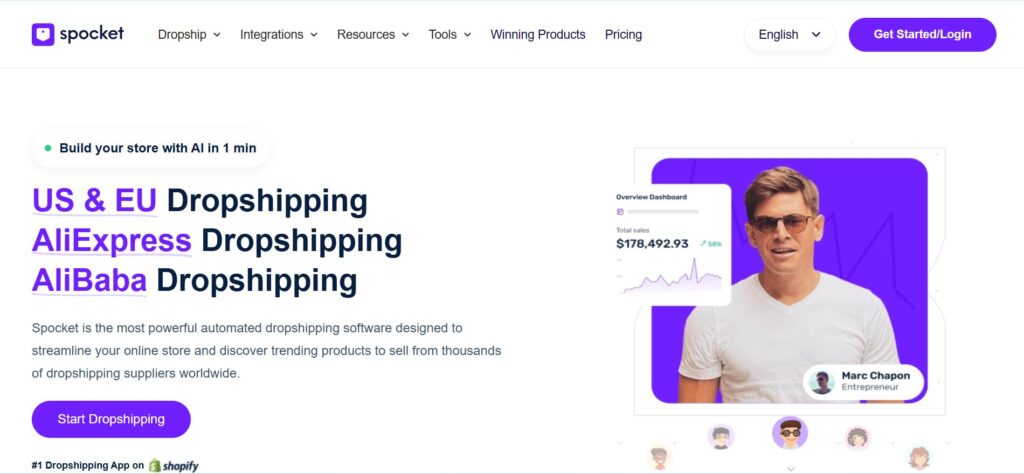
Spocket focuses on connecting dropshippers with suppliers in the US, Europe, and other markets. Its biggest appeal is access to domestic inventory, which can reduce international shipping delays.
We’d evaluate Spocket for stores selling fashion, beauty, home accessories, or lifestyle products where delivery speed and product presentation matter.
- Best for: Stores targeting US and European customers.
- Shipping: Around 5–12 business days for many US/EU suppliers, depending on location and product availability.
- Pricing: Starter costs $39.99/month, Professional $59.99/month, Empire $99.99/month, and Unicorn $299.99/month. A seven-day trial is available.
- Pros: US/EU supplier network, sample ordering, branded invoices, ecommerce integrations.
- Cons: Monthly subscriptions increase operating costs; supplier pricing can limit margins; cancellation and billing complaints appear in customer reviews.
- Watch for: Spocket offers Professional at $24/month with annual billing, but that requires a longer commitment. We’d test suppliers and delivery performance before subscribing annually.
4. SourcinBox: Best Free Human Sourcing Agent
SourcinBox combines a dropshipping management platform with human sourcing assistance. You can submit product links from marketplaces such as AliExpress or 1688, and its sourcing team helps locate suppliers, manage inspections, and fulfill orders.
This makes SourcinBox worth evaluating once you’ve found a product with repeat demand and want someone to handle more of the supplier coordination.
- Best for: Growing dropshippers looking for dedicated sourcing assistance without monthly software fees.
- Shipping: Approximately 6–12 days to the US on selected shipping routes; actual delivery depends on the product and carrier.
- Pricing: No monthly subscription or setup fee. Product and shipping costs are quoted separately.
- Pros: Dedicated account management, product sourcing, quality inspection, warehousing, private labeling.
- Cons: Fulfillment speed depends on China-based operations; shipping can be expensive for certain products; less convenient for instant self-service purchasing.
- Watch for: Compare the full product-plus-shipping quote against AliExpress. A lower sourcing price doesn’t necessarily mean a lower delivered cost.
5. NicheDropshipping: Best for Branded Dropshipping and QC
NicheDropshipping provides China-based sourcing and fulfillment services for ecommerce sellers who need greater control over product quality and branding. Its team helps coordinate supplier selection, factory pricing, pre-shipment inspections, and custom packaging.
We’d consider this type of service once a product has proven demand and you’re ready to develop consistent packaging, private-label products, or a more reliable supply chain.
- Best for: Growing dropshipping businesses developing branded product lines.
- Shipping: Approximately 7–15 days for standard international fulfillment, depending on destination and shipping method. US/EU warehouse options are available.
- Pricing: Free product sourcing and quotes within two business days. No upfront sourcing charge; order costs are quoted for approval.
- Pros: Human pre-shipment inspections, supplier negotiation, private labeling, custom packaging, international warehousing options.
- Cons: China-direct fulfillment can take longer than US-stock platforms; import duties affect landed costs; custom branding may involve MOQs.
- Watch for: We’d suggest comparing quotes for three to five proven products, including product cost, inspection, packaging, shipping, and applicable duties. This provides a more useful comparison than unit prices alone.
6. DSers: Best for Automating AliExpress Orders
DSers is an official AliExpress dropshipping partner that helps automate product importing, bulk ordering, supplier mapping, and order tracking.
It’s especially useful if you’re satisfied with your current AliExpress suppliers but want to reduce the manual work involved in processing orders.
- Best for: Dropshippers who want to continue sourcing from AliExpress while automating fulfillment.
- Shipping: Determined by the selected AliExpress supplier and shipping method; China-direct deliveries may take several weeks.
- Pricing: Free Basic plan supporting three stores and 3,000 products. Advanced costs $19.90/month, while Pro costs $49.90/month.
- Pros: Official AliExpress integration, bulk order processing, supplier comparison tools, free starting plan.
- Cons: Supplier quality remains your responsibility; delivery speed depends on AliExpress sellers; it doesn’t eliminate import duties.
- Watch for: DSers improves how you manage AliExpress orders, but it doesn’t change the underlying supplier relationship. If product quality or shipping reliability is your main problem, consider changing suppliers rather than upgrading your automation plan.
7. Doba: Best for Multi-Channel US Sellers
Doba connects ecommerce sellers with a supplier network that emphasizes US-based inventory. It supports product importing, inventory synchronization, and order automation across multiple selling channels.
We’d evaluate Doba for established stores that prioritize domestic fulfillment and are comfortable paying for automation.
- Best for: Multi-channel sellers targeting US customers.
- Shipping: Approximately 3–7 days for eligible US supplier inventory; shipping varies by supplier.
- Pricing: Monthly plans start at 29.99 for limited, followed by basic (59.99), Standard (149.99), and Enterprise (299.99). Discounted quarterly and annual billing may be available.
- Pros: US supplier network, broad product catalog, multi-channel integrations, inventory automation.
- Cons: Subscription costs, potentially narrow resale margins, supplier-dependent product quality and returns.
- Watch for: Compare supplier prices against competing retail listings before importing products. Some customer reviews report limited margins and supplier fulfillment issues, so we’d validate a small selection of SKUs first.
8. Modalyst: Best for Fashion and Lifestyle Stores
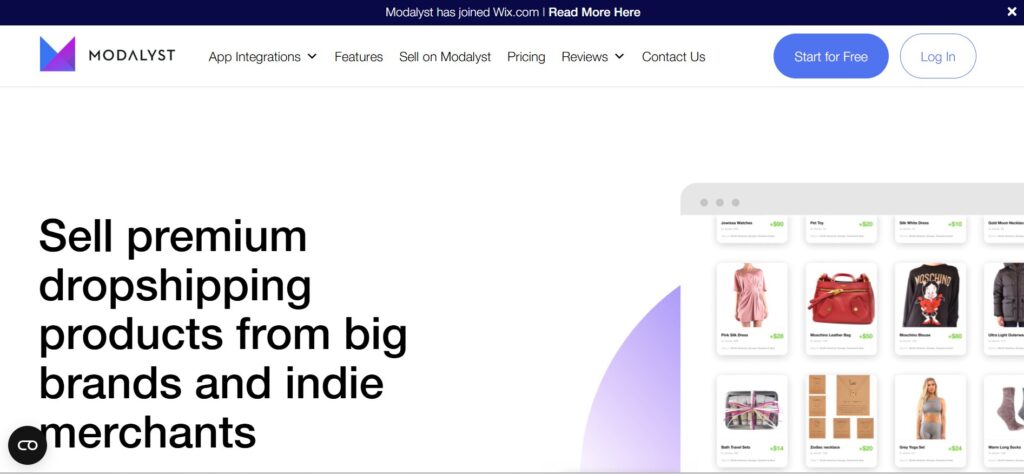
Modalyst is a dropshipping marketplace with an emphasis on fashion, accessories, and lifestyle products. It integrates with ecommerce platforms such as Wix and Shopify and also supports importing products from AliExpress.
We’d consider Modalyst for a boutique-style store that wants access to multiple suppliers without managing separate sourcing relationships.
- Best for: Fashion, beauty, and lifestyle stores using Wix or Shopify.
- Shipping: Around one week for some domestic suppliers; international delivery varies considerably by supplier.
- Pricing: Free Hobby plan for up to 25 products. Start-Up costs $35/month, while Pro costs $90/month. Modalyst also lists a 5% transaction fee.
- Pros: Fashion-focused catalog, brand-name supplier access, product automation, free entry-level plan.
- Cons: Limited products on the free plan; ongoing platform and transaction fees; reported problems with product syncing and customer support.
- Watch for: Modalyst currently has a 2.2/5 Trustpilot rating, although it’s based on only nine reviews. We’d test product synchronization and supplier responsiveness before committing to a paid plan.
Wholesale & Bulk Sourcing Platforms
If you’ve found a product that sells consistently, buying wholesale can help you negotiate better unit prices, customize products, and build a more reliable supply chain.
Unlike traditional dropshipping platforms, wholesale sourcing often involves minimum order quantities (MOQs), supplier negotiations, and international freight. We’ve selected five alternatives that serve different buying needs, from small-batch orders to factory-direct sourcing.
9. Alibaba: Best for Wholesale and Private Label
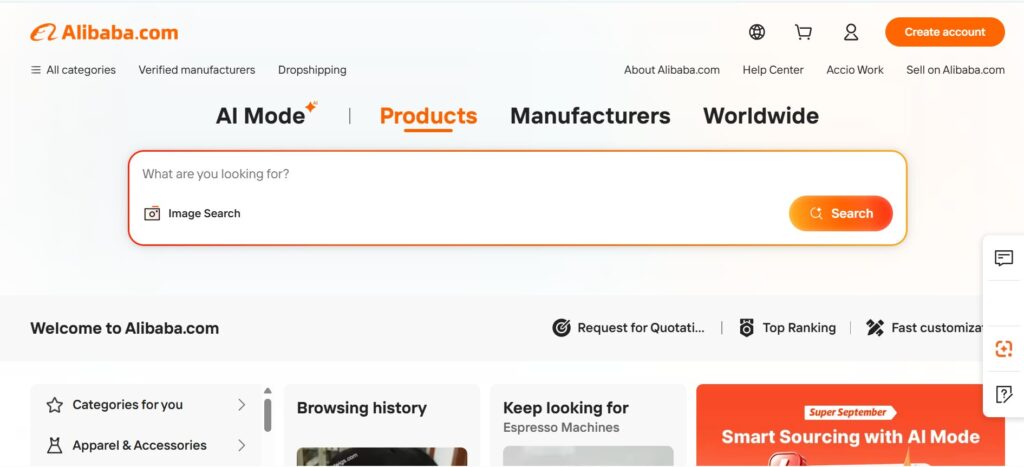
Alibaba is one of the strongest AliExpress alternatives for businesses ready to purchase inventory in bulk. Both platforms belong to Alibaba Group, but Alibaba.com focuses on B2B transactions, connecting buyers with manufacturers, wholesalers, and trading companies.
We’d start with Alibaba when sourcing a new product for wholesale or private labeling. You can compare multiple supplier quotations, request samples, negotiate MOQs, and arrange custom manufacturing without committing to a supplier immediately.
- Best for: Retailers, importers, and ecommerce brands purchasing wholesale inventory or developing private-label products.
- Shipping: Typically several weeks for international orders, depending on production lead time, shipping method, and destination. Ready-to-ship products may leave suppliers sooner.
- Pricing: Free for buyers to browse and contact suppliers. Unit prices, MOQs, customization, and freight costs are negotiated individually.
- Pros: Large supplier network, factory-direct sourcing opportunities, customization options, Trade Assurance buyer protection.
- Cons: Supplier quality varies, custom products often require higher MOQs, international freight and duties increase landed costs.
- Watch for: A Verified Supplier badge confirms that a third-party assessment has been conducted, but it doesn’t guarantee product quality. We recommend ordering samples and documenting specifications before making a bulk payment.
Alibaba’s Trade Assurance program provides payment protection and dispute assistance for eligible orders when suppliers fail to meet agreed product-quality or shipping terms. However, protection depends on the documented order terms and completing payment through Alibaba’s approved channels.
For more detailed guidance, read our articles on buying from Alibaba and whether Alibaba is safe and legitimate.
10. 1688.com: Best for Domestic Chinese Wholesale Prices
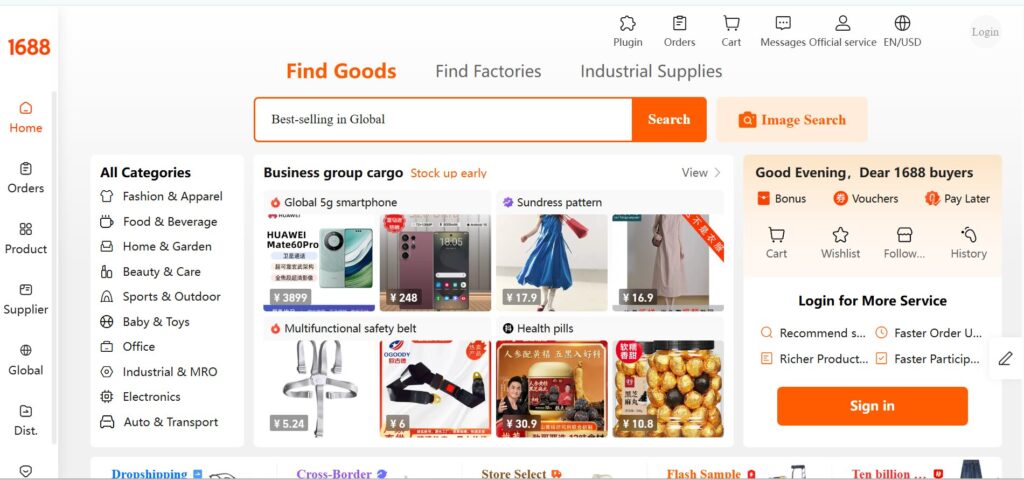
1688.com is Alibaba Group’s domestic Chinese wholesale marketplace. It connects buyers with manufacturers, distributors, and wholesalers primarily serving China’s local market.
Prices on 1688 can be lower than equivalent listings on Alibaba.com because suppliers primarily quote for domestic transactions. However, international buyers must account for Chinese-language communication, payment arrangements, domestic delivery, and export logistics.
- Best for: Experienced importers and ecommerce brands sourcing larger quantities through a China-based purchasing partner.
- Shipping: Primarily domestic delivery within China. International shipping generally needs to be coordinated separately through an agent or freight forwarder.
- Pricing: Free to browse. Product prices vary by supplier and quantity; sourcing agents commonly charge additional service fees.
- Pros: Competitive domestic wholesale pricing, extensive supplier selection, opportunities to negotiate directly with manufacturers.
- Cons: Chinese-language interface, international purchasing complications, supplier verification requirements, additional logistics coordination.
- Watch for: Compare the final landed cost before assuming 1688 is more economical. Domestic freight, agent fees, inspections, international shipping, and duties can offset lower unit prices.
In our view, 1688 becomes particularly useful when you’re purchasing repeat inventory and can consolidate orders from several suppliers into one shipment.
For a closer comparison of domestic Chinese marketplaces, see our 1688 vs. Taobao guide.
11. NicheSources: Best for Hands-Off Bulk Sourcing
NicheSources is our own China sourcing service, based in Yiwu. We help businesses find manufacturers, negotiate product pricing, arrange quality inspections, and coordinate international shipping without managing every supplier individually.
Our service is particularly relevant for buyers sourcing multiple products, developing private-label collections, or purchasing from platforms such as 1688 where local coordination can simplify the process.
- Best for: Ecommerce brands, wholesalers, and importers looking for managed bulk sourcing from China.
- Shipping: Sea freight, air freight, and express options, with US/EU warehousing available. Delivery estimates depend on the product, order size, and destination.
- Pricing: Free sourcing with quotes in two business days. A 5–10% service fee applies to approved orders, depending on their requirements.
- Pros: Supplier sourcing and negotiations, pre-shipment inspections, custom packaging and branding, consolidated international shipping.
- Cons: Less suitable for individual consumer purchases or immediate self-service ordering; sourcing fees must be included when calculating landed costs.
- Watch for: A sourcing agent becomes more valuable when the savings from supplier negotiations, consolidation, and reduced quality issues justify the service fee. We recommend comparing complete quotations against direct supplier offers.
With over 10 years of China sourcing experience, our team can also help coordinate suppliers across different manufacturing regions and arrange inspections before products leave China.
Transparency: NicheSources publishes this guide. We’ve included our service because it represents a different sourcing model from the marketplaces listed here, and buyers should compare its costs and capabilities independently.
12. DHgate: Best for Small-Batch Wholesale Testing
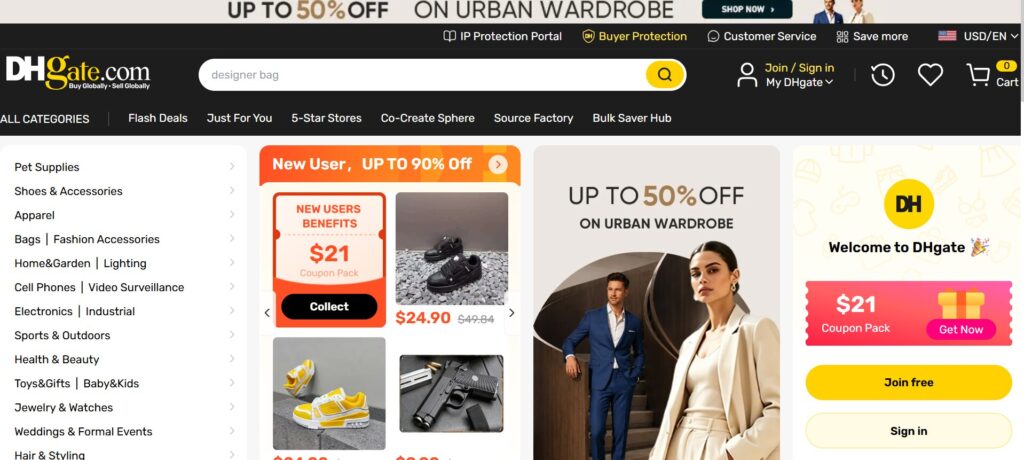
DHgate is a Chinese cross-border marketplace that connects international buyers with suppliers offering individual products and small wholesale quantities.
We’d consider DHgate when testing products in quantities too small for traditional factory orders. Some sellers allow price negotiations or quantity discounts, although product quality and supplier reliability vary considerably.
- Best for: Small retailers and ecommerce sellers testing products before larger wholesale purchases.
- Shipping: Approximately 1–4 weeks or longer for China-direct orders, depending on the seller and shipping method.
- Pricing: Free buyer registration, with product prices and shipping charges determined by individual sellers.
- Pros: Low-MOQ buying opportunities, broad product selection, quantity discounts, marketplace payment protection.
- Cons: Inconsistent supplier quality, delivery delays, complaints about refunds and disputes.
- Watch for: DHgate has a low Trustpilot rating of approximately 1.7/5 as of October 2026, with reviews frequently reporting product and dispute-resolution problems. We’d limit initial orders and inspect samples before committing to larger quantities.
DHgate is better suited to exploratory purchases than a business that requires guaranteed product consistency across recurring orders.
You can explore our guides on DHgate shipping times and other websites like DHgate.
13. Banggood: Best for Electronics and Gadgets
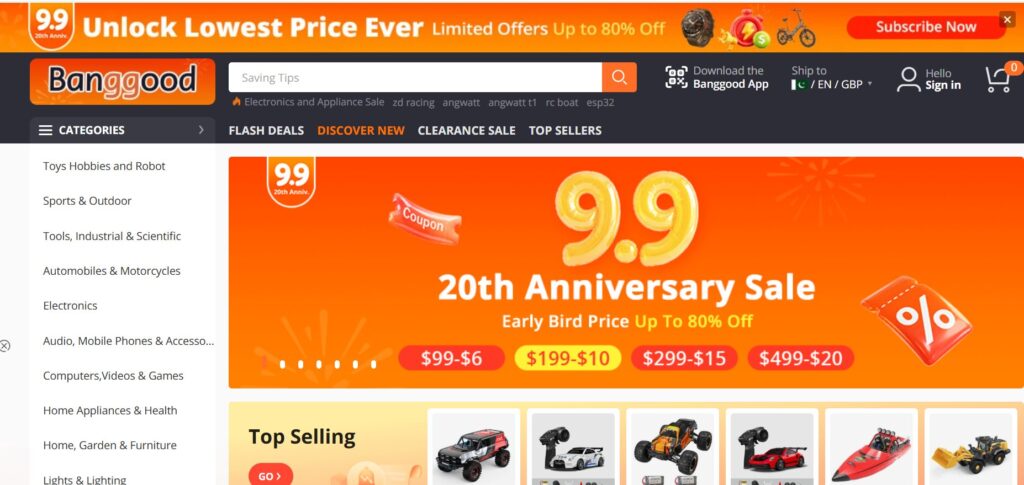
Banggood is a China-based online retailer offering electronics, gadgets, RC products, tools, and other consumer goods. It also operates a dropshipping program, making it relevant to both product resellers and smaller ecommerce businesses.
Unlike open marketplaces where you’re dealing with numerous independent sellers, Banggood operates a centralized retail and fulfillment model. We’d evaluate it primarily for electronics-focused stores seeking products that can be ordered individually or through its dropshipping arrangements.
- Best for: Sellers specializing in electronics, gadgets, hobby products, and accessories.
- Shipping: Local warehouse inventory may arrive within approximately 3–7 business days; China-stock orders can take several weeks, depending on the destination.
- Pricing: Free registration, with dropshipping discounts and product prices varying by program eligibility and order terms.
- Pros: Broad electronics catalog, international warehouse options, dropshipping support, product discounts for eligible resellers.
- Cons: Limited customization compared with manufacturers, variable international shipping times, return and warranty challenges for certain products.
- Watch for: Confirm the dispatching warehouse before listing a product. A product advertised on Banggood may ship from China even when the platform operates warehouses in your target market.
For electronics sellers, we’d also factor warranty handling, return shipping, and replacement costs into supplier comparisons. These expenses can quickly offset attractive product prices, particularly for higher-value gadgets.
Read our detailed guide on whether Banggood is legitimate.
US-Based Dropshipping Suppliers
If most of your customers are in the United States, sourcing from domestic suppliers can reduce delivery times and simplify returns.
The trade-off is pricing. US-stock products may cost more than China-direct alternatives, so we’d compare fulfillment costs and resale margins before switching suppliers.
14. Wholesale2b: Best for US Supplier Automation
Wholesale2b is a dropshipping platform that connects online sellers with primarily US-based suppliers. It offers over one million products across multiple categories, with integrations for Shopify, WooCommerce, eBay, Amazon, and other selling channels.
We’d consider Wholesale2b if you want domestic supplier access without manually coordinating inventory updates and order fulfillment.
- Best for: US-focused dropshippers selling across multiple ecommerce channels.
- Shipping: Approximately 3–5 business days for eligible US-stock products, depending on the supplier.
- Pricing: Shopify app starts at $29.99/month; direct store integration plans are listed at $49.99/month. Other plans vary by channel.
- Pros: Extensive product catalog, automated inventory and order syncing, multiple integrations, no resale license required to register.
- Cons: Subscription costs can accumulate across channels; product margins vary; fulfillment and return policies depend on suppliers.
- Watch for: Wholesale2b charges $2 per order for its separate bulk order-entry service, which requires at least 30 daily orders. Check whether that service applies to your workflow rather than treating it as a standard per-order fee.
Before subscribing, we’d shortlist ten products and compare their delivered costs against existing retail prices. Domestic fulfillment offers little advantage if there’s insufficient margin after platform fees and advertising.
15. Wholesale Central: Best Free US Wholesale Directory
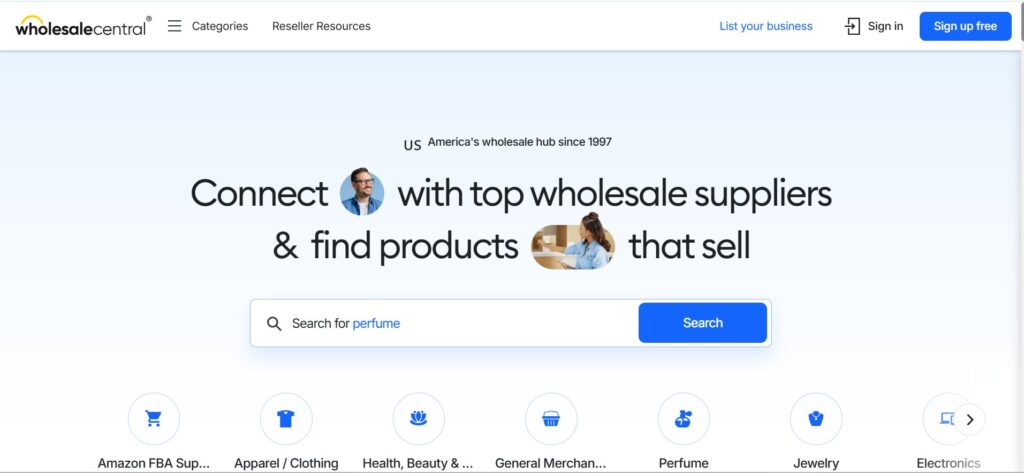
Wholesale Central is a US-based B2B supplier directory connecting retailers with wholesalers, manufacturers, distributors, and importers across numerous product categories.
Unlike automated dropshipping platforms, Wholesale Central primarily helps you discover suppliers. You’ll typically contact businesses independently to discuss pricing, minimum order quantities, and fulfillment terms.
- Best for: Retailers and ecommerce businesses researching US wholesale suppliers.
- Shipping: Varies by supplier, warehouse location, and order size.
- Pricing: Free for buyers to search suppliers and access the directory.
- Pros: No buyer subscription fees, broad product categories, direct supplier contact, wholesale and dropshipping listings.
- Cons: No centralized order fulfillment, limited automation, supplier terms and reliability vary.
- Watch for: A directory listing alone doesn’t guarantee that a supplier meets your quality or fulfillment requirements. Verify business credentials, request samples, and confirm resale policies before ordering.
We’d use Wholesale Central to build a shortlist of potential suppliers, particularly when researching a specific product category.
You can also explore our guides to US wholesale suppliers and wholesale supplier options.
16. Costway: Best for Home and Garden Dropshipping
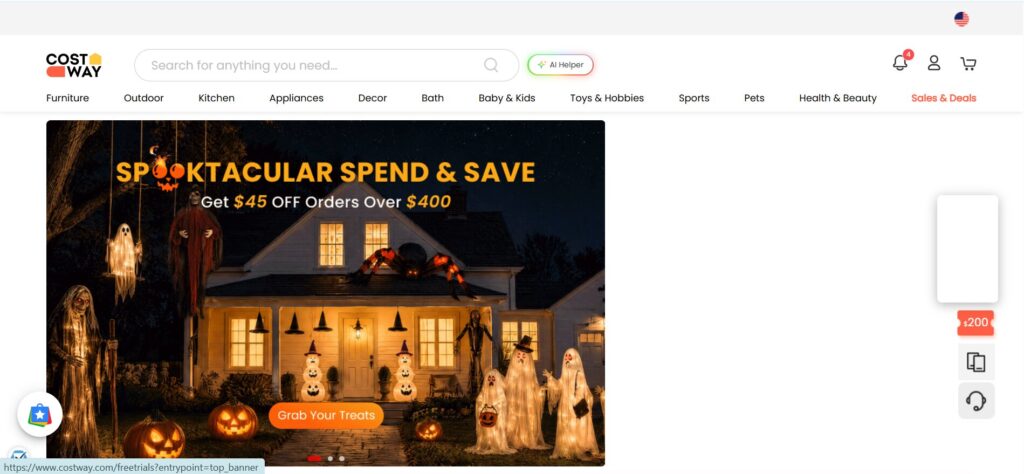
Costway is an online retailer with a dedicated dropshipping program covering furniture, home improvement, outdoor equipment, appliances, and related categories.
For sellers operating in these niches, Costway provides access to US-stock products and direct-to-customer fulfillment without requiring a traditional wholesale inventory purchase.
- Best for: Dropshippers selling furniture, home goods, garden equipment, and lifestyle products.
- Shipping: Typically 2–7 business days for eligible US orders.
- Pricing: Free program application, with approved US dropshippers receiving tiered discounts of 18–22%, depending on monthly sales.
- Pros: US fulfillment, category-specific inventory, reseller discounts, product data feeds, no need to hold stock.
- Cons: Limited product categories, restrictions on marketplace resale, limited white-label flexibility.
- Watch for: Costway explicitly prohibits Amazon resale through its US dropshipping program, while other marketplaces require approval. We’d confirm channel eligibility and packaging requirements before listing products.
One distinction worth understanding is that Costway’s dropshipping and wholesale programs have separate terms. If you’re purchasing inventory in bulk, compare both programs rather than assuming their discounts and minimum quantities are interchangeable.
European Dropshipping Suppliers
For ecommerce businesses selling across Europe, local suppliers can offer shorter delivery times, simpler returns, and fewer cross-border shipping complications.
17. BigBuy: Best for EU Dropshipping
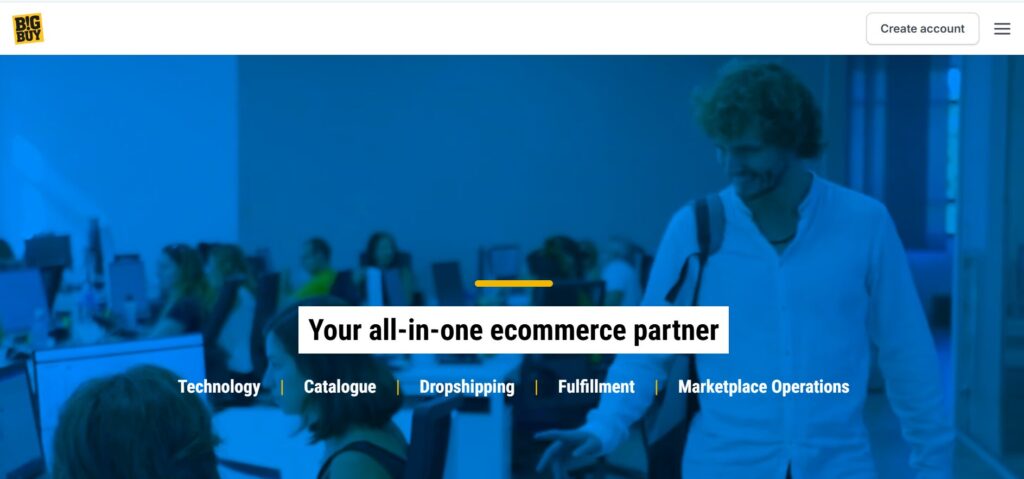
BigBuy is a Spain-based wholesale and dropshipping platform offering a catalog of over 400,000 products across electronics, home goods, beauty, fashion, and other categories. It combines European fulfillment with automated integrations for Shopify, WooCommerce, Amazon, eBay, and other sales channels.
We’d consider BigBuy for established ecommerce businesses targeting multiple European countries, particularly those looking to manage inventory and orders through a single supplier platform.
- Best for: European dropshippers and multi-channel retailers needing EU-based inventory and automated fulfillment.
- Shipping: Advertised delivery of 24–48 hours for eligible European destinations and products. Actual timelines depend on stock availability, dispatch, and destination.
- Pricing: The supplied 2026 pricing lists an Ecommerce Pack at €89/month and a Marketplaces Pack at €119/month, each with an €89 registration fee. Confirm current prices before subscribing.
- Pros: Extensive product catalog, European warehouse fulfillment, multilingual product information, integrations with major ecommerce platforms.
- Cons: Monthly subscription and setup costs, competitive resale margins, reported stock synchronization and customer support issues.
- Watch for: BigBuy has a Trustpilot rating of approximately 2.9/5 as of October 2026. Recent reviews include complaints about inventory availability, delayed orders, and refunds. We’d test a small product selection and verify actual stock levels before committing to a paid plan.
Our recommendation: BigBuy is worth evaluating if European fulfillment is a priority and your expected order volume can justify its recurring fees. For a smaller store, we’d calculate the subscription cost per order alongside product prices and shipping charges before subscribing.
Consumer Marketplaces: Shopping vs. Sourcing
Temu, Amazon, eBay, and Etsy frequently appear in lists of AliExpress alternatives. However, these platforms primarily serve consumers or provide marketplaces where businesses can sell products.
We’d use them for product research, competitor analysis, and reaching customers. For consistent inventory sourcing, dedicated wholesale suppliers or dropshipping platforms are generally more suitable.
18. Temu: Best for Consumer Shopping and Product Research
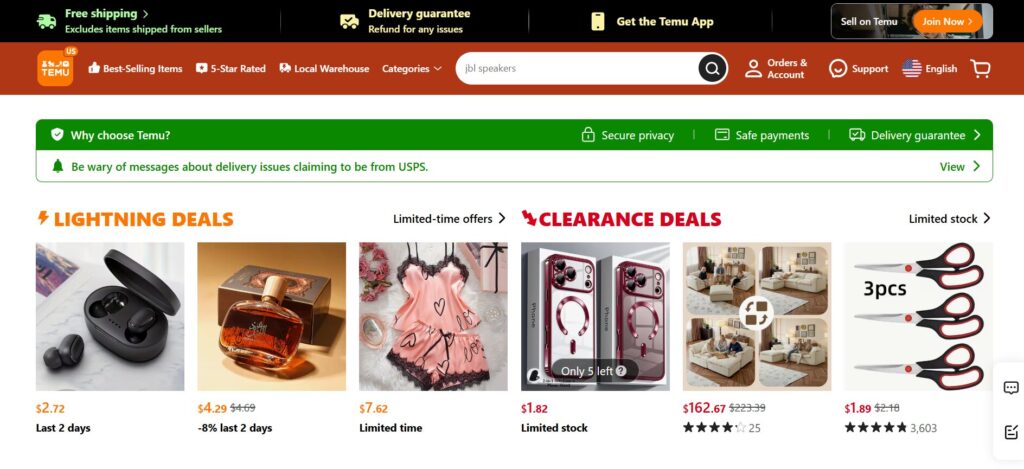
Temu is one of AliExpress’s closest competitors for consumer shopping, offering products across fashion, electronics, home accessories, and other categories.
Following the US de minimis changes in May 2025, Temu shifted its US operations toward locally stocked inventory and domestic sellers. It also operates a Local Seller Program, allowing eligible businesses to sell products directly to consumers.
- Best for: Personal shopping, researching product trends, and selling through Temu’s marketplace.
- Shipping: US delivery times vary by seller and product, with locally fulfilled orders generally arriving faster than international shipments.
- Pricing: Free to shop. Registration for Temu’s Local Seller Program is also free.
- Pros: Extensive consumer catalog, competitive retail prices, product discovery opportunities, access to a growing marketplace.
- Cons: Not designed for conventional dropshipping fulfillment, limited supplier relationships, little control over packaging or product customization.
- Watch for: Temu doesn’t offer a conventional dropshipping program for fulfilling orders placed on your own store. Purchasing retail items manually creates inventory, branding, and fulfillment risks.
We’d primarily use Temu to research products and assess competing retail offers. If you’re planning to fulfill customer orders, a dedicated dropshipping supplier provides a more structured approach.
19. Amazon: Best for Retail Shopping and Selling
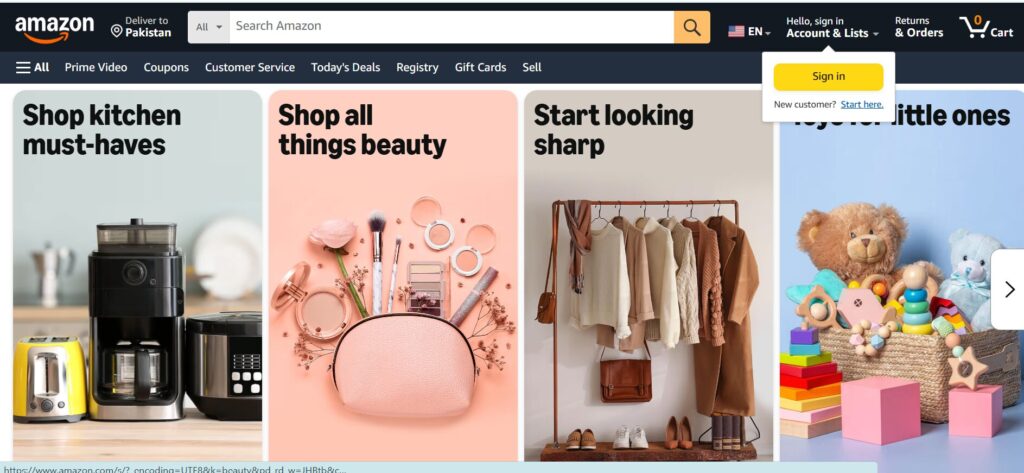
Amazon is a global ecommerce marketplace offering fast retail delivery, a large product selection, and several fulfillment options for businesses.
For ecommerce entrepreneurs, its greatest value is often as a sales channel. Amazon Business can also support business purchasing, while Fulfillment by Amazon (FBA) and Multi-Channel Fulfillment help sellers manage inventory they already own.
- Best for: Retail purchases, competitor research, and selling products to an established customer base.
- Shipping: Eligible Prime products may arrive within one or two days in supported locations; actual delivery varies by seller and destination.
- Pricing: Free to browse. Seller fees, subscription charges, and fulfillment costs depend on the chosen selling model.
- Pros: Large customer base, established fulfillment infrastructure, extensive product research opportunities, business purchasing options.
- Cons: Retail prices generally leave limited resale margins, significant marketplace competition, selling fees, and strict fulfillment policies.
- Watch for: Amazon permits dropshipping when you remain the seller of record and comply with its policy, including requirements for supplier agreements and identifying information on packaging.
We wouldn’t rely on buying individual Amazon retail orders to fulfill sales elsewhere. For businesses interested in selling on Amazon, working with authorized wholesalers or manufacturers is a more sustainable approach.
Read our guides on finding products to sell on Amazon and products for Amazon FBA.
20. eBay: Best for Liquidation and Unique Products
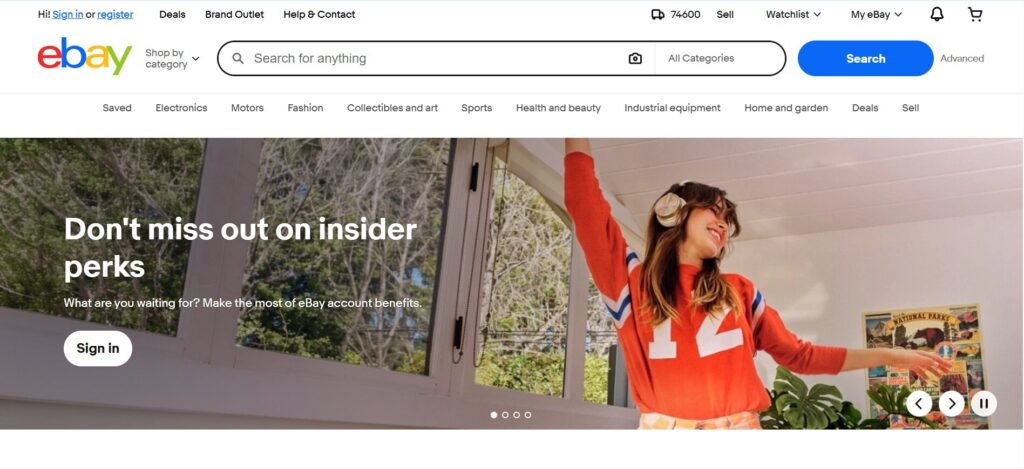
eBay is an online marketplace where individuals and businesses sell new, used, refurbished, vintage, and collectible items.
Unlike wholesale sourcing platforms, eBay is particularly useful for discovering liquidation lots, discontinued products, and niche inventory that may be difficult to find through conventional suppliers.
- Best for: Finding liquidation inventory, used merchandise, collectibles, and selling products online.
- Shipping: Varies by seller, item location, and shipping method.
- Pricing: Free to browse and purchase; seller fees depend on category, account type, and marketplace.
- Pros: Broad product selection, liquidation opportunities, access to unique inventory, established resale marketplace.
- Cons: Inconsistent stock availability, varying seller reliability, limited opportunities for repeat bulk sourcing.
- Watch for: eBay allows dropshipping from wholesale suppliers but prohibits listing a product and then purchasing it from another retailer or marketplace to ship directly to the customer.
We’d consider eBay for one-off inventory opportunities or niche resale businesses. If you need hundreds of identical products with consistent specifications, working directly with wholesalers will usually be more practical.
21. Etsy: Best for Handmade and Custom Products
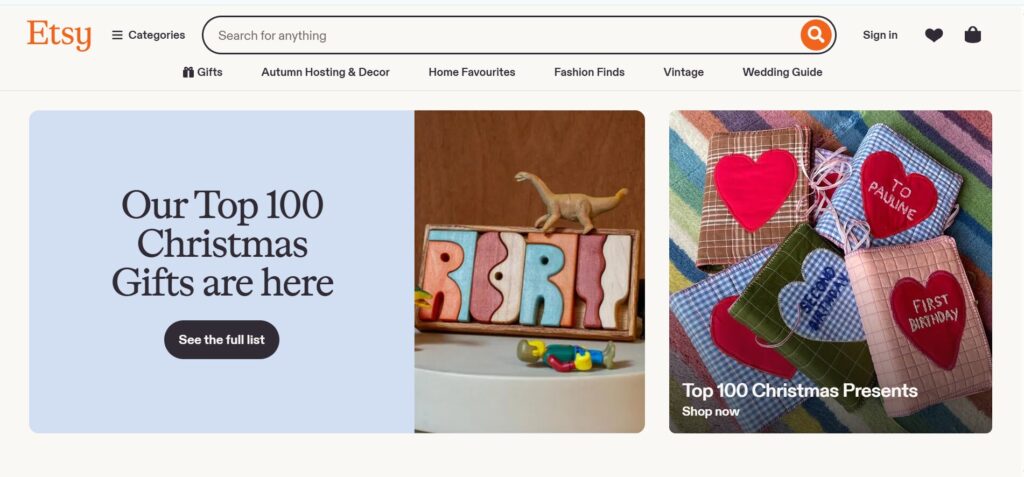
Etsy specializes in handmade, vintage, personalized, and creatively designed products. It attracts customers looking for distinctive items, making it particularly relevant to sellers of custom accessories, artwork, home decor, and print-on-demand merchandise.
For ecommerce businesses, Etsy is primarily a selling channel. Its product eligibility rules make it unsuitable for ordinary AliExpress-style resale of mass-produced goods.
- Best for: Selling original designs, handmade products, personalized merchandise, and qualifying vintage items.
- Shipping: Depends on the seller, production method, and destination. Custom-made products may require additional production time.
- Pricing: Etsy charges listing and transaction fees, with additional payment processing and optional advertising costs.
- Pros: Audience interested in unique products, support for original designs, print-on-demand opportunities, established niche marketplace.
- Cons: Restrictions on mass-produced resale, marketplace fees, competition in popular categories, production partner disclosure requirements.
- Watch for: Etsy permits qualifying print-on-demand products created from your original designs, provided you disclose the production partner. Simply reselling generic AliExpress products generally violates its Creativity Standards.
We’d consider Etsy if you’re developing original product designs or working with a manufacturer to produce custom merchandise. It can also be useful for sourcing genuine craft supplies, although it isn’t a conventional wholesale supplier directory.
For more guidance, read our articles on selling on Etsy and Amazon Handmade vs. Etsy.
What Happened to Gearbest, Wish & Chinabrands?
If you’ve researched AliExpress alternatives before, you’ve probably seen Gearbest, Wish, and Chinabrands recommended in older articles. However, their circumstances have changed significantly, and we wouldn’t include them among our top sourcing options for 2026.
Here’s what happened and which platforms we’d consider instead.
| Platform | Status in 2026 | Alternative to consider |
| Gearbest | Major operational collapse in 2021; reliable fulfillment remains unverified | Banggood for electronics and gadgets |
| Chinabrands | Reportedly ceased operations around 2024 | CJdropshipping for dropshipping fulfillment |
| Wish | Still operating, but its 2024 acquisition by Qoo10 introduced ownership-related concerns | Temu for consumer shopping; CJdropshipping for sourcing |
What Happened to Gearbest?
Gearbest experienced a major operational collapse in September 2021 after its parent company, Globalegrow, encountered serious financial difficulties. Its website went offline, and reports emerged of unfulfilled orders and unpaid suppliers.
Although the website has appeared online intermittently since then, we couldn’t establish that its original operations and reliable fulfillment services have been restored.
For sellers looking for electronics, gadgets, and RC hobby products, Banggood is a more practical alternative because it maintains an active product catalog and dropshipping program.
Why Did Chinabrands Shut Down?
Chinabrands was previously a popular China-based wholesale and dropshipping platform offering extensive product catalogs and international fulfillment services.
Industry reports indicate that the platform went offline around 2024, with new registrations and ordering becoming unavailable. However, we couldn’t verify an official closure announcement explaining the exact circumstances.
If you previously used Chinabrands for automated dropshipping, we’d evaluate CJdropshipping for its product sourcing, store integrations, and fulfillment services.
Is Wish Still Operating in 2026?
Yes, Wish has continued operating, although its ownership history raises questions worth considering.
ContextLogic completed the sale of Wish to Singapore-based Qoo10 in April 2024. Later that year, on November 11, the Singapore High Court ordered Qoo10 to be wound up following financial difficulties and merchant payment disputes.
Wish’s support documentation subsequently stated that the marketplace continued operating. Therefore, it would be inaccurate to describe Wish itself as permanently shut down.
However, given the uncertainty surrounding its former parent company’s financial position, we’d favor more established alternatives for business sourcing until current merchant payment arrangements and fulfillment reliability are independently verified.
For consumer shopping, Temu is worth comparing. For consistent ecommerce fulfillment, we’d look toward dedicated dropshipping suppliers instead.
Our advice: Before relying on any sourcing platform recommended in an older article, verify that it’s accepting orders, fulfilling shipments, and providing working customer support. An accessible website alone doesn’t establish that a supplier is operationally reliable.
Other AliExpress Alternatives Worth Considering
Beyond our main list, several other platforms are worth exploring depending on your product category, sourcing requirements, and preferred fulfillment model.
- HyperSKU: A China-based dropshipping agent offering product sourcing, automated fulfillment, custom packaging, and branding services for growing ecommerce stores.
- EPROLO: A dropshipping platform with a free-to-use sourcing and fulfillment model, store integrations, and branding options for eligible products.
- SaleHoo: A paid supplier directory that helps sellers research wholesalers and dropshipping suppliers, particularly in the US and other English-speaking markets.
- Syncee: A dropshipping and wholesale marketplace connecting ecommerce stores with suppliers across the US, Europe, and other regions.
- Trendsi: A fashion-focused dropshipping and wholesale platform offering US inventory, clothing, accessories, and private-label opportunities.
- Taobao: Alibaba Group’s Chinese consumer marketplace, useful for discovering products and domestic pricing, although international buyers may need a purchasing agent.
- Printful: A print-on-demand platform that manufactures and fulfills custom-designed apparel, accessories, and merchandise without requiring inventory purchases.
We’d shortlist these platforms when you have a specific sourcing need that the 21 main alternatives don’t fully address, particularly fashion, print-on-demand, or agent-assisted fulfillment.
How to Choose the Right AliExpress Alternative

The right platform depends on your order volume, target market, and whether you’re testing products or building a long-term brand.
We recommend starting with your biggest sourcing challenge, whether that’s shipping speed, product cost, quality control, or supplier management.
| If you want to… | Start with | Consider as you scale |
| Test products without a monthly subscription | CJdropshipping | SourcinBox for dedicated sourcing support |
| Offer faster shipping to US customers | Zendrop or Spocket | US warehousing through a sourcing agent |
| Build a private-label dropshipping brand | NicheDropshipping | Alibaba for larger custom manufacturing orders |
| Buy products wholesale | Alibaba | NicheSources for supplier management and inspections |
| Source at competitive domestic Chinese prices | 1688.com with an agent | Consolidated purchasing and freight |
| Sell primarily to European customers | BigBuy | Dedicated EU warehousing for proven products |
| Dropship home and garden products | Costway | Direct wholesale relationships |
| Sell original designs without holding inventory | Printful | Etsy or your own branded store as sales channels |
What Should You Compare Before Switching?
Before committing to a supplier, we’d evaluate four things:
- Total landed cost: Include product pricing, platform fees, shipping, duties, and applicable inspection costs.
- Fulfillment reliability: Confirm where inventory is stored, realistic delivery times, and how returns are handled.
- Product consistency: Order samples and check materials, packaging, and specifications before increasing order volume.
- Scalability: Determine whether the supplier can support higher quantities, branding, and repeat orders without disrupting fulfillment.
Our recommendation: Start with one or two suppliers that fit your immediate needs. Test their products and fulfillment performance before migrating your entire catalog. A slightly higher unit price may be worthwhile if it leads to more reliable delivery and fewer customer complaints.
When Does a Sourcing Agent Beat an App?
Dropshipping apps work well when you’re testing products or processing a relatively small number of orders. However, as sales grow, supplier coordination, product consistency, and fulfillment costs can become harder to manage through automated platforms alone.
We generally recommend comparing a sourcing agent against your existing platform once you have consistent sales or products that justify bulk purchasing.
When Is Switching to a Sourcing Agent Worth It?
| Your business stage | Our recommendation | Why |
| Fewer than 30 orders/day | Stay with CJdropshipping, Zendrop, or similar platforms | Automation and low upfront commitments are usually sufficient |
| 30–100 orders/day | Compare sourcing agent quotes | Factory negotiations and quality inspections may improve your margins |
| 100+ orders/day | Evaluate dedicated sourcing and fulfillment | Consistent order volume can justify negotiated pricing, inventory planning, and consolidated shipping |
| Building a private-label brand | Consider a sourcing agent regardless of daily order volume | Custom packaging, manufacturer coordination, and quality inspections require more hands-on support |
These are practical evaluation thresholds, not guaranteed break-even points. The right time to switch depends on your product margins, order value, shipping costs, and customization requirements.
For example, if an agent reduces your combined product and fulfillment costs by $1 per order, that’s $1,000 in potential monthly savings at 1,000 orders, before agent fees and other expenses.
However, if you’re still testing products with unpredictable sales, an app may remain more economical because you aren’t committing to inventory or additional sourcing services.
How Can NicheSources Help?
At NicheSources, we work with ecommerce brands, retailers, and importers that want to outsource supplier coordination while maintaining control over their purchasing decisions.
Our Yiwu-based team offers:
- Product sourcing: Free supplier research and quotations within two business days.
- Factory negotiations: Help comparing manufacturer pricing, MOQs, and product specifications.
- Quality inspections: Pre-shipment checks to identify defects and specification issues before dispatch.
- Branding: Private labeling, custom packaging, and product development support.
- Shipping and fulfillment: Consolidated shipping arrangements and US/EU warehouse options.
Our sourcing service has no upfront fee, and a 5–10% service fee applies only to approved orders.
We’d recommend requesting an itemized quote and comparing it against your current supplier’s total landed cost. Include product pricing, shipping, duties, inspection costs, and service fees to determine whether switching makes financial sense.
Ready to source products from China? NicheSources offers free product sourcing with quotes in 2 business days. Request a free quote.
For more information, explore our guides to China sourcing agents and sourcing agent fees.
Frequently Asked Questions
What are some cost-effective websites similar to AliExpress for online shopping?
If you’re looking for cost-effective online shopping sites, Banggood and Temu offer varied product ranges at competitive prices. These platforms can be great alternatives for buyers seeking budget-friendly options.
How do I find websites that provide quicker shipping compared to AliExpress?
To improve shipping times, seek platforms like Temu which have been noted for their faster delivery options. Additionally, sourcing from dropshipping suppliers that have warehouses in your target market areas can substantially cut down on shipping duration.
What are the main differences between Temu and AliExpress?
The main differences between Temu and AliExpress are as follows:
Product Selection and Quality: Temu offers a curated selection of unique and niche products with a more limited range, while AliExpress boasts an extensive catalog with over 100 million products across various categories. However, the quality on AliExpress can vary significantly between sellers.
Pricing: Temu generally offers lower prices with free shipping options and significant discounts. AliExpress also has competitive prices, but shipping fees are usually additional, which can make the total cost higher than Temu.
Shipping and Delivery: AliExpress leads in shipping options and delivery times, offering global shipping with a variety of courier options. Delivery times on Temu may be longer, depending on the seller’s location and available shipping methods.
Buyer Protection and Returns: AliExpress has a well-established buyer protection system with dispute resolution processes, seller ratings, and customer reviews. Temu allows returns within 90 days of purchase, offering a more flexible return policy.
User Experience: Temu’s website and app interfaces are more modern and user-friendly
Which is better, DHgate or AliExpress?
When comparing DHgate and AliExpress, it’s important to consider several factors:
Pricing and Discounts: AliExpress generally offers more competitive pricing and a greater number of discounts than DHgate.
Selection of Products: AliExpress boasts a significantly larger selection, with over 100 million products from more than 40,000 suppliers, while DHgate has a smaller offering of around 30 million products.
Buyer Protection: AliExpress is recognized for its robust buyer protection policies, with a high success rate in siding with buyers during disputes. DHgate has a more balanced approach, with buyers winning disputes about half the time.
Shipping Times: AliExpress typically provides faster shipping options, whereas DHgate’s delivery times can range between 60 to 90 days.
Platform Interface: Both platforms are user-friendly, but AliExpress is often seen as having a more modern and aesthetically pleasing interface.
The better platform may depend on individual preferences and priorities, such as price sensitivity, product variety, shipping speed, and user experience.
How Do US De Minimis Changes Affect Dropshipping?
The removal of US de minimis duty-free treatment means qualifying low-value shipments can no longer automatically enter the country without applicable import duties.
The exemption ended for China and Hong Kong products on May 2, 2025, and was suspended more broadly on August 29, 2025.
For dropshippers, the practical concern is landed cost. We’d check the product’s tariff classification, applicable duties, customs charges, and shipping terms before setting retail prices. Duty rates are product-specific, so a single percentage won’t accurately represent every order.
What Are the Best AliExpress Alternatives in India?
IndiaMART is worth considering for domestic wholesale sourcing, while international options such as Alibaba may suit businesses importing products in larger quantities.
India blocked the AliExpress app in November 2020, making it unsuitable as a straightforward sourcing option for Indian sellers.
We’d prioritize Indian suppliers when delivery speed, payment convenience, or local returns are important. For international sourcing, confirm that the supplier supports delivery to India and calculate customs duties, import requirements, and freight costs before ordering.
How Can You Verify an AliExpress Alternative Is Legitimate?
Start by checking the company’s registered business information, official website, payment protection, refund policies, and recent independent customer reviews.
For wholesale suppliers, we’d also request business credentials, product specifications, and sample orders.
Be cautious of suppliers requesting payment to unrelated personal accounts or refusing to document order terms.
Positive reviews alone aren’t sufficient. A small test order provides useful evidence of product quality, communication, delivery reliability, and how the supplier handles problems.
Is DDP Shipping Better for Dropshipping?
DDP (Delivered Duty Paid) can simplify international fulfillment because the seller takes responsibility for import clearance and applicable duties under the agreed shipping terms.
This can reduce unexpected customs charges for customers.
However, DDP quotations may cost more upfront, and not every shipping provider offers the same service coverage.
We’d compare DDP and DAP (Delivered at Place) quotations carefully, confirming who acts as importer, who pays duties, and whether customs processing fees are included.
How Many Samples Should You Order Before Switching Suppliers?
We’d start with at least one sample of each shortlisted product and order additional units when product consistency is especially important.
One sample can reveal obvious defects, but it won’t establish whether different production batches meet the same specifications.
For products involving sizing, electronics, moving parts, or delicate materials, testing multiple units is more useful.
Check packaging, functionality, measurements, finish, and delivery time. Keep an approved sample as a reference for future quality inspections.
Does Shipping From a US Warehouse Eliminate Import Duties?
No. Shipping from a US warehouse doesn’t automatically eliminate import duties. Imported inventory may already have incurred duties when it entered the country.
The difference is how those costs are handled.
For products already customs-cleared and stored domestically, your individual customer orders generally don’t require separate import clearance.
However, those earlier import costs may be reflected in the supplier’s selling price.
We’d compare the domestic supplier’s final delivered price against China-direct fulfillment, including duties and handling charges, before deciding which option offers better margins.