For this 2026 update, we reviewed 15 major B2B platforms based on their sourcing role, buyer fees, supplier coverage, and buyer protection. Whether you are looking for Chinese manufacturers, low-MOQ wholesale products, regional suppliers, or retail-ready inventory, this guide will help you narrow down which platform fits your sourcing model.
We’ll also look at supplier directories and sourcing tools, plus when using a product sourcing service may make more sense than managing supplier verification and quality control yourself.
Quick Facts: B2B Marketplaces in 2026
- Largest global marketplace: Alibaba, 37M+ buyers and 200K+ suppliers, platform-reported in 2026
- Largest B2B procurement channel: Amazon Business, roughly $40B in annualized sales, Amazon-reported
- Best for low-MOQ product testing: DHgate
- Best for independent retail: Faire
- Best for North American manufacturing: Thomasnet
- Best for sourcing from India: IndiaMART
- Fees reviewed for this article: August 2026
What Is a B2B Marketplace?

A B2B marketplace is an online platform where businesses buy and sell products or services from manufacturers, wholesalers, and distributors. Unlike consumer marketplaces, B2B platforms are typically built around wholesale pricing, minimum order quantities (MOQs), requests for quotation (RFQs), negotiated terms, and larger or recurring purchases.
Some marketplaces also process payments and provide buyer protection, while others primarily connect buyers with suppliers and leave the transaction to both parties.
B2B marketplaces can be horizontal, covering many industries, such as Alibaba, or vertical, serving a specific sector, such as JOOR for fashion.
Types of B2B Platforms: Marketplaces vs Directories vs Tools
The term “B2B marketplace” is often used for platforms that actually work quite differently. Before choosing where to source, it helps to know whether you’re dealing with a transactional marketplace, a supplier directory, a sourcing tool, or a sourcing agent.
| Type | How It Works | Where Transactions Happen | Examples |
| B2B marketplace | Lets you browse multiple suppliers, compare products, negotiate, and often place orders directly | Usually on-platform, sometimes with buyer protection | Alibaba, DHgate, Faire, Amazon Business |
| Supplier directory / RFQ platform | Helps you discover suppliers and request quotes, but generally leaves negotiation and contracting to you | Usually off-platform | Thomasnet, Europages, Wholesale Central |
| Sourcing tool / automation platform | Connects supplier catalogs with ecommerce stores and can automate inventory or order processing | Through the tool and its connected suppliers | Inventory Source, BigBuy |
| Sourcing agent | Finds suppliers, verifies factories, negotiates pricing and MOQs, coordinates quality inspection, and manages logistics | Managed directly on your behalf | NicheSources and other sourcing companies |
The right option depends on how much of the sourcing process you want to manage yourself. Marketplaces work well for broad supplier discovery and price comparison, while directories are useful when you want direct supplier relationships. Tools mainly reduce operational work.
A sourcing agent is the more hands-off route when you need factory verification, negotiation, quality control, and shipping coordinated as one process.
The 15 Best B2B Marketplaces for Product Sourcing in 2026
No single B2B platform works for every sourcing model. We’d choose differently depending on whether the goal is factory-direct manufacturing, smaller test orders, regional supplier discovery, finished wholesale inventory, or business procurement.
Global & China-Oriented Sourcing
1. Alibaba – Best for Global and China Sourcing
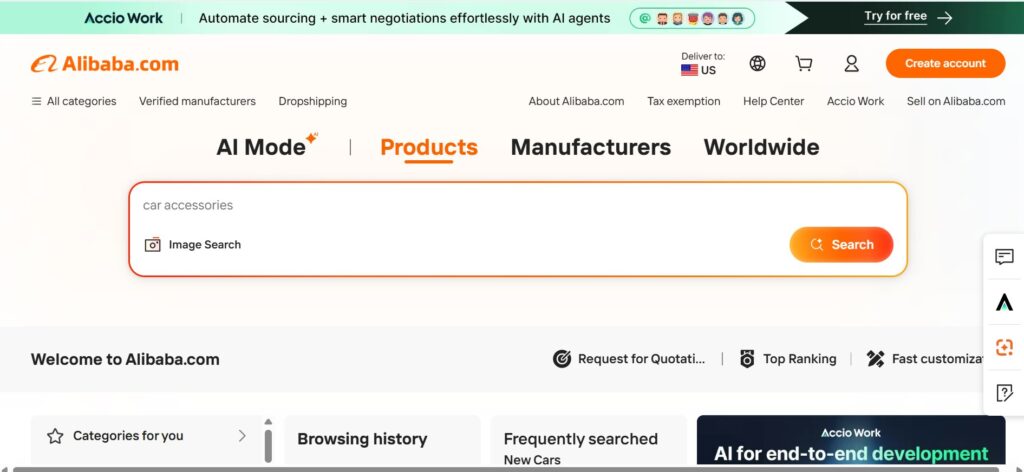
Alibaba is the broadest option on this list for buyers looking for Chinese manufacturers, wholesalers, private-label production, and custom manufacturing. Platform-reported 2026 figures list more than 37 million buyers, 200,000 suppliers, and 280 million products, so the advantage is choice but that scale also makes supplier screening especially important.
- Founded / HQ: 1999, Hangzhou, China
- Categories: Consumer goods, electronics, machinery, packaging, apparel, industrial products
- Buyer fees: Free; Trade Assurance available on qualifying orders
- Seller fees: 0% commission; Gold Supplier membership approximately $2,999–$4,500/year depending on region
- Protection: Trade Assurance on eligible orders paid through Alibaba
- Integrations: Shopify via the Alibaba & AliExpress Dropship app
Cons: Supplier quality varies significantly, and verification badges do not remove the need for independent due diligence.
Ideal For: Importers, ecommerce brands, and Amazon or Shopify sellers sourcing bulk, OEM/ODM, or private-label products. Before sending RFQs, see our guide to finding the right Alibaba suppliers.
2. Made-in-China – Best for Industrial Products and Audited Suppliers
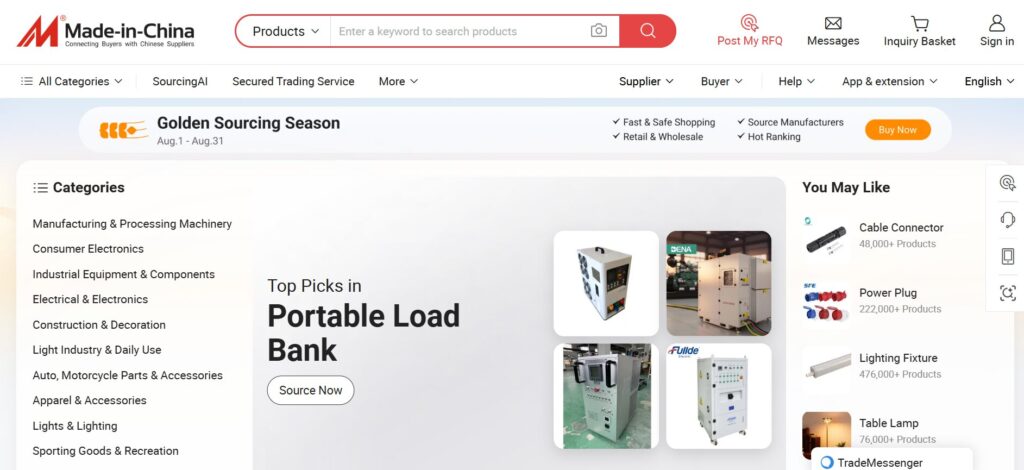
Made-in-China is particularly useful when we’re looking beyond general consumer goods and into machinery, tools, hardware, construction products, or other industrial categories. Operated by Focus Technology, the platform also puts more emphasis on supplier audit documentation than many broad B2B directories.
- Founded / HQ: 1998, Nanjing, China
- Categories: Machinery, industrial equipment, electronics, construction materials, consumer goods
- Buyer fees: Free; optional supplier reports and sourcing assistance may cost extra
- Seller fees: Tiered premium memberships; exact pricing not publicly verified in supplied data
- Protection: Secured Trading Service and Audited Supplier program
Cons: Its supplier communication and interface can be less streamlined than Alibaba, and the amount of audit information available varies by supplier tier.
Ideal For: Buyers sourcing machinery, tools, industrial components, and products where factory documentation matters. For larger projects, our guide to finding a manufacturer in China covers additional verification steps.
3. Global Sources – Best for Verified Asian Exporters and Trade Shows
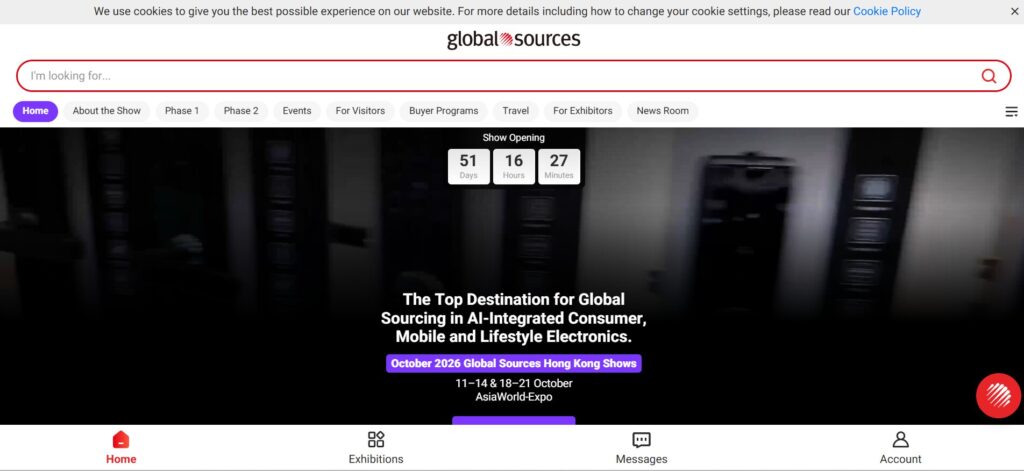
Global Sources combines online supplier discovery with physical sourcing events, which gives it a different role from purely digital marketplaces. It has operated for more than 50 years and reports more than 10 million registered buyers, with particularly strong coverage in electronics and export-oriented Asian manufacturing.
- Founded / HQ: Global Sources was founded in 1971 (with corporate origins starting around 1970) in Hong Kong
- Categories: Electronics, mobile products, smart home, fashion, hardware, gifts
- Buyer fees: Free basic access; premium services quoted separately
- Protection: Supplier verification process; trade-show exhibitors are pre-vetted
Cons: The catalog is smaller than Alibaba’s, and its strongest supplier depth is concentrated in electronics and related categories.
Ideal For: Established importers sourcing electronics or buyers who want to combine online research with Asian trade shows. We cover its verification model in more detail in is Global Sources legit.
4. 1688 – Best for China Domestic Factory Pricing
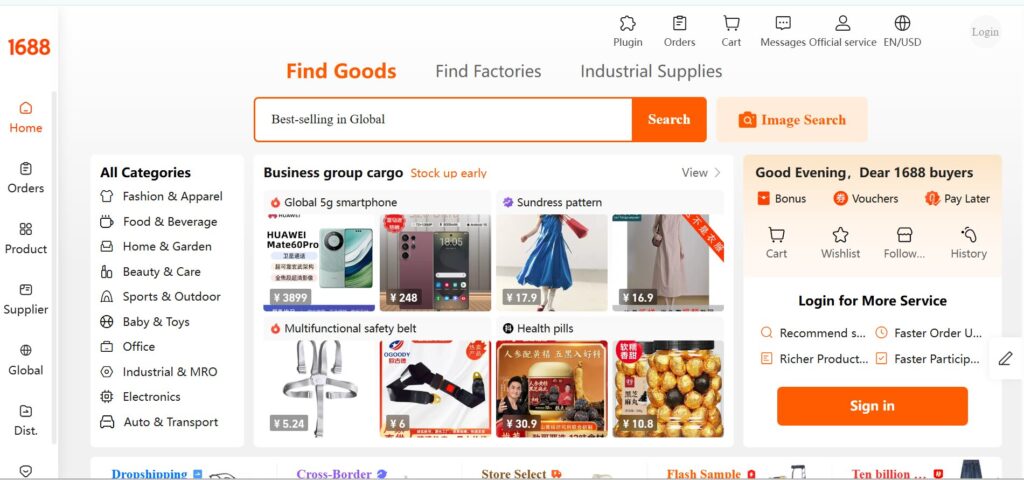
1688 is Alibaba Group’s domestic Chinese wholesale marketplace. We’d look at it when international marketplace pricing is no longer competitive enough and a buyer has the operational capability to source inside China. Its domestic orientation can provide access to factory pricing that is often lower than export-facing platforms.
- Founded / HQ: Established 1999; headquarters not specified in supplied data
- Categories: Apparel, home goods, electronics, packaging, industrial products
- Buyer fees: Free to browse
- Protection: Designed for domestic transactions; limited recourse for overseas buyers
Cons: The platform is Chinese-language, commonly relies on domestic payment methods, and most suppliers are set up for delivery within China. International buyers usually need local support for communication, payment, consolidation, and export logistics.
Ideal For: Experienced importers and price-sensitive businesses with China-local capabilities or a sourcing agent. Our 1688 vs Taobao comparison explains the domestic sourcing model further.
5. DHgate – Best for Small Wholesale Orders and Product Testing
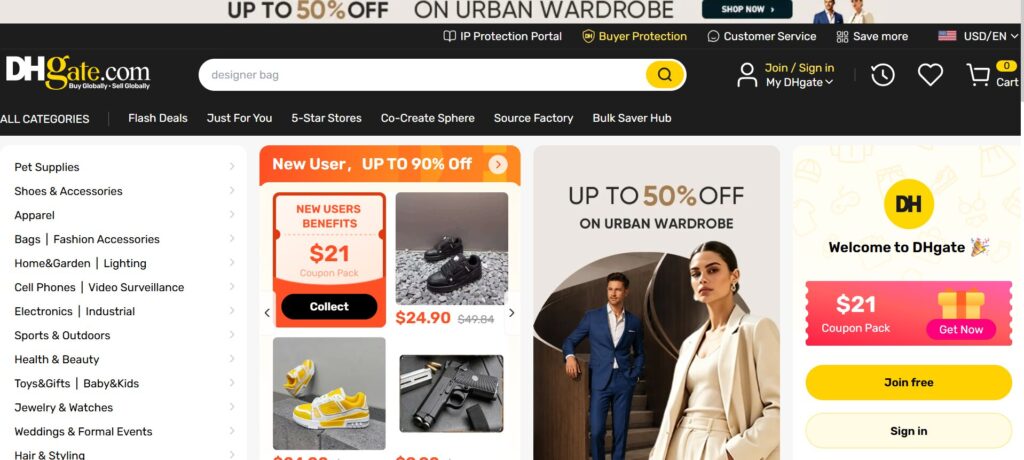
DHgate fills an important gap between consumer marketplaces and higher-MOQ factory sourcing. Sellers commonly offer smaller order quantities, making it useful when we want to validate a product before committing to a larger Alibaba or factory-direct production run.
- Founded / HQ: 2004, Beijing, China
- Categories: Consumer electronics, apparel, home goods, beauty
- Buyer fees: Free
- Seller fees: Category-based commissions
- Protection: Escrow-style payment holding with dispute and refund processes
- Integrations: Open API and dropshipping integrations
Cons: Supplier consistency varies, and counterfeit or intellectual-property exposure is a known concern. Buyers should avoid branded lookalikes and keep initial transactions inside the platform.
Ideal For: Small businesses testing products, validating demand, or purchasing quantities below typical factory MOQs before moving into larger wholesale orders.
6. HKTDC Sourcing – Best for Hong Kong and Asian Supplier Discovery
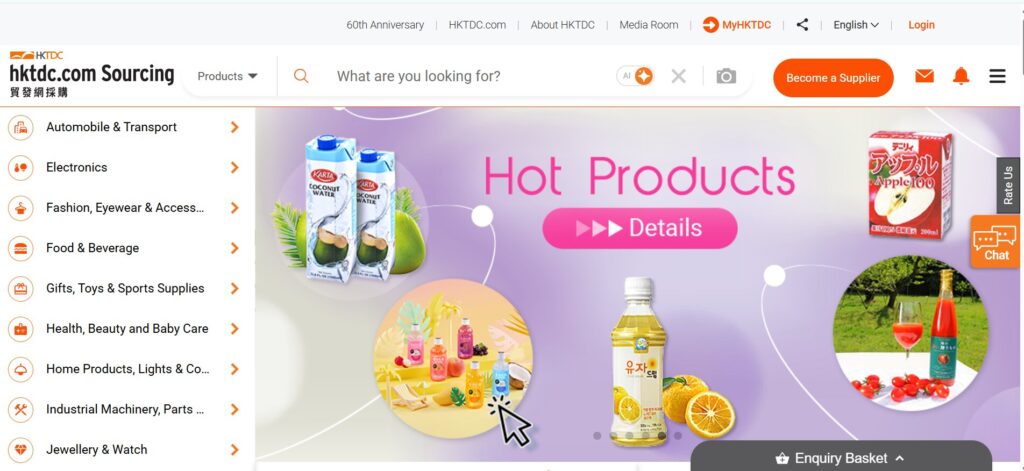
HKTDC Sourcing is operated by the Hong Kong Trade Development Council, giving it a more institutionally backed sourcing model than a conventional commercial marketplace. The platform reports access to more than 130,000 Asian suppliers and connects its online supplier database with Hong Kong’s trade-fair ecosystem.
- Founded / HQ: HKTDC established 1966, Hong Kong
- Categories: Broad Asian manufacturing and export categories
- Buyer fees: Free
- Protection: Supplier verification guidance and trade-body oversight
Cons: HKTDC is more focused on supplier discovery and inquiries than on providing a full transactional workflow. Buyers may need to handle contracts, payment arrangements, and additional verification themselves.
Ideal For: Businesses sourcing from Hong Kong and wider Asia that value supplier discovery tied to established trade fairs and institutional sourcing resources.
7. EC21 – Best for Expanding Asian Supplier Discovery Beyond China
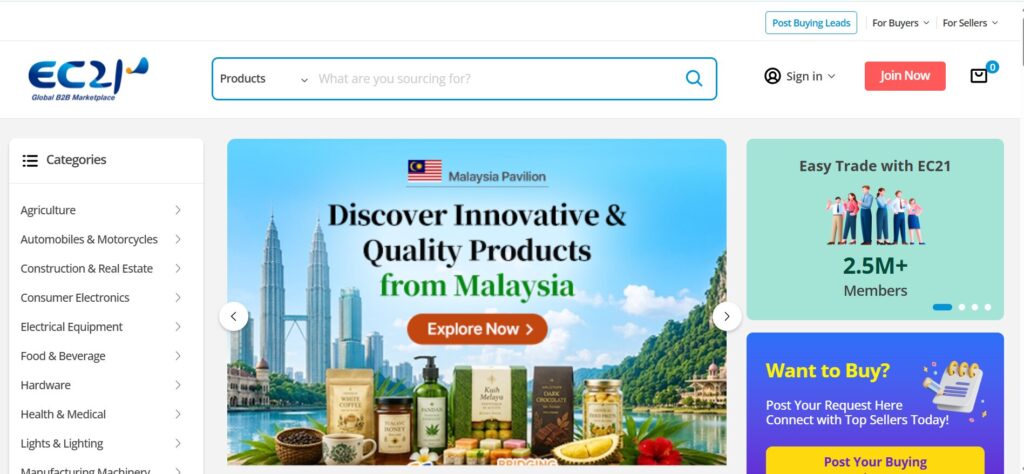
EC21 is a Seoul-based B2B platform that gives buyers another route into Asian supplier discovery, particularly when they want to look beyond China. Its model combines supplier listings and buying leads with verification services, while supported transactions can also use escrow.
- Founded / HQ: Founded in Seoul, South Korea
- Categories: Industrial and consumer products across multiple sectors
- Buyer fees: Free basic access; TradeVerify checks available for a fee
- Protection: TradeVerify reports and escrow on supported transactions
Cons: EC21 operates more like a lead-generation and supplier-discovery platform than a fully integrated checkout marketplace. Buyers should therefore expect more direct supplier negotiation and independent due diligence.
Ideal For: Importers looking for Korean and other Asian suppliers outside the major China-focused marketplaces.
Regional Supplier Discovery
8. IndiaMART – Best for Sourcing from India
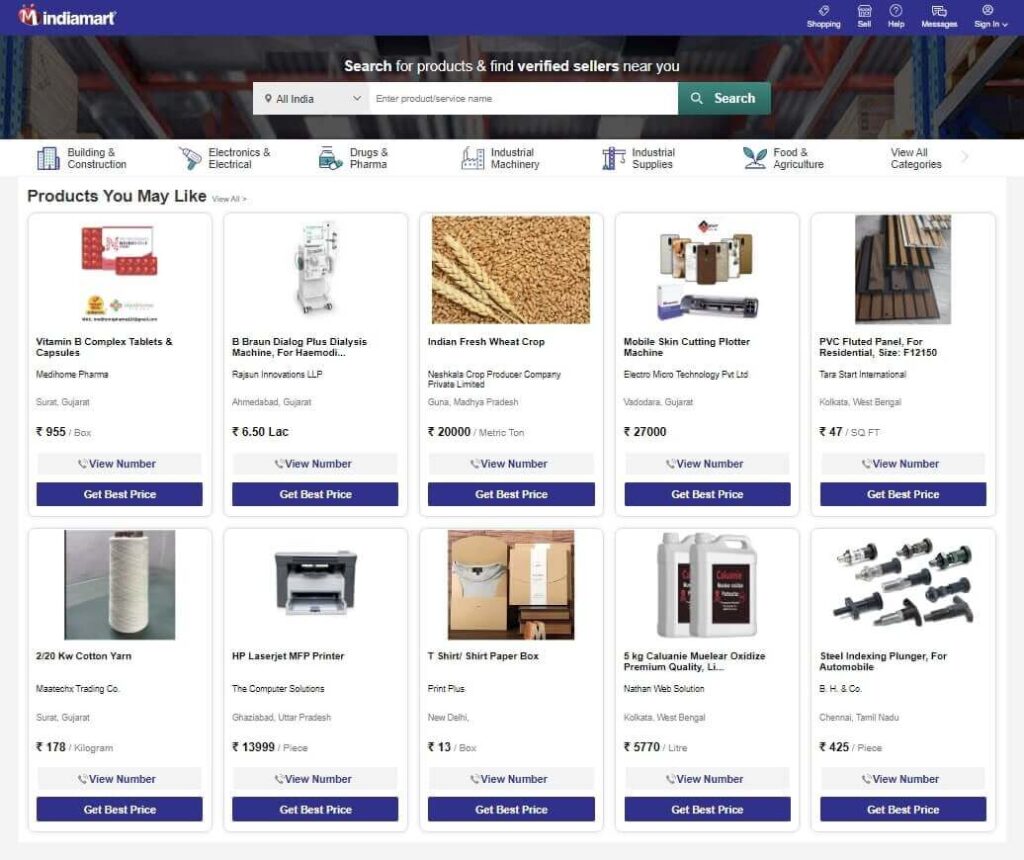
IndiaMART is the main platform we’d shortlist when the sourcing strategy specifically targets Indian manufacturers. The listed company reports more than 210 million registered buyers in FY2026, with supplier coverage across major Indian export categories including textiles, jewelry, chemicals, handicrafts, and pharmaceuticals.
- Founded / HQ: IndiaMART was founded in 1996 in Noida, India.
- Categories: Textiles, apparel, jewelry, chemicals, pharmaceuticals, handicrafts and other Indian manufacturing categories
- Buyer fees: Free; direct supplier phone and chat contact available
- Protection: TrustSEAL verification; buyer payment protection exists but has limited coverage
Cons: IndiaMART primarily facilitates introductions rather than acting as the transaction counterparty. Foreign-buyer and product-quality disputes may fall outside available payment protection.
Ideal For: Importers diversifying into Indian textiles, handicrafts, jewelry, chemicals, or pharmaceutical supply chains.
9. Thomasnet – Best for North American Industrial Manufacturing
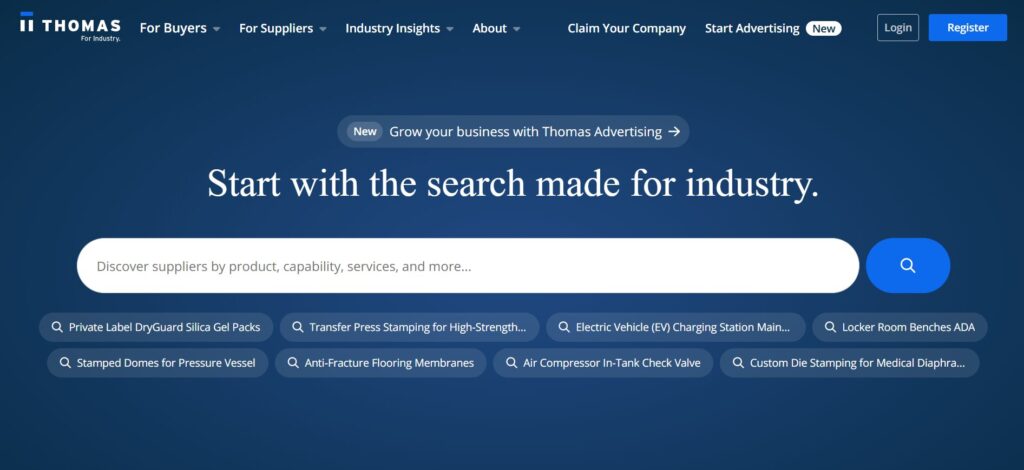
Thomasnet serves a very different buyer from Alibaba or DHgate. It is a North American supplier directory and RFQ platform built around manufacturing, industrial products, components, machining, fabrication, and MRO sourcing rather than general consumer wholesale.
- Founded / HQ: Thomasnet was founded in 1898 by Harvey Mark Thomas
- Categories: Machining, fabrication, industrial components, manufacturing services, MRO
- Buyer fees: Free
- Protection: Verified supplier badges; transactions occur directly with suppliers
Cons: Thomasnet does not provide marketplace-style checkout or transaction protection. Buyers still need to vet suppliers, negotiate contracts, and structure payment directly. Its industrial focus also makes it less useful for many consumer ecommerce categories.
Ideal For: Procurement teams and businesses seeking US or Canadian manufacturers, custom fabrication, or shorter regional supply chains.
10. Europages – Best for European Supplier Discovery
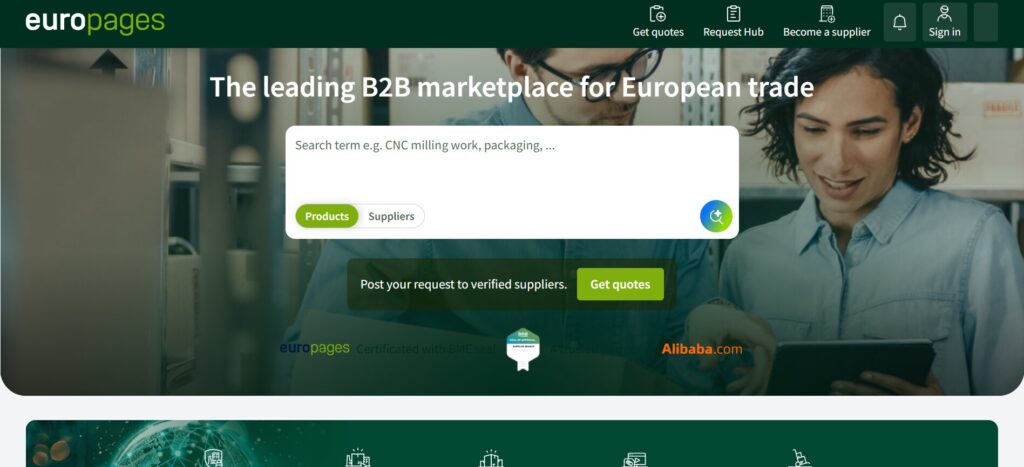
Europages is a multilingual European supplier directory and lead-generation platform rather than a conventional transactional marketplace. It can be especially useful when we want to build an EU supplier shortlist without researching manufacturers country by country.
- Founded / HQ: Online since 1995; operated by Visable GmbH.
- Categories: Food, luxury goods, industrial products and a broad range of European B2B sectors
- Buyer fees: Free
- Protection: No on-platform transaction protection
The Request Hub allows buyers to issue RFQs and connect with relevant suppliers, but contracts and transactions are handled outside the platform.
Cons: Supplier responsiveness can vary by country and category, and buyers are responsible for independent verification and payment safety.
Ideal For: Importers and procurement teams looking to establish or diversify a European supplier base.
Retail Wholesale & Procurement
11. Faire – Best for Independent Retailers Buying Finished Wholesale Goods
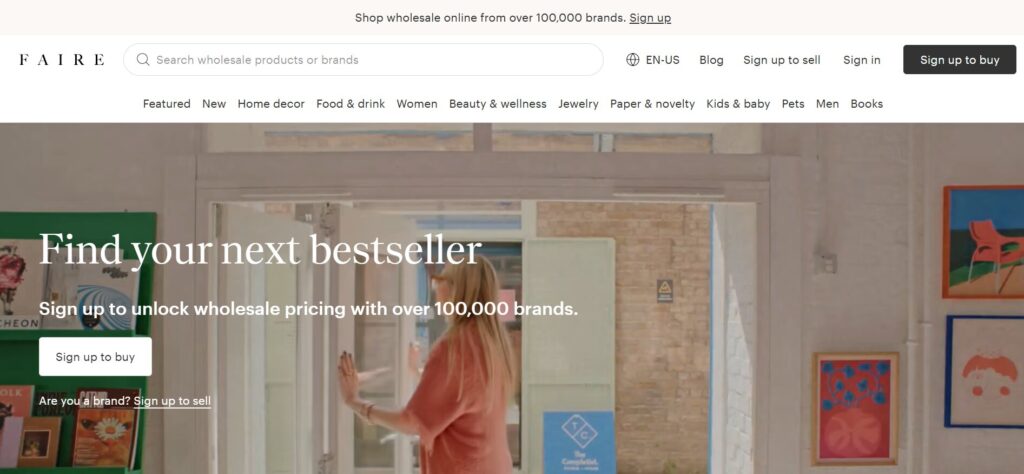
Faire is designed for retailers purchasing finished, retail-ready inventory from independent brands. That distinction matters: we’d use it to stock a boutique or ecommerce store with existing branded products, rather than to find a factory for OEM or custom manufacturing.
- Founded / HQ: Faire was founded in 2017 (incorporated in January 2017) in San Francisco, California.
- Categories: Home, gifts, beauty, food, apparel, lifestyle
- Buyer fees: Free to join; eligible retailers may receive net-60 terms and free returns on opening orders
- Seller fees: 15% marketplace commission plus $10 on a new customer’s first order; Faire Direct 0%; payout processing 1.9%–3.5% + $0.30
- Protection: Returns and payment-term programs
- Integrations: Shopify inventory and order synchronization
Faire reports more than 100,000 brands across the US, Canada, UK, and much of the EU.
Cons: It is not a factory-direct or custom-manufacturing channel, so wholesale unit costs already include the brand layer.
Ideal For: Independent retailers and online boutiques stocking curated branded products. See our guide to websites like Faire for alternatives.
12. Ankorstore – Best for European Boutique Wholesale
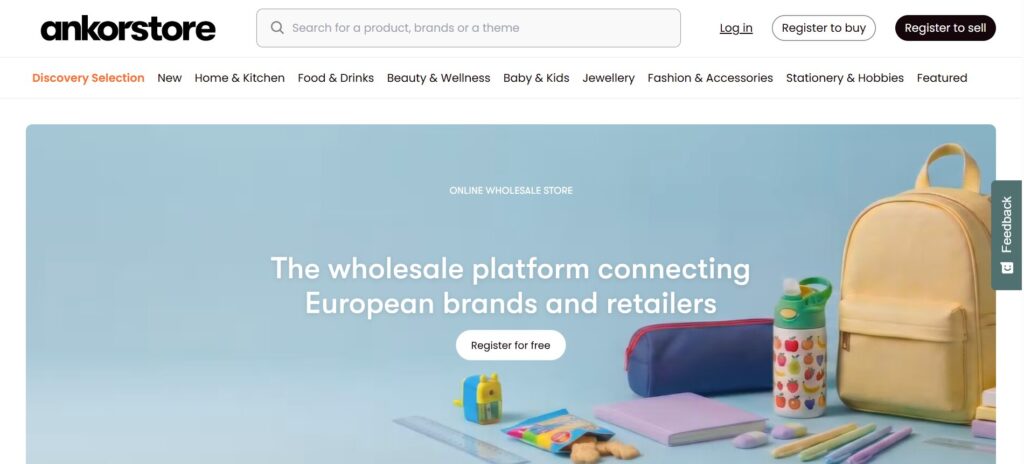
Ankorstore has a similar role to Faire but with a stronger European focus. Based in Paris, it connects independent brands with professional retailers across Europe and provides payment-term options for eligible buyers through partners such as Hokodo.
- Founded / HQ: Ankorstore was founded in Paris, France, in November 2019 by four French entrepreneurs.
- Categories: Home, fashion, beauty, food, kids
- Buyer fees: Free to join; payment terms available to eligible retailers
- Protection: Flexible payment-term arrangements
- Integrations: Shopify app for brands
This makes Ankorstore most relevant when the priority is sourcing finished wholesale merchandise from European brands rather than manufacturing a new product.
Cons: Its geographic and supplier focus is primarily European, so it offers less value for US-centric buyers or businesses seeking factory-direct manufacturing.
Ideal For: European boutiques, independent retailers, and brands building a regional wholesale assortment.
13. Amazon Business – Best for Corporate Procurement and Operational Supplies
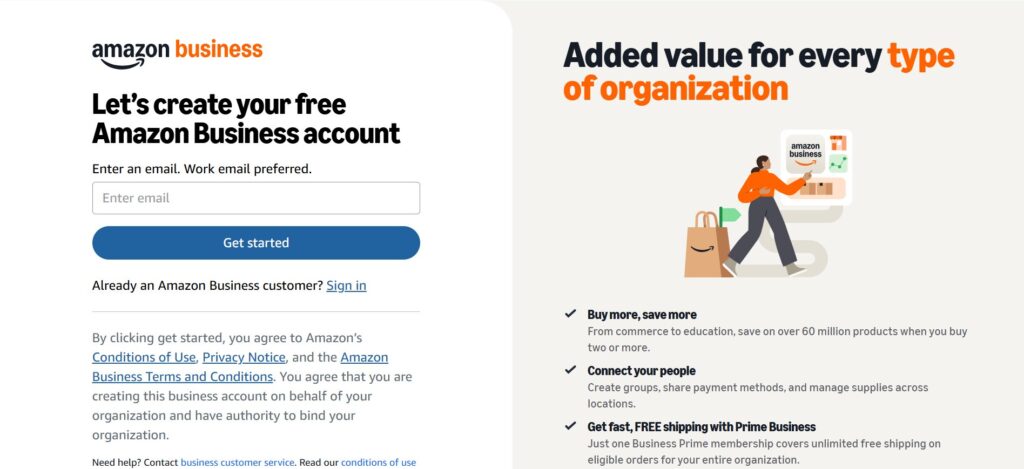
Amazon Business is primarily a procurement platform rather than a product-development sourcing marketplace. It adds business pricing, quantity discounts, purchasing controls, approval workflows, and procurement integrations to Amazon’s existing marketplace model, making it useful for repeat operational purchasing.
- Founded / HQ: Amazon was founded by Jeff Bezos on July 5, 1994, in a garage in Bellevue, Washington.
- Categories: Business supplies, office products, MRO and standardized operational goods
- Buyer fees: Free account; optional Business Prime plans start at $69/year
- Seller fees: Professional plan $39.99/month plus category referral fees
- Protection: Amazon A-to-z Guarantee
- Integrations: Procurement-system integrations
Amazon reports approximately $40 billion in annualized Amazon Business sales.
Cons: It is poorly suited to OEM, private-label development, or factory negotiation because buyers are mainly purchasing standardized products already listed in the Amazon ecosystem.
Ideal For: Companies purchasing operational supplies at scale with centralized procurement and approval requirements.
14. Wonnda – Best for European Private Label and Co-Manufacturing
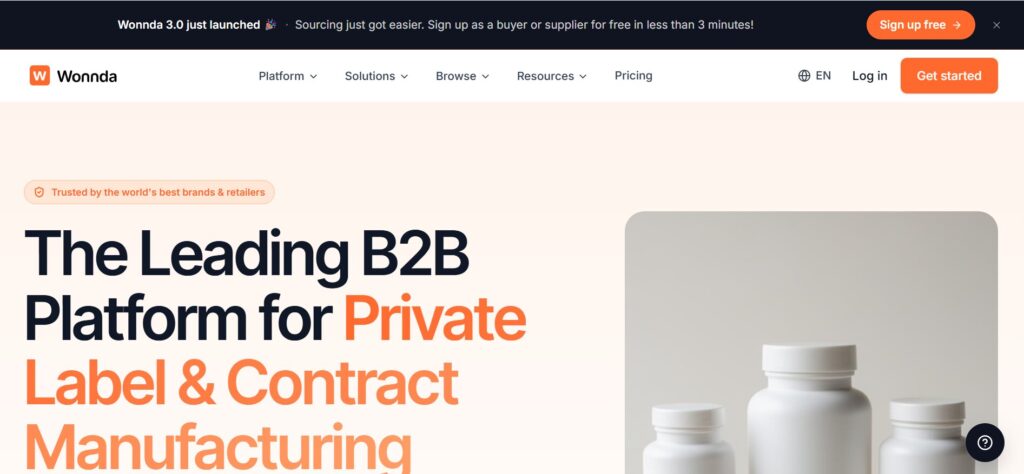
Wonnda is one of the more specialized platforms in this list. Instead of general wholesale, it focuses on connecting consumer brands with European private-label, white-label, and contract manufacturers, with tools for RFQs, samples, and product-development collaboration.
- Founded / HQ: Wonnda was founded in January 2022 in Berlin, Germany.
- Categories: Cosmetics, supplements, food and beverage, home products and other consumer goods
- Buyer fees: Free to browse and brief manufacturers
- Protection: Platform-mediated project workflow
Ideal For: DTC brands seeking European private-label or contract manufacturing. For China-based production, private labeling and branding through a sourcing partner provides another route.
15. Wholesale Central – Best for Finding US Wholesalers
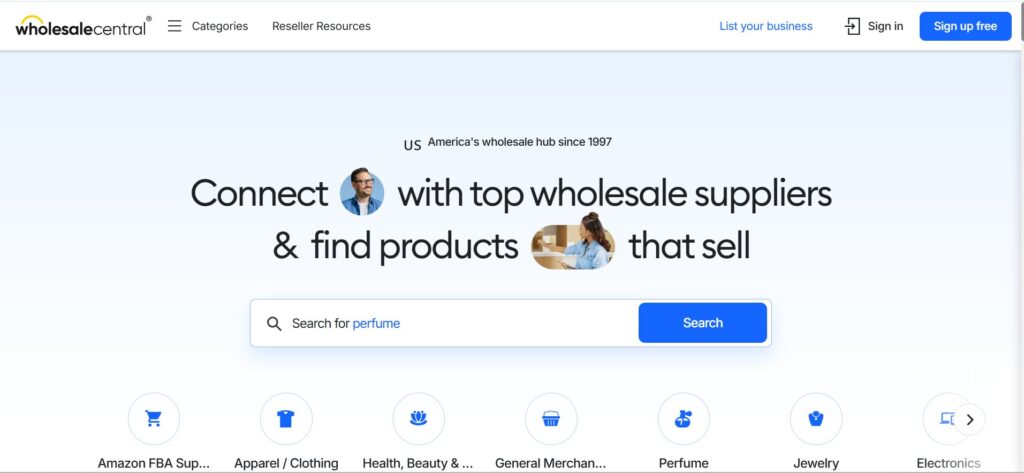
Wholesale Central belongs in this list because it remains useful for supplier discovery, but it should be labeled accurately: it is a directory, not a transactional B2B marketplace. Operated by Sumner Communications, it helps retailers find US wholesalers and then directs them to deal with those suppliers independently.
- Founded / HQ: Wholesale Central was officially launched online in 1997 by its parent company, Sumner Communications, which was originally founded in 1988
- Categories: General merchandise and wholesale consumer products
- Buyer fees: Free
- Protection: None on-platform
The model is straightforward and can work well if you want domestic wholesale contacts without paying for directory access.
Cons: Wholesale Central does not manage payment, escrow, disputes, or supplier verification for the transaction. The buyer carries the full responsibility for vetting each wholesaler.
Ideal For: US retailers looking for domestic general-merchandise wholesalers. Our guide on how to find wholesalers covers additional sourcing channels.
Top Picks by Category
If you want to narrow the list quickly, these are the platforms we’d shortlist first based on sourcing model, region, and order size.
| Category | Winner | Why |
| Best for Beginners | Alibaba | Broad supplier coverage, RFQ tools, and Trade Assurance make it easier to compare factories while keeping qualifying payments protected. |
| Best for Lowest MOQ | DHgate | Suppliers commonly support smaller wholesale quantities, making it practical for testing demand before committing to larger factory orders. |
| Best for China Bulk Sourcing | Alibaba | Strong coverage of Chinese manufacturers across consumer, industrial, OEM, and private-label categories. |
| Best for Private Label | Wonnda | Built specifically around private label, white label, and contract manufacturing, particularly with European consumer-goods manufacturers. |
| Best for EU Retail | Faire | Gives independent retailers access to finished wholesale products from 100,000+ brands across Europe and other major markets. |
| Best for US Industrial Sourcing | Thomasnet | Focuses on North American manufacturers, machining, fabrication, components, and other industrial sourcing needs. |
| Best for India Sourcing | IndiaMART | Provides broad access to Indian manufacturers across textiles, jewelry, chemicals, handicrafts, pharmaceuticals, and other major categories. |
Directories and Sourcing Tools Worth Knowing
Some useful sourcing platforms do not actually operate as transactional B2B marketplaces. We separate them here because the distinction matters: directories help you find suppliers, while sourcing tools mainly help manage catalogs, inventory, or orders.
- DIYTrade — China Supplier Directory: A China-focused directory for finding suppliers and sending inquiries. It can support initial supplier discovery, but transactions are handled outside the platform.
- TopTenWholesale — US Wholesale Directory: A US-focused supplier directory operated by JP Communications. It connects buyers with wholesalers but does not participate in the sales transaction itself.
- Inventory Source — Supplier Directory + Automation Tool: Combines a free supplier directory with software for syncing supplier catalogs, inventory, and orders with ecommerce stores. It is primarily an automation platform rather than a marketplace. If fulfillment becomes the bigger operational challenge, a dedicated order fulfillment service may be more appropriate.
- Worldwide Brands — Paid Wholesale Directory: Established in 1999, Worldwide Brands provides a researched directory of wholesalers and dropshipping suppliers. Members contact and transact with suppliers directly rather than buying through the platform.
A few other platforms are worth knowing for specific use cases: JOOR focuses on fashion wholesale and digital linesheets, TradeIndia is an alternative for Indian supplier discovery, and BigBuy operates a European wholesale and dropshipping catalogue rather than an open multi-seller marketplace.
Pros and Cons of B2B Marketplaces
B2B marketplaces can make supplier discovery much faster, but they also shift more of the verification work onto the buyer. In our view, they work best when you use them to compare options rather than assuming the platform itself has removed all sourcing risk.
Pros
- Faster supplier discovery: You can compare dozens of manufacturers or wholesalers in one place instead of relying on cold outreach.
- Easier price and MOQ comparison: RFQs, bulk pricing, and supplier profiles make it easier to benchmark offers before negotiating.
- Built-in transaction tools: Some marketplaces provide escrow, buyer protection, invoicing, or payment workflows that reduce friction. This is also where understanding sourcing vs procurement becomes useful.
Cons
- Supplier quality still varies: Verification badges help, but they do not replace samples, factory checks, or quality inspection.
- Fees can affect margins: Seller commissions, memberships, and platform charges can eventually be reflected in product pricing.
- You depend on platform rules: Changes to fees, account policies, or buyer-protection terms can affect how you source and transact.
How to Vet Suppliers on B2B Marketplaces
A verification badge is useful, but we would never treat it as proof that a supplier is safe for a large order. The platform may verify a business license, facility, or identity, while product quality, lead time, and contract performance still depend on the individual supplier.
- Check what the verification badge actually covers. Look for statuses such as Verified Manufacturer, Audited Supplier, or Gold Supplier, then review the underlying audit or verification details where available.
- Keep early payments on-platform. Buyer-protection programs such as Trade Assurance or escrow generally apply only when the order and payment stay within the platform. Moving a first transaction to a direct wire transfer can remove that protection.
- Order samples before committing to volume. A sample helps you evaluate product quality, packaging, communication, and whether the supplier can follow your specifications before you accept a larger MOQ.
- Arrange a pre-shipment inspection. For meaningful order values, have the goods inspected before the balance is released or the shipment leaves the factory. This is where problems with dimensions, materials, labeling, packaging, and workmanship are much easier to resolve.
- Check reputation outside the marketplace. Search for recurring complaint patterns, unresolved disputes, and independent business ratings such as BBB where relevant. We removed a formerly listed platform from this 2026 update after its BBB rating fell to F, which is a useful reminder that the marketplace itself also needs vetting.
From our experience in Yiwu: Supplier verification is the #1 issue our clients face before working with us. Our on-ground team handles factory audits and background checks so you don’t have to. Discuss your project.
How to Source Products Without B2B Marketplaces
B2B marketplaces are convenient for discovery, but they are not the only way to find suppliers. Depending on your product, order size, and how much sourcing work you want to manage yourself, trade shows, directories, direct factory outreach, or a sourcing agent may give you better access and control.
Trade Shows

Trade shows let you meet suppliers face to face, compare samples, and discuss MOQs, specifications, and lead times directly. Events such as the Canton Fair, Global Sources trade shows in Hong Kong, and HKTDC fairs are particularly useful for buyers sourcing from Asia.
The main drawback is the cost and time involved in attending. We would usually shortlist suppliers before the event rather than walking the show without a clear product brief.
Supplier Directories
Directories such as Thomasnet and Europages can help you find manufacturers that may not sell through large transactional marketplaces. They are especially useful when you want suppliers in a specific country or manufacturing region.
However, directories mainly facilitate introductions. You still need to verify the company, negotiate terms, arrange payment, and manage quality control independently.
Direct Factory Outreach
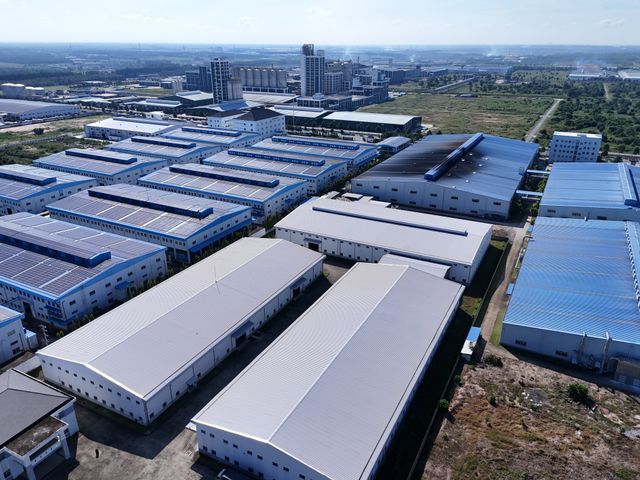
If you already know the type of manufacturer you need, contacting factories directly can remove marketplace intermediaries and give you more room to negotiate pricing, MOQs, specifications, and production terms.
The challenge is verification. Before paying a deposit, you need to confirm that you are dealing with an actual manufacturer, review business credentials, approve samples, and establish clear product specifications and QC requirements.
Sourcing Agents
A sourcing agent is the more hands-off option when you want local support throughout the sourcing process. A capable agent can:
- Find and verify suitable factories.
- Compare quotations and negotiate pricing and MOQs.
- Coordinate samples and production requirements.
- Arrange quality inspection before shipment.
- Consolidate orders and manage export logistics.
- Compare shipping options, including FOB and DDP terms.
This can be particularly useful when sourcing through domestic Chinese channels such as 1688 or when you want to buy wholesale from China without managing supplier communication and logistics yourself.
Ready to source products from China? NicheSources offers free product sourcing with quotes in 2 business days. Request a free quote.
FAQs about B2B Marketplaces
Let’s answer the following questions about B2B marketplaces in more detail.
How Do B2B and B2C Marketplaces Differ?
B2B marketplaces cater to businesses buying from other businesses, while B2C platforms focus on individual consumers. Transaction sizes in B2B marketplaces are typically much larger, often involving bulk orders or long-term contracts.
The purchasing process in B2B is more complex, often requiring multiple decision-makers and longer negotiation periods. Relationship management is crucial in B2B transactions, with a focus on building long-term partnerships.
Alibaba is a prime example of a B2B marketplace, connecting suppliers with businesses worldwide. In contrast, Amazon primarily serves individual consumers, though it also has a B2B arm.
Where Do You Find Offline B2B Marketplaces?
Offline B2B marketplaces continue to thrive in the form of trade shows, industry fairs, and wholesale markets. These events provide valuable opportunities for face-to-face networking and product showcases.
The Canton Fair in China is one of the largest offline B2B marketplaces, attracting thousands of suppliers and buyers from around the world.
In the USA, CES (Consumer Electronics Show) is a major tech industry event that serves as a significant B2B marketplace.
What should I include in an RFQ to a supplier?
A useful RFQ should give suppliers enough detail to quote the same product specification. Include the product name, materials, dimensions, target quantity, packaging requirements, branding needs, destination country, desired lead time, and any required certifications.
Ask suppliers to separate product pricing, tooling or setup charges, packaging, and shipping where possible. We also suggest requesting MOQ information and pricing at several quantity levels.
Can you negotiate MOQs on B2B marketplaces?
Yes, MOQs are often negotiable, particularly when you are discussing custom manufacturing directly with a supplier. Your leverage usually depends on the product, production method, customization level, and whether the factory believes you could become a repeat buyer.
Instead of simply asking for a lower MOQ, explain that you want a smaller trial order before scaling. Suppliers may agree to reduce the quantity if you accept a slightly higher unit cost, use existing packaging, or avoid customization during the first production run.
How should I compare quotations from different suppliers?
Compare the full sourcing terms rather than looking only at unit price. Check whether each quotation uses the same material, dimensions, packaging, MOQ, customization, shipping term, and quality requirements.
A lower quote can become more expensive once tooling, packaging, freight, or inspection costs are added. We also look closely at communication quality and whether the supplier answers technical questions clearly.
Building a simple comparison sheet with product cost, MOQ, lead time, Incoterm, sample cost, customization charges, and payment terms makes weak quotations much easier to identify.
What is the difference between EXW, FOB, and DDP when sourcing online?
These shipping terms determine how much of the logistics process the supplier is responsible for. EXW usually leaves most transport arrangements to the buyer from the factory onward.
FOB generally means the supplier handles the goods through export and delivery to the agreed port, after which the buyer manages international freight.
DDP places more responsibility on the seller or logistics provider, including delivery to the specified destination. Always confirm exactly what a supplier’s quote includes because two identical unit prices can produce very different landed costs.
How do I calculate landed cost before choosing a supplier?
Landed cost is the total amount you spend to get sellable inventory to your warehouse or fulfillment location. Start with the product price, then add packaging, customization, domestic transport, international freight, insurance where applicable, customs duties, taxes, inspection costs, and destination handling.
Divide the final amount by the number of usable units to estimate your true cost per item. We suggest comparing suppliers using landed cost rather than factory price because a slightly more expensive supplier can still be the better option once logistics and quality costs are included.
Do B2B marketplaces support private-label products?
Yes, several B2B platforms can connect you with suppliers offering private-label or custom manufacturing. Alibaba covers a broad range of OEM and ODM manufacturers, while Wonnda specifically focuses on private label, white label, and contract manufacturing for European consumer brands.
Before placing an order, confirm whether the supplier can customize the product itself, packaging, labels, inserts, and regulatory documentation. Also ask about customization MOQs because private-label quantities can be higher than the MOQ for an existing unbranded product.
Is it better to sell through a B2B marketplace or your own website?
For many businesses, the strongest approach is to use both for different purposes.
A marketplace can give you access to an existing pool of business buyers and make early customer acquisition easier, but you operate within its fees, policies, and competitive environment.
Your own website gives you more control over branding, customer relationships, pricing, and repeat sales, but you must generate the traffic yourself.
A practical approach is to use marketplaces for discovery and validation while gradually building direct sales channels for long-term customer relationships and margin control.