A lingerie manufacturer is a factory, atelier, or full-package production partner that develops and produces intimate apparel such as bras, panties, shapewear, and sleepwear. Depending on the supplier, brands may submit original designs for OEM production, adapt existing ODM styles, or buy ready-made wholesale products for resale.
For this 2026 guide, we reviewed 22 lingerie manufacturers across the USA, UK, and China. The list includes custom OEM factories, offshore production partners, wholesale suppliers, and made-to-order ateliers, with company type, MOQ, location, and ideal use case clearly labeled.
We have also separated genuine factories from trading companies and design studios. That distinction matters because it affects pricing, customization, communication, and how much control you have over production.
For brands that do not want to manage the search alone, a product sourcing service can help shortlist suppliers, verify factory credentials, coordinate samples, and compare quotations.
Quick Facts: Lingerie Manufacturing in 2026
- Typical MOQ: 0–50 pieces for ateliers or wholesale stock; 100–500 pieces for many custom OEM programs; 3,000+ pieces for major industry groups.
- Estimated bra cost: $3.50–$7 at mass-market volume, $12–$22 for overseas mid-sized runs, and $18–$40 for small-batch US production.
- Sampling: Commonly $80–$250 per custom style, with a typical turnaround of 7–20 days.
- Bulk lead time: Around 30–60 days in China and 2–8 weeks in the USA or UK, before international shipping.
- Important certifications: OEKO-TEX, BSCI, Sedex, ISO 9001, GOTS, and GRS, depending on your market and material claims.
- Main production hubs: Guangdong and Fujian in China, Los Angeles and New York in the USA, and London and Derbyshire in the UK.
30-Second Decision Box
- Choose a USA or UK manufacturer when low MOQs, faster restocking, local communication, or domestic-origin positioning matter most. Expect higher unit costs.
- Choose a China OEM factory when unit economics, fabric variety, and production capacity are the priority, and you can usually order at least 100–500 pieces per style.
- Choose a wholesale or dropshipping supplier when you want ready-made products without paying for development or holding large quantities.
- Choose a made-to-order atelier when you are building a luxury, bespoke, or fit-sensitive collection where craftsmanship matters more than unit price.
- Choose a design house with offshore production when you want UK-side development and quality control combined with Asian manufacturing costs.
Types of Lingerie Manufacturers
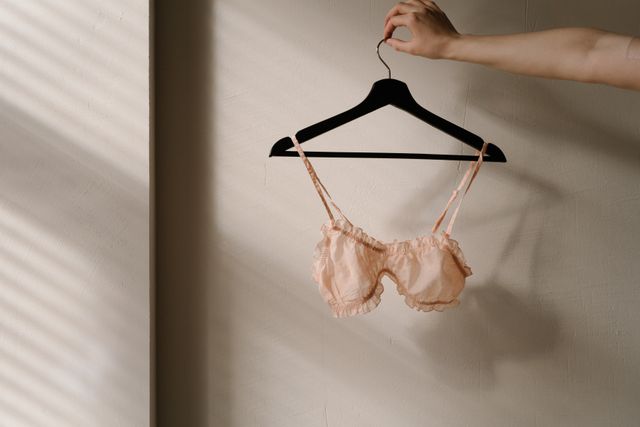
Not every company using the word “manufacturer” owns or directly operates a factory. Some manage production through offshore partners, while others sell ready-made stock or produce garments one at a time.
Understanding these four models helps you compare MOQs, pricing, development support, and production control more accurately.
1. Custom OEM/ODM Lingerie Manufacturers
Custom OEM/ODM manufacturers produce lingerie for brands at factory scale. They are generally the best fit for businesses that want private-label bras, panties, shapewear, sleepwear, or coordinated collections.
These manufacturers may provide:
- Fabric and trim sourcing
- Pattern making and size grading
- Custom sampling
- Logo labels and branded packaging
- Bulk production
- Quality inspection and export support
Custom factories usually offer the strongest unit economics at volume. However, they also require more development work and commonly set MOQs by style, color, or size.
In China, custom lingerie MOQs often range from around 100 to 500 pieces per style. Small US manufacturers may accept lower runs, but their unit prices are usually higher.
2. Design Houses with Offshore Production
A design house with offshore production manages product development locally while manufacturing through owned or partner factories abroad.
This model is especially common among UK lingerie companies. The local team may handle design, technical specifications, fittings, sampling, and quality assurance, while factories in China, Vietnam, Sri Lanka, Bangladesh, or Europe complete the bulk order.
This arrangement can provide:
- Easier communication with a domestic team
- Local fit and product-development expertise
- Access to lower offshore manufacturing costs
- Better coordination across design, production, and logistics
The trade-off is less direct access to the factory floor. Brands should clarify whether the design house owns its production facilities or works through third-party factories, as this can affect pricing, capacity, and accountability.
3. Wholesale and Dropshipping Lingerie Suppliers
Wholesale and dropshipping suppliers sell ready-made lingerie rather than developing a completely original product from a tech pack. Many are trading companies that source products from several factories and consolidate them into one catalog.
This is often the fastest route for ecommerce sellers because it avoids lengthy sampling and product development.
Common services include:
- Mixed-style wholesale orders
- Low or no MOQ on stocked products
- Basic private labeling
- Custom packaging
- Direct-to-customer order fulfillment
- Product photography for resellers
The main limitation is differentiation. Other retailers may sell the same designs, and pricing usually includes a trading-company margin rather than factory-direct rates.
4. Made-to-Order Ateliers and Brand Studios
Made-to-order ateliers produce lingerie in very small batches or as individual pieces. Garments may be cut and sewn by hand using silk, lace, custom embroidery, and specialist couture techniques.
These businesses are best suited to:
- Luxury lingerie labels
- Bespoke collections
- Inclusive or unusual sizing
- Fit-sensitive products
- Limited editions and signature pieces
- Early prototypes and market-testing runs
Some ateliers accept orders from one to 30 units, making them more accessible than conventional factories. The trade-off is a substantially higher cost per piece and limited capacity for rapid scaling.
Before selecting an atelier, confirm whether it accepts B2B production work. Some businesses primarily operate as consumer brands and only offer wholesale or private-label arrangements selectively.
OEM vs ODM Lingerie Manufacturing: What Is the Difference?
| Model | How It Works | Development Required | Product Control | Best For |
| OEM | The manufacturer produces your original design from a tech pack | High | Full | Brands building proprietary products |
| ODM | You adapt and brand one of the manufacturer’s existing designs | Low to medium | Partial | Brands prioritizing speed and lower development costs |
With OEM lingerie manufacturing, you control the design, measurements, materials, colorways, hardware, and construction. This provides stronger differentiation, but sampling usually takes longer and development costs are higher.
With ODM lingerie manufacturing, the supplier provides an existing design that you can modify or rebrand. It is faster and requires less technical input, although similar products may be available to other buyers.
Our guide to what OEM means explains the production model in more detail. You can also compare OEM vs ODM manufacturing before deciding which route fits your lingerie line.
In practice, startups often use wholesale or ODM products to test demand. Once they identify reliable sellers and understand fit requirements, they can move those styles into OEM production for better differentiation and long-term brand control.
The Top 5 Lingerie Manufacturers (Editor’s Pick)
We selected these five companies because they cover the main sourcing scenarios most brands face: domestic production, low-MOQ private label, China-based OEM manufacturing, and inventory-free product testing.
We have also labeled each company by its actual business model. That matters because a factory, an offshore manufacturer, and a wholesale supplier offer very different levels of control, pricing, and customization.
1. Argyle Haus of Apparel
Argyle Haus of Apparel is a Los Angeles design and manufacturing company with its own factory in California’s San Fernando Valley. This makes it one of the stronger options for brands that need genuine Made-in-USA lingerie production.
Its technical capabilities include underwire bras, corsetry, shapewear, panties, and sleepwear. These products require more specialized pattern making and construction than basic cut-and-sew apparel.
Brands can use its design and development services without committing immediately to production. Small-batch manufacturing can begin from around 25 pieces at premium pricing, while standard runs are closer to 500 pieces per style.
- Location: Los Angeles and San Fernando Valley, California, USA
- Type: Design house and owned US factory
- MOQ: Small batches from around 25 pieces; standard runs around 500 per style
- Lingerie types: Underwire bras, corsetry, panties, shapewear, and sleepwear
- Fabrics: Organic cotton, lace, silk, bamboo fiber, and spandex blends
- Services: Design, development, sourcing, sampling, grading, and bulk production
- Ideal For: US brands needing structured lingerie and genuine domestic production
2. QLingerie
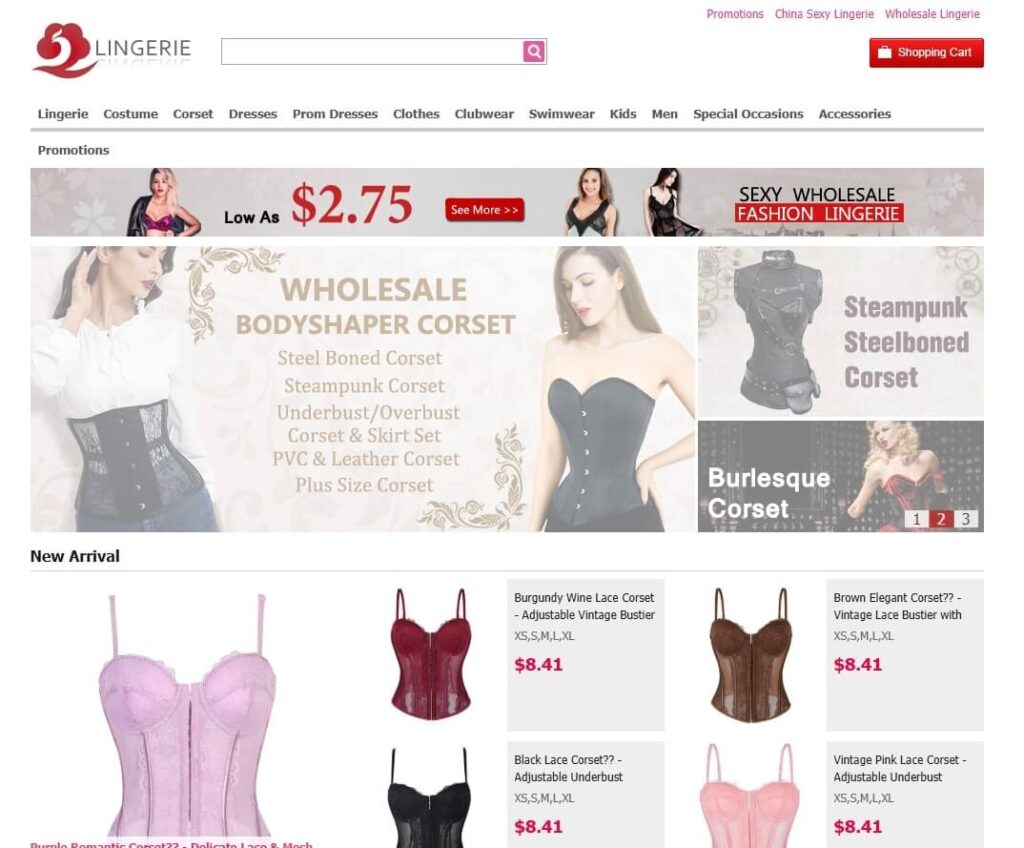
QLingerie is a China-based wholesale and dropshipping supplier rather than a factory. We include it because it serves a very different buyer from the custom manufacturers on this list.
Its catalog includes corsets, babydolls, teddies, robes, stockings, and themed lingerie or costumes. Ecommerce sellers can buy ready-made stock in bulk or use its no-MOQ dropshipping program to test products without holding inventory.
The trade-off is limited differentiation. Since QLingerie resells existing styles, other stores may carry the same products, and pricing will include a trading-company margin. Before relying on it for ongoing fulfillment, confirm stock accuracy, dispatch times, branding options, and return handling.
- Location: China
- Type: Wholesale and dropshipping supplier
- MOQ: No MOQ for dropshipping
- Lingerie types: Corsets, babydolls, teddies, robes, costumes, and stockings
- Fabrics: Lace, satin, mesh, cotton, and polyester blends
- Services: Wholesale, dropshipping, and limited private labeling
- Ideal For: Ecommerce sellers testing lingerie without purchasing inventory
3. Affix Apparel
Affix Apparel combines a Los Angeles sales operation with manufacturing in Pakistan. It offers a practical middle ground for startups that want US-side communication with offshore production costs.
Its private-label services include fabric sourcing, pattern making, sampling, production, labels, and packaging. Reported minimums begin at around 50 pieces, making it more accessible than many full-package apparel manufacturers.
However, Affix is a broad clothing producer rather than a dedicated lingerie factory. Its portfolio includes hoodies, T-shirts, jeans, swimwear, lingerie, and shapewear. We would consider it for relatively straightforward intimate apparel, but brands developing highly technical underwire or fit-intensive products should confirm its relevant machinery and sample work first.
- Location: Los Angeles, USA, with production in Pakistan
- Type: Offshore private-label apparel manufacturer
- MOQ: From around 50 pieces
- Lingerie types: Bra-and-panty sets, underwear, shapewear, and swimwear
- Fabrics: Cotton blends, silk, lace, microfiber, satin, and spandex
- Services: Fabric sourcing, sampling, private labeling, production, and packaging
- Ideal For: Startups needing low-MOQ, full-package private-label production
4. Casland Garments
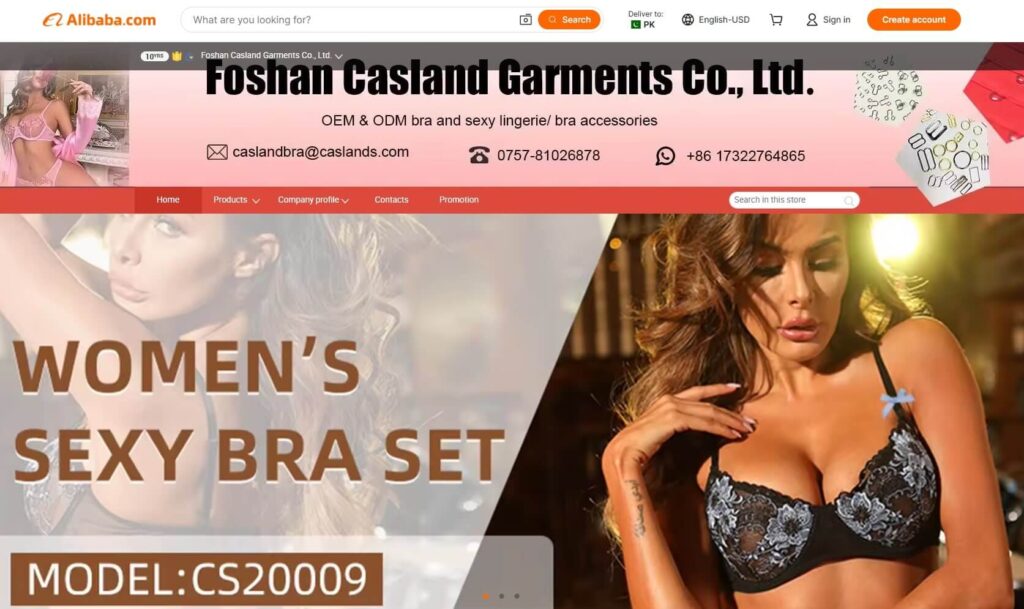
Casland Garments is an OEM/ODM lingerie factory in Foshan, Guangdong. It has audited profiles on major B2B marketplaces and produces fashion lingerie sets, seamless bras, sports bras, sleepwear, and plus-size styles.
Its main advantage is flexibility. Reported OEM minimums range from around 50 to 500 pieces depending on the product, while some stocked designs can be ordered in quantities as low as a few sets. The factory also releases new styles regularly, which can help ecommerce brands respond quickly to changing trends.
Casland does not appear to operate an independent website, so buyers generally contact it through marketplace storefronts. We recommend verifying its current business license, audit documents, sample quality, and payment terms before placing a bulk order.
- Location: Foshan, Guangdong, China
- Type: OEM/ODM lingerie factory
- MOQ: Around 50–500 pieces for OEM; selected stock from a few sets
- Lingerie types: Fashion sets, seamless bras, sports bras, plus-size lingerie, and sleepwear
- Fabrics: Lace, cotton, silk, microfiber, and spandex blends
- Services: OEM/ODM, product development, private labeling, and frequent catalog updates
- Ideal For: Ecommerce brands needing trend-led styles and relatively low factory MOQs
5. Argus Apparel
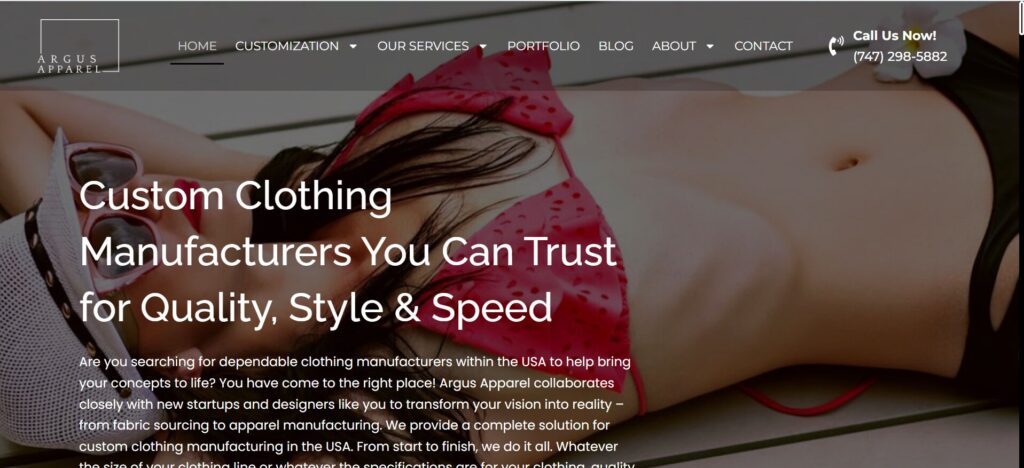
Argus Apparel is a Los Angeles custom clothing manufacturer offering private-label production for startups and established brands. Its lingerie capabilities cover bras, panties, shapewear, and coordinated intimate apparel.
The company works with materials such as French lace, sheer mesh, bamboo blends, cotton, and spandex. It also supports development and sampling, which can be useful for founders who have a concept but still need help preparing it for production.
Argus reports low minimums, although it does not publish a single fixed MOQ that applies to every lingerie project. Brands should therefore request a quotation based on the garment’s construction, fabric, size range, and color count. It is a strong domestic option for brands seeking more flexibility than a high-volume US factory.
- Location: Los Angeles, California, USA
- Type: Custom and private-label manufacturer
- MOQ: Low, but project-specific; confirm directly
- Lingerie types: Bras, panties, shapewear, and custom lingerie sets
- Fabrics: French lace, sheer mesh, bamboo blends, cotton, and spandex
- Services: Product development, sampling, custom manufacturing, and private labeling
- Ideal For: Brands needing flexible, US-based custom lingerie production
Lingerie Manufacturers in the USA
US lingerie manufacturers are most useful when you need lower MOQs, faster sampling, easier communication, or a Made-in-USA positioning. The trade-off is a higher unit cost than offshore production, particularly for bras and shapewear that require specialist construction.
Three of our editor’s picks are US-facing options:
- Argyle Haus of Apparel: Best for technically complex, Made-in-USA lingerie.
- Argus Apparel: Best for flexible domestic custom manufacturing.
- Affix Apparel: Best for low-MOQ private label with US-side communication and production in Pakistan.
Their full profiles appear in the Top 5 section above. The following manufacturers cover wholesale programs, luxury development, inclusive made-to-order lingerie, and full-package Los Angeles production.
6. Alanic
Alanic is a wholesale and private-label apparel company headquartered in Beverly Hills, with production handled through an offshore supplier network. We would classify it as a wholesale and private-label organization rather than a US lingerie factory.
Its intimate apparel range includes sports bras, everyday sets, bridal lingerie, plus-size products, and sleepwear. Brands can request custom designs, labels, packaging, and international logistics, although lingerie is only one part of its much broader apparel catalog.
The main advantage is convenience: buyers can source several apparel categories through one company. However, brands seeking factory-direct pricing or close access to the production floor should verify exactly where their order will be made and who will manage quality control.
- Location: Beverly Hills, California, USA; offshore production network
- Type: Wholesale and private-label supplier
- MOQ: Varies by product and program
- Lingerie Types: Bra-and-panty sets, sports bras, bridal lingerie, plus-size lingerie, and sleepwear
- Fabric Types: Organic cotton, lace, silk, bamboo fabric, microfiber, and spandex blends
- Services: Wholesale supply, private label, custom design, branding, and global logistics
- Ideal For: Brands wanting a broad apparel catalog and one supplier for wholesale and private-label programs
7. Atelier Amelia
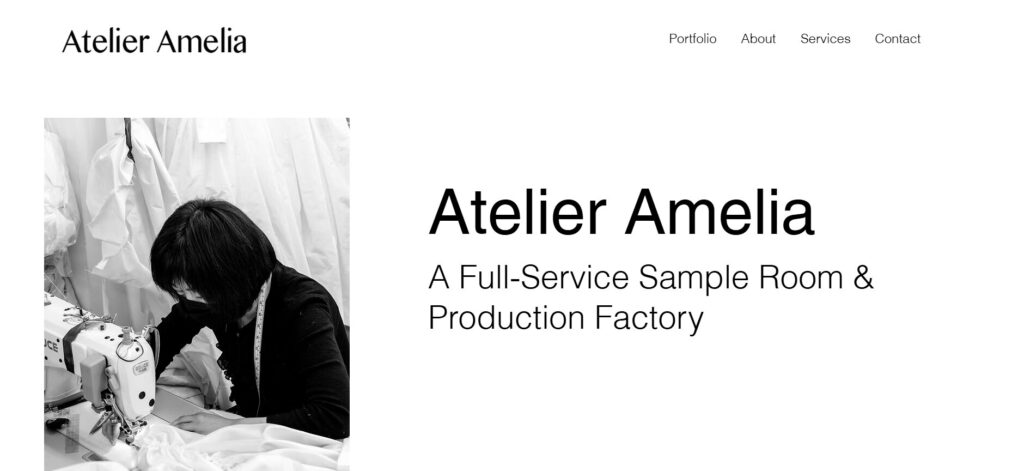
Atelier Amelia is a women-owned sample room and production house in New York’s Garment District. It is listed in the CFDA Production Directory and has received support through the CFDA Fashion Manufacturing Initiative.
The studio manages design, fabric sourcing, pattern drafting, fittings, sampling, and small-batch production. Its strengths include technically delicate products such as underwire bras, French-lace lingerie, hand-beaded pieces, swimwear, and luxury sleepwear.
Production reportedly begins at around 30 units, making Atelier Amelia accessible to premium startups that cannot meet conventional factory MOQs. The cost per piece will be higher than offshore manufacturing, but brands receive close development support and domestic production for fit-sensitive garments.
- Location: New York City, USA
- Type: Atelier and small-batch production house
- MOQ: From approximately 30 units
- Lingerie Types: Underwire bras, underwear, lingerie sets, swimwear, sleepwear, and bespoke pieces
- Fabric Types: Silk, French lace, cotton, satin, and mesh
- Services: Design, sourcing, pattern making, fittings, sampling, and production
- Ideal For: Luxury and artisan brands developing high-spec small-batch collections
8. Impish Lee
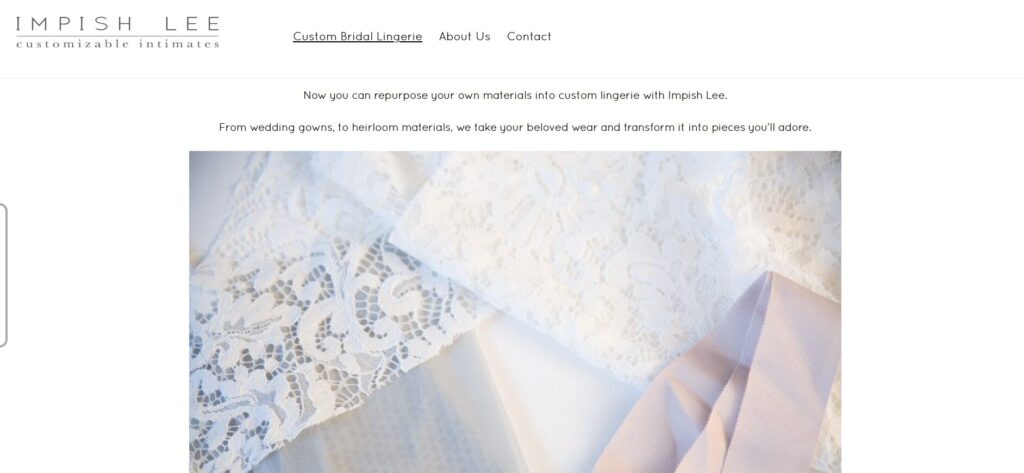
Impish Lee is a New York made-to-order lingerie brand and studio built around customizable styles, fabrics, and trims. Its size range extends from 28A to 44J, giving it a stronger inclusive-fit proposition than many ready-made suppliers.
Each garment is produced to order in its New York studio, with a typical stated turnaround of three to four weeks. The assortment includes bras, bralettes, panties, robes, slips, and loungewear in lace, velvet, mesh, cotton, and novelty prints.
Impish Lee primarily operates as a consumer brand, but it also offers wholesale and private-label arrangements. Buyers should confirm the available customization, branding terms, capacity, and wholesale pricing before treating it as a conventional manufacturing partner.
- Location: Sea Cliff, New York, USA
- Type: Made-to-order brand and studio
- MOQ: No minimum for its made-to-order model
- Lingerie Types: Bras, bralettes, panties, robes, slips, and loungewear
- Fabric Types: Lace, velvet, mesh, cotton, and printed fabrics
- Services: Made-to-order production, customization, wholesale, and private label
- Ideal For: Boutiques and designers needing customizable lingerie across an inclusive size range
9. Lefty Production Co.
Lefty Production Co. is a full-package apparel manufacturer based in downtown Los Angeles. Its services cover the full production sequence, including design, fabric sourcing, pattern making, grading, sampling, cut-and-sew manufacturing, packing, and branding.
The company produces bras, panties, men’s underwear, swimwear, and activewear alongside several other apparel categories. This makes it useful for brands developing lingerie as part of a wider clothing collection rather than as a highly specialized bra program.
Minimums are commonly estimated at around 50–150 pieces per style, although brands should confirm the figure for their specific construction and materials. Its main advantage is having one local team manage development through finished production.
- Location: Los Angeles, California, USA
- Type: Full-package custom apparel manufacturer
- MOQ: Approximately 50–150 pieces per style; confirm directly
- Lingerie Types: Bras, panties, men’s underwear, swimwear, and active intimates
- Fabric Types: Cotton, lace, silk, satin, spandex blends, and sustainable material options
- Services: Design, sourcing, pattern making, grading, sampling, production, branding, and packing
- Ideal For: Emerging brands wanting one Los Angeles partner from initial sketch to finished production
Lingerie Manufacturers in the UK
UK lingerie suppliers generally fall into two groups: couture ateliers producing small runs locally, and design houses managing larger production through overseas factories. The right choice depends on whether you need handcrafted luxury pieces, micro-MOQ sampling, or retail-scale manufacturing.
10. Divaurae
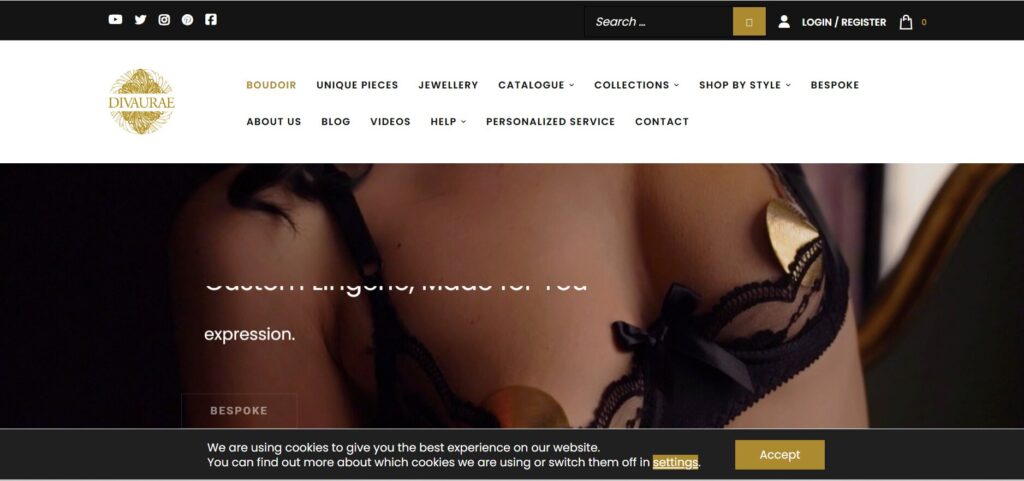
Divaurae is a family-run bespoke lingerie atelier based in Brighton & Hove. Designer Linda Miller creates made-to-order pieces using silk, French lace, satin, and other premium fabrics, with a style focused on retro glamour and couture detailing.
This is not a bulk factory. Bespoke pricing reportedly starts at around £200 for briefs and £500 for sets, so Divaurae is better suited to signature products, limited editions, or luxury collections where craftsmanship carries more weight than unit cost.
We would shortlist it for a hero product or a high-end capsule rather than a volume basics program.
- Location: Brighton & Hove, UK
- Type: Bespoke atelier
- MOQ: Made to order
- Lingerie Types: Bras, panties, garter belts, nightwear, and luxury sets
- Fabric Types: Silk, French lace, satin, cotton blends, and microfiber
- Services: Bespoke development, custom orders, and small-batch production
- Ideal For: Luxury startups and designers developing couture-level UK-made pieces
11. Delta Connex
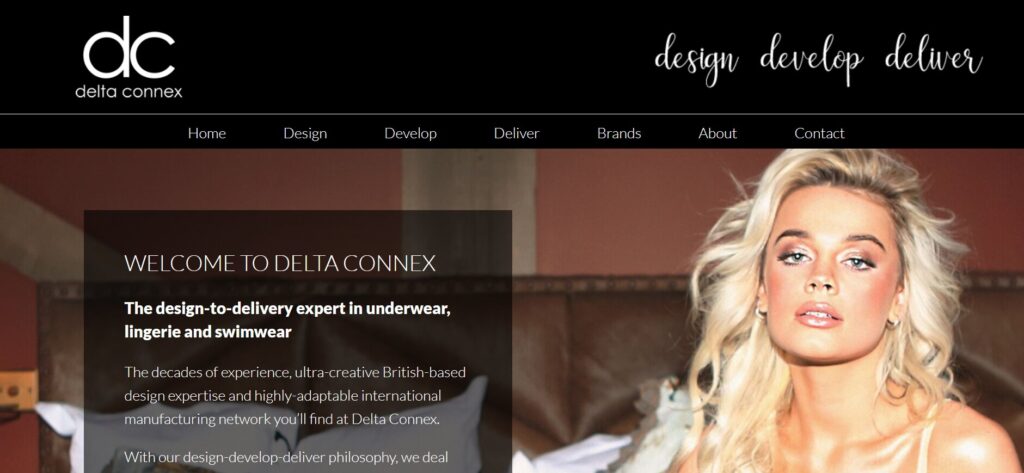
Delta Connex is a Leeds-based private-label design house founded in 2011. Its UK team manages design, development, and quality assurance, while production is handled through partner factories across Europe and Asia.
The company is a Sedex member and lists retailers such as Matalan and Boux Avenue among its clients. That makes it more relevant to established brands than first-time founders working with small test orders.
Reported MOQs range from around 300 to 10,000 units per style, depending on the program. Before proceeding, brands should confirm which factory will handle the order, the applicable compliance standards, and who owns responsibility for final inspection.
- Location: Leeds, UK, with partner factories in Europe and Asia
- Type: Design house with offshore production
- MOQ: Approximately 300–10,000 units per style
- Lingerie Types: Bras, panties, sets, shapewear, swimwear, nightwear, and active intimates
- Fabric Types: Cotton, lace, satin, microfiber, and nylon blends
- Services: Design, development, OEM production, branding, quality assurance, and logistics
- Ideal For: Established brands scaling through UK-managed international production
12. Inspire Intimates
Inspire Intimates combines a design and development headquarters in Harrogate with its own factory in Dongguan, China. It also works with production partners in Vietnam, Sri Lanka, and Portugal.
The business has more than 30 years of experience in intimate apparel, covering bras, panties, shapewear, sleepwear, swimwear, and men’s underwear. Its strongest advantage is technical support: UK-based sampling and fit engineering are paired with offshore production and on-the-ground quality control in China.
The company does not publish one standard MOQ, so buyers should discuss volumes, materials, and development requirements early.
- Location: Harrogate, UK, and Dongguan, China
- Type: UK design house with owned China factory
- MOQ: Project-specific; contact directly
- Lingerie Types: Bras, panties, shapewear, sleepwear, swimwear, and men’s underwear
- Fabric Types: Cotton, lace, satin, polyester, and spandex
- Services: OEM/ODM, technical fit development, sampling, packaging, quality control, and logistics
- Ideal For: Brands wanting UK-side development with China manufacturing economics
13. Emma Harris
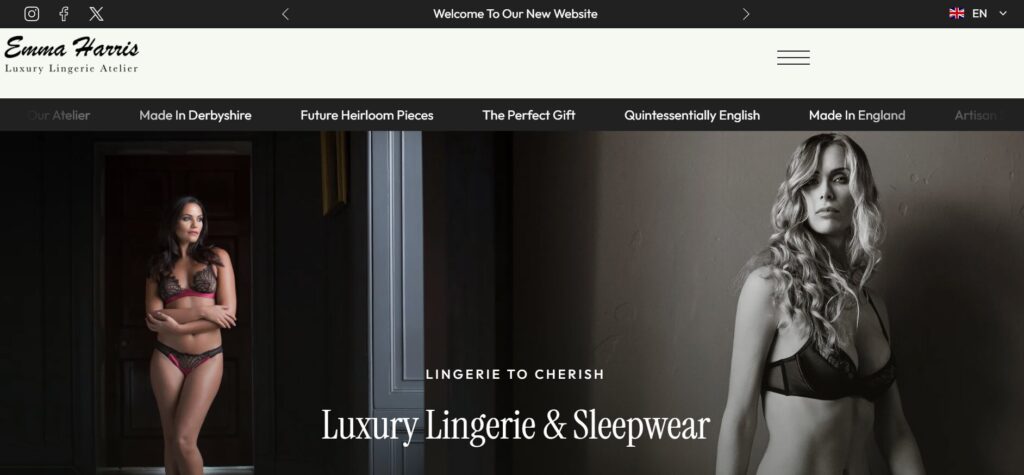
Emma Harris is a couture lingerie atelier based in Ilkeston, Derbyshire. Its pieces are handmade to order using techniques such as French seams, pin hems, and lace appliqué.
The collection includes silk bras, camisoles, chemises, robes, and lounge pieces. Pricing sits firmly in the luxury tier, with silk robes reported at around £495, so this is not a practical route for price-led wholesale programs.
For premium boutiques, Emma Harris offers genuine UK-made craftsmanship and a clear luxury story. Buyers should treat it as an artisan partner rather than a white-label or volume manufacturer.
- Location: Ilkeston, Derbyshire, UK
- Type: Made-to-order couture atelier
- MOQ: Made to order
- Lingerie Types: Luxury bras, camisoles, chemises, robes, and lounge trousers
- Fabric Types: Silk, French lace, and specialist premium fabrics
- Services: Bespoke production, artisan construction, and made-to-order manufacturing
- Ideal For: High-end retailers and boutiques seeking artisan UK-made silk lingerie
14. Aura Lingerie
Aura Lingerie is a London design house serving larger retail programs. Design, pattern development, and sample making are handled in West London, while production is coordinated through offices in Guangzhou and Dhaka and a network of accredited factories across the Far East.
Its reported client portfolio includes Ann Summers, Boux Avenue, Bluebella, Bravissimo, and Next. The product range covers core lingerie, maternity, bridal, swimwear, and nightwear.
Aura is best approached as a high-volume development and production partner. Small startups should confirm minimums before investing time in the process, as its structure is built around established retail accounts rather than micro runs.
- Location: London, UK, with Guangzhou and Dhaka offices
- Type: Design house with offshore manufacturing network
- MOQ: Volume programs; confirm directly
- Lingerie Types: Bras, panties, camisoles, maternity, bridal, swimwear, and nightwear
- Fabric Types: Silk, lace, satin, cotton blends, nylon, spandex, and mesh
- Services: Design, sampling, pattern grading, offshore production, and packaging
- Ideal For: High-street retailers and established brands requiring accredited volume production
15. Intimate Apparel Samples
Intimate Apparel Samples is a London studio focused on lingerie sampling and low-volume production. Its reported minimum begins at around 10 units per style, making it one of the most accessible UK options for a first collection.
The studio can support pattern development, prototypes, fit refinement, and small production runs for bras, panties, and lingerie sets. This is useful when a brand needs to test construction and customer response before committing to hundreds of units.
Capacity is naturally more limited than a volume factory. A sensible route is to use the studio for samples and an initial run, then transfer the approved specification to a larger manufacturer once demand is proven.
- Location: London, UK
- Type: Sampling and small-run studio
- MOQ: From approximately 10 units per style
- Lingerie Types: Bras, panties, lingerie sets, prototypes, and small runs
- Fabric Types: Based on client specification
- Services: Pattern development, sampling, fit refinement, and low-MOQ production
- Ideal For: Startups, crowdfunding projects, and boutique labels testing a first collection
Lingerie Manufacturers in China
China remains one of the deepest lingerie manufacturing markets, particularly in Guangdong and Fujian. The supplier base covers custom OEM factories, certified high-volume manufacturers, ready-made wholesalers, and dropshipping companies.
QLingerie and Casland Garments are covered in the Top 5 section above:
- QLingerie: Best for no-MOQ dropshipping and ready-made product testing.
- Casland Garments: Best for relatively low-MOQ OEM/ODM production and trend-led styles.
The remaining companies below cover seamless production, certified manufacturing, underwear basics, plus-size catalogs, and low-commitment wholesale sourcing.
16. Freeflow Lingerie
Freeflow Lingerie is a Shantou-based intimate apparel manufacturer with more than 15 years of experience, four production lines, and reported annual capacity approaching three million pieces.
Its technical strengths include seamless knitting, bonded construction, and laser-cut finishes. These capabilities make it relevant for no-show bras, seamless panties, modern shapewear, and other products where visible seams or bulky stitching reduce comfort.
Freeflow publishes BSCI, OEKO-TEX, WCA, and GRS credentials, which can simplify supplier screening for brands with retailer or sustainability requirements. However, buyers should still verify certificate validity and confirm which production line will handle their order.
- Location: Shantou, Guangdong, China
- Type: Custom OEM/ODM factory
- MOQ: Contact supplier
- Lingerie Types: Bras, panties, sets, teddies, men’s underwear, sleepwear, and swimwear
- Fabric Types: Lace, seamless yarns, satin, mesh, and bonded or laser-cut materials
- Services: OEM/ODM, private label, product development, packaging, and high-capacity production
- Ideal For: Brands needing certified volume production and advanced seamless construction
17. Beeten Garments
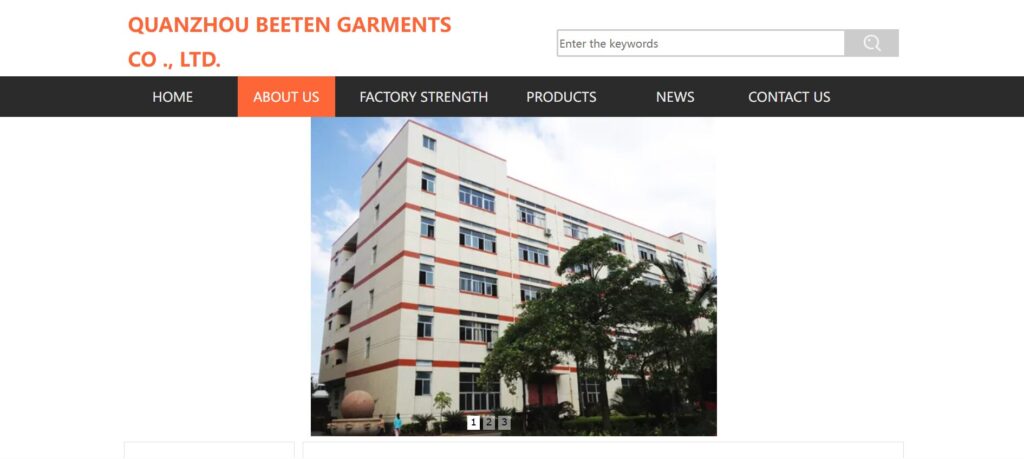
Beeten Garments is an underwear manufacturer in Quanzhou, Fujian, established in 2007. Its reported production history includes programs associated with Playboy, Pierre Cardin, Body Glove, Disney, Kmart-Sears, and Metro.
The factory focuses on bras and panties alongside men’s and children’s underwear. Its material range includes cotton, modal, Lycra, and polyester blends, making it most relevant for repeatable basics rather than couture or highly embellished lingerie.
Reported MOQs sit around 500 units. This places Beeten above startup micro-order territory but within reach of established brands developing core underwear lines or licensed programs.
- Location: Quanzhou, Fujian, China
- Type: Custom OEM/ODM underwear factory
- MOQ: Approximately 500 units
- Lingerie Types: Women’s bras and panties, men’s underwear, and children’s underwear
- Fabric Types: Cotton, modal, Lycra, and polyester blends
- Services: OEM/ODM, private label, branded packaging, and export logistics
- Ideal For: Basics-focused underwear brands and licensed retail programs
18. JSpeed
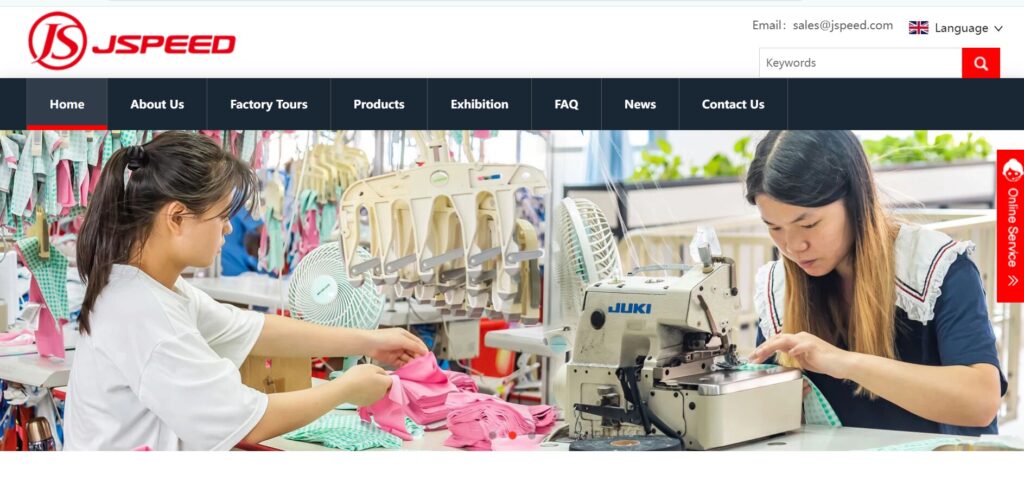
JSpeed is headquartered in Shanghai and operates production facilities in Jinjiang, Fujian. Its range includes bralettes, push-up bras, sports bras, panties, shapewear, lingerie sets, and nightwear.
The company’s main differentiator is compliance. It reports BSCI and OEKO-TEX credentials as well as Disney approval, which indicates experience with the audit and documentation requirements attached to licensed or major retail programs.
Minimums reportedly begin at around 200 pieces. That is lower than many compliance-focused factories, although the actual MOQ may vary by material, color, and construction. Buyers should confirm whether the minimum applies per style, color, or total order.
- Location: Shanghai and Jinjiang, Fujian, China
- Type: Custom OEM/ODM manufacturer
- MOQ: From approximately 200 pieces
- Lingerie Types: Bralettes, push-up bras, sports bras, panties, shapewear, sets, and nightwear
- Fabric Types: Cotton, polyester, nylon, and spandex blends
- Services: Design development, OEM/ODM, packaging, compliance support, and export logistics
- Ideal For: Mid-sized brands needing audit-ready lingerie production without a four-figure MOQ
19. Wonder Beauty Lingerie
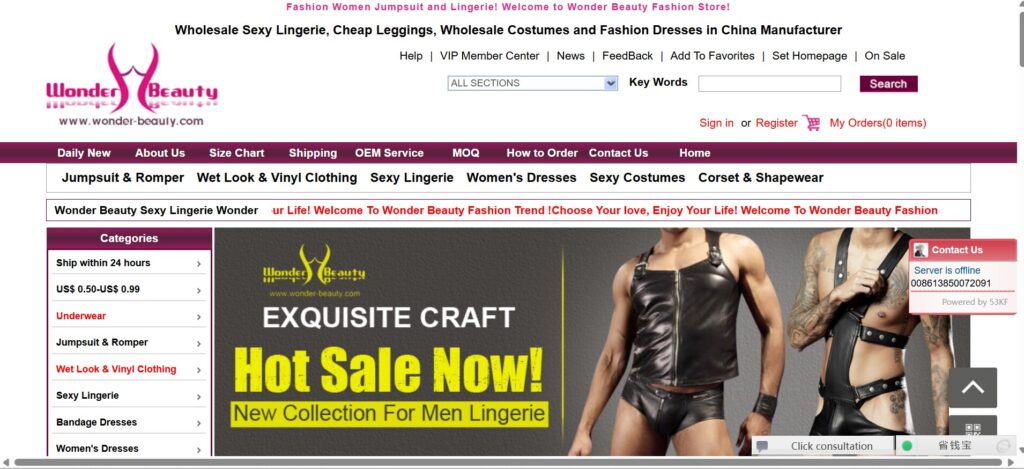
Wonder Beauty Lingerie is a Quanzhou-based wholesale supplier with a broad catalog of ready-made intimate apparel. Its range includes babydolls, chemises, teddies, hosiery, plus-size lingerie, costumes, and other fashion-led styles.
The company claims access to in-house production, but we would still classify it primarily as a wholesale supplier. Its strongest value is product variety and lower commitment rather than fully custom factory development.
Private labels and custom packaging may be available on selected stock styles. Reported minimums can begin around 100 units, but buyers should verify current quantities directly because minimums often vary by design and available inventory.
- Location: Quanzhou, Fujian, China
- Type: Wholesale supplier with claimed production capability
- MOQ: Low; around 100 units reported, verify directly
- Lingerie Types: Babydolls, chemises, teddies, hosiery, plus-size lingerie, and costumes
- Fabric Types: Lace, satin, cotton, faux leather, PVC, and spandex blends
- Services: Wholesale, private label, packaging, and international shipping
- Ideal For: Boutiques expanding their assortment with ready-made styles
20. Young Source
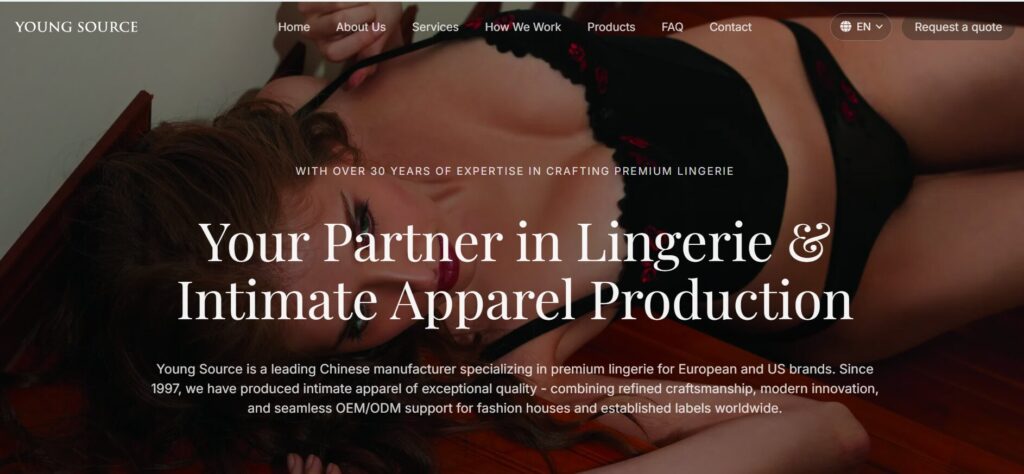
Young Source is a Shenzhen OEM manufacturer serving buyers in Europe and North America. Its range covers bras, corsets, panties, men’s underwear, swimwear, and hosiery.
The company’s strengths are technical consistency and export support. It offers custom size grading, embroidery, branded packaging, and bilingual communication, which can reduce friction when developing a broader size range.
Young Source appears better suited to mid-volume programs than micro orders, but it does not publish a verified MOQ in the supplied data. Brands should request a quotation based on style complexity, material, size curve, and color count rather than relying on a general figure.
- Location: Shenzhen, Guangdong, China
- Type: Custom OEM manufacturer
- MOQ: Mid-volume; exact figure not publicly stated
- Lingerie Types: Bras, corsets, panties, men’s underwear, swimwear, and hosiery
- Fabric Types: Cotton, silk, lace, microfiber, and mesh
- Services: OEM production, custom grading, embroidery, packaging, and bilingual support
- Ideal For: Established brands needing consistent grading and export-oriented production
21. Anmajy
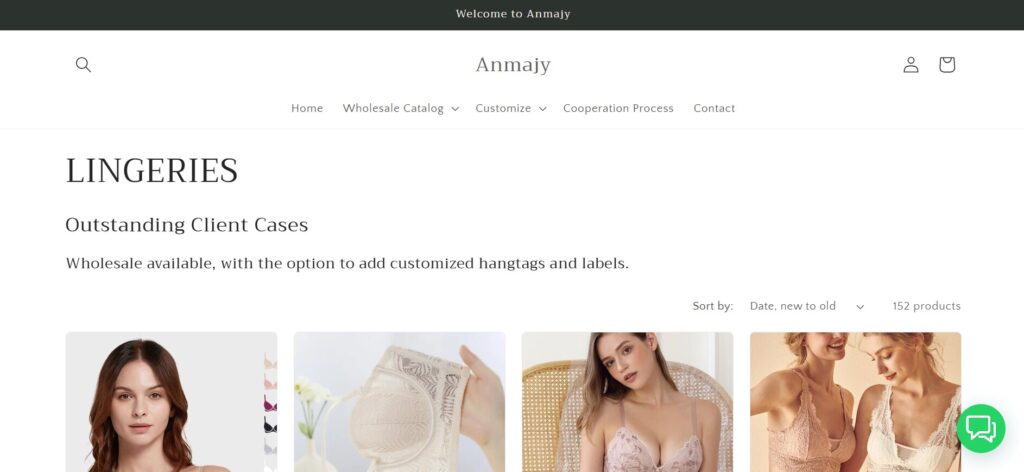
Anmajy is a Guangdong manufacturer of custom lingerie and swimwear. It reports receiving BSCI certification in 2025, making it a newer option for brands that need current social-compliance documentation.
Its capabilities include custom sizing, embroidery, logo labeling, branded packaging, and smaller production runs. The product range covers bras, panties, shapewear, swimwear, and sleepwear.
The supplied data describes its MOQ as low but does not provide a verified number. We would therefore treat the minimum as project-specific and confirm it separately for each style. Custom colors, size ranges, and specialist fabrics may increase the required quantity.
- Location: Guangdong, China
- Type: Custom OEM manufacturer
- MOQ: Low and project-specific; confirm directly
- Lingerie Types: Bras, panties, shapewear, swimwear, and sleepwear
- Fabric Types: Cotton, silk, lace, microfiber, mesh, and synthetic blends
- Services: Custom sizing, embroidery, private label, packaging, and logistics
- Ideal For: Niche brands seeking small-batch customization with recent BSCI documentation
22. Ohyeah Co., Ltd.
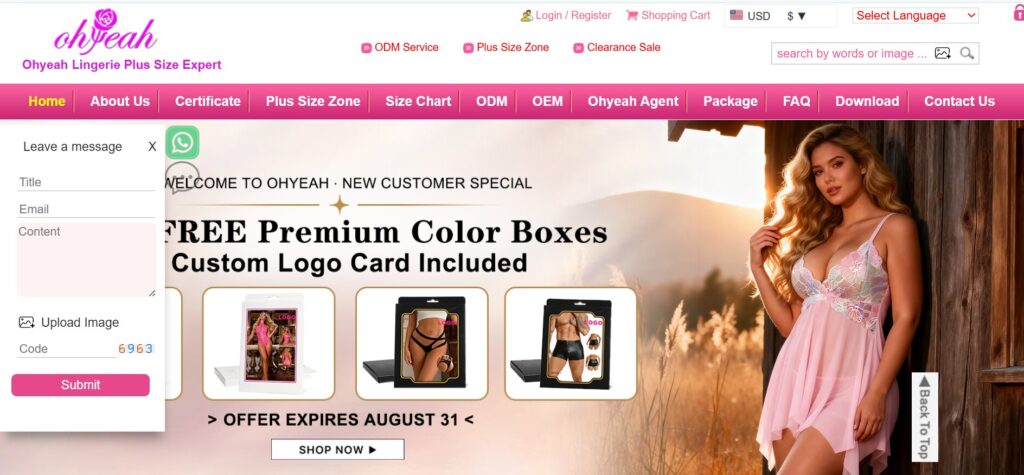
Ohyeah is a Xiamen trading company connected to an affiliated factory, Comeon Apparel. Its catalog contains thousands of ready-made styles across sexy lingerie, plus-size lingerie, corsets, babydolls, hosiery, costumes, and clubwear.
Its operating model is designed for ecommerce speed. Buyers can place mixed orders from available stock, request low-MOQ private labeling, use dropshipping support, and access product photography for online listings.
The trade-off is reduced product exclusivity and trading-company pricing. For demand testing, however, this can be more practical than committing to hundreds of units of one unproven design.
- Location: Xiamen, Fujian, China
- Type: Wholesale and dropshipping trading company with an affiliated factory
- MOQ: Low; mixed stock orders available
- Lingerie Types: Plus-size and sexy lingerie, babydolls, corsets, hosiery, costumes, and clubwear
- Fabric Types: Lace, satin, mesh, faux leather, PVC, and spandex blends
- Services: Wholesale, dropshipping, OEM/ODM, private label, product photography, and stocked inventory
- Ideal For: Ecommerce retailers testing multiple styles with faster turnaround
Ready to source lingerie from China? NicheSources offers free product sourcing with quotes in 2 business days. Request a free quote.
How to Choose and Vet a Lingerie Manufacturer
Choosing a lingerie manufacturer requires more than comparing price and MOQ. Bras, shapewear, and fitted lingerie are technically demanding products, so we look closely at pattern capability, size grading, fabric handling, sampling quality, and compliance before we consider a supplier production-ready.
Lingerie Manufacturer Vetting Checklist
Use this checklist before paying for samples or placing a bulk order:
- Verify the registered business
Ask for the company’s business license, registered address, legal name, and export details. The name on the quotation, invoice, bank account, and license should match. - Confirm its actual business type
Establish whether the supplier is:
- A factory
- A design house using offshore partners
- A trading company
- A wholesale supplier
- A made-to-order atelier
- A trading company can still be useful, but you should know who is producing your order and what margin the intermediary adds.
- Check relevant lingerie experience
Ask for recent examples of products similar to yours. A factory experienced in basic panties may not have the machinery or technical team needed for molded cups, underwires, bonded seams, corsetry, or compression shapewear. - Review size grading and fit capability
Lingerie fit errors become expensive once production begins. Ask how the supplier develops cup sizes, grades bands, tests elastic recovery, and handles extended sizing. - Verify certifications
Request current certificates and certificate numbers rather than accepting logos on a website. Depending on your product and market, relevant documentation may include:
- OEKO-TEX Standard 100
- BSCI or Sedex
- ISO 9001
- WRAP
- GOTS
- GRS
- Order samples from several suppliers
We recommend sampling with at least three candidates. Compare construction, fit, stitching, elastic tension, hardware, fabric recovery, and consistency between pieces. - Clarify the complete cost
Ask for a written quotation covering:
- Sample fee
- Unit price
- MOQ per style and color
- Fabric and trim costs
- Labels and packaging
- Mold or tooling charges
- Quality inspection
- FOB or DDP shipping terms
- Start with a trial order
Use the smallest commercially reasonable production run before scaling. A trial order reveals how the supplier handles material purchasing, production communication, quality control, and deadlines. - Arrange a pre-shipment inspection
Inspect the finished order before the final balance is paid or the shipment leaves the factory. For lingerie, inspection should cover measurements, cup symmetry, stitching, elastic recovery, labels, packaging, and size ratios.
Factory vs Trading Company: Common Red Flags
A trading company is not automatically a poor supplier. Some provide useful consolidation, communication, and low-MOQ access. The problem is when a company presents itself as a factory but cannot prove that it controls production.
Watch for these warning signs:
| Red Flag | What It May Indicate |
| The catalog covers many unrelated products | The company may source from several external factories |
| No verifiable factory address | Production may be outsourced or undisclosed |
| Refusal to provide a live factory tour | The supplier may not control the facility |
| Factory photos appear inconsistent | Images may come from different suppliers |
| No production equipment or line details | The business may primarily handle sales |
| Prices barely change when specifications change | The quotation may not come directly from production |
| Bank account name differs from the licensed company | Payment may be routed through another entity |
| The supplier avoids technical questions | The contact may lack direct access to production staff |
| Certificates belong to another company | The claimed compliance may not cover your order |
| MOQ and lead time change after payment | Initial terms may have been used only to secure the order |
When we assess a supplier, we ask who owns the machinery, who buys the fabric, who employs the workers, and where the order will physically be produced. Those answers are more useful than the word “factory” on a homepage.
How Should You Contact Lingerie Manufacturers in China?
Email is suitable for the first introduction, but many China-based factories move active discussions to WeChat or WhatsApp. These channels are commonly used for quotations, sample updates, production photos, and quick technical questions.
We recommend keeping important commercial terms in writing by email or in a signed purchase order, even when daily communication happens through messaging apps.
A reliable supplier should usually:
- Acknowledge your inquiry within 24–48 hours
- Answer technical questions directly
- Confirm MOQ by style, color, and size
- Explain which requests increase cost
- Provide a realistic sample and production lead time
- Share factory details when asked
- Follow your specification rather than only sending a catalog
Be cautious when a supplier responds only with product links, pressures you to pay immediately, or avoids answering questions about materials, grading, certifications, and production location.
Lingerie Sourcing Sheet Template
Send a structured sourcing sheet with your first serious inquiry. This helps factories quote accurately and makes their responses easier to compare.
| Field | Information to Provide |
| Product | Bra, panty, shapewear, sleepwear, set, or other item |
| Design route | OEM from your tech pack, ODM customization, or ready-made wholesale |
| Target quantity | Units per style, color, and size |
| Size range | Include band, cup, alpha, or numeric sizing |
| Target market | USA, UK, EU, or another destination |
| Fabric | Fiber composition, weight, stretch, lace, mesh, lining, and finish |
| Components | Underwire, molded cup, boning, hooks, sliders, elastic, and closures |
| Color requirements | Stock shades or custom Pantone colors |
| Branding | Woven labels, heat transfers, hangtags, logo hardware, and packaging |
| Sample request | Number of samples, sizes, and required completion date |
| Quality requirements | Measurement tolerances, stitching standards, and inspection level |
| Certifications | OEKO-TEX, BSCI, Sedex, GOTS, GRS, or retailer-specific requirements |
| Target price | Preferred FOB price range |
| Shipping destination | Country, city, and postal code for freight estimates |
| Shipping terms | FOB, air, sea, express, or DDP quote |
| Required lead time | Sampling deadline and desired bulk completion date |
We compare suppliers based on how completely they answer this sheet. A manufacturer that responds line by line is usually easier to manage than one that ignores the specification and sends a generic catalog.
From our experience in Yiwu: supplier verification is the #1 issue our clients face before working with us. Our on-ground team handles factory audits and background checks so you don’t have to. Discuss your project.
How Much Does Lingerie Manufacturing Cost?

Lingerie manufacturing costs depend on construction, fabric, hardware, size range, order volume, and production location. Bras generally cost more than basic apparel because one style may require molded cups, underwires, elastics, sliders, hooks, lining, and multiple sewing operations.
The figures below are planning estimates. Your final quote will depend on the approved sample and specification.
Estimated Bra Manufacturing Cost in 2026
| Production Route | Typical Order Volume | Estimated Cost per Bra |
| Mass-market production | 10,000+ units | $3.50–$7 |
| Overseas medium batch | 500–1,000 units | $12–$22 |
| USA small-batch production | 100–300 units | $18–$40 |
These ranges are most useful for early budgeting, not final supplier comparison. Two bras with the same general appearance can have very different costs based on cup construction, lace placement, hardware quality, sewing time, and size grading.
What Does It Cost to Manufacture Panties?
Basic panties produced in China may start at around $1–$3 per piece at volume. More complex styles cost more when they use premium lace, bonded seams, custom prints, embroidery, period-proof layers, or specialist elastic.
Ready-made wholesale lingerie commonly falls around $2–$6 per piece, although this route offers less design control than custom manufacturing.
One-Time Lingerie Development Costs
Custom manufacturing requires setup work before bulk production begins.
| Development Item | Typical Cost | What It Covers |
| Tech pack | $120–$400 per style | Measurements, materials, construction, trims, and production instructions |
| Custom prototype | $80–$250 per style | A factory-made sample based on your design |
| Existing-design sample | $10–$50 | A sample from the supplier’s current catalog |
Some manufacturers credit part of the prototype fee toward the bulk order. Confirm this before paying, as sample-fee policies vary.
What Increases Lingerie Manufacturing Costs?
The main cost drivers include:
- Molded, padded, or underwire cup construction
- Custom lace, elastic, or hardware
- Small orders or many colorways
- Extended size ranges and complex grading
- Silk and certified sustainable fabrics
- Embroidery, appliqué, and hand finishing
- Custom dyeing or Pantone matching
- Branded labels, hangtags, inserts, and packaging
- Additional sample rounds
- Third-party testing and quality inspection
A lower MOQ usually produces a higher unit price because the factory must spread setup, cutting, and material costs across fewer garments.
USA vs China Lingerie Manufacturing Costs
China generally offers lower unit pricing and a deeper supply chain for lace, elastic, cups, hooks, and packaging. US manufacturing costs more but may provide lower MOQs, faster restocking, easier communication, and a domestic-origin selling point.
Do not compare unit prices alone. Request a landed-cost estimate that includes samples, packaging, inspection, freight, duties, and either FOB or DDP terms. A low factory quote may become less competitive once development and logistics are added.
Final Thoughts
The lingerie industry offers a wide variety of options, from boutique studios producing luxury lingerie to large-scale factories capable of fulfilling high-volume ecommerce demand.
Ultimately, the key is to find a balance between quality, cost, and flexibility that aligns with your business model. Take time to request samples, review fabric options, and clarify service offerings before committing.
Our professional sourcing services can ease this process for you. We have the skill and resources to find and evaluate high-ranking lingerie manufacturers that can meet your needs. We also offer product development, branding, and shipping support.
Tired of reading through lingerie manufacturer credentials? Leave it to us. Send us a detailed sourcing outline, request a free quote, and we will find you exactly what you need.
FAQs about Lingerie Manufacturers
What Factors Should I Consider When Choosing a Lingerie Manufacturer?
When choosing a lingerie manufacturer, consider product quality first. Look for high-quality fabrics and durable stitching. Check the supplier’s reputation by reading reviews and case studies.
Evaluate the minimum order quantities (MOQs) to ensure they fit your budget and inventory needs. Pricing should be competitive and match the quality offered.
Customer service is another factor. Quick and effective communication can prevent delays and misunderstandings. Always request samples to check the actual product quality. Verify certifications like ISO to ensure they meet international standards.
Do I need a tech pack before contacting a lingerie manufacturer?
A tech pack is strongly recommended for custom lingerie because it gives the factory clear instructions on measurements, materials, stitching, hardware, colors, labels, and packaging.
Without one, suppliers may quote different interpretations of the same design, making comparisons unreliable. For simple ODM customization, a full tech pack may not be necessary, but you should still provide reference images, size requirements, fabric preferences, and branding details.
For underwire bras, shapewear, or extended sizing, a detailed tech pack is especially important.
How do manufacturers handle lingerie sizing and grading?
Lingerie manufacturers usually create a base size first, then grade the pattern across the agreed size range. Proper grading should account for band length, cup volume, strap position, elastic tension, and body proportions rather than simply enlarging every measurement.
Ask whether the supplier uses dedicated fit models, dress forms, or customer-provided measurement standards. For plus-size or extended-cup collections, request separate fit testing across key sizes. A factory experienced only in standard alpha sizing may not be suitable for technical bra sizing.
Can a manufacturer source custom lace, elastic, and hardware?
Many full-package manufacturers can source custom lace, elastic, underwires, hooks, sliders, molded cups, and logo hardware. However, custom components often carry separate MOQs that may exceed the garment MOQ. A factory might accept 200 bras but require a much larger order for custom-dyed elastic or exclusive lace.
Ask which trims are stocked, which require development, and whether unused materials must be purchased in full. Using available components can reduce cost and lead time, while custom trims provide stronger product differentiation.
How can I protect my lingerie design when working with a factory?
Use a signed manufacturing agreement, confidentiality clause, and clear ownership terms for patterns, molds, tech packs, and artwork. You should also limit access to complete design files until the supplier has passed basic verification.
Legal protection helps, but practical control matters too: register trademarks where relevant, keep dated design records, and clarify whether the factory can reuse or display your designs.
For highly distinctive products, work with suppliers that accept exclusivity terms and confirm who owns any custom tooling created during development
Should I arrange an inspection during production or only before shipment?
A pre-shipment inspection is the minimum safeguard, but an in-line inspection can be useful for complex or high-value orders. In-line checks identify problems while production is still underway, making correction easier than after the full order is finished.
They are especially valuable for new suppliers, technical bras, custom lace placement, large-size ranges, or first-time materials. For simpler repeat orders, a final inspection may be sufficient. The inspection plan should match the risk level, order value, and difficulty of correcting defects.
How should I compare quotations from different lingerie manufacturers?
Compare quotations using the same specification and Incoterm. One supplier may quote only the garment, while another includes labels, packaging, testing, and freight.
Ask each factory to separate unit cost, sampling, molds, trims, packaging, inspection, and shipping. Also check whether the MOQ applies per style, color, or size.
A lower quote can become less competitive if it excludes development costs or uses lower-grade materials. The most useful comparison is total landed cost for an equivalent product, specification, and quality standard.
How far in advance should I place seasonal lingerie orders?
For custom overseas production, plan three to five months before the intended launch. This allows time for supplier selection, sample rounds, material sourcing, bulk production, inspection, and shipping.
Add extra time before Chinese New Year, major retail seasons, or launches requiring custom lace and packaging. Domestic production may move faster, but technical products can still require several fit revisions.
A rushed schedule often forces brands to accept air freight, fewer quality checks, or incomplete sampling, all of which increase cost and production risk.
What Countries Are Best for Lingerie Manufacturing?
China is a leading country for lingerie manufacturing due to its cost-effective production and advanced capabilities. It offers skilled labor and a vast supply chain network.
You can also find lingerie manufacturers in India and Bangladesh are also significant players. They provide cost advantages and a skilled workforce. The region specializes in intricate designs and fine fabrics, benefiting brands looking for high-quality craftsmanship.
Vietnam is known for quality control and efficient production timelines. It combines reasonable pricing with high standards, making it another good choice for lingerie manufacturing.
Which Are Better, OEM or ODM Lingerie Manufacturers?
OEM (Original Equipment Manufacturer) and ODM (Original Design Manufacturer) have distinct advantages. OEM manufacturers produce items based on your designs. This model is ideal if you want to bring a unique design to market.
On the other hand, ODM manufacturers offer their designs, which you can rebrand. This option is useful if you want to quickly enter the market without spending time and resources on product development.
Choosing between OEM and ODM depends on your business needs. If customization and uniqueness are priorities, OEM is better. For faster market entry and less development cost, go with ODM.